














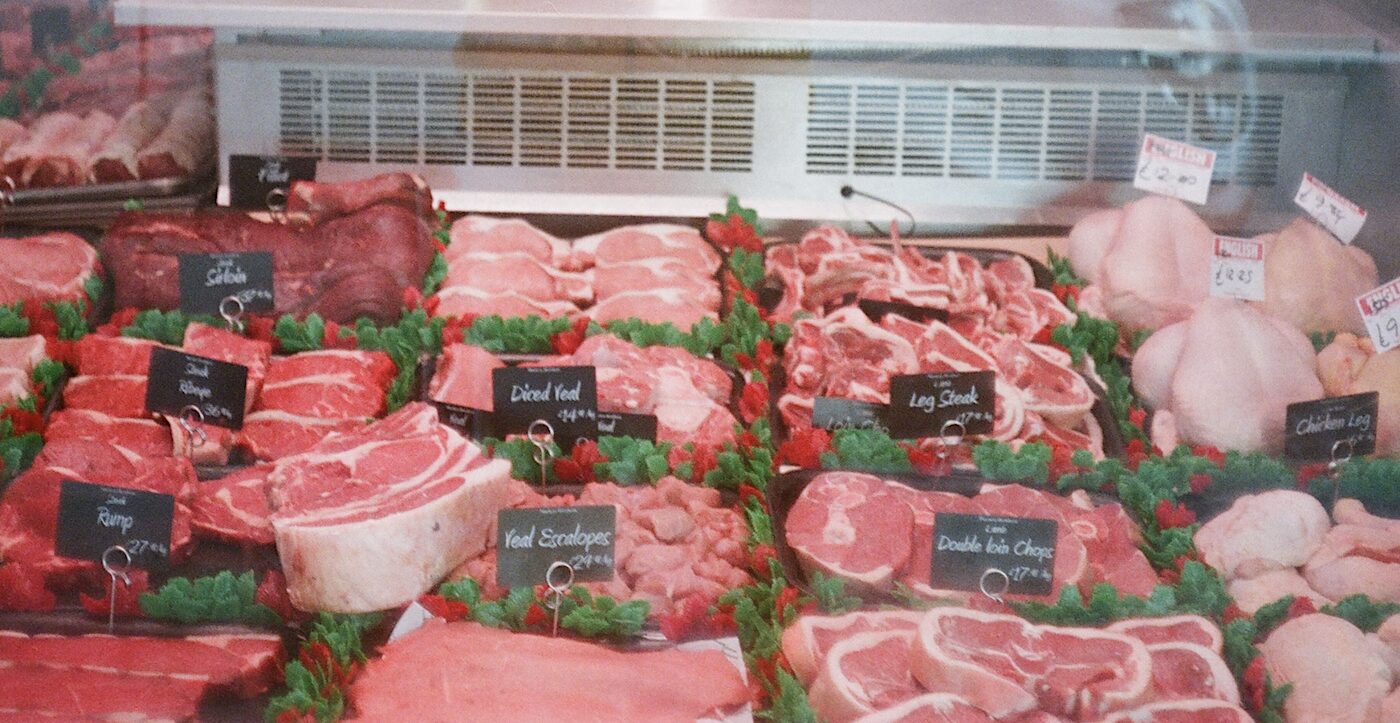
Researchers in Sweden recently found that seniors were able to offset a genetic risk for Alzheimer’s disease by consuming more meat.
The study authors say that their findings suggest that conventional dietary advice may be unfavorable to a subgroup of the population who carry the APOE gene.
Now infamous, APOE is a gene that confers a greater risk of Alzheimer’s disease. In Sweden, around 30% of the population are carriers of the gene combinations APOE 3/4 or APOE 4/4, and among Swedish Alzheimer’s patients, 70% carry one of these two combinations.
When the Swedish Food Agency presented an overview of research on the link between diet and dementia last year, more research was requested to assess a possible link between meat consumption and the development of dementia.
“This study tested the hypothesis that people with APOE 3/4 and 4/4 would have a reduced risk of cognitive decline and dementia with higher meat intake, based on the fact that APOE4 is the evolutionarily oldest variant of the APOE gene and may have arisen during a period when our evolutionary ancestors ate a more animal-based diet,” lead author Dr. Jakob Norgren at the Karolinska Institute in Solna said in a press release about the study.
The research, published in JAMA Network Open, followed more than 2,100 Swedes for up to 15 years, all of whom were aged 60 or older and had no diagnosis of dementia at the start of the study period. The association between self-reported diet and cognitive health measures was analyzed, adjusting for age, sex, education, and lifestyle factors.
Among those who ate less meat, the group with APOE 3/4 and 4/4 had more than twice the risk of dementia than people without the gene variants.
However, the increased risk of cognitive decline and dementia in the risk groups was not seen in the top 20% of participants who consumed the most meat (included red meat).
Their average consumption was estimated at around 870 grams of meat per week, standardized to a daily energy intake of 2,000 calories.
Additionally, the 20% of participants who ate the second most meat per week on average had similar, albeit less robust scores for dementia, cognition, and memory, suggesting that at least at this higher level, there was a dose-dependent response: a strong suggestion that the results were more than just an observational coincidence.
“Those who ate more meat overall had significantly slower cognitive decline and a lower risk of dementia, but only if they had the APOE 3/4 or 4/4 gene variants,” said Dr. Norgren. “For those who are aware that they belong to this genetic risk group, the findings offer hope; the risk may be modifiable through lifestyle changes.”
The study also found that the type of meat consumed is important.
“A lower proportion of processed meat in total meat consumption was associated with a lower risk of dementia regardless of APOE genotype,” said study co-author Dr. Sara Garcia-Ptacek said.
The research team also found a “significant” reduction in the chances of an early death in carriers of APOE 3/4 and 4/4 who ate higher quantities of unprocessed meat.
ALSO CHECK OUT: Simple Amino Acid Identified as Perhaps the Difference Between Life and Death from Illness
The researchers pointed out that the research was observational, and needs to be followed up with intervention studies that can better demonstrate causal relationships.
“Clinical trials are now needed to develop dietary recommendations tailored to APOE genotype,” said Dr. Norgren.
“Since the prevalence of APOE4 is about twice as high in the Nordic countries as in the Mediterranean countries, we are particularly well suited to conduct research on tailored dietary recommendations for this risk group.”
FOR MEAT LOVERS: Cruelty-free Way of Making Duck Foie Gras Devised by Scientist: ‘It was always a dream’
Dietary research is difficult to conduct. It’s difficult for people to remember how much of what they ate day in and day out, but keeping them isolated in a metabolic ward for 15 years would obviously be impossible.
Almost all dietary research ever conducted involved gathering observations—not the “gold standard” of scientific research. That includes almost all research that has shown that higher consumption of meat is linked with increased risk factors for various diseases like cancer, cardiovascular disease, and others.
REDUCING YOUR DEMENTIA RISK: 43-year-long Study Found Coffee Was Associated with 18% Lower Risk of Dementia
Whatever those studies might have shown with these relationships, it’s 100% the case that the process of aging is both characterized by and driven by loss of muscle mass and the resulting increase in morbidity. The maintenance of muscle mass in old age is found to reduce morbidity and slow the aging process. High protein diets, such as 1 gram protein per kilogram of bodyweight, support muscle maintenance in old age.
Dementia is also part of the aging process, and so maintaining lean muscle mass—for which a protein-rich diet is a must—may indeed be more than just a correlative finding, which it currently is. More meat, it might be argued, equals more muscle mass, equals slower aging, equals reduced risk of dementia.
SHARE This Important Dietary Research With Friends At Risk Of Dementia…