














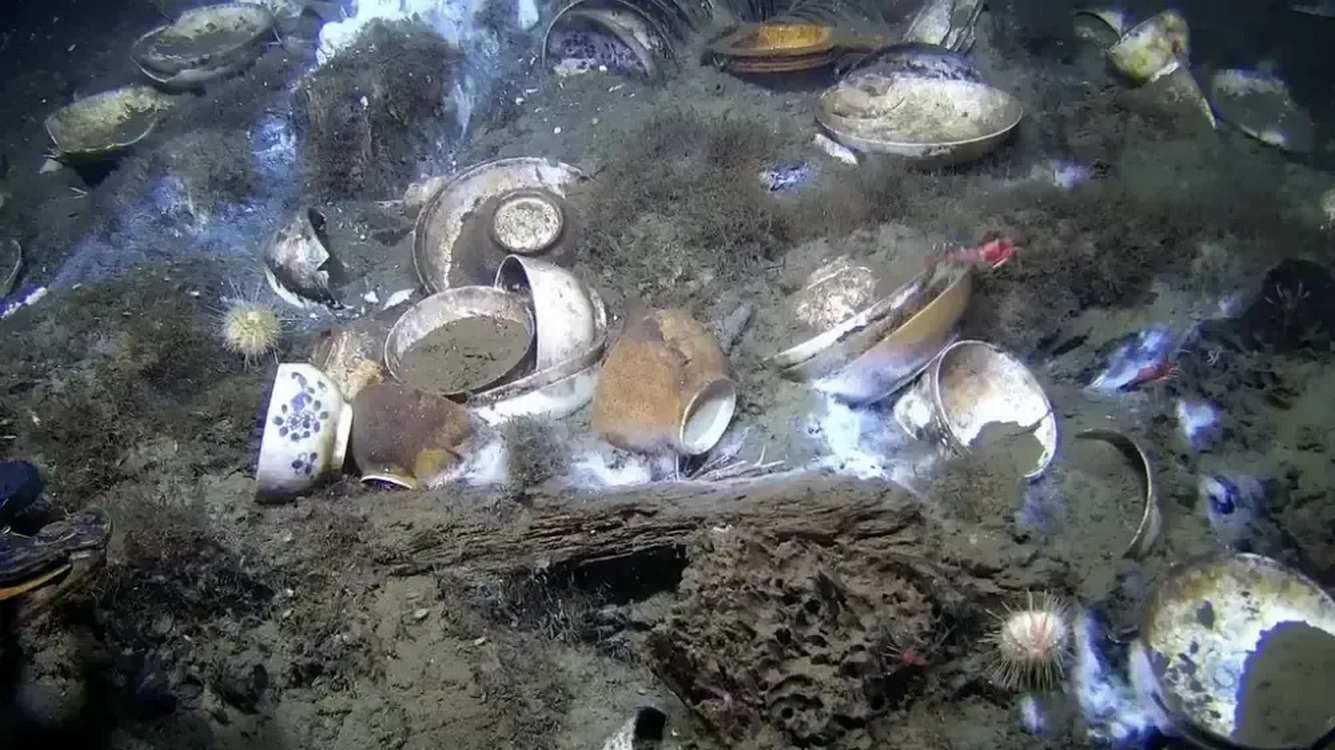
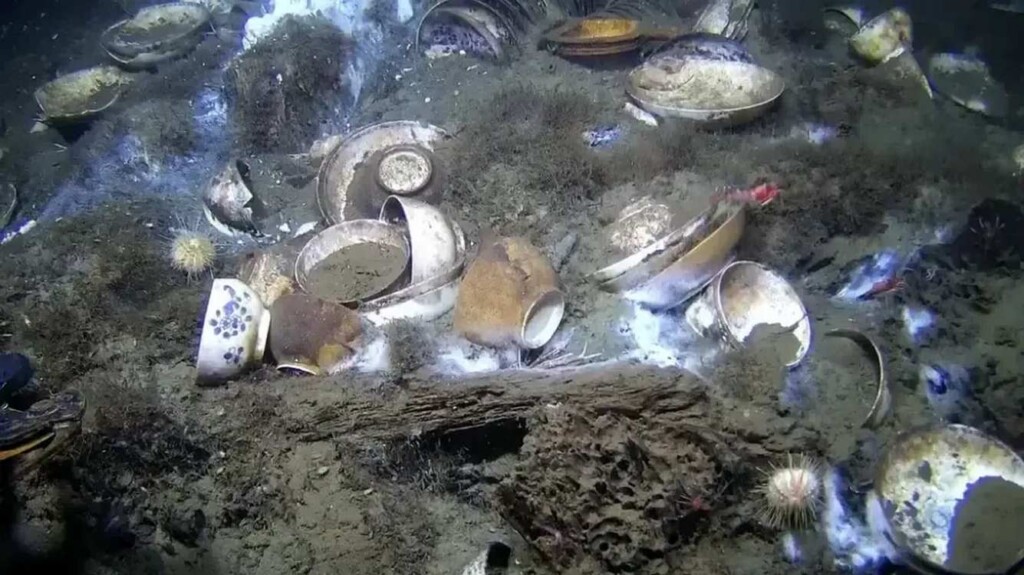
A private citizen in Norway with a passion for underwater exploration has turned up an astonishing find in the nation’s waters: a shipwreck with a cargo of intact Chinese porcelain.
Espen Saastad, a watchmaker by trade, also happens to own a small underwater survey company, and it was during one such survey in the Skagerrak Strait between Norway and Sweden that his underwater vehicle found the wreck.
The video of the ROV gliding over sparkling white and blue porcelain dishes sticking out of the marine sand is hair-raising. Saastad called the Norwegian Directorate for Cultural Heritage and explained what he had found.
Later, a joint-expedition used another ROV armed with a suction cup to venture down to the wreck and recover some 40 artifacts.
“I had to rub my eyes when I grasped the scale of this find,” says Hanna Geiran, director general of the Norwegian Directorate for Cultural Heritage, in a statement. “It is almost beyond belief.”
Discovered last fall, the cargo is the subject of a new museum exhibition at the Norwegian Maritime Museum in Oslo.
Measuring 72-feet in length, the vessel has rested upright some 2,000 feet below the sea for nigh on 300 years after it sank fairly quickly. The cargo contains two styles of porcelain: Batavia style, which features blue decorations, and Dehua style which is almost always entirely white, a feature for which it was prized in Europe as “Blanc de Chine.”
The porcelain kilns that produce Dehua ceramics in the city of the same name on China’s south coast are collectively listed as a UNESCO World Heritage Site. The crates which held them were packed with rice straw, suggesting their point of origin was indeed the Far East, however experts doubt the ship traveled all that way.
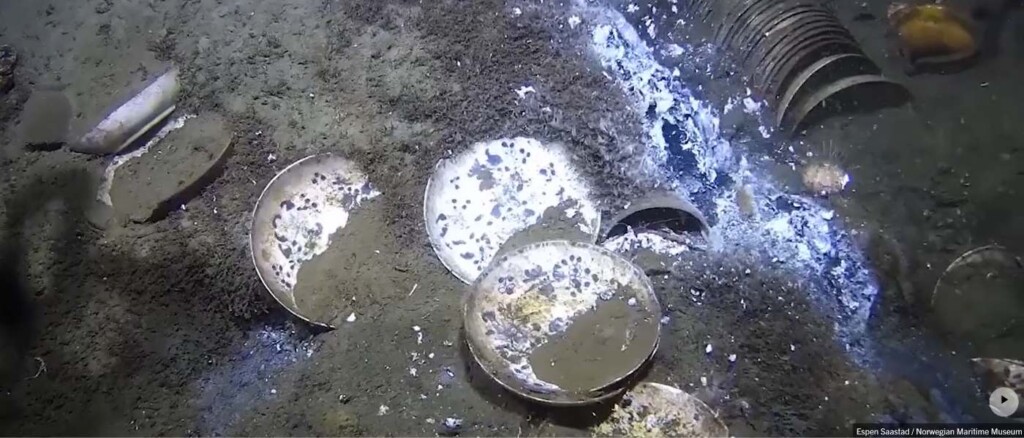
Instead, it probably picked them up directly from an intermediary. In addition to the porcelain, it contained blown and stemmed glass shaped into a variety of good from platters to chandeliers, barrels of grain, and containers of biological substances which have degraded over time, but may have been coffee, medicine, cocoa, or tea.
The combined evidence suggests the ship sank around 1750—a period marked by profound political, economic and social change in Northern Europe. Trade in raw materials and luxury goods, which had previously taken place in separate markets, was now developing into an interconnected maritime trading system.
MUST SEE SHIPWRECKS:
- Shipwrecks from the Age of the Real ‘Pirates of the Caribbean’ Found–and Filmed–for the First Time
- Artifacts from 2,000-yo Shipwreck at Bottom of Swiss Lake Include Roman Chariot Pieces (LOOK)
- This Shipwreck Is ‘Treasure Fleet’ from 1715 with $1 Million in Gold and Silver Coins Recovered
At the same time, the rise of the middle classes and the growth of international trade drove a rapid expansion in commerce and shipping. Among the wreckage was a clue as to the ship’s origin or shipping route: a brick baked in the northern German city of Lübeck.
The brick was part of the galley—the ship’s kitchen. However, a galley may have been repaired or replaced during a ship’s lifetime, so it doesn’t necessarily point to the two-masted vessel being a German one.
Many questions remain unanswered, and much of the cargo remains on the seabed.
SHARE This Fantastic Story Showing What Awaits Us On The Ocean Floor…