













It’s been 113 years since the ‘unsinkable’ Titanic sank, and engineers still have hopes of someday creating unsinkable ships.
None more so than a team at the University of Rochester that recently present a new “superhydrophobic” design that could lead to more resilient ships, floating platforms, and renewable energy innovations.
The design is special for several reasons, not least of which being its use of normal aluminum tubes rather than some expensive alloy or material. The process also replicates how the diving bell spider traps air to breathe when hunting underwater, meaning it works off a proven concept.
By making little etchings along the interior of aluminum tubes, the research team at the University’s Institute of Optics in New York created microscopic pits on the surface that turn it superhydrophobic, repelling water and staying dry.
Once modified, the tubes should theoretically stay afloat no matter how long they are forced into water or how heavily they are damaged, and indeed tests demonstrated just this.
“When the treated tube enters water, the superhydrophobic surface traps a stable bubble of air inside the tube, which prevents the tube from getting waterlogged and sinking,” said Chunlei Guo, lead author of the study presenting the technology in the journal Advanced Functional Materials.
“Importantly, we added a divider to the middle of the tube so that even if you push it vertically into the water, the bubble of air remains trapped inside and the tube retains its floating ability.”
Guo and his team first demonstrated superhydrophobic floating devices in 2019, but he says the current tube design “simplifies and improves” the technology in several key areas.
ENGINEERING AT SEA: The First Cargo Ship Running on Green Methanol Weighs Anchor Amidst Merchant Shipping Decarbonization
The disks that the researchers previously developed could lose their ability to float when turned at extreme angles, but the tubes are resilient against turbulent conditions such as those found at sea.
“We tested them in some really rough environments for weeks at a time and found no degradation to their buoyancy,” he commented to his university press. “You can poke big holes in them, and we showed that even if you severely damage the tubes with as many holes as you can punch, they still float.”
MORE STORIES LIKE THIS: Intricate Feather Patterns of an African Bird Inspires New Water Bottle Design
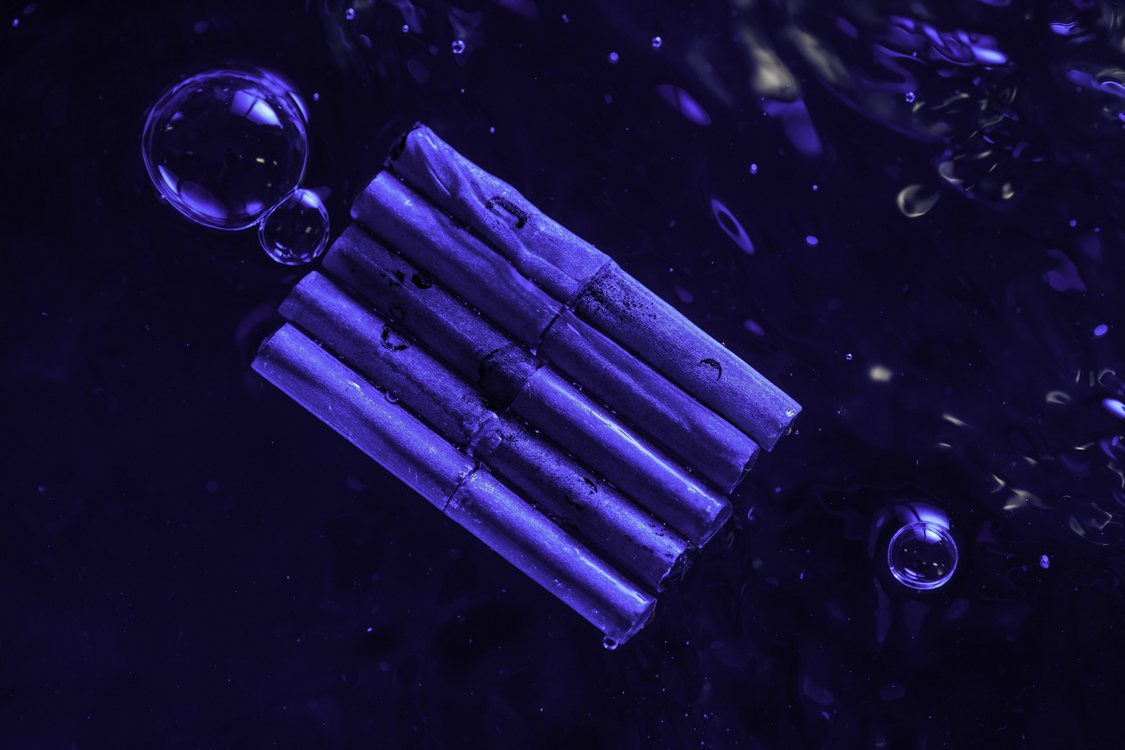
Multiple tubes can be linked together to create rafts that could be the basis for ships, buoys, and floating platforms, while the technology could be easily scaled to the larger sizes needed for load-bearing floating devices, such as the moorings of an offshore wind turbine.
“The mechanism is similar to how diving bell spiders trap an air bubble to stay buoyant underwater or how fire ants form floating rafts with their hydrophobic bodies.
WATCH the story below from the Univ. of Rochester…
SHARE This Innovative, Spider-Inspired Technology With Your Friends…
Nice concept – I wonder what effect algae growth in the tube might have as it could compromise the internal etching… I suppose a regular maintenance schedule, as with all things, could prevent any unwanted depositions from happening.