














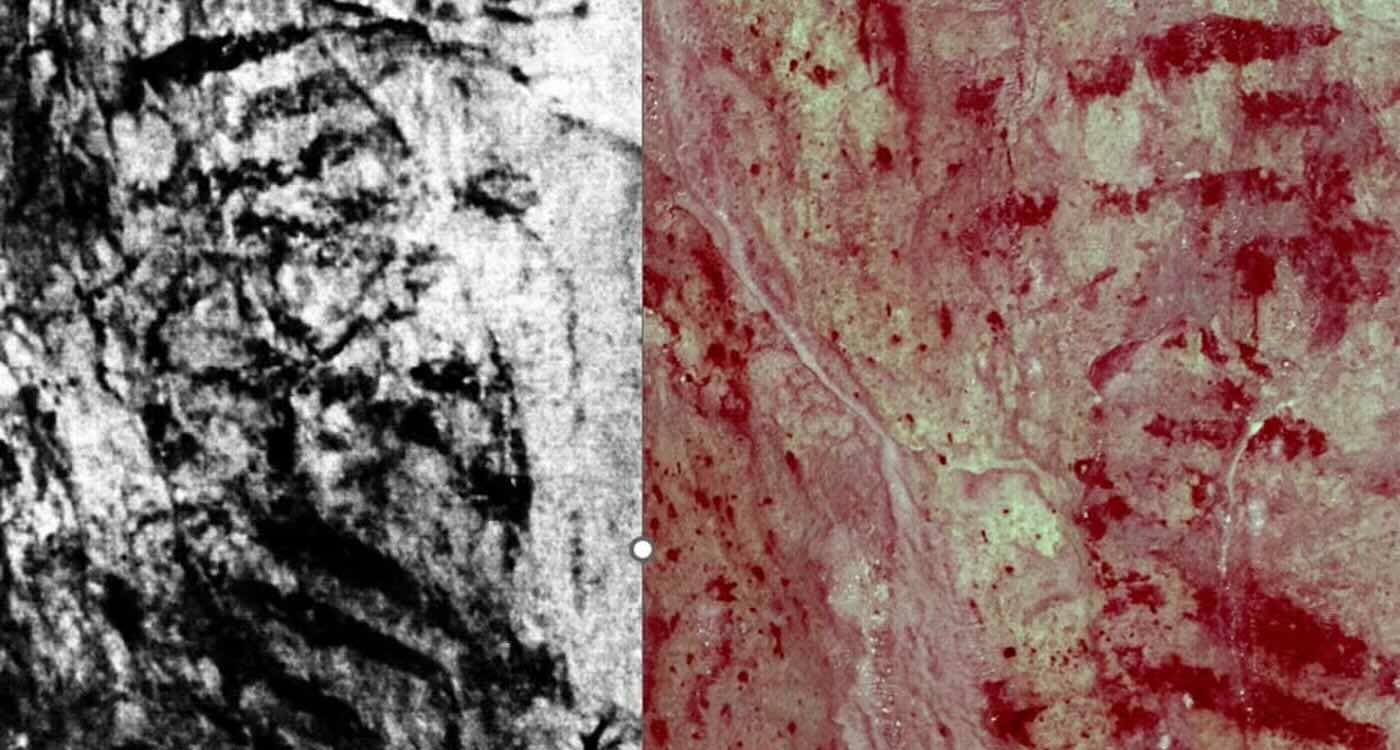
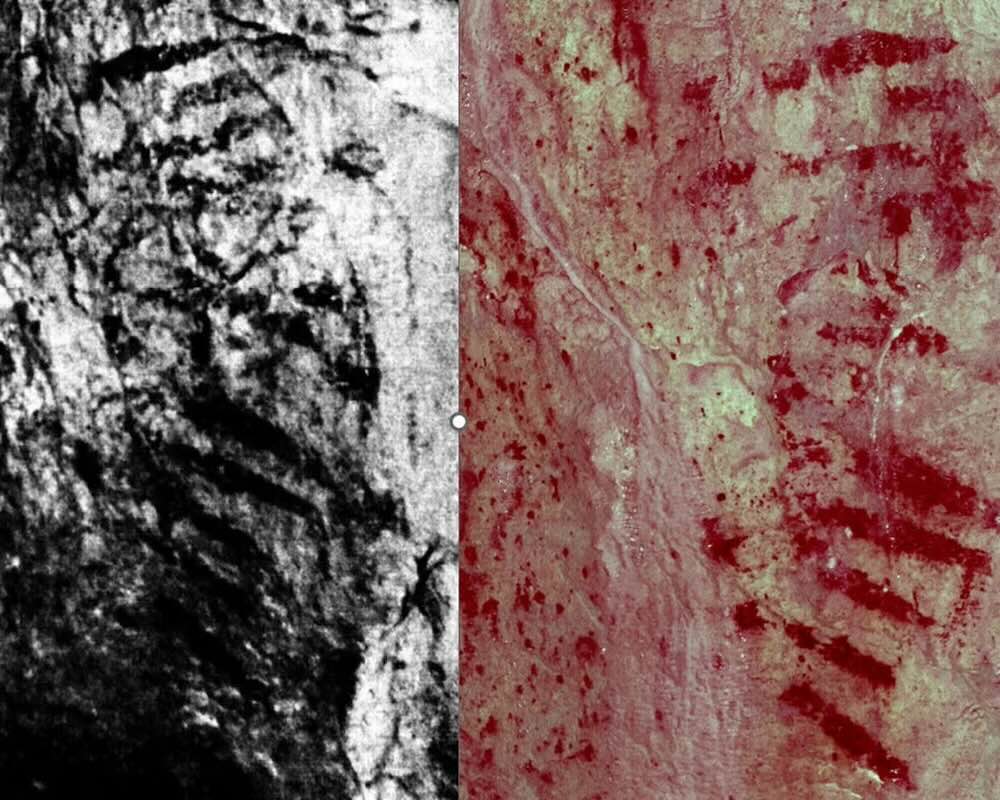
It was a case of better late than never for the Guardian: editors issued something of a correction 98 years after the paper reported the UK’s oldest prehistoric art was actually a natural phenomenon.
On October, 1912, red streaks discovered on a wall in Bacon Cave near Mumbles, Wales, were believed to be made by humans. A 1928 analysis later concluded the red streaks to be iron oxide seeping through cracks in the rock.
The record has now been re-corrected, however. The stripes are indeed prehistoric art, and nothing less than the oldest ever found in the UK with an estimated age of 15,100 BCE.
“It was never considered to be rock art after 1928, and also it could never be dated, because in those days they didn’t have the scientific means that we have today,” Dr. George Nash, a British specialist in prehistoric art who headed an international team that conducted the new research, said in a statement.
“We’ve used uranium-thorium dating for the pigments. We’ve got data 17,100 years before present, which makes it the oldest rock art in the British Isles. I was taken aback that we were able to date it and analyze the pigments. This is an exciting rediscovery, significant in understanding what was going on in Wales in the deep past.”
While the artwork was discovered in 1912, Bacon Cave was no secret. In 1894, a fisherman graffitied the opposite wall. The graffiti made it difficult to understand the full scope of the painting.
Using methods common at the time, two scientists: Henry Breuil and William Solas were able to isolate traces of clay pigments among the calcite of the local limestone rock. They wrote in 1912…
“Based on both field observations … and laboratory examination of the pigment samples, it is evident that the pigmented lines were intentionally created by human agency, rather than resulting from natural processes.”
OLDEST CAVE ARTWORKS:
- Researchers Identify Grooves and Indents in Cave Floor as World’s Oldest 3D Map
- World’s Oldest Narrative Cave Painting Is at Least 51,200 Years Old, Scientists Say
- Markings on French Cave Wall Identified as the Oldest Known Neanderthal Engravings
17,000 years ago, the area near the Bristol Channel where Bacon Cave is located was emerging from a severe cold period. It likely served as a natural channel of migratory megafauna, and with ample fishing resources, the caves would have been the perfect shelter for semi-nomadic hunter-gatherers.
Bacon Cave is just one feature of the Gower Peninsula limestone landscape near the Bristol Channel, and the scientists who overruled the 1928 prognosis that the artwork was formed by nature believe it should be protected as the UK-equivalent of a National Monument in the US, like Canyon of the Ancients in Colorado, for example.
SHARE The Story Of The Oldest UK Paleolithic Artwork Ever Found…