













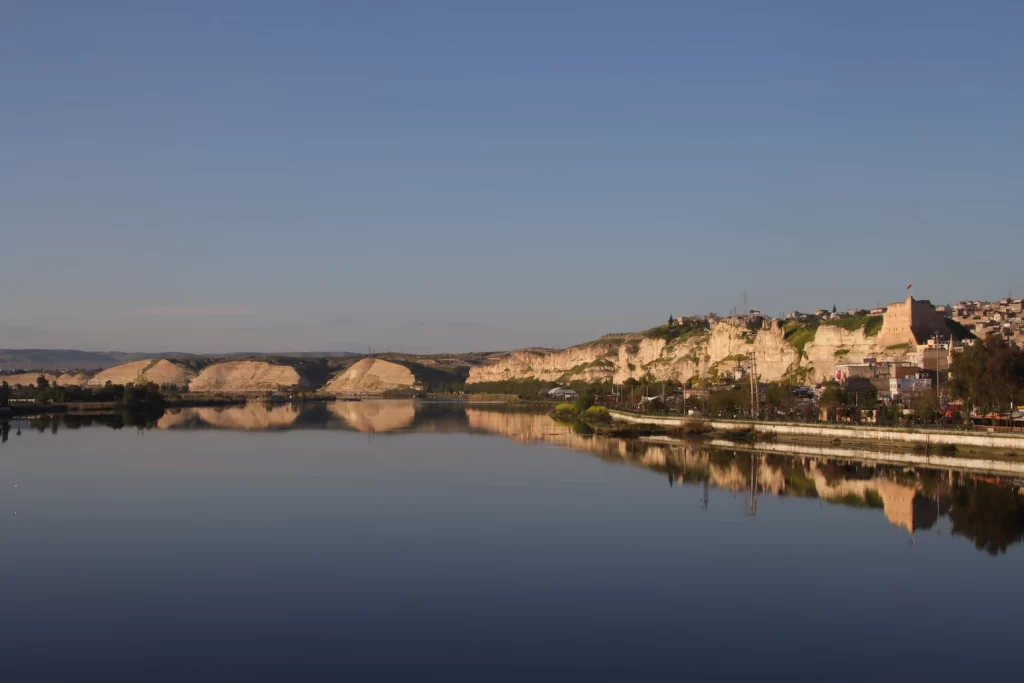
Towering above the crystal clear waters of the Euphrates River, sandstone cliffs have for thousands of years played host to the bald ibis, returning from Ethiopia during the spring migration.
But when modern dangers upset this delicate age-old balance, a coalition of local wildlife enthusiasts and international conservation efforts rescued this majestic bird from the very brink.
A story almost 50 years in the making, it was an early sign that conservation of migratory birds could be achieved long term, even if dangers persisted along an animal’s migratory route.
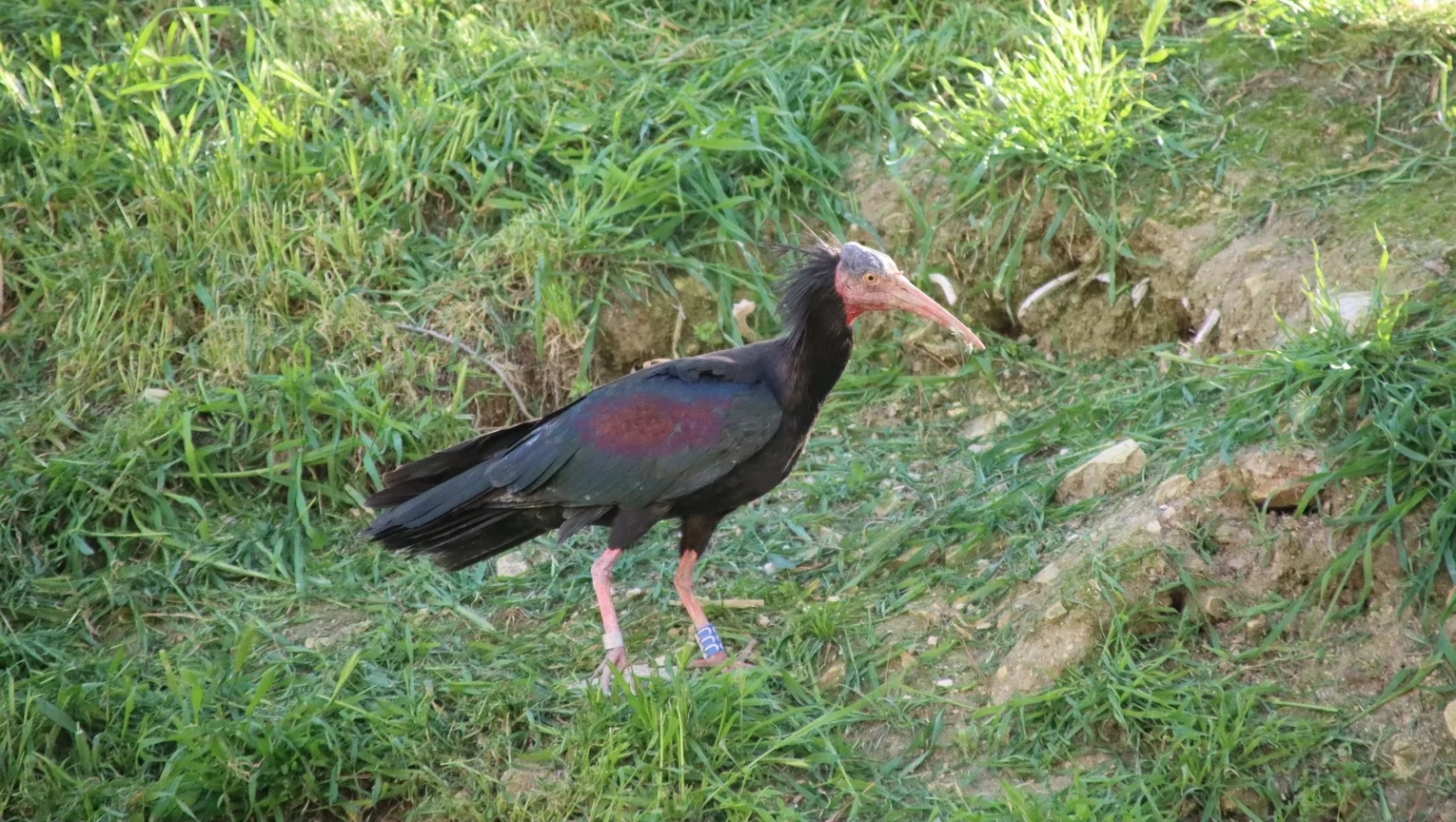
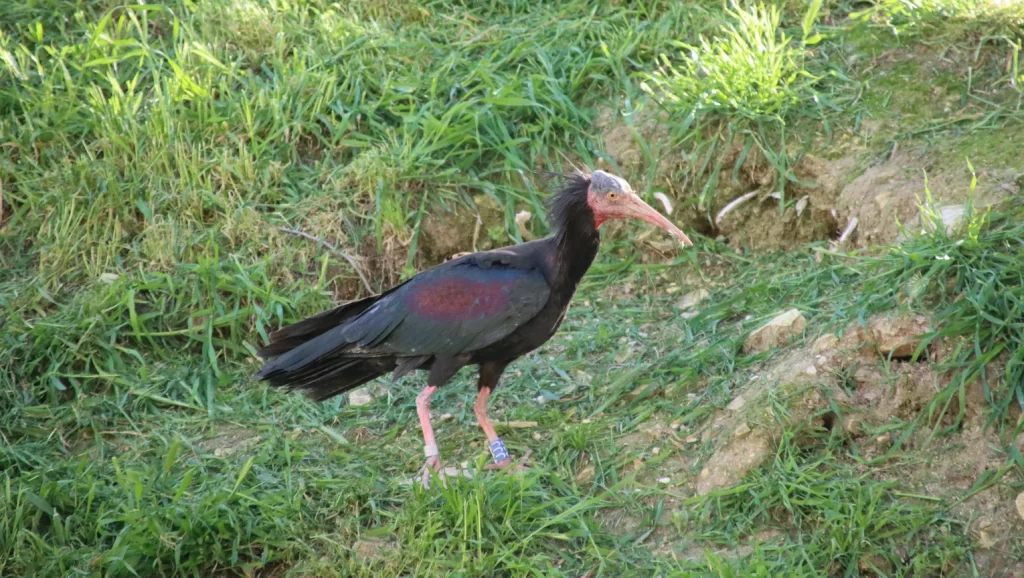
“Juvenile, 1 year old, brown with feathers on head,” says Mustafa Çulcuoğlu as he points out where I should point my camera lens. “Adult, bald head, green and red feathers in Sun, do you see?”
A local wildlife guide and third-generation bald ibis lover, Mustafa has seen attitudes about wildlife change in his native Turkey.
He was born and fledged in Birecik, a historic town on the Euphrates that spills up and over the sandstone cliffs where the bald ibis has long been a cultural icon.
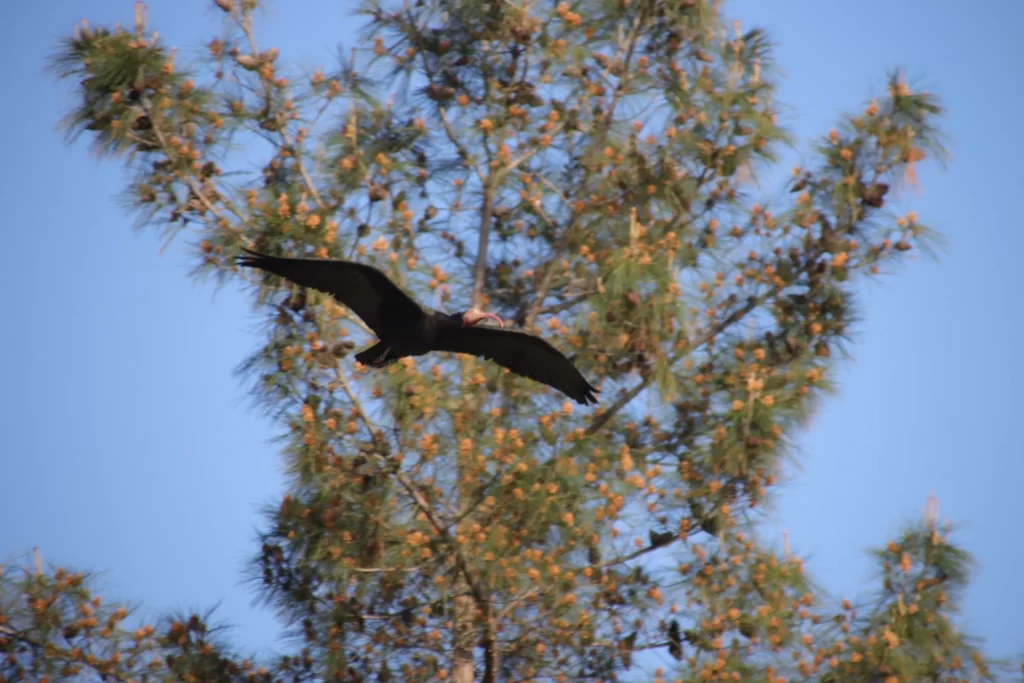
“Every year, February 14th, bald ibis is coming back from Africa. It was a sign to the people that springtime is here.”
Mustafa recalls his grandmother warning him not to climb up into the cliffs. “‘There are sweet little birds there, you’ll scare them,'” he said.
The caves, holes, and niches in the cliffs make for the perfect habitat to shield their eggs from the sun, as it passes southwest-west over the horizon, lighting the cliffs up with fiery brilliance.
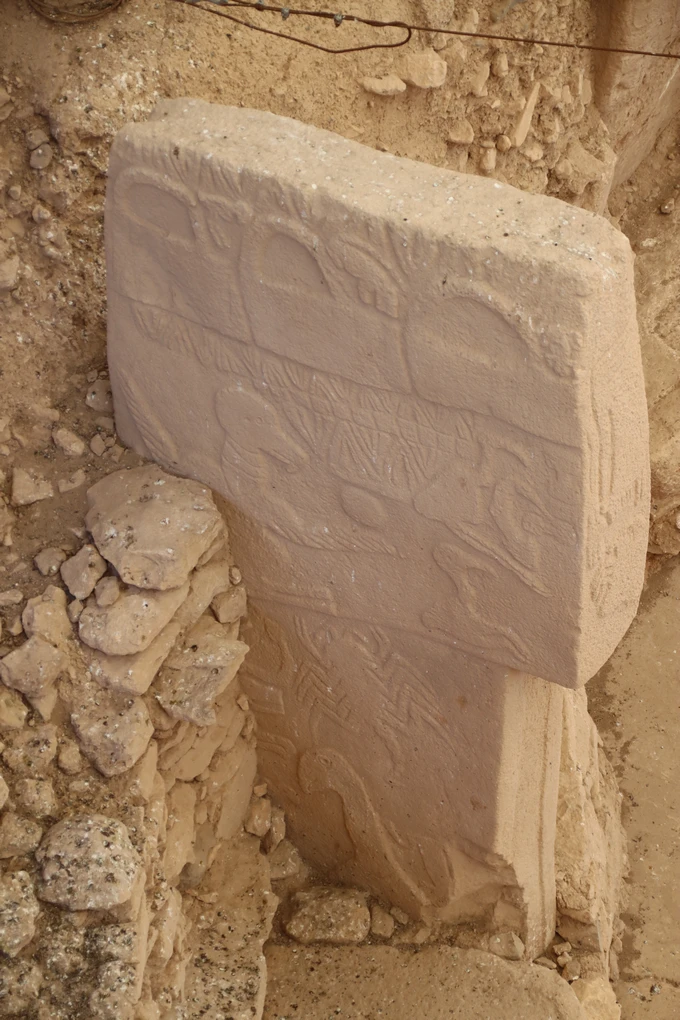
The ibis has been observed and appreciated for literally tens of thousands of years. About 100 kilometers east of Birecik is the world-renowned archaeological site of Gobeklitepe, a megalithic center of worship dating back 11,600 years ago that has totally upended what we know about our own past.
Carved into several large, T-shaped pillars within the site’s stone enclosures are birds that have long sloping bills which seem to be the bald ibis.
Religious traditions helped this species to survive in Birecik long after the species had disappeared from Europe, since it was believed that the ibis migrated each year to guide Hajj pilgrims to Mecca.
Surrounding Birecik are pistachio orchards and olive groves: the perfect haunt for the bald ibis’ prey: small mice and large insects, a meal which almost proved a fatal one after the introduction of modern pesticides.
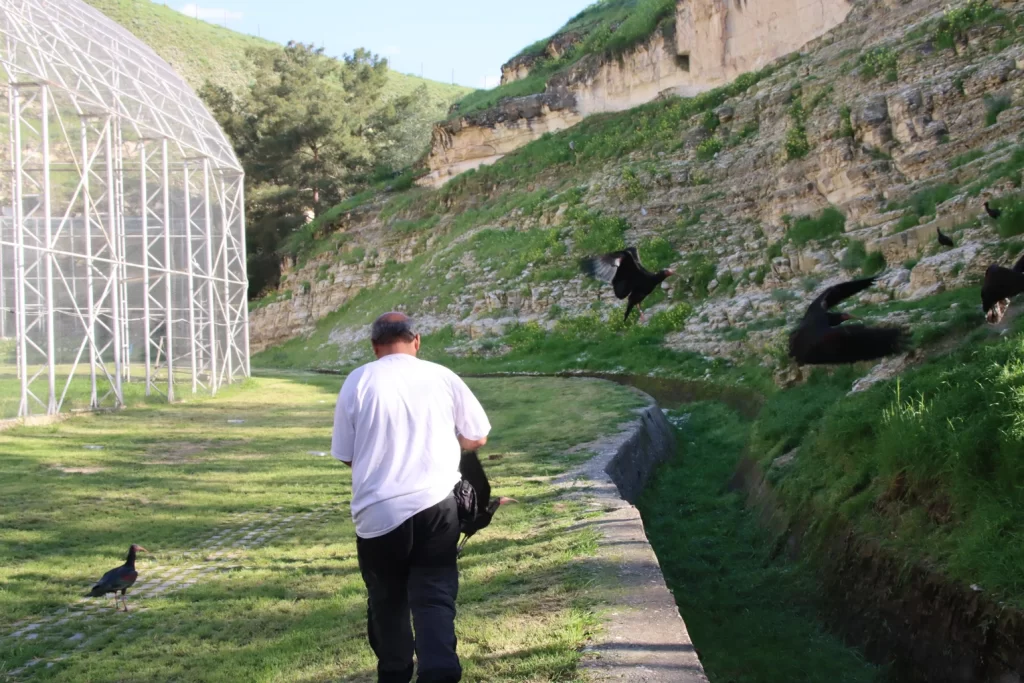
“After World War II, there was the Marshall Plan. This brought DDT to the orchards, and so bald ibis: dead, dead, dead, until we brought 10 here,” he said.
There is another migratory population which travels from Morocco to Austria, but along the Euphrates, the people were at risk of losing one of their most treasured creatures.
In 1977, BirdLife International with the help of the Turkish government, established the Birecik Bald Ibis Breeding Center, the first of its kind anywhere in the animal’s range. It protected a section of cliff face and built nest boxes for the animals, which while increasing the captive population, couldn’t stop the animal’s eventual extinction in the wild.
The breeding center, however, proved a success in saving the population which is recognized as the Northern bald ibis (Geronticus eremita), with several hundred birds currently living a semi-wild existence.
Mustafa told GNN that threats still exist along the migration route, and until such a time that they believe the birds can travel to Ethiopia and back without persecution, the animals, which live freely during the nesting season, are brought inside an amphitheater-sized aviary to prevent them from migrating.
He says Bedouins in Jordan and Saudi Arabia hunt the bald ibis, while land-use changes, war and strife, and other impacts make it impossible for the animal to migrate safely.
Until such a time as they can, Mustafa continues to take groups of visitors out birdwatching. He says he’s witnessed a profound shift in his country’s interest in its wild animals. The countryside surrounding Birecik is also home to the pallid scops owl, a critically endangered species in Turkey, the Euphrates softshell tortoise, and the striped hyena, both of which are also endangered.
THE LENGTHS GONE TO SAVE A BIRD: Guam Kingfishers Could Soon Return to the Wild After a 30-Year Absence Thanks to Ambitious Scientists
“20 years ago, it was only Netherlands, Germany—who came for birdwatching. Now, many young people are coming; they can afford binoculars, telescopic lenses, and they are interested in these animals like the bald ibis,” he told GNN.
It’s not the happiest of endings: the birds cannot migrate like their ancestors, that were the models for the stone carvers of Gobeklitepe or the pilgrims on the Hajj, once did. But that’s an awful lot better than being gone entirely.
SHARE This Great Success In Saving A Vanishing Species…
I’ve never seen a bald ibis before. It’s a shame they don’t live in Australia. They tend to live more in Morocco, Austria, Germany, Spain and Soussa Massa National Park. It would be unusual to ever see one ever live in Australia. However, another type of an ibis would live in Australia. Mostly they’d live up in Queensland in Brisbane or even Far North Queensland in Cairns. We’d also get some in Melbourne as well and they seem quite nice. I’m not sure if you’re able to see some at zoo’s in Melbourne Victoria or any other zoo like Adelaide or Sydney. But Ibis’s are really cool especially the bald one that lives in a different country.
I checked my photos from the bird enclosure of the Melbourne Zoo to see if I had captured any bald ibis. I didn’t spot it, but they had many other delightful stork-like birds. xxoo