














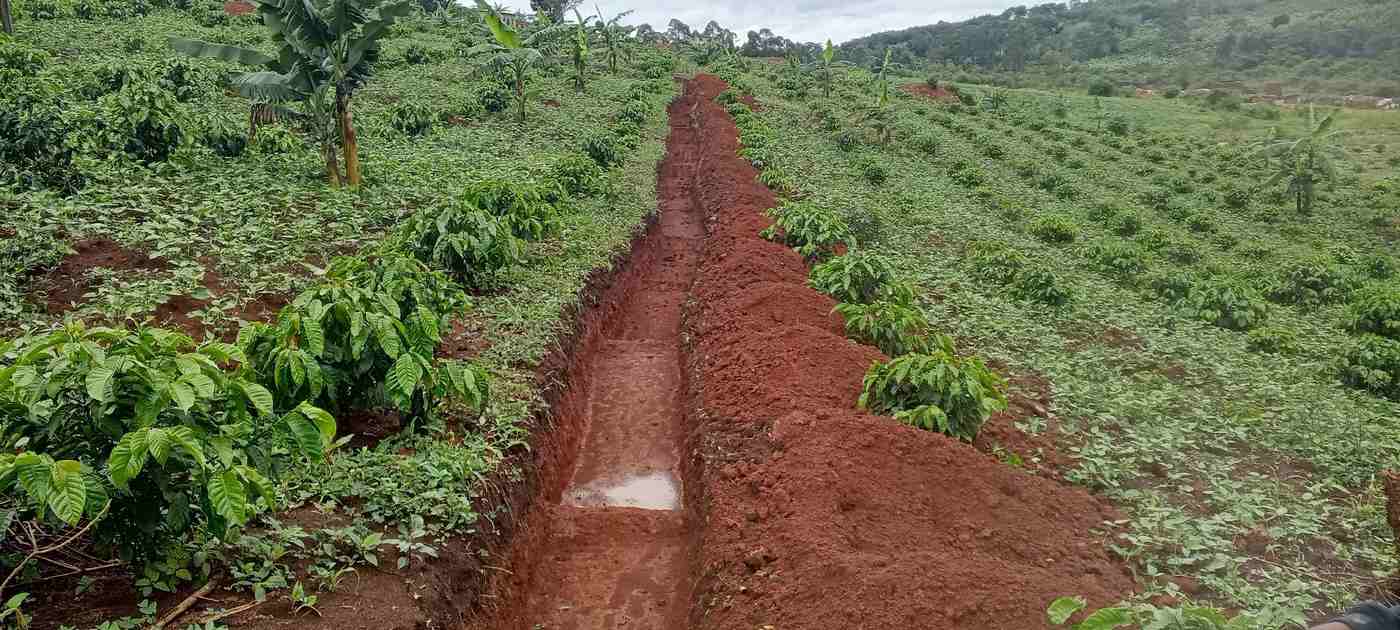
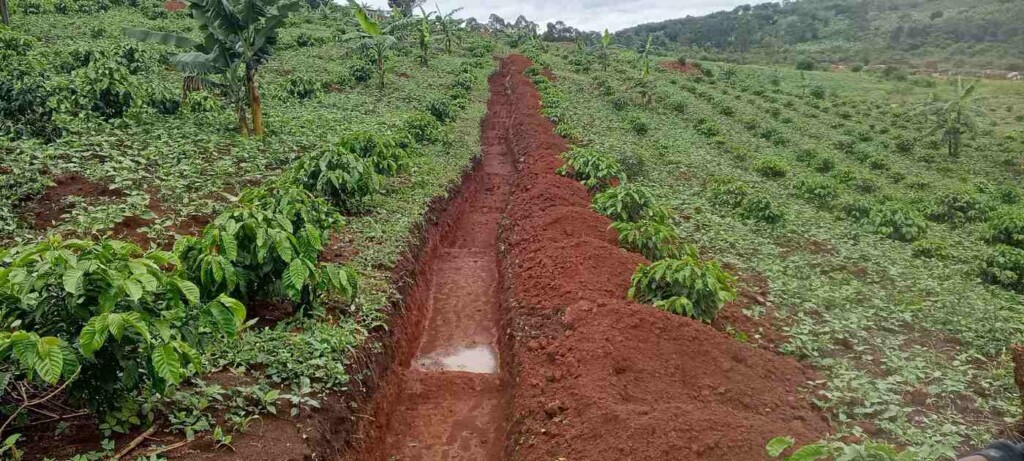
Among the rolling hills of Uganda’s Masaka region, robusta coffee plants are producing larger, tastier yields thanks to a pilot program utilizing regenerative agriculture to battle droughts or erratic rainfall.
A catch-all term for a variety of growing techniques as simple as mulching to as complex as cover cropping, regenerative agriculture is especially useful in the coffee belts where nutrient-poor tropical soils and heavy rainfall make erosion a real threat to productive crops.
Coffee is central to Uganda’s economy and the social fabric of life in many growing regions like Masaka. Global Environment Facility, (GEF) an international partnership focused on providing financial resources to help countries address global environmental issues, brought together a coalition of groups with the idea of setting up demonstration farms to teach the Ugandan growers in Masaka how to utilize regenerative farming.
Uganda’s oldest and largest licensed coffee exporter contributed their in-country expertise to the coalition, which included Nespresso and the International Union for the Conservation of Nature, and together they established 30 “model farms” where local growers could come and gain hands-on experience in these growing methods.
Cultivation of known varieties proven to be more resilient were done on the farms which could then be transplanted into plantations around the region.
“Too little or untimely rains have become serious threats to coffee production,” Nakalisa Mary Fatuma, a smallholder robusta coffee farmer in Masaka, told the IUCN.
“But since we applied mulches and planted drought resistant seedlings, the coffee farms are reliably resilient. My coffee is stronger and more promising, and so is my family.”
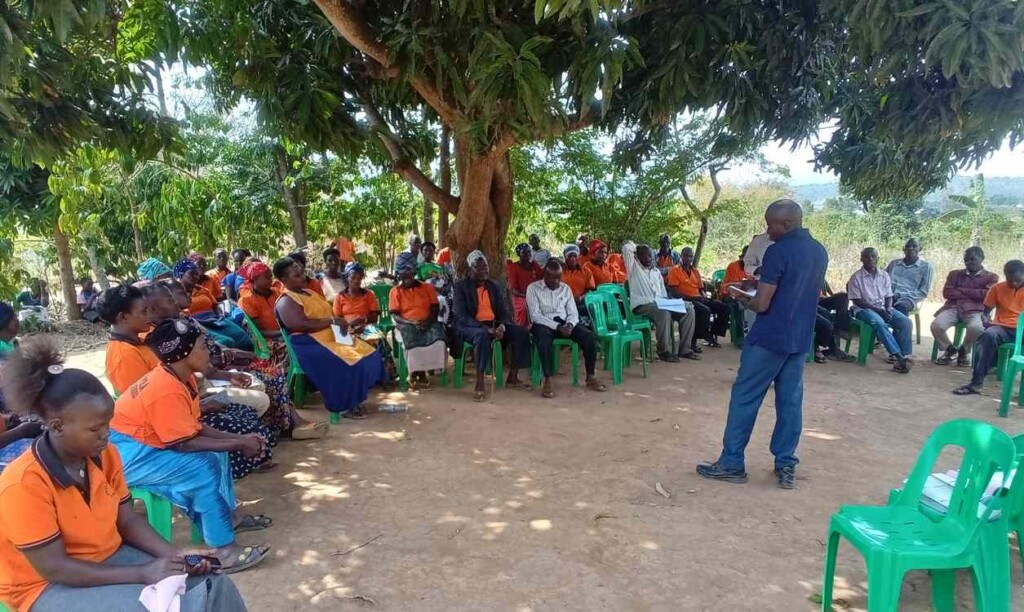
IUCN wrote that the benefits are already visible, beyond those observed merely by Fatuma. “Farmers are reporting adaptation of regenerative practices, improved yields and quality, healthier trees, and better income stability.”
While it may sound interchangeable with organic farming, and while organic farmers may utilize regenerative practices, there are differences. Practitioners of regenerative ag not only grow crops, but grow the topsoil through a mixture of mulching and cover cropping, or growing complimentary, non-food plants throughout the field.
This has the effects of helping retain soil from erosion, replacing nitrogen in the soil, and shielding microbes from the heat of the Sun. Shade trees grown throughout the acreage further protect the soil, which is never tilled, while adding more organic material through leaf loss.
GROWING BETTER COFFEE: Growing Coffee in the World’s Densest City: Hong Kong Roastery Hails Beans That Aren’t Imported
Some regenerative farmers will pasture livestock in their field between harvests to simulate natural soil disturbances and grazing activity in nature, enriching the soil yet further through the animals’ droppings.
“We used to think erosion was just something we had to live with,” Munanira Joseph told writers at IUCN. “But when we saw how the soil stayed in place on the demo plot, everyone wanted to try.”
REGENERATIVE AGRICULTURE IN THE TROPICS: This Wonder Tree is a Game-Changer for Rainforest Agriculture in Honduras And Deforested Sites Worldwide
In the last 10 years, the rate of price inflation in coffee has outpaced price inflation on average, with some particularly disruptive years like 2022 seeing double-digit rises in the prices of roasted coffee. Given that billions of people drink coffee almost every day, the first step towards slowing or reversing that trend is making yields more resilient and predictable.
Hopefully, the success of the model farms in Masaka will be grounds for hope.
TOAST These Farmers Helping To Make Better, More Resilient Coffee…