












‘Southern California is home to a black-and-yellow flying treasure’, wrote scientists giddy over good news about bee populations—and our food supply.
Commercial honeybee hives across the US have been collapsing for years, under attack from deadly parasites—but now a unique hybrid bee found only in the southern part of California has demonstrated the ability to survive.
Varroa mites feed on honeybees’ fat body tissue, resulting in weakened immune systems, reduced body weight, and shorter lives. (The fat body is a bee’s organ which performs similar functions to a liver, pancreas, and immune system). The mites also spread deadly viruses.
Beekeepers have relied on chemical treatments that can lose their effectiveness against the mites over time, but a new study from researchers at the University of California–Riverside offers hope.
Published in Scientific Reports, it is the first paper to show that a locally adapted population of honeybees can naturally and consistently suppress the mites.
“We kept hearing anecdotally that these Californian honeybees were surviving with way fewer treatments,” said Genesis Chong-Echavez, a UCR graduate student and lead author of the study. “I wanted to test them rigorously and understand the driving force behind what the beekeepers were seeing.”
Alongside entomologists from UCR’s Center for Integrative Bee Research (CIBER), Chong-Echavez monitored 236 honeybee colonies for three years.
68% fewer mites and 5x healthier
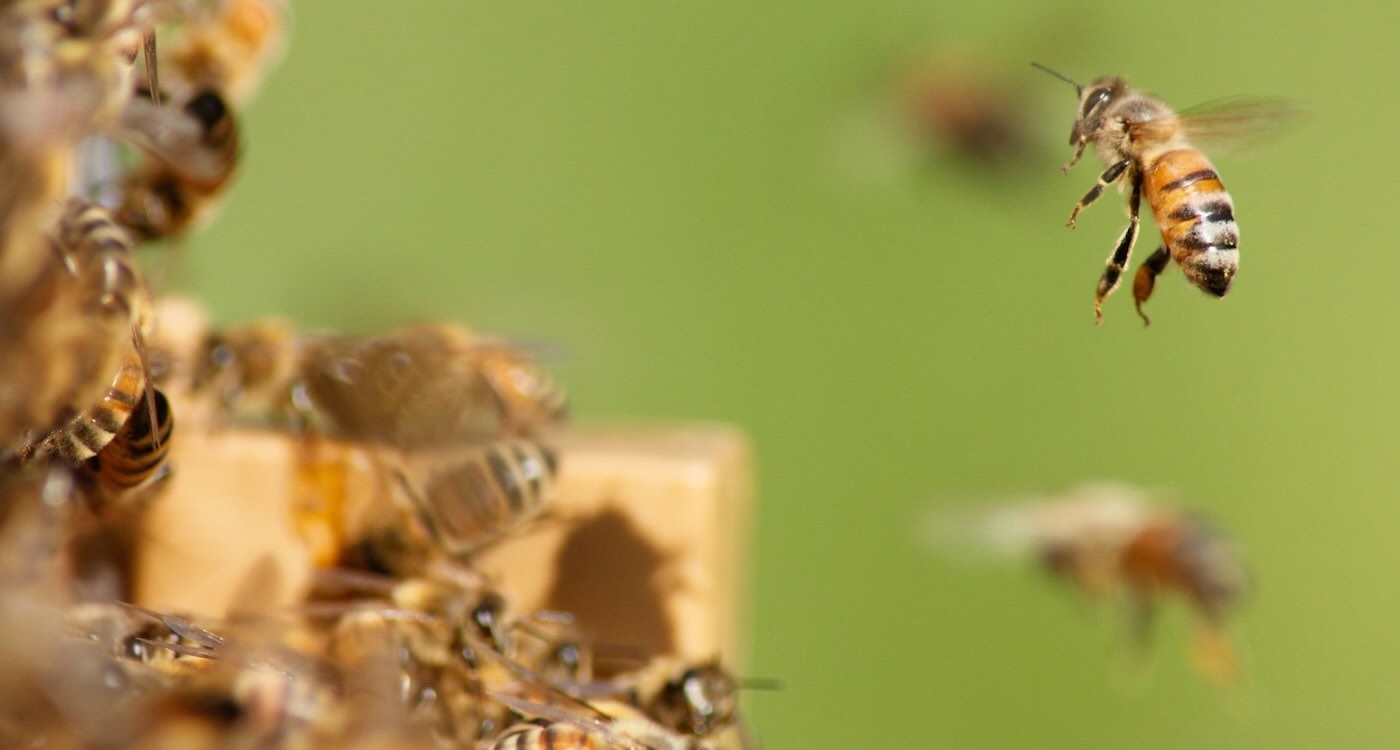
The Californian bees were not entirely immune to the mites. However, colonies headed by locally-raised Californian hybrid honeybee queens had 68% fewer mites on average than colonies headed by commercial honeybee queens.
They were also five times less likely to require chemical treatments.
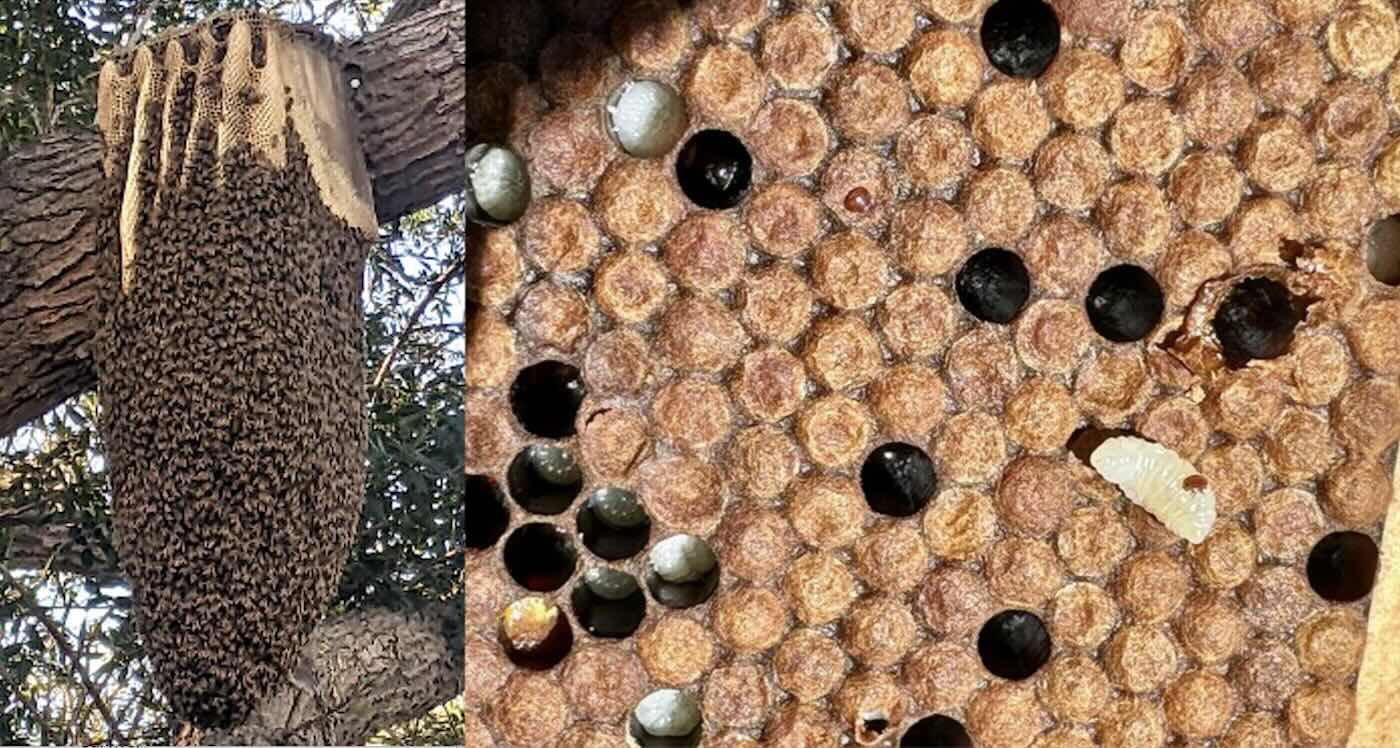
The bees in the study are a mixed population of genetically diverse honeybees established in Southern California—often feral colonies living in trees. Recent research shows they are a hybrid population with ancestry from at least four honeybee lineages, including African, Eastern European, Middle Eastern, and Western European bees.
To more fully understand the bees’ resistance to the mites, the researchers also ran laboratory experiments with developing honeybee larvae. Varroa mites must enter brood cells to reproduce, so the team tested whether mites were equally drawn to larvae from commercial and Californian hybrid honeybee colonies.
They were not.
Mites were less attracted to the Californian hybrid honeybee larvae, especially at seven days old—the stage when mites are normally most likely to invade.
The findings suggest that the secret to bees fending off mites lies in early development, before any adult worker behaviors come into play.
“What surprised me most was the differences showed up even at the larval stage,” Chong-Echavez said in a media release. “This suggests the resistance mechanism may go deeper than some kind of behavior and may be genetically built into the bees themselves.”
SWEET BEE NEWS:
• Yeast Used to Create Honeybee Superfood–And Colonies Grow 15-Fold
• A Country of 2 Million is the World Leader in Beekeeping and Protecting Pollinators
The findings could have implications beyond Southern California. Honeybees pollinate crops worth billions of dollars and are under growing pressure from multiple environmental stressors. The research suggests that part of the answer to improving honeybee health may lie in the biology of these bees.
The researchers hope to learn which traits help these honeybees keep mite levels lower, and whether those traits could support future breeding programs or reduce dependence on chemicals.
Next, the team plans to investigate the genetic, behavioral, and chemical signals that may make the larvae less attractive to mites.
“This work offers a hopeful message,” said Chong-Echavez. “Solutions may already be emerging in the field, and we just need to understand them.”
MAKE SOME BUZZ By Sharing the Amazing News on Social Media…