

















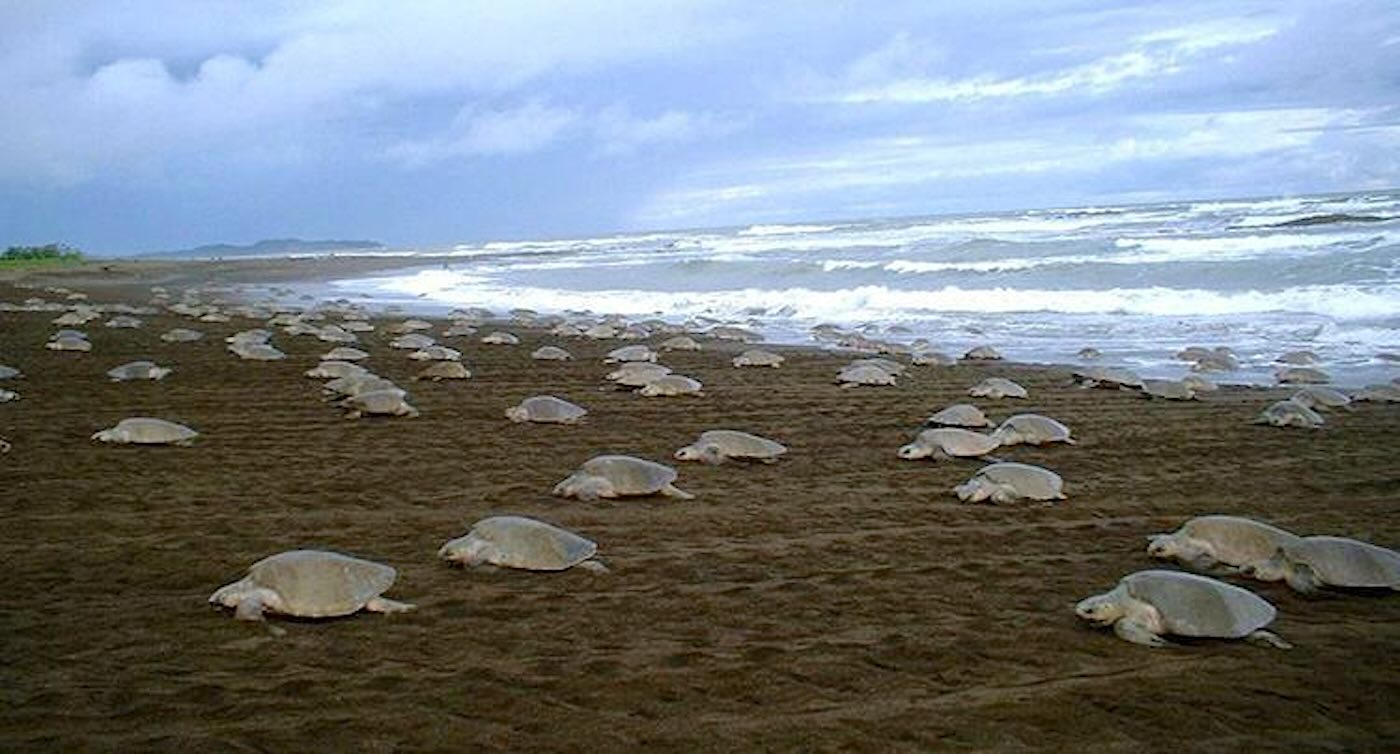
Sea turtles continue rebounding all over the world, with a recent report from NPR claiming that 1 million turtle nests have been counted along the western coastline of India, a number 10-times as high as 20 years ago.
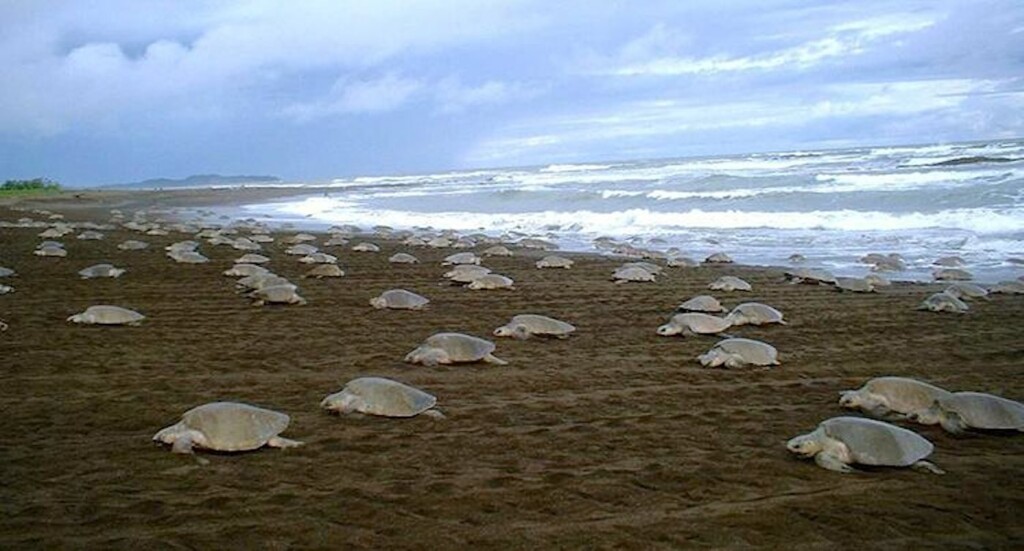
Olive ridley sea turtles are the most populous species in the world, but is still listed as Vulnerable by the IUCN. At the Velas Turtle Festival, thousands of tourists and locals watched and cheered as baby turtle after baby turtle flopped, flipped, and flumped along the beach to reach the sea last April.
The festival is one method that a coalition of hard-working turtle lovers have employed to raise awareness and share the majesty of the olive ridley turtles that nest along the coast of Maharashtra, Odisha, and other states.
Cameras record where females dig their nests in January. Volunteers and conservationists then go excavate the nest and place the eggs in large hatcheries to protect them from birds, lizards, and dogs which scavenge unhatched eggs from the shoreline.
Once it’s time for the little ones to emerge and make what in nature is quite straightforwardly a break for it, they find themselves escorted by the Velas Festival team, until every last one feels the salt on their scales for the very first time, the roar of the waves matched by the roar from the onlookers.
It’s been a long road to get to this point. Kartik Shanker, a leading Indian sea turtle expert, told America’s NPR that 20 years ago, there might be 100,000 nests counted along the entire Indian coastline. It might seem like a lot, but considering that only 1 in 1,000 baby turtles survives to adulthood, that count doesn’t equate to robust repopulation.
Shanker and others thought the olive ridley sea turtle had vanished forever from their town of Velas, until in the year 2000, a solitary egg was discovered on the beach. Shanker knew that meant there were turtles somewhere in the ocean that would someday return to Velas to nest, and he argued this to the town council in a bid to implement conservation measures, including a ban on coastal construction.
MORE TURTLE TAKES: Sharp Increase in the Numbers of Nesting Sea Turtles Rewards a Generation of Hard Work in Greece
This was followed by seasonal fishing bans, protected coastal zones, and a paid custodial staff to keep the beaches clear of plastic trash which the turtles can mistake for jellyfish—their favorite food.
“[W]hen some measure of protection was put in place, these turtles, olive ridley turtles, have rebounded,” said Shanker. During the past winter’s nesting season the turtles dug “about a million nests, which is crazy high.”
It follows an announcement in October from the IUCN, the world’s international conservation authority, that the green sea turtle is no longer Endangered. These graceful giants nest from the Caribbean to the Indian Ocean, and have consistently recovered since the 1970s.
ALSO CHECK OUT: Locals Release 10 Endangered Siamese Crocodiles into Laos Wetlands to Save Species from Extinction
It’s difficult to know how many turtles of any species exist in the seas. Conservationists have only their nests to use as proxies for population.
“We went from being pretty worried about green turtle populations to watching their numbers increase over the last few decades,” Bryan Wallace, part of the team that prepared the recommendation for the IUCN, told NPR’s Morning Edition.
“Not entirely out of the woods yet, of course, but what the report shows that, generally speaking, when we do the right things, conservation works.”
WISH These Turtles Well On Their Journey AND SHARE This Story With Your Friends…