All News - Page 1429 of 1694 - Good News Network
Home Blog Page 1429

NY Girl Saves Choking Friend Thanks to SpongeBob

spongebob.jpg

spongebob.jpgWhen a high school student started choking, her best friend was inspired to action by a SpongeBob SquarePants episode, where she believes she saw the cartoon character use the Heimlich maneuver.

She got up and did the procedure well enough that the gum stuck in her friend’s throat came flying out of her mouth.

(READ the AP story on Arizona Live)

Encouraging News For Florida Panther Population

panther-fla-cub_fwc.jpg

panther-fla-cub_fwc.jpgA dozen cubs were born recently in 4 panther dens found in palmetto thickets in Picayune Strand State Forest, Florida wildlife officials report. The births are significant because they offset some of the panther deaths on highways, and offer hope that the population will continue to grow.

The panthers’ numbers declined to approximately 30 cats by the early 1980s, but research and monitoring by FWC biologists have helped in restoring the genetic health and vigor of the panther population.

(READ more about panthers in Florida from Foster Folly News)

Scientists Tap An Electrical Current Stemming from Plants

algae-jim-conrad.jpg

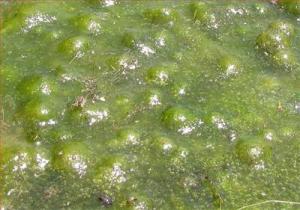
algae-jim-conrad.jpgIn an electrifying first, new research could lead to  production of electricity that doesn’t release carbon into the atmosphere. Stanford scientists have plugged into algae cells and harnessed a tiny electrical current at the very source of energy production – photosynthesis. Tapping the plant’s method of converting sunlight to chemical energy may be a first step toward generating high-efficiency bioelectricity that doesn’t give off carbon dioxide as a byproduct, the researchers say.

“We believe we are the first to extract electrons out of living plant cells,” said WonHyoung Ryu, the lead author of the paper published in March by mechanical engineering researchers.

Scientists Tap An Electrical Current Stemming from Plants

algae-jim-conrad.jpg

algae-jim-conrad.jpgIn an electrifying first, new research could lead to  production of electricity that doesn’t release carbon into the atmosphere. Stanford scientists have plugged into algae cells and harnessed a tiny electrical current at the very source of energy production – photosynthesis. Tapping the plant’s method of converting sunlight to chemical energy may be a first step toward generating high-efficiency bioelectricity that doesn’t give off carbon dioxide as a byproduct, the researchers say.

“We believe we are the first to extract electrons out of living plant cells,” said WonHyoung Ryu, the lead author of the paper published in March by mechanical engineering researchers.

The Stanford research team developed a unique, ultra-sharp nanoelectrode made of gold, specially designed for probing inside cells. They gently pushed it through the algal cell membranes, which then sealed around it. From the photosynthesizing cells, the electrode collected electrons that had been energized by light and the researchers generated a tiny electrical current.

Early research stage

“We’re still in the scientific stages of the research,” said Ryu. “We were dealing with single cells to prove we can harvest the electrons.”

Plants use photosynthesis to convert light energy to chemical energy, which is stored in the bonds of sugars they use for food. The process takes place in chloroplasts, the cellular powerhouses that make sugars and give leaves and algae their green color. In the chloroplasts, water is split into oxygen, protons and electrons. Sunlight penetrates the chloroplast and zaps the electrons to a high energy level, and a protein promptly grabs them. The electrons are passed down a series of proteins, which successively capture more and more of the electrons’ energy to synthesize sugars until all the electrons’ energy is spent.

In this experiment, the researchers intercepted the electrons just after they had been excited by light and were at their highest energy levels. They placed the gold electrodes in the chloroplasts of algae cells and siphoned off the electrons to generate the tiny electrical current.

The result, the researchers say, is electricity production that doesn’t release carbon into the atmosphere. The only byproducts of photosynthesis are protons and oxygen.

“This is potentially one of the cleanest energy sources for energy generation,” Ryu said. “But the question is, is it economically feasible?”

Minuscule amount of electricity

Ryu said they were able to draw from each cell just one picoampere, an amount of electricity so tiny that they would need a trillion cells photosynthesizing for one hour just to equal the amount of energy stored in a AA battery. In addition, the cells die after an hour. Ryu said tiny leaks in the membrane around the electrode could be killing the cells, or they may be dying because they’re losing out on energy they would normally use for their own life processes. One of the next steps would be to tweak the design of the electrode to extend the life of the cell, Ryu said.

Harvesting electrons this way would be more efficient than burning biofuels, as most plants that are burned for fuel ultimately store only about 3 to 6 percent of available solar energy, Ryu said. His process bypasses the need for combustion, which harnesses only a portion of a plant’s stored energy. Electron harvesting in this study was about 20 percent efficient. Ryu said it could theoretically reach 100 percent efficiency one day. (Photovoltaic solar cells are currently about 20 to 40 percent efficient.)

Possible next steps would be to use a plant with larger chloroplasts for a larger collecting area, and a bigger electrode that could capture more electrons. With a longer-lived plant and better collecting ability, they could scale up the process, Ryu said. Ryu is now a professor at Yonsei University in Seoul, South Korea.

(Public domain photo of bubbling algae, Wikimedia)

Quadriplegic Builds His Dream Truck, Launches Business

truck-4-wheel-red.jpg

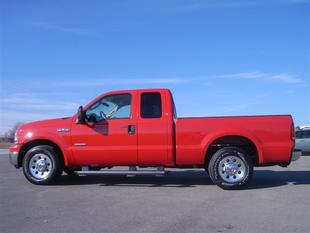
truck-4-wheel-red.jpgIn economically hard-pressed northeast Indiana, a small automotive miracle is taking place. A double twist of fate has led to an opportunity to fill a niche market for disabled drivers who’d like to be driving something a little flashier than a modified minivan.

Steve Kitchin really wanted a four-wheel drive. So, the former advertising executive designed his dream truck in the back of a barn. With the touch of a button, he simply backs his wheelchair in, and the elevator-like lift raises it up and slides him into the cab of the truck.

He used the prototype to create a new company. But before he could even secure a factory, he was inundated with vehicle requests.

(READ more or listen to the story from Weekend Edition, NPR)

New Home Sales Surge 27%, Blowing Past Estimates

sold sign

sold_sign.jpgSales of new homes surged 27 percent last month, bouncing off the previous month’s record low and blowing past expectations as government incentives and better weather boosted sales.

The Commerce Department said Friday that new home sales rose in March to a seasonally adjusted annual sales pace of 411,000. It was the strongest month since last July and the biggest monthly increase in 47 years.

(READ the AP story at CNBC.com)

Mural Project Changes Face of Blight in DC

ellington-mural-dc-bldg.jpg

ellington-mural-dc-bldg.jpgWhat do you get when you put together high energy teenagers, aerosol cans, and empty walls in blighted neighborhoods?

In Washington DC now, the answer is art – highly professional murals painted on some of the city’s most rundown real estate.

(SEE all the murals in this news report from BBC News )

Thanks to Priscilla W. in France for submitting the link!

Donors Save Harlem School of Arts

Harlem School for the Arts file photo

pianist-harlem-school-for-arts-photo.jpgThe sudden closing of the Harlem School of the Arts this month is proving to be temporary: The mayor and other city officials and a host of donors have stepped in to resuscitate the storied and fiscally troubled Harlem institution, and it is to reopen on Saturday.

(READ more in a New York Times blog)

Oklahoma Governor Vetoes “Unconscionable” Abortion Bill

gavel

gavel.jpgOklahoma Gov. Brad Henry vetoed an abortion bill Friday that would have required women who are rape and incest victims to undergo an intrusive vaginal probe ultrasound and listen to a detailed description of the fetus before getting abortions.

Henry said “it would be unconscionable to subject rape and incest victims to such treatment” because it would victimize a victim a second time.

(READ the AP story at NPR News)

Ninja slugs, Color-changing frogs and Other Weird New Species Discovered

spectacled-flowerpoker-bird.jpg

spectacled-flowerpoker-bird.jpg

123 new species were discovered in Borneo over the last few years, including a frog with no lungs, a “ninja” slug firing love darts at its mate, and the world’s longest insect, according to an announcement yesterday by the WWF.

The exploration is a result of the Heart of Borneo conservation plan agreed to by the three countries that make up Borneo that conserves 85,000 square miles (220,000 square kilometers) of irreplaceable tropical rainforest.

Explorers have been visiting the island of Borneo for centuries, but vast tracts of its interior are yet to be biologically explored.

Dog Leads Police to Burning Building

guide dog file photo

dog-on-white-bkgrd.jpgA german shepherd was told to go get help after a fire started in a remote area of snowy Alaska. “Buddy” then found the police car wandering lost in the dark trying to locate the fire. His barking and running down the road convinced police to follow and like the lead animal in a dogsled race, delivered them to their destination.

Watch the video below, or at the Today Show

Here’s a longer report on the event from the Idaho Statesman.

(Thanks to EC_Country for the link!)

Dog Leads Police to Burning Building

guide dog file photo

dog-on-white-bkgrd.jpgA german shepherd was told to go get help after a fire started in a remote area of snowy Alaska. “Buddy” then found the police car wandering lost in the dark trying to locate the fire. His barking and running down the road convinced police to follow and like the lead animal in a dogsled race, delivered them to their destination.

Watch the video below, or at the Today Show

Harmonica Man Cheats Death With Music

harmonica-man.jpg

harmonica-man.jpgAfter his ninth heart surgery, 70-year-old Andy Mackie’s doctors had him on 15 different medicines. But the side effects made life miserable. So one day he quit taking all 15 and decided to spend his final days doing something he always wanted to do.

He used the money he would have spent on the prescriptions to give away 300 harmonicas, with lessons included. “I really thought it was the last thing I could ever do,” he says.

And when he didn’t die the next month, he bought a few hundred more.

It’s now 11 years and 13,000 harmonicas later. Music has lengthened his life and brought it real meaning. He’s even taught the older kids to teach the younger ones, and continue his teaching legacy.

This story shows that improved health can result from your choice of attitude and a commitment to following your passion. WATCH the video below, or read the story at CBS … (The story aired last year, but its inspirational value is timeless.)

Waste Company Pays Customers to Recycle

recycle-logo.gif

recycle-logo.gifRecycling is good for the planet, but now it can be good for your wallet. Allied Waste is teaming up with Recycle Bank in Tennessee to offers points per pound of recycled items. The points in turn can be redeemed for coupons and gift certificates.

Joe Salamone, the GM for Allied Waste, says on average, only 20% of people recycle. The new recycling program is in 25 states, where by contrast more than 80% of those states population are now recycling.

READ the story at NewsChannel9.com, or watch their video below…

40 Victories Since the First Earth Day: 40th Anniversary Timeline

earthheart

earthheart.jpgSince the first Earth Day 40 years ago, America has become a cleaner, safer, more beautiful place with less pollution, more pristine rivers, fewer people littering, and many endangered species rescued from the brink.

Founded in 1970 by U.S. Senator Gaylord Nelson of Wisconsin to be an “environmental teach-in”, 20 million people participated in the first Earth Day, which is now observed on April 22 each year by people worldwide. Classrooms of students young and old became active that day at 2,000 colleges and universities and roughly 10,000 primary and secondary schools.

Senator Nelson hoped that a grassroots outcry  might prove to Washington politicians that Americans really cared about environmental issues. Plans for Earth Day so ballooned out of his capacity to organize that he needed a temporary office staffed with college student volunteers. Earth Day became a full-blown movement with autonomous groups organizing in cities large and small.
coastline_cleanup.jpgAs a senior at Snohomish High School in Washington, Cheryl Pearson organized a highway cleanup on that first Earth Day. Sandra Dodd of Albuquerque persuaded the principal of her high school to allow her to skip school for the day to join a celebration 25 miles away on the Santa Fe Plaza.”There were speeches, there was singing. I still have the green armband they gave me.”

On the 20th anniversary in 1990, 200 million people in 141 countries mobilized,giving a huge boost to recycling efforts worldwide and helped pave the way for the 1992 United Nations Earth Summit in Rio de Janeiro. Many cities now extend the observance of Earth Day events to an entire week.

Here is just a sampling of victories that arose out of that first “teach-in”:

40 Successes in 40 years of Earth Day

1970 – President Nixon created the Environmental Protection Agency (EPA)with a mission to protect the environment and public health.

1972 – The EPA banned DDT, a carcinogenic pesticide, featured in Rachel Carson’s 1962 book “Silent Spring.”

1972 – The Clean Water Act was passed at a time when only 40% of major rivers in the U.S. were safe enough for swimming. Today, about 70% are safe enough.

1973 – EPA began phasing out leaded gasoline, a source of air pollution, banning it fully by 1986.

1974– Congress passed the Safe Drinking Water Act, allowing EPA to regulate the quality of public drinking water.

1975 – The first use of the catalytic converter in automobile tailpipes helped to reduce noxious emissions required under the Clean Air Act. Since the first Earth Day, emissions from the most common air pollutants have decreased by about half, even while gross domestic product went up 195% and people increased their travel in cars by 178%.

1978 – The federal government banned chlorofluorocarbons (CFC) as propellants in aerosol cans because CFCs destroy the ozone layer, which protects the planet from harmful ultraviolet radiation.

1979 – EPA banned cancer-causing PCB production and use.

1980 – Congress created the Superfund to clean up hazardous waste sites,and require payment from polluting companies to finance clean up of the most hazardous sites.

1987 – The Montreal Protocol was signed by the US to protect the ozone layer by phasing out CFC’s. It became the most successful international agreement, having been signed by every member of the United Nations.

1988 – Congress passed the Sewage Ocean-dumping Ban against sewage sludge and industrial waste.

1990 – A new Clean Air Act Amendment required states to demonstrate progress in improving air quality and imposed the first acid rain controls.

1991 – Under an order from President George H.W. Bush, the US government started recycling on the federal level.

1992 – The ENERGY STAR program was first created by the U.S. Department of Energy to help us all save money — and conserve energy — through the use of energy efficient products. The program has since been adopted around the world.

1993 – President Clinton directed the federal government to use its $200 billion in annual purchasing power to buy recycled or greener products.

1994 – EPA launches its Brownfields Program to clean up abandoned,contaminated sites to return them to productive community use. One example: The city of Dallas, instead of looking for land in the suburbs to house a new stadium for its basketball team, decided to assist developers in cleaning up a 72-acre toxic mess at the city’s core.Where there once was arsenic and lead leftovers from a 100-year old city dump, the American Airlines center opened in 2001 serving sushi and sea bass to sports fans.

1999Smog in big cities had decreased at a tremendous rate: During the1990’s Southern California’s number of days of high pollution decreased100 percent. Los Angeles had nearly two hundred hazardous smog days per year in the 1970s but now experiences less than 25 each year.

1999 – President Bill Clinton announced new emissions standards for cars, sport utility vehicles, minivans and trucks, requiring them to be77 to 95 percent cleaner in future years.

1999 – The largest unprotected grove of ancient redwoods in the world came under protection after Pacific Lumber agreed to accept federal and state funds totaling nearly a quarter billion dollars in exchange for preservation of the10,000 acre Headwaters Forest.

2000 – Congress overwhelmingly approved $7.8 billion for the restoration of the Florida Everglades and undo a half-century of canal and levee-building. Support came from every sector: Democrats & Republicans, landowners& environmentalists, farmers & home builders.

2000 – Under President George W. Bush the EPA established new regulations requiring truck diesel engines and fuel to be more than 90 percent cleaner.

2001 – Australia ended commercial coral harvesting on the Great Barrier Reef to protect the world’s largest living reef formation.

2002 – WWF partnered with Brazil to launch the world’s largest tropical forest conservation program, carving out 12 years of strict preservation and the establishment of 62 million acres of new protected areas – a swath about the size of Wyoming.

2005 – The Kyoto Protocol became law around the world, a UN framework for nations to pledge to cut carbon emissions. At the end of 2009, 187states had signed and ratified the protocol.

2006 – The Bush Administration encircled Hawaii with the world’s largest marine preserve, home to 7000 marine species, at least a quarter of which are found nowhere else. The huge sanctuary is larger than all U.S. National Parks combined, stretching the distance from Chicago to Florida.

2006320 mayors of U.S. cities joined with 164 nations to embrace the Kyoto Accord setting targets that will lead to reduced greenhouse gas emissions by 2012.

2007One billion trees were planted by citizens around the world in just one year in the UN’s Billion Tree Campaign.

2007 – In New York City’s Hudson River, Shortnose sturgeon became the first fish to be resurrected from the endangered species list. More than 60,000 occupy the river, greater by four times than the number in1970.

2007Dell became the first major computer firm to commit to becoming totally carbon neutral worldwide.

2008 – Europe achieved its goal of cutting pollution from coal-burning plants years ahead of schedule, reducing acid rain-causing sulphur dioxide by 65 percent since 1990.

2008 – The Black rhino population was up 20 percent in Kenya, after years of decline from poaching and habitat loss.

2008 – Americans are tossing less litter despite the fact that there are more people on the roads. “Experts estimate that deliberate trash-tossing has fallen about 2% per year since the mid-’70s.”

2008 Bald eagles this year soared off the endangered species listafter nearly four decades, their population climbing from a dismal count of just 417 nesting pairs in the continental United States in1963 to more than 11,000 today.

2008 – The gorilla population rose 12 percent over the past decade in Uganda, while a 10-year strategic plan between Congo, Rwanda and Uganda pledged the continued recovery of the great ape. A new nature reserve in DR Congo became the world’s largest continuous protected area for Mountain Gorillas, larger than the state of Massachusetts.

2009 – The Obama Administration, environmentalists and the auto industry formally reach an agreement for the production of significantly more energy-efficient vehicles.

2009EPA ruled greenhouse gases to be dangerous to public health and the environment, and subject to Clean Air Act requirements.

2009Humpback whales may soon graduate from the endangered species list. Conservation has boosted population growth to 4-7 percent annually, leading to an estimated 19,000 animals, from fewer than 1,400before the 1960’s ban on whaling.

2010 – A $2.2 billion five-year blueprint for rescuing the Great Lakes from toxic contamination and invasive species was launched by the Obama administration developed .

2010 – After roosting on the list of endangered species longer than most any other creature, the pelican was finally de-listed, with birds nationwide thriving.

2010 – The Earth lost fewer trees in the last decade, as global deforestation rates fell over the past ten years by more than 18 percent,according to the UN’s Global Forest Resources Assessment, which studied 233 countries.

(Image of Earth as Heart by Sun Star)

Starbucks Gives Discounts for Bringing Own Mug, Now Features Fair Trade Coffee

starbucks mug

starbucks-mug.jpgDid you know that Starbucks has been giving customers who bring in a reusable travel mug a ten cent discount since 1985? Now, Starbucks is featuring Fair Trade Certified coffee (Café Estima) in more than 10,000 participating locations around the world.

Estima coffee, in an easy-to-spot orange package labeled “From farmers, for Farmers,”  is part of Starbucks’ Bold Coffee Portfolio — a daily offering of Tall (12 oz) brewed coffee for $1.50, allowing customers to try different bold coffee each week.

(READ more in a report at GreenChipStocks.com)

Mexico City Offers Bikes In Its Clean Air Campaign

bikes-mexico-ecobici.jpg

bikes-mexico-ecobici.jpgMexico City isn’t the most bicycle-friendly place. But residents are being asked to take the risk — between spewing buses and shrill police whistles — as part of a campaign that leaders hope will clean up this 700-year-old metropolis.

This spring the city launched Ecobici, installing 1,100 bikes at 85 stations throughout the center of the city. In its first three months, 4,000 people have paid $24 for user cards they swipe at a rack to release a bicycle for a half-hour. City officials hope to register 24,000 people in the first year.

. . . Happy Earth Day, Mexico City.

(READ the AP story at NPR.org)

40 Victories Since the First Earth Day: 40th Anniversary Timeline

earthheart

earthheart.jpg
Since the first Earth Day 40 years ago, America has become a cleaner, safer, more beautiful place with less pollution, more pristine rivers, fewer people littering, and many endangered species rescued from the brink.

Founded in 1970 by U.S. Senator Gaylord Nelson of Wisconsin to be an “environmental teach-in”, 20 million people participated in the first Earth Day, which is now observed on April 22 each year by people worldwide. Classrooms of students young and old became active that day at 2,000 colleges and universities and roughly 10,000 primary and secondary schools.

Senator Nelson hoped that a grassroots outcry about environmental issues might prove to Washington politicians that Americans really cared about them. Plans for Earth Day so ballooned out of his capacity to organize that he needed a temporary office staffed with college student volunteers. Earth Day became a full-blown movement with autonomous groups organizing in cities large and small.

Top of Mt. Everest to Be Cleaned Up for First Time

Mt. Everest North Face

everest_north_face.jpgA team of 20 Nepalese Sherpas is planning to clean up rubbish and bring the bodies of dead climbers down from the top of Mount Everest — the first clean up of its kind at such an altitude.

The dangerous expedition will set off from the Nepalese capital, Kathmandu, this weekend. Seven-times Everest climber Namgyal Sherpa is running the expedition, allowing each of the climbers to haul 45 pounds of trash down the mountain.

(READ the story from the BBC)

Thanks to Priscilla W. from France for the link!


Top of Mt. Everest to Be Cleaned Up for First Time

Mt. Everest North Face

everest_north_face.jpgA team of 20 Nepalese Sherpas is planning to clean up rubbish and bring the bodies of dead climbers down from the top of Mount Everest — the first clean up of its kind at such an altitude.

The dangerous expedition will set off from the Nepalese capital, Kathmandu, this weekend. Seven-times Everest climber Namgyal Sherpa is running the expedition, allowing each of the climbers to haul 45 pounds of trash down the mountain.

(READ the story from the BBC)

Thanks to Priscilla W. from France for the link!