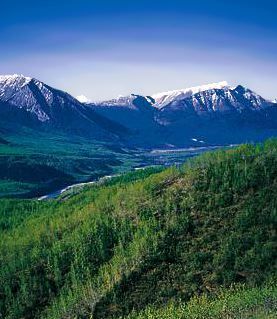
 The Earth lost fewer trees in the last decade, as global deforestation over the past ten years fell by more than 18 percent, according to the UN’s Global Forest Resources Assessment 2010.
Between 2000 and 2010, about 50,000 square miles (13mil hectares) of forests each year were converted to other uses or lost through natural causes, as compared to around 61,800 sq. miles (16mil hectares) per year during the 1990s, say the key findings of the Food And Agriculture Organization’s most comprehensive forest review to date, which studied 233 countries.
Planting of new forests has significantly reduced net loss of forests
Brazil and Indonesia, which had the highest loss of forests in the 1990s, have significantly reduced their deforestation rates. In addition, ambitious tree planting programs in countries such as China, India, the United States and Viet Nam – combined with natural expansion of forests in some regions – have added more than 27,000 sq. miles (7mil hectares) of new forests annually. As a result the net loss of forest area was reduced to 20,000 sq. miles (5.2 mil hectares) per year between 2000 and 2010, down from 32,000 sq. miles (8.3 mil hectares) annually in the 1990s.

















 The dream of an American scientist who imagined a world where every child in the world had a laptop computer has gained strength in eight years, and yesterday began its great sweep across remote north Australia.


 The rock band Pearl Jam has donated $210,000 to the Seattle-based Cascade Land Conservancy for the planting of native trees and shrubs to offset the carbon footprint left behind by their 2009 US tour.