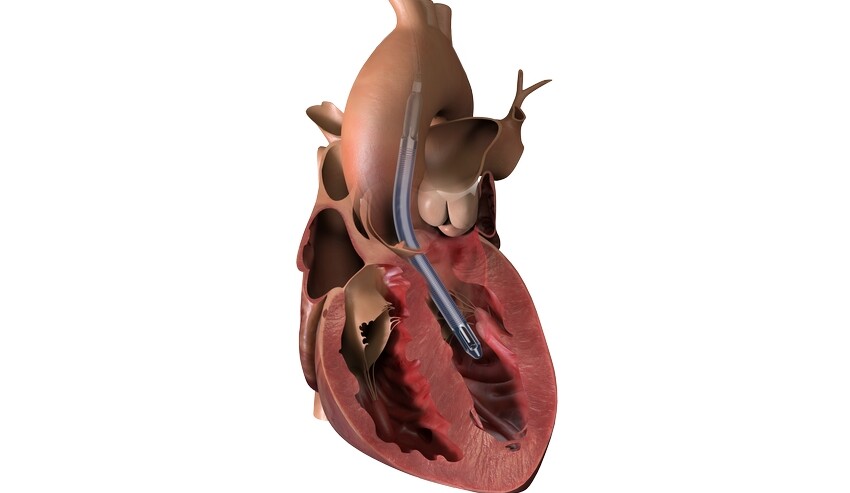
Impella 5.5® with SmartAssist® Pump - credit Abiomed
Impella 5.5® with SmartAssist® Pump – credit: Abiomed
A heart pump no bigger than a fountain pen has just been approved by the FDA for use in children, having already saved adult lives in a revolutionary way.
Cardiologists don’t even need to open a chest cavity to install the Impella 5.5, the world’s smallest heart pump that can keep a heart going during critical moments of heart failure or cardiogenic shock.
21-year-old Katrina Penney was born with congenital heart defects, but the transplant she received also failed when she was 19. For 5 weeks, the Impella kept the failed heart pumping while a second heart transplant was secured.
“It does all the work for your heart,” Katrina Penney told CBS Philadelphia “It did save my life, 100%. I named my Impella ‘Ella.'”
“It’s very useful in the sense that actually it can be implantable without opening the chest,” Dr. Katsuhide Maeda with Children’s Hospital of Philadelphia, where Penney was treated, told CBS. “We are so excited. This is a really like a, you know, game-changer.”
The pump component on the Impella only consists of the very tip of the device—making it the size of a fingertip, something Penney says makes her whole ordeal just seem unbelievable.
WATCH the CBS story below… Or for readers outside the US, watch HERE…
SHARE This Truly Incredible Cardiac Implant With Your Friends…
Jacqueline Mangus with her winnings - credit: Virginia State Lottery
Jacqueline Mangus with her winnings – credit: Virginia State Lottery
A Virginia woman was “tickled to death” when she found that a lottery ticket she had slipped into her Bible for safekeeping was a winner.
Jacqueline Mangus bought the ticket on Christmas Eve, but it wasn’t until after the New Year that she saw on the news a ticket from her town of Moneta had won the New Year’s Millionaire Raffle.
She bought her ticket, #081604, at Lake Mart & Deli, located at 4795 Scruggs Road in Moneta, and was one of five $1 million winners.
“I was tickled to death!” she told Virginia Lottery officials.
There’s no word as yet regarding how Mangus plans to enjoy her winnings, either as a lump sum or as an annuity—the two typical methods offered by state lotteries, but one would think there’s a hefty donation in waiting for her local church.
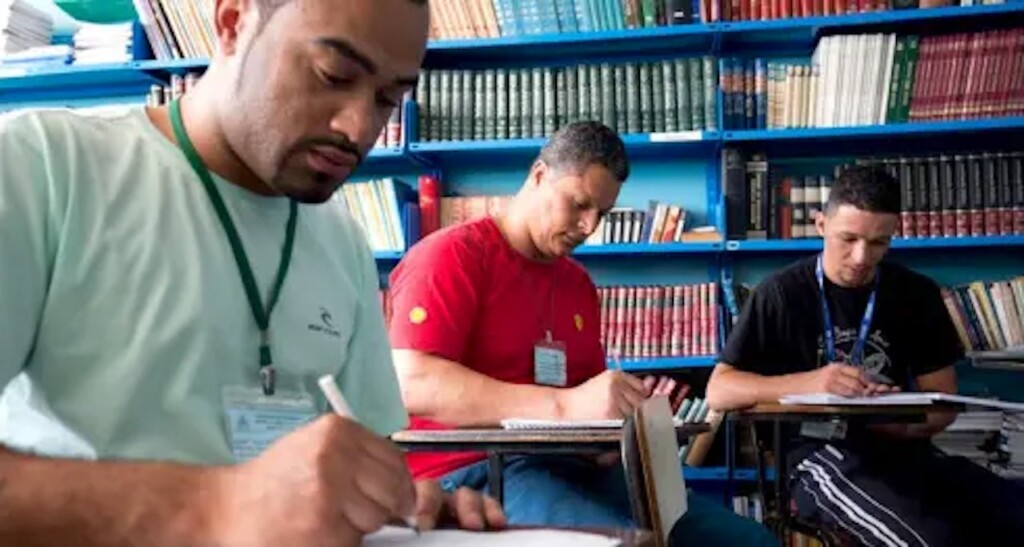
Brazilian inmates reading and writing in prison library / APAC Credit: FBAC Brazil
Brazilian inmates reading and writing in prison library / APAC Credit: FBAC Brazil
For 13 years, the Brazilian government has offered its incarcerated citizens a simple deal: read a book, serve less time.
This “Remission for Reading” program is now serving as a template to other nations, and prison populations are enjoying similar deals in countries such as Kazakhstan and Uzbekistan.
With a recidivism rate of more than 80% and the 15th highest imprisonment rate on the planet, the Brazilian criminal justice system was for decades failing its 1984 mandate which states that prisoners must have access to programs that will help prepare them to reenter society.
Remission for Reading works by offering all Brazilian prisoners regardless of literacy skill or mental faculties access to the prison library, which includes books in Braille and audiobooks for those with poor eyesight.
Once a book is checked out, the inmate has 21 to 30 days depending on the page count to finish it, and then 10 days to complete a written book report to demonstrate their knowledge of the text. Assistance is offered to those who speak different languages or who are intellectually impaired.
For each report, the prisoner’s sentence is commuted by 4 days. An inmate can submit up to 12 reviews per year, which if maxed out equates to 48 days of commuted sentence.
“We hope to create a new perspective on life for them,” Ajda Ultchak, a program teacher, told UNESCO. “This is about acquiring knowledge and culture and being able to join another universe.”
Carambaia is a Brazilian publisher focused on filling out prison libraries. The prisoners are allowed to review books, aiding in Carambaia’s publicity. According to a study conducted by the Brazilian Institute of Public Opinion and Statistics, Brazilian prisoners read nine times more than the national average of five books per year.
“Carambaia is a Brazilian publisher focused on those who are passionate about reading, and we find that no one reads more than the prisoners,” a press statement read. “By giving voice to them and using the texts they produced, we show society that they are thinking, critical beings with their own opinions, which must be respected.”
In 2021, the correctional program “Reading Without Borders” was instituted in prisons in the Karaganda region of Kazakhstan. 40 fiction works of classic Russian and Kazakh literature from the 19th and 20th centuries were selected for the pilot program to great success
Its slightly more religious southern neighbor Uzbekistan has also formulated a redemptive reading protocol with works curated by the “Center for Spirituality and Enlightenment,” to ensure the content aligns with objectives for promoting growth in intellectual and moral capacity.
Even Russian State Duma officials are lobbying for redemptive reading in Russian prisons, with a focus on Russian literary classics such as Crime and Punishment or Resurrection by Tolstoy.
Three of these four countries heavily censor the internet, so any concerns that some of these programs may involve indoctrination are probably well-founded: although there’s precious little anyone can do more to further their intellectual and moral capacity than reading Crime and Punishment.
Great works of literature are meta-narratives synthesizing hundreds of similar narratives from the human experience—they offer more insight into our species’ plights and fancies than any government-prepared material a prisoner could hope to acquire.
“Books are the quietest and most constant of friends; they are the most accessible and wisest of counselors, and the most patient of teachers,” – Charles W. Eliot
WATCH a video from Carambaia about the Brazilian program…
SHARE This Redemptive Reading Program With Your Friends On Social Media…
Quote of the Day: “Love is the great miracle cure. Loving ourselves works miracles in our lives.” – Louise Hay
Photo by: Tabitha Turner for Unsplash+ (cropped)
With a new inspirational quote every day, atop the perfect photo—collected and archived on our Quote of the Day page—why not bookmark GNN.org for a daily uplift?
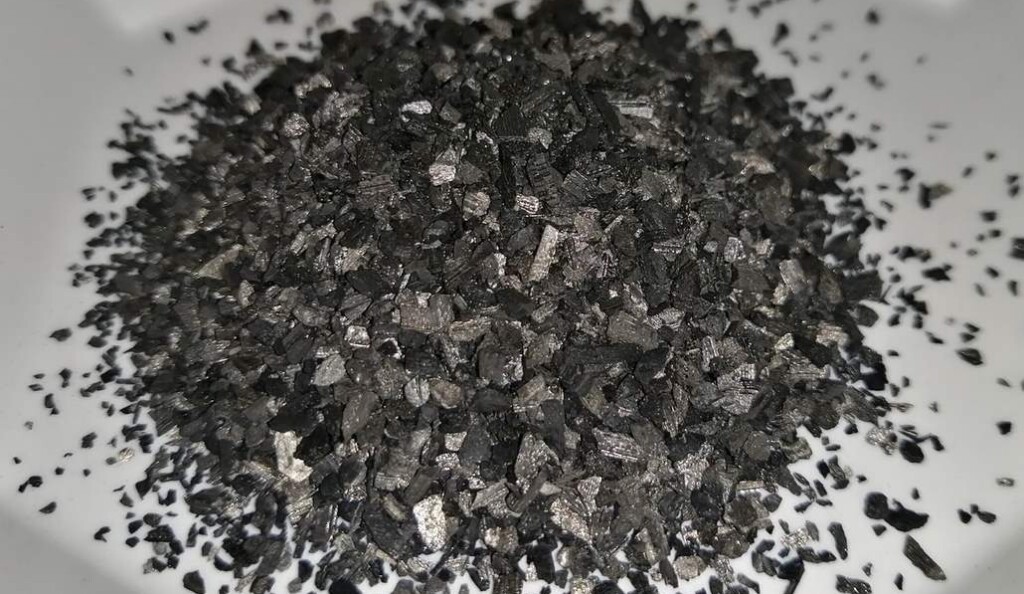
Biochar is a form of charcoal made by burning without oxygen - credit Canadian Light Source, via Flickr CC BY-SA 2.0.
Biochar is a form of charcoal made by burning without oxygen – credit Canadian Light Source, via Flickr CC BY-SA 2.0.
Researchers from the University of Waterloo have discovered that a special form of charcoal is highly effective at absorbing chromium and transforming it from a toxic industrial waste form into the form seen in nutritional supplements.
Chromium is a heavy metal that exists in two forms. One form, chromium(III), is a safe micronutrient that our body needs. The other, chromium(VI), is a dangerous carcinogen linked to ovarian, lung, and liver cancer, and reproductive problems. The dangerous form is usually created during industrial processes such as leather tanning, stainless steel production, and mining, but it can also occur naturally in the presence of manganese minerals.
Biochar, a form of charcoal produced by heating agricultural waste without oxygen, is being studied as a potential tool for cleaning up chromium pollution at industrial sites, using the natural filtering ability of organic carbon.
Filip Budimir, a PhD candidate in earth and environmental sciences at the University of Waterloo, in Canada, wanted to know what happens when water contaminated with chromium(VI) is mixed with an oak-based biochar.
The first thing Budimir noticed was that the biochar acted like activated charcoal in a water filter, soaking up the chromium and preventing it from leaching into the soil.
Using the cutting-edge research facility known as Canadian Light Source at the University of Saskatchewan, Budimir then probed the biochar to see where the chromium was being deposited on the grains, and which version of the metal was there.
He found that, while the solution initially contained only Cr(VI), after sitting for 120 hours (5 days), 85% had become Cr(III). So not only was the biochar absorbing the toxic chromium, it was also converting it to its safer form.
“We were happy to see that the majority of what we were finding on the biochar grains was chromium-3 and not chromium-6,” says Budimir.
The researcher also found that the chromium isotopes changed (or fractionated) during the removal of Cr(VI) from the water; the lighter chromium isotopes were removed faster and converted from Cr(VI) to Cr(III) more readily than the heavier isotopes. This could potentially be used as a tool to monitor groundwater remediation efforts using biochar, he says.
“Things are happening underground, but we’re not sure what,” says Budimir. “Testing the isotopes can give us an idea of what is happening and if the process is working.”
His research is published in the journal Chemosphere.
WATCH a video explainer from Canadian Light Source…
SHARE This Great Discovery In Treating Polluted Soils And Water…
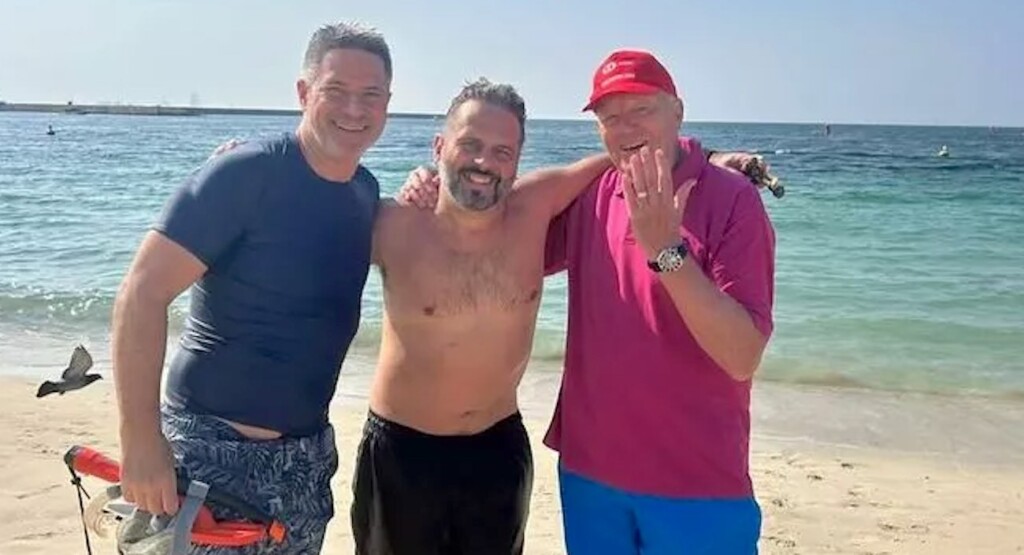
Chris Brightmore (right) with son-in-law and helpful diver in Dubai
Chris Brightmore (right) with son-in-law and helpful diver in Dubai
From England comes a story via Dubai of extraordinary human kindness shown to a man who had lost his wedding ring.
Chris Brightmore was visiting family in the UAE in the week before Christmas when a ring that had not left his finger in 51 years slipped off into the Persian Gulf near Jumeira.
Diving down about three feet to the sand, he frantically looked for the ring but could not find it. As he emerged, he faced the prospect of telling his wife the unhappy news as she lay on the beach ahead of him.
Expecting sorrow, his wife Kathy was “kindness personified” and jogged down into the waves to help him search, but with neither masks nor snorkels, they shortly gave up.
Brightmore’s son-in-law Philip suggested he publicize his plight on a Facebook page called “British Dads Dubai” to see if anyone was able to help.
“We did, and the response was overwhelming,” Brightmore, from Grimsby, told local news. “Among the dozens of kindly responses, one man offered to loan us his underwater metal detector and another said he had his own jewelry shop and that he would make me a replacement as close to the original as possible and, because of the intensely sentimental value, he would give it to me for free.”
Two days later, Chris and Philip returned to the same beach armed with the metal detector and snorkeling gear.
“We spent two hours diving to the sea bed but the water was so buoyant that it was impossible to stay down long enough to search,” Brightmore said.
One might think that he had exhausted the supply of Good Samaritans among the British visitors and expats in Dubai, but they’d be wrong.
Another couple swam up and asked if Chris was “the gentleman that has lost his wedding ring.”
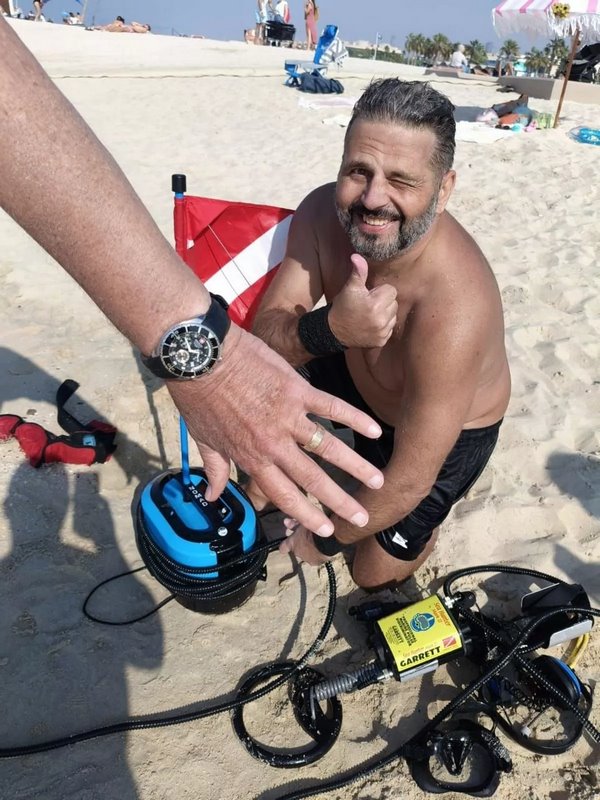
UK diver Adam Whitehead who helped find the ring – credit Chris Brightmore
“The man said, ‘well for someone who has been married that long and has never had the ring off his finger until now, it would be my honor to help you find it, if you would allow me,’” Brightmore told Grimsby Live.
“It turned out that he was a former professional diver who liked to dive in Dubai as a hobby at weekends.”
Even with the diving equipment, they had no luck and were about to concede defeat for good when the diver, Adam Whitehead, went down one more time with the detector and came up shouting “Eureka!” He had found it 10 feet down in about 3 inches of sand.
Brightmore insists that the ring will never leave his sight again and that precautions will be taken from now on whenever he plans on getting wet.
Sharing the whole saga on the British Dads page, Brightmore reports that it has been inundated with people labeling it the “Miracle in the Gulf” and saying how it restored their faith in humanity.
SHARE The Unbelievably Considerate Efforts Made By STrangers To Help This Man…
Scientists in China experimenting with rice cultivars have been able to crossbreed a non-GMO variety that produces 70% less methane, a potent greenhouse gas that is emitted in large amounts through rice cultivation.
The team is now seeking to demonstrate the importance of this new rice to the Chinese government in the hopes that it can be offered to farmers nationwide, as it also yields more rice per acre than most other cultivars.
Though composting and livestock are the two most-blamed sources of methane emissions among economic activities, rice farming generates 12% of global methane emissions. Methane’s contribution to the greenhouse effect is much more potent than carbon dioxide. However, with a half-life of less than a decade, its effects on climate change aren’t well understood.
Some climatologists say that methane’s potency and fast decay mean it should be a key target to prevent the worst effects of 2°C of average yearly warming, while others have argued that because CO2 lasts hundreds of years in the atmosphere, it’s far more important to address it, rather than methane, because every particle we release today will be something we have to deal with for hundreds of years to come.
Whatever the case may be, a team of agronomists from universities in Hunan and Zhejiang provinces in China, and the Uppsala BioCenter at the Swedish University of Agricultural Sciences wanted to see if it were possible to breed a rice cultivar with high yields and low methane emissions.
The team first found a rice cultivar that had low methane emissions and compared it to another one that had normal emissions to identify what the difference was between the two.
In the team’s study published in Cell Molecular Plant, they identified that the rice’s root components called exudates produce a common acid ester called fumarate. This is fed on by archaea in the surrounding soil, which produce methane as a byproduct.
They further confirmed the roll of fumarate by adding oxantel, a chemical that inhibits the enzymatic breakdown of fumarate, into the soil of potted high-methane cultivars of rice in their lab and saw that the methane production dropped precipitously.
“It was almost like having a riddle,” says Anna Schnürer, a microbiologist at the Uppsala BioCenter. “We noticed that the soil itself contained something that reduced methane emissions, so we started thinking that there must be an inhibitor of some kind that is also causing the difference between the varieties.”
But with fumarate production equal between the two, the researchers needed to look for another answer as to why some cultivars released less methane. The answer was ethanol produced by rice and exuded into the soil.
The scientists then sought to answer a simple question: could you crossbreed high ethanol (and therefore low methane) producing rice with a high-yield breed all without using any GMOs to create more rice for fewer emissions?
Taking a normal high-yield rice varietal and breeding it with the Heijing cultivar, which was high in ethanol production, they achieved their goal with substantial success. A two-year field trial in China demonstrated more than 60% fewer methane emissions while yielding 8.96 tons/hectare on average, compared to the 2024 global average of 4.71 tons/hectare.
“This study shows that you can have low methane and still have a rice with high yields,” Anna Schnürer told Sci-tech Daily. “And you can do it using traditional breeding methods, without GMO, if you know what you’re looking for.”
SHARE This Much-Needed Invention In The Fights Against Hunger And Climate Change…
The 280-ft-long pedestrian bridge will feature two 40-ft-high arches on each side - courtesy of Depena Studio/City of Charlotte
The 280-ft-long pedestrian bridge will feature two 40-ft-high arches on each side – courtesy of Depena Studio/City of Charlotte
North Carolina cyclists are rejoicing at the news that plans for a pedestrian bridge over I-277 have finally begun to materialize after 2 decades of procrastination.
For almost 20 years, residents of various parts of Charlotte, NC, have been able to access the city’s Uptown core with a unique urban infrastructural feature called the Rail Trail.
The 3.5-mile cycling and pedestrian artery runs along the city’s Blue Line metro, and connects the southwestern neighborhoods of Sedgefield, Southside Park, Brookhill, Dilworth, Wilmore, and South End to Uptown.
Per the project’s website, it is the best place to find quaint cafes, happening bars, galleries, concerts, and great food in the city, all enjoyed without the pressure of traffic.
However, the line abruptly ended at the LINX Blue Line bridge over Interstate 277. In 2018, 500,000 people, an average of 2,000 each day, used Charlotte’s Rail Trail, but for cyclists on the northeastern side of the Interstate, the charming thoroughfare must have seemed a world away.
In its most certain meeting, the Charlotte City Council approved a $16.3-million bid from Blythe Construction Inc. to build a new pedestrian bridge to open the Rail Trial to the northern suburbs.
Funded by a mixture of state, local, DoT, and private contributions, the bridge is set for a second-quarter 2028 completion, according to Engineering News Record.
The Charlotte pedestrian bridge – credit Depena Studios
Renderings show a gentle bend in the 280-foot-long deck that will feature a 40-foot-wide concrete bike and pedestrian path. Slinky, snaking double arches strung with cables will aid in the suspension of the bridge, rising 40 feet at their highest point.
Additionally, nocturnal renderings of the plans show a lattice of multi-colored light fixtures strung between the arches to give a touch of the Tokyo to Charlotte’s Rail Trail.
SHARE This Great Upcoming Infrastructure Project For Our Countrymen In Charlotte…
Quote of the Day: “Defeat may serve as well as victory to shake the soul and let the glory out.” – Edwin Markham
Photo by: Meiying Ng
With a new inspirational quote every day, atop the perfect photo—collected and archived on our Quote of the Day page—why not bookmark GNN.org for a daily uplift?
An Islamic tent depicted on 13th-century frescoes in Ferrara, Italy, in church of S. Antonio in Polesine – CREDIT: Cambridge historian Dr. Federica Gigante
A 13th-century fresco rediscovered in Ferrara, Italy, provides unique evidence of medieval churches using Islamic tents to conceal their high altars.
The 700-year-old fresco is thought to be the only surviving image of its kind, offering precious evidence of a little-known Christian practice.
An Islamic tent depicted on 13th-century frescoes in Ferrara, Italy’s church of S. Antonio – CREDIT: Cambridge historian Dr. Federica Gigante
The partially visible fresco, identified by Cambridge historian Dr. Federica Gigante, almost certainly depicts a real tent, now lost, which the artist may have seen in the same church.
The brightly colored original tent, covered in jewels, could have been a diplomatic gift from a Muslim leader or a trophy seized from the battlefield.
Gigante’s research, published in The Burlington Magazine, also suggests that a high-profile figure such as Pope Innocent IV—who gifted several precious textiles to the Benedictine convent church of S. Antonio in Polesine, Ferrara, where the fresco was painted—may have given such a tent.
“At first, it seemed unbelievable and just too exciting that this could be an Islamic tent,” said Dr. Gigante.
“I quickly dismissed the idea and only went back to it years later with more experience and a braver attitude to research. We probably won’t find another such surviving image. I haven’t stopped looking but my guess is that it is fairly unique.”
The fresco provides crucial evidence of a medieval church using Islamic tents in key Christian practices, including mass, the study suggests.
“Islamic textiles were associated with the Holy Land from where pilgrims and crusaders brought back the most precious such Islamic textiles,” Gigante said.
“They thought there existed artistic continuity from the time of Christ so their use in a Christian context was more than justified. Christians in medieval Europe admired Islamic art without fully realizing it.”
While it is well known that Islamic textiles were present in late medieval European churches, surviving fragments are usually found wrapped around relics or in the burials of important people.
Depictions of Islamic textiles survive, in traces, on some church walls in Italy as well as in Italian paintings of the late medieval period. But images of Islamic tents from the Western Islamic world, such as Spain, are extremely rare and this might be the only detailed, full-size depiction to be identified.
The fresco was painted between the late 13th and early 14th centuries to represent a canopy placed over the high altar. The artist transformed the apse into a tent comprising a blue and golden drapery wrapped around the three walls and topped by a double-tier bejeweled conical canopy of the type found throughout the Islamic world.
“The artist put a lot of effort into making the textile appear life-like,” Gigante said.
The background was a blue sky covered in stars and birds, giving the impression of a tent erected out in the open.
In the early 15th century, the fresco was partly painted over with scenes from the lives of the Virgin Mary and Jesus Christ. This later fresco has captured the attention of art historians who have overlooked the sections of older fresco.
Gigante identified the depiction of Islamic textiles when she visited the church ten years ago but it took further research to prove that the fresco represents an Islamic tent.
Gigante argues that the fresco depicts an Islamic tent that actually existed and that at some point in the 13th century, may even have been physically present in the convent church, providing a direct reference point for the artist.
It is already known that medieval churches used precious textile hangings to conceal the altar from view either permanently, during Mass, or for specific liturgical periods. And when studying the fresco, Gigante noticed that it depicts the corner of a veil, painted as if drawn in front of the altar. Gigante, therefore, believes that the real tent was adapted to serve as a ‘tetravela’, altar-curtains.
“If the real tent was only erected in the church on certain occasions, the fresco could have served as a visual reminder of its splendor when it was not in place,” Gigante said. “The interplay between painted and actual textiles can be found throughout Europe and the Islamic world in the late medieval period.”
Gigante’s study notes that the walls of the apse are studded with nails and brackets and that they could have served as structural supports for a hanging textile.
Gigante points to the fresco’s ‘extraordinarily precise details’ as further evidence that it depicts a real tent. The fabric shown in the fresco features blue eight-pointed star motifs inscribed in roundels, the center of which was originally picked out in gold leaf, exactly like the golden fabrics used for such precious Islamic tents.
A band with pseudo-Arabic inscriptions runs along the edge of both the top and bottom border. The textile also features white contours to emphasise contrasting colors reflecting a trend in 13th-century Andalusi silk design.
The structure, design, and color scheme of the tent closely resemble the few surviving depictions of Andalusi tents, including in the 13th-century manuscript, the Cantigas de Santa Maria. They also match one of the few potential surviving Andalusi tent fragments, the ‘Fermo chasuble,’ which is said to have belonged to St Thomas Becket, Archbishop of Canterbury.
Gigante also compares the jewels depicted in the fresco with a rare surviving jeweled textile made by Arab craftsmen, the mantle of the Norman King Roger II of Sicily (1095–1154), which was embroidered with gold and applied with pearls, gemstones, and cloisonné enamel.
In the 13th century, it was common for banners and other spoils of war to be displayed around church altars in Europe.
“Tents, especially Islamic royal tents were among the most prized gifts in diplomatic exchanges, the most prominent royal insignia on campsites, and the most sought-after spoils on battlefields,” Gigante said.
“Tents made their way into Europe as booty. During anti-Muslim expeditions, it was common to pay mercenaries in textiles and a tent was the ultimate prize. The fresco matches descriptions of royal Islamic tents that were seized during the wars of Christian expansion into al-Andalus in the 13th century.”
From the 9th century, Popes often donated Tetravela (altar-curtains) to churches and papal records reveal that by 1255, Pope Innocent IV had sent ‘draperies of the finest silk and gold fabrics’ to the convent of S. Antonio in Polesine.
“We can’t be certain but it is possible that a person of high profile such as Pope Innocent IV gifted the tent,” Gigante says.
An Andalusi tent taken from the campsite of the Almohad caliph Muhammad al-Nāsir was sent to Pope Innocent III after 1212 meaning that there was an Islamic tent in St Peter’s Basilica at some point prior to the painting of the fresco.
Gigante suggests that the tent could also have been part of a diplomatic gift made to the powerful Este family which brokered alliances between the Guelfs and Ghibellins, factions supporting the Pope and the Holy Roman Emperor respectively. The convent was founded in 1249 by Beatrice II d’Este.
“Many people don’t realize how extraordinarily advanced and admired Islamic culture was in the medieval period,” Gigante said.
Last year Dr. Gigante identified the Verona Astrolabe, an eleventh-century Islamic astrolabe bearing both Arabic and Hebrew inscriptions.
SHARE This Fascinating Find And History Lesson With Your Friends…
Reprinted under CC 4.0. License from Cambridge University. Originally written by Tom Almeroth-Williams.
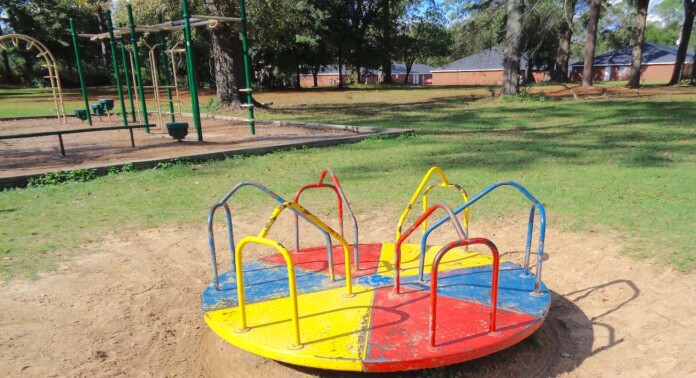
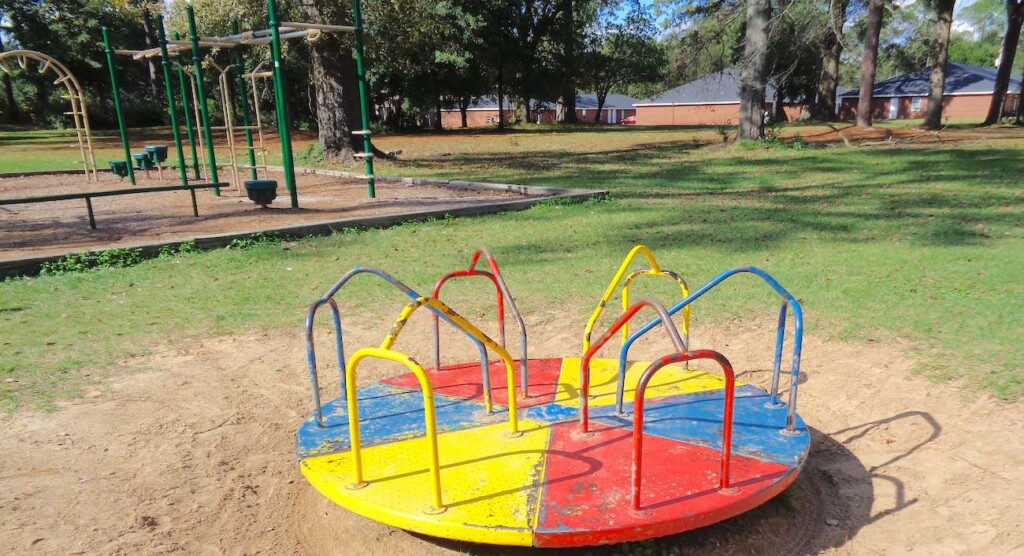
Playground spinner and monkey bars by Michael Rivera, CC BY-SA 4.0 wikimedia
Playground spinner and monkey bars by Michael Rivera, CC BY-SA 4.0 Wikimedia
Parts of Dutch society are campaigning to bring risky playgrounds back into their cities and towns as concerns about too much time spent indoors, helicopter parenting, and childhood diabetes risk grow.
Some are merely advocating playgrounds with potentially dangerous toys, such as a merry-go-round, but others are seeking places for their children to start fires, build with hammers, and play flight with sticks.
No one wants their children to be injured of course, but the policy proposal from the D66 liberal democrats, which currently holds 7 seats in parliament, acknowledges that without spaces to explore and challenge themselves in, kids risk losing the opportunity to develop crucial skills.
“Rufty-tufty playing means that children might get a bump or a cut,” according to the policy—but it’s an acceptable risk the authors determine.
“The inspiration, and it really is a huge problem, is that children are hardly moving,” said Rob Hofland, head of the local D66 to the Guardian. “All kinds of problems stem from just sitting behind a screen.”
According to research from the Diabetes Fonds, a Dutch group trying to educate a reversal in the childhood diabetes rate in the Netherlands, which is climbing, children are on average spending twice as much time indoors today than before the pandemic lockdowns, while motor skills have declined so much that many children can no longer catch a ball.
“More and more kids are losing the ability to make social contact, to learn to deal with risks and also to be happy when the situation gets a little bit more stressful,” said Mascha van Werven from another advocacy group Jantje Beton. “If they learn to still play in those [riskier] areas, they are starting at a very young age to deal with risks, to maybe ask someone for help…”
In Amsterdam, some parents and organizations are taking this principle to the extreme: in the form of Woeste Westen, or “Wild West.” In this radical play space, kids can go fishing, climb trees, build huts, start and cook with open fires, and play with real tools like hammers and knives—all in the name of helping them develop the mental-physical coordination that an adult relies upon to navigate potentially dangerous situations.
Woeste Westen highlights how every time a parent says “watch out!” or “don’t do that!” the child loses one more instance where they may have better prepared themselves for adulthood.
Of course there will be scrapes, bruises, a scar or two, but who said a painless life is preferable?
SHARE This Great Parenting Trends Of Reclaiming Risky Play For Holland…
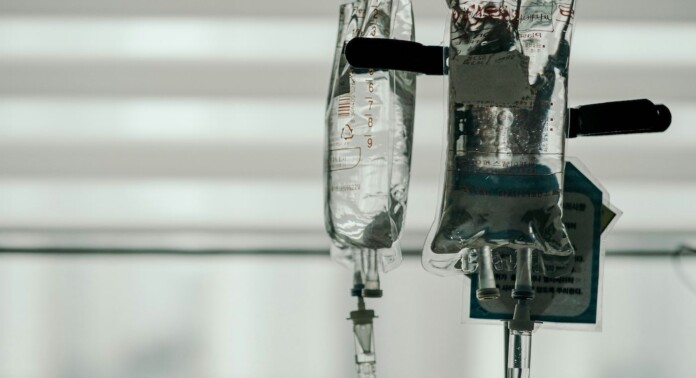
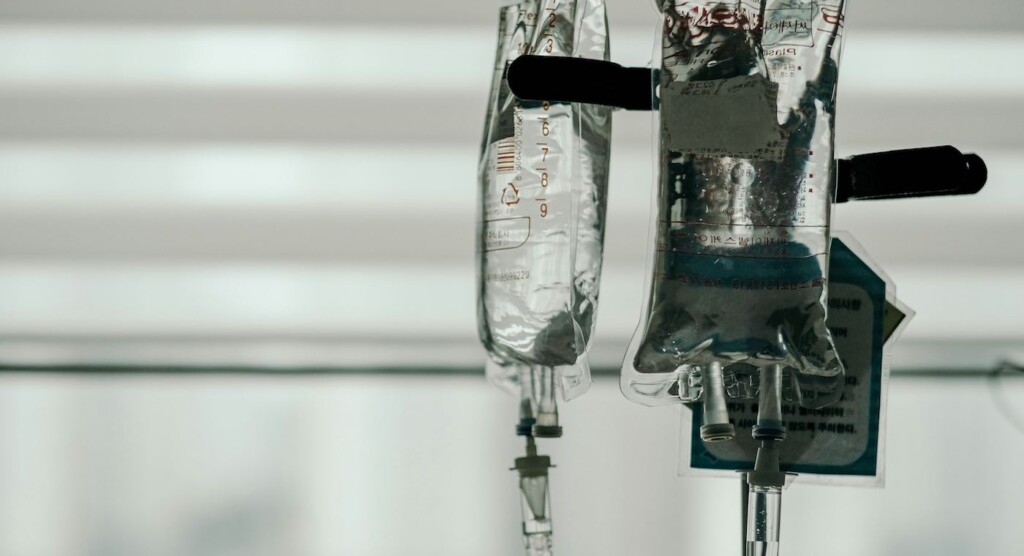
A clever veterinarian is helping address a shortage of IV fluids for animal care by accepting donations of leftover fluids from blood banks.
Though hospital regulations in Australia and likely in most countries dictate that leftover intravenous fluid, also known as saline, should be discarded for sanitary standards, its use for animals had never been explored.
ABC News AU reports that Dr. Felicity Cole donates blood often, and sees how the saline used to rehydrate and replenish blood cells in donors is often not fully used by the time the procedure is finished.
“I knew the product [saline] was being used and a large amount of it was possibly spare or being discarded,” she said.
Her clinic in Newcastle has experienced shortages of saline in treating animals. It’s often used to help pets maintain blood volume while under anesthesia or during trauma operations. In July last year, Dr. Cole wrote to the team at Australia Red Cross Lifeblood to ask if it were possible to salvage that leftover saline for her clinic.
“It was such a great idea,” Lifeblood spokesperson Jemma Falkenmire said. “But there was certainly some work to do, from our end, to get approval to donate that saline.”
Using a method called heat-sealing, bags of saline can be conserved for future use with animals, and Lifeblood has now pioneered best practices for the procedure in case any other facilities want to do the same with leftover saline.
The first box of saline arrived in August of last year, with the average bag providing a cat with 10-20 hours of fluid depending on the procedure and the cat’s condition.
Best of all, Lifeblood has made a real effort out of Dr. Cole’s simple request, and has now donated 5,000 bags of heat-sealed IV fluids to around 100 vet clinics across the nation of Australia.
A veterinarian at the Australia Zoo told ABC that the saline allowed them in some cases to continue delivering life-saving treatment, including for koalas, an endangered species that “rely on these lifesaving fluids.”
SHARE This Veterinarian’s Brilliant Idea And The Revolution In Pet Care It Started…
This is Ruth Slenczynska, the 100-year-old, last living pupil of Sergei Rachmaninov who still performs wearing the Fabergé egg necklace the legendary Russian musician gifted her.
Despite her age, Ruth continues to play—recently at the Chopin International Festival and Friends at the Polish embassy in New York City in 2021. During COVID-19 lockdowns, she recorded videos to celebrate Beethoven’s 250th Birthday.
Then, amazingly, she recorded and released a new album at 97 years of age.
“Whoever heard of a pianist my age making another album?” she said at the time of its release. “Music is meant to bring joy. If mine still brings joy to people, then it is doing what it is supposed to do.”
My Life in Musicis an ebony and ivory journey through a distinguished career that included studying under Rachmaninov, but features primarily music from Chopin, an artist who had an extraordinary impact on her thanks to her father, Josef Slenczynski, a skilled violinist.
He would make her perform all 25 Etudes, the solo studies of Chopin, before breakfast. The album also includes works from Grieg, Debussy, and Bach.
“If you don’t know something thoroughly, you can’t do anything with it. This is something I got from Mr. Rachmaninov,” she said in a video released by Decca Classics, who signed Ruth at 97 for My Life in Music.
“I remember I played for him something and he said ‘you don’t know that well enough to play it at the tempo you’re taking it,'” she recalled. “And I said, ‘well I’ve been playing it for three weeks already.'”
“And he said, ‘three weeks, that’s nothing! After three years, working with it slowly, fast, until it is yours, then you can present it; but that takes time.'”
Ruth even once filled in for “Mr. Rachmaniov,” according to her, after he had to withdraw from a performance date due to an injury.
As if these weren’t enough for one lifetime, Ruth has performed for presidents Kennedy Jr., Reagan, and Carter—and alongside Truman and Empress Michiko of Japan.
Ruth Slenczynska celebrated her centennial on January 15th.
WATCH and LISTEN to Ruth Do her stuff…
SHARE This Timeless Woman’s Incredible Gift With Your Friends…
Quote of the Day: “We are not permitted to choose the frame of our destiny. But what we put into it is ours.” – Dag Hammarskjöld
Photo by: Dariusz Sankowski
With a new inspirational quote every day, atop the perfect photo—collected and archived on our Quote of the Day page—why not bookmark GNN.org for a daily uplift?
Dominic and Janine Yacovelli in kitchen rave via Phillip’s video / SWNS
Dominic and Janine Yacovelli in kitchen rave via Phillip’s video / SWNS
A 23-year-old DJ taught his parents the ropes of using his music decks, and now they’re hosting spontaneous raves in their kitchen.
The full-time DJ, Phillip Yacovelli, saw that his parents had some spare time since they’d recently retired—and says Dominic and Janine took to it straight away.
Now, the family in Atlantic City, New Jersey, turn up the volume on the beats in their kitchen at any time of day.
Phillip says the idea came from nowhere, but was a triumph (as you can see by the video and photos below).
“I graduated college and was still living at home with my parents. I was DJing all the time, and I suggested my parents hop on and play.
“They thought it was funny—and said ‘why not?’. Now they play once a week, maybe more.
“They’re not that good, but when they have free time they like to play around. I give them tips when they’re playing, telling them what the different buttons do.
Dominic Yacovelli – SWNS
“They definitely bring a lot of energy when they’re on the board.”
Phillip Yacovelli / SWNS
“They’ve never produced their own music but if I could get them into that it would be pretty fun…Maybe one day!”
WATCH the videos below from SWNS and the New York Post on Facebook…
INSPIRE THE RETIRED By Sharing The Fun on Social Media…
Rhinoderma darwinii –By Jalmonacida, CC BY-SA 4.0 wikipedia
Rhinoderma darwinii – By Jalmonacida CC BY-SA 4.0 Wikipedia
The birth of 33 frogs at the London Zoo has been hailed as a “landmark moment” in the ongoing battle to save an endangered species that was first described by Charles Darwin during his epic voyage on HMS Beagle in the early 1800s.
A deadly fungus was threatening to wipe out the Southern Darwin frog in its native Chile following the introduction of the chytrid fungus to their native habitat.
The tiny frogs (Rhinoderma darwinii), which are particularly susceptible to the fungus, needed a refuge until conservationists figured out how to make their forest home safe once again.
So, conservationists embarked on an urgent 7000-mile rescue mission last October to a remote island off the coast of Chile that retrieved healthy frogs for safeguarding at the London Zoo.
The expedition was documented by wildlife filmmaker Paul Glynn, and his new film, A Leap of Hope, is due to premiere tomorrow, Monday, Feb 3, on YouTube. (Watch below…)
After 52 frogs were collected and declared chytrid-free, they travelled in specially designed, climate-controlled boxes on a six-hour boat ride, then a 15-hour drive to the capital Santiago, and a final flight to Heathrow airport and their new home in London.
The first births
“This is a landmark moment in our work to protect the Darwin’s frog from the devastating impact of chytrid fungus,” said Ben Tapley, Curator of Amphibians at London Zoo.
“The successful parent-rearing of these froglets is a powerful symbol of hope for the species, and highlights what can be achieved when conservationists work together.
“We knew we were embarking on something special. The clock was ticking, and we needed to act quickly if we were going to save these frogs—and capturing this work on film has really cemented just how vital our work is.”
Southern Darwin frog by Ong ranita CC BY-SA 4.0 / Wikipedia wikipedia.jpg
The catastrophic fungus
Southern Darwin’s frogs in the Parque Tantauco forests of southern Chile faced devastation in 2023, when surveys confirmed the arrival of the chytrid fungus.
That led to a “catastrophic” 90% decline in monitored populations within a year, due to amphibian chytridiomycosis – a disease which has now affected at least 500 amphibian species, making it the most devastating infectious disease recognized by science.
Andres Valenzuela-Sanchez of the Zoological Society of London (ZSL), an Institute of Zoology research fellow, explained, “By working with partners in Chile, we’re able to safeguard these frogs in their new home at London Zoo, ensuring that this unique species has a fighting chance of recovery.
“These frogs are not only vital for the future of their species but also help us better understand how we can combat chytrid fungus and safeguard other amphibians globally.”
The 33 froglets were carried and brooded by 11 of the male frogs rescued. This male brooding makes Darwin’s frog distinct from any other frog species—except for R. rufum, which may be extinct.
The frogs use a unique strategy to protect and rear their tiny tadpoles, carrying them inside their vocal sacs. After the females lay eggs, which develop into tadpoles, the male Darwin’s frog moves them into his vocal sac so they can mature in safety.
After traveling by boat, plane, and car to London, the fathers – each fully grown yet weighing less than two grams and measuring a little over one inch (3cm) – continued to carry the tiny tadpoles until they metamorphosed into the next generation of the extraordinary species.
With the rearing of 33 froglets and more soon to follow, London Zoo hopes that its population of Southern Darwin’s frogs will grow from strength to strength, eventually supporting reintroduction efforts in Chile. (Watch the ZSL film which premieres at 1:00pm (EST) on Monday…)
MULTIPLY THE GOOD By Leaping This News to Frog-Lovers On Social Media…
A life coach and former nurse Christina Russell has shared her top ten strategies for overcoming self-doubt, including adopting a “power pose,” which is proven to help boost confidence.
There are ups and downs in every personal-growth journey, says the Florida coach. But self-doubt is “a pervasive issue” for many.
Here are ten actionable strategies to help you prioritize yourself and identify your boundaries, dreams, and aspirations:
1. Create a ‘WINS’ Journal: Write down daily accomplishments, no matter how small. Sometimes simply acknowledging regular wins helps reinforce what you’re capable of. It shifts the focus to your strengths rather than your failures.
2. Rewire Your Inner Critic: Instead of succumbing to negative self-talk, treat yourself with the same respect you’d show a friend. Replace ‘I’m not good enough’ with ‘I’m still learning, and this is part of the process’.
You can even try “positive punishments” like doing 50 sit-ups whenever you backslide. This can help build consistency—and a good habit.
3. Visualize Your Future Self: Emphasize the power of imagining yourself as the person you aspire to become. Step into this mindset either right before bedtime or early in the morning. It can be an incredible confidence booster.
4. Adopt a Beginner’s Mindset: Give yourself permission to not have all the answers. Challenges are opportunities for growth, not failures.
5. Surround Yourself with Growth-Minded People: Positive energy is contagious. Be around people with goals who support one another.
6. Take Tiny Steps: Breaking down goals into small, manageable actions is a cornerstone of a positive philosophy. Momentum will build your confidence.
7. Practice a Power Pose: Try posing in confidence-boosting postures for two minutes before tackling a challenging task. It’s proven to reduce stress and increase self-assurance.
8. Learn to Celebrate Failure: View setbacks as feedback. List alternative solutions and view the problem as an objective outsider—instead of taking it so personally.
9. Ask for Feedback: Honest feedback from a friend or professional can help you identify blind spots—or strengths—that you may be overlooking.
10. Create a Personal Affirmation Ritual: Writing affirmations that resonate with your values and goals can help instill them into your consciousness. Say them aloud each morning—and tape them to your mirror—to set a positive tone for the day.
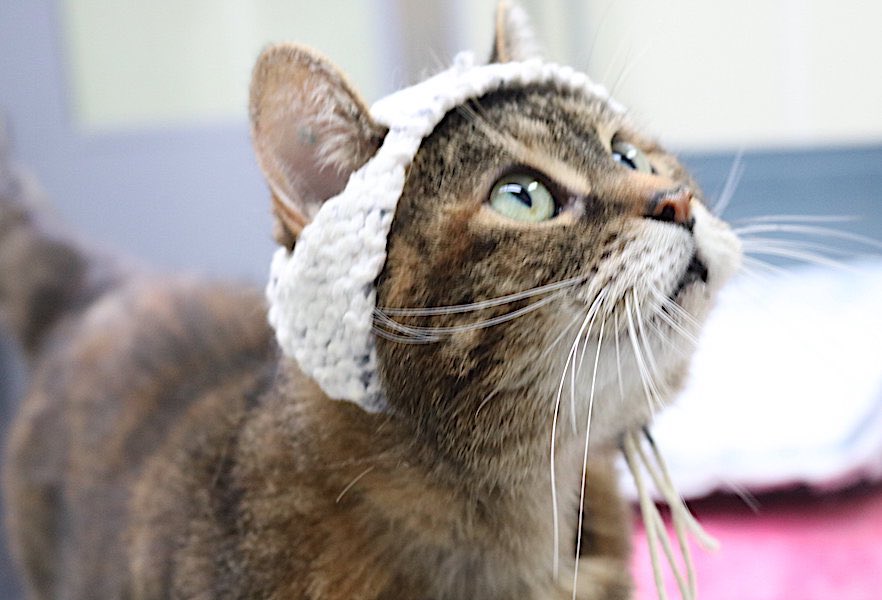
Cat's brain is scanned using electrodes under specially-knitted wool caps –Credit: Alienor Delsart of UdeM / SWNS
Cat’s brain is scanned using electrodes under specially-knitted wool caps –Credit: Alienor Delsart of UdeM / SWNS
Cats are wearing hats for science—as researchers use brain scans to understand pain in arthritic felines, and find a way to soothe it.
It’s a world first for veterinary scientists at the University of Montreal (UdeM): they found a way to scan the brains of cats while they’re still awake, using electrodes concealed under specially-knitted wool caps.
Chronic pain associated with osteoarthritis affects over 25 % of the adult feline population and this incidence increases with age.
Seeking to understand how cats experience the chronic pain, the researchers wanted to create a non-invasive method to study their brains.
In previous studies, the cat subjects would shake off and chew the wires of traditional electrodes. The answer was to incorporate the sensors into comfy crocheted beanies.
“We had the idea of the little knitted hat that would keep the electrodes in place,” said Aude Castel, Assistant Professor at UdeM Faculty of Veterinary Medicine in the Department of Clinical Sciences.
The team wanted to use sensory stimulation to try to reduce the aches, exposing the cats to soothing stimuli such as colored lights and comforting smells, as a way to ease their suffering.
Credit: Alienor Delsart / UdeM (via SWNS)
“With some treats and positive reinforcement, the cats tolerated the hat very well and allowed us to record their brain activity while awake and being exposed to different types of sensory stimuli: citrus smell, different light colors.
In all, they studied 11 adult cats with osteoarthritis, assessing their stress and pain using the electrodes that produced electroencephalograms (EEGs).
“The reasoning behind exposing them to different stimulations is that we wanted to see if, just like in people, we could modulate their brain activity and, by the same token their pain perception, with sensory stimulation.”
The study, published in the Journal of Neuroscience Methods, found that the hat method is feasible, and spectral analysis are efficient methods to characterize the response to a given sensory stimulation.
“This opens new avenues for investigating chronic pain mechanisms and developing novel therapeutic strategies,” the report concluded.
“We now plan to obtain NSERC funding [Natural Sciences and Engineering Research Council of Canada], in partnership with private companies, to enable us to establish a genuine EEG signature for chronic pain, and many other applications that will enable us to automate chronic pain detection in the future,” said Éric Troncy, who co-led the study.
PUT ON YOUR NEWS HAT By Sharing the Development For Cats On Social Media…
With a new inspirational quote every day, atop the perfect photo—collected and archived on our Quote of the Day page—why not bookmark GNN.org for a daily uplift?
A survey of 2,000 single Americans revealed that 56% of respondents agreed it’s important that their partners have the same career values that they do.
In terms of ambition, 44% would prefer someone whose career ambitions were the same as their own, while 34% are looking for someone who is even more ambitious.
Regarding salary, 39% of all respondents—which were equally divided between men and women—said they would prefer to be an equal “breadwinner” with their partners. Unsurprisingly, this was much more common for women, with 45% of females preferring salaries to be equal, compared to 33% of men.
Conducted by Talker Research on behalf of the dating app The League, the survey also looked at the most desirable careers for 2025.
29% of men and women agreed that those in the health care field make the best partners, while careers in education ranked as the second most attractive for the men surveyed (28%).
21% of women are interested in dating an entrepreneur, 19% were interested in an educator, while finance guys and artists were desirable for 18%.
Also ranking in the top most dateable jobs for both genders are lawyers (24%), scientists (16%), and careers in tech, like web or software developers (14%).
The poll also explored the ideal time to have “the career conversation” with potential partners. Nearly a quarter of respondents (22%) said that, ideally, they’ll have a conversation about goals and aspirations before going on a first date—but most will bring up the conversation by the end of their first date.
“Transparency is more attractive than ever,” said Rachel DeAlto, a dating expert at The League. “While there may be no perfect time to talk about careers and ambitions, bringing it up in conversation sooner than later in the dating process allows singles to determine if they share similar values and life goals from the start.”
Despite many respondents being eager to speak with potential partners about their career, that doesn’t mean single Americans are “all work and no play.” 40% of singles surveyed want their potential partners to have a passion for what they’re doing but also prioritize a work/life balance.
Gabriella Clare Marino
Additionally, over one in five respondents are looking for partners who have a desire to leave a positive impact on society or other people.
64% are willing to date someone in graduate school, further demonstrating the appeal of having drive and goals, no matter where your career is at the moment.
“When partners share similar aspirations and value the same things in life, they’re better equipped to support and understand each other. The key is to stay open to finding that alignment,” said DeAlto.
On the flip side, constant burn-out (32%), long overtime hours (29%) and switching jobs every year (25%) are some of the top career “red flags.” Interestingly, being an “influencer” was also a “red flag” for more than one in five respondents (22%).
WHAT CAREER VALUES ARE IMPORTANT IN A POTENTIAL NEW PARTNER?
Passion for what they’re doing — 40%
Prioritizing work/personal life balance — 34%
Understanding that there is always more to learn/ways to improve — 28%
Ability to work well with others and build relationships with colleagues — 25%
Desire to leave a positive impact on society or other people — 21%
Competitiveness or wanting to be successful — 19%
Desire to leave a positive impact on the environment — 15%
Desire to be a good manager or leader — 15%
Commitment to pushing the boundaries and paving new roads — 15%