











Indonesian authorities have paused, and perhaps ended, the “world’s largest deforestation project.”
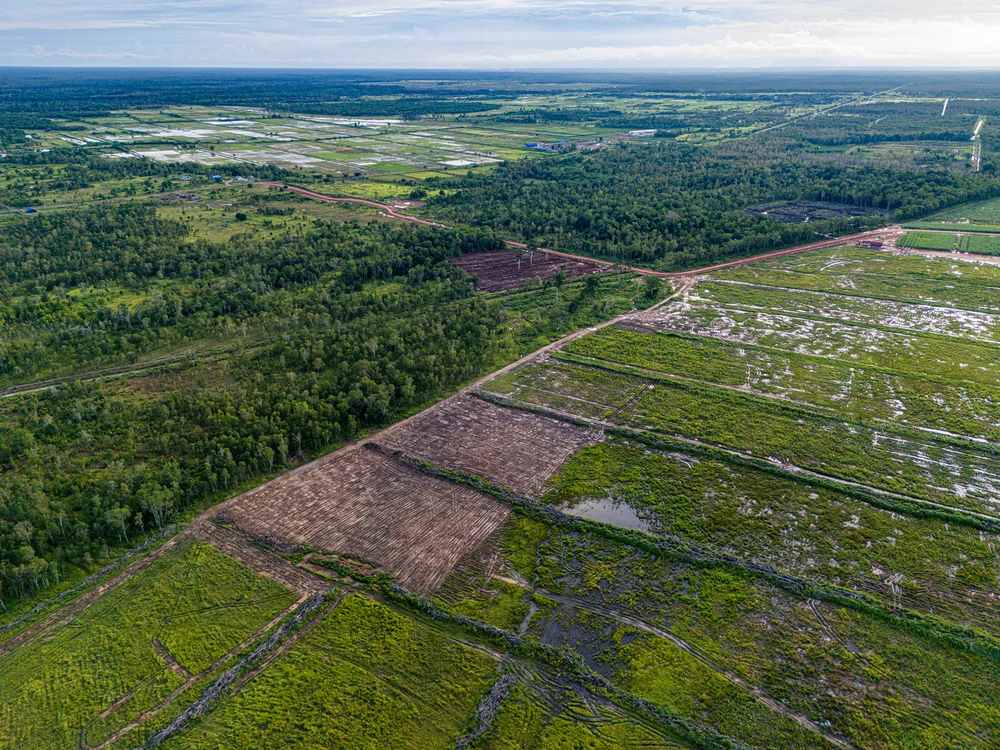
Having achieved self-sufficiency in rice cultivation some 3 years ahead of a government schedule, around 4 million acres of rainforest, swamps, and peatlands across large Indonesian islands will be spared from deforestation.
Though the ultimate destiny of these vast areas remains unclear, a decision was made between the agriculture and forestry ministries and the Indonesian National Economic Council that any further agriculture projects will take place on land that’s already been converted into productive use.
The Indonesian president’s younger brother Hashim Djojohadikusumo is also the special envoy for climate and energy, and he told a sustainability forum in the capital of Jakarta in early October that 4.4 million acres of forest areas which had previously been slated to become rice plantations would remain untouched.
An executive effort to make the nation self-sufficient in rice was expected to extend across those acres and at least to 2029, but the target has been achieved earlier than expected off the back of incentives, improvements in crop varieties, and government fertilizer subsidies.
Along the way, the effort was met with fierce resistance from international environmental groups, and local organizations of activists and indigenous groups.
The government, said Mr. Hashim on behalf of the Agriculture Ministry, “sees no further need to expand rice cultivation in so-called forest areas,” referring to targeted land on Kalimantan and in South Papua on the island of New Guinea.
Mari Elka Pangestu, deputy chair of the National Economic Council, told the forum that “moving forward, we will be using degraded land. We have over [28 million acres] of degraded land that can be used for this.”
Jakarta Post said that together, Hashim, Mari, and the ministers of agriculture and forestry, agreed that any future expansion of subsidized agriculture, either for food or bioethanol production, would take place on this degraded land.
INDO-NEWSIA: Rescued Orangutans Released Into Isolated Forest Are Now Raising Babies, Creating New Wild Population
Known in the Western World as the island of Borneo, it’s mostly governed by Indonesia, whose provinces of north, south, east, west, and central Kalimantan cover 73% of total landmass, including the vast majority of the most biodiverse and pristine parts of the legendary Borneo forest ecosystem, home to orangutans, proboscis monkeys, clouded leopards, and so many more endangered and fascinating species.
However, it is the rice and sugarcane estates originally planned by the government for South Papua, on the island of New Guinea, that were the most controversial. There, peatlands and swamp ecosystems that sequester substantially more carbon than rainforest were planned to be upended for productive purposes.
SAVE THE WETLANDS: Florida is Purchasing 20,000 Acres of Everglade Wetlands to Protect It From Oil Drilling
Since 2024, around 90,000 acres of these landscapes were converted to plantations in line with the rice growing program, according to satellite data from Mighty Earth, whose CEO Glenn Hurowitz said the Indonesian government had made “a globally significant decision for people, nature and climate”.
“Mighty Earth and allies will be closely monitoring implementation and supporting work with local communities in Papua to heal the damage that’s been done. We are hopeful about the potential of this decision to drive a continued shift to protecting and restoring nature and to sustainable agriculture,” he said in a statement.
SHARE This Merciful Halt To Deforestation In One Of The World’s Most Biodiverse Countries…