While a cup of joe from Cafe Joyeux is a normal experience in European cities, this radical and tremendous coffee chain just opened its doors in the Big Apple.
Located at 599 Lexington Avenue, East 52nd Street, the first American Cafe Joyeux employs crew members with intellectual and developmental disabilities, empowering them through meaningful training and employment.
With Autism Awareness Day having just passed, it’s the perfect time to go for a coffee there.
It’s a beautiful thing to see the average Joe helping out his neuro-divergent neighbors, but as humans are a communal species of social primates, few things can empower a person as much as the vote of confidence that they are worthy and capable of performing gainful, meaningful employment.
To that end, and whether it’s broad-spectrum autism or Down Syndrome, the staff at Cafe Joyeux are trained and expected to perform like any other employee, something which Rachael Barcelona told CBS News “changed her life.”
“I’ve been rejected so many times and told I was a burden because of my autism,” she said, describing the shock she had when someone offered her a job, “and I was going to get paid too!”
Founded by a French social entrepreneur, there are 20 Cafe Joyeux across the Old World, a number most Americans will agree would be joyeux to see here Stateside.
In the Madre de Dios region of southern Peru, small, artisanal gold mines and the miners that work them have become a source of inspiring environmental work.
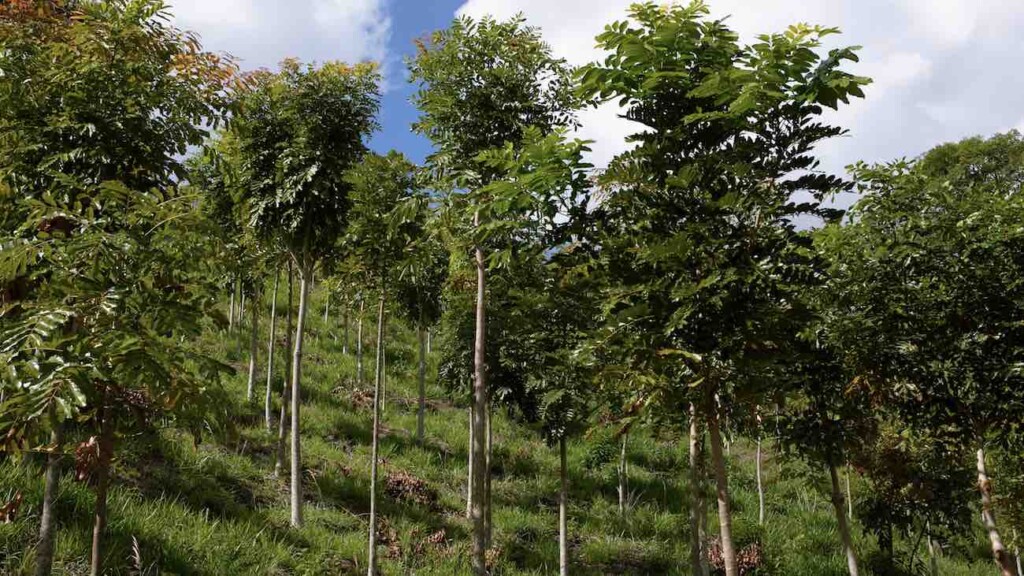
Once slashing and burning tens of thousands of acres of jungle in search of gold which they extracted with mercury, they’re now focused on restoring the land they excavated by planting a biodiverse rainforest—and swapping the toxic mercury for more sanitary methods of mining.
Behind the project is the environmental NGO Pure Earth which sought to achieve with a delicate touch what local and national governments failed to achieve with aggressive legislation and police raids.
Realizing that the miners, despite coming mostly from the Andes regions, took no pleasure in the clearing of pristine tropical rainforest, and that even after the price of gold skyrocketed following the 2008 Financial Crisis, they were operating on “a lot of stick but not much carrot,” Pure Earth gradually gained their trust enough to set up a pilot program.
“It feels good to see the forest grow back,” Pedro Ynfantes, a 66-year-old miner whose legal mining concession of 1,110 acres included a 10-acre patch of land for the pilot program, told NPR. “We don’t want to deforest. When we had the opportunity to let the forest grow back, we took it. It’s much better this way.”
There are dozens of understory and canopy species growing now and Ynfantes’ land, each tagged with scientific and local names in order to raise just a little bit the collective sense of knowledge and responsibility the miners have while operating in the mighty Amazon.
Bordering Brazil, Bolivia, and the other Peruvian parts of the Amazon Basin, Madre de Dios is almost entirely Amazonian rainforest, and contains a variety of tribal groups who live in large forest reserves, and, according to legend, a lost city of the Inca. More tangibly, it is a stronghold of biodiversity for the western reaches of the Amazon Basin and an emerging tourist destination.
It isn’t only for the sake of Western-style environmentalism that the miners are replanting on their concessions, but also for the sake of the health of the community. Madre de Dios, and Peru more generally, suffers from some of the highest rates of mercury poisoning in the world, causing developmental delays for children and other neurological problems, as well as significant damage to the lungs and kidneys, and immune system dysfunction.
Recently, Pure Earth helped four artisanal and small-scale gold mining communities in Madre de Dios achieve the internationally-recognized Fairmined Certification, which proves their mining efforts are minimally damaging to the environment and human health by pairing their reforestation efforts with a switch away from using mercury to extract gold.
Since 2014, 1,7 tons of certified gold have been sold to the international market, empowering more than 3,000 miners from certified mining organizations, according to Pure Earth. In return for their commitment to responsible mining practices, mining organizations have received more than 7 million dollars of Fairmined premium.
This substantial economic recognition not only validates their dedication but also serves as a compelling incentive for continued investments in technical enhancements that make mining gold a minimally invasive procedure.
WATCH a short video of one of the mining sites below…
SHARE This Inspiring Story Of Responsible Miners Changing Their Practices For The Sake Of Us All…
From the Czech Republic comes a fascinating archaeological find—a 1,000-year-old ice skate blade made of a horse’s shinbone.
Located during excavations of a cellar in the city of Přerov, it was designed to be tied with leather straps to a boot sole.
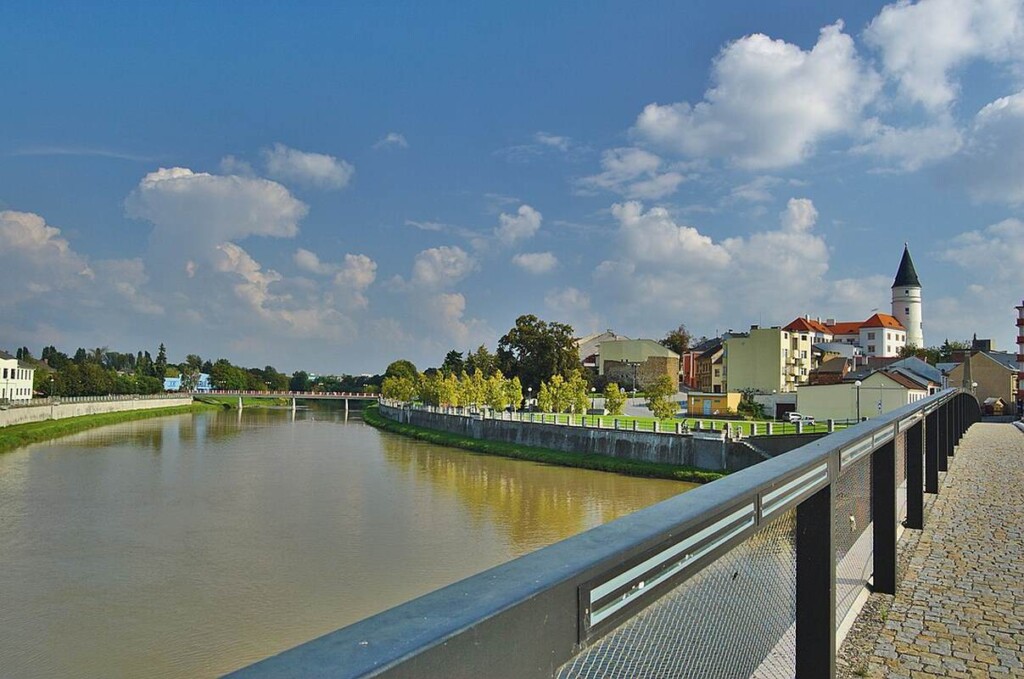
In the early Middle Ages, Castle Přerov was situated on a mound on the left bank of the River Bečva in Moravia, Czechia. It was a very important medieval stronghold at the crossroads of long-distance trade routes linking east and west, south and north.
To that commercial end, residents needed a way to move across the broad river in the wintertime, and would have carved skates like these out of animal bones.
Archaeologist Zdeněk Schenk, Ph.D., from the Comenius Museum in Přerov who found the skate, explained that they were typically made from metapodia or the radii bones of cattle and horses.
“The object has a specific shape. On one side, it is curved into a tip which has a hole drilled in it and there is another hole at the back,” Dr. Schenk told Radio Prague International. “They were used to thread a strap through, which was used to attach the skate to a shoe or to a wooden sled.”
“I was born in Přerov. I remember when I was a child, I enjoyed with my friends ice skating over the frozen Bečva River,” Schenk told GNN. “My mom and daddy and grandparents skated there before, so it’s a long tradition. But, what is surprising is that our ancestors skated over the frozen Bečva River 1,000 years ago.”
The Bečva River, with the tower of Castle Přerov seen in the background. CC 4.0. Jiří Komárek.
Schenk believes that they would have used wooden poles to shuffle themselves along inch by inch rather than actually skating as we imagine it today. The activity itself is older than the 1,000-year date of this skate.
The find is nearly identical to skates recovered in Northern Europe, “for example from Birka in Sweden a very famous archaeological site from the Viking Age,” Schenk said, “also from York in England or Dublin in Ireland.”
While for us the activity is purely recreational, a thousand years ago it was just an easier way to move across the landscape.
SHARE This Look At The Ancient Origins Of A Beloved Pastime…
Quote of the Day: “Of all possessions a friend is the most precious.” – Herodotus
Photo by: Joel Muniz
With a new inspirational quote every day, atop the perfect photo—collected and archived on our Quotes page—why not bookmark GNN.org for a daily uplift?
East Asia was part of the largest net gain in life expectancy of 8.3 years – credit, Joey Huang
Reductions in deaths from leading killers in the developing world such as as diarrhea, lower respiratory infections such as bronchitis and pneumonia, and stroke, have raised the global life expectancy by more than six years since 1990, a new study has revealed.
Improved healthcare and better disease prevention also helped people live longer, until government-mandated lockdowns and business closures disrupted the global supply chains and reversed this trend during the pandemic years.
Researchers from the Institute for Health Metrics and Evaluation (IHME) studied causes of death around the world over the last three decades and analyzed how global life expectancy changed during that period.
They found that overall, life expectancy is up by 6.2 years since 1990, with the most pronounced reduction in deaths recorded between 1990 and 2019 in Oceania, East Asia, and Eastern sub-Saharan Africa.
This was driven by a sharp drop in deaths from enteric diseases—including diarrhea and typhoid—and significantly reduced mortality from lower respiratory infections.
Eastern sub-Saharan Africa experienced the largest life expectancy increase of 10.7 years.
The super-region of Southeast Asia, East Asia, and Oceania saw the second-largest net gain in life expectancy with 8.3 years, largely due to drops in deaths from stroke, lower respiratory infections, chronic respiratory diseases, and cancer.
The area’s management of the pandemic also helped preserve its life expectancy gains, the team said.
South Asia was the super-region with the third largest net gain with 7.8 years, which has been attributed to a steep decline in deaths from diarrheal diseases.
The study, published in The Lancet, also highlights how COVID-19 altered the top five causes of death for the first time in 30 years—replacing a long-dominant killer, stroke, to take second place.
Researchers found that the super-regions of Latin America, the Caribbean, and sub-Saharan Africa were hit the hardest by the pandemic, losing the most years of life expectancy in 2021.
Dr. Liane Ong, co-first author of the study and a Lead Research Scientist at IHME, added that the study can help scientists deepen their understanding of death-reduction strategies and offer more information on what kinds of public health interventions are successful.
The study’s findings also revealed which diseases have become more concentrated in certain locations, which co-first author Professor Mohsen Naghabi, the Director of Subnational Burden of Disease Estimation at IHME, said can help with prevention and treatment.
“Our study shows that in 2021, deaths from enteric diseases were largely concentrated in sub-Saharan Africa and South Asia,” said Naghabi.
“Likewise, 90 percent of deaths from malaria occurred in an area inhabited by just 12 percent of the world’s population: a stretch of land ranging from western sub-Saharan Africa through central Africa to Mozambique.”
“We already know how to save children from dying from enteric infections including diarrheal diseases, but now we need to focus on preventing and treating these diseases,” he added.
SHARE News Of These Billions Of Added Years Of Life With Your Friends…
At HarperCollins, a lot of attention and thought is given to deciding exactly what combinations of margin measurements, font, and layout feel most appropriate for the genre, and writing style.
But in a case of do-your-part environmentalism, designers at the publishing house have now standardized a series of subtle and imperceptible alterations to normal font style, layouts, and ink that have so far removed the need for 245 million book pages, totaling 5,618 trees.
Telling the story in Fast Company, representatives from HarperCollins, one of the four largest publishing houses in the world, explained that the idea first arose in Zondervan Bibles, HarperCollins’ Christian publishing division. Being that the Bible is 2,500 pages or sometimes more, saving ink and pages was not just an environmental consideration, but one of production costs.
A new typeface called NIV Comfort Print allowed Zondervan to shave 350 pages off of every Bible, which by 2017 had amounted to 100 million pages, and which, as Fast Company points out, would be four times higher than the Empire State Building if stacked.
The production and design teams then wondered how much they could save if they applied the same concepts to other genres like romance and fiction. Aside from the invention of the eBook, publishing hasn’t changed much in the last 100 years, and the challenge was a totally novel one for the teams—to alter all their preconceived ideas and try and find a font and typeface that resulted in fewer pages without being harder to read.
They eventually standardized 14 different combinations their tests determined were the most environmentally friendly, and which delivered an unchanged reading experience.
But the challenge didn’t stop there. Printed books, one might not know, are printed in large sheets which are then folded into sections of sixteen pages, meaning that Leah Carlson-Stanisic, associate director of design at HarperCollins, has to calculate the savings of space, words, and ultimately pages with the help of her team to fall in multiples of sixteen.
Nevertheless, they have been successful with it so far, and in the recent print run of one popular book, 1 million pages (or a number near 1 million that coincides with the 16 times tables) were saved.
“We want to make sure our big titles, by prominent authors, are using these eco-fonts,” Carlson-Stanisic said. “It adds up a little bit at a time, saving more and more trees.”
SHARE This Excellent Bit Of Corporate Responsibility And Innovation…
A tomb dating to the middle of the Ming Dynasty has been excavated in the Chinese province of Shanxi, revealing a wealth of exquisitely preserved funerary objects that tell the story of imperial life.
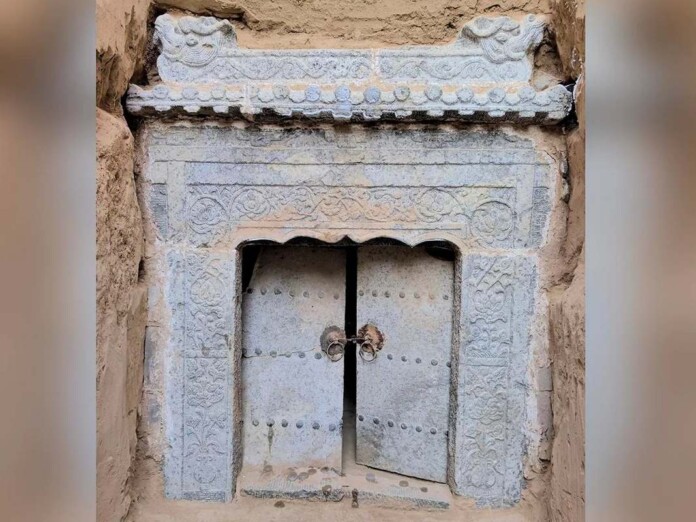
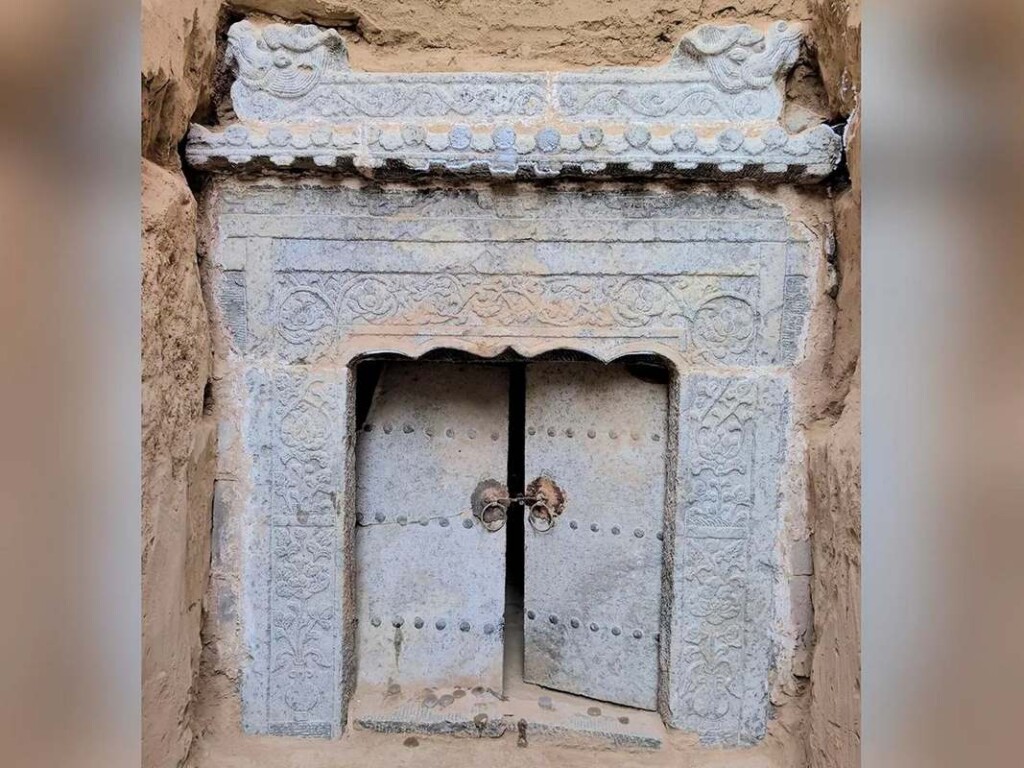
Belonging to a court official, even the exterior facade of the tomb is in excellent condition, and Chinese archaeologists state the discovery is exceptionally rare.
Wang Luo had great taste when he administered the city of Xinzhou on behalf of the imperial civil service, and this is reflected in the wealth of wood and ceramic objects that decorated his tomb, inscribed in his honor.
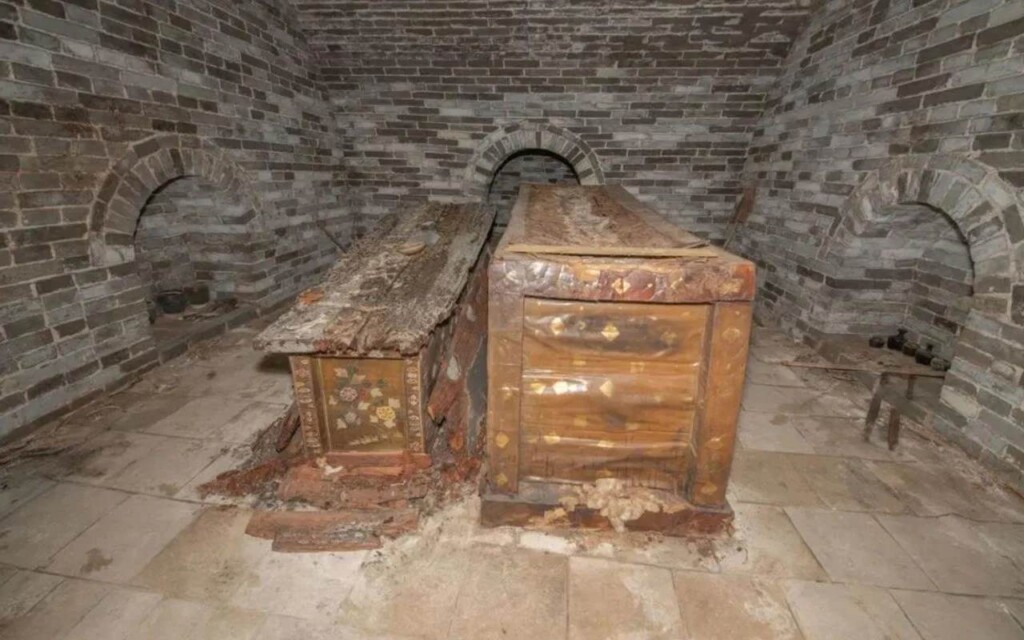
“Entrusted by the Ming dynasty to serve the royal court as a palace official,” read his coffin of tan wood painted with diamonds and flowers.
All around the tomb were signs of high office. An ornate wooden desk and chair sat in one of the chambers, on which were candlesticks, incense burners, painted wooden figurines, ink stones, brushes, and brush holders. A gorgeous chair of lacquered wood with gold and black designs and a dragon image sat behind the desk.
Other tables had ceramic and stone bowls and pots, that in their great state of preservation, give the appearance it wasn’t long ago that a meal was shared on them.
The right coffin is the one believed to have contained the remains of the official – credit, Shanxi Institute of Archaeology, releasedThe rear chamber – credit, Shanxi Institute of Archaeology, released
“It is rare in Xinzhou and even the entire province. It provides precious physical information for studying the local Ming dynasty tomb shape, social life, and burial customs,” wrote the scientists in an announcement about their discovery.
The tomb was found as part of a monumental discovery in Xinfu District that identified a sort of “Valley of the Officials” to borrow from the famous Egyptian Valley of the Kings.
66 tombs, dating as far back as the nearly Neolithic Longshan Culture, through to the Warring States Period, and onto nearly all of the most important imperial dynasties, including the Han, Tang, Jin, Yuan, Ming, and Qing dynasties, covering around 1,500 years.
They were discovered during the realignment of China’s National Highway 108, and Wang Luo’s tomb was found on a brick terrace near the village of Hexitou.
Decorations inside the tomb – credit, Shanxi Institute of Archaeology, released.The chair found in the rear chamber – credit, Shanxi Institute of Archaeology, released
Shaped like an addition sign, the exquisite stone doors and portico are carved with interlacing flowers. A corridor runs to a central chamber, the length of which is around 75 feet.
Niches stand on each side of the chamber, and a larger, rear chamber containing the desk and most of the funerary goods also includes a stone stele with Wang’s epitaph, which contains some curious life advice carved in the Zhuan script, as well as personal information.
“Those who have borrowed money to become prosperous should not be arrogant,” the epitaph read, adding that Wang was the third youngest brother of a famous palace eunuch named Wang Zhi.
SHARE These Gorgeous Photos With Your Friends Who Enjoy Chinese History…
Two firms in Boston have just laid the foundations of a large building using a USA-made zero-carbon cement mixture, representing one of the first adoptions of this technology in the real world.
Many companies are testing or subsidizing low/zero carbon cement and concrete hoping to reduce their carbon footprint, but few as yet are using it liberally to build real structures.
Manufactured by Sublime Systems, which was just named to Fast Company Magazine’s Most Innovative Companies in Sustainability for 2024, the firm uses an electrochemical process to create the cement for ready-mix products.
At the heart of traditional Portland and other kinds of cement is its heating in a kiln wherein calcium carbonate reacts with silica-bearing minerals to form a mixture of calcium silicates. Over a billion tonnes of cement are made per year, and cement kilns are the heart of this production process: heating the mixture to over 1,300°C and producing around 5% of all made-made carbon emissions worldwide, according to The Economist.
By eliminating the kiln altogether, Sublime Systems has removed the large majority of emissions from the process.
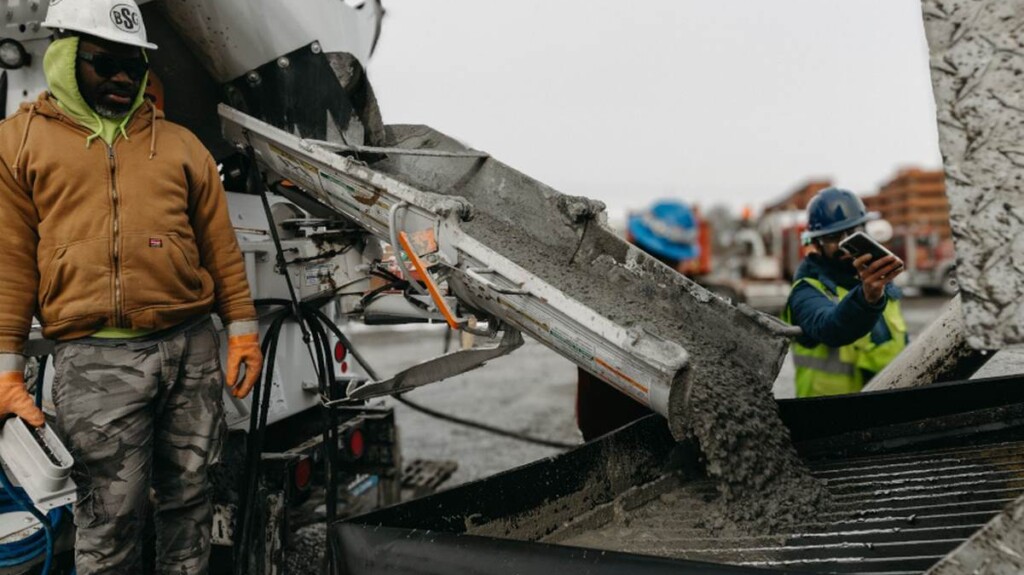
Best of all, it’s actually being used right now in the Greater Boston Area. Boston Sand & Gravel is supplying Turner Construction Co. with ready-mix cement containing Sublime Systems’ product to form the mud mat of a large building.
“It’s going to be in that building for decades to come,” Leah Ellis, Sublime Systems’ CEO, told Engineering News Record.
“It really was the culmination of a lot of effort to see it not just being done for testing’s sake, but actually, replacing cement that would otherwise have been the carbon-intensive variety.”
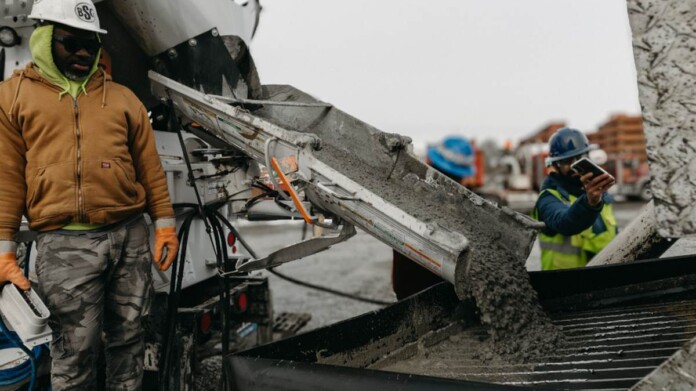
Along with reducing the carbon emissions budget of that new building, the construction has validated that several key targets of Sublime Systems’ product have been met: the product was transported to the site in a ready-mix concrete truck like normal, maintained malleability during transit, was poured out of the concrete truck and into a hose, and the hose was able to deliver it to the setting where it stuck and hardened—all exactly like traditional cement.
“In the grand scheme of things, it was, really, very boring for construction,” David Robb, a Turner estimator and the preconstruction manager on the Boston-area project, told ENR. “But it’s it’s a huge step in terms of our embodied carbon reduction goals that we’re striving toward in the future here at Turner.”
Government money as well as private investment has been pouring into Sublime Systems’ which seems poised to lead a great revolution in cement by building its first full-scale, dedicated manufacturing facility in Holyoke, Mass.
SHARE This Great Advancement In Green Construction With Your Friends…
Quote of the Day: “Anyone who has never made a mistake has never tried anything new.” – Albert Einstein
Photo by: Todd Quackenbush (cropped)
With a new inspirational quote every day, atop the perfect photo—collected and archived on our Quotes page—why not bookmark GNN.org for a daily uplift?
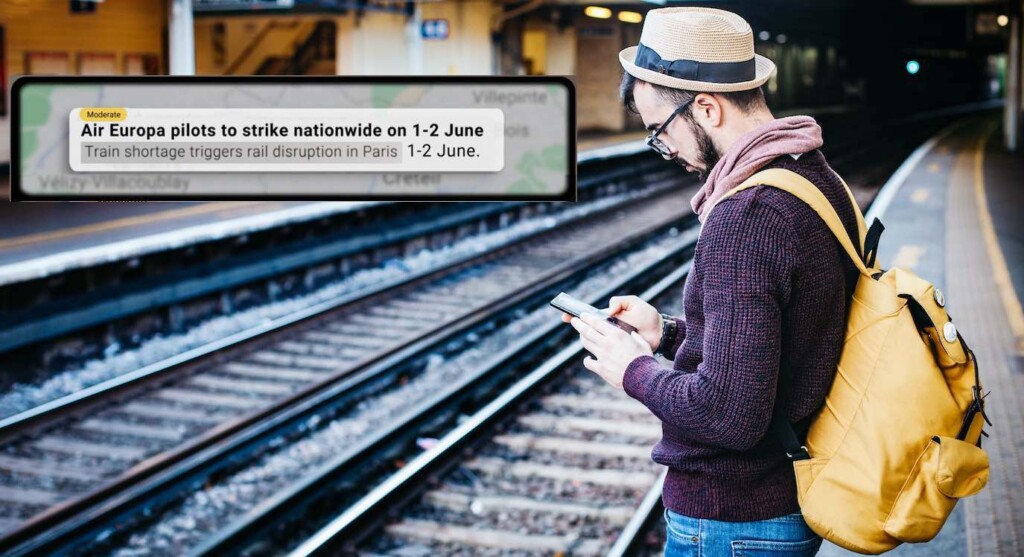
When I was young, backpacking through Europe with my sister, we took a train into Paris completely unaware that the Seine had flooded the city, and the train workers were on strike.
Most travelers lack immediate access to travel intelligence information or communication capabilities that may be critical in the event of a travel, medical, or security emergency, and for that reason, the Global Rescue Intelligence Delivery system app (GRID 2.0.) is winning awards.
Global Rescue is the undisputed world leader in providing medical, security, evacuation, and travel risk-management services for business or charity workers—and even young backpackers.
A membership with Global Rescue means you have the ultimate red button to press in case of an emergency—whether that’s a broken leg on a remote mountaintop, or being stranded by a natural disaster. Global Rescue’s staff of military veterans, paramedics, intelligence experts, and translators are on standby to help at all times, whether that’s a telehealth diagnosis or an emergency field evacuation.
And it’s all covered under the same membership cost, without co-pays, without deductibles, without coverage networks, and without claim forms.
Also included in the membership is the GRID 2.0 app, not available on Apple or Google Play, which distributes targeted notifications and alerts to individuals who could be impacted by events including civil unrest, disease-related developments, safety issues, transportation disruptions, communications blackouts, and natural disasters such as floods, hurricanes, earthquakes, and volcanic activity.
For a concerned parent, the membership not only gives unparalleled protection for a charge far from home, but also the ultimate way to keep track of their journey and minimize risk.
“It is the world’s only integrated medical and security mobile app for travel risk, asset tracking, intelligence delivery, and crisis response management. Last year more than a million targeted event alerts were distributed to individuals who could be affected by more than 10,000 global events reported,” said Dan Richards, CEO of Global Rescue.
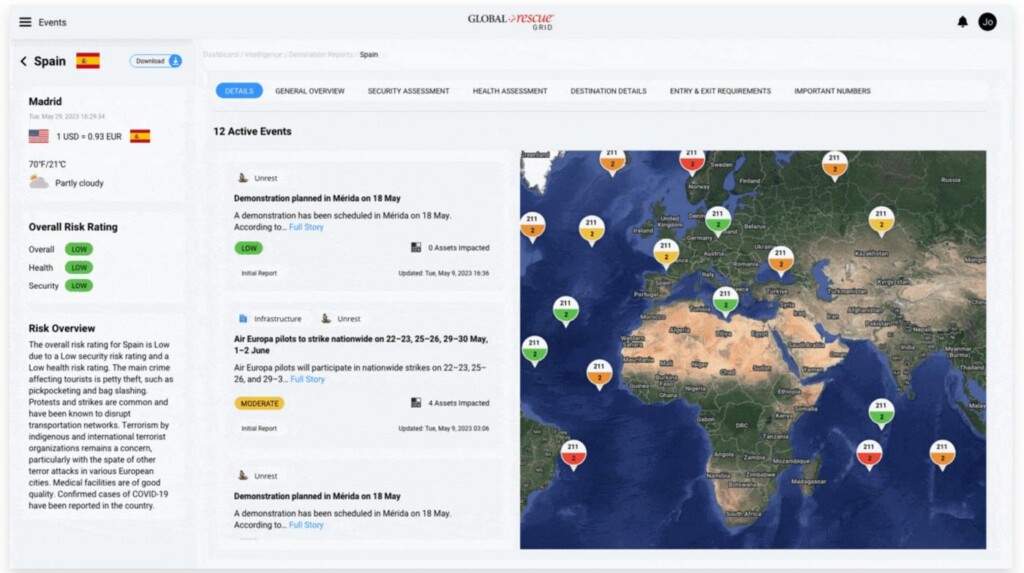
The GRID 2.0 system is comprised of two parts to reduce traveler risk. The Individual Traveler Mobile App and the Desktop Administrator Control Center work together to help individuals, organizations, companies, and universities protect, track, and communicate with remote travelers, employees, and students.
credit – Global Rescue, screengrab
Travelers using the GRID 2.0 Individual Traveler Mobile App can research medical and security risks by destination, obtain automatic Destination Reports, receive active security alerts including analysis and advice, connect for GPS “check-ins” with real-time location tracking, and stay in touch with in-app communications both internally and with Global Rescue, making it the ultimate choice for traveling in unstable regions or nations.
Back at home, headquarters, or wherever the traveler is striking out from, those using the Desktop Administrator Control Center can keep in contact with individual app users, keep watch on their locations, monitor real-time global threats and analysis with Event Alerts, and get comprehensive assessments of global risks that might affect app users 24/7/365.
“In an emergency, the GRID 2.0 app puts its users in immediate contact with the medical teams and military special operations veterans who staff Global Rescue’s Global Operations Centers,” said Harding Bush, associate director for Global Rescue security operations.
A membership to Global Rescue that includes the app starts at $319 for one year of unparalleled security and risk management.
Global Rescue was added to Fast Company’s prestigious list of the World’s Most Innovative Companies of 2024 as a result of the successful launch of GIRD 2.0. Over 2,000 NGOs, tour companies, and government agencies use Global Rescue to secure their overseas travel.
Over 1 million private individuals use Global Rescue, which having just entered its 20th year of business, has conducted just over 25,000 operations, including evacuations and rescues during some of the world’s most challenging crises.
SHARE This Amazing App And Service For Travelers You Know…
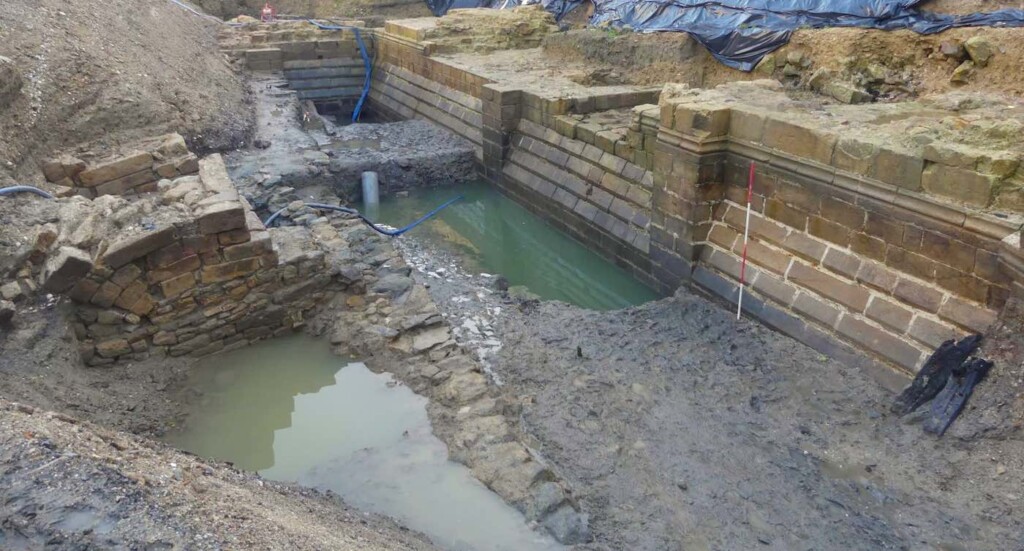
The stunningly well-preserved remains of a castle have been dug up in the French city of Vannes, Brittany, at the foot of a private hotel.
The operation was carried out as part of preventive archaeology prior to the construction of the future Museum of Fine Arts of the City of Vannes, and while the owners knew that a medieval structure existed under the Hôtel Lagorce, the scope and preservation of it were a grand surprise to everyone involved.
The first phase of the project took place between February and April 2023 in the cellars and courtyard of the hotel which was originally a private mansion built at the end of the eighteenth century.
The courtyard had been built atop an embankment 13 feet deep (4 meters). Down below, archaeologists unearthed two stories of what was probably a four-story castle that measured 140 feet long and 55 feet wide overall. Connected to additional defensive elements, it would have been even larger.
Historical records all but confirm the castle was Château de l’Hermine, constructed by the Duke of Brittany in 1380 following the end of one of the many wars between French royals. It was part of a large public works program that doubled the size of the city of Vannes, but was abandoned by the Duchy in favor of Nantes in 1470, before becoming ruins in the 17th century.
The excavation was handled by Inrap, the national institute for archaeological excavations for the state of France.
A central passage connects the north gate, built into the façade on the city side, to another gate framed by two large towers that once made up a section of the city rampart overlooking the outer moat, all of which was identified on very old architectural plans of the city.
They unearthed several staircases, including a remarkably well-preserved ceremonial staircase with a decorated core, several intact steps, and a sitting window. In the skeleton of the exterior masonry at each end of the house, the archaeologists also identified a set of latrines and drainage pipes that served the upper two floors.
Also identified were the foundations of a watermill, placed “in a very original way” at the corner of the castle near a square tower. A canal brought water from the River Marle to drive the mill. The water drained to the moat downstream of the wheel through an opening in the façade, the grille of which has been preserved.
Across all the recovered masonry, the stones have been remarkably well maintained by the embrace of the wet earth, and in some places appear to have been laid recently.
The drain pipes and latrines were searched manually, but thanks to 580 years of passing time the workers had only soil and water to dig through. They also performed a deep bore into the former moat, and the two searches yielded hundreds of varied artifacts.
Cooking utensils, pots, pans, and wooden crockery, jewelry, a selection of coins, padlocks, remains of furniture like cabinets and chairs, keys, pins, clothing fragments, remains of the watermill, shoe buckles, and graffiti-covered ceramic tiles were all found.
SHARE This Amazing Discovery With Your Friends Who Love This Sort Of Thing…
Coach Isaac With Tsavora Fencers- credit Tsavora Fencing, permission granted to GNN
Coach Isaac With Tsavora Fencers- credit Tsavora Fencing, permission granted to GNN
In a difficult part of Kenya’s sprawling capital city of Nairobi, an unlikely sport has taken hold of the passions of young people, offering them an alternative to drugs, violence, or crime.
That sport is fencing, and despite the fact that the Tsavora Fencing Club sometimes struggles to keep well stocked with the necessary equipment, Africa News reports it is having a huge impact in the community, keeping adolescents busy, and sending some of them to the national team.
The club members routinely hold bouts in the street, where they strike a dramatic scene thrusting and parrying in their snow-white uniforms across the reddish ground.
The club was founded by Mburu Wanyoike, a former gangster turned athlete and eventual coach for the Kenyan National Fencing Team.
Both 17-year-old Jemimah Njeri, and 16-year-old Allen Grace, echo the same sentiments about the importance of Tsavora in their lives that Wanyoike does: it keeps them busy and eats up the hours outside school and housework.
Njeri said the company she kept around her home before joining the fencing club wasn’t great, while Grace says that since joining, she has seen several teenage girls on her street become mothers.
Tsavora at the Olympic Elite Youth Training Camp-2023- credit Tsavora Fencing, permission granted to GNN.Tsavora Fencers – credit Tsavora Fencing, permission granted to GNN
Wanyoike said that they use their “enthusiasm and obsession” to compensate for the lack of high-quality equipment, especially when competing with other nations—like in the African Olympic Qualifiers in Algeria this year.
“Sometimes it is tough when it comes to competing with well-equipped international countries that are well organized, so what we do is just to move on with enthusiasm and obsession,” he told Africa News.
“We don’t complain that we do not have equipment, we just use what we got and put in the obsession and the enthusiasm and the passion combined, that’s what we do, we fence.”
Tsavora Fencing Club has a mentorship program called Mtaani, which provides training and guidance on how to cultivate virtues like integrity and discipline. Their 45 members are now beacons within their community.
WATCH the story below from Africa News…
SHARE This Unlikely Haven For The Classic Sport With Your Friends…
Straw-headed bulbul - credit Michael MK Khor CC 2.0. Flickr
Straw-headed bulbul – credit Michael MK Khor CC 2.0. Flickr
From the sprawling urban city-state of Singapore comes the unlikely story of a critically endangered songbird and a dedicated group of environmentalists helping it thrive as the population collapses overseas.
The straw-headed bulbul is a victim of its beautiful song, which has seen it extirpated from the wilds of Thailand, Myanmar, and Java as poachers capture it for the illegal songbird trade.
But as early as 1990, conservationists, birdwatchers, and government workers in Singapore have taken action on this species’ behalf.
“Whenever I hear its resonant, bubbly song, the forest seems to erupt with life,” conservationist Ho Hua Chew told Smithsonian Magazine.
Because of men like Ho, the peripheral wetlands of Singapore, the offshore island of Pulau Ubin, and the large green spaces in the city state’s interior together play host to 600 straw-headed bulbuls.
Nature Society Singapore, of which Ho was a member, was the first to push for nature protections on Pulau Ubin, the site of an old granite quarry, where nevertheless a concentrated population of these birds could be found.
This resulted in a Nature Area designation for the island in 1993, achieved through advocacy and outreach among millions of Singaporeans.
Smithsonian lists this as an early victory in the history of environmentalism on the cramped peninsular city-state.
After populations had fallen 50% over three generations, the bird was listed as “Endangered” on Singapore’s own Red Data Book, which tracks populations of every plant and animal in the country, the straw-headed bulbul was added to the Endangered Species (Import and Export) Act of 2006, a move which reversed the trend, even while populations were collapsing around Southeast Asia.
Today, there is a Straw-Headed Bulbul Working Group, co-led by the National Parks Board and the Nature Society Singapore, which ensures this beautiful warbling bird remains in tip-top condition.
If it were not for the incredible momentum that the work to conserve this bird has had over the years, its future would be alarmingly uncertain. Today, Ho believes that as the Working Group ensures the genetic diversity among the birds is in good shape, and the populations are increasing, the Singaporean straw-headed bulbuls may one day be the only population to draw from to restore populations elsewhere.
LISTEN to its song below…
SHARE This Unlikely Safe Haven For This Beautiful Songbird…
Quote of the Day: “Success is the sum of small efforts—repeated day in and day out.” – Robert Collier
Photo by: Christian Holzinger
With a new inspirational quote every day, atop the perfect photo—collected and archived on our Quotes page—why not bookmark GNN.org for a daily uplift?
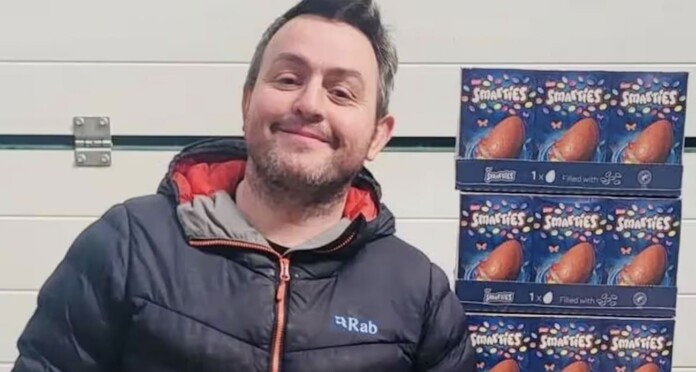
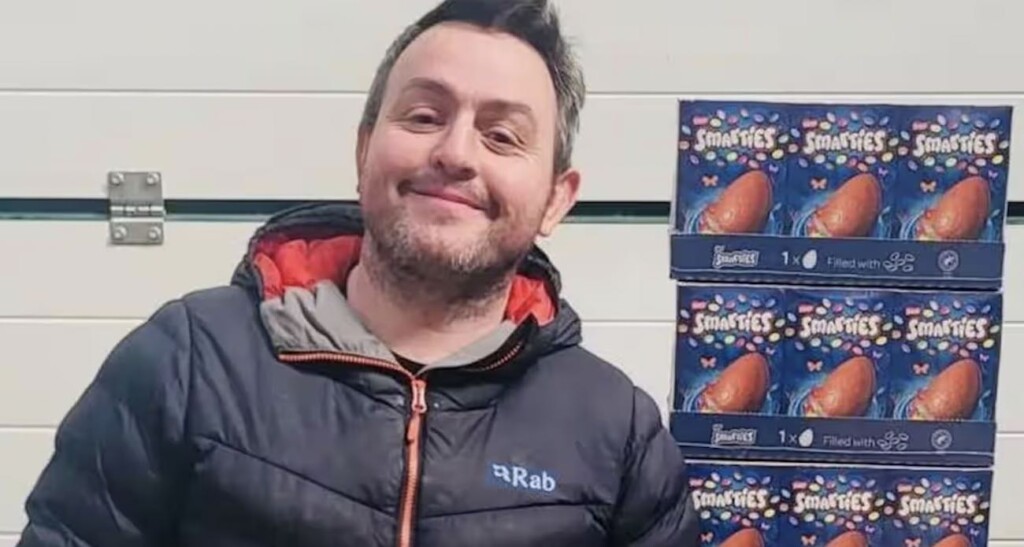
Dan Dafydd with Easter eggs he raffled off – Credit SWNS / Sinclair General Stores
Dan Dafydd with Easter eggs he raffled off – Credit SWNS / Sinclair General Stores
On an island off the coast of an island, a local grocer’s big error turned into a successful national charity event.
Dan Dafydd wanted 80 chocolate Easter eggs for the shelves at Sinclair General Stores on Sanday, one of the Orkney Islands, but accidentally ordered 80 cases of Easter eggs, totaling 720 confectionaries for a total island population of 500.
Wondering what he was going to do with the excess, his heart overtook his mind, and decided to raffle off groups of 100, with proceeds going to the Royal National Lifeboat Institution, (RNLI) the largest of the lifeboat services operating around the coasts of the British Isles which rescue dozens of people and vessels every year.
It proved to be a huge hit on Sanday, with £3,000 being raised to win batches of 100 eggs. It was so popular that in the ultimate irony, Dafydd had to order more chocolate eggs.
“We actually took a delivery of eggs yesterday because we ran out. We needed to buy more in the end. People have wanted them signed and all sorts,” said Mr. Dafydd to the Guardian.
“Once word spread a bit and I was invited to talk on local radio, I thought ‘it’s not bad enough to be a laughing stock on this island, but to be one all over Orkney.”
Dan Dafydd with Easter eggs he raffled off – Credit SWNS / Sinclair General Stores
From the shores of Albion, it carried across world media, with the grocer soon receiving stacks of letters from people as far afield as Singapore writing to say how inspirational he was.
Many of the chocolate eggs were manufactured by Nestlé, who contacted Mr. Dafydd with the proposal that they would match any donations received for the RNLI up to £10,000 with the aim of raising £20,000 by Easter Sunday.
“It’s incredible to see how a simple mistake can turn into an opportunity to make a positive impact,” said Beth Lucas, the marketing director for confectionery at Nestlé UK & Ireland in a statement. “Together, we aim to raise up to £20,000 for the RNLI and contribute to the invaluable work they do.”
Dafydd said that even without the help of Britain and Nestlé the immediate community on the Orkneys had purchased so many raffle tickets that they won 300 of the eggs, showing how close-knit and big-hearted his local community is.
SHARE This Man’s Fortuitous Error And The Amazing Response…
An Australian bank representative recently yanked an unsuspecting woman back from the brink of the financial oblivion she was about to throw herself into resulting from an internet scam.
Westpac Bank trains its employees to poke questions at anyone engaging in strange transactions, and after the teller’s suspicions were aroused, she was proven right every step of the way.
It’s an example, says Westpac’s Head of Fraud and Financial Crime Insights Ben Young, of how valuable the person-to-person interaction is in the private commercial banking industry, and a regrettable loss of branch closures across the country.
But as regards the scam, teller Mariana Karbowski at the Liverpool Branch noticed a woman in her 70s seemed nervous coming in with the news that she was going to sell her home, and that she wished to cancel the home insurance she had through Westpac.
Asking why she was planning to sell, Karbowski got the unsatisfactory answer that the woman needed to “help her son.” Inviting the woman into one of the personal offices, Karbowski dug a little deeper and found out the real reason the woman was going to make one of the largest financial decisions of her life: she needed to free her boyfriend from an overseas prison.
Speaking of jail, Karbowski took no prisoners when she heard this was the woman’s motivation.
“My next question was, please tell me the last time he took you out for a coffee, and she said, ‘Actually, never, we met online,'” Karbowski told Channel 9 News.
It didn’t take long for the teller, whose very father was scammed out of millions as it happens, and who decided to run a reverse image search on Google of the man the woman claimed was her internet boyfriend, to discover that many of the photos the client received from the man were online but with different names.
“We cried together and I walked her to the police station to report it,” she said, “We care and when we see those red flags, we act.”
Internet scamming and fraud is a black market that pilfers tens of billions around the world, and it’s Karbowski’s training and insight that Ben Young hopes to capture for a new security feature on Westpac’s online banking suite, powered by AI, that asks exactly the sort of questions that you would ask a loved one if they told you: “I’m about to send $50,000 to some foreign corner of the world.”
It asks how you came to know this person, what are some things they have said or promised you, and if the AI is not satisfied with the transaction, it will block it and notify the fraud department who will then reach out to the client and discuss the transaction.
While it may seem like an abrasive invasion of personal decision-making, scammers and fraudsters often target people who are not of sound mind, such as those with dementia, those who live alone, or internet illiterates.
Perhaps Westpac also saw the story of ANZ Bank’s decision to reimburse an elderly client’s life savings worth AUD$500,000 that was stolen by scammers. The client has early-stage dementia, and the fraud department concluded after an internal investigation that they should have done a lot more to protect his account.
WATCH the story below from Channel 9…
SHARE This Hero Bank Teller And Important Lesson With Your Friends…
Scientists have developed a new solar-powered system to convert saltwater into fresh drinking water which they say could help reduce dangerous the risk of waterborne diseases like cholera.
Via tests in rural communities, they showed that the process is more than 20% cheaper than traditional methods and can be deployed in rural locations around the globe.
Building on existing processes that convert saline groundwater to freshwater, the researchers from King’s College London, in collaboration with MIT and the Helmholtz Institute for Renewable Energy Systems, created a new system that produced consistent levels of water using solar power, and reported it in a paper published recently in Nature Water
It works through a process called electrodialysis which separates the salt using a set of specialized membranes that channel salt ions into a stream of brine, leaving the water fresh and drinkable. By flexibly adjusting the voltage and the rate at which salt water flowed through the system, the researchers developed a system that adjusts to variable sunshine while not compromising on the amount of fresh drinking water produced.
Using data first gathered in the village of Chelleru near Hyderabad in India, and then recreating these conditions of the village in New Mexico, the team successfully converted up to 10 cubic meters, or several bathtubs worth of fresh drinking water. This was enough for 3,000 people a day with the process continuing to run regardless of variable solar power caused by cloud coverage and rain.
Dr. Wei He from the Department of Engineering at King’s College London believes the new technology could bring massive benefits to rural communities, not only increasing the supply of drinking water but also bringing health benefits.
“By offering a cheap, eco-friendly alternative that can be operated off the grid, our technology enables communities to tap into alternative water sources (such as deep aquifers or saline water) to address water scarcity and contamination in traditional water supplies,” said He.
“This technology can expand water sources available to communities beyond traditional ones and by providing water from uncontaminated saline sources, may help combat water scarcity or unexpected emergencies when conventional water supplies are disrupted, for example like the recent cholera outbreaks in Zambia.”
In the global rural population, 1.6 billion people face water scarcity, many of whom are reliant on stressed reserves of groundwater lying beneath the Earth’s surface.
However, worldwide 56% of groundwater is saline and unsuitable for consumption. This issue is particularly prevalent in India, where 60% of the land harbors undrinkable saline water. Consequently, there is a pressing need for efficient desalination methods to create fresh drinking water cheaply, and at scale.
Traditional desalination technology has relied either on costly batteries in off-grid systems or a grid system to supply the energy necessary to remove salt from the water. In developing countries’ rural areas, however, grid infrastructure can be unreliable and is largely reliant on fossil fuels.
Creating a low-cost ‘battery-like’ desalination technology removes the reliance on battery technology for using intermittent solar energy in off-grid applications, enabling affordability to rural communities in developing countries like India.
“By removing the need for a grid system entirely and cutting reliance on battery tech by 92%, our system can provide reliable access to safe drinking water, entirely emission-free, onsite, and at a discount of roughly 22% to the people who need it compared to traditional methods,” He said.
The system also has the potential to be used outside of developing areas, particularly in agriculture where climate change is leading to unstable reserves of fresh water for irrigation.
The team plans to scale up the availability of the technology across India through collaboration with local partners. Beyond this, a team from MIT also plans to create a start-up to commercialize and fund the technology.
“While the US and UK have more stable, diversified grids than most countries, they still rely on fossil fuels. By removing fossil fuels from the equation for energy-hungry sectors like agriculture, we can help accelerate the transition to Net Zero,” He said.
“The next step for us is to apply this low-cost technology to other sectors, including wastewater treatment, and producing alkaline to make the ocean more alkaline to help it absorb more CO2 from the atmosphere. By taking this approach not only can we decarbonize agriculture, but wider environmental and climate benefits as well.”
SHARE This Invention That Could Change The World On Social Media…
Credit: Taber Lost Paws Society / Taber Police Service, Alberta Canada
Credit: Taber Lost Paws Society / Taber Police Service, Alberta Canada
An Akita named ‘Hero’ saved his owner’s life last week in an incredible tale of loyalty and resilience that saw him remain by his side through two frigid Alberta nights, fend off coyotes, and eventually alert rescuers.
Winning plaudits for his name and deed the world over, a GoFundMe raised $3,000 to cover the veterinary bills of Hero by the shelter that is keeping him safe and warm while his owner recovers.
The story began with an attack: when a passerby named Curtis Dahl was walking in a field of mud and grass near the sugar factory in the town of Taber, and Hero came running up and bit his dog around the neck.
Dahl claims he tussled with Hero for ten minutes trying to get him off his dog, and needed stitches on his finger by the end of it.
Calling police and animal services with a complaint, he alerted them to Hero’s presence, but when the officers arrived and saw Hero lying down exhausted near a terraced plot of grass and weeds near the road, they suddenly heard a cry for help.
Arriving, they found a 61-year-old man on his back in a ditch, shivering and unable to move. He told police he’d been stuck there for two days while Hero protected him.
While the man was taken to a hospital, Hero was taken to Taber Lost Paws Society, an animal shelter that has a special program to look after dogs during periods of crisis or injury. As it happened, the society’s acting president Alana McPhee said they had an employee who was the injured man’s neighbor and knew that he had another Akita dog named Tora.
Reported missing two days prior, Tora eventually turned up in her owner’s yard with a disabled leg after screws and rods in her leg from a previous injury had come loose. They suspect she had been back and forth from the site where her owner fell to the home several times, or perhaps could have been fighting, though she had no bite or puncture marks.
Once informed of the full story, the man whose dog had been attacked by Hero was “understanding of the situation” and was grateful Hero’s owner was rescued. He later received compensation for the medical costs to his dog and himself via CAD$3,000 that was raised from a GoFundMe organized by the Lost Paws Society.
“(Hero) was being protective. That dog probably had not eaten for several days. He was incredibly stressed and, obviously, powerless to help his owner. He had to fight off coyotes,” McPhee said.
WATCH the story below from CBC News…
SHARE This Hero By Name And By Nature With Your Dog Loving Friends…
Quote of the Day: “A drawing is simply a line going for a walk.” – Paul Klee
Photo by: Alexandru Scurtu (cropped and enhanced)
With a new inspirational quote every day, atop the perfect photo—collected and archived on our Quotes page—why not bookmark GNN.org for a daily uplift?
Male gorilla - credit Kabir Bakie at the Cincinnati Zoo CC 2.5.
Male gorilla – credit Kabir Bakie at the Cincinnati Zoo CC 2.5.
A gorilla’s chest beating is an incredible sight, and sound, to behold, but new research based on years of observation of mountain gorillas shows there’s much we never understood about this iconic acoustic.
Since people first went to see King Kong, or since gamers first met Donkey Kong from the Mario Bros franchise, most might say male gorillas beats their chests with their fists, and as a sign of challenge or triumph.
Apart from the fact that they use cupped hands, it seems to serve a number of functions—a challenge not necessarily being one of them.
Edward Wright, a primatologist at the Max Planck Institute, spent between 2014 and 2016 observing 500 chest beats from 25 different silverback mountain gorillas in Rwanda’s national parks.
Using acousitc monitoring equipment he and his colleagues determined that the chest thumping was an honest demonstration of body size. This hints at several organizational aspects of gorilla social life. The first is that larger animals were recorded at lower frequencies which could travel half a mile.
By beating their chests, air sacks underneath their larynx reverberate from the kinetic energy, producing a sound, and the bigger the male, the deeper the sound. This is believed to broadcast how big and dominant a male gorilla is as a means of keeping rival males away from their social group.
Furthermore, it’s believed that each thump may act as a calling card, with members of a dominant male’s group being able to identify the silverback from this sound.
The second aspect was that while sound depth and body size were correlated, body size and frequency of chest thumping instances did not—the dominant males didn’t pound their chest any more than their smaller rivals. This presented Dr. Wright and his colleagues with a fascinating suggestion—the chest thumping is used difuse fights, rather than provoking them.
Along with smaller males hearing the chest thumps of a dominant male and knowing to steer clear, by returning the sound with their own puny chest thumps, they can alert the dominant male to their presence while simultanously demonstrating they’re no match physically due to the higher frequency of their thumping sounds.
“Even if you’re likely to win a fight, there is still quite a high-risk factor,” Dr. Wright told National Geographic. “These are large, powerful animals that can do a lot of damage.”
How the chest thumps affect the female half of gorilla society is even less well-studied, but the scientists knew at the initiation of their observations that males beat their chest more when the females in their social group enter esterus, and that larger males make deeper calls which were both found to correlate to reproductive success.
Future studies will examine whether a large male’s chest beating can act as a siren’s song as it were, and pull females away from other social groups.
SHARE This Insight Into The Less-Gentle Side Of These Gentle Giants…