All News - Page 226 of 1715 - Good News Network
Home Blog Page 226

Why Are So Many Old Maps Covered in Sea Monsters? Nat. Geo Dives Deep

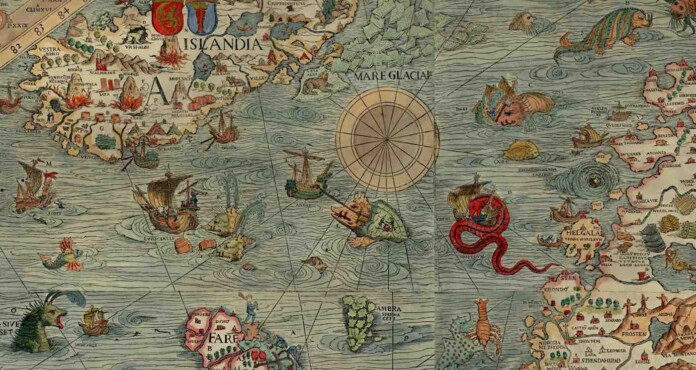
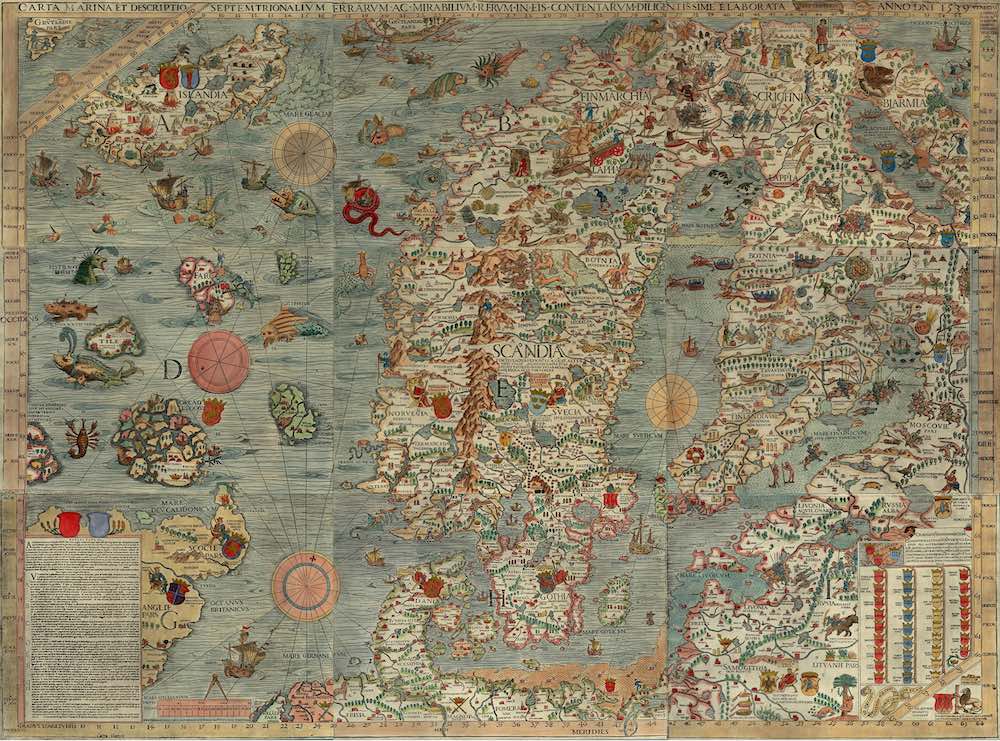
Details of Carta Marina map by Olaus Magnus
The Carta Marina map by Olaus Magnus

Everyone knows that our ancestors believed the seas and oceans were the domains of monsters, but the extent of this fear, as depicted in early Renaissance maps, is striking to behold.

As early as the 9th century, Arab historians such as Abū Zayd al-Sīrāfī, who compiled first-hand accounts of sailors from China and India, knew to discount or ignore their stories of sea serpents.

This evidently didn’t take hold until later in scholastic traditions of Europe, because as late as the 15th century, maps were still covered in images of “sea swine,” “sea orms,” and “pristers.”

The map above is one of the most famous examples of the fear that Europeans clung to during the Renaissance. Initially published in 1538 by Swedish ecclesiastic Olaus Magnus, the Carta Marina was one of the earliest maps to depict Scandinavia with such a richness of place names.

According to author Edward Lynam writing in 1949, Magnus drew from a variety of ancient sources including Ptolemy’s map in Geographia, and contemporary sources such as the work of Astronomer Jacob Ziegler. In addition to cartographic sources, Magnus also relied on the descriptions of sailors and his own observations.

A “sea orm” from the Carta Marina by Olaus Magnus-public domain

Near the coast of Norway, descriptions from sailors led to Magnus illustrating an image of a sea serpent attacking a ship, which in this case would be a mythical beast called a “sea orm”, the inspiration for which scholars believe be whales, squids, sea lions, or more.

Magnus wrote in a later history that a sea orm could rear its head up out of the sea and pluck an unwitting sailor directly from his deck. He described it as being 200-feet long (double the size of a blue whale) and 20 feet in girth.

Whales are actually pictured on the map, identified by their Latin name balena, but Magnus’ depictions hint at the original hypothesized appearances of these gentle giants. Seeming more like boar than balena, the whales sport long tusks and have two blowholes instead of one, appearing in place of a hog’s ears rather than along the spinal column as is the case with whales. Two can be seen attacking ships off the coast of Iceland.

Pristers and other whale depictions on Olaus Magnus’ Carta Marina.

Accounts of mythical “sea swine” can be traced as far back as ancient Greece, but Magnus depicts them in the illustration marked ‘E’ with webbed “dragon’s feet” and a single eye down toward the beast’s belly.

YOU MAY ALSO LIKE: 76,000 Gold and Silver Artifacts Recovered from Chinese River Charts Infamous 17th Century Warlord’s Conquests

Another variation on the balena/boar beast is the prister, which was also 200-feet long according to Magnus, and could be scared away with the blast of a trumpet, of all things. Near Iceland in his Carta Marina, a sailor is depicted doing just this, while westward, a beast marked on the map as a “prister” rears up much like a sea orm, and apart from the blowholes/ears, seems quite serpant-like; and is covered in spines for good measure.

Chet Van Duzer, author of Sea Monsters on Medieval and Renaissance Maps, spoke to Nat Geo about the map and said that nearly everything depicted on it was just variations on the same theme of terror and confusion inspired by whales, whether breaching, tail-slapping, or on occasions of striking wooden ships with their huge bodies.

MORE STRANGE AND WILD HISTORY: Mythical City of Underground Labyrinths Found Beneath Altar of 15th Century Church in Mexico

Mortality of sailors on long-distance voyages was around 50% for much of the Age of Exploration, and while this was due mainly to scurvy and other diseases, the fact that so few mariners returned home stoked traditional fears of being gobbled up by a monster, and must have deeply informed Magnus’ map.

The gorgeous colors and illustrations have made the Carta Marina a constant source of intrigue and delight for later scholars. Other depictions such as the sea cow, which could be thought to be a manatee but is shown on the map as a literal cow, as well as narwhals and walruses, all entice the history fan by providing a perfect glimpse into the behavior or beliefs of past generations.

SHARE This Amazing History Lesson And Map With Your Friends… 

Man Finds Largest Colorless Diamond in Arkansas State Park’s Modern History

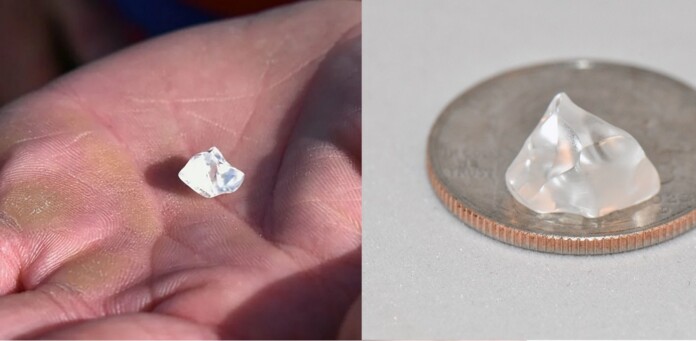
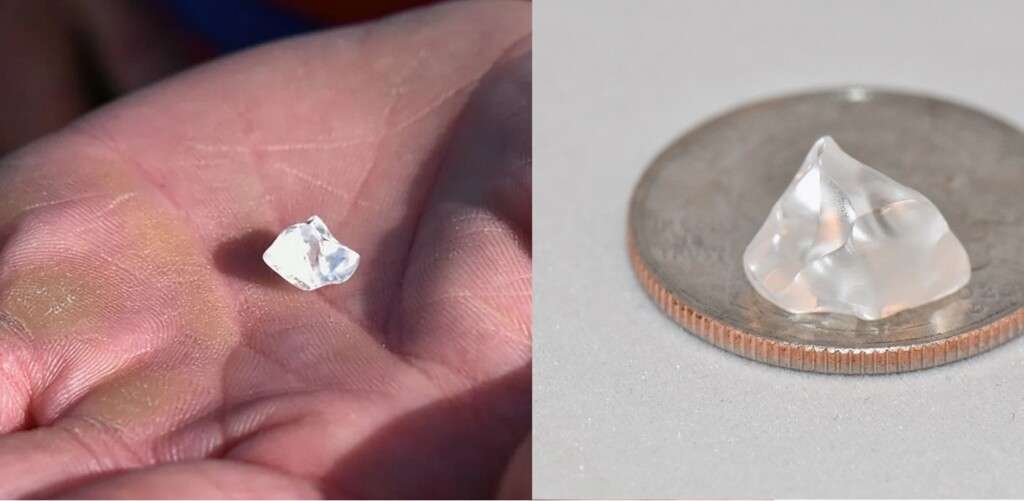
credit - Arkansas State Parks, released.
credit – Arkansas State Parks, released.

A man in Arkansas visited a famous state park with his girlfriend and ended up walking out with a 4.87-carat diamond—the largest colorless diamond found in the park this decade.

At Crater of Diamonds State Park, anyone, foreigner or citizen, can come and comb through the hills and ditches for diamonds, which is exactly what Jerry Evans from Lepanto was doing in spring of 2023.

Within ten minutes of entry, Evans saw what he thought was a piece of glass on top of a plowed ridge, picked it up, and stuffed it in his pocket.

“I thought it might be a piece of glass, it was so clear. I really didn’t know,” Evans said. “We were picking up everything thinking it was a diamond.”

He later sent the stone to the Gemological Institute of America for identification on the hunch that it was something more than just broken glass.

A few weeks later, he heard back that it was a near-colorless diamond.

OTHER FINDS FROM THIS VERY PARK: Girl Celebrating 7th Birthday Finds 2.95-Carat Diamond in State Park

“When they called and told me it was real, I was tickled to death!”

“While I get many emails from people wanting me to identify something they’ve found here, to my recollection, this is the first time someone has contacted me after they’ve had a diamond identified by the GIA,” said Assistant Park Superintendent Waymon Cox. “I’m glad that Mr. Evans was able to bring his historic diamond back to the park to have it officially registered.”

Over 75,000 diamonds have been found at Crater of Diamonds State Park, and this is the largest colorless stone found in some time, and the largest overall since Labor Day of 2020 when a brown diamond twice its size was uncovered.

MORE STORIES LIKE THIS: Man Goes on 2000-Mile Quest to Mine His Own Diamonds for Engagement Ring—and Finds a 2.2 Carat Beauty

125 carats worth of diamonds were registered at the park this year, which was the site of a volcanic event long ago that created the necessary conditions of heat, pressure, and elements to make the diamonds which people find today.

SHARE This Delightful Discovery With Your Friends Near Arkansas… 

Archeologists Confirm Oldest Viking Ship Burial in All Scandinavia–Could Rewrite the Viking Age

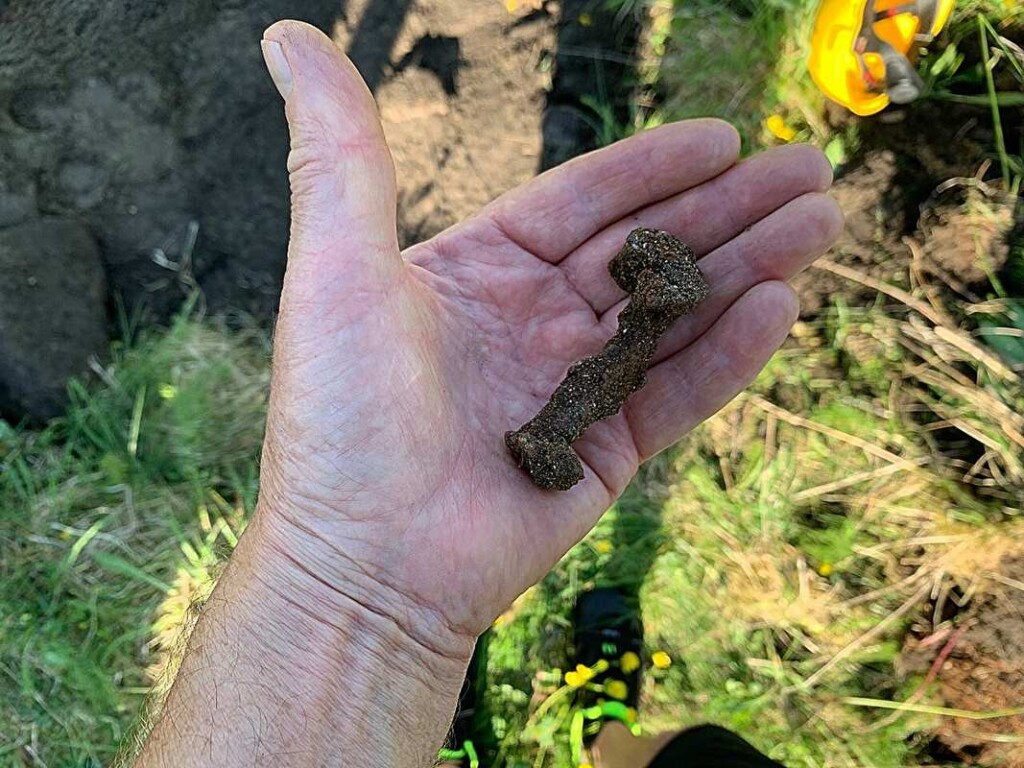
The mound, called Herlaugshaugen, is mentioned in Snorre's royal sagas as the final resting place of King Herlaug. Credit: Hanne Bryn, NTNU University Museum.
The mound, called Herlaugshaugen, is mentioned in Snorre’s royal sagas as the final resting place of King Herlaug. Credit: Hanne Bryn, NTNU University Museum.

County archaeologists have recently dated the remains of a Viking ship burial on a small island called Leka and found it to be the oldest one in all of Scandinavia.

In fact, it dates back so far, there’s a technical question about whether or not one can even call it a Viking ship burial, because funerary activities pre-date the Viking Age, when the term Viking began to be used for a Scandinavian mariner who spent some time trading and some time raiding.

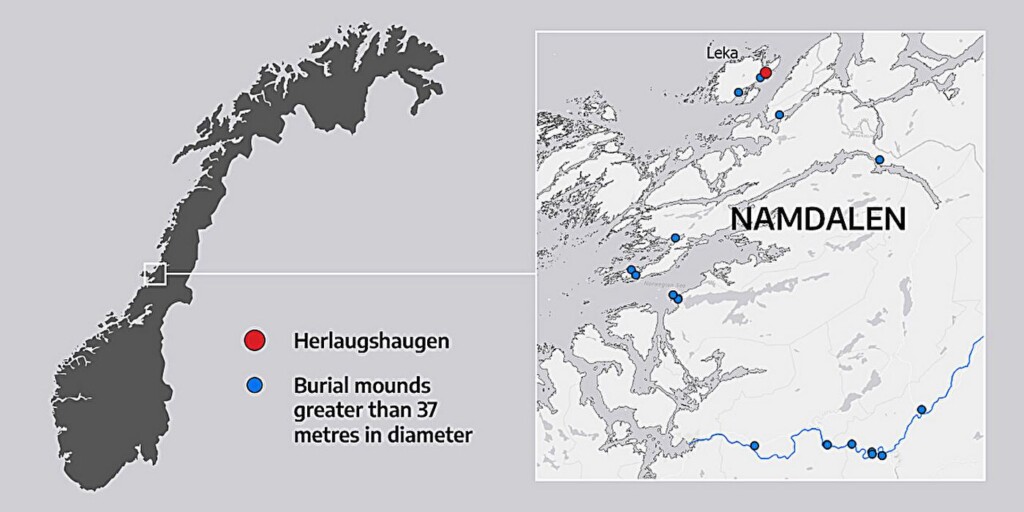
The Herlaugshaugen burial mound in Leka is located in an archaeologically rich area called Namdalen. Here, there is a very unusually high concentration of burial mounds, but while most are unsurveyed and unexcavated, Herlaugshaugen had been excavated at three different times.

Records from the 18th and 19th centuries show that the mound contained construction materials like nails, a bronze cauldron, animal bones, and a seated skeleton with a sword. These have long since disappeared and interest in Herlaugshaugen for Norway’s recent ancestors concluded.

Now, a team of archaeologists and a professional metal detective went to survey the mound as part of a collaboration with the Norwegian Directorate for Cultural Heritage and Trøndelag County Authority.

They found iron nails and other evidence to suggest that the mound was the site of a ship burial, in which a man was interred around 700 CE, decades before the generally accepted start points of the Viking Age.

Furthermore, the ship was very large. Historians often credit the boat-building methods developed by the Scandinavians as one of several trends and forces that launched the Viking Age, but here, the appearance of a large sea-worthy vessel means that the technology and the will, capabilities, and commercial interests all existed to use it even before the 700 CE date.

Ship nails of this size, and this age, tell us that people here could build large ships much earlier than previously believed. Credit: Geir Grønnesby.

“This dating is really exciting because it pushes the whole tradition of ship burials quite far back in time,” Geir Grønnesby, an archaeologist at the NTNU University Museum, told Phys.org.

MORE VIKING STORIES: Viking Age Shipyard Uncovered at Birka is Like Nothing Ever Found Before

Viking raids may have been ongoing within Scandinavia at earlier periods, but the first outward acts of aggression by medieval Scandinavians are recorded as happening within the final quarter of the 8th century.

The other side of the Viking identity—that of the trader—may have already been fully developed at much earlier dates, such as the Merovingian Period, during which this burial was constructed.

“I think that the location along the shipping route plays a key role in understanding why Herlaugshaugen burial mound is located at Leka,” said archaeologist Lars Forseth from Trøndelag County Authority. “We know that whetstones have been traded from Trøndelag to the continent from the mid-700s onwards, and goods transport along the route is key to understanding the Viking Age and developments in ship design before the Viking Age.”

This map shows the approximate locations of the large burial mounds located in central Norway. Map: Kolbjørn Skarpnes/NTNU. Credit: Map: Kolbjørn Skarpnes/NTNU

Ships would have been great signs of status, as they provided an economic link from the continent to these disparate Norwegian fjords and inlets. Anyone who owned one would have stood to make a lot of money, and the presence of the ship burial and the other mounds in Namdalen suggests to archaeologists like Forseth that the area of Namdalen may have played host to an elite merchant society.

KEEP READING ABOUT HISTORY: 4 Years After Discovery, the First Viking Ship Burial Found in Over 100 Years Reveals its Lost Secrets

Namdalen’s various valleys contain 10% of all the recorded burial mounds in Norway, but most haven’t been surveyed, so the idea has no legs as of yet.

SHARE This Amazing Discovery And Update To The Viking Story On Social Media…

Hero NYC Cops Carry Four Elders Out of Burning Building on Their Shoulders (WATCH)

Still image obtained from released body cam footage.

5th Precinct officers of the NYPD had no intention of waiting for firefighters to come to the 6-story apartment building in flames right across from their station door.

Officers Willian Finan and William Dottavio along with two other colleagues charged in after residents fleeing the fire said there were elderly people trapped inside.

“I remember very specifically a guy walked up to me and said, ‘Mommy Mommy—6th floor’ and at that point I knew we had to get up there,” said NYPD officer Jeremy Banfield, talking to Fox 5 from their precinct in New York City’s Chinatown.

Released body cam footage worn by Dottavio shows Officer Finan exiting the building with a 99-year-old woman over his shoulder, before Dottavio charges up 5 flights of stairs to find the fourth member of the rescue team, Detective Rodney Rosado, coming out with another elderly woman.

Between the four men, they were able to rescue the 99-year-old, two elderly men aged 96 and 91, as well as a fourth woman whose age was not disclosed—all just 5 days before Christmas.

MORE STORIES LIKE THIS: Watch Hero Firefighters Perform Incredible Rescue, Rappelling Down NYC High-Rise Apartment

“After you’re done and after you get everybody out of there, and you do see that the holidays are here, then you start thinking wow. This could’ve been totally different,” said Officer Rosado.

WATCH the story below from Fox News… 

SHARE This Great Quartet Of Officers With Your Friends…

“Although no one can go back and make a brand new start, anyone can start now and make a brand new ending.” – Carl Bard (Happy New Year!)

Quote of the Day: “Although no one can go back and make a brand new start, anyone can start from now and make a brand new ending.” – Carl Bard  (Happy New Year!)

Photo by: Jason Leung

With a new inspirational quote every day, atop the perfect photo—collected and archived on our Quotes page—why not bookmark GNN.org for a daily uplift?

Road Traffic Deaths Have Fallen by Up to 50% Across the Globe Since 2010

Photo by Isaac N.
Photo by Isaac N.

The tally of road crash deaths is heading in the right direction—downwards.

The new 2023 World Health Organization report on road safety shows that, since 2010, road traffic deaths have fallen by 5%—and that would translate into a 16% drop if the rise in global population was accounted for.

108 countries reported a drop in road traffic-related deaths between 2010 and 2021.

Ten countries succeeded in reducing road traffic deaths by over 50%: Belarus, Brunei Darussalam, Denmark, Japan, Lithuania, Norway, Russian Federation, Trinidad and Tobago, United Arab Emirates and Venezuela.

35 more countries made notable progress, reducing deaths by 30% to 50%.

Low income countries are at much higher risk: Asia and Africa reported the bulk of the deaths, followed by 12% in the Americas, 11% in the Eastern Mediterranean, and 5% in the Europe.

Over half of all road traffic fatalities include pedestrians (23%), motorcycles (21%); cyclists (6%); and scooters (3%).

MORE GREAT GLOBAL TRENDS: Deforestation in the Amazon Rainforest Drops Sharply in One Year–Fewest Acres Since 2019

The report covering a decade of progress was produced with support from Bloomberg Philanthropies which has committed $500 million to support road safety interventions in low- and middle-income countries and cities across the world.

“Our mission at Bloomberg Philanthropies is to save and improve as many lives as possible, and one of the best ways to do that is to make more of the world’s roads safe for all,” said Bloomberg founder Michael Bloomberg, the WHO Global Ambassador for Noncommunicable Diseases and Injuries, who also wrote a foreword for the report.

RELATED GOOD NEWS: Young Driver Fatality Rates Have Fallen Sharply in the US, Helped by Education, Restrictions

“For more than a decade now, we’ve made encouraging progress together with the World Health Organization and our partners. Still, as this new report makes clear, road safety demands stronger commitments from governments worldwide—and we’ll continue to urge more leaders to take lifesaving action.”

SHARE the Positive Global Trend on Social Media, Wishing All a Safe New Year…

Elderly Woman’s Dream of Petting a Penguin is Fulfilled for Christmas–it Brings Her to Tears (WATCH)

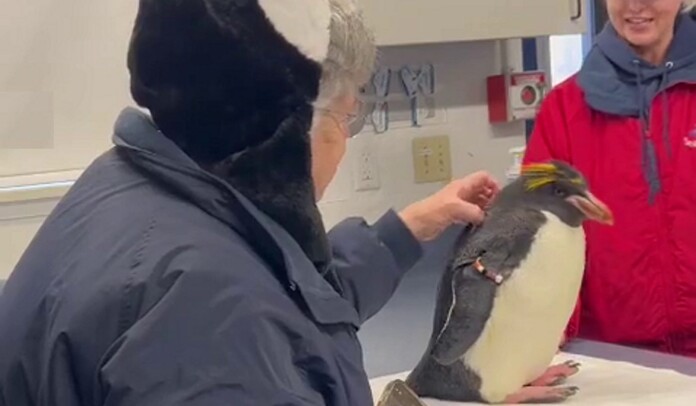
Christine petting a penguin at SeaWorld San Diego, December 15 2023. See SWNS story SWSMpenguins. An elderly woman cried tears of joy when her daughter fulfilled her lifelong dream of petting a penguin for Christmas. Christine Cross' lifelong dream was to see a penguin up close and she couldn't hold back tears when her daughter Lindsay Cross made her dream come true. A video shows Christine, 76, overcome with emotion after touching the bird at SeaWorld in San Diego, California, USA. Lindsay, 45, a database manager from San Juan Capistrano, California, said: "When she got back I lost count of how many times she said thank you.
Christine petting a penguin at SeaWorld San Diego (Photo by Lindsay Cross / SWNS)

An elderly woman cried tears of joy when her daughter fulfilled her lifelong dream of petting a real penguin.

Christine Cross is a super fan of all things penguin, and for a Christmas gift, her daughter Lindsay Cross made her dream come true.

A video shows the 76-year-old overcome with emotion after petting the bird at SeaWorld in San Diego, California.

“When I actually told her about the present she didn’t say any words. It was more like an excited noise,” recalls Lindsay.

Christine, a retired special needs teacher, has always loved penguins and feels very connected to them.

“She associated herself with them because they’re clumsy on land but graceful in the water. My mum was the same. She’s an absolute clutz but as soon as she gets in the water she’s so graceful.”

PENGUIN GOOD NEWS: Island is Wonderland for Penguins Once Again After Dog Helps Eradicate 300,000 Invasive Rabbits

She collects anything penguin-themed and has sponsored the animals in zoos for years by sending money for their care.

“She’s a big fan and has been collecting penguins her whole life—toys, figurines, pencils, clothes with penguins on them, paintings, Christmas decorations, anything.”

“When we got back I lost count of how many times she said thank you!”

WATCH: Penguin Leaps Into a Tour Boat to Avoid Being Eaten By Killer Whales

Watch the special moment below…

SEND THE GIFT OPPORTUNITY By Sharing on Social Media…

New Enzyme Allows CRISPR Technology to Accurately Target Almost Any Human Gene

Duke University team
Duke University team in Press Release

While the original CRISPR gene editing technology could only target 12.5% of the human genome, a new method developed by engineers at Duke University expands access to nearly every gene to potentially target and treat a broader range of diseases.

The study published in the journal Nature Communications, involved collaborators at Harvard University, Massachusetts Institute of Technology, University of Massachusetts Medical School, University of Zurich, and McMaster University.

“With this new tool, we can target nearly 100% of the genome with far more precision,” said Pranam Chatterjee, Assistant Professor of Biomedical Engineering at Duke.

CRISPR-Cas is a bacterial immune system that allows bacteria to use RNA molecules and CRISPR-associated (Cas) proteins to target and destroy the DNA of invading viruses. Since its discovery, researchers have raced to develop an arsenal of new CRISPR systems for applications in gene therapy and genome engineering.

The team investigated the new tool’s potential therapeutic uses for genetic diseases that were untreatable with the standard CRISPR system. Their first test was Rett syndrome, a progressive neurological disorder that predominantly affects young females and is caused by one of eight mutations to a specific gene.

The second was Huntington’s disease, a rare, inherited neurological disorder that causes the degeneration of neurons in the brain. Using the new technology, the team was able to alter previously inaccessible mutations, providing potential therapeutic opportunities for both diseases.

SUCCESS SO FAR: FDA Approves Cure for Sickle Cell Disease, the First Treatment to Use Gene-Editing Tool CRISPR

How Does it Work?

To make edits to the genome, Cas proteins utilize both an RNA molecule, which guides the enzyme to a targeted stretch of DNA, and a protospacer adjacent motif, or PAM, which is a short DNA sequence that immediately follows the targeted DNA sequence and is required for the Cas protein to bind.

Once a guide RNA finds its complementary DNA sequence and the Cas enzyme binds the adjacent PAM, the enzyme acts like scissors to make a cut in the DNA, triggering the desired changes to the genome. The most common CRISPR-Cas system is the Cas9 from Streptococcus pyogenes bacteria (SpCas9), which requires a PAM sequence of two guanine bases (GG) in a row.

In previous work, Chatterjee and his team used bioinformatics tools to discover and engineer new Cas9 proteins, including Sc++, which only requires a single guanine base PAM to make a cut. This change made it possible for researchers to edit nearly 50% of all DNA sequences.

WHAT ELSE CAN IT DO? CRISPR Gene Editing Reverses ‘Permanent’ Vision Loss in Mice

At the same time, Chatterjee’s collaborators at Harvard, led by Benjamin Kleinstiver, an assistant professor at Harvard Medical School, engineered a separate variant called SpRY. While SpRY could bind to any one of the four DNA bases that could form the PAM, it had a much stronger affinity for adenine and guanine.

Because both systems had drawbacks, the group decided to put the best of both together into a new variant called SpRyc.

While SpRYc was slower than its counterparts at cutting target DNA sequences, it was more effective than both the traditional enzymes at editing specific sections of DNA. Despite SpRYc’s broadness, it was also more accurate than SpRY.

INCREDIBLE NEWS: Aggressive Leukemia Disappears in 13-Year-old Who was First to Receive New CRISPR Treatment

“There is a lot of potential with SpRYc, whether it’s exploring how to translate it into the clinic or finding ways to make it even more efficient,” said Chatterjee. “We look forward to exploring the full capabilities of our tool.”

(Source: Duke University)

EXCITING STUFF to Share For the New Year on Social Media…

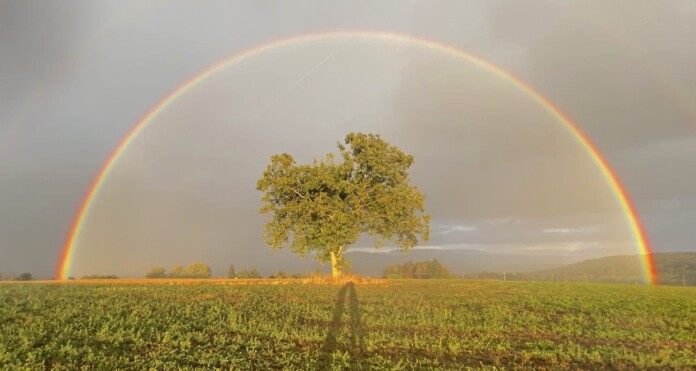
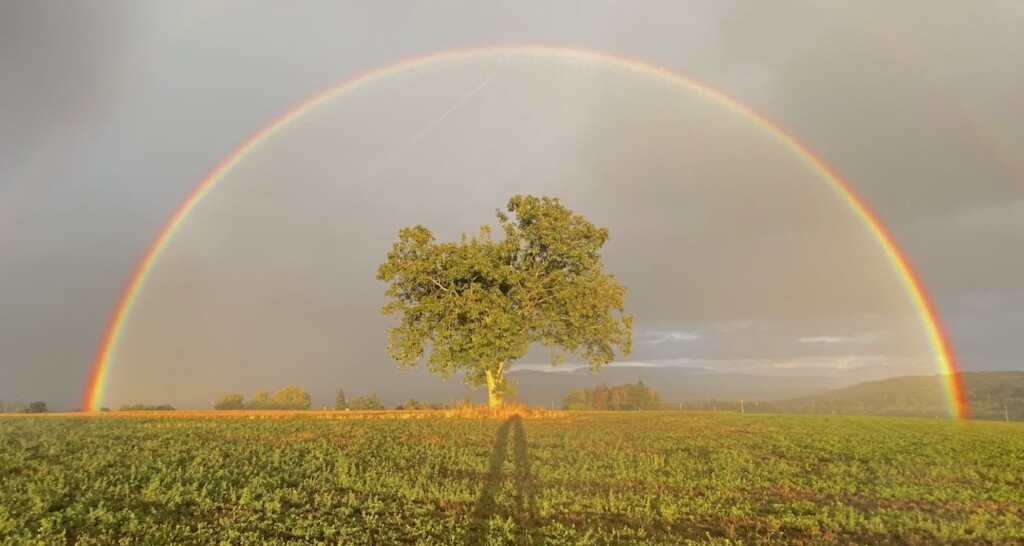
“Let no one who loves be unhappy—even love unreturned has its rainbow.” – James M. Barrie

Quote of the Day: “Let no one who loves be unhappy—even love unreturned has its rainbow.” – James M. Barrie 

Photo by: Typhaine Braz

With a new inspirational quote every day, atop the perfect photo—collected and archived on our Quotes page—why not bookmark GNN.org for a daily uplift?

Mother Protects Children After they Fall on Tracks as Train Rushes into Station (Watch)

SWNS license
SWNS license

A mother and her two children had a miraculous escape after they were accidentally pushed onto railway tracks—while a moving train came rushing into the station.

In reaction, the mother protected her little children by shielding them with her body as the train moved on, just inches above them.

This incident was caught on camera on December 23 at the Barh railway station in Bihar, which is in northern India.

The woman and her kids, from Begusarai, fell onto the tracks as a crowd surged on the platform while they were hoping to board the incoming train to Delhi on the Vikramshila Express.

Although shocked, the family all emerged from the tracks unscathed.

HEARTWARMING MOMENT:Photo of Firefighter Reading Book to Little Girl After Car Crash Warms Hearts on the Internet

Watch the lucky moment captured via cell phone…

SHARE THE LUCKY Moment With Friends on Social Media…

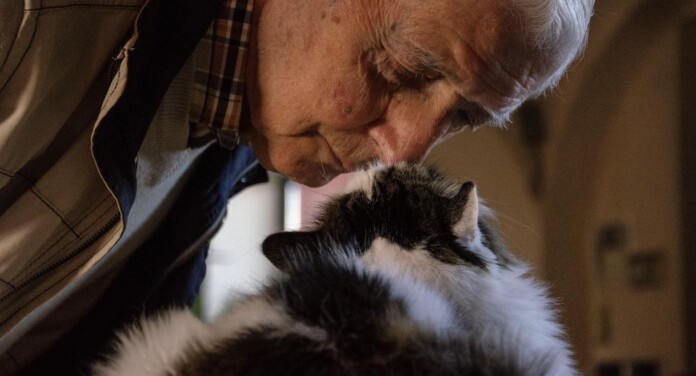
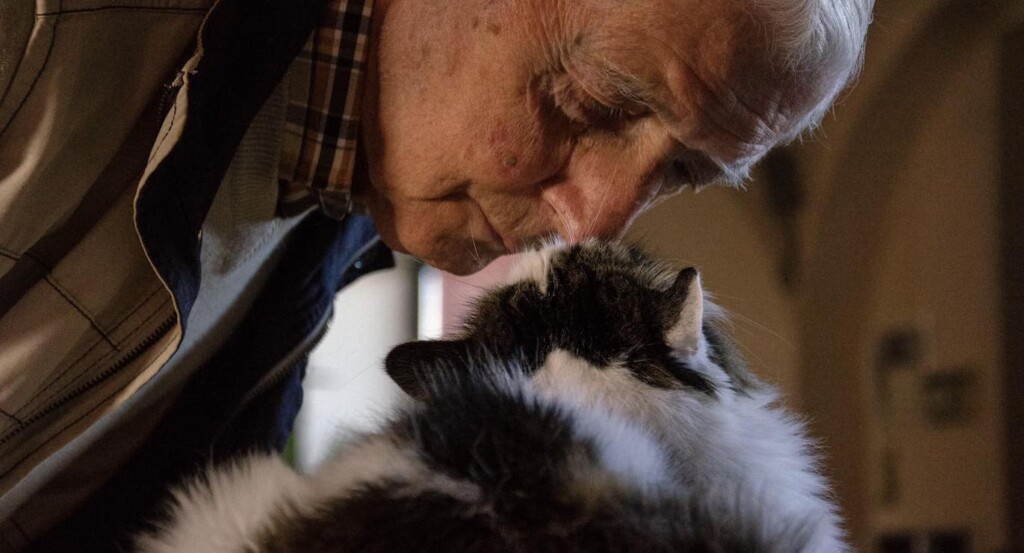
Owning Pets Helps Stave Off Dementia for People Over 50 Living on Their Own

By Pietro Schellino
By Pietro Schellino

Caring for a pet helps stave off cognitive decline for people over 50 who live on their own, according to a new study of almost 8,000 participants.

Researchers found that pet ownership was associated with slower rates of decline in verbal memory and verbal fluency among the older adults who were living alone.

The study included 7,945 mostly-white British participants from the English Longitudinal Study of Ageing with an average age of 66.

Followed over an eight year period, more than a third of the group (35.1 percent) owned pets; about 30% of the group lived alone.

Previous studies suggested that solitary living is a risk factor for developing dementia and cognitive decline, but among those folks, raising dogs or cats was related to reduced loneliness.

CHECK THIS OUT: Looking On the Bright Side of Life Could Help Cut Your Risk For Dementia

Some research has found that pet ownership is associated with better verbal memory and executive function, but others failed to find any evidence.

The new research published in JAMA Network aimed to further explore the association between aging by oneself—a trend which has been on the rise over the past few decades—and pet ownership. And the results were clear.

“Pet ownership offset the associations between living alone and declining rates in verbal memory and verbal fluency,” said study corresponding author Professor Ciyong Lu, of Sun Yat-sen University in Guangzhou, China.

It was “a significant modifier” in all 3 associations—composite verbal cognition, verbal memory, and verbal fluency.

POPULAR: An Espresso a Day Could Keep Alzheimer’s at Bay by Preventing Tau Clumping

“Pet ownership was associated with slower rates of decline among older adults living alone.”

But owning a cat or dog did not make any difference for older people who lived with other people.

“These findings suggest that pet ownership may be associated with slower cognitive decline among older adults living alone.”

RELATED: Vitamin D Supplements May be Fending Off People’s Dementia, New Large Study Shows–Especially in Females

Prof. Lu is now calling for clinical trials that could help inform public health measures to address dementia among the elderly.

SEND This HEALTH Advice to Friends Living Alone By Sharing on Social Media…

Number of Electric School Buses More than Doubled in the U.S. in Past Year

File photo by lwinkyawmyat
From World Resources Institute – Energy.gov (FOTW)

According to the World Resources Institute, the number of electric school buses operating or delivered in the United States more than doubled—from 598 in 2022 to 1,285 through June 2023—all driven to serve school children while providing cleaner air in 40 states.

Looking into the near future, the number of electric school buses that were already funded or on-order nearly tripled, and were spread across districts located in 49 states.

The emissions-free buses are found in 914 U.S. school districts and private fleet operators, according to the evidence-based nonprofit’s report published in September, 2023: State of Electric School Bus Adoption in the US.

California leads all states, with over 2,000 committed electric buses across the sprawling territory. This is more than five times as many EV buses as the next leading state, Maryland, with 391 commitments.

New Jersey has the second largest increase with 107 new buses, while West Virginia has the third largest increase with 42 new commitments. The updated data shows electric school bus commitments are now more evenly distributed across all regions of the country.

WOW! Gordon Ramsay Shocks School Cafeteria Manager Who Called in to Talk Show Asking For Substitute Chef For the Day

The Top 5 School Districts by Number of Electric School Buses are:

  1. Montgomery County Public Schools (Maryland)
  2. Los Angeles Unified School District
  3. New York City Public Schools
  4. Twin Rivers Unified School District (California)
  5. Troy Community Consolidated School District (Illinois)

“We estimate approximately 69,000 students across the country are currently served by electric school buses that are delivered or in operation,” said the report authors, Lydia Freehafer, Leah Lazer, and Brian Zepka.

Zero pollution from tailpipes while buses are idling or driving means the students, staff, and community will be exposed to significantly less harmful air particulates that contribute to asthma and lung disease. The environment also benefits from reduced greenhouse gas emissions.

RELATED: US Mail to be Delivered in 9,000 New Electric Vehicles, With USPS Installing 14,000 Charging Stations

The federal government’s Clean School Bus Program, administered by the Environmental Protection Agency, is one of the biggest funders of these vehicles, having awarded 2,339 electric school buses—with more on the way.

EDUCATE OTHERS By Sharing This Green News on Social Media…

2024 New Year’s Horoscope: A ‘Free Will Astrology’ From Rob Brezsny

Our partner Rob Brezsny, who has a new book out, Astrology Is Real: Revelations from My Life as an Oracle, provides his weekly wisdom to enlighten our thinking and motivate our mood. Rob’s Free Will Astrology, is a syndicated weekly column appearing in over a hundred publications. He is also the author of Pronoia Is the Antidote for Paranoia: How All of Creation Is Conspiring To Shower You with Blessings. (A free preview of the book is available here.)

Here is your weekly horoscope…

FREE WILL ASTROLOGY – Week of December 30, 2023
Copyright by Rob Brezsny, FreeWillAstrology.com

CAPRICORN (Dec. 22-Jan. 19):
Capricorn-born Lebron James is one of the greatest players in basketball history. Even more interesting from my perspective is that he is an exuberant activist and philanthropist. His list of magnificent contributions is too long to detail here. Here are a few examples: his bountiful support for charities like After-School All-Stars, Boys & Girls Clubs of America, the Children’s Defense Fund, and his own Family Foundation. I suggest you make Lebron one of your role models in 2024. It will be a time when you can have more potent and far-reaching effects than ever before through the power of your compassion, generosity, and beneficence.

AQUARIUS (Jan. 20-Feb. 18):
I propose we make the shark your soul creature in 2024. Not because some shark species are apex predators at the top of the food chain. Rather, I propose you embrace the shark as an inspirational role model because it is a stalwart, steadfast champion with spectacular endurance. Its lineage goes back 400 million years. Sharks were on Earth before there were dinosaurs, mammals, and grass. Saturn’s rings didn’t exist yet when the first sharks swam in the oceans. Here are the adjectives I expect you to specialize in during the coming months: resolute, staunch, indomitable, sturdy, resilient.

PISCES (Feb. 19-March 20):
In the 19th century, many scientists believed in the bogus theory of eugenics, which proposed that we could upgrade the genetic quality of the human race through selective breeding. Here’s a further example of experts’ ignorance: Until the 1800s, most scientists dismissed the notion that stones fell from the sky, even though meteorites had been seen by countless people since ancient times. Scientists also rejected the idea that large reptiles once roamed the Earth, at least until the 19th century, when it became clear that dinosaurs had existed and had become extinct. The moral of the story is that even the smartest among us can be addicted to delusional beliefs and theories. I hope this inspires you to engage in a purge of your own outmoded dogmas in 2024. A beginner’s mind can be your superpower! Discover a slew of new ways to think and see.

ARIES (March 21-April 19):
Among couples who share their finances, 39 percent lie to their partners about money. If you have been among that 39 percent, please don’t be in 2024. In fact, I hope you will be as candid as possible about most matters with every key ally in your life. It will be a time when the more honest and forthcoming you are, the more resources you will have at your disposal. Your commitment to telling the truth as kindly but completely as possible will earn you interesting rewards.

TAURUS (April 20-May 20):
According to tradition in ancient Israel, a Jubilee year happened every half-century. It was a “trumpet blast of liberty,” in the words of the Old Testament book Leviticus. During this grace period, enslaved people were supposed to be freed. Debts were forgiven, taxes canceled, and prisoners released. People were encouraged to work less and engage in more revelry. I boldly proclaim that 2024 should be a Jubilee Year for you Bulls. To launch the fun, make a list of the alleviations and emancipations you will claim in the months ahead.

GEMINI (May 21-June 20):
This is essential wisdom about how to conduct vibrant relationships: “Make peace with their devils, and you will do the same with yours.” I invite you to make liberal use of it in 2024. Why? Because I suspect you will come to deeply appreciate how all your worthwhile bonds inevitably require you to engage with each other’s wounds, shadows, and unripeness. To say it another way, healthy alliances require you to deal respectfully and compassionately with each other’s darkness. The disagreements and misunderstandings the two of you face are not flaws that discolor perfect intimacy. They are often rich opportunities to enrich togetherness.

CANCER (June 21-July 22):
Cancerian author Franz Kafka wrote over 500 letters to his love interest Felice Bauer. Her outpouring of affection wasn’t as voluminous, but was still very warm. At one point, Kafka wryly communicated to her, “Please suggest a remedy to stop me trembling with joy like a lunatic when I receive and read your letters.” He added, “You have given me a gift such as I never even dreamt of finding in this life.” I will be outrageous here and predict that 2024 will bring you, too, a gift such as you never dreamt of finding in this life. It may or may not involve romantic love, but it will feel like an ultimate blessing.

LEO (July 23-Aug. 22):
Renowned inventor Nikola Tesla (1856–1943) felt an extraordinary closeness with sparrows, finches, pigeons, and other wild birds. He loved feeding them, conversing with them, and inviting them into his home through open windows. He even fell in love with a special pigeon he called White Dove. He said, “I loved her as a man loves a woman, and she loved me. As long as I had her, there was a purpose to my life.” I bring this to your attention because I suspect 2024 will be an excellent time to upgrade your relationship with birds, Leo. Your power to employ and enjoy the metaphorical power of flight will be at a maximum.

VIRGO (Aug. 23-Sept. 22):
“All the world’s a stage,” wrote Shakespeare. He was comparing life to a theatrical drama, suggesting we are all performers attached to playing roles. In response, a band called the Kingpins released the song “All the World’s a Cage.” The lyrics include these lines: “You promised that the world was mine / You chained me to the borderline / Now I’m just sitting here doing time / All the world’s a cage.” These thoughts are the prelude to my advice for you. I believe that in 2024, you are poised to live your life in a world that is neither like a stage nor a cage. You will have unusually ample freedom from expectations, artificial constraints, and the inertia of the past. It will be an excellent time to break free from outdated self-images and your habitual persona.

LIBRA (Sept. 23-Oct. 22):
At age 10, an American girl named Becky Schroeder launched her career as an inventor. Two years later, she got her first of many patents for a product that enables people to read and write in the dark. I propose we make her one of your role models for 2024. No matter how old you are, I suspect you will be doing precocious things. You will understand life like a person at least ten years older than you. You will master abilities that a casual observer might think you learned improbably fast. You may even have seemingly supernatural conversations with the Future You.

SCORPIO (Oct. 23-Nov. 21):
Here are excellent questions for you to meditate on throughout 2024. 1. Who and what do you love? Who and what makes you spill over with adoration, caring, and longing? 2. How often do you feel deep waves of love? Would you like to feel more of them? If so, how could you? 3. What are the most practical and beautiful ways you express love for whom and what you love? Would you like to enhance the ways you express love, and if so, how? 4. Is there anything you can or should do to intensify your love for yourself?

SAGITTARIUS (Nov. 22-Dec. 21):
Like the rest of the planet, Scotland used to be a wild land. It had vast swaths of virgin forests and undomesticated animals. Then humans came. They cut the trees, dug up charcoal, and brought agriculture. Many native species died, and most forests disappeared. In recent years, though, a rewilding movement has arisen. Now Scotland is on the way to restoring the ancient health of the land. Native flora and fauna are returning. In accordance with astrological omens, I propose that you launch your own personal rewilding project in 2024. What would that look like? How might you accomplish it?

WANT MORE? Listen to Rob’s EXPANDED AUDIO HOROSCOPES, 4-5 minute meditations on the current state of your destiny — or subscribe to his unique daily text message service at: RealAstrology.com

(Zodiac images by Numerologysign.com, CC license)

SHARE The Wisdom With Friends Who Are Stars in Your Life on Social Media…

“Kindness in words creates confidence… Kindness in giving creates love.” – Lao Tzu

Narges Pms, public domain

Quote of the Day: “Kindness in words creates confidence… Kindness in giving creates love.” – Lao Tzu

Photo by: Narges Pms

With a new inspirational quote every day, atop the perfect photo—collected and archived on our Quotes page—why not bookmark GNN.org for a daily uplift?

Narges Pms, public domain

Restaurants Find Companies to Take Their Spent Oyster Shells to Restore Oyster Reefs

Decontaminated shells being unloaded to become part of a series of restored oyster reefs. Photograph Miko/The Nature Conservancy

For everything that Hong Kong is and has become, a quiet constant among the rattle of construction and the sprawl of concrete, steel, and glass has been the humble oyster.

Now, after decades of degradation of the oyster reefs, restaurants and municipal waste services are ensuring that consumed oysters have their shells returned to the reefs, ensuring they rebuild and thrive in the deep Hong Kong water.

The Hong Kong oyster, Magallana hongkongensis filters more water of impurities than any other species. If properly cared for, each of the tens of thousands of oysters that make up the reefs can clean 200 liters per day.

The Nature Conservancy, one of America’s largest conservation NGOs, runs a chapter in Hong Kong that organizes oyster shell collection from the city’s many restaurants. Every Thursday their vehicles comb the city for sacks of used oyster shells before dumping them at a special enclosure at a landfill to ensure all residual flesh and bacteria are dried out in the sun.

1 year from that point, they are dumped into the waters over reefs identified as having the potential to be regenerated, according to the Guardian’s Sofia Quaglia reporting on the effort.

YOU MAY ALSO LIKE: Make Yourself Happy: Watch a Pair of Giant Rubber Duckies Floating in Hong Kong Harbor

The Nature Conservancy is collecting nearly 1 metric ton of shells from 12 hotels, supermarkets, and a variety of smaller restaurants. Around 80 tonnes have been recycled since the project began in 2020.

The shells help regrow the reefs by increasing the mass of material for oyster larvae to glom on to. It also provides homes for sea sponges and other foundational marine life that provide food, shelter, and co-dependent relationships with other creatures higher up the marine food web.

OYSTERS IN THE CHESAPEAKE: World’s Largest Oyster Restoration Is Big Success – Fulfilling Virginia’s Promise to Chesapeake Bay Rivers

The City University of Hong Kong and the Swire Institute of Marine Science are both studying the efforts of the Nature Conservancy and their local oyster farming partners to quantity how much, if at all, oyster populations can be restored by this recycling method.

They have been used in 4 projects so far, including on the eastern side of the island and around the airport island.

WATCH the story below from The Nature Conservancy… 

SHARE The Rebuilding Of These Reefs One Half-Dozen On Ice At A Time… 

Wild and Wonderful Saiga is No Longer Endangered with a Million Roaming Now in Central Asia

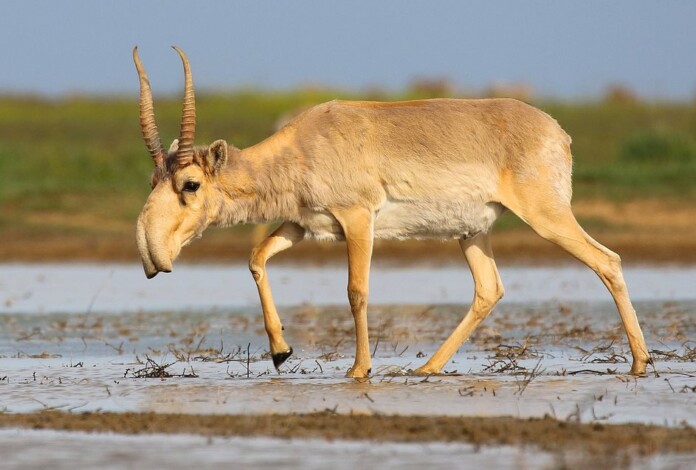
Saiga antelope at the Stepnoi Sanctuary in Russia. CC 4.0. Andrey Giljov

Decades of hard work on the part of national and international conservation partners have reaped rich rewards for the saiga, one of the world’s most charismatic and, until recently, most endangered antelopes.

The IUCN Red List status of this timeless talisman of the Central Asian steppes has been changed from Critically Endangered to Near Threatened.

The dramatic downlisting reflects a remarkable rebound in saiga numbers, particularly its Kazakhstan stronghold, where populations have bounced back from a perilously low 48,000 individuals in 2005 to a new high of over 1.9 million.

It’s hard not to romanticize the Central Asian steppes with all their great history of intercultural exchange and travel. But leering at all the passing Turkic tribes, Mongol hordes, peaceful nomads, and Marco Polo would have been the saiga antelope.

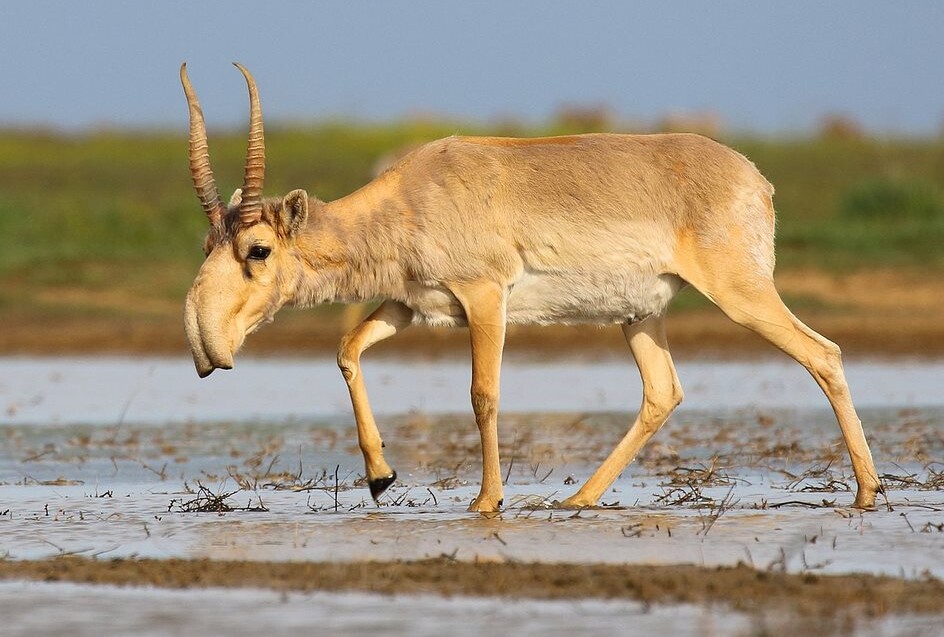
The most characteristic feature of this animal are without a doubt the pair of bloated downward-facing nostrils, and the gorgeous, ringed horns sported only by the males. Large nostrils are typical of sprinters or cold weather environments, but it’s possible they are also a display tool for potential mates.

Described by Fauna and Flora International as a “genuine collaborative effort” involving state governments, research institutes, and conservation NGOs, the return of the saiga has featured many “false dawns.” Of particular impediment to their recovery has been frequent outbreaks of zoological diseases.

While the stronghold of the saiga is in Kazakhstan—the largest member of the Central Asian “stans” there are populations as far away as Russia and China, with the latter protecting it with the same stringency as giant pandas, rhinos, tigers, slow lorises, a variety of Critically Endangered monkeys, elephants, and Przewalski’s horse.

MORE CENTRAL ASIAN NEWS: Once Numbering Less Than 400, Majestic Bukhara Deer Return To The Wilds Of Kazakhstan

“Saiga have been roaming in the Eurasian steppe territories for thousands of years, way before our current generation was born,” said Samat Toigonbaev, Fauna & Flora Project Manager, Kazakhstan.

“When staying in the steppe, I can sense that invisible feeling of pride the local people have towards saiga. Witnessing them running through the steppe in vast numbers again has been one of my brightest life experiences. And it is our utmost duty to conserve it that way.”

MORE TREMENDOUS SPECIES RECOVERIES: In World First, Horned Oryx Upgraded from Extinct in Wild to Endangered Owing to Decades of Zoo Work

The Kazakh government has consistently legislated to protect the saiga; as recently as 2021 designated two new protected areas on their behalf totaling over 1.5 million acres.

“As one of the most successful recoveries of a terrestrial mammal ever recorded, this… illustrates how conservation can be effective if all parties collaborate with a strong mission and appropriate resourcing”, says Vera Voronova, Executive Director of ACBK, a Kazakh national civil society organization that was part of the conservation efforts.

SHARE This Major Milestone For These Central Asian Icons With Your Friends… 

Driver Sees 18-Year-old Jump off 50-ft Bridge and Instantly Dives into Racing River to Save Him

credit Jeremy Bishop, Unsplash.

An Army veteran in Virginia jumped 50 feet off a bridge into winter-cold water to save a suicidal teen.

Instincts clued in Juan Serrano on the motives of a young guy on the side of the Appomattox Bridge of I-95 who was pacing and seemed to need help. Serrano had been returning home from a visit to church he hadn’t been particularly interested in—waking up tired that morning.

Pulling over, he asked the young fellow if he needed a ride, but as soon as Serrano began to approach him, he jumped into the fast-flowing, freezing water below.

“I thought alright we got to get him out of the water because it could’ve been my kid,” Serrano told WTVR. “Next thing I knew I was just jumping into the water, trying to get him out.”

It was pitch-black that night, and against all odds, Serrano managed to reach the boy, either before or after the river carried them a mile downstream, eventually landing them at the gates of a water treatment facility where Serrano used his belt and the boy’s backpack in some combination to get him out of the water.

MORE WATER RESCUES: Seven Swimmers Owe Their Lives to Australian Teens on Boogie Boards–2 Rescues in One Week

“Hero is a big word, I was just a guy with my wife, passing by and God put us there for a reason,” Serrano said, dismissing the moniker.

He told the CBS affiliate that he’s telling the story now—not to draw attention to his daring actions—but to raise awareness of mental health needs in communities near and far.

WATCH the story below from WTVR…

SHARE This BRAVERY With An Important Message on Social Media…

First-time Ever, Scientists Find Planet Almost as Big as its Host Star: ‘How little we know about the universe’

Artistic rendering of the possible view from LHS 3154b towards its low mass host star - CC 4.0. ND SA
Artistic rendering of the possible view from LHS 3154b towards its low mass host star – CC 4.0. ND SA

Far out in the galaxy, astronomers at Penn State have found a planet that is just a little bit smaller than its host star, a surprising finding set to potentially change the established ideas of planet formation.

Science news is filled with headlines of discoveries that clash with established theories known only to the scientists researching them, and not to the general public. But the idea of a planet being almost as large as the star it orbits is intuitively very strange to anyone with even a vague understanding of system dynamics.

The exoplanet is twice the mass of any known body that orbits its star in less than ten days, and weighs in at about one three-hundredth the mass of its star, which may not sound like much, but just compare it to Mercury, the closest planet to the Sun which is 93 million times smaller, and you have some understanding of the magnitude of the discovery.

“This discovery really drives home the point of just how little we know about the universe,” said Suvrath Mahadevan, Professor of Astronomy and Astrophysics at Penn State and co-author on the paper describing the discovery. “We wouldn’t expect a planet this heavy around such a low-mass star to exist.”

Mahadevan and his colleagues were using the 10-meter Hobby-Eberly Telescope at McDonald Observatory in Texas to survey low-mass stars and managed to identify LHS 3154, an M-type star, which is called a ‘cold dwarf’ and is the least-massive and least-hot kind of luminescent star.

Very quickly they used the transiting method to determine there was a planet passing between the view of the telescope and the star every 3.7 days, and the apparent wobble it was causing in the position of the star indicated that it was a massive object.

MORE MYSTERIOUS EXOPLANETS: On Distant Planets that Don’t Rotate, Life May Exist Under Skies of Permanent Dawn and Dusk

With the help of NASA’s Transiting Exoplanet Survey Satellite (TESS) and ESA’s Gaia satellite, the team established the mass of the transiting body as 0.35% the mass of the star, and about the size of Neptune, which when controlled for with the two most accepted theories of planet formation, threw a spanner in the works of both.

An artistic rendering of the mass comparison of LHS 3154 system and our own Earth and Sun. Credit: Penn State / Penn State. CC 4.0. ND SA

“The planet-forming disk around the low-mass star LHS 3154 is not expected to have enough solid mass to make this planet,” Mahadevan said. “But it’s out there, so now we need to reexamine our understanding of how planets and stars form.”

The two existing theories of planet formation are core accretion and gravitational instability.

Core accretions states that when stars complete their formation, a large disk of gas and dust is leftover which coalesces into planets, but the size of LHS 3154 is simply not enough to produce a planet as large as this one in any of the scenarios the team ran.

MORE STORIES LIKE THIS: Locked in a 4 Billion-Year-old Dance, Six New Exoplanets Demonstrate the Cosmic Beauty of ‘Resonant Orbits’

The team also considered the possibility the planet was created outside the star system and arrived there afterwards, but if this was the case, the planet would have to have an elliptical orbit, which it doesn’t.

“We were really struggling—like, we said, ‘OK, how can we actually form this type of planet?’” Guðmundur Stefánsson, an astrophysicist at Princeton University, and the paper’s first author, told Astronomy.

The mass of dust in the protoplanetary disk would have to be 10 times what the star is believed to have been capable of producing to create such a large planet.

SHARE This Astronomical Headscratcher With Your Friends…

“The great thing about getting older is that you don’t lose all the other ages you’ve been.” – Madeleine L’Engle

Quote of the Day: “The great thing about getting older is that you don’t lose all the other ages you’ve been.” – Madeleine L’Engle

Photo by: Aziz Acharki

With a new inspirational quote every day, atop the perfect photo—collected and archived on our Quotes page—why not bookmark GNN.org for a daily uplift?

Family Hears Late Loved One’s Voice Again Thanks to an Electrician Who Jumped at the Chance to Help

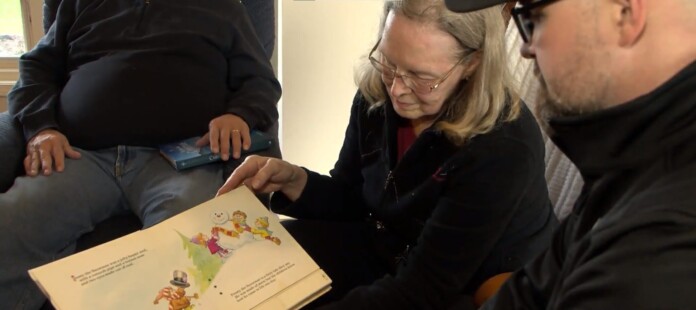
Linda Swartz - WCIA, fair use
Linda Swartz – WCIA, fair use

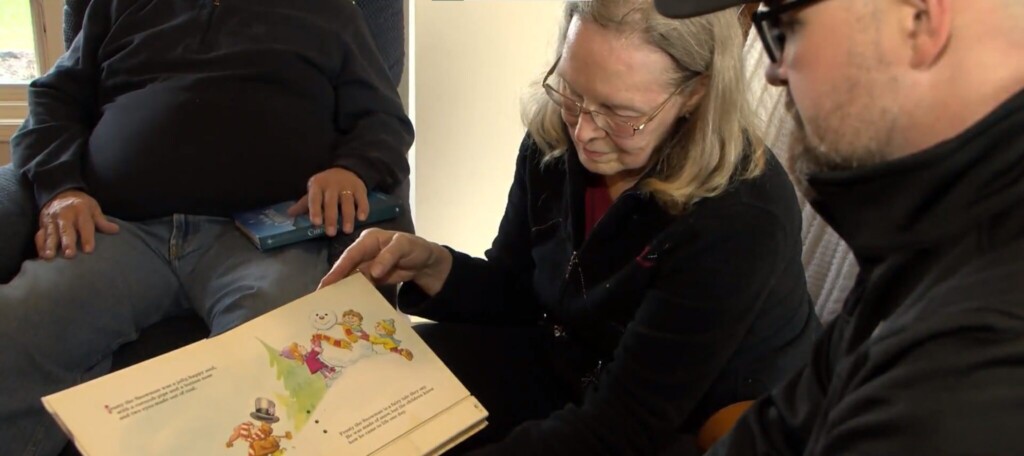
An electrician with a passion for preservation restored an ancient piece of home electronics, allowing a woman to hear her departed mother’s voice on Christmas.

The old animated version of Frosty the Snowman can pull many people back to their childhood; doubly so for Linda Swartz, who had an old book with an electronic recording of her mother reading it to her when she was young.

Corrosion had long since rendered the circuitry unusable, but Linda kept it around for sentiment. Years went by, and as all mothers do, hers passed away in 2020.

Enter Lars Robins, an electrician who came by to fix something in Linda’s house. In the course of his work he came across the Frosty the Snowman book.

“I was really shocked because I didn’t think it was going to work,” Swartz told WCIA news. “For a second there it looked like it wasn’t going to, but it did. I couldn’t be happier.

Robins says his passion for preserving old things began when he worked as a teacher before his job as an electrician. Teachers are constantly creating and watching their kids create sentimental things, and understand how much old books and toys can mean even to adults.

OTHER HELPFUL HANDYMEN: Electrician Comes To Repair Lights For 72-Year-old, Then Enlists Entire Community To Fix Her Crumbling House—For Free

“Helping people is the heart of what we do, so being able to help somebody in that kind of specific way, those opportunities don’t come around too often but when they do you kind of jump on them,” Robins added.

Linda put it down as a Christmas blessing.

WATCH the story below from WCIA… 

SHARE This Sentimental Story With Your Friends Post-Christmas…