








All News - Page 237 of 1725 - Good News Network
Home Blog Page 237

Scientists Find Drug that Could Combat Resistant Infections Like MRSA, Thanks to AI

By Christine Daniloff for MIT, Courtesy of CDC (CC-ND)

Using a type of artificial intelligence known as deep learning, MIT researchers have discovered a class of compounds that can kill a drug-resistant bacterium that causes more than 10,000 deaths in the United States every year.

In a study appearing this week in Nature, the researchers showed that these compounds could kill methicillin-resistant Staphylococcus aureus (MRSA) grown in a lab dish and in two mouse models of MRSA infection. The compounds also show very low toxicity against human cells, making them particularly good drug candidates.

A key innovation of the new study, could help researchers design additional drugs that might work even better than the ones identified by the model.

“Our work provides a framework that is time-efficient, resource-efficient, and mechanistically insightful, from a chemical-structure standpoint, in ways that we haven’t had to date,” says James Collins, from MIT’s Institute for Medical Engineering and Science (IMES) and Department of Biological Engineering.

Severe cases of MRSA can lead to sepsis, a potentially fatal bloodstream infection.

Over the past several years, Collins and his colleagues at MIT have begun using deep learning to try to find new antibiotics. Their work has yielded potential drugs against Acinetobacter baumannii, a bacterium that is often found in hospitals, and many other drug-resistant bacteria.

These models sifted through millions of compounds, generating predictions of which ones may have strong antimicrobial activity.

OTHER AI SUCCESSES: Ancient Library Scrolls Thought Ruined By Vesuvius Eruption Now Readable By AI

These types of searches have proven fruitful, but one limitation to this approach is that the models are “black boxes,” meaning that there is no way of knowing what features the model based its predictions on. If scientists knew how the models were making their predictions, it could be easier for them to identify or design additional antibiotics.

“What we set out to do in this study was to open the black box,” Wong says. “These models consist of very large numbers of calculations that mimic neural connections, and no one really knows what’s going on underneath the hood.”

The deep learning model generated this training data by testing about 39,000 compounds for antibiotic activity against MRSA, and then fed this data, plus information on the chemical structures of the compounds, into the model.

“You can represent basically any molecule as a chemical structure, and also you tell the model if that chemical structure is antibacterial or not,” Wong says. “The model is trained on many examples like this. If you then give it any new molecule, a new arrangement of atoms and bonds, it can tell you a probability that that compound is predicted to be antibacterial.”

ALSO CHECK OUTAI Can Accurately Detect 20% More Breast Cancers than Traditional Screening by Radiologists

To figure out how the model was making its predictions, the researchers adapted an algorithm known as Monte Carlo tree search, which has been used to help make other deep learning models, such as AlphaGo, more explainable. This search algorithm allows the model to generate not only an estimate of each molecule’s antimicrobial activity, but also a prediction for which substructures of the molecule likely account for that activity.

Potent activity

To further narrow down the pool of candidate drugs, the researchers trained three additional deep learning models to predict whether the compounds were toxic to three different types of human cells. By combining this information with the predictions of antimicrobial activity, the researchers discovered compounds that could kill microbes while having minimal adverse effects on the human body.

Using this collection of models, the researchers screened about 12 million compounds, all of which are commercially available. From this collection, the models identified compounds from five different classes, based on chemical substructures within the molecules, that were predicted to be active against MRSA.

The researchers purchased about 280 compounds and tested them against MRSA grown in a lab dish, allowing them to identify two, from the same class, that appeared to be very promising antibiotic candidates. In tests in two mouse models, one of MRSA skin infection and one of MRSA systemic infection, each of those compounds reduced the MRSA population by a factor of 10.

Experiments revealed that the compounds appear to kill bacteria by disrupting their ability to maintain an electrochemical gradient across their cell membranes. This gradient is needed for many critical cell functions, including the ability to produce ATP—molecules that cells use to store energy. An antibiotic candidate that Collins’ lab discovered in 2020, halicin, appears to work by a similar mechanism but is specific to Gram-negative bacteria (bacteria with thin cell walls). MRSA is a Gram-positive bacterium, with thicker cell walls.

“We have pretty strong evidence that this new structural class is active against Gram-positive pathogens by selectively dissipating the proton motive force in bacteria,” Wong says. “The molecules are attacking bacterial cell membranes selectively, in a way that does not incur substantial damage in human cell membranes–and is not toxic against human cells.”

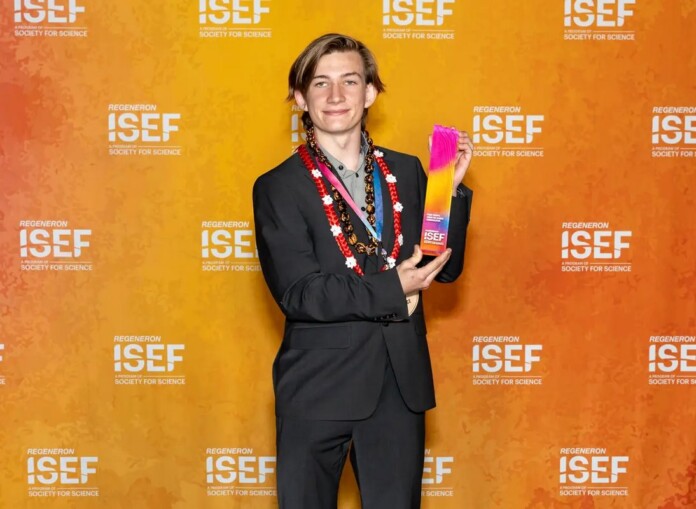
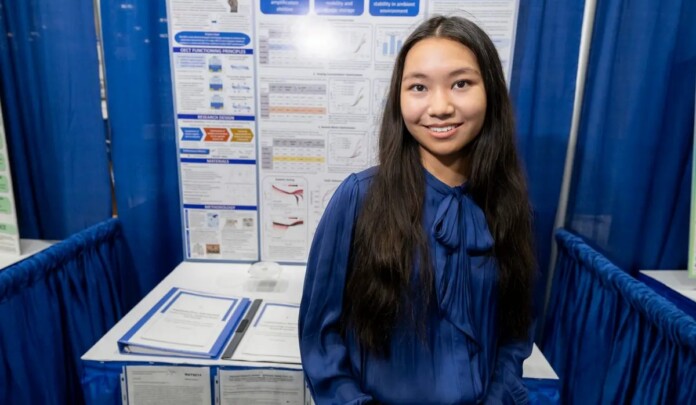
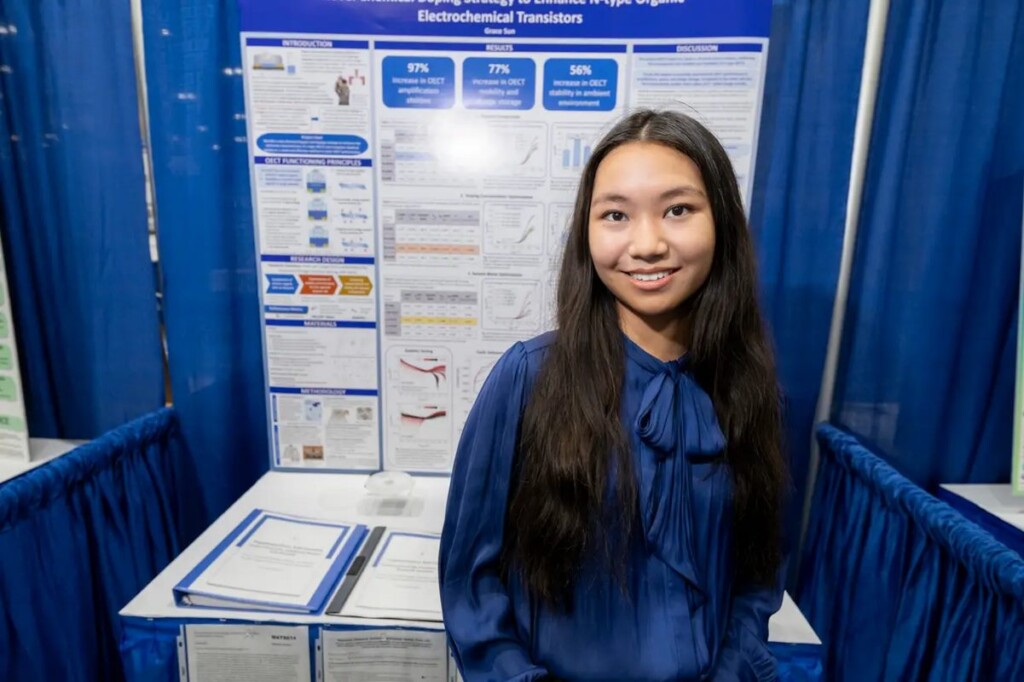
ALSO: 17-Year-old Wins $150,000 in Science Talent Search for Remarkable Way to Diagnose Pediatric Heart Disease

The researchers have shared their findings with Phare Bio, a nonprofit started by Collins and others as part of the Antibiotics-AI Project. The nonprofit now plans to do more detailed analysis of the chemical properties and potential clinical use of these compounds. Meanwhile, Collins’ lab is working on designing additional drug candidates based on the findings of the new study, as well as using the models to seek compounds that can kill other types of bacteria.

“We are already leveraging similar approaches based on chemical substructures to design compounds de novo, and of course, we can readily adopt this approach out of the box to discover new classes of antibiotics against different pathogens,” Wong says.

‘New Species’ of Frog With Fangs Hunts Crabs Even Though it’s No Bigger Than a Quarter

Left the new species of fanged frog. Right the frog’s eggs, laid on a leaf - photo credit, Sean Reilly.
Left the new species of fanged frog, Limnonectes phyllofolia. Right the frog’s eggs, laid on a leaf – photo credit, Sean Reilly.

In a new study, published in the journal PLOS ONE, researchers have described a new species of fanged frog: the smallest one ever discovered.

In general, frogs’ teeth aren’t anything to write home about—they look like pointy little pinpricks lining the upper jaw. But one group of stream-dwelling frogs in Southeast Asia has a strange adaptation: two bony “fangs” jutting out of their lower jawbone.

There are over 70 species of these Dracula frogs, and they use these fangs to battle with each other over territory and mates, and sometimes, incredibly, even to hunt tough-shelled prey like giant centipedes and crabs.

In collaboration with the Bogor Zoology Museum, a team from the McGuire Lab at Berkeley found the frogs on Sulawesi, a rugged, mountainous island that makes up part of Indonesia.

“It’s a giant island with a vast network of mountains, volcanoes, lowland rainforest, and cloud forests up in the mountains. The presence of all these different habitats mean that the magnitude of biodiversity across many plants and animals we find there is unreal—rivaling places like the Amazon,” said Jeff Frederick, a postdoctoral researcher at the Field Museum in Chicago and the study’s lead author.

“This new species is tiny compared to other fanged frogs on the island where it was found, about the size of a quarter,” says Frederick.

“Many frogs in this genus are giant, weighing up to two pounds. At the large end, this new species weighs about the same as a dime.”

While trekking through the jungle, members of the joint US-Indonesia amphibian and reptile research team noticed something unexpected on the leaves of tree saplings and moss-covered boulders: nests of frog eggs.

Frogs are amphibians, and they lay eggs that are encapsulated by jelly, rather than a hard, protective shell. To keep their eggs from drying out, most amphibians lay their eggs in water. To the research team’s surprise, they kept spotting the terrestrial egg masses on leaves and mossy boulders several feet above the ground. Shortly after, they began to see the small, brown frogs themselves.

“Normally when we’re looking for frogs, we’re scanning the margins of stream banks or wading through streams to spot them directly in the water,” Frederick says. “After repeatedly monitoring the nests though, the team started to find attending frogs sitting on leaves hugging their little nests.”

SCIENTISTS DISCOVER 30 NEW FROGS: 32 Species of Harlequin Frogs Were Found in Ecuador That We Thought Were Extinct

This close contact with their eggs allows the frog parents to coat the eggs with compounds that keep them moist and free from bacterial and fungal contamination.

Closer examination of the amphibian parents revealed not only that they were tiny members of the fanged frog family, complete with barely visible fangs, but that the frogs caring for the clutches of eggs were all male.

“Male egg-guarding behavior isn’t totally unknown across all frogs, but it’s rather uncommon,” says Frederick.

MORE NEW SPECIES: Newly-Identified Species of Transparent ‘Glass’ Frogs Unveiled in Amazing Photos From Ecuador

Frederick and his colleagues hypothesize that the frogs’ unusual reproductive behaviors might also relate to their smaller-than-usual fangs. Some of the frogs’ relatives have bigger fangs, which help them ward off competition for spots along the river to lay their eggs in the water. Since these frogs evolved a way to lay their eggs away from the water, they may have lost the need for such big imposing fangs. (The scientific name for the new species is Limnonectes phyllofolia; phyllofolia means “leaf-nester.”)

“It’s fascinating that on every subsequent expedition to Sulawesi, we’re still discovering new and diverse reproductive modes,” says Frederick. “Our findings also underscore the importance of conserving these very special tropical habitats. Most of the animals that live in places like Sulawesi are quite unique, and habitat destruction is an ever-looming conservation issue for preserving the hyper-diversity of species we find there. Learning about animals like these frogs that are found nowhere else on Earth helps make the case for protecting these valuable ecosystems.”

SHARE This Little Protector With Your Friends On Social Media… 

Man Has Eaten a Frozen Mince Pie Made by his Late Mom Every Christmas for Last 21 Years

SWNS
SWNS

A man will once again taste one of his mother’s home-baked mince pies this Christmas—21 years after she died.

Richard Newson discovered a batch of 47 pastry treats in the bottom of his mum’s freezer following her sudden passing in December 2002.

Now, every Christmas, he defrosts one of the small pies and scoffs it down in memory of his mum Marlene.

Marlene used to bake hundreds of festive treats and dish them out to shops, businesses, and friends in Fleetwood, near Blackpool, England, for no other reason other than to spread Christmas cheer.

“She used to bake hundreds of them and had started to bake them, storing in the freezer before she died,” explained Richard. “I decided to take them home and eat one every single year in her memory.”

He lamented that this year’s tin did taste like a 21-year-old mince pie, but he dug in anyway.

“The pastry is still great—short and crumbly—but the mincemeat did have a funny taste this year. But it wasn’t too bad!”

Richard allows the pies to defrost naturally and then warms them slightly before the main event. It has become a family tradition and heralds the start of their family Christmas.

MEMORIES MATTER: After Teen Dies, Friends Visit His Grandma for Breakfast Every Wednesday to Ease Their Loss

“Mum absolutely loved Christmas and we do too. She has passed on, but I think she would be telling me off for still eating them now.”

Back in 2002 there were 43 mince pies. In the early days the family joined in, but now it is only Richard who dares to eat one.

MORE HOLIDAY FUN: Brits Reveal Their Best-Loved Holiday Traditions, Like Christmas Jumpers on Boxing Day

There are lots left and he plans to keep up the family tradition until they are gone.

SHARE THIS IDEA For a New Christmas Tradition on Social Media…

“We are better throughout the year for having, in spirit, become a child again at Christmastime.” – Laura Ingalls Wilder

Quote of the Day: “We are better throughout the year for having, in spirit, become a child again at Christmastime.” – Laura Ingalls Wilder

Photo by: GWC

With a new inspirational quote every day, atop the perfect photo—collected and archived on our Quotes page—why not bookmark GNN.org for a daily uplift?

Once-Abused Dog Gets to Celebrate First Christmas With Vet Who Saved Him

Terry the whippet-RSPCA via SWNS

A dog was just 12-weeks-old when he was brought into an animal hospital with signs of abuse, but now he gets to celebrate his ‘first proper’ Christmas with the veterinarian nurse who helped save him.

Terry the Whippet arrived at the Hull PDSA Animal Hospital in East Yorkshire, England, where he was treated by nurse Rachel Coombes.

The 42-year-old fell in love with the puppy and told her colleagues that she would adopt him, and later brought him into her home.

“I just felt a connection as soon as he was brought in, as he was in such a state.”

“He hasn’t looked back since—and is having the best of life right now. He enjoys running around the garden and going to the beach.

“He has formed a close bond with my son Stanley and will always be there by his side.”

After Terry was brought into the vets in November 2021, the vet discovered the white of his left eye and his lips were both bruised. Three of his upper incisors were missing and another tooth was broken.

POPULAR: Missing Toddler Found Sleeping in Woods with Dog as A Pillow After Walking 3 Miles Barefoot

Due to his suspicious injuries, RSPCA Inspector Laura Barber was asked to investigate. She said, even though he was in a sad state, he was very trusting’.

“He was really quiet and withdrawn when he was with people,” said Inspector Barber. “I remember him coming over to me and putting his head on me and being so trusting.”

Terry’s owner appeared in court, where he admitted causing unnecessary suffering to a dog and was handed a five-year ban on keeping animals.

Emily Lomas, an animal care assistant at the RSPCA’s Hull branch, says she was ‘thrilled’ when she found out Rachel had adopted him.

WATCH: Dog Learns the Hard Way Not to Mess With Porcupines–or Disagree With Dad on Car Ride to Vet

“He was overwhelmed when he came to us so we had to really show him there was nothing to be scared of and that he was now safe,” she recalled. “We took him to the socialization room and I remember him falling asleep on my legs.”

“He was so lovable so it’s great to see he has the home he deserves with such a lovely family.”

SHARE THE WHIPPET-GOOD News on Social Media…

Best Uplifting Photos of 2023 Are Guaranteed to Make Your Eyes Smile

A woman raises her hands in the air as the sun sets on the Pyramid stage at Glastonbury, the UK's greatest cultural event of the year. Photo by Tom Wren – SWNS Pictures of the Year 2023

“A great news photograph can be many things, but its core quality is that it tells you a story and lives on in your memory,” says picture editor Jon Mills, who prepared a list of the best photos from this year.

Many of our favorite 2023 pictures are stunning images of the natural world. Some show moments of intense emotion.

But these dozen photos chosen by GNN are guaranteed to uplift your spirits—or your curiosity—as we look back on the past year.

All these images were licensed to GNN by SWNS—Southwest News Service–a partnership for which we give endless thanks.

Happy Holidays to the folks at SWNS and to all our loyal readers of good news…

Sunset at Glastonbury Festival – Photo by Tom Wren 

Tom Wren / SWNS Pictures of the Year 2023

Rebecca and Chris Got ‘Best Ever’ Wedding Shots When Northern Lights Appeared – By Michael Carver

Michael Carver / SWNS

Read more here: Couple Get ‘Best Ever’ Wedding Pictures When Northern Lights Break Out Over their Big Day

Clouds Encircling Volcano was The Royal Meteorological Society’s 2023 Photo of the Year – By Francisco Negroni

Royal Meteorological Society’s 2023 Standard Chartered Weather Photographer of the Year – Francisco Negroni / SWNS

Photojournalist is Joined by Friendly Lion Cub while Working at Zoo in Algeria – Faisal and Djamel Hadj Aissa

Faisal and Djamel Hadj Aissa / SWNS

Twins Walk in Field of Bluebells in Dartmoor, UK – By Daniel Dayment

By Daniel Dayment – SWNS

Jamal Miah With his Giant Central Asian Shepherd Named Kenzo – By Tony Kershaw

By Tony Kershaw / SWNS

Was Life Found on Mars? No, but a Bear’s Face Showed Up – By NASA HiRISE Camera

NASA

Read more here: A Formation That Looks Like a Grizzly Bear Spotted on Mars by NASA Camera

Young ‘Farmer Joe’ Trofer With His Cow Rosie – By Joseph Walshe

Joe Trofer with his cow, Rosie – SWNS

Read more here: 11-Year-old Boy Determined to Be a Farmer: Rents His Own Land, Breeds Sheep, and Spins Wool (Video)

90-Year-old Woodcarver Stuart Grant in his Self-made Hobbit Cottage – By Katielee Arrowsmith

By Katielee Arrowsmith SWNS

Read the story here, and see more photos: 90-Year-old Woodcutter Built his Own Hobbit House Where He Lives in Charming Comfort

Wild Stallions Fight Over a Female in Shropshire – By Andrew Fusek-Peters

By Andrew Fusek-Peters / SWNS

‘Winnie’ the Dachshund and Her 11 Puppies – By Emma Trimble

By Emma Trimble / SWNS

Read the story here: Wiener Dog Gives Birth to So Many Puppies it Might Be a World Record: ‘She’s Such a Great Mum’

Visitor to Gloagburn Farm Sunflower Trail Made by Farmer Using 250,000 Plants – By Katielee Arrowsmith

By Katielee Arrowsmith / SWNS

Read the story here: Farmer Creates Massive Sunflower Trail Growing 250,000 in a Pattern Out in His Fields

SHARE A SMILE By Posting This on Social Media With a Happy New Year Message…

Girl Will Open Latest Christmas Gift From Elderly Neighbor Who Pre-bought 14 Years of Presents Before he Died

A seven-year-old is preparing to open the most recent of 14 years’ worth of Christmas gifts pre-bought by her elderly neighbor before he died of cancer.

Cadi Williams is looking forward to opening her sixth mystery present from Ken Watson, who was 87 when he passed away five years ago.

After the funeral, Ken’s family was surprised to find a sack full of 14 wrapped presents for the wee girl who was then only two. Cadi’s parents were “knocked off their feet” by his thoughtfulness, which he had kept secret from everyone.

“It was magical and heart-warming,” said her father Owen Williams. “It was the feeling that gets you in the throat—when your brain is processing quicker than your heart can take it.”

Thus began the tradition of Cadi opening her ‘Ken gift’ every Christmas Eve, when the family brings it down from the attic—and so far, she’s unwrapped toys, books and games.

“We tell Cadi about how, on a dark night in December, her neighbor passed away. She doesn’t really remember him, but you can always keep someone’s memory alive by telling stories.

“There’s something quite powerful about a kindly neighbor who put away these gifts.

“What’s sweet is seeing my daughter’s development as well. She’s gone from being a toddler when this started and now she’s seven. It’s like a record of her growing up.”

Cadi with a present from kindly neighbor Ken Watson – Owen Williams / SWNS

The family actually couldn’t wait until Christmas to open the first present from Ken in 2018, so they immediately unwrapped it—a book called ‘Christmas Eve at the Mellops’, by Tomi Ungerer.

Cadi unwrapped a cuddly goat on Christmas the same year, and in 2019 she received a little wooden train that carried the letters of her name.

A BIG SURPRISE: New Hampshire Man Had No Car and No Furniture, But Died with a Big Secret, Leaving His Town Millions

In 2020 she opened a giant Crayola coloring book and the following year she got a book, ‘Ghostly Beasts’ by Joan Aiken.

Last Christmas she received the three-book series of ‘What Katy Did’ by Susan Coolidge.

Owen, who works in social media, uses #BeMoreKen in his annual Twitter post revealing Cadi’s gift, encouraging others to be kind and to get to know their neighbors. At the time of this posting, they had just brought the present down.

See Owen’s latest Twitter post series #BeMoreKen

“Ken was just one of those people that others adored,” says Owen.
“He was like a Father Christmas figure.”

He didn’t have grandchildren and missed his wife who had passed away ten years prior to the Williams family moving next door.

For her first birthday, Ken gifted Cadi a huge cuddly Lion called Elvis—and he went on to buy the same plush giant for every child on the street—costing $20 a pop in Wales.

CHRISTMAS KINDNESS: Christmas Spirit Enfolds Korean Tourists During Blizzard –After They Knocked on This Guy’s Door

That fact became known when Owen went into a local toy shop and mentioned to the owner that his neighbor had bought Cadi one of the lions for her birthday.

She replied, “Was it Ken?”

He had come into the shop after seeing the lion in the window and decided to buy them for all the children in the street.

An accomplished man, Ken often surprised Owen with tales of his past adventures—just another reason the 45-year-old Welsh dad advises others to “take the time to get to know your neighbors”.

LET YOUR FRIENDS Unwrap This Gift of Inspiration By Sharing on Social Media…

“We are all born for love. It is the principle of existence.” – Benjamin Disraeli

Quote of the Day: “We are all born for love. It is the principle of existence.” – Benjamin Disraeli

Photo by: borkazoid (CC license)

With a new inspirational quote every day, atop the perfect photo—collected and archived on our Quotes page—why not bookmark GNN.org for a daily uplift?

US Appeals Court Rules the Approval of Human Antibiotic as a Citrus Pesticide by EPA to Be Unlawful

Karolina Bobek
Karolina Bobek

In a win for public health, pollinators, and the environment, the U.S. Ninth Circuit Court of Appeals ruled this month in favor of farmworkers and public-interest groups that called for reversing the Environmental Protection Agency’s (EPA) approval of a human antibiotic for use as a pesticide on citrus crops.

In the ruling, the court determined the EPA’s 2021 decision to allow spraying of streptomycin on citrus crops to be unlawful under the Federal Insecticide, Fungicide, and Rodenticide Act, and the Endangered Species Act. The court also held that the issue’s seriousness required that the EPA vacate its approval of the ‘pesticide’.

The decision directs the EPA to bolster its analysis of the potential risks to pollinators and assess whether streptomycin is actually effective for this purpose.

Streptomycin is used to treat serious human illnesses ranging from tuberculosis to urinary tract infections. The overuse of medically-important antibiotics has contributed to increased antibiotic resistance in bacteria, a pressing public health crisis causing more than 35,000 deaths each year in the United States, according to the Natural Resources Defense Council.

“We don’t need to blast medically important antibiotics into the environment,” said Allison Johnson, Senior Attorney at the NRDC. “We do not have to choose between a stable food supply AND pollinators–we need both.”

MORE GOOD NEWS FOR BEES: California Governor Signs Law to Help Protect Pollinators From Toxic Pesticides

“Organic producers show that we do not have to sacrifice one for the other by building healthy farm ecosystems without wanton antibiotic usage.”

Also involved in the lawsuit was the Farmworker Association of Florida, which sought to protect agriculture workers who toil in the fields and deserve to be free from such avoidable threats to their health—especially when the spraying of antibiotics “has not been proven effective in treating citrus diseases,” according to the advocates for both the environment and workers’ heath.

CHECK OUT: ‘No-Kill Caviar’ Method Produces Superior Product While Boosting Endangered Sturgeon Population

SHARE The News With Natural Food Enthusiasts on Social Media…

‘Operation Christmas Drop’ Has Delivered Toys and Supplies to Remote Islanders via Parachute Since 1952 (WATCH)

Operation Christmas Drop with 2022 patch – Photo by US Indo-Pacific Command (CC license)
Operation Christmas Drop 2023 – DOD USAF photo

You’ve heard about Christmas gifts coming down a chimney, but did you know they also float down from airplanes attached to parachutes?

Since 1952, the U.S. Army has been dropping huge packages every year for the holidays while flying over islands in the Pacific.

The tradition of giving, called Operation Christmas Drop, has become the longest-running U.S. Department of Defense mission in full operation—bringing joy and supplies to Micronesia.

It doubles as a training mission, teaching new troops how to deliver humanitarian supplies from cargo airplanes, to be prepared in case of disaster.

Each parachuted crate contains 400 pounds (180 kg) of toys, school supplies, and items such as clothing, shoes, powdered milk, canned goods, and fishing nets and gear.

They arrive in the water just off shallow beaches in order to avoid hitting the locals.

Money is raised for the operation by sponsored activities like golf tournaments and sponsored runs, and though donations from local businesses. Volunteers assemble the boxes in Guam at Andersen Air Force Base, with crew and aircraft coming also from the 36th Airlift Squadron at Yokota Air Base in Japan.

Operation Christmas Drop volunteers pack relief supplies – DOD / USAF

In 1951, the aircrew of a WB-29 aircraft from the Guam base, was flying a mission over the Micronesian atoll of Kapingamarangi when they saw the islanders waving to them. The crew quickly gathered some items they had on the plane, placed them in a container with a parachute attached and dropped the cargo as they circled again.

“We saw these things come out of the back of the airplane and I was yelling, ‘There are toys coming down,’” said a witness to the first drop on the island of Agrigan.

At the time the island had no electricity or running water, and the islands were periodically hit by typhoons. Some of the first containers failed to arrive where intended, and islanders swam out to retrieve some, while others were discovered months later some miles away.

MORE HOLIDAY JOY: FedEx Delivers 300,000 Free Christmas Trees to Military Families With Annual Trees for Troops Program

By 2006, 59 islands were the recipients of 140 boxes, using repurposed parachutes. The 2011 operation included dropping 25 boxes of IV fluids to Fais Island in order to combat a local outbreak of dengue fever.

Operation Christmas Drop with 2022 patch – Photo by US Indo-Pacific Command (CC license)

In 2015, the Japan Air Self-Defense Force and the Royal Australian Air Force participated in the operation for the first time. The two countries each provided one C-130 plane to join the three provided by the United States—and continued their participation in future missions.

This year in during six days in early December, the Royal Canadian Air Force supplied Secret Santas for the first time, working with crews that included The Republic of Korea and The Philippines. They delivered 210 bundles of supplies inside crates decorated with holiday scenes to benefit more than 42,000 residents of 58 islands throughout Micronesia and Palau.

POPULAR: Boy Who Started Food Bank in his Shed Now Opens Holiday ‘Gift Bank’ for Hundreds of Poor Kids

The story of Operation Christmas Drop became a 2020 Netflix rom-com film, too. Watch a video dropped this month by the USAF about this year’s operation…

SEND THIS CHRISTMAS MIRACLE to Friends on Social Media…

Rhino Finds Love at First Sight When He’s Matched to Help Save a Species–And the Video Will Touch Your Heart

THE LIVING DESERT ZOO AND GARDENS

A black rhino looks like it has found a mate in time for the holidays—and, in time to help save a species.

The 4-year-old, which was born on Christmas Eve in 2019, has just reached maturity after being moved from a zoo in Lansing, Michigan to a newly designed home in Palm Desert, California.

Newly captured videos shows the triumphant day when Jaali was first introduced to Nia—a female black rhino from the Cleveland Zoo that was also moved following a match-making appeal from the Association of Zoo and Aquariums’ Species Survival Plan.

Their first interactions are precious, but also critical. African Black Rhinos are classified as critically endangered and the pair’s new caretakers at The Living Desert Zoo and Gardens are devoutly committed to the conservation of this species.

“This first introduction between Jaali and Nia is the culmination of 4 years of habitat design research and construction to build the perfect home for this pair of endangered black rhinos,” said Allen Monroe, the zoo’s president.

The California team hopes that, with a little luck—and after a 15-month gestation period—they will have at least one more to add to the species’ diminished numbers.

GOOD RHINO NEWS: Rare Rhino Sub-Species Sees Dramatic Growth – From Just 100 to 3,700 Today – as Poaching Falls

“It’s amazing to see the first steps of rhino courtship now that Jaali and Nia have reached maturity.”

The animal matchmaking experts behind the Species Survival Plan knew that this particular female and male were underrepresented genetically in the population, and needed to get together—and the new ‘Rhino Savannah’ in the Palm Dessert zoo would be a prime environment for procreation.

“Black rhinos are solitary by nature. The general thought is that absence makes the heart grow fonder. So we had Jaali on one side of the habitat and Nia on the other. They can see each other,” Monroe told People.

Female rhinos have a short reproductive period—three days out of the month—so caretakers will time their interactions for that peak breeding time.

“Our fingers are crossed that sometime in the coming year these introductions will result in a pregnancy and bouncing baby rhino.”

MORE POSITIVE TRENDS: For the First Time Since 1977, Zero Rhinos Were Poached In India’s Parks

With his fourth birthday coming on Christmas Eve, Jaali (pronounced jolly) couldn’t have received a better gift.

Watch the heartwarming video posted on Instagram…

SPREAD THE THUNDERING LOVE to Friends By Sharing on Social Media…

“Knowing trees, I understand the meaning of patience. Knowing grass, I can appreciate persistence.” – Hal Borland

Quote of the Day: “Knowing trees, I understand the meaning of patience. Knowing grass, I can appreciate persistence.” – Hal Borland

Photo by: Mick Haupt

With a new inspirational quote every day, atop the perfect photo—collected and archived on our Quotes page—why not bookmark GNN.org for a daily uplift?

New James Webb Image Shows ‘Crowded, Tumultuous’ Heart of Our Galaxy in Never-Before-Seen Detail

An estimated 500,000 stars shine in this image of the Sagittarius C (Sgr C) region - credit NASA, ESA, CSA, STScI, and S. Crowe (University of Virginia).
An estimated 500,000 stars shine in this image of the Sagittarius C (Sgr C) region – credit NASA, ESA, CSA, STScI, and S. Crowe (University of Virginia).

The James Webb Space Telescope recently took a picture of the C region of the Sagittarius constellation, deep in the galactic center of the Milky Way in order to find what’s going on inside.

Located about 300 light years from the supermassive black hole at the center of the galaxy, and 25,000 light years from Earth, Sag. C is a star-forming region that is filled with yet unexplained phenomena.

“The galactic center is the most extreme environment in our Milky Way galaxy, where current theories of star formation can be put to their most rigorous test,” said Professor Jonathan Tan, an astronomer at the University of Virginia.

The image was generated with Webb’s NIRCam (Near-Infrared Camera) instrument, which color-coded some of the interesting features as a result of seeing the light in such long wavelengths.

The great mess of cyan-colored material in the center is ionized hydrogen, which happens when some energetic particle collides with a hydrogen atom and causes it to become positively charged via a loss of its electron. The collision in the image could be coming from the blacker region that seems to be driving a wedge into the cyan color.

That black wedge is deceiving, for though it may appear to be emptiness, it’s actually the result of the material inside it being so dense that light from stars behind it can’t shine through. The material in question will coalesce into stars in the coming millennia.

MORE GORGEOUS IMAGES FROM WEBB: New Webb Image Captures Clearest View of Neptune’s Rings, Revealing the Ice Giant in Whole New Light

At the center of this regional collision lies a bright magenta protostar, just one of 500,000 estimated to be present in this image of Sag. C. This specimen is 30 times the mass of the Sun, and much of the darker areas will eventually be filled up by these bright characters.

– credit NASA, ESA, CSA, STScI, and S. Crowe (University of Virginia).

One unexplainable phenomenon are the bright streaks of cyan that seem to be oriented in random directions. At present, neither Tan nor his colleagues have any idea what they are.

MORE LESSONS LEARNED FROM WEBB: X-rays and Webb Telescope Provide Dazzling Views of Space Invisible to the Unaided Eye

“The galactic center is a crowded, tumultuous place. There are turbulent, magnetized gas clouds that are forming stars, which then impact the surrounding gas with their outflowing winds, jets, and radiation,” said Rubén Fedriani, a co-investigator of the project at the Instituto Astrofísica de Andalucía in Spain.

“Webb has provided us with a ton of data on this extreme environment, and we are just starting to dig into it.”

SHARE This Galactic Insight With Your Friends Who Love The Webb Telescope…

Dominica Financed 2,000 Hurricane-Proof Homes for Locals by Offering Citizenship to Foreigners Who Invest

Bellevue Chopin Housing Development - MMC Development Ltd.
Bellevue Chopin Housing Development – MMC Development Ltd.

In 2017, the Caribbean nation of Dominica needed to think of some way to recover from Hurricane Maria which devastated the whole of the country, and do so in a manner that could protect them from future storm damage of the like.

Now, thousands of storm-proof homes have been built for locals who had lost everything. They sit in elegant and not-too-crowded developments in the hills, paid for by enthusiastic foreigners who were willing to pay for near-instant citizenship to the island.

The need was great. Tropical Storm Erika eliminated 90% of the country’s productive capacity, while the damage from the following Hurricane Maria resulted in total damages of 226% of the country’s GDP.

Instead of rushing to the IMF for a bailout that would plunge the relatively prosperous Caribbean nation into debt, the government created the Integrated Housing Development plan which was funded by the Citizenship by Investment program.

Established in 1993, the Dominica Economic Citizenship Program legally offers individuals and families worldwide irrevocable second citizenship and passports in only four to six months with no visit to the country required. It requires that prospective residents make a large investment into a government fund, or purchase real estate on the island.

“Dominica is one of the most beautiful islands in the Caribbean with perfectly unspoiled nature,” reads the Citizenship by Investment program. “Americans are retiring to the country in record numbers, drawn to the island’s natural beauty and peaceful way of life.”

It’s not a boast, and soon the money from the program was completing housing units all over the country.

MORE NEWS FROM DOMINICA: Rats Finally Eradicated from Caribbean Island as Huge Nature Reserve Rises in Their Place

Resettlement for displaced families started in December 2018, reports Caribbean News Now, at the Bellevue Chopin Housing Development; consisting of 350 residential units, a 28-unit commercial complex, a community center, medical facilities, and sports areas.

These sorts of developments have been popping up all over the island, and over 2,000 housing units have been built in 23 different districts. All utilities are underground, and the buildings have reinforced concrete walls, storm drains, protected sewage, and stormproof window panes.

OTHER CARIBBEAN HIGHLIGHTS: Artist Decorates Underwater Sculpture Park With 25 Figures of Local Island People in the Caribbean

“The units are granted, not sold nor rented, and are awarded to beneficiaries through a selection system based on dire and social needs, with particular consideration for single mothers,” reports Caribbean News Now. 

WATCH drone footage of the housing developments below…

SHARE This Story Of Brilliant Government Management With Your Friends…

The Billionaire and Founder of Cirque du Soleil is Donating a $5 Million Piece of Land to His City

Guy Laliberté, the mayor of Saint-Bruno, Ludovic Grisé Farand, and Louise Dion, district 1 councilor - provided by Saint-Bruno
Guy Laliberté, the mayor of Saint-Bruno, Ludovic Grisé Farand, and Louise Dion, district 1 councilor – provided by Saint-Bruno

As is so often the case, the surpassing of a billion in personal net worth acts as the catalyst for charitable donations of land and capital, and Guy Laliberté is the most recent to follow the path of Rockefeller.

The founder of Cirque du Soleil, Laliberté is donating all the money required for his hometown to protect a large piece of natural riparian woodland and wetlands that sits adjacent to it.

A suburb of Montreal on the south bank of the Saint Lawrence River, Saint-Bruno-de-Montarville received $5 million from Mr. Laliberté, their most famous resident, for the purchase.

“It is with great pleasure that I offer this land to the City of Saint-Bruno, the city where I grew up and where I still live. I have been going to the park since my childhood and that is why I was quick to accept the City’s proposal when they offered to make this space a protected place that all residents could enjoy,” said Guy, according to Le Journal de Montreal in a translated report.

The Journal saw the transaction papers, and report that they stipulate the land must only and ever be used for park purposes.

MORE PHILANTHROPIC GIVING: Ocean Cleanup Nonprofit Gets $25Mil From Airbnb Co-Founder to Launch Massive Plastic Pollution Cleanup

“I would like to warmly thank Mr. Guy Laliberté who agreed to cede this magnificent wooded area to the City at no cost to our citizens,” said the mayor of Saint-Bruno, Ludovic Grisé Farand, in a press release.

Saint-Bruno is the administrative center of the Mont-Saint-Bruno National Park, which while small contains much of the same pristine habitat of coastal forest and wetlands, and is listed as category II by the IUCN.

SHARE This Inspiring Home-Town Philanthropy With Your Friends… 

This 2,300-year-old Mosaic Made of Shells and Coral Has Just Been Found Buried Under Rome

The 2,300 year old mosaic, released by Emanuele Antonio Minerva of MiC.
The 2,300-year-old mosaic, released by Emanuele Antonio Minerva of MiC.

Excavations into the side of the famous Palatine Hill in Rome have uncovered the banquet hall of a wealthy aristocrat that contained a mosaic made almost entirely of materials from the sea.

At 16 feet long and 2,300 years old, the incredibly detailed mosaic was made of seashells, coral, mother of pearl, blue glazed tiles from Egypt, flecks of marble, and Roman glass, and depicts sailors, ships, mythical sea life, trumpets, and tridents.

Those elements fit into a narrative scene that likely celebrated the naval victory of the owner of the banquet hall. A hill town surrounded by a wall overlooks the sea where two fleets of vessels pass, one in triumph, the other being devoured by sea monsters.

“In ancient times, when powerful noble families inhabited the Palatine Hill, it was customary to use rich decorative elements as a symbol to show off opulence and high social rank,” said archaeologist Alfonsina Russo, head of the Colosseum Archaeological Park in charge of the site.

She told CNN that water themes didn’t stop at the mosaic, but that the banquet hall overlooked a garden where lead pipes carried water out of various statues and fountains to create “water games,” another part of the fun for the wealthy aristocrats.

The 2,300-year-old mosaic, released by Emanuele Antonio Minerva of MiC.

Aside from the obvious beauty of the piece, the preservation of the mosaic was impressive.

ALWAYS BUSY TIMES IN ROME: Rome Finally Opens to Public the Spot Where Julius Caesar Met His End at Senators’ Hands

“Mosaics are usually found on floors, but this runs across the entire front wall and has been incredibly well-preserved,” said Marco Rossi, professor of Roman antiquities and head of the mosaic lab at Rome’s Università degli Studi di Roma. “It’s not been ruined by the weight of debris—as can happen to some mosaics on the ground.”

Russo and Rossi believe that its location on the Palatine is the secret. Buried eventually by mud and soil as the land shifted, it trapped relics like the mosaic wall from being exposed to damaging oxygen.

MORE ROMAN FINDS: 2,000-year-old Roman House Uncovered in Malta Reveals Ancient History of Wealthy Society

At the moment, the most important piece of the puzzle for the archaeologists is missing: the identity of the person who could afford to pay for the materials and artisans for the wall mosaic’s construction.

Even before that will be located however, the room will be open to the public in late January, as it’s considered a truly staggering display of Roman luxury.

SHARE This Stunning Find From The Eternal City With Your Friends…

“When nature has work to be done, she creates a genius to do it.” – Ralph Waldo Emerson

Quote of the Day: “When nature has work to be done, she creates a genius to do it.” –
Ralph Waldo Emerson

Photo by: Luc Viatour (cropped)

With a new inspirational quote every day, atop the perfect photo—collected and archived on our Quotes page—why not bookmark GNN.org for a daily uplift?

Readers’ Choice Top 10 Good News of the Year 2023

CC BY-ND - Jaguar
CC BY-ND – Jaguar

Individual stories of hope and miracle color in this year’s review of the most popular good news on the internet. There are some that remind us the planet is changing for the better, and others that capture the goodness in people.

From a potential treatment to one of the world’s rarest and deadliest genetic diseases, to the recovery of species extinct in the wild, the list will hopefully having you pen New Year’s resolutions fit for a better world; a more positive world.

Millionaire Builds 99 Tiny Homes to Cut Homelessness in His Community–He Even Provides Jobs On Site for Them

Courtesy of 12 Neighbours

After selling his company for eight figures to a competitor, one Canadian entrepreneur is using his profit to build a community of tiny homes for those who need it most.

In the New Brunswick city of Fredericton, his factory is now churning out 1 tiny home every 4 business days in a bid to create the 12 Neighbours gated community of 99 homes and an enterprise center to give homeless Frederictonians a real second chance.

12 Neighbours founder Marcel LeBrun had a successful social media monitoring company which he sold to an American competitor, and is now putting his new money where his mouth was—every time he used to say something needed to be done about the homelessness problem in the city. READ more… 

Prehistoric Bird Once Thought to Be Extinct Returns to New Zealand Wild

Prehistoric takahe bird by Kathrin Stefan Marks (CC license on Flickr)

In a massive and historic conservation success story, eighteen takahē birds have been released into the wilds of a nature reserve on Lake Wakatipu.

This is hoped to be followed by seven more in October, and another 10 in the early months of next year as this rediscovered wonder continues its long road to recovery into the third separate breeding population in the wild.

The automobile was still a novel sight in London when the takahē was declared extinct.

This iridescent flightless bird is a symbol of New Zealand’s unique prehistoric past, but it evolved on an island without mammals, and with their invasive introduction came what might have been the bird’s ultimate demise. READ more… 

California Military Base is Being Transformed Into one of the Largest City Parks in the U.S.

credit City of Irvine Great Park

Construction of a massive municipal park—over 20 years in the making, is finally underway in the city of Irvine.

They say if California became its own country, it would have one of the world’s largest economies. The new Great Park of Irvine is a reflection of the always lofty ambitions of the state, and is expected to dwarf Central Park by more than 500 acres.

It was on May 23rd this year that the “Great Park Project” broke ground on the long-derelict El Toro Marine Corps Base, 21 years after voters approved a ballot measure ordering the state to create a park on the site.

Expected to take another 10 years to complete, the park will span 1,300 acres and include several museums, an amphitheater, a veterans memorial garden, an aquatics center, a sports complex, and not one but two lakes. READ more…

Man’s Biological Clock Set Back 10 Years After 93 Days Living Under the Ocean in a Research Station

Credit @drdeepsea

A man of science locked himself in a 592-square-foot underwater research station for 100 days to document the effects of pressurization on the human body.

Now, having emerged from his submerged experiment, scientists studying those effects have discovered a shocking change in the man’s body—he’s 10 years younger.

The man, Joe Dituri, a former US Navy diver and expert in biomedical engineering, had experienced a 20% growth in the lengths of his telomeres.

Telomeres shorten as we age, exposing the DNA to damage, and many longevity programs today focus on halting that loss. READ more… 

‘Secret Room’ Where Michelangelo Hid Beneath Trap Door is Covered With His Drawings–And Now Opens to Public

Window opening in secret room – Francesco Fantani/Courtesy Musei del Bargello

The walls of a “secret” underground room discovered in 1975, covered in sketches by the persecuted Michelangelo, are now being unveiled to the public for the first time.

The Italian Renaissance master sculptor who carved David and decorated the ceiling of the Sistine Chapel hid in the tiny chamber for about two months in 1530 while evading a death sentence ordered by Pope Clement VII.

The pope, who was a member of the powerful Medici family, was enraged at the artist for aiding a rebellion against their reign, the same family whose magnificent tombs Michelangelo carved in the chapel just above his hiding place. READ more… 

When Boy Asks Strangers for Yard Work to Save up for New Game Console, Cops Are Called–And They Buy Him a New PS5 (WATCH)

credit – City of Hapesville Police Department, Facebook

It’s not every day one reads that a young black man’s day was made after police officers were called to the scene.

That boy’s day might have been ruined in the Georgia town of Hapeville, where the unnamed lad was going door to door asking if there were any yard work that needed doing.

His hope was to save up money mowing lawns and trimming hedges to be able to afford a PlayStation 5, but of the neighbors had other ideas—specifically, picking up the phone and calling the police, and asking for him to be removed from the area.

Officer Colleran of the City of Hapeville Police Department was dispatched to the area where he quickly made contact with the boy, whom he described as “polite, respectful, and truthful.” READ more… 

Ringed Planet That Defies Known Physics Discovered in Outer Reaches of Our Solar System

ESA / SWNS

It turns out that Saturn isn’t the only married planet in the solar system. A European telescope has found a new dwarf planet right here at home, and it too has a ring.

The largest object found to orbit our sun since Pluto was discovered in 1930, Quaoar is the third-largest dwarf planet or planetoid of the 3,000 that orbit the sun out beyond Neptune.

But Quaoar’s is unique because it breaks a longstanding principle in astronomy that details when disks of dust and debris will inevitably coalesce and form a moon.

“As a result of our observations, the classical notion that dense rings survive only inside the Roche limit of a planetary body must be thoroughly revised.” READ more… 

After Taking Vitamin B2 Baby Becomes Solitary Case of Recovery from Rare Genetic Disease

Augustine having recovered from Mitchell Syndrome – SWNS

Vitamin B2, or riboflavin, is a key compound in energy metabolism, cellular respiration, and antibody production, and in the case of a 1-year-old baby from California, perhaps the reason he was able to recover from Mitchell Syndrome.

If that disease sounds unfamiliar to you, that’s because it’s one of the rarest diseases known to medicine. There have been just 20 recorded cases of this genetic disease, and it was only named back in 2019.

“At the time, the hospital were only aware of three patients with the disorder, who had all passed away, that was incredibly hard to hear,” said Kristen. “It wasn’t until weeks later that I started asking more questions.”

In the course of that asking she found the Mitchell and Friends Foundation, set up after the death of Mitchell Herndon, the first recorded death by this disease in 2019.

The foundation had detailed records of all 20 known patients, some of whom were still alive, and they shared with Kristen that vitamin B2 seemed to have some positive effect for ameliorating the worst of the disease. READ more… 

One of the World’s Rarest Animals is Born – Zoo Conservationists Bolster Population of Only Hundreds Left in Wild

Philippine spotted deer –Chester Zoo/SWNS

A Philippine spotted deer, one of the world’s rarest animals, has been born to the delight of conservationists at Chester Zoo in England.

The adorable fawn was born in September weighing 4.4 pounds (2kg).
Now standing 12 inches tall (30cm), he has taken his first steps outdoors in their new enclosure alongside his doting parents—Nova and Cosmos.

As part of a special breeding program, the birth is said to provide a much-needed boost to an ultra-rare species classified as ‘highly endangered’ in the wild. As a result of conservation efforts, however, 32 Philippine spotted deer were safely reintroduced into a protected nature reserve in 2020.

“Since then, a number of births in the wild has almost doubled the population and we’re very happy to report that they are thriving.” READ more… 

For 3 Hours Doctors Continued CPR on Toddler with No Pulse–Until Life Returned

Waylon Saunders – released by Gillian Burnett

When 3-year-old Waylon Saunders arrived at the hospital, he was already legally dead and had been for a while.

Found face-down in an icy backyard swimming pool, the Ontario toddler’s body temperature was so low that paramedics’ thermometers couldn’t get a reading, and he had no pulse.

Nevertheless, a team at Charlotte Eleanor Englehart Hospital in Petrolia, Ontario performed CPR for 3 hours without stopping, while simultaneously using other methods to warm his frozen body.

If one didn’t know anything about CPR, someone watching the game or watching little Waylon be rushed into the hospital might have been certain they were never going to wake up. Movies and TV either show CPR working after less than a minute, or never working, but in reality CPR can revive people who have had their heart stopped for tens of minutes.

Waylon’s mother Gillian Burnett said the team holds a piece of her heart for all time for their determination. READ more… 

SHARE This Year’s Most Popular Stories Of Recovery, Discovery, And Hope…

English Boy Unwraps Iron Man Prosthetic Arm–a Gift from His Nation Days Before Christmas

released by Open Bionics

An English boy who was born without the lower half of his arm is going to be hugging and opening presents as fast as everyone else after receiving a state-of-the-art prosthetic ‘Hero Arm’ in time for the big day.

Harry, of Lancashire, had to first undergo a trial to show he could wield the hand before the National Health Service paid for the majority of it on his behalf. The Iron Man-themed design is just one option the manufacturers provide for kids and adults.

With several different grip modes and technology that detects movements of the muscles in Harry’s arm and translate them into intuitive responses, it’s exactly the kind of non-invasive prosthetic that a sporty 10-year-old needs.

Engineered and manufactured in the UK by Open Bionics, the Hero Arm is now available in over 800 locations in the USA, UK, Europe, Australia, and New Zealand.

“When he got it yesterday, he was just beaming, he couldn’t wait to show everybody,” his grandmother Susan Higham said in a statement.

MORE HEROIC PROSTEHICS: Young Inventor Turns Her Disability into ‘Superpower’ After Building Prosthetic Arm That Shoots Glitter

“He’ll be able to now really get into the festive spirit, he can pull a Christmas cracker with both hands now, which he’s never been able to do before,” said Susan, using the English term for a party popper.

WATCH the story below from Fox LA… 

SHARE This Daysaving Hero Arm Prostethic Arriving In Time For Christmas…

Nuclear Waste from Unused Weapons Is Being Safely Turned to Glass After Leaking for Years

Glass beads that will be mixed with nuclear and chemical waste for disposal at Hanford federal site were produced for the first time at a giant treatment facility – released of Bechtel National

A public-private partnership will soon see one of the world’s largest nuclear waste treatment facilities begin operations, as liquid and solid waste is turned into large bricks of non-radioactive glass.

The Hanford nuclear cleanup site in Washington state, commissioned by the Department of Energy and built by Bechtel National, takes nuclear waste and mixes it with traditional glass-forming materials at high temperatures to make solid glass that can be safely stored underground.

Some people are concerned about the environmental and human health risks of nuclear power plants, but a much greater risk yet less discussed risk over the years has come from all the plutonium produced for nuclear warheads during the Cold War.

The runaway nuclear arms race during the 1950s, 60s, and 70s produced 56 million gallons of radioactive plutonium and other materials in both solid and liquid forms from now-decommissioned warheads, a veritable hot potato that the Department of Energy has been trying to deal with for decades.

When heated to 2,100 degrees Fahrenheit at the Hanford site, radioactive waste mixes with the glass material in a molten state before being poured into stainless steel canisters where it cools to become stable and storable.

The multi-billion dollar facility recently moved ahead to build the first of its two, 300-ton melters, after a successful test saw 30,000 pounds of this vitrified glass produced.

OTHER FIRST-EVER CLEAN-UPS: Apple Co-Founder Steve Wozniak Launches Company to Clean Up Space Debris

“With this first container of glass produced, we are entering the next era of risk reduction in the Hanford environmental cleanup mission as we work towards the start of tank waste immobilization,” said Brian Vance, DOE Hanford site manager, in a statement.

Of the over 100 tanks of liquid and solid radioactive plutonium waste stored underground at the Hanford site where the new facility is to be built, 20 had leaked, causing environmental harm that had to be addressed by the DoE. The first of the 300-ton melters is slated to be operational next year.

SHARE This Solution To A Horrendous Problem With Your Friends…