For years, doctors have treated allergies by introducing small amounts of the dangerous allergen over a period of time, which desensitizes the patient to keep them safe.
Now, a special toothpaste may soon be saving people with peanut allergies from having severe reactions.
The proposed product would contain tiny amounts of the nut to build patients’ immunity over time.
Every participant in the small trial tolerated the highest dose of the peanut toothpaste without any moderate or severe systemic reactions. Some experienced a little itch in the mouth but it was a mild and transient reaction, similar to that which occurs at an injection sites when doctors give shots.
Speaking at the annual scientific meeting of the American College of Allergy, Asthma and Immunology (ACAAI) in California, allergy expert Dr. William Berger described the process called Oral Mucosal Immunotherapy (OMIT).
“OMIT uses a specially formulated toothpaste to deliver allergenic peanut proteins to areas of the oral cavity.
“OMIT as a delivery mechanism for peanut protein has great potential for food allergy desensitization,” he said.
Due to its targeted delivery and simple administration, it can desensitize patients to peanuts without requiring dozens of visits to a clinic over a period of years.
Quote of the Day: “If you want to be loved, love and be lovable.” – Benjamin Franklin
Photo by: Patty Brito
With a new inspirational quote every day, atop the perfect photo—collected and archived on our Quotes page—why not bookmark GNN.org for a daily uplift?
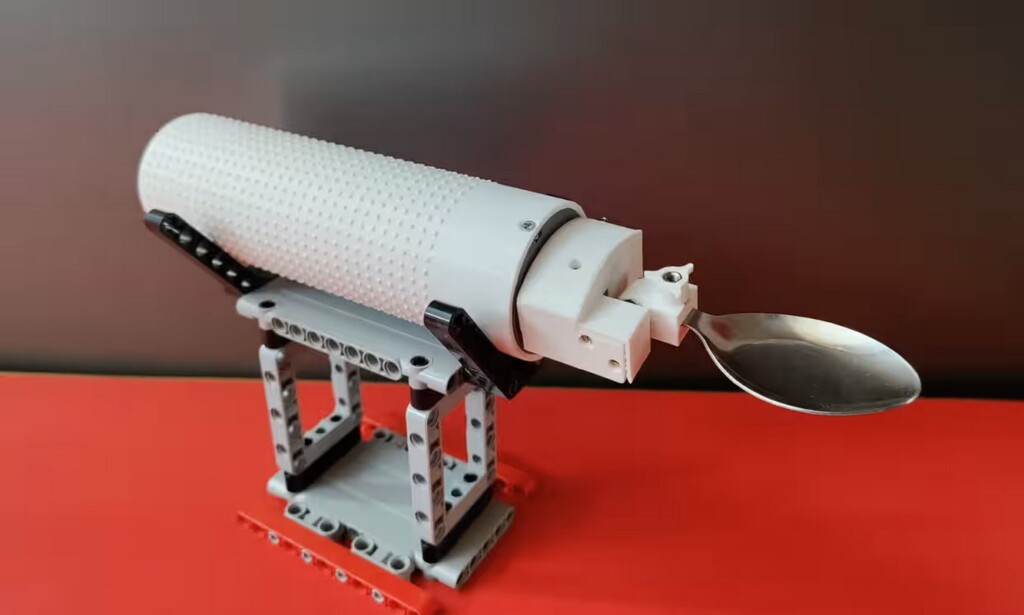
A schoolboy in India has invented a mechanical spoon that automatically stabilizes itself to help his uncle eat through his hand tremors caused by Parkinson’s.
It was the sight of the 70-year-old retired government employee trying to eat and splattering his food on his trousers, and a 10-year fascination with mechanics that started when his mother but him a Lego set, that saw Aarrav Anil build the device with motors, sensors, microelectronics, and a 3D printer.
Now undergoing tests at the RV College of Physiotherapy in Bengaluru, Southern India, Anil has taken on plenty of feedback—including from his uncle who was all too happy to give it a whirl.
“I’ve been fine-tuning the design based on the college’s feedback – that it needs to be waterproof so that it can be washed without damaging all the electronics inside; that it must be detachable so it can be cleaned and replaced by a fork; and the spoon needs to be deeper to hold more food,” Aarrav told the Guardian.
But Anil’s costs less than half of what similar spoons go for, making it far more likely that the more than 7 million Indian Parkinson’s patients can afford it.
And he expects to publish the results of a small trial in a medical journal next year before manufacturing them on a small scale; initially for hospitals.
He said that he remembers fondly the words of his uncle upon the occasion of his first test of the spoon—that such a small thing could mean the difference between “dignity and indignity.”
When he isn’t working with the spoon tech, Anil is an accomplishment representative of his country in science competitions; carrying the flag over 20 times in international robotics contests.
In one of these, he won first prize for his spoon blueprints, which jolted him into designing the prototype undergoing testing at RV College.
SHARE This Young Boy’s Brilliance And Big Heart With Your Friends…
Butler University in Indianapolis - credit Library of Congress
Butler University in Indianapolis – credit Library of Congress
Butler University of Indianapolis has created a 2-year debt-free college to offer an associate’s degree aimed at helping prospective first-generation laureates get access to higher education.
Graduates of the facility can then continue their path to a bachelor’s degree for a flat rate of $10,000, a quarter of the current normal tuition of $45,000.
“We were founded in 1855 by an abolitionist,” President James Danko told CNN. “We were not living out our founder’s dream… that set in motion a lot of conversation and discussion about how you would deliver a degree? What would the type of student look like?”
Butler University is a private liberal arts college in Indiana, and the new college and programs will be funded by endowments and donations, and accessible to students in low-income housing areas and those who would be the first in their family history to go to college.
It was advised by the Come to Believe Network, an organization that helps design affordable degree programs for 4-year universities like Butler which has helped create similar programs at Loyola University in Chicago and the University of St. Thomas, in Minneapolis.
Danko said that Butler will begin enrolling students under the affordable associate’s program next year at their Midtown Indianapolis campus for the 2025 fall semester.
“The ‘Come to Believe’ model is not only innovative in its approach, but it also has proven outcomes, resonating deeply with Butler’s original mission,” Danko said in a statement.
Students will have the option of pursuing associate’s degrees in Business or Allied Health.
SHARE This Opportunity On Social Media: It Could Change Someone’s Life…
Aerial footage of palm oil and the forest in Sentabai Village, West Kalimantan - credit CIFOR, CC 4.0.
Aerial footage of palm oil and the forest in Sentabai Village, West Kalimantan – credit CIFOR, CC 4.0.
The palm oil boom changed Southeast Asia forever, but the government of Indonesia is not going to let bygones be, and has set up a task force to comb through all oil palm plantations and force those that were created on protected land to leave.
In total the government estimates that half a million acres, or around 200,000 hectares of plantations will be removed in order to restore the tropical rainforest that should be there.
Both the internal security and environmental ministries have come together to work on ejecting the plantations, with Indonesia’s chief security minister Mahfud MD threatening to pursue legal action against palm oil companies that continue to use land illegally after the deadline passed last week.
When critiquing government action, especially on environmental issues, it’s important to remember that all governments are inherently slow and inefficient—developing ones more so, and considering the mountainous, forested terrain of rural Indonesia that encompasses thousands of islands, one begins to understand how it’s possible that just 40% of plantation owners operating in forests have even been identified.
The first step for the task force, Reuters writes, was to place a deadline for the submission of paperwork detailing where and how much land each plantation owner is working, and those that are found to be in what should be forest will be evicted.
The paperwork is necessary for obtaining cultivation rights, and those operating without will receive criminal charges.
“The ones in protected forests and conservation forests, the government wants to restore after they pay the fine,” forestry ministry secretary-general Bambang Hendroyono told reporters in Jakarta, adding this will be part of the government’s efforts to mitigate climate change.
In total, Hendroyono estimates that around 200,000 hectares of land should be reclaimed for nature by the end of the program.
Indonesia is one of the world’s most biodiverse countries on Earth. The vast archipelago of isolated tropical rainforests has created a high degree of endemism which has been threatened by palm oil plantations.
Those trends have reversed in some cases, with a moratorium on new oil palm plantations resulting in higher and higher rates of forest survival.
SHARE This Good News For Nature With Your Friends Concerned About Palm Oil…
The medieval Rondine campus – supplied to Christian Science Monitor
In Italy, a one-of-a-kind school sees Palestinians graduating alongside Israelis, Americans with Tribal origins alongside those with European origins, and Bosnian Muslims next to Orthodox Serbs—all in the name of creating a generation of interfaith peacebuilders.
The Swallow Citadel of Peace, located in a medieval campus in the hills of Tuscany near the city of Arezzo, offers a variety of higher educational programs and degrees, but it comes with a catch.
Prospective students must live with the “enemy”—either those of a domestic ethnic group or a neighboring nation—all in the name of deconstructing the reasons behind their hatred and conflict, breaking the trance of viewing people as the “other,” and returning to their nations as peace leaders.
In this time of ethnic conflicts all over the world, where a generation has been brought up tending plants sewn by seeds of conflict four or five generations in the past, it could be the most important school on Earth.
“We didn’t want to build a Utopian place where students could pretend war doesn’t exist,” explains Franco Vaccari, co-founder and president of Rondine. “We wanted, rather, to create a neutral ground, away from the chaos of their homelands and bigger Western cities, where our students could focus on a peaceful dialogue.”
The school, called Rondine which means the swallow in Italian, offers various degrees like a master’s program in conflict management and humanitarian action. Students arrive and begin an intensive course in Italian language, and then proceed to study interfaith dialogue, methodological and leadership skills to deconstruct the idea of “the enemy,” and reconciliation.
At the end of their journey, they are required as per the scholarship to go back to their country of origin and lead a peacebuilding and reconciliation program for 1 year.
Ruzica Markovic is one such student, who spoke to Christian Science Monitor about her progress. A Bosnian Croat born in the aftermath of the Balkans War which saw the ethnically motivated killing of 100,000 people across the region, she has since graduated and returned home to hold interfaith cafe events, conferences, and summer camps focused on reconciliation.
“I learned to see the other person as myself: a being with emotions, challenges, pain, frustrations, maybe some traumas. That’s the lesson I brought back home,” Ms. Markovic told CSM in a video call from Sarajevo.
It’s not as easy a mission as it might seem when walking through the veritable medieval castle that makes up the Rondine campus, filled with gnarled oaks and beautiful Tuscan food, and educators at the Citadel of Peace said that sometimes the news gets turned on and arguments flair up that haven’t been expressed in months.
But many opportunities like shared study, communal dorms, and sporting events all help to reinforce the idea, nay the truth, that the students there are just people, not enemies.
This year’s new class will include Armenians and Azerbaijanis—hot on the heels of the latter’s seizing, and some say ethnic cleansing, of the former’s presence in the disputed territory of Artsakh-Nagorno-Karabakh. It will include Russians and Ukrainians, hot on the heels of the latter’s recent defeat by the former in the Donbas and Kherson.
It will include Canadians and Americans of tribal origin and those of European origin, and Palestinians and Israelis.
SHARE The Inspiring, World-Changing Work Of This Unique School…
Quote of the Day: “I want to put a ding in the universe.” – Steve Jobs
Photo by: GWC (copyright 2023)
With a new inspirational quote every day, atop the perfect photo—collected and archived on our Quotes page—why not bookmark GNN.org for a daily uplift?
By generating electrical energy from the heartbeat, a new pacemaker developed by scientists in Seattle was able to partially recharge itself.
Although the beat only generated 10% of the energy needed for the next heartbeat, the researchers hope that their breakthrough will become the standard, since changing a battery in a wireless pacemaker requires heart surgery, convincing most people to just implant a second one.
The new device is much smaller than a traditional pacemaker due to its wireless nature, measuring about one-third the size of a AAA battery and residing entirely in the heart’s right ventricle.
“We hope to prolong battery life further and expand access of this product to younger patients, who would hopefully require fewer implants over their lifetime,” said Dr. Babak Nazer of the University of Washington in Seattle, who led the paper demonstrating his team’s new invention.
“When we can improve upon our 10 percent harvesting efficiency, we hope to partner with one of the major pacemaker companies to incorporate our design and housing into an existing leadless pacemaker,” he added.
By converting mechanical energy into electrical energy, the experimental wireless pacemaker housing is able to partially recharge its battery—the same technology used in some experimental electricity-generating roads.
“Just like ultrasound converts electrical voltage into pressure or sound, we can engineer similar materials onto implantable medical devices to convert the heart’s natural oscillating pressures ‘backward’ into voltage to prolong battery life,” Dr. Nazer added.
Up until this point, wireless pacemakers have been impractical, as it is difficult to replace the battery, often leading to patients just having another one put in next to it.
Traditional pacemakers have tiny wires that connect the heart the a generator and battery, just under the skin of the left shoulder. A typical battery in both traditional and wireless pacemakers lasts 6 to 15 years.
As Nazer pointed out, younger patients with heart complications may require multiple pacemakers throughout their lives, making all options impractical for different reasons.
Part of his and his team’s next step will be to design long-term trials with real humans to make sure the device works properly. All the while they hope to increase the recharge rate for the battery. If 10% could become 20 to 30%, it could increase the functional life of the pacemaker by a not insignificant number of years.
SHARE This Pacemaker-Positive News Story On Social Media…
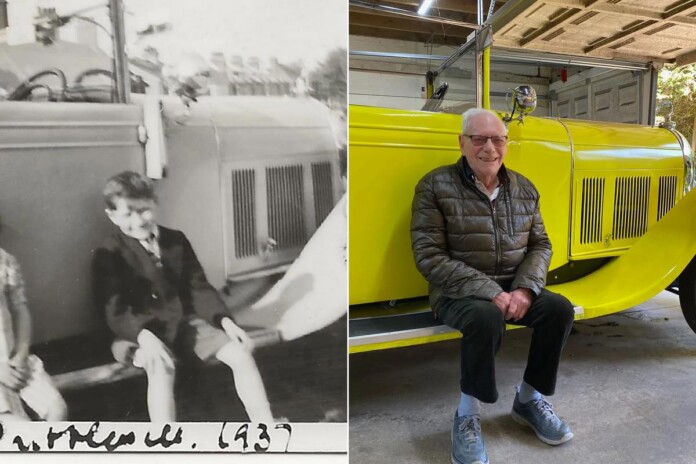
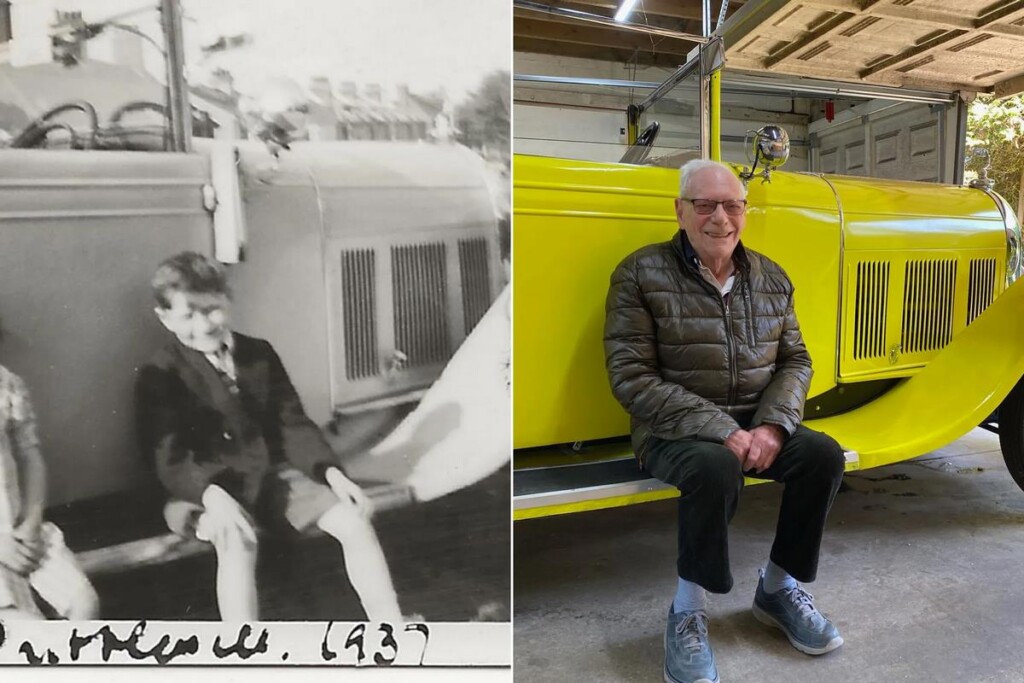
Malcolm Stern and his Talbot-Darracq once upon a time, and now again restored - supplied to the press by the Stern Family.
Malcolm Stern and his Talbot-Darracq once upon a time, and now again restored – supplied to the press by the Stern Family.
A man found his father’s beloved old car from the 1930s ready to be sold in an auction, and with his son’s help bought and restored it over the course of the pandemic, reuniting his relatives with a rare and treasured heirloom.
Every family has its stories—the ones heard around the dinner table a hundred times—and for the Sterns of England it was about Grandad’s bright yellow Talbot-Darracq motorcar.
Bought in 1935, proud Alec Stern, a Londoner who made his money parking cars in a city garage, used to drive his wee son Malcolm around town whilst reveling in the auto’s long, sloping fenders, chrome grill, and banana yellow bodywork.
Then in World War II, when the British Government ordered the evacuation of children to the countryside, young Malcolm Stern remembers being driven away on a coach watching his dad follow along behind in his Talbot-Darracq.
And that was it, for the story of Alec and his yellow car, who sold it in 1942—until now.
Fast forward to 2020 and Malcolm was 91 years old looking for a new hobby when he decided to buy a 3D printer to make small models. That’s when he got the idea to make a model of one of his father’s Talbot-Darracq; a grand idea, but he needed to understand the dimensions of the real thing before he could scale it down.
It only took a few clicks and keystrokes on the computer for Malcolm to locate his father’s actual car—plate numbers and everything—because it was being auctioned.
“An amazing story of serendipity,” Malcolm’s son Jonathan told The Washington Post. “To find the car by just coincidence. We were egging each other on, ‘Oh Dad, you’ve got to buy it…'” he remembers saying. “‘You can’t let it go again.’”
The cost was £8,000, or just over ten grand, a price indicative of fortune since Jonathan was able to afford it; but being of an age quite similar to Malcolm, it was in bad need of repairs before hitting the road.
Jonathan was at first doubtful that his father was up to the manual labor required to refurbish the car, but in Malcolm’s garage in Rickmansworth, a British town north of London, he launched a 3-year project, hiring professionals when he needed to, doing everything else himself, and even using the 3D printer which would have otherwise almost certainly become a coat rack in the face of the restoration of the Talbot-Darracq.
Then the day came. Three years after repairs first started, and with Malcolm (and the car) 3 years older, the engine groaned to life. Even though the nonagenarian struggled with the heavy steering and ancient transmission, Malcolm and his son rumbled 15 miles to the parking lot of a local watering hole where a gathering of vintage car enthusiasts were meeting.
Arriving in the Talbot-Darrcq with a fresh coat of canary yellow paint, those gathered were in awe of the old man and the old car.
“The two of us, I think our faces hurt from smiling so much,” Jonathan said. “He [Malcolm] was the star of the show. Ninety-four years old, driving around this great big yellow car.”
In Norse Mythology 101, there would certainly be a section on the Midgard Serpent, known as Jormungandr, which encircles the Earth and holds up the oceans by fitting its tail in its mouth.
It was in honor of that mythical beast that a new species of Mosasaur, a huge and terrifying ancient marine reptile, entered a key place in the fossil record as Jormungandr walhallaensis.
This new species has traits similar to two widely found and well-researched Mosasaurid genera, one of which, Clidastes lived in the early Cretaceous and grew to lengths between 6 and 14 feet, while the second, Mosasaurus, grew to be about 40 feet longer than that, and lived in the late Cretaceous.
Norse mythology enthusiasts will note that the species name, walhallaensis, sounds conspicuously like Valhalla, the great hall of Odin where half of all fallen warriors go to dwell. In reality, it’s named after the town in North Dakota where the fossil was discovered.
The fossil itself is an impressive specimen consisting of a nearly complete skull, jaws, and spine.
Thor and Jormundandr lay dying in Ragnarok, lithograph on cardboard by Alfred Jacobsens from the 19th century. CC 4.0. Louis Moe
“If you put flippers on a Komodo dragon and made it really big, that’s basically what it would have looked like,” said the study’s lead author Amelia Zietlow, a Ph.D. student in comparative biology at the American Museum of Natural History.
They have been found fossilized on all 7 continents owing to their dominant position in the food chain and ocean-going lifestyle.
Jormungandr walhallaensis is estimated to be about 24 feet long and, the new study suggests, lived around 80 million years ago. A set of bony ridges above its eye sockets stand out as a unique feature, and would have given it a rather permanent scowl.
“As these animals evolved into these giant sea monsters, they were constantly making changes,” Zietlow said. “This work gets us one step closer to understanding how all these different forms are related to one another.”
A fair few questions about those changes remain unanswered, such as when and how many separate times they evolved flippers, when their early ancestors went from semi-aquatic to fully aquatic, and if they were more closely related to snakes or monitor lizards.
WATCH the story below from the AMNH…
SHARE This Mighty Seaborne Beast With Your Friends Who Love Dinos…
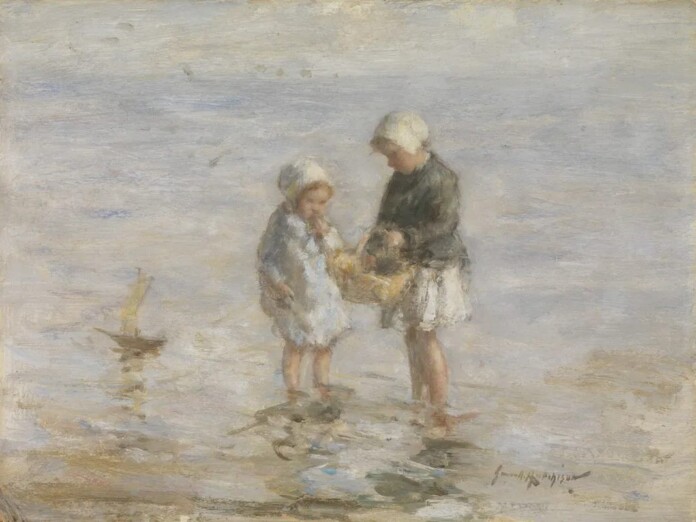
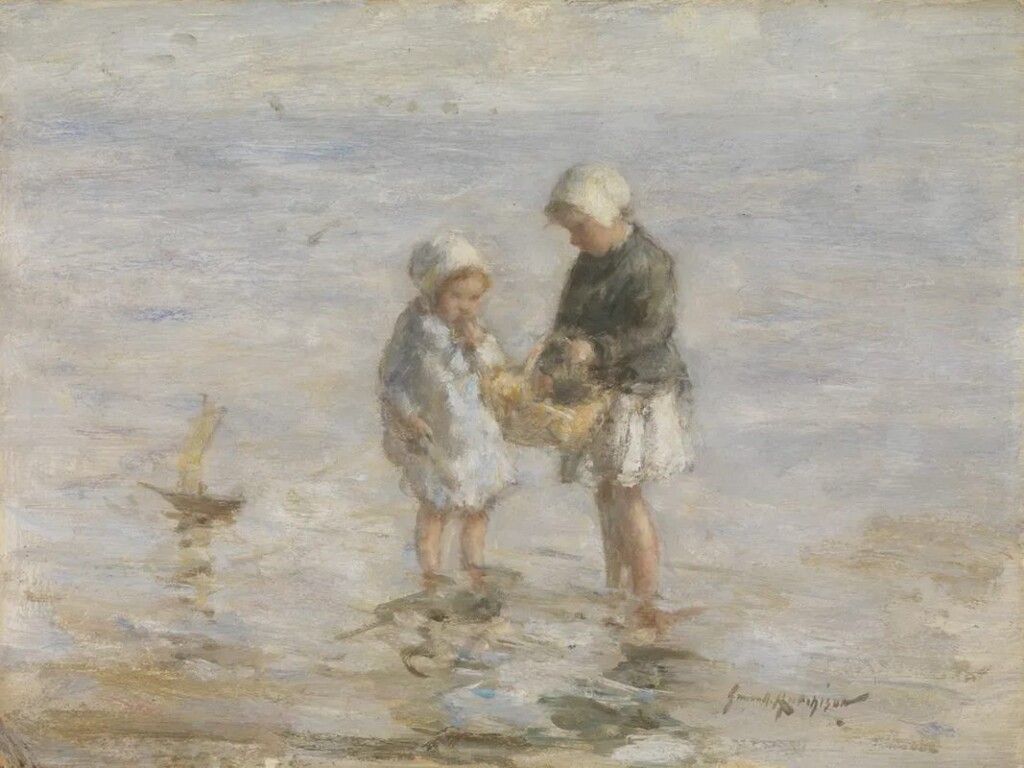
A painting stolen from a Scottish castle museum over 30 years ago has finally been returned after it emerged in a Yorkshire auction—and an art database was able to prove its status as hot property.
It was back in 1989 that the Haggs Castle Museum of Childhood lost some dozen or so artworks and other artifacts to thieves. Investigations revealed nothing and the loss had to be endured—until last year when the stolen painting Children Wading, painted by Scottish artist Robert Gemmell Hutchison, appeared at Tennants Auctioneers.
Currently listing more than 700,000 items, 65,000 of which are missing presumed stolen, Art Loss Register is a non-profit databasing company that lists detailed information on artworks and antiquities on behalf of the victims of looting or theft, insurers, police forces, and others.
Art Loss is then utilized to offer a due diligence service to clients in the art market who wish to ensure that they are working with items to which no claim will arise—which is exactly what happened with Children Wading.
“We’re delighted to have a work returned, even though the theft was a very long time ago,” says Duncan Dornan, head of Glasgow Life Museums, to BBC News’ Carolyn Atkinson. “The pain of it still persists—and there’s a loss to the public in Glasgow. We were sorry to lose it and delighted to be able to recover the work subsequently, using the Art Loss system.”
Indeed, the Museum of Childhood closed many years ago, but the painting will be put back into the Glasgow Museums Resource Center where it can be viewed online or added to new exhibits in the future.
The painting depicts Mary Watt and Lorna Galloway frolicking in the surf in the Scottish town of Carnoustie during the summer of 1918.
The family that owned the painting purchased it in good faith without knowledge of its theft. Under British law, after six years the family has no obligation to return it—but when the selling family was informed of the situation, they decided to give it over to the museum collection for free.
SHARE This Important Non-Profit And The Work It Does For The Art World…
Quote of the Day: “The only courage that matters is the kind that gets you from one moment to the next.” – Mignon McLaughlin
Photo by: Jaroslav Devia
With a new inspirational quote every day, atop the perfect photo—collected and archived on our Quotes page—why not bookmark GNN.org for a daily uplift?
Some of the corals on Cacho De Coral in the Galápagos Marine Reserve, a pristine coral reef newly discovered by R/V Atlantis and HOV Alvin. Released by Schmidt Ocean Institute.
Some of the corals on Cacho De Coral in the Galápagos Marine Reserve, a pristine coral reef newly discovered by R/V Atlantis and HOV Alvin. Released by Schmidt Ocean Institute.
Everyone knows of the Galapagos Islands’ biodiversity and scientific value on land, but a recent deep-water expedition has revealed that this biodiversity carries on fathoms below the bellies of the islands’ giant tortoises.
An international expedition from the Schmidt Ocean Institute has revealed the presence of two pristine, cold-water coral reefs growing alongside the walls and bases of several seamounts over 1,000 feet below the surface.
Tropical coral reefs typically grow within 120 feet of the surface, but have sometimes been found at lower depths. These however were cold-water corals, known sometimes by their shorthand of “stony corals,” and were found at depths ranging from 1,200 to 1,375 feet (370 to 420 meters).
The larger of the two reefs spans over 800 meters in length, the equivalent of eight football fields. The second, smaller reef measures 250 meters in length. They exhibit a rich diversity of stony coral species, suggesting that they have likely been forming and supporting marine biodiversity for thousands of years.
The inhabitants of these reefs included sea fans, or Gorgoans, and stony corals from the subclass Hexacorallia, or six-sided corals, which include almost only deep-sea corals but also sea anemones.
These are the second and third deep-sea coral reefs found in the Galapagos Island Marine Reserve, following the discovery of the first one this April by scientists onboard a research vessel from the Woods Hole Oceanographic Institution.
The Schmidt expedition began in September and was led by Dr. Katleen Robert of the Fisheries and Marine Institute of Memorial University of Newfoundland and Labrador. The expedition included 24 participating scientists representing 13 organizations and universities and lasted 30 days.
“This information is not only valuable from a scientific perspective, but it also provides a solid foundation for decision-making that effectively protects these ecosystems, safeguarding the biological diversity they harbor and ensuring their resilience in a constantly changing environment,” stated Danny Rueda Córdova, director of the Galápagos National Park Directorate.
Corals documented by ROV SuBastian as it dove at a site on the northern side of Isabela Island. This dive included investigating a small mount, as well as collecting coral and lava samples. Released by Schmidt Ocean Institute.
One goal of the expedition was to apply laser scanning technology to create extremely high-resolution maps of these reefs and the seamounts they grow on—which was accomplished at an astounding 2-millimeter resolution.
In addition to investigating coral biodiversity in the Galápagos, the scientists explored areas within the Isla del Coco National Marine Park, a protected area managed by Costa Rica.
The team explored seamounts southwest of Isla del Coco and examined links between coral communities on seamounts in the Galápagos and those in Costa Rica. On one of the remotely-operated submersible dives, the researchers observed multiple deep-sea coral species laden with eggs.
This research contributes data to inform the management of the Eastern Tropical Pacific Marine Corridor, a network of interconnected marine reserves managed by the governments of Ecuador, Costa Rica, Panama, and Colombia.
“The Galápagos Marine Reserve is an area of outstanding biological importance, connected to partner marine protected areas across the Eastern Pacific. Finding such deep and long-lived reef takes us important steps closer to protecting hidden dimensions of ocean diversity and understanding the role that deep habitats play in maintaining our ocean’s health,” said Charles Darwin Foundation’s CEO Stuart Banks.
“These fascinating new findings continue to feed important research to inform better management of existing and future marine protected areas in the region.”
SHARE This Deep-Sea Secret Waiting To Be Discovered With Your Friends…
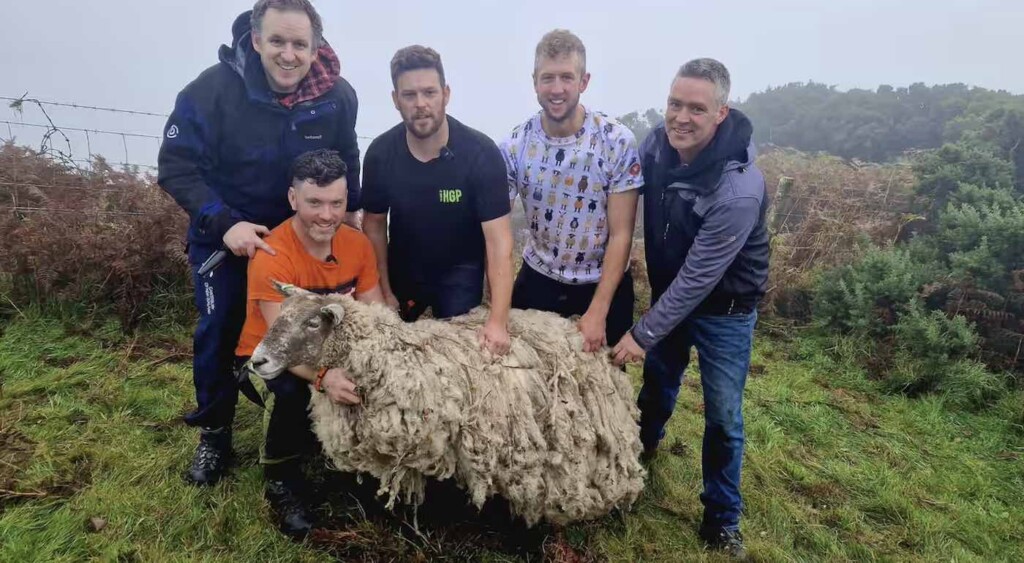
A sheep dubbed “Britain’s loneliest” has finally been rescued by 5 strapping farmhands after being stuck on a beach for two years.
Fiona the sheep was first seen at the base of a cliff by a kayaker in Sutherland, Scotland. Hemmed in by sheer cliffs and the frigid Cromarty Firth, there was enough fodder and water for her to survive to grow a huge fleece.
After several animal rescue organizations determined the rescue was too complicated, a group of local farmers managed to haul the beast up the cliff; and though it went well, there was an unforeseen difficulty—Fiona was very fat.
Whatever else she was doing on the isolated pebble beach, she certainly spent a long time eating, with the farmers describing her as being in “incredible condition.”
“We’ve come up here with some heavy equipment and we’ve got this sheep up an incredibly steep slope,” said rescuer and sheep-shearer Cammy Wilson in a video on Facebook. “She’s in incredible condition—it was some job lifting her up that slope.”
Wilson had seen some media coverage of Fiona’s plight and decided to come and help, saying that now she’s free she “is going to a very special place,” referring to a farm park.
Wilson is an agricultural media personality of sorts, and runs The Sheep Game video blog where he shared a local news report about Britain’s loneliest sheep and commented that it would be a “great challenge for the weekend.”
Once he got her safe on firm pasture again, Wilson took her to Dumfries and sheared her for national media at a farm park. The fleece—so large it was almost a danger to Fiona in the same way that a turtle shell is dangerous to the turtle if it falls flat on its back—will go to a special wool weaver where it will be made into something for a charity auction.
Commonwealth media can blow up over sheep stories. When the infamous Australian Merino wether named “Shrek” was caught after 6 years at large, it was one of the most-read stories that week across English-speaking media.
WATCH the story below from Sky News Australia…
SHARE This Tremendous Sheep Story With Your Friends From The Countryside…
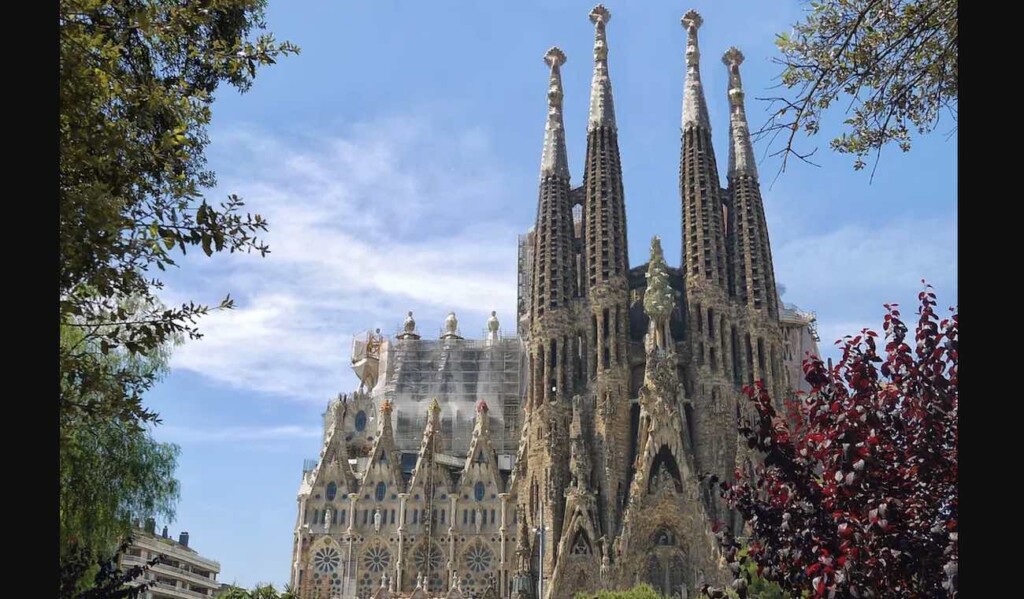
It’s one of the most famous buildings in Europe: partly because it isn’t finished yet more than 100 years since it was started.
Sagrada Familia Cathedral in Barcelona is just a few years away from completion, however, as the towers of Matthew, Mark, Luke, and John have been fully erected. When the ultimate tower is finished—slated for 2026—the building will be finished, 144 years after it was started.
The original designer, Catalan architect Antoni Gaudi, wanted the facade to contain 16 spindly towers which would each be dedicated to a biblical figure: 12 for the apostles, 4 for the evangelists, one for Mary, and one for Jesus.
It was last Wednesday that the final sculptural element was placed on the tower of Matthew, and the day after that, John’s tower was crowned with an eagle.
The basilica celebrated the triumph on Facebook.
For local Christians, they will get to enjoy this building on November 12th for the basilica’s inaugural mass, when the four towers of the evangelists will be illuminated. They will remain so until after Christmas.
On Sunday, the Barcelona Symphony Orchestra gave the debut musical performance at the Sagrada Família. Led by head conductor José Rafael Pascual-Vilaplana, the concerto featured a repertoire chosen for the occasion that paid tribute to the symbiosis of nature, faith, and art represented in the Sagrada Família’s art and sculpture.
The towers have been the final pieces of this massive, complicated, and oft-interrupted puzzle which first hit snags upon Gaudi’s death in 1926 when only 10% of the building had been finished.
Sagrada Familia towers under construction – retrieved from Basilica di Sagrada Familia Facebook Page
Interrupted by the wars of the 20th century, much of the subsequent work had to be done off imagination because Gaudi’s original models had been destroyed. The Sagrada Familia was consecrated by Pope Benedict XVI in 2010, more than 20 years after it was declared a UNESCO World Heritage Site.
Now only the tower of Jesus remains unfinished, and when the scaffolding is finally pulled down it will be the tallest cathedral in Europe at 566-foot tall (172.5 meter) plus a 56-foot tall (17-meter) cross.
SHARE This With Your Friends And Start Planning Your Vacation To Spain…
Cats sometimes get a bad rap as loners and antisocial furballs with cold, indifferent looks. But, unsurprisingly for a domesticated hunter, they are very socially active according to a new study that counted their facial expressions.
While recording video footage of the 53 residents of a Los Angeles cat cafe, researchers Lauren Scott and Brittany Florkiewicz concluded that cats possess at least as much variance in their facial expressions as dogs.
In particular, they found that cat facial expressions and their complexity were derived from “compositionality” rather than complexity, meaning that in order to dig what your cat is communicating, it pays to look at its ears, nose, and whiskers, not only its eyes and mouth.
Lauren and Florkiewicz discovered 276 expressions made up of a combination of 26 facial movements; dogs by comparison use 27 movements and humans use 44.
Each expression combined about four of these 26 unique facial movements, including parted lips, jaw drops, dilated or constricted pupils, blinks and half blinks, pulled lip corners, nose licks, protracted or retracted whiskers, and/or various ear positions.
Live Science, which spoke to the authors, details that the majority of the developed expressions were sociable ones—meant to communicate with another cat or a human in a cooperative and calm manner.
“It was surprising to see them play-fighting, and then things escalated into an aggressive encounter,” Florkiewicz told the outlet. “You can see a change in their facial expressions. At first one cat’s eyes were more relaxed and its ears and whiskers were pushed forward, a movement to get closer to the other cat. But then things got ugly, and it moved its ears and whiskers backward — its demeanor changed pretty quickly.”
One interesting finding was that it appeared domestic cats shared similar aspects of the “common play face” observed in other mammals like monkeys, humans, and dogs, characterized by the corners of the mouth drawn back and the jaw dropped like in a spritely laugh.
The authors hope that humane societies, shelters, and other locations that house multiple cats can use their research to better understand the deeper humors and sympathies of their feline residents.
SHARE This Story With Cat Owners, See How Many Expressions They’ve Seen…
Quote of the Day: “The breaking of a wave cannot explain the whole sea.” – Vladimir Nabokov
Photo by: Jeremy Bishop
With a new inspirational quote every day, atop the perfect photo—collected and archived on our Quotes page—why not bookmark GNN.org for a daily uplift?
Last Wednesday, WBEZ (91.5 FM) reported that a civic leader of St. Louis visited the Chicago Mayor’s Office to discuss a program whereby migrants from Venezuela could be brought to the Gateway to the West in order to ease the migrant crisis gripping the Windy City just as winter temperatures arrive.
It’s estimated that 20,000 migrants, mostly Venezuelans, have arrived in Chicago this year, and finding them places to stay has been challenging.
The WBEZ report details that St. Louis is currently in a decline of population and employees, and some in the city believe the migrants and the city would be better off long-term if they moved there.
The International Institute of St. Louis announced the new Latino Outreach Program last month with the aim of both attracting and accommodating migrants arriving from Latin America.
Karlos Ramirez, vice president of Latino Outreach for the International Institute, told WBEZ the as-yet unconfirmed agreement “could be the potential for a great relationship between both cities,” adding that “if the [migrants] are going to be in a better place, St. Louis is going to be in a better place, and Chicago is going to be in a better place, I think everybody wins.”
Ramirez says that any next step would have to include sharing details and practices between Latino Outreach and its partners with their counterparts in Chicago.
Fox News 2 reached out to the St. Louis Mayor’s Office for comment, and the representative shared a statement released previously in response to the WBEZ report.
“While the City has not had direct conversations on welcoming more migrants from Chicago, the City of St. Louis has had a longstanding cooperative relationship with the International Institute to welcome immigrants and refugees to the St. Louis area.”
Other migrant welcome programs in the city, such as the Arch Grants program, saw great success in Afghans fleeing the country in August of 2021, and the International Institute modeled its efforts for Latino Outreach on this success.
WATCH the story below from Fox 2…
SHARE This Story On Social Media And Shed Light On This Important Work…
A company in France has developed genetically-enhanced houseplants that remove 30 times more indoor air pollutants than your normal ficus.
Paint, treated wood, household cleaners, insulation, unseen mold—there is a shopping list of things that can fill the air you breathe in your home with VOCs or volatile organic compounds. These include formaldehyde and other airborne substances that can cause inflammation and irritation in the body.
The best way to tackle this little-discussed private health problem is by keeping good outdoor airflow into your living spaces, but in the dog days of summer or the depths of a Maine winter, that might not be possible.
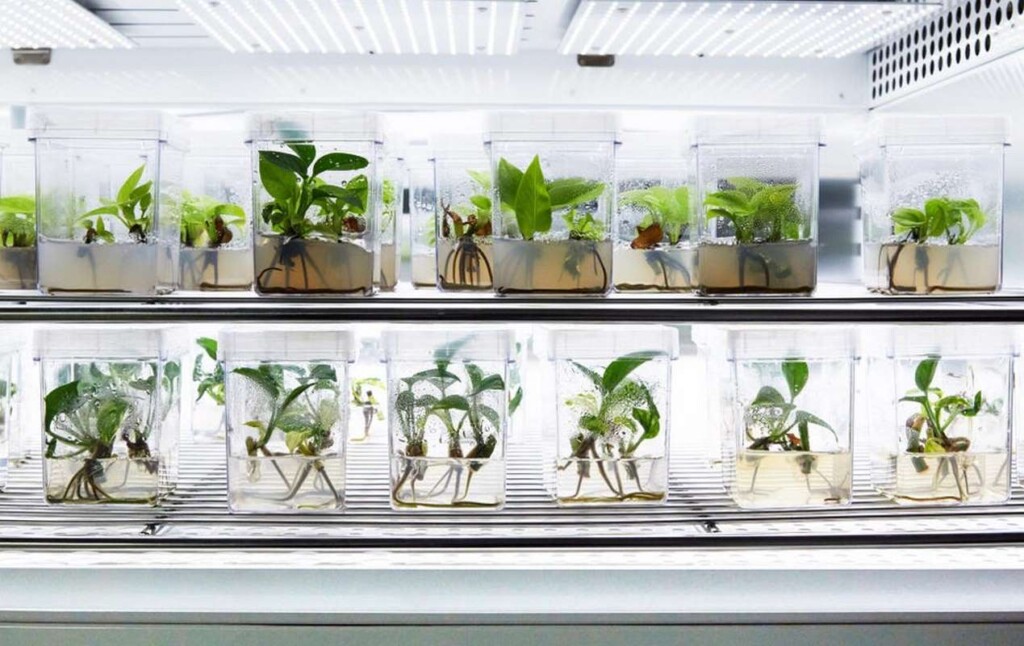
Houseplants can remove these pollutants from the air, and so the company Neoplants decided to make simple alterations to these species’ genetic makeup to supercharge this cleaning ability.
In particular, houseplants’ natural ability to absorb pollutants like formaldehyde relies on them storing them as toxins to be excreted later.
French scientists and Neoplants’ co-founders Lionel Mora and Patrick Torbey engineered a houseplant to convert them instead to plant matter. They also took aim at the natural microbiome of houseplants to enhance their ability to absorb and process VOCs as well.
The company’s first offering—the Neo P1—is a Devil’s ivy plant that sits on a custom-designed tall stand that both maximizes its air-cleaning properties and allows it to be watered far less often.
Initial testing, conducted by the Ecole Mines-Telecom of Lille University, shows that if you do choose to shell out the $179 for the Neo P1, it’s as if you were buying 30 houseplants. Of course, if you went for the budget route of 30 houseplants, you’d have to water them all.
The founders pointed out in an interview done with Forbes last year that once they settled on the species and fixed the winning genetic phenotype, the next part of the process was just raising plants, the same activity done in every nursery and florist in every town in Europe.
Deliveries for the P1 are estimated for August 2024.
SHARE This Amazing Idea And Accomplishment With Your Friends…