A Costco in Amagasaki Japan CC 3.0. Kirakirameister.
A Costco in Amagasaki Japan CC 3.0. Kirakirameister.
A Costco employee as honest as the day is long is being celebrated after returning an envelope of $4,000 cash to a shopper.
John Sotelo had set himself a goal of working hard enough through August to make Employee of the Month, and thanks to his selfless act, he now has a plaque hanging on the wall of the store.
At the Costco on Shaw and Clovis Avenue in Clovis, California, Sotelo was putting away cases of bottled water when something on one of the pallets caught his eye. It was an envelope it seemed.
It contained $3,940, and Sotelo immediately notified his managers. Together, they tracked down the member who misplaced it using surveillance footage and her member ID.
“It was crazy because my manager walked me outside, and the member was right there,” Sotelo told KFSN ABC News 30. “So yeah, she told me like, ‘Oh, you know, I’m so glad you found this. That’s for my kids to go to school.’ I’m like, ‘Okay,’ you know, ‘well I’m happy to help.'”
In tough economic times, it’s inspiring to know there are people who will still choose to do the right thing when the opportunity for the wrong presents itself.
WATCH the story below…
SHARE Sotelo’s Employee Of The Month-Winning Action With Your Friends…
Netflix’s Stranger Things has won 12 Primetime Emmys, and tens of millions of fans over the course of its four seasons, but it may have ultimately achieved something even greater than that—it saved a man’s life.
A 12-year-old named Austen MacMillan was able to revive his behavioral therapist Jason Piquette after he partially drowned by using CPR that he learned while watching the television show.
MacMillan was swimming with Piquette in his home’s pool when at a certain point the therapist wanted to see how long he could hold his breath underwater.
He racked up an impressive 6 minutes—though it’s unclear how many of those minutes were voluntary because what is clear is that at a certain point, he lost consciousness.
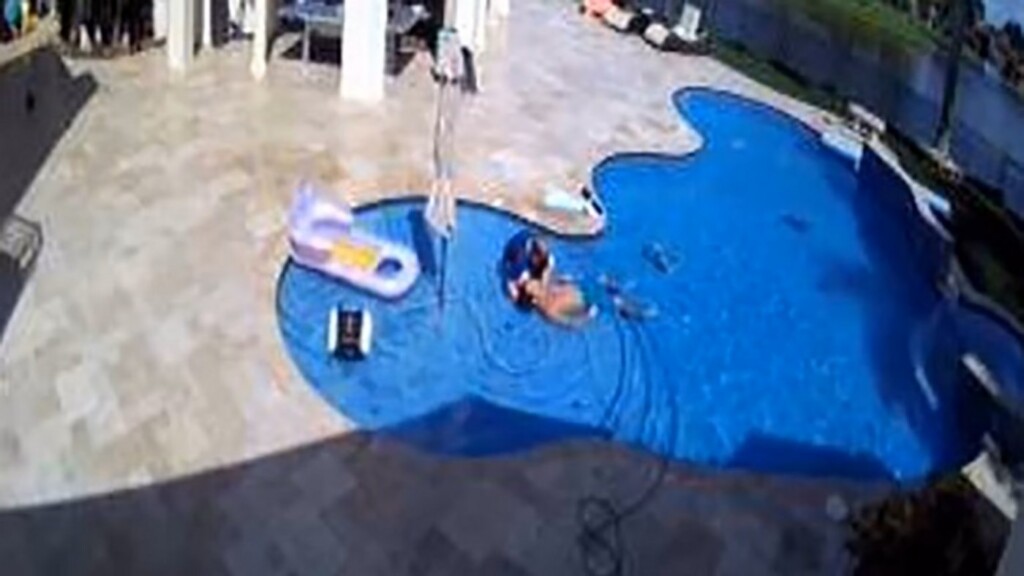
MacMillan quickly grabbed the man after realizing he wasn’t coming up, dragged him out of the water, and began running around the house screaming for help. When it didn’t come, he returned to Piquette’s side and performed CPR.
The whole ordeal was captured on a ring camera.
“I just saw it from a TV show—Stranger Things,” Austen told ABC News. “After I gave him CPR, he woke up a few minutes later.”
Piquette believes he lost consciousness about 30 seconds into his underwater attempt, but doesn’t know why.
“It was definitely a really proud mom moment. He’s really brave and courageous,” said Christina MacMillan, Austen’s mom.
It’s a reminder that movies and television aren’t a complete waste of time, and that if you happen to be planning a CPR scene for your production, make sure it’s the real technique—it could save a life.
WATCH the story below…
SHARE This Unlikely Hero And Television Lesson With Your Friends…
Credits Illustration NASA, CSA, ESA, J. Olmsted (STScI), Science N. Madhusudhan (Cambridge University)
Credits Illustration NASA, CSA, ESA, J. Olmsted (STScI), Science N. Madhusudhan (Cambridge University)
Earlier this month operators at Webb identified a planet that may contain both a protective atmosphere and a surface covered entirely in oceans—also known as a Hycean world.
One of the main functions of the James Webb Space Telescope is to advance the search for life in the universe by being able to study exoplanets as no other observatory can, and using Webb’s spectrographs, scientists were able to determine that this Hycean world is the perfect place to search.
K2-18b lies 120 light years away from Earth in the constellation Leo, where it orbits the habitable zone of a red dwarf star called K2-18. Believed to be 8.6 times larger than Earth, the abundance of methane and carbon dioxide, and shortage of ammonia detected on the planet supports the hypothesis that there may be a water ocean underneath a hydrogen-rich atmosphere.
Life emerged under such conditions on Earth, and finding them elsewhere is our best bet to determining if we are not alone in the galaxy.
Promisingly, these initial Webb observations also provided a possible detection of a molecule called dimethyl sulfide (DMS). On Earth, this is only produced by life. The bulk of the DMS in Earth’s atmosphere is emitted from phytoplankton in marine environments.
The DMS finding needs to be further validated, say the researchers, who add that because of the light and glare of the host star, it’s extremely difficult to get detailed observations of an exoplanet.
The method used involves waiting until the orbit of the planet around the star takes it between the star and the telescope. The corresponding eclipse signifies the planet is there to be seen, and when it is, Webb can use its NIRISS (Near-Infrared Imager and Slitless Spectrograph) and NIRSpec (Near-Infrared Spectrograph) instruments to image the planet and determine within the wavelengths of light and color which molecules are there on the planet.
However with such a short window of opportunity, even Webb’s exceptional power remains limited.
“This result was only possible because of the extended wavelength range and unprecedented sensitivity of Webb, which enabled robust detection of spectral features with just two transits,” said Nikku Madhusudhan, an astronomer at the University of Cambridge and lead author of the paper.
“For comparison, one transit observation with Webb provided comparable precision to eight observations with Hubble conducted over a few years and in a relatively narrow wavelength range.”
The planet is classified as a “sub-Neptune” meaning one which shares its characteristics but that is smaller than our neighbor. Such planets are believed in some circles to be the most common type of rocky exoplanet.
Analyses from other sub-Neptunes however have shown that they often preclude the possibility to host life, at least as we know it. Their mantles of high-pressure ice and thin atmospheres have almost always led to the ocean either being too hot or simply an ocean of water vapor.
Make A SPLASH On Social Media With This News Of An Ocean World…
Quote of the Day: “Experience is one thing you can’t get for nothing.” – Oscar Wilde
Photo by: Sigmund
With a new inspirational quote every day, atop the perfect photo—collected and archived on our Quotes page—why not bookmark GNN.org for a daily uplift?
Down Under, there’s a massive campaign to connect 315,000 hectares, or 750,000, acres of coastal habitat for koalas in New South Wales into a single national park.
Now, a new logging ban to come into effect will protect 106 “hubs” across 8,400 hectares (21,000 acres) of forest where koalas in the wild are known to congregate in largest numbers.
It was a “historic step forward,” said Nature Conservation Council acting chief executive Brad Smith, describing the area as “the most important koala habitat in the world.”
The parcel is just one part, though key, of the 315,000 hectares that a coalition of conservation organizations is hoping to protect forever to ensure koalas can survive the eons.
Given the Moniker “Great Koala National Park,” the 315,000 hectares are currently split between conservation areas and state forest across an area the size of Yosemite. The GKNP would unify it all under a heavier level of protection.
Koalas need a particular kind of forest biome, one that lies close to the coast where real estate is often coveted. In this case, the 21,000 acres were saved from logging, another activity in these woods.
Currently, only 58% of the GKNP proposal is protected from logging, and the coalition acknowledges that this latest ban is merely a step in the right direction.
GKNP estimates that it would cost the state around $1.5 billion to buy all the land and set up the park infrastructure, while the worldwide fame of having a place to come and be practically guaranteed to see koalas in the wild would add handsomely to the already $20 billion made every year in the state of New South Wales from nature tourism.
SHARE This Good News From Down Under With Your Friends…
Wind turbine blades set to be landfilled or incinerated, are being turned into footbridges that can hold the weight of a 30-tonne digger.
Currently, there are around 11,000 wind turbines in the UK, and estimates suggest that 450 blades will be decommissioned in Ireland by 2030, creating tons of non-recyclable waste.
In a bid to avoid filling up the landfill, a transatlantic research network led by Queen’s University Belfast called ‘Re-Wind’ was set up to find new ways to repurpose the blades. Working together, geography experts, design architects, and engineers have discovered that by using just two turbine blades they can create a bridge.
Already, the team has successfully built two footbridges in Ireland—a 21-foot (7-meter) bridge in Draperstown, Northern Ireland, and a 15-foot (5-meter) bridge in Cork in the Republic of Ireland.
The bridges, which are made from two wind turbine blades, are known as ‘BladeBridges’ and passed rigorous testing in May. A third bridge is also underway in Atlanta Georgia.
Over the last 30 years, wind farm development has been scaled up globally, but this is now posing a major environmental challenge. The turbine blades, which are non-biodegradable, have a lifespan of just 20-25 years. After this, they are either landfilled or incinerated.
The researchers have also been looking at ways to use the blades to build bus shelters, barriers, street furniture, and telecommunications towers.
“It has been incredibly exciting and rewarding to work on this project,” commented Professor. Marois Soutos from Queen’s University. “As researchers, we like to push things as far as we possibly can in order to come up with the best solution available. In this instance, we’ve been able to create a footbridge from two wind turbine blades which is able to hold 30 tonnes—that’s the weight of a digger.”
“This could have a very positive impact for society going forward as we are only going to have more of these blades becoming decommissioned as the years go on.”
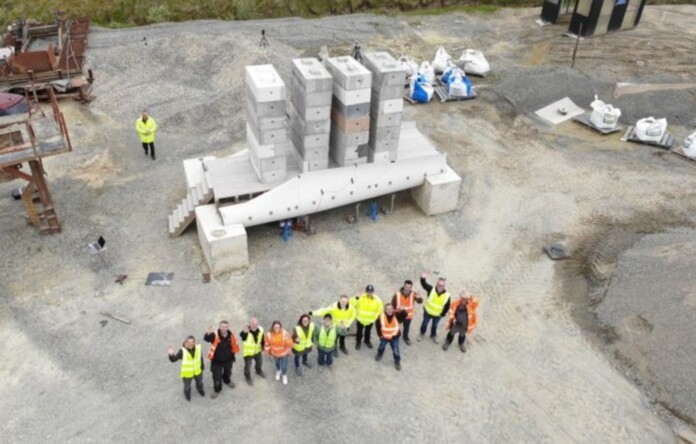
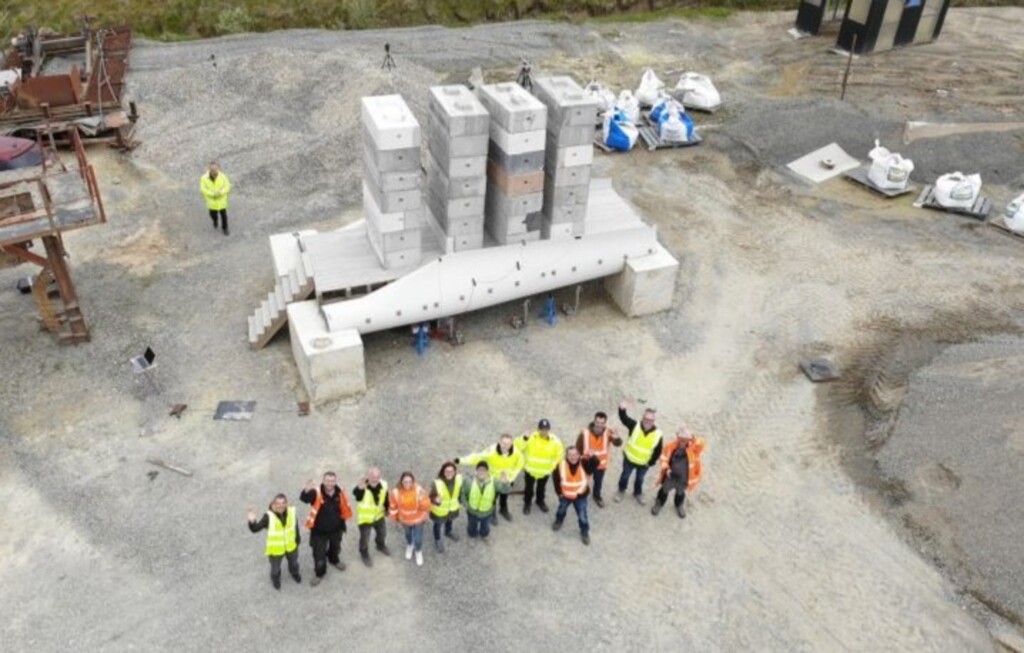
For the Draperstown bridge, computer-aided modeling was used to come up with the structural design, but the researchers had concerns that the bolts used might tear when weight was added. It was tested by loading it with 34 blocks, each weighing 1,100kg and the results were very positive—the bridge was able to take much more weight than expected.
“We designed the bridge to avoid failures and during testing there was no tearing, no failure at all,” said Kenny McDonald, Technical Manager in the School of Natural and Built Environment at Queen’s University. “We kept loading these concrete blocks and we could not get the bridge to fail.”
“We’re continuing to work with the Network and our colleagues in the USA on the bridge in Atlanta. After this, we would like to see if more blades can be added to make it longer. We’d like to join two together and increase the length. We’re hoping to secure further funding to do this,” he said.
Part of the Network is University College Cork and Munster Technological University, and they’ve taken the project in a different direction and made a spinoff from the Re-Wind research, called BladeBridge. They’ve been looking at a variety of uses for the blades.
“We are partnering with well-known designers here in Ireland to create a portfolio of durable and sustainable products, such as greenway furniture and bridges,” said BladeBridge co-founder Dr. Angie Nagle. “Our first customer was Mayo County Council, who recently installed a suite of our furniture on the greenway extension in Achill.”
The bridge in Cork was completed in January 2022 and funded under the Irish Department of Transport’s Project Ireland 2040 initiative.
With a 20-year lifespan, there will be around 8.6 million metric tons of blades being decommissioned worldwide by 2042. Innovative solutions have to be found to keep them out of landfills, but it’s worth the effort as most blades are made from fiberglass, an expensive material to buy and shape.
SHARE This Great Recycling Idea With Your Green Brains…
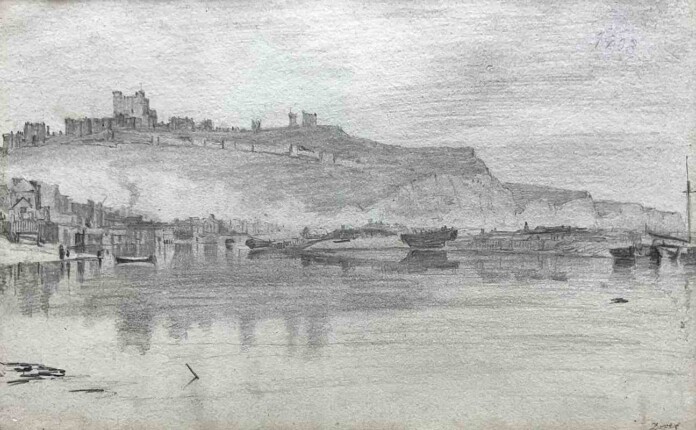
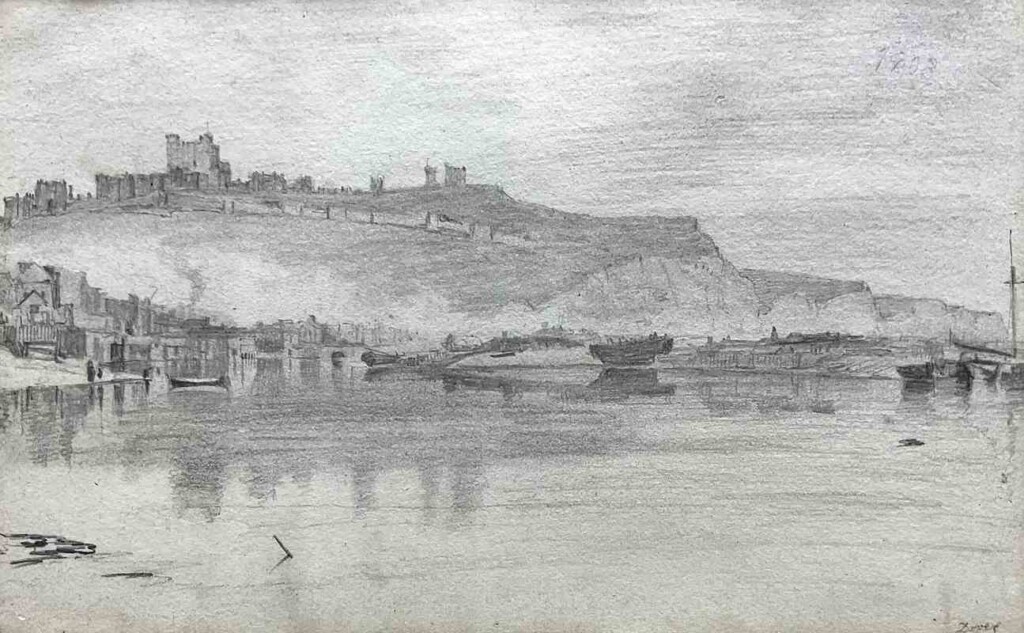
A sketch of Dover Harbor, created by British landscape artist John Constable on a sailing trip in 1803, was found within a smashed frame in a house in Leeds recently.
It came to light during a house clearance, and those responsible for cleaning and restoring realized the celebrated artist was responsible for the work when they found ‘J Constable’ written by hand on the back while examining it.
It’s one of 130 drawings that the landscape artist made during the month-long trip from London to Deal, although less than 50 are known to be left in existence.
A letter that Constable sent to his friend informs art historians that the sketch was made on the last day of his trip.
“I came on shore at Deal, walked to Dover (about one and a half hours) and the next day returned to London,” he wrote in April 1803.
Constable had been aboard an East India boat called Coutts, which was captained by his father’s friend Robert Torin. His notes indicate he left in a hurry after Torin decided to sail to China.
The sketch was made from the deck of the Coutts and contains a broad view across the harbor and the wharf buildings. Above the harbor on a high hill sits the kingly Dover Castle.
“Actually, it was only by the greatest good fortune that any of them survived,” said Dominic Cox, from auctioneers David Duggleby who will be selling the artwork. “Constable had to get off the ship in a hurry when the decision to depart for China was taken and he left his carefully wrapped parcel of drawings behind.”
“Luckily they were recovered before they ended up in the Far East.”
John Constable was born on the River Stour and grew up amid corn fields, canals, and villages which became both subjects of his artistic attention and, later, famous under the moniker “Constable Country.”
Constable painted many full-scale preliminary sketches of his landscapes to test the composition in advance of finished pictures. These large sketches, with their free and vigorous brushwork, were revolutionary at the time, and hence why this one is predicted to sell for as much as $150,000.
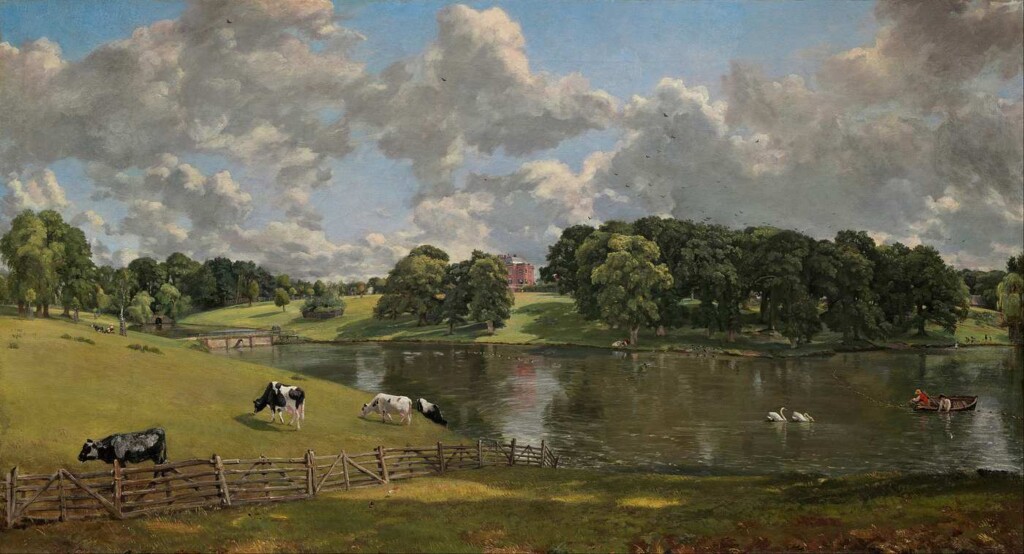
Wivenhoe Park (1816) by John Constable
Mr. Cox said the painting was identified as an original Constable following the house clearance of the property of Leeds.
It is thought a handwritten note on the back of the picture may have been penned by a family member when they later sold off his works.
“That is an old inscription, perhaps added when members of his family sold off drawings and sketches after his death in 1837. It is not Constable’s signature,” Mr. Cox Clarified.
“The backing of the framed drawing bears the label of The Little Gallery of Kensington Church Walk in London, a gallery that was in business in the early 1970s and specialized in the sketches and drawings of big-name artists that were far more readily available at that period than they are today.”
SHARE This Unlikely Find With Your Friends In The Art World…
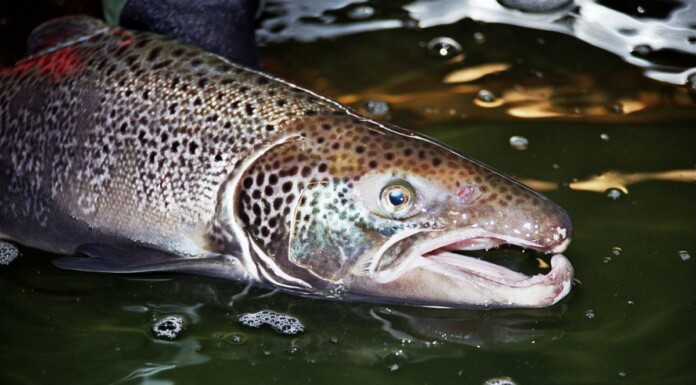
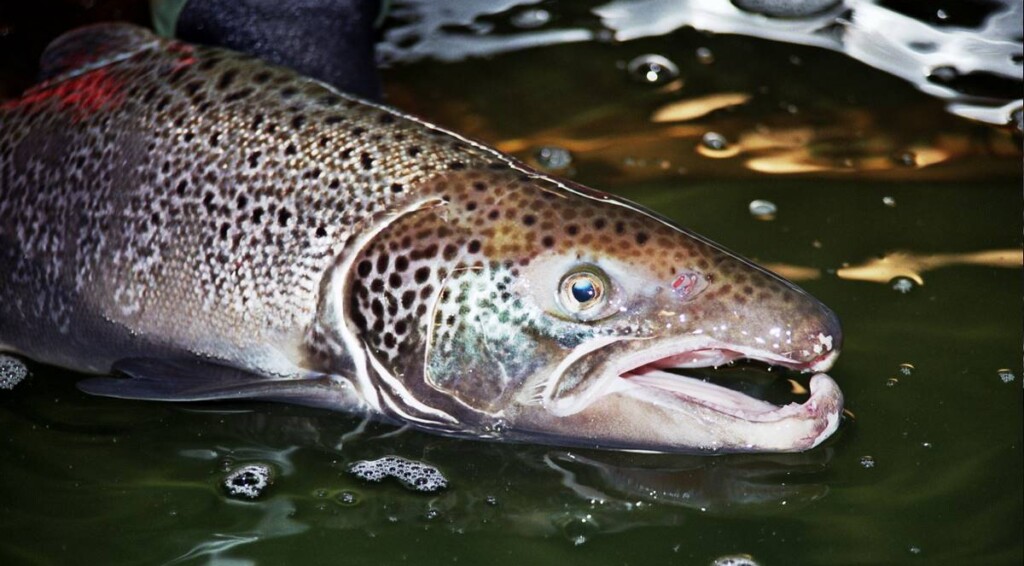
Maine’s rivers are the only ones left in the US where Atlantic salmon can return to spawn, and the most productive of these rivers is having one of its most productive years.
After the removal of the Bangor Great Works Dam on the Penobscot River, ocean-going/river-spawning fish began to return in large numbers.
As of late July, an estimated 1,489 salmon have passed by a fish lift at a place called Milford, the most that have been counted since 2012 when the dam was removed.
“We are up to 1,455 salmon. It’s been a good year thus far,” Jason Valliere, marine resource scientist for the Maine Department of Marine Resources told the Bangor Daily News (paywall). “Let’s hope they keep coming and we see another good push this fall.”
Maine is the only remaining state in the union where wild Atlantic salmon run up river, but fishing for them is prohibited.
It’s thought that higher-than-normal spring and summer rains swelled rivers to greater masses and kept them cooler, which led to greater numbers of cold-water fish returning to spawn.
Other taxa that run up the Penobscot are alewives and blueback river herring, of which 5,490,195 had run up the Milford lift by July 22, shattering by more than double the year-to-date record for the period up to the 22nd.
Maine’s Department of Marine Resources writes that alewives are important to the ecology of freshwater environments in the state because they provide an alternative prey item for osprey, eagles, great blue heron, loons, and other fish-eating birds at the same time juvenile Atlantic salmon are migrating downriver.
Alewives provide cover for upstream migrating adult salmon that may be preyed on by eagles or osprey, and for young salmon in the estuaries and open ocean that might be captured by seals.
Across the United States, 69 river dams were removed from American rivers in 2020, opening up 624 miles of waterways to flow freely and helping connect populations of salmon species like Chinook, coho, and pink, as well as steelhead, cutthroat, and bull trout, Bartram’s bass, greater redhorse, longnose dace, and northern brook lamprey—the latter three of which are threatened or endangered in the U.S.
In most cases, dams were built long ago to fortify industry, or to supply fresh water and irrigation. As technology and population densities have changed over the decades, a surprising amount of dams are powering or assisting nothing, and instead act as irrelevant tax leeches.
SWIM This Good Fishy Story Over To Your Friends’ Social Media Channels…
Quote of the Day: “Out on the edge, you see all kinds of things you can’t see from the center. Big, undreamed-of-things.” – Kurt Vonnegut
Photo by: warren wong
With a new inspirational quote every day, atop the perfect photo—collected and archived on our Quotes page—why not bookmark GNN.org for a daily uplift?
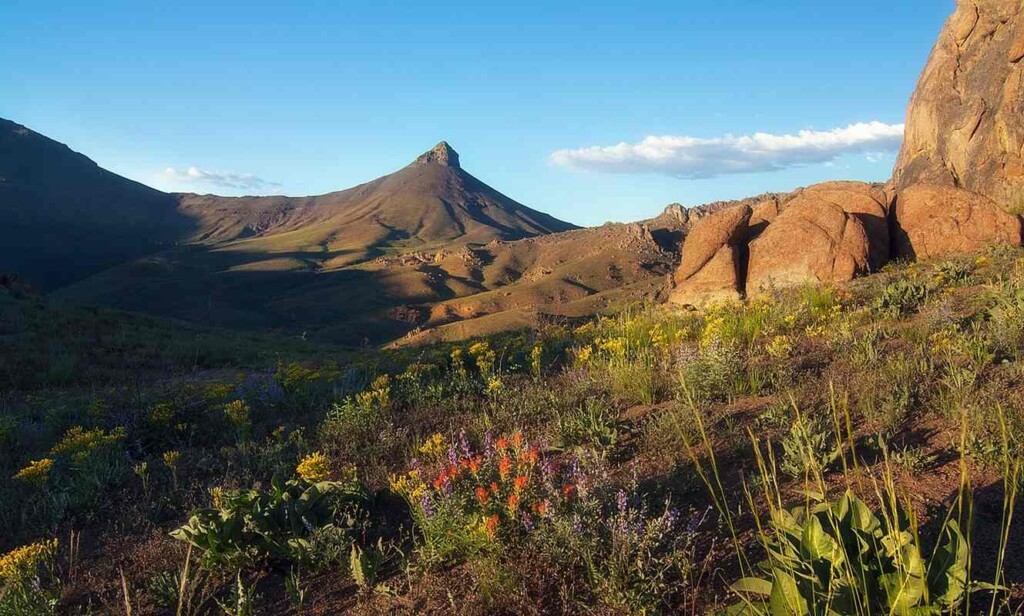
View of Disaster Peak - beyond which lie the McDermitt caldera and its lithium reserves - BLM
View of Disaster Peak – beyond which lie the McDermitt caldera and its lithium reserves – BLM
If even half of the lithium that’s estimated to exist in the McDermitt caldera is mined, it would change the world. Full stop.
Early this year, GNN reported that massive lithium reserves totaling 5.9 million metric tons were discovered in the Indian mountains near Kashmir which put them among the highest known lithium reserves on Earth by country.
The McDermitt caldera reserves are almost 700% larger—40 million metric tons, 13 million more than the known reserves of every lithium-producing mine on Earth.
With every manufacturing nation running around for lithium to make batteries and computer chips, any additional source is highly anticipated.
Up until now, large deposits have been found all around the world, but Bolivia is believed to hold the highest at between 16 to 21 million metric tons. However, political turmoil and low development rates have interfered with getting their reserves out of the ground.
“If you believe their back-of-the-envelope estimation, this is a very, very significant deposit of lithium,” Anouk Borst, a geologist at KU Leuven University, told journalist Anthony King. “It could change the dynamics of lithium globally, in terms of price, security of supply, and geopolitics.”
A new analysis of the in situ lithium reveals that the sediments of the McDermitt caldera include a unique claystone composed of the mineral illite that could contain as much as 2.4% lithium by composition, which is higher than the more widely extracted magnesium smectite.
The claystone formed after incredible amounts of alkaline magma, about 1,000 times more magma than Mount St. Helens in 1980, was blasted out of the volcano, located on the border with Nevada and Oregon. Cooling down, it formed ignimbrite, which eroded away at the crater floor to produce lithium-rich particles.
After which, a lake formed in the crater which collected the lithium in mineral-rich clay at the bottom before another eruption mixed in a lithium-containing alkaline brine.
Mining at the deposit is likely to begin in 2026, having been now thoroughly surveyed by the Lithium Americas Corporation.
As well as securing a supply line of this valuable mineral to US manufacturing, it allows for quality control concerning both environmental and labor practices.
With so few available lithium suppliers, manufacturers often don’t have the luxury of being able to ensure their supply chains are free of practices like debt slavery, child labor, environmental pollution, or other problems that have been known to plague mineral supply chains like cobalt.
With a concentrated supply from Nevada-Oregon, manufacturers can avoid supporting exploitative operations elsewhere.
SHARE This Big Big Economic And Manufacturing Announcement…
This little nugget went through quite the ordeal after falling down a storm drain near Port Jefferson Station on Long Island, NY.
After someone heard mewing coming from the opening of the storm drain, rescuers were called to the scene. Strong Island Animal Rescue then worked with local police to move a 5,000-pound concrete slap atop the drain that would allow them to reach the kitten.
Using large jacks, and then a hydraulic rescue tool called “the Jaws of Life,” they were able to reach the young one 30 feet down.
“The feeling we had while getting him out was similar to Raiders of the Lost Ark when they removed the slab from the well of the souls to get the ark. Well getting this kitten felt the same way when were moving the slab to get a treasure as well this little kitten!” the rescue foundation wrote in a Facebook post.
They added that the kitty, whom they have named Lawrence, is coming along very quickly after being taken to Jefferson Animal Hospital, and that they will have him ready for adoption in no time.
WATCH the rescue below…
SHARE This Cute-As-Can-Be Kitten With Your Friends…
From Australia comes a story of corporate responsibility in the face of personal tragedy as an elderly national bank depositor had nearly AUD$500,000 returned to him out of the bank’s own pockets.
He had been tricked by scammers into revealing his banking information, which an inquest at ANZ bank found was something they should have been able to detect and stop before the scammers pilfered every last cent of the depositor’s life savings.
78-year-old Alex Shaw was recently diagnosed with dementia, something that wasn’t a big surprise to his son Victor. The news came just a few days after he had gone in with Alex to their local branch of the Australia and New Zealand Banking Group (ANZ) and were told that Alex had been the victim of a scam, and that the roughly AUD$460,000 amassed throughout his working life had been taken.
Victor understood it was generally known that scam victims are rarely reimbursed by banks who have a responsibility to protect depositors against fraudulent withdrawals. If the Shaws were to have any hope of recovering the money, they would have to understand whether or not the withdrawals were something that the bank should have prevented.
“Day to day, he’s kind of fine,” Victor told ABC News AU about his father’s dementia. “But that higher-level paperwork kind-of-stuff [like] managing finances… was just really beyond him. Getting the straight narrative as to what had happened… I couldn’t really work it out.”
In a stroke of fortune, Alex had been taking meticulous notes while in conversation with the scammers. He recorded the process almost to a tee, noting that the scammers asked him to buy some Apple store gift cards and send the serial numbers to a phone number in Thailand, or click on some links that were supposed to offer thousands in grant money.
Throughout Alex’ notes, there were references to something called “AnyDesk,” which Victor later learned was a program that allowed scammers to remotely access devices. From that moment on Alex was compromised, and several lump sums of between $10k and $25k were lifted from his account.
ANZ’s fraud detection system blocked the account following these transfers which went to an unknown offshore bank account. However the scammers managed to coach Alex into getting his account reactivated, at which point the rest of his money was taken.
Submitting a complaint, Victor didn’t have much hope, and the representatives from ANZ explained that it’s usually impossible to get much money back in these circumstances.
Then, three months after his father had lost everything, Victor got a response in the mail.
“Following our review of this matter… ANZ recognizes that it could have done more to support Mr. Shaw given his history with scams,” the bank stated. “Considering Mr. Shaw’s vulnerability and the impact the scam has had on him, we will reimburse the scam transactions totaling $460,174.04.”
Victor told ABC that not a single person he knows, and as an Anglican church rector he has quite the Rolodex, has ever heard of such a thing happening.
Bank representatives speaking with ABC used the opportunity to encourage the children or relatives of those with dementia or cognitive decline to take steps to ensure greater security around financial management. Victor set up power of attorney over the account, for example, but other measures can be taken.
SHARE This Important Example Of Responsible Conduct By A Big Bank…
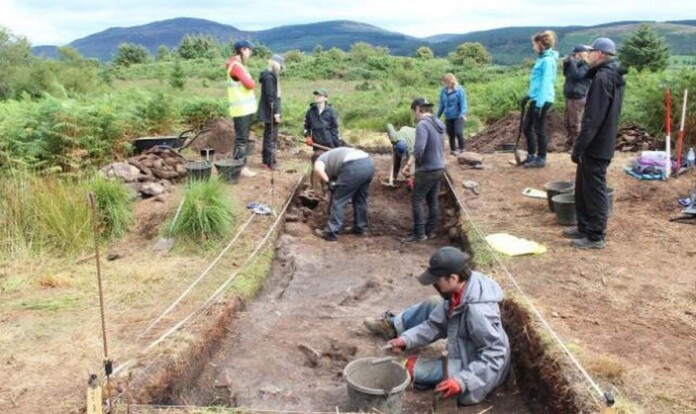
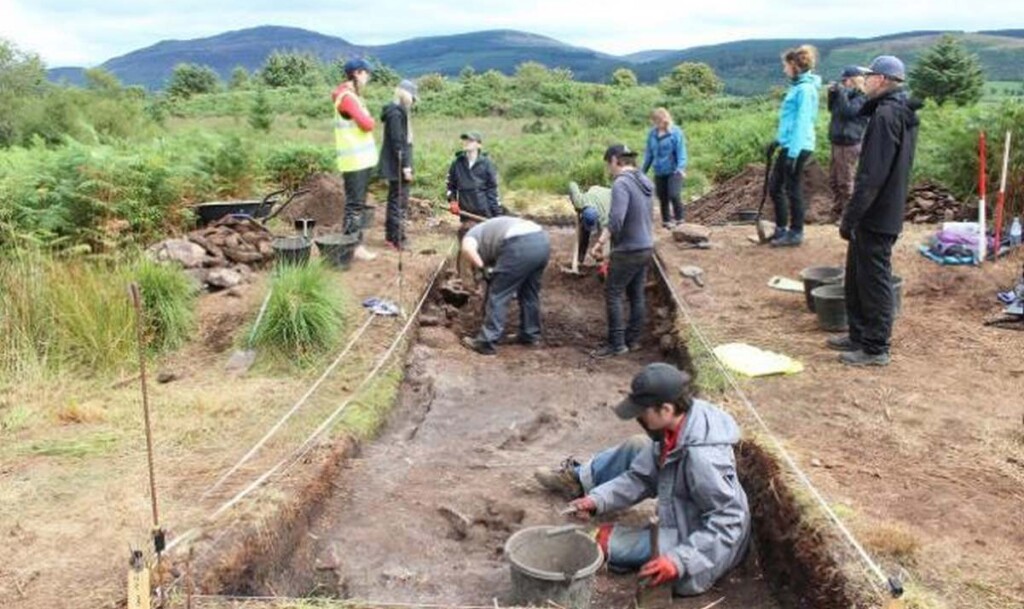
Excavation of the eastern bank of the Drumadoon cursus in summer 2021 - Univ. of Glasgow
Excavation of the eastern bank of the Drumadoon cursus in summer 2021 – Univ. of Glasgow
On Scotland’s Isle of Arran, national archaeologists are abuzz that a new ‘cursus’ has been found that is proving to be the most complete and best-preserved monument of this kind ever found in Britain—greater even than Stonehenge.
A cursus is not a stone circle, but rather a massive earthwork, and this one found at a place called Drumadoon was built by Neolithic farmers around 3,500 BCE, and it stretches 0.6 miles.
These kinds of landscape monuments were given the name ‘cursus’ after the Latin word for ‘course,’ and in fact the cursus at Stonehenge was at one point believed to be an ancient chariot racing track.
Their purpose is difficult to divine, and their shape and size differ from place to place, but essentially they take the form of a processional course that leads past other monuments like barrow mounds, stone circles, burial cairns, and standing stones. Indeed if stone circles are the Neolithic equivalent of the Roman Colosseum, then the cursus is the equivalent of the Roman Forum.
Sometimes the boundary structure of the cursus is a trench, like at Stonehenge, and other times it’s a raised mound, like at Drumadoon, or at Dorset in England. These mounds would have been exceptionally difficult to build when accounting for a lack of surveying equipment and digging implements like a shovel.
“The Isle of Arran is well known for Machrie Moor with its Prehistoric stone and timber circles; standing stones and burial cairns but the discovery that these may be part of a much larger complex which included this enormous cursus elevates this into a region of global significance on a par with other ceremonial landscapes like Stonehenge,” said Dr. Emma Jenkins, Associate Professor at Bournemouth University who co-led the landscape geoarchaeology and environmental science work in a statement.
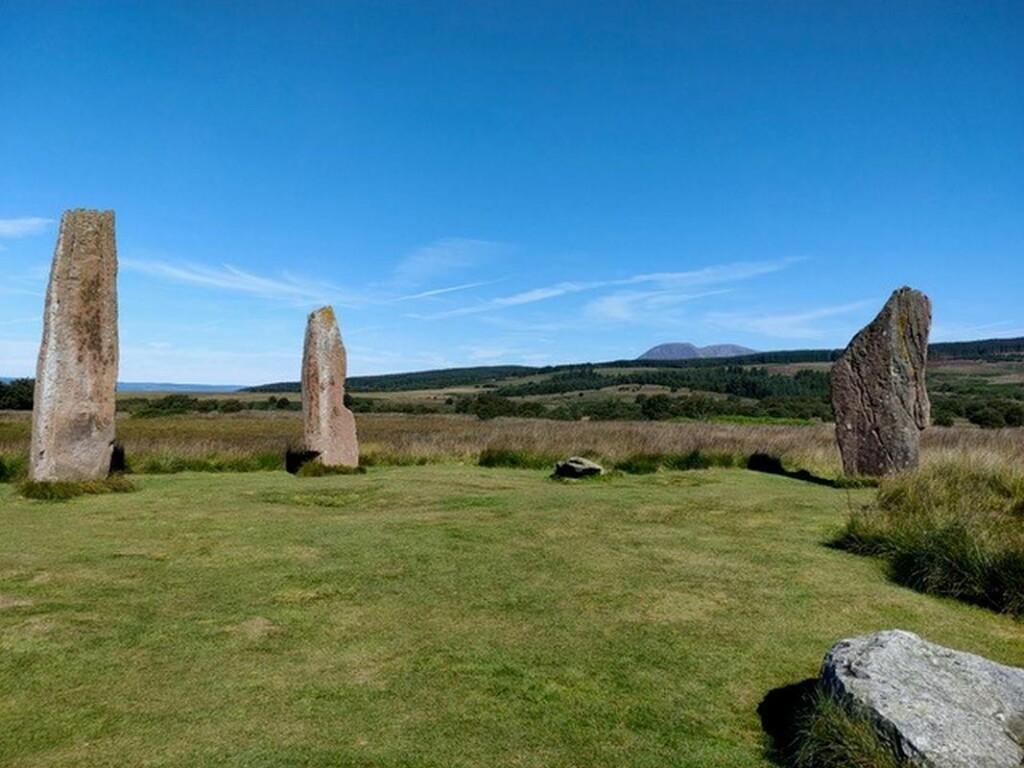
Machrie Moor stone circle – credit N. Whitehouse, Univ. of Glasgow.
As glorious as standing stone circles are—and there is a very glorious one near the Drumadoon excavation site called the Machrie Moor stone circle, they can’t reveal details about societal organization like a cursus can.
Constructing the monument would have involved staggering amounts of labor, transforming the entire local landscape in the process.
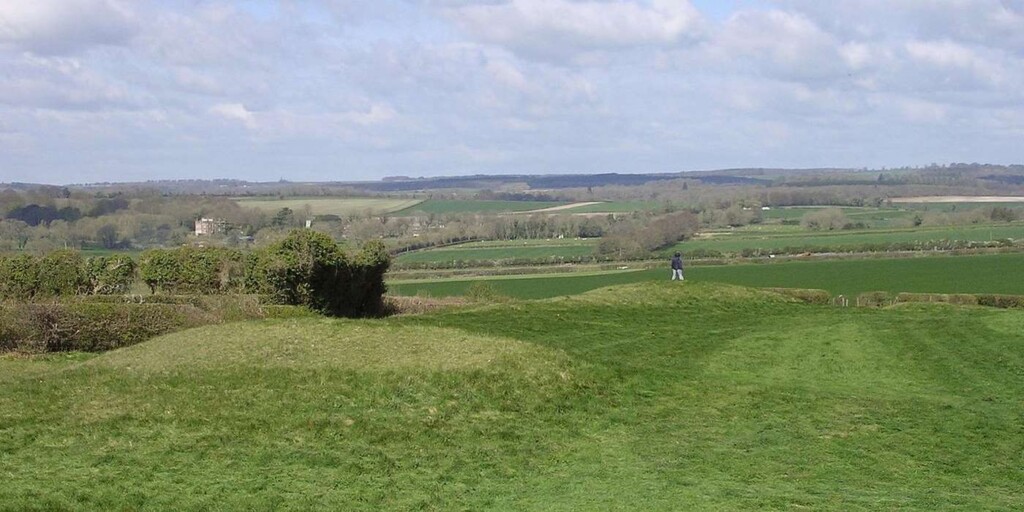
The end of the Dorset Cursus – CC SA 3.0. Jim Champion
“I have been fortunate to be involved in the excavations of several cursus monuments over the last 30 years, but this is by far the most significant,” said Dr. Kenny Brophy, Senior Lecturer in Archaeology at the University of Glasgow who co-directed excavations at the cursus.
“The survival of the monument means that the potential it has for shedding light on early Neolithic farming and social organization is incredibly exciting. These sites are almost all ploughed flat so to be able to stand on near intact cursus bank is very rare.”
Prehistoric field boundaries, clearance cairns, and circular houses, at least some of which may be contemporary with the monument, have also been found in the same landscape, all preserved within peatland, sealing the archaeological layers.
Ancient soils representing the original Neolithic land surface, together with cultivated soils from the Bronze Age period, provide an unparalleled opportunity to understand how contemporary farming practice and settlement interacted with the cursus monument and how early farmers transformed Drumadoon.
Drumadoon is currently ensconced in a protected area called the Arran Geopark, but the site is privately owned by a Mr. David Bennett, who is currently in the process of rewilding much of the land; the discovery of the cursus will “inform” the rewilding strategy.
SHARE This Monumental Discovery With Your Friends…
Quote of the Day: “You are the bows from which your children as living arrows are sent forth.” – Khalil Gibran
Photo by: Marcel Ardivan
With a new inspirational quote every day, atop the perfect photo—collected and archived on our Quotes page—why not bookmark GNN.org for a daily uplift?
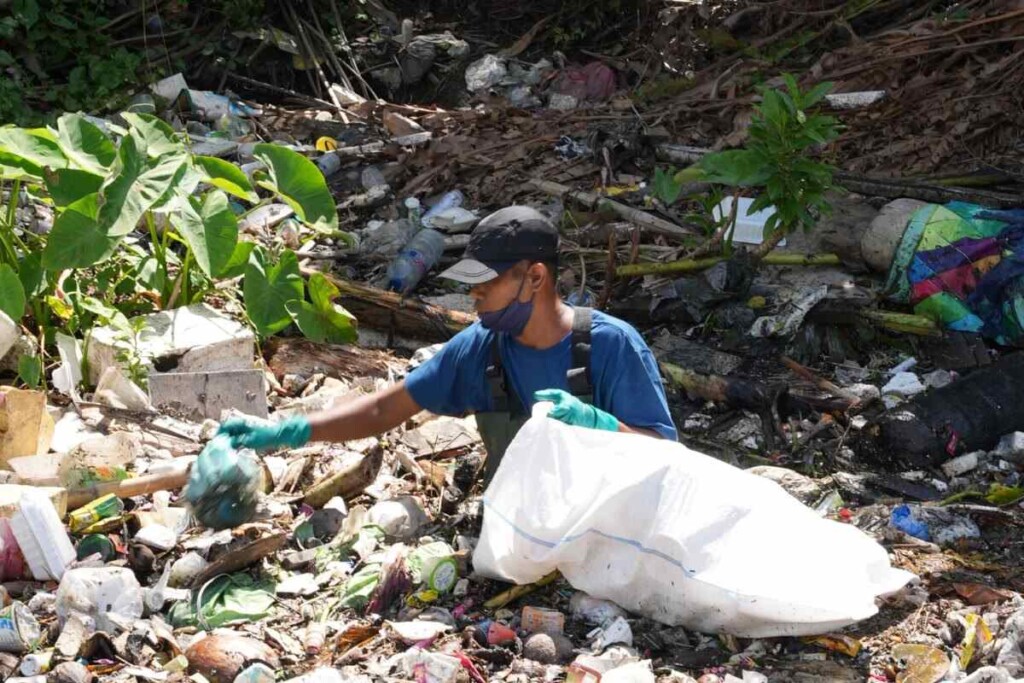
Sungai Watch staff clearing plastic trash gathered from river barriers. Image courtesy of Sam Benchegjib.
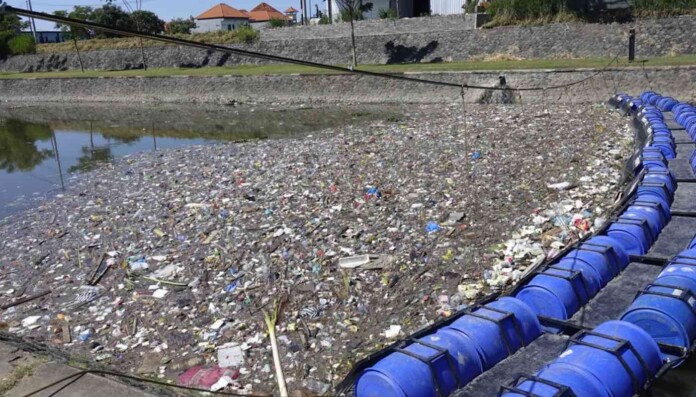
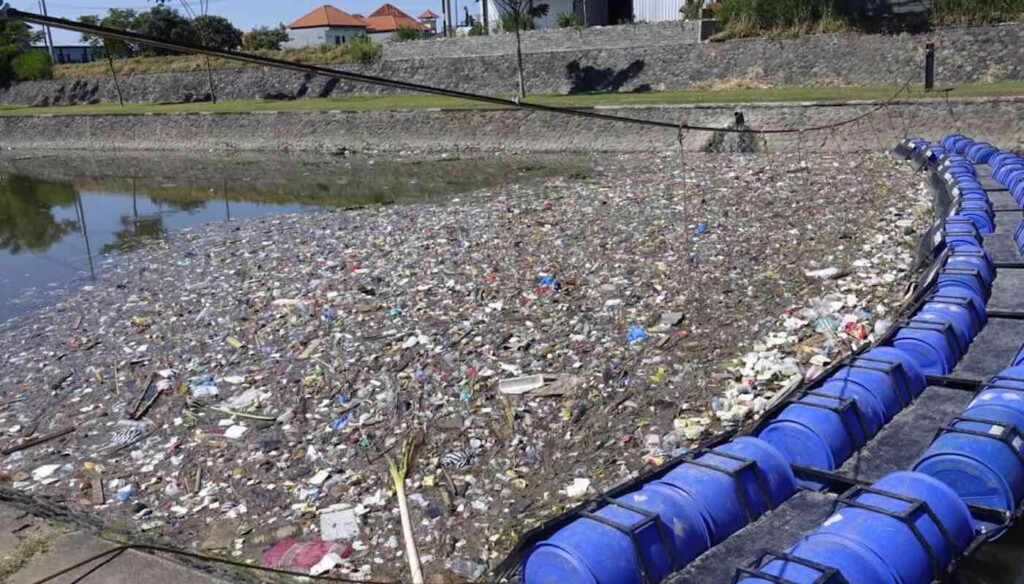
In Indonesia, the worsening plastic pollution crisis has led young Sam Benchegjib to start Sungai Watch – an environmental organization dedicated to keeping Indonesia’s waterways clean by installing river barriers to prevent plastic and other trash from entering the ocean.
An average of 2,000 kilograms (4,400 pounds) of plastic waste per week can leak into the ocean from just a single village. Proper management of plastic waste is lacking in coastal communities in the country, the No. 2 contributor to the ocean plastic crisis, pushing the government to vow $1 billion to cut 70% of its marine plastic waste by 2025.
With his two siblings, Benchegjib started Sungai Watch, in October 2020. They experienced many setbacks throughout the almost three years of building Sungai Watch, from the technology and equipment used in their barriers to staff shortages to learning how to scale the project. He says they’re still learning new things every day and continually improving our processes.
Sungai Watch has successfully cleaned several of Indonesia’s most polluted rivers and revived mangrove ecosystems that have been damaged because of plastic pollution, using a system similar to litter booms. So far, over 1.2 million kilograms (over 2.6 million pounds) of plastic waste has been collected from river systems and bodies of water.
“I grew up in Indonesia and saw that plastic pollution was getting worse and worse throughout the years,” Benchegjib said.
“I think that’s the beauty of being an entrepreneur and fighting an issue like plastic pollution, where new challenges and variables are always presented to you,” he said. “This has been a true-life school for us.”
Despite these challenges, they have removed over 1.2 million kg (over 2.6 million pounds) of plastic from Indonesia’s rivers, installed 180 trash barriers throughout Indonesia’s most polluted rivers, and have grown from a team of 3 siblings to 100 people full-time staff helping the mission to clean rivers.
“Some of our success stories include seeing fish populations return to what were once extremely polluted waterways, reviving mangrove forests after removing layers and layers of plastic, which were suffocating mangrove trees,” Benchegjib says.
In certain rivers, they had to remove their barriers as they were no longer useful due to the lack of plastic pollution after working upstream with communities on education and raising awareness about properly managing waste at the household level.
Written by Latoya Abulu and Laurel Sutherland. Reprinted with permission from Mongabay – CC license
Artists impression of a black hole destroying a nearby star. The researchers believe such a collision may be responsible for this new type of explosion. (Credit ESA C. Carreau)
Artist’s impression of a black hole destroying a nearby star. The researchers believe such a collision may be responsible for this new type of explosion. (Credit ESA C. Carreau)
A dazzling and rare cosmic explosion, which outshines most supernovae in the universe, has been spotted by researchers at Queen’s University Belfast.
The unusual new blast that has been analyzed by the researchers is as bright as hundreds of billions of stars the size of our sun. But it also has another peculiar trait, it lasts less than half as long as a typical supernova.
Their research on the phenomenon following its observation led them to conclude it wasn’t a one-off, but something more concrete, meaning they got to name it—which they did after their favorite sports team–Liverpool Football Club, in part because their jerseys are red.
In a newly published study describing their findings, the researchers first identified the event using the ATLAS network of robotic telescopes. The ATLAS telescopes in Hawaii, Chile, and South Africa scan the entire visible sky every night to search for any object that moves or changes in brightness.
Within days of detecting the explosion—named AT2022aedm—the researchers obtained more data with the New Technology Telescope in Chile and found that it looked unlike any known supernova.
Follow-up data from observatories around the world showed that the explosion faded and cooled down much faster than expected.
“We’ve been hunting for the most powerful cosmic explosions for over a decade, and this is one of the brightest we’ve ever seen,” said Dr. Matt Nicholl from the School of Mathematics and Physics at Queen’s University.
“Usually, with a very luminous supernova, it will have faded to maybe half of its peak brightness within a month. In the same amount of time, AT2022aedm faded to less than one percent of its peak—it basically disappeared!”
The location of the explosion was also a big surprise, as it occurred in a type of galaxy that up until now was believed to be void of any star large enough to cause a supernova.
“Our data showed that this event happened in a massive, red galaxy two billion light years away. These galaxies contain billions of stars like our Sun, but they shouldn’t have any stars big enough to end up as a supernova,” added Dr. Shubham Srivastav, also from Queen’s.
The team searched through historical data and found just two other cosmic events with a similar set of properties. These were discovered by the ROTSE and ZTF surveys in 2009 and 2020. The extensive data set obtained for AT2022aedm shows that these are a new type of cosmic event.
“We have named this new class of sources ‘Luminous Fast Coolers’ or LFCs,” said Dr. Nicholl. “This is partly to do with how bright they are and how fast they fade and cool. But it’s also partly because myself and some of the other researchers are huge fans of Liverpool Football Club. It’s a nice coincidence that our LFCs seem to prefer red galaxies!”
The researchers hypothesize that a star normally too small to go supernova, was pushed to this bright breaking point by the influence of a nearby blackhole.
Bringing a bit of European small-time organization across the pond, a US/Dutch resident of Oregon is launching a startup to allow wine drinkers to bring bottles back to wineries for a refill.
Such infrastructure exists in Europe, but in the US, where 765 million glass bottles are used every year in the wine industry, only one-third are even recycled, much less reused.
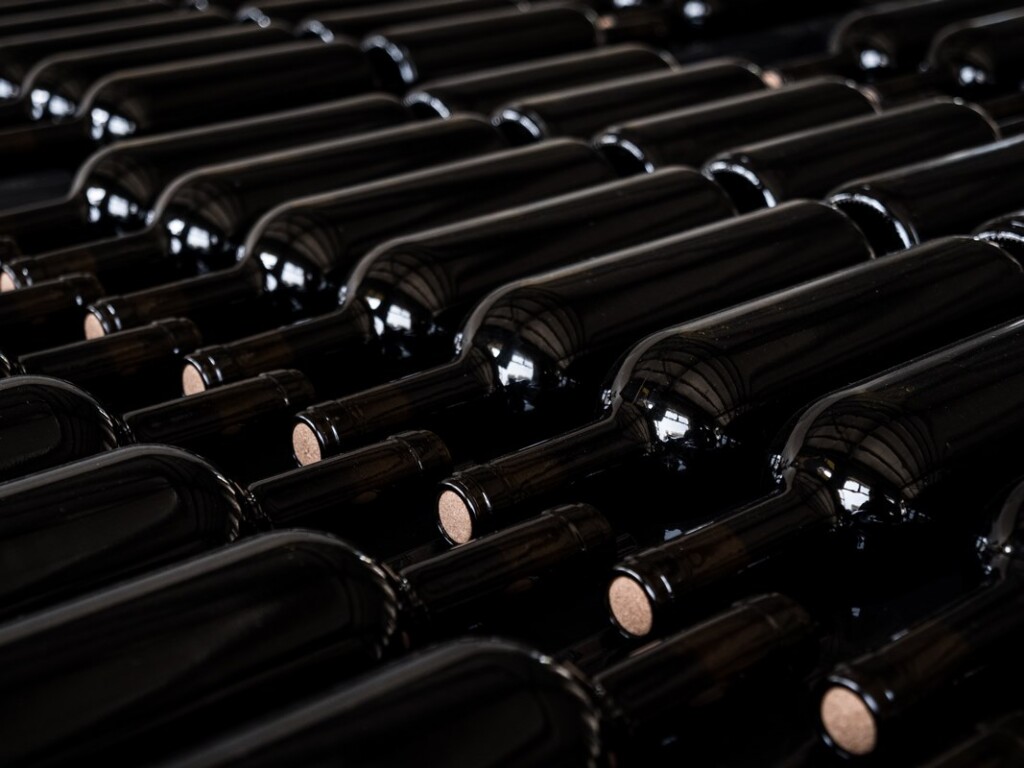
The company is called Revino, and they collect, wash, and sanitize the bottles before removing labels and returning them to wineries to be refilled. The design is imprinted with a leaf to help customers identify them, and they are also tailor-made to fit into existing automatic filling machines.
Customers can either take them directly to wineries for a refill or deposit the bottles at collection points at liquor stores and recycling facilities.
“What we really identified is simplicity: We can’t make it complicated for people to return things,” said Keenan O’Hern, cofounder of the startup. “We can’t make it out of the way, because they’re just not going to do it.”
The manufacturing process produces bottles that are rated for 50 reuses, which can reduce the bottle’s overall carbon footprint by 85%, even if it meets just one-third of that total.
There are many major companies already using recycled materials in the beverage industry, but Revino wants to prove what’s possible with small producers, and after their 2024 spring launch in Oregon wineries, O’Hern wants to move into Northern California where there are many small wineries with a lot of local consumption.
SHARE This Story With Any Northwest Winos You Know…
Reconstruction of Fujianvenator prodigiosus – Credit- Zhao Chuang / SWNS
Reconstruction of Fujianvenator prodigiosus – Credit- Zhao Chuang / SWNS
China introduced many things to the world—paper, fireworks, gunpowder, zippers, but it’s also in China’s soils that the greatest scientific advancement in paleontology was discovered—that dinosaurs became birds.
China has produced more feathered or gliding dinosaurs, or those that share intimate similarities with flightless birds like emu, than any other country, including this one: a new 150-million-year-old avialan theropod found in Zhenghe County in Fujian Province.
Chinese scientists say the previously unknown species was a “high-speed runner” who lived in a “swamp-like” environment during the Jurassic Period.
They said the new species, named Fujianvenator prodigiosus, or (Fujian hunter) exhibits a strange mixture of features shared with other predecessors of today’s birds.
“Our comparative analyses show that marked changes in body plan occurred along the early avialan line, which is largely driven by the forelimb, eventually giving rise to the typical bird limb proportion,” said study corresponding author Dr. Wang Min, of the Chinese Academy of Sciences in Beijing.
“However, Fujianvenator is an odd species that diverged from this main trajectory and evolved bizarre hindlimb architecture.”
Dr. Wang said the surprisingly elongated lower leg and other features suggest that Fujianvenator lived in a “swamp-like” environment and was a quick runner or a long-legged wader, representing a previously unknown version of early birds.
A Jurassic-era wading bird—fascinating. Other aquatic bird/dinos have been found in China, like the Natoventator, which was described by one paleontologist as a kind of Cretaceous cormorant.
The researchers say that between the Late Jurassic and Early Cretaceous period, southeastern China underwent intensive tectonic activities, resulting in the unusual landscape where Fujianvenator was found.
“The extraordinary diversity, unique vertebrate composition, and paleoenvironment strongly indicate that this locality documents a terrestrial fauna, which we named the Zhenghe Fauna,” said study author Dr. Zhou Zhonghe.
The team says their findings, published in the journal Science, opens a “new window” into the Late Jurassic terrestrial ecosystem of the planet, and they plan to continue their exploration of Zhenghe and nearby areas.
SHARE This Jurassic Wading Bird Ancestor With Your Friends…
Quote of the Day: “Where there is great love, there are always miracles.” – Willa Cather
Photo by: Datingjungle
With a new inspirational quote every day, atop the perfect photo—collected and archived on our Quotes page—why not bookmark GNN.org for a daily uplift?
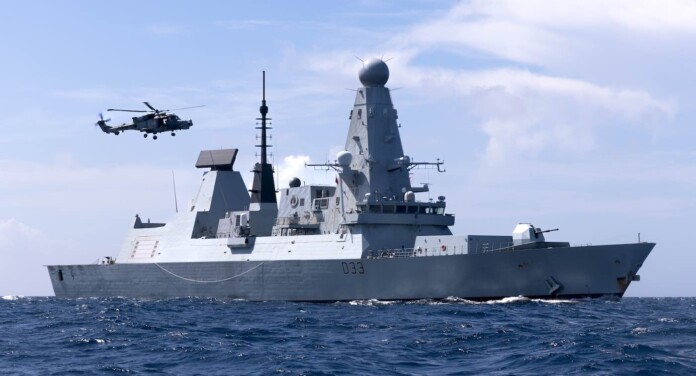
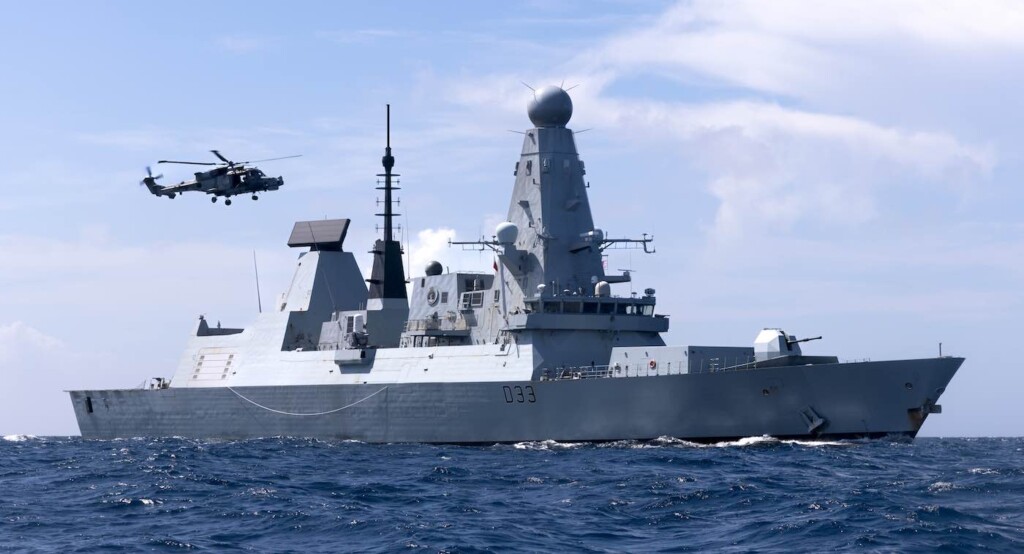
HMS Dauntless and a Wildcat from 815 Naval Air Squadron seized $175m worth of cocaine from drug traffickers in Caribbean waters - SWNS / Royal Navy
HMS Dauntless and a Wildcat from 815 Naval Air Squadron seized $175m worth of cocaine from drug traffickers in Caribbean waters – SWNS / Royal Navy
A Royal Navy warship seized more than a ton of cocaine worth $175 million on the streets in a drug trafficking snare set up with the U.S. Coast Guard in the Caribbean.
HMS Dauntless, a Portsmouth-based warship hunted down a ‘go-fast’ smuggling boat with 1,230kg of cocaine, deploying a Wildcat helicopter, Royal Marines, and the US team to stop and search the vessel.
In another operation in the Caribbean Sea, the ship supported additional US law enforcement agencies in tracking a suspicious aircraft flying from Venezuela. The team alerted ground forces and seized a further 550kg of cocaine.
It was the first time the Type 45 destroyer used state-of-the-art sensors normally used to scan the skies for hostile incoming jets and missiles to track a suspect drug flight.
“It shows that not only are we able to disrupt the flow of drugs at sea but have the ability to sense and track air traffic, suspected of transporting drugs,” the HMS Dauntless officers told the Royal Navy.
“This also highlights the importance of taking an interagency approach to counter narcotics, as our US counterparts were able to seize the aircraft upon arrival at its destination.”
The ship’s commanding officer, Commander Benjamin Dorrington, agreed. “The successful counter illicit trafficking operation demonstrates the value of working with partners such as the US Coast Guard and the professionalism of the ship’s company of HMS Dauntless.”
The first operation began when Dauntless’ advanced radar system alerted sailors to the presence of a suspect vessel. Acting quickly, Dauntless closed on its position, launching its embarked helicopter.