Big corporate hotel chains have never lacked criticism and customer complaints, but in downtown Kansas City, one Marriot is honoring a promise that its representatives made almost 40 years ago.
Tim and Melinda O’Brien got married in 1983 and wanted to go “where nobody would think to look for us” for a fast honeymoon getaway.
They selected the Radisson Muehlebach hotel, but due to unforeseen circumstances, they didn’t stay there long enough for the important part.
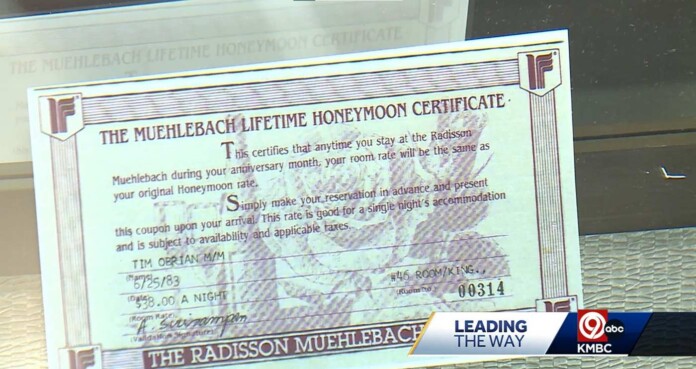
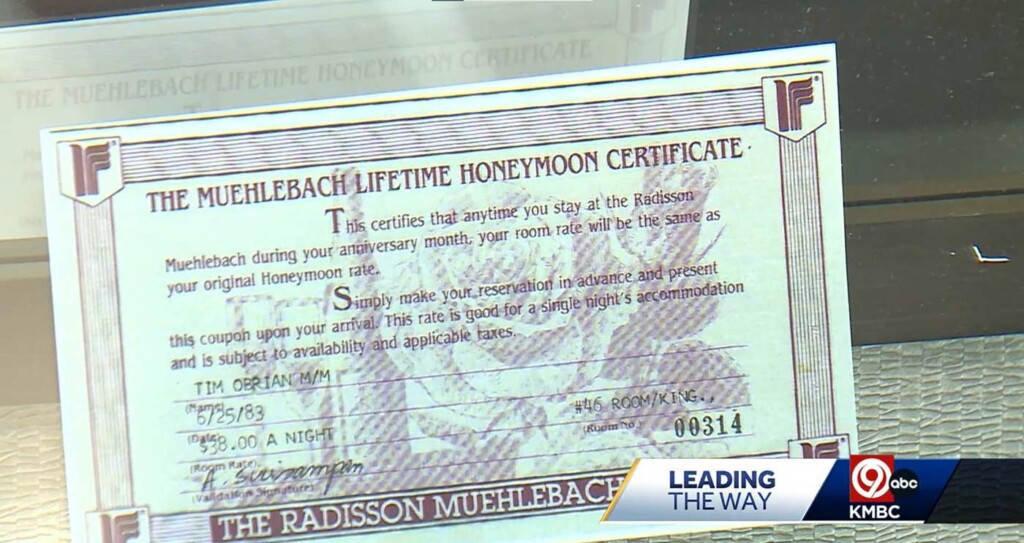
Fast forward to 2023, and the couple is preparing to celebrate 40 years of partnership, and that’s when combing through their wedding album they came across a gift certificate certifying that “anytime you stay at the Radisson Muehlebach during your anniversary month, your room rate will be the same as your original honeymoon rate.”
Back then, that was just 38 bucks. How times change.
“I wonder if they’ll still honor this,” Tim O’Brien thought to himself.
To the credit of the hotel—now a Marriot instead of a Radisson—they did, and while the room they stayed in no longer exists, they had some very comparable ones.
“I can’t take credit for that marketing initiative,” Dustin Holcumbrink, the hotel manager told KMBC 9 news with a smile on his face.
“This is what marriage is all about, memories, special things that you experience together,” said Melinda.
The couple plans to use the certificate to stay at the hotel over the weekend of their anniversary on June 25th to attend a few jazz nights, and take care of some unfinished business after that.
WATCH the story below…
SHARE This Serendipitous Certificate With Your Friends…
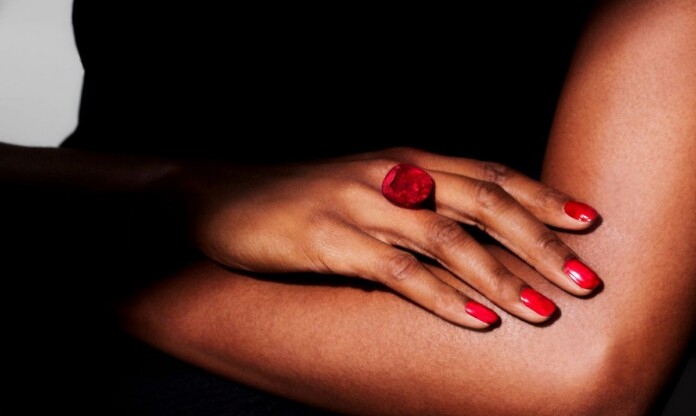
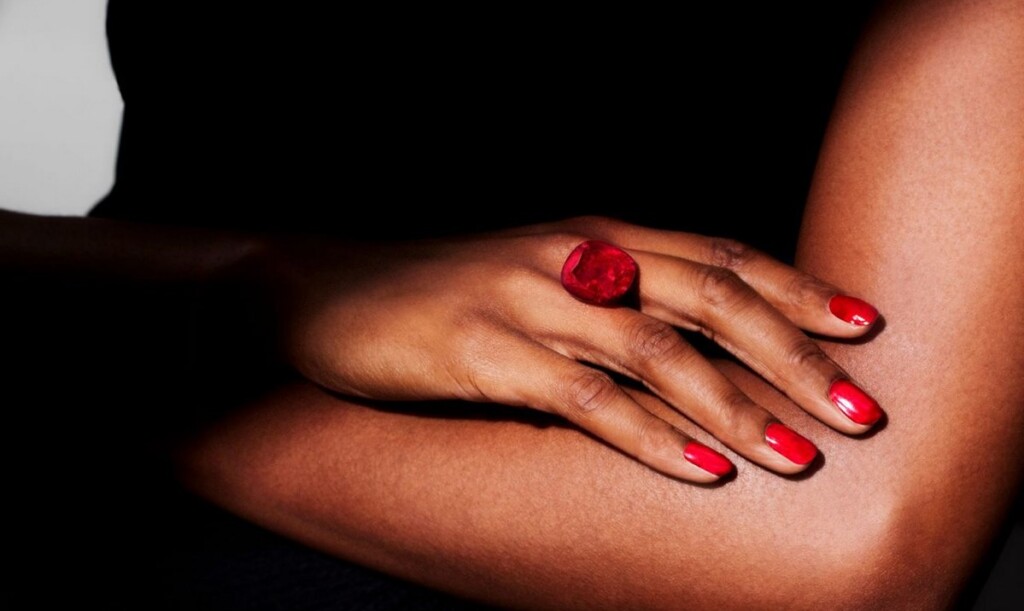
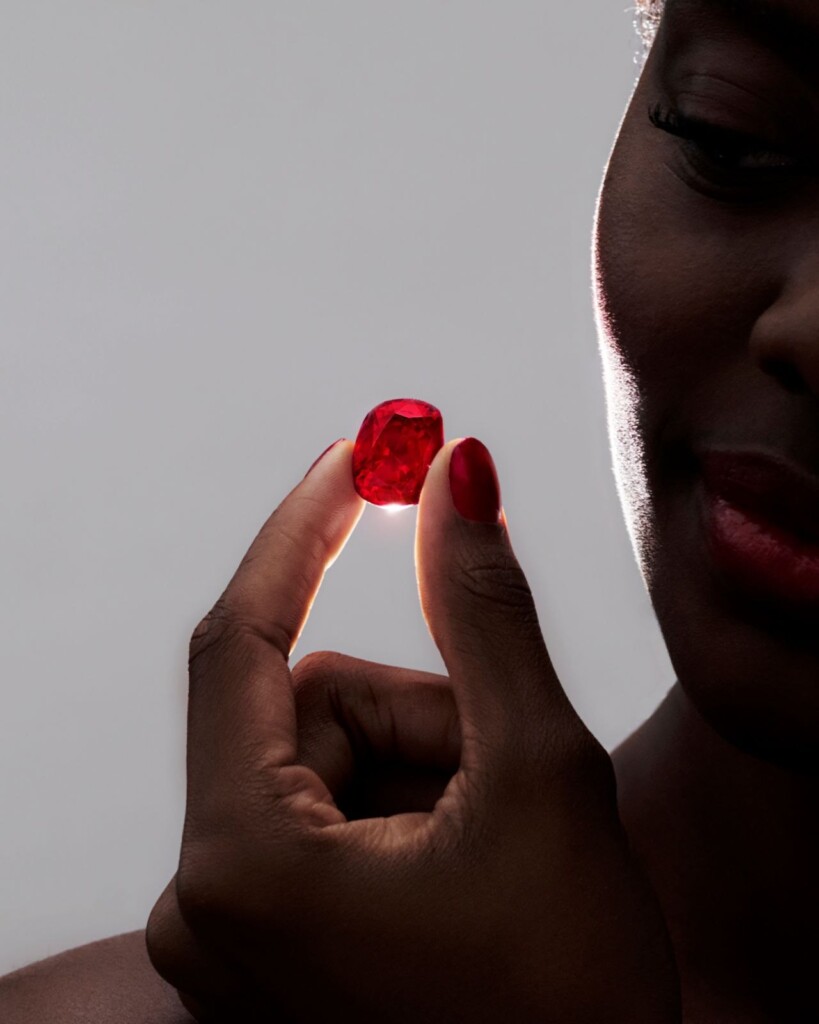
Unearthed by miners in Mozambique last July, a 55.22-carat ruby has just sold for a record-breaking $34.8 million.
Dubbed the Estrela di Fura in the country’s official language of Portuguese, it was cut and polished into a symmetrical shape of deep red down from its rough carat count of 101.
Sotheby’s, which handled the sale, described the stone as “exceedingly rare” and “the most valuable and important” ruby ever to go under the hammer.
It was discovered in one of the mines of Canadian firm Fura Gems, whose CEO Dev Shetty said a stone of that size was “unprecedented”
“From the in-depth analysis and study of the stone—through the process of cutting and polishing—we have worked with the utmost care and respect for the ruby, recognizing its importance and stature,” he added.
A man named Balbir, who handles sorting for Fura, was both the first to see the jewel and hear back from laboratory work done on it.
“I have a laboratory that came back to me and said: ‘In 20 years of testing, I’ve never seen anything like this’,” Balbir told Voice of Indonesia, per Google Translate. “No one has seen anything like this before, in terms of fluorescent, color, and clarity.”
One of the most-productive ruby mining countries on Earth, rubies were only discovered in Mozambique a few decades ago, and only came to international attention after a large deposit was found in 2009.
“This is a historic moment for us, my company, and for Mozambique. I am very happy and proud of Mozambique; it deserves all the praise,” Shetty also told VOI.
The Estrela de Fura – credit Sotheby’s
The CEO is on a mission to make colored gemstones on par in consumers’ eyes with diamonds. According to Shetty, rubies are actually 20 times rarer than diamonds and traded pretty much dollar for dollar until the 1980s. That’s when the Belgian diamond brokers De Beers used considerable marketing prowess to convince the whole world diamonds were uniquely superior to sapphire, emerald, and ruby.
According to news from Mozambique, the government is implementing a multifaceted approach to ensure gem export goes through legal channels in order to contribute to the development of the country. It’s also undergoing the implementation of the “Kimberly scheme” to certify that diamonds, also discovered there, are mined without any human rights violations.
Over the last few decades, particularly with colored stones, several low and middle-income countries have been able to establish conflict-free, ethical gem mining operations, breaking the famous “Resource Curse.” Two good examples of this are the sapphire trade in Sri Lanka, a huge gem exporter that has also become a world leader in ethical mining, and the state of Veracruz in Mexico where amethyst mining is decentralized and supports thousands of families.
The Muzo Mine in Colombia produces many of the emeralds in the industry today. Muzo miners belong to a union, have access to healthcare, fixed salaries, and profits are invested into both the local community and the environment.
SHARE This Stunning Find And Price Tag With Your Friends…
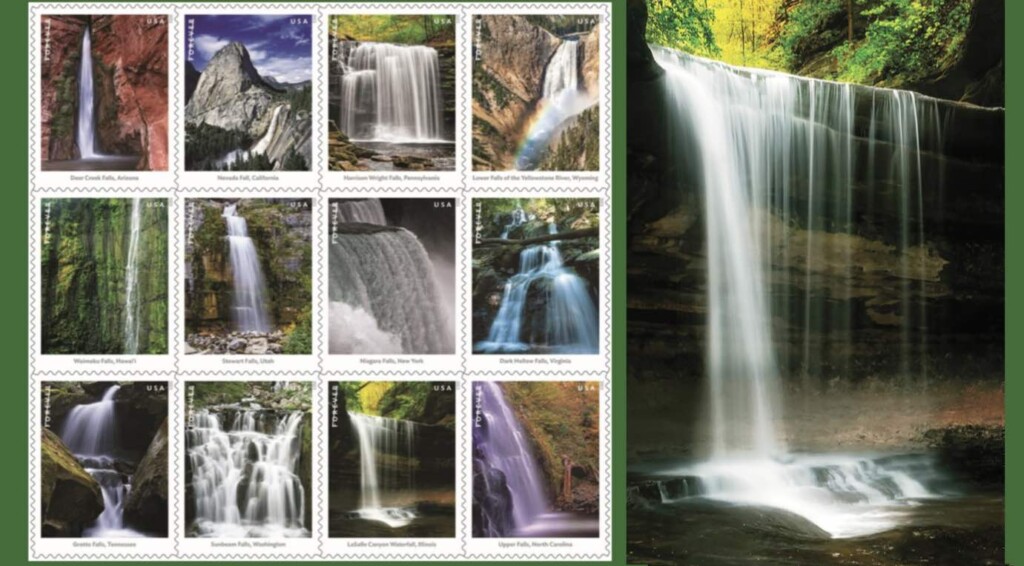
The US Postal Service has taken a peculiar interest in its latest commemorative stamp collection—waterfalls.
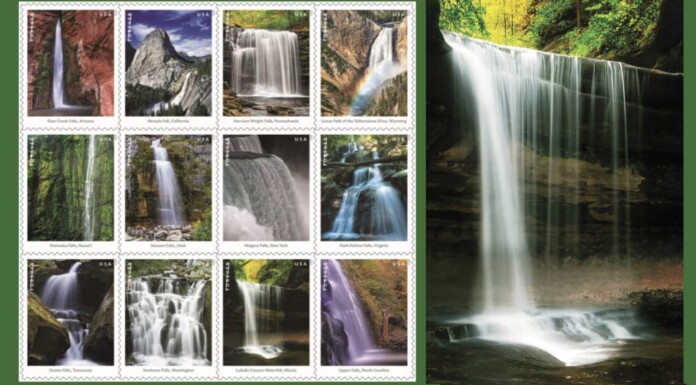
12 news stamps attempt to communicate the majesty of the nation’s most beautiful cascades, from Virginia to Washington State to Hawai’i.
Many may recognize Niagra Falls or Lower Yellowstone Falls, but not all of them are large cataracts. There are smaller, more intimate trickles by comparison, just as beautiful but in their own way, such as Harrison Wright Falls in Ricketts Glen State Park, Pennsylvania.
“The Postal Service is proud to celebrate the natural world through our stamps, and these gorgeous new stamps will bring the beauty of these waterfalls to millions of people who will see them on the cards and letters they receive in their mailboxes,” said Michael J. Elston, Secretary of the Board of Governors, U.S. Postal Service, who served as the stamps’ dedicating official.
“One of the most familiar types is the plunge, where the stream falls vertically without making contact with the underlying cliff face; sometimes there are caverns behind the falls carved by earlier erosion.”
“As the name suggests, a fan waterfall resembles the shape of a fan as the flow spreads down the rocks. Other types include the cascade, which breaks into smaller falls as the water descends over a slope of rocks and boulders, and the cataract, where large amounts of fast-moving water plummet over a cliff to create a waterfall of great size and power.”
The stamps debuted on June 13th at the canyon visitor center in Yellowstone National Park. They include the following…
Deer Creek Falls (Grand Canyon National Park, AZ) plunges 180 feet into a pool at its base. On foot, it is a strenuous hike for experienced desert backpackers, but it is also accessible as a stopping place on rafting trips along the Colorado River.
Nevada Fall (Yosemite National Park, CA) is one of hundreds of waterfalls in the park. It flows next to Liberty Cap, a dramatic granite dome, and drops 594 feet along the mountainside.
Harrison Wright Falls (Ricketts Glen State Park, PA) drops 27 feet over a rock ledge, where it spreads to create a curtain-type fall flowing into a large pool at the base.
The Lower Falls of the Yellowstone River (Yellowstone National Park, WY) has a 308-foot drop. Nearly twice as high as Niagara Falls, the sheer volume of water that descends the cliffs makes it one of the most powerful waterfalls in the United States.
Waimoku Falls (Haleakalā National Park, HI), with its dramatic 400-foot drop down sheer lava-rock, is one of the park’s great highlights.
Stewart Falls (Mount Timpanogos Wilderness, UT) falls in two tiers and is more than 200 feet tall. Also known as Stewarts Cascades, it is a moderate, slightly steep hike along a lovely forest trail on the east side of Mount Timpanogos.
Niagara Falls (Niagara Falls State Park, NY) is one of North America’s natural wonders. Its force is enormous: 3,160 tons of water flows over the falls every second.
Dark Hollow Falls (Shenandoah National Park, VA) plunges 70 feet over a series of drops. It is a popular subject for photographers visiting the park.
Grotto Falls (Great Smoky Mountains National Park, TN) is the only one in the park that has a hiking trail behind the veil of falling water. The 25-foot falls is along one of the park’s most popular hikes.
Sunbeam Falls (Mount Rainier National Park, WA), while not high, features picturesque cascades of water flowing over a series of rock ledges. It is most impressive when fed by snowmelt.
LaSalle Canyon Waterfall (Starved Rock State Park, IL) features a 25-foot fall that allows access behind its curtain of water. In winter, it freezes into beautiful and alluring shapes along the rocks.
Upper Falls (Blue Ridge Parkway, NC) is a moderate hike from the parkway. The 60-foot waterfall descends the steep rock face, sending out sprays that support many types of ferns and wildflowers.
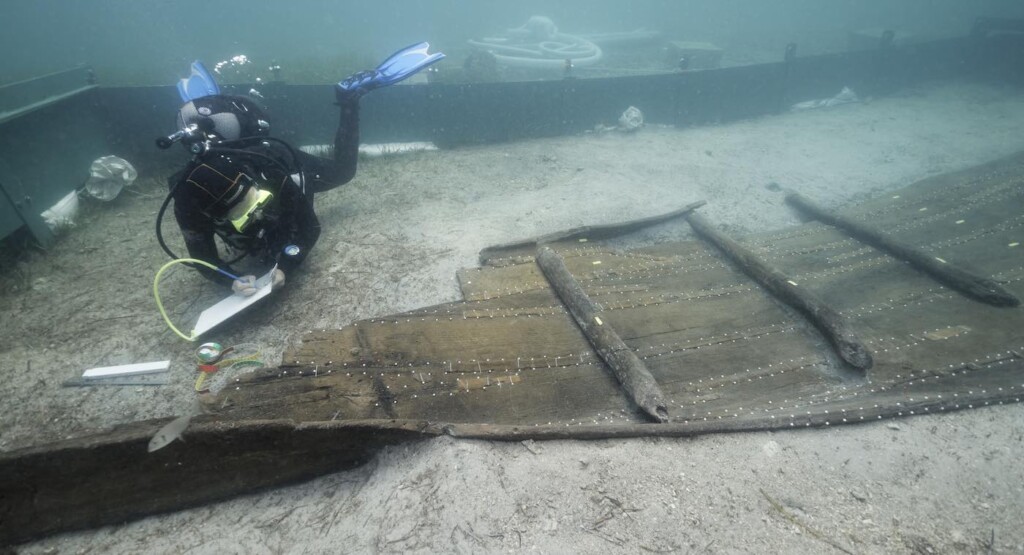
If you have ever taken an interest in underwater archaeology, you’ll know that this is a truly astonishingly well-preserved shipwreck.
It must be 200 or 300 years old to look like that right? Try 3,000 years old—the oldest hand-sewn boat ever found in the Mediterranean.
Named the “Zambratija boat” because of its location in the Bay of Zambratija, the artifact was first investigated after reports from local fishermen. It’s a lasting testament to an “ancient naval tradition” of the regions of Istria and Dalmatia.
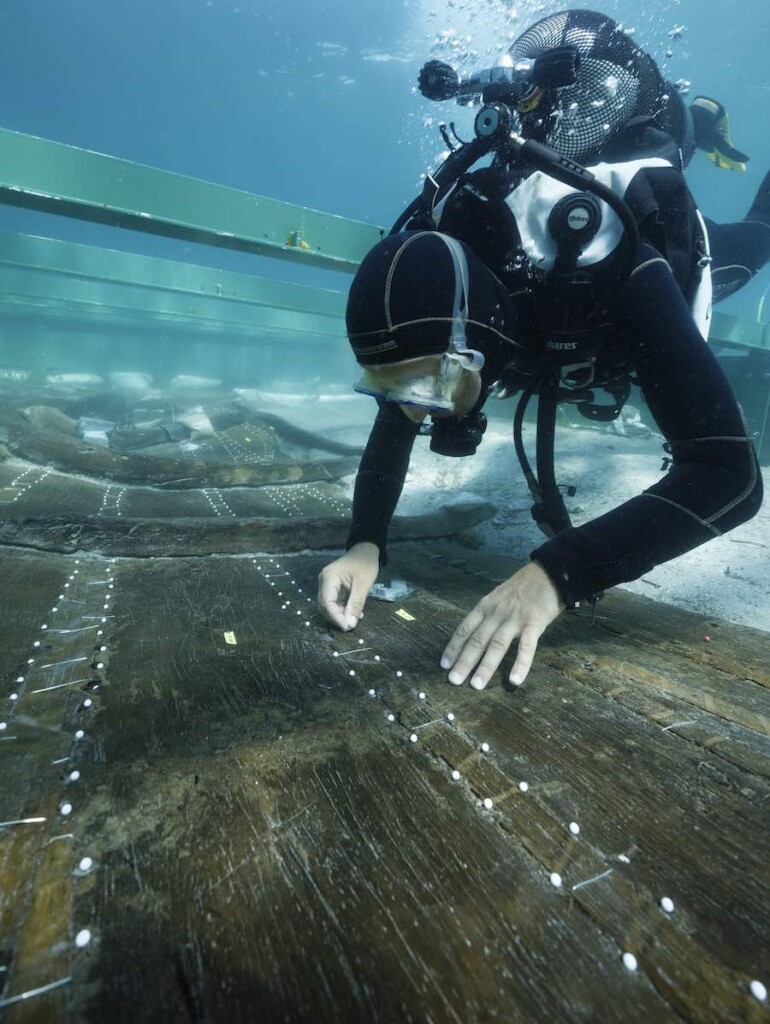
“Its architecture and its construction, the assembly technique of the strakes, as well as the waterproofing system of the hull, have no equivalent in the Mediterranean area,” per a statement from the Camille Jullian Center, a research organization connected to the CNRS.
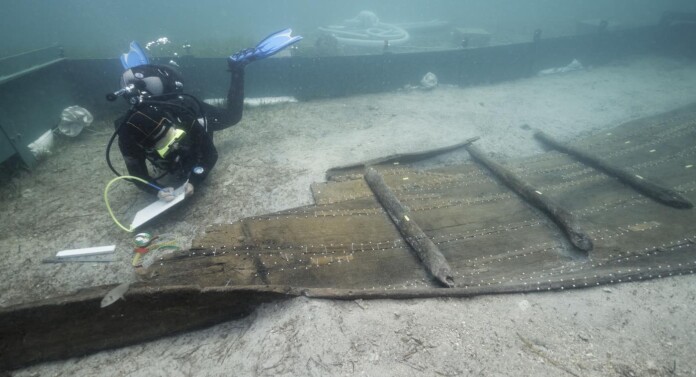
Now, archaeologists with the French National Center for Scientific Research (CNRS), are getting ready to raise the boat from its watery tomb. A 23-foot section of the 39-foot-long boat is in pristine condition, and special care will ensure it survives the journey to the Archaeological Museum of Istria where it will be desalinated.
The scientists will notably reconstruct the boat in 3D, they will also try to date its construction more precisely, identify the fibers used for sewing, and study the techniques used for shaping the wood. Handling remains of this caliber is a delicate matter, each stage of the process requires the greatest precautions to preserve this exceptional vessel.
Dinosaur fossils aren’t actually bones; they’re mineralized imprints of bones. In much the same way, wood that remains in water this long becomes more water than wood. The water fills every molecular nook and cranny, and if it were to move the wooden remains would disintegrate.
A water-soluble wax called polyethylene glycol is sometimes used in ancient shipwrecks which impregnates the wood. Gradually the wax takes the place of the water molecules, and after the wood is dried out, the wax forms a reinforcing part of the structure.
SHARE This Unprecedented Find From Ancient Times With Your Friends…
Quote of the Day: “A man is what he thinks about all day long.” – Ralph Waldo Emerson
Photo by: Andras Vas
With a new inspirational quote every day, atop the perfect photo—collected and archived on our Quotes page—why not bookmark GNN.org for a daily uplift?
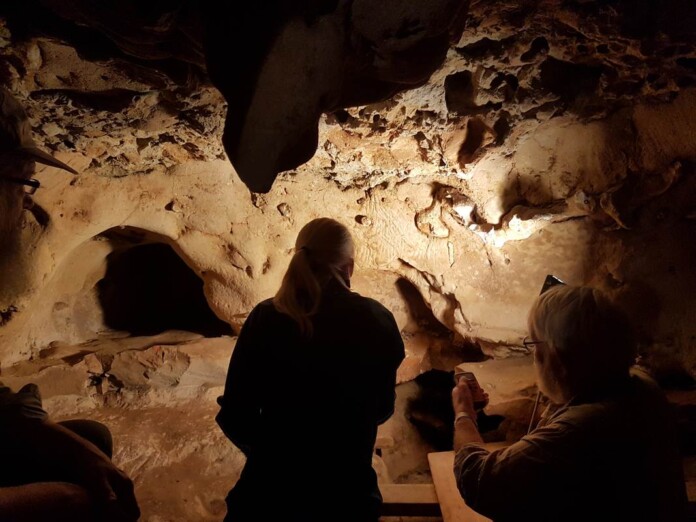
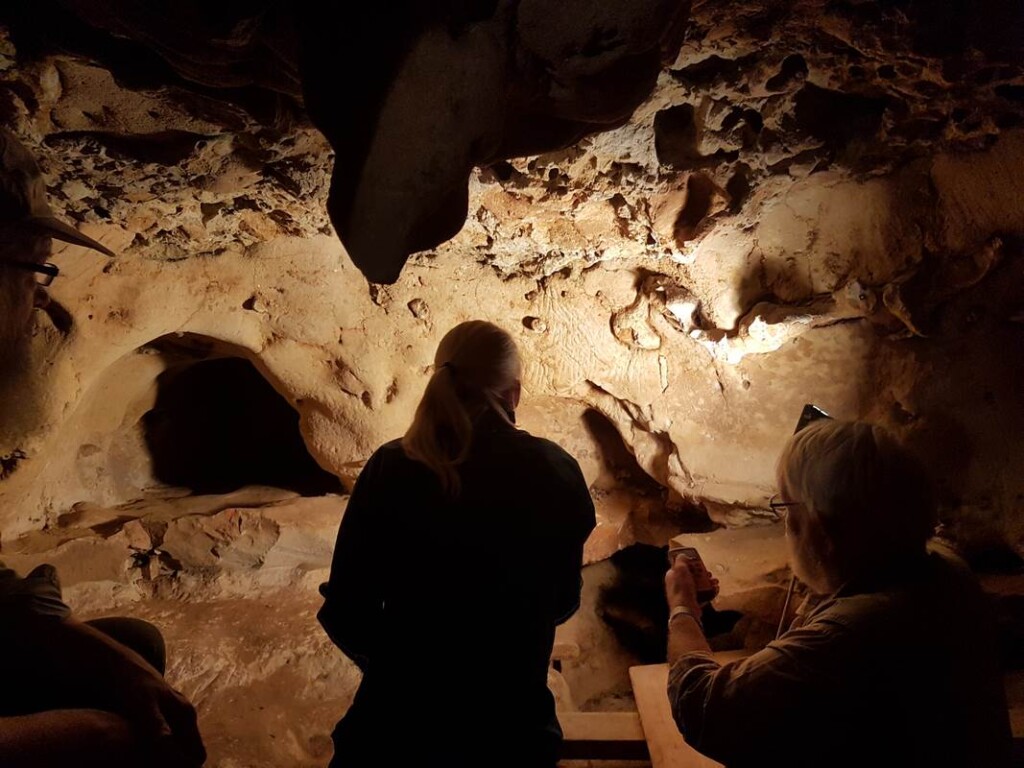
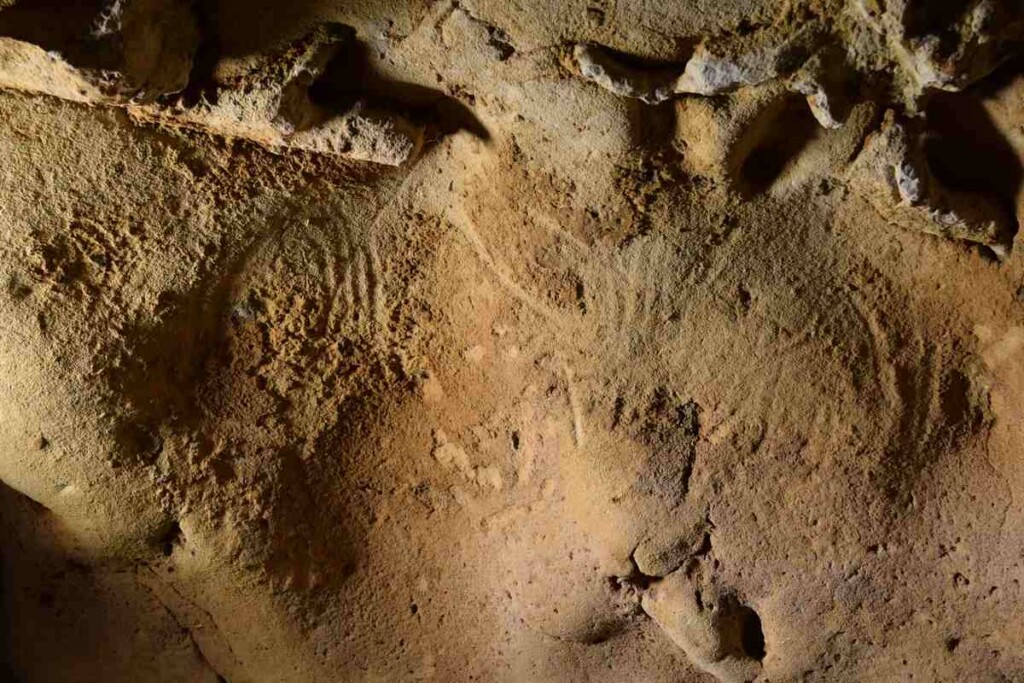
The marks on the wall of La Roche-Cotard cave in the Centre-Val de Loire are interpreted as finger-flutings, or marks made by human hands, at least 57,000 years ago.
Research in recent decades has revealed much about the cultural complexity of Neanderthals, but relatively little is known about their symbolic or artistic expression.
Only a small number of symbolic productions can be attributed to Neanderthals, and the interpretation of these is often the subject of debate.
For the new study, Dr. Jean-Claude Marquet and colleagues identified markings at La Roche-Cotard as the oldest known Neanderthal engravings.
“Two or three panels of lines at the entrance to the room are very simple and look like tests to see if contact with the surface leaves a trace,” Dr. Marquet told ABC News Australia.
“Three of the following panels were made with a great deal of application and care, and above all they were probably made after quite a lot of thought, because the intentional nature of the work is obvious.”
The researchers made a plotting analysis and used photogrammetry to create 3D models of the markings, comparing them with known and experimental human markings.
Flutted marks show perhaps a Neanderthal test scribble – Marquet et al. – via SWNS
Based on the shape, spacing, and arrangement of the engravings, the team concluded that they are “deliberate, organized and intentional” shapes created by Neanderthal hands.
The team also dated sediments, using state-of-the-art optically-stimulated luminescence techniques, to determine that the cave became closed off by infilling sediment around 57,000 years ago, well before Homo sapiens became established in the region.
The researchers say that discovery, combined with the fact that stone tools within the cave are only Mousterian—a technology associated with Neanderthals, is “strong” evidence that the engravings are the work of Neanderthals.
“Because these are non-figurative symbols, the intent behind them is unclear,” said Dr. Marquet of the University of Tours in France.
“They are, however, of a similar age with cave engravings made by Homo sapiens in other parts of the world. This adds to a growing body of evidence that the behavior and activities of Neanderthals were similarly complex and diverse as those of our own ancestors.”
“Fifteen years after the resumption of excavations at the La Roche-Cotard site, the engravings have been dated to [between] 57,000 years ago and, thanks to stratigraphy, probably to around 75,000 years ago, making this the oldest decorated cave in France, if not Europe.”
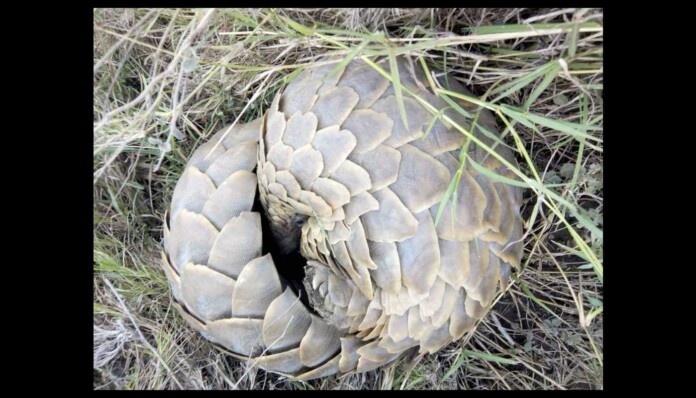
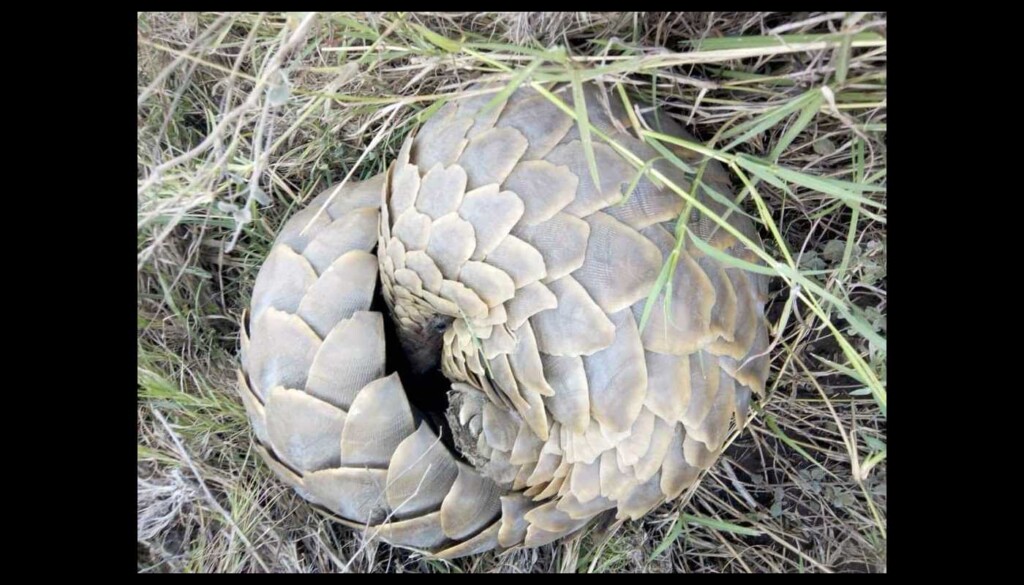
A pangolin rolled up in a ball in Serengeti National Park - Erick B. Lyimo CC 4.0.
A pangolin rolled up in a ball in Serengeti National Park – Erick B. Lyimo CC 4.0.
A pangolin-inspired small robot designed to perform safe and minimally invasive medical procedures inside of the body was revealed in a study published this week.
The untethered, soft robots may one day be capable of accessing hard-to-reach regions inside of the body—such as in the stomach and small intestine—by morphing their shape.
When most of us think of the word “robot” we think of something made of hard metal and wires, something at the cutting edge of technology and engineering, but that’s not entirely accurate.
One of the most exciting advances in the field of robotics comes from so-called “soft robotics” which refers to animated pieces of material that can perform tasks but which aren’t necessarily filled with wiring and circuitry, like this “gelbot” that can inch along from the manipulation of heat.
Untethered miniature robots working inside a human body can harvest energy made available to them remotely, such as light, magnetic, or acoustic energy, and convert them to other forms of energy in order to perform tasks.
Despite having keratin scales, pangolins can move with a flexible and unencumbered motion by organizing their rigid scales into an overlapping structure.
Inspired by pangolins, Metin Sitti and colleagues at the Max Planck Insitute in Munich, designed a millirobot, 1 cm by 2 cm by 0.2 mm in size, with an overlapping scale design and on-demand heating, shape-morphing, and rolling capabilities.
In proof-of-concept experiments in the laboratory, the robots were able to heat to 70°C and perform medical treatments on tissues with potential future clinical applications, including hyperthermia to treat cancer or stop bleeding in hard-to-reach regions. Additionally, the robots are capable of demagnetizing to release cargo onto the tissues, which could be used to deliver drugs in the future.
All this they can do via their ability to roll and tumble about, triggered by external magnetic stimulation that charges particles in the millirobot’s pangolin-like scales, allowing it to change from a flat to a curled posture, and thus locomote.
Although further testing is required, this technology could be a useful clinical tool for the delivery of therapeutic payloads and heat therapy applications.
A video captured in Colombia shows a clever baby escaping from his crib—by moving it across his bedroom while still inside.
CCTV shows the toddler trying and failing to climb over the side of the cot. Eventually, he figures out he can move the crib across the room by pushing at the wall with his feet.
He eventually manages to shimmy it enough so that it’s near a bed that he can jump onto.
Climbing out of the crib with his teddy he returns to place the crib pack in its proper place against the wall, probably because his parents taught him well enough to pick up after himself, but not well enough for him to no he shouldn’t perform escape maneuvers like Ethan Hill from Mission Impossible.
WATCH the escape for yourself…
SHARE This Adorable Escape With Your Friends In Need Of A Pick Me Up…
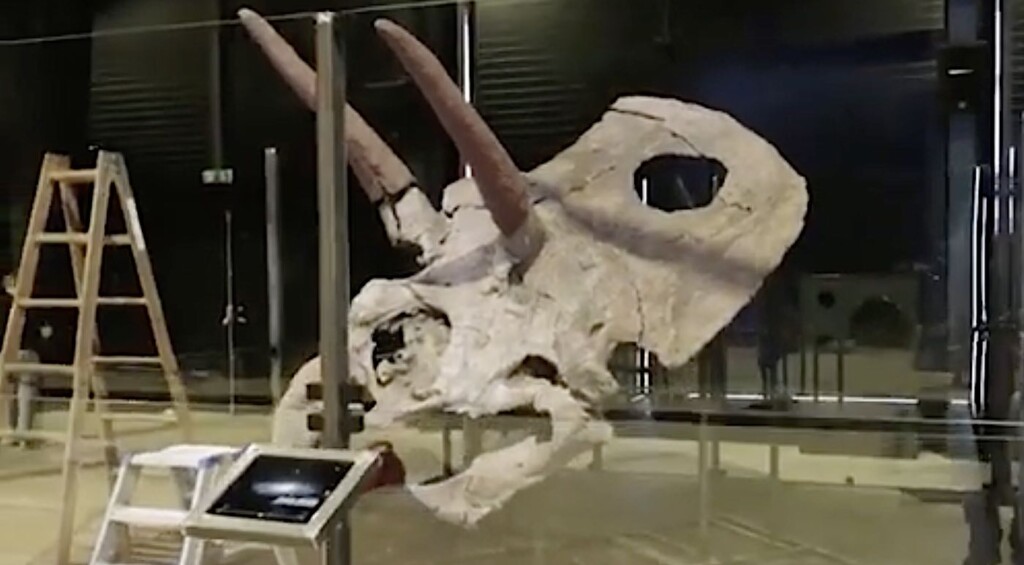
Knuthenborg Safaripark - Museum of Evolution / YouTube (Fair use)
Knuthenborg Safaripark – Museum of Evolution / YouTube (Fair use)
Denmark is celebrating the opening of its first dinosaur museum by shipping over the largest dino skull ever found.
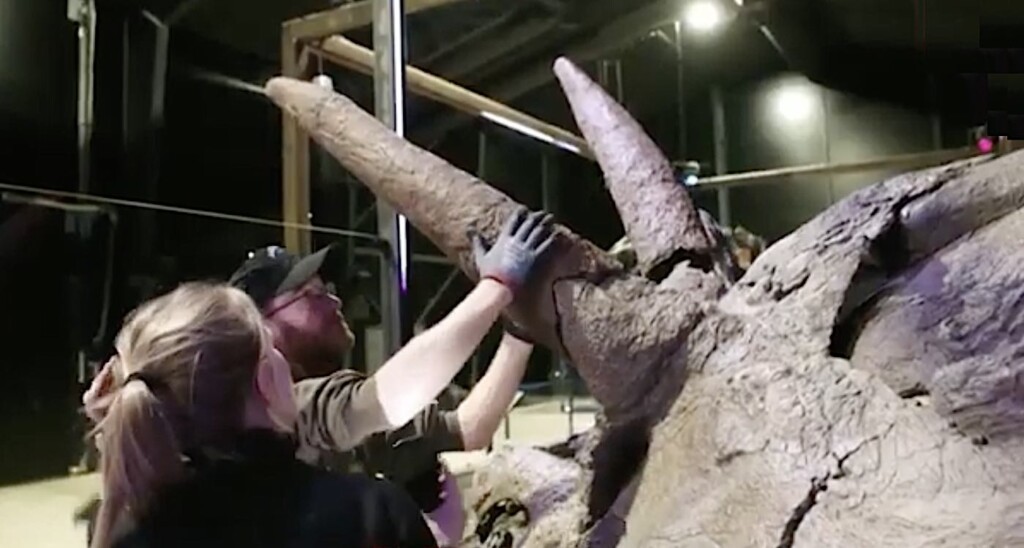
Once, the enormous, 10-foot-long dome belonged to a male Torosaurus that weighed over 6.5 tons. It’s the largest skull of any known land animal ever recorded.
The beast, affectionately called “Adam” was found in the United States and shipped overseas to the Museum of Evolution in Denmark for its grand opening to be exhibited alongside “Big Joe” the best-preserved Allosaurus skeleton ever found, as well as one of the world’s twelve Archaeopteryx skeletons, called the most important fossil in the world as it proved the theory that dinosaurs evolved into birds.
“Many years of intensive work culminates today. It is a great pleasure that we are now officially inaugurating Denmark’s first museum for dinosaurs,” director Christoffer Knuth, who is also director of Knuthenborg Safaripark where the new museum is located, said in a statement.
“It is also one of the world’s most ambitious museums, because we are lucky enough to have some of the absolutely best-preserved dinosaur skeletons and several spectacular and extremely valuable fossils from dinosaurs and other prehistoric animals. Together, the museum covers 300 million years of evolutionary history.”
Knuthenborg Safaripark – Museum of Evolution / YouTube (Fair use)
The Torosaurus lived in North America between 70 and 66 million years ago, at both the end and zenith of the age of the dinosaurs. Its name means “perforated lizard” because of the large holes in its frill which would have draped colorful, scaled skin for mating displays.
It was thought to be similar in size to Triceratops, whose skull frill was solid, and meant more for dominance displays, species recognition, jousting, and if necessary, defense.
WATCH the skull being assembled below from Inside Edition…
SHARE This Must Visit Museum With Your Dinosaur Lovers…
Quote of the Day: “There are two ways of spreading light: to be the candle or the mirror that reflects it.” – Edith Wharton
Photo by: Andras Vas
With a new inspirational quote every day, atop the perfect photo—collected and archived on our Quotes page—why not bookmark GNN.org for a daily uplift?
Que Huong Charity Center - retrieved from Facebook
Que Huong Charity Center – from Facebook
In Vietnam, a remarkable woman has adopted 346 children after overcoming a life of incredible hardship which started when her parents left her on a doorstep as a foundling.
Huynh Tieu Huong, whom national media has dubbed “Mother Theresa of Vietnam” runs a non-profit organization dedicated to the adoption, support, and free offering of loving kindness to foundlings, orphans, and homeless children. Thanks to support given by donors and volunteers, these 346 children are all able to receive education, safe places to sleep and play, and the proper medical care to ensure they reach adulthood healthy.
Huong herself doesn’t really know when she was born. An ID found on her didn’t include a surname, but did say 1968. In the years following the war, An old homeless woman dedicated what was left of her life’s energies toward trying to help Huong find a home—which she did in the hands of a young couple from the city of Vinh Phu.
These turned out to be sexual predators, and it took the neighbors to help her escape a permanent fate of sexual exploitation. Her life then became year after year of vagabondry, until she found a baby girl left on her doorstep when she was about 19 years old.
She adopted the child, and in this act of generosity, the universe finally began to smile on Tieu Huong, who met a Chinese man who gave her the money to rent an apartment and start a business. When she could readily support herself and her daughter Anh Dao, she started volunteering at the Vietnam Relief Association in 1993, helping orphans and the elderly.
Que Huong Charity Center – retrieved from Facebook
In 2001 she founded the Que Huong Charity Center in the Tan Dong Hiep Commune, and gradually increased the number of her dependants until it passed the 300 mark: all bearing a surname that Mother Huong received when she was briefly adopted the second time.
She founded the Mother Houng Foundation to support this work, and has begun expanding its footprint overseas to the US.
Volunteers from all over Asia come to hang out and help the children there—for example, on (Vietnam calendar) New Year’s Eve, their Japanese sponsors paid them a visit with gifts and haircuts.
After surmounting the cruelest hardships in post-war Vietnam, everyone on Earth would understand if Ms. Huong had instead used her success to build a life of luxury, indulgence, and security. Instead, she dove headlong back into the world that made her, making a difference to others in a way that never was possible for her.
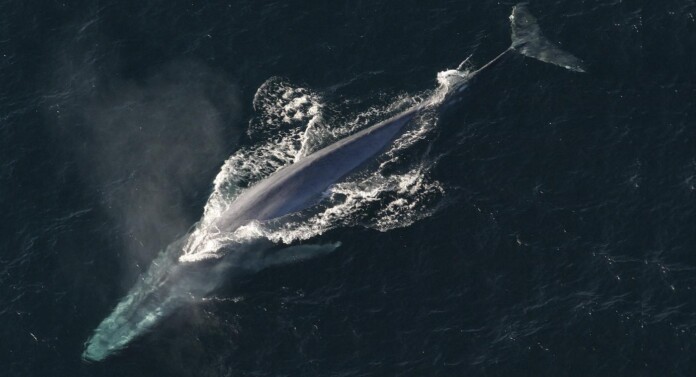
Don’t call it a comeback, blue whales have been here for years, rocking their peers and putting sailors in fear.
The largest animals on Earth are returning to the coastal Californian waters in larger and larger numbers, with sightings on whale-watching trips becoming increasingly common.
According to a 2014 study investigating the impact of ship strikes on the blue whale population, the western Pacific population of these cetaceans has reached 97% of its pre-whaling levels.
“It’s not just one entity that is contributing to the success of the populations rebounding; it’s really the efforts of everyone,” Jennie Dean, Vice President of Education and Conservation at the Aquarium of the Pacific in LA, told KTLA.
“When we’re able to take collective action and think about balance, such that people and the activities that we want to support like shipping, like recreational use, like commercial fishing, all of those things can coexist.”
Commercial fishing tackle can harm whales, and so the industry took measures to reduce this and it worked.
Too many blue whales were killed every year in ship strikes, and so Pacific shipping narrowed their lanes to avoid areas where whales congregate, and are now agreeing to reduce their speeds when entering and exiting harbor areas.
The current estimates suggest that as many as 2,000 blue whales travel up from Mexico to Southern California waters every year, a large chunk of a global population that may be topping 25,000.
Another marine mammal making a comeback are seals, which have begun regularly turning up on the beaches of Belgium for the first time in over a century. Grey seals and harbor seals turn up on the beach to rest and feed their pups, during which time they are protected from overly-excited Belgians by a volunteer force called the North Seal Team.
Scientists believe there is a population of 200 such animals near the city of Ostend.
“I was born in Ostend. I’ve lived my whole life here and I couldn’t remember seeing a seal,” says Inge De Bruycker, founder of the North Seal Team to Euronews. “It’s new. It’s like, come on, when we built this dam here about seven, eight years ago we sometimes had one. Occasionally, but just one.”
SHARE This Fantastic News With Your Friends And Plan A Whale Watching Trip…
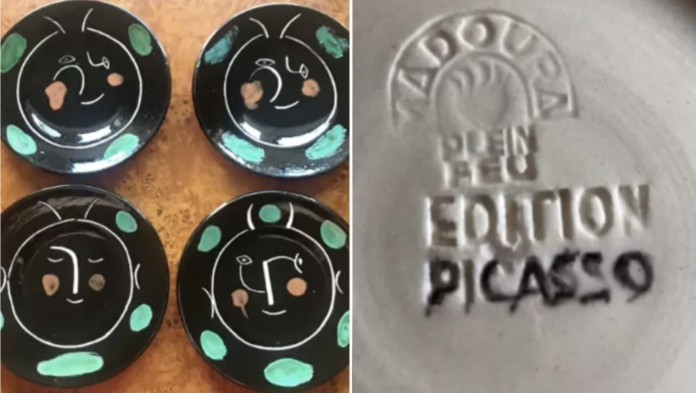
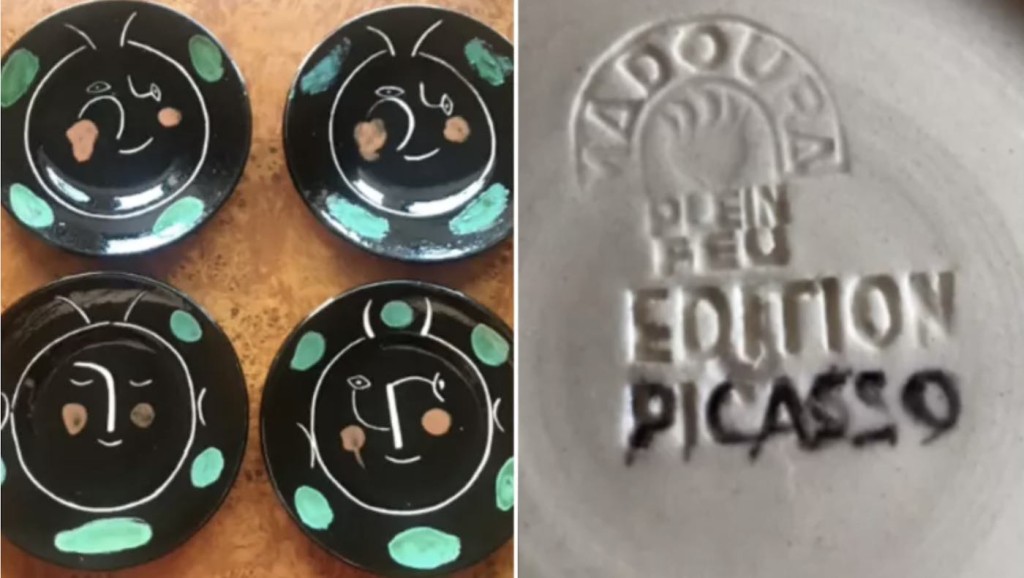
When a thrift store enthusiast found these strange-looking plates that vaguely resembled human faces, she felt they would make a great table set. The price was listed on a sticker at $1.99 per plate—right next to the name “Picasso.”
Nancy Cavaliere loves to fill up her apartment with storied pieces, but checked her enthusiasm which right there in the china aisle was threatening to boil over; she didn’t know Picasso made ceramics at the time.
“I stumbled on the plates during my daily trip to the store. On my way out I noticed some new china had been added to the shelves. My first reaction was that they would make a great tablescape, but then I turned them over and saw the Picasso tag,” Cavaliere told Newsweek.
In either case, she checked out for a grand total of $6.00 and ran back to her office to do some research.
Pablo Picasso is one of the highest-selling artists of all time, and he did in fact make all manner of ceramics, including pitchers, plates, bowls, and vases; over 600 pieces in all. These plates were part of a larger set, and when Cavaliere managed to turn up an internet page with them, she freaked out, and started crying.
Calling all the major auction houses of New York City, it became clear that they could fetch around $4,000 each—less than half of what they actually did sell for when a bidding war over her Picasso plates sent all of them over $10,000
“It was absolutely bananas,” Cavaliere said. “I was watching the auction from the office ‘screaming crying throwing up.'”
Thrifty by nature, if not in name, Cavaliere took her five-figure windfall and invested it, before getting back to thrift-drifting which she says is harder now than before the pandemic, as the demand for second-hand merchandise has increased.
SHARE This Thrift Store’s Big Take With Your Friends…
Largo Argentina in Rome where Julius Caesar was killed –Jean-Christophe BENOIST, CC license / Wikimedia
Largo Argentina in Rome where Julius Caesar was killed –Jean-Christophe BENOIST, CC license / Wikimedia
It’s one of the most infamous crime scenes in history. Now, “Beware the Ides of March,” “Why this is force!” “Et tu, Brutae?” and all the other utterances can be enjoyed by you and your friends as Rome has opened to the public the spot where Julius Caesar was assassinated.
For decades, the “Sacred Area” at Argentina Square in the Eternal City sat silent as the bustling city was built up around it. The 4 temples and the walls of Pompey’s mansion the Curia, were frequented only by ghosts and cats.
Now, with the help of the luxury jewelry brand Bulgari, the Sacred Area is open to visitation from the public. Costing just €5 for non-residents, a series of elevated walkways can take visitors through the area where aggrieved senators stabbed the Roman dictator to death on the Ideas of March (15th).
The temples were first discovered when Benito Mussolini was demolishing Medieval-era structures as part of an urban renewal program. Rome’s top archaeologist, Claudio Parisi Presicce, told the AP that they are quite sure the area contains Pompey’s Curia because latrines were discovered on the wall near 2 of the temples.
Leave it to the Romans to be so litigious as to comment on the exact placement of Pompey’s latrines.
The temples are believed to have honored female deities—like Fortuna, the goddess of chance and fertility. A colossal stone carving of a female head was found during excavations, furthering that hypothesis along.
Presicce called it one of the best-preserved ruins of Rome from the Republican period, and perhaps one day it can stage Shakespeare’s famous depiction of the life and times of the controversial figure.
SHARE This Amazing Tourist Opportunity With Your History Lovers…
Quote of the Day: “Love and compassion are necessities, not luxuries. Without them humanity cannot survive.” – Dalai Lama
Photo by: Levi Guzman
With a new inspirational quote every day, atop the perfect photo—collected and archived on our Quotes page—why not bookmark GNN.org for a daily uplift?
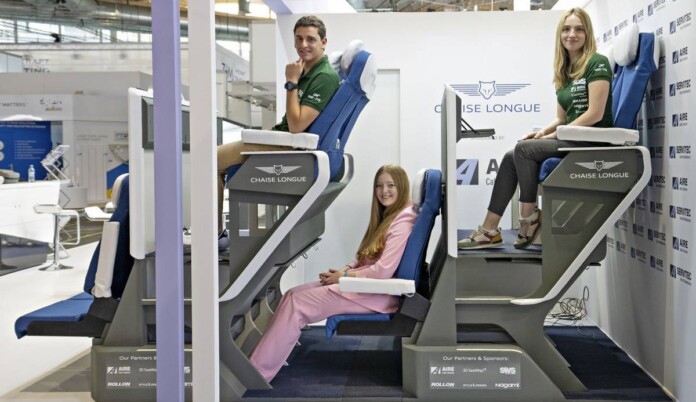
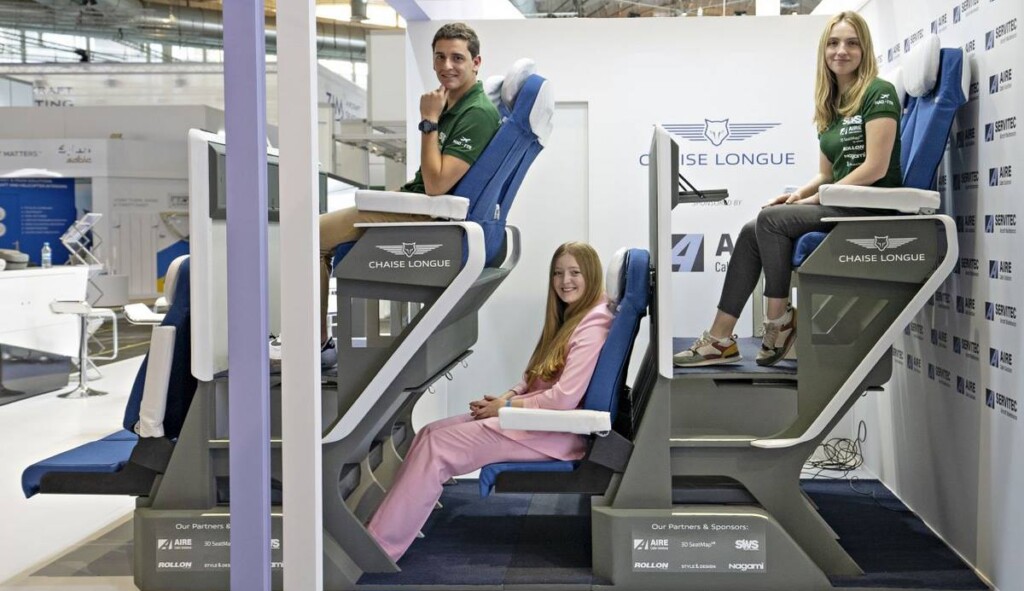
Alejandro Núñez Vicente, left, designed the Chaise Longue double level airplane seat concept – credit 1OFF Media released
At an innovation fair in Germany, a young man might have just found a way to seat more people in an aircraft while simultaneously giving them more legroom and accessibility.
How could such a thing be possible? Check out these double-decker airplane seats.
23-year-old designer Alejandro Núñez Vicente presented a revised concept of his original vision that flopped at last year’s Aircraft Interiors Expo (AIX) in Hamburg, Germany. When the expo came back around, Vicente proved himself flexible and open to constructive criticism.
His new-and-improved design solves many issues that people identified, particularly those to do with claustrophobia.
First things first—this isn’t likely to be seen aboard a flight any time soon. However, he is in the process of getting approval from all the major air travel regulatory bodies.
The Chaise ‘Longue,’ as Vicente’s design is called, would be situated in the middle row of large aircraft, with the aisle/window seats remaining how we’ve always known them.
Those opting for these seats would sacrifice the inflight entertainment system for more comfort, with legroom that would easily accommodate people above 6 feet 2 inches in height on the bottom level, and seats that recline far further back on the upper level.
The upper level is reached by 2 sturdy steps, while the seats on the bottom level can fold up movie theater-style to accomodate wheelchair passengers.
“We know that this will work at some point and people will be grateful for it even though they don’t know it now, they will be grateful that someone was pushing for a new economy class seat,” Vicente told CNN Travel.
Indeed, most airlines aren’t interested in innovations in economy seating. First class and business class is typically where innovations happen. Subject to one of the highest degrees of mass regulation of any industry, large airlines have almost no time or budgetary consideration for permanently addressing economy concerns.
For years, as Vicente pointed out, the only consideration ever given was how to fit more passengers into the plane’s economy section. The Chaise Longue is a way to clear two hurdles with one leap—getting more passengers on a plane, thereby lowering the ticket cost for everyone, and improving the flying experience—at least for those in the middle row.
FLY This Aircraft Seat Concept Over To Your Friends And See What They Say…
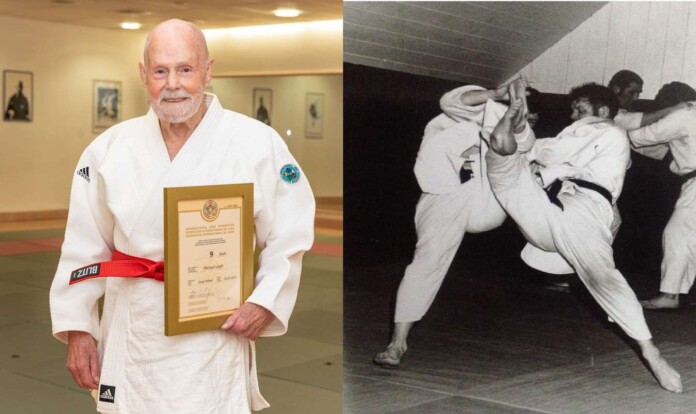
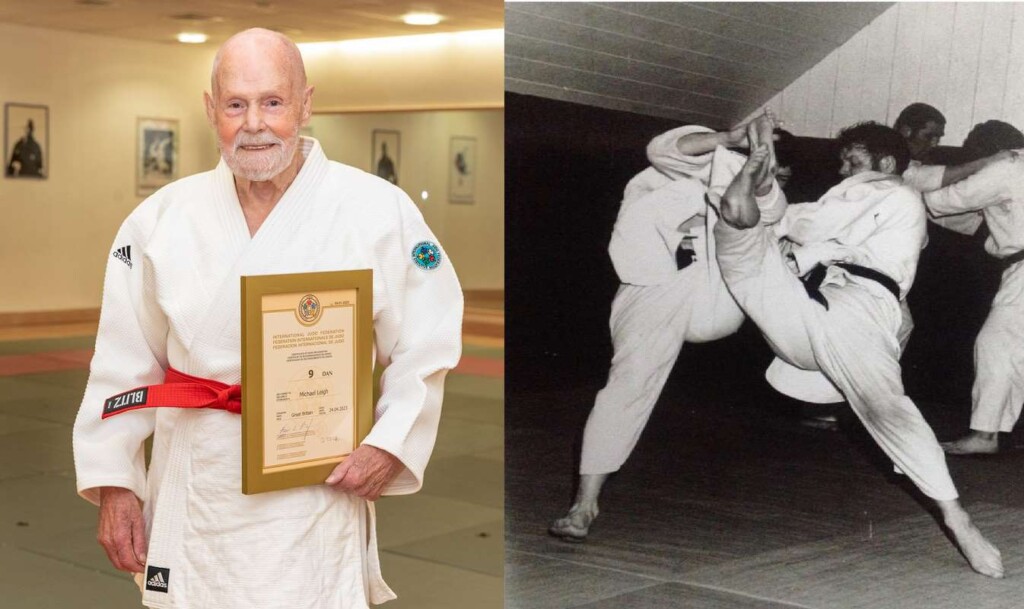
(left) Michael Leigh the judoka stands with his ninth dan, (right) Leigh performing a foot-sweep on his opponent.
(left) Michael Leigh the judoka stands with his ninth dan, (right) Leigh performing a foot sweep on his opponent; note the extreme flex in his right foot—needed to apply maximum force to sweep his opponent’s planted foot.
A 90-year-old master who’s still limber enough to get on the mat every once in a while has just been awarded his ninth degree, or dan, in Judo.
Only 6 individuals in the UK hold a ninth dan, and Michael Leigh is the oldest judoka in the country to reach what is the second-highest rank in the sport.
Michael Leigh set up the Kin Ryu Judo Club in Crawley, West Sussex, in 1976 after taking up the martial art in 1955 in London and acting as a backup on the UK ’64 Olympic team.
He first discovered the sport while working in the Royal Air Force, after he stumbled on a judo book in a charity shop written by the co-founder of the London Judo Society. He thought it “looked interesting”.
He went on to become the chairman of British Judo for two terms, a national coach, and an international referee.
“When I heard the news I couldn’t quite take it in,” Leigh wrote for his club’s news section. “Knowing that there are only five other people in the UK who have been awarded 9th dan, I find myself amongst peers I greatly admire and respect. I appreciate this recognition of my lifetime of commitment to the amazing sport of Judo and I will hold the grade with great pride and honour.”
Leigh’s school became the largest in the UK at one point, with 520 members in three locations: Crawley, Horley, and Horsham.
“I’ve had a very interesting life, I’ve been to about 160 countries,” he told the BBC, adding that it had been a “wonderful journey”.
“I’m tempted to go on the mat but until my current disabilities go away I don’t think I’ll be able to,” he said. “I miss it very much, but everything has a beginning, middle, and end.”
After obtaining the black belt, judokas move onto the ten dan levels. The last four are generally honorary, with judges at the International Judo Federation taking into consideration their lifelong accomplishments.
Judo is a grappling martial art that involves using leverage and grips to throw opponents to the ground and can be physically punishing. Perhaps the most famous Judo practitioner in popular culture was the former UFC Women’s Bantamweight Champion Rhonda Rousey.
In one respect, Rousey and Leigh have more than just their martial skill in common—both have helped make the sport more inclusive.
As a silver citizen, Leigh has organized championships in the UK for older judokas and a special needs Judo program.
Although “more of an oracle” now, Martin Rivers who co-manages the Crawley Judo club said Leigh still gets on the mat from time to time, and certainly doesn’t look a day over 75.
SHARE This Super Sensei With Your Friends On Social Media…
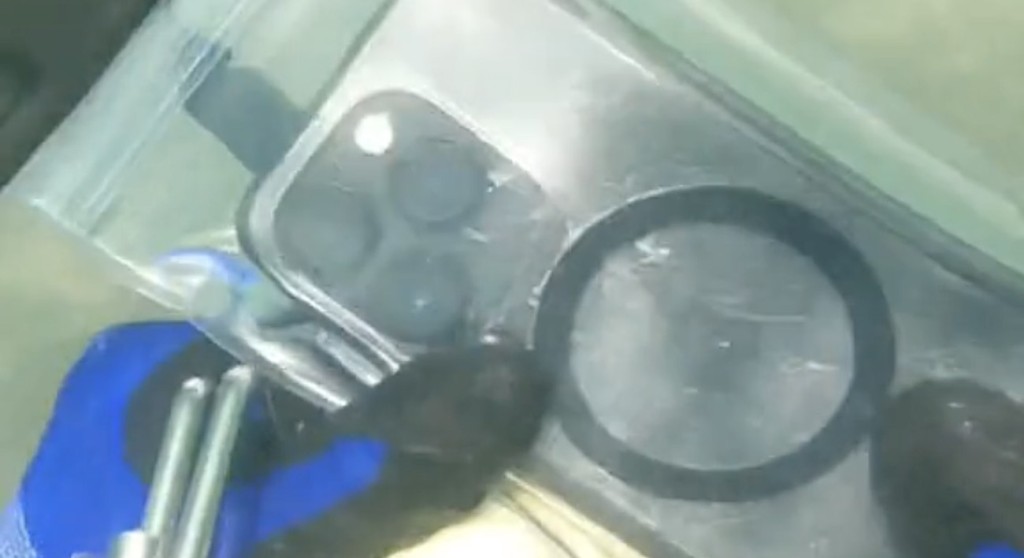
During a routine dive to clean the oceans off the coast of Florida, 4ocean CEO Alex Schulze found something that obviously still had value to someone.
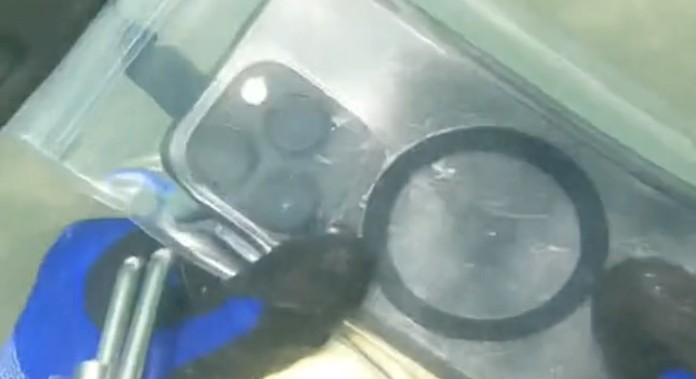
The brand new iPhone sealed in a plastic bag was in far better shape than most of the smartphones found by Schulze and his cleanup crews, being waterlogged and unable to turn on.
Along with the bag, the phone was sporting a waterproof case, and Alex was able to charge the phone and get in touch with the person’s emergency contact.
Despite all odds, he was able to return the phone to its thankful owner while simultaneously triggering a viral TikTok sensation with over 3 million views on the video chronicling the discovery
“We’re always stoked about the work we do cleaning the ocean,” Alex Schulze, CEO and co-founder of 4ocean, told GNN. “But it’s even better to make someone’s day by returning what’s important to them!”
courtesy of 4ocean
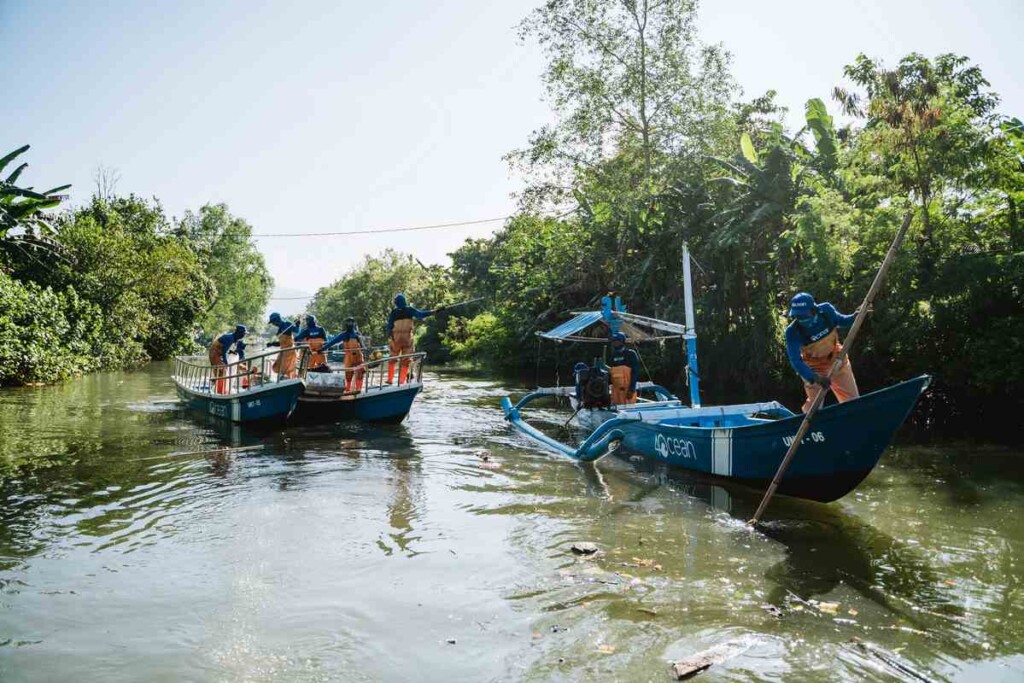
4ocean are the guys famous for selling those bracelets made of beads of ocean plastic, and their work in the US, Guatemala, and Indonesia has removed over 29 million pounds (13.1 million kg) of plastic from oceans, rivers, and coastlines.
Their newest location is on the Rio Motagua, in Guatemala. One of Central America’s longest and most polluted rivers, it deposits roughly 2% of the plastic that enters our oceans.
SHARE This Unlikely Lost And Found Success Story On Social Media…
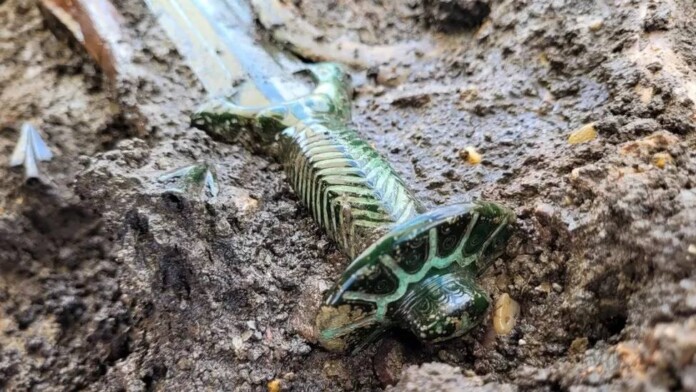
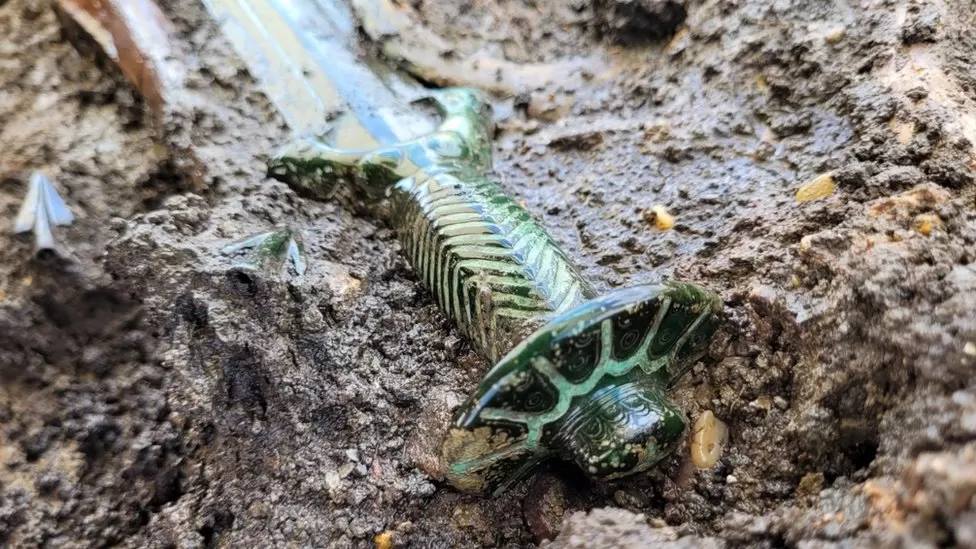
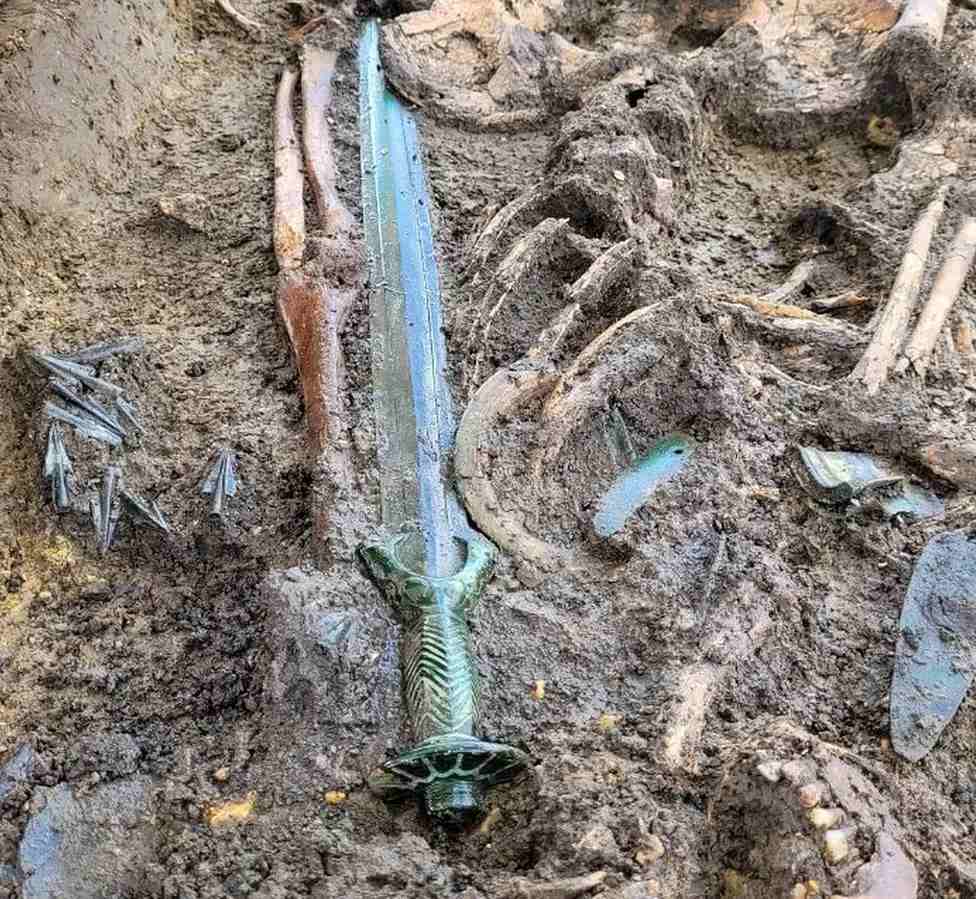
It looks fake at first glance—how could 3,400 years of time leave a hunk of metal so untouched?
Yet when archaeologists from Bavaria’s State Office for Monument Protection first uncovered the sword, it literally “almost still shines.”
Found in the grave of a man near the town of Nördlingen, the sword is thought to have been forged in bronze during the 14th century BCE using the most sophisticated methods available.
Early swords and long knives from the Homeric Bronze Age in Greece were cast in bronze from a single mold—like a bronze statue. The Nördlingen weapon by contrast was made by casting the hilt onto the previously-made blade.
The grave contained the remains of a man, a boy, and a woman along with bronze arrowheads and other objects. Archaeologists aren’t sure if they’re related.
ARCHÄOLOGIE BÜRO DR. WOIDICH
The sword, which has an octagonal pommel, is believed to have been a real, functional weapon, but was probably not meant to be used in anger.
If the dating of the weapon is correct, it was probably made in the Tumulus Culture, the dominant Middle Bronze Age Celtic society in central Europe, extending from the Carpathians to the Rhine.
A warrior society, the Tumulus people were nevertheless skilled metalworkers, especially in gold and bronze, and the earliest metallic representation of a human body part ever found in archaeology corresponds to these charismatic Europeans.
Quote of the Day: “Cheerfulness is the best promoter of health—as friendly to the mind as to body.” – Joseph Addison
Photo by: Jusdevoyage
With a new inspirational quote every day, atop the perfect photo—collected and archived on our Quotes page—why not bookmark GNN.org for a daily uplift?