











All News - Page 316 of 1719 - Good News Network
Home Blog Page 316

To Reduce the Harmful Health Effects of Sitting, Take a 5-Minute Walk Every Half-Hour

A study looking to find the bare minimum of physical activity required to prevent the well documented ill effects of continuous sitting determined that 5 minutes of walking every half hour was enough.

By looking at blood sugar levels and blood pressure, two important metrics of heart disease, the scientists were able to determine how much daily movement was required to get back to equilibrium from the negative effects of sitting.

Picture if you will, an office worker. Waking in the morning in time for coffee and perhaps breakfast with perhaps a spouse or perhaps children, the day begins with at least some sitting. Then climbing into one’s car, the office worker drives in a seated position to the office. There, between lunch and desk work, the worker spends 8-9 hours sitting before returning home, sitting in their car. Once home, they likely sit down for dinner, and perhaps a bit of television or reading; both done from the seated position.

Sitting time for adults in industrialized nations has been climbing for decades, and it increases the risk for all the diseases typical of those nations, i.e. type-2 diabetes, cancer, heart disease, stroke, fatty liver disease, etc.

In a new study published in Medicine Science in Sports and Exercise, Keith Diaz et al. asked 11 healthy middle-aged individuals to complete an experiment in which they sat in a lab for 8 hours a day for 5 days to represent a normal workweek.

On some days they sat for the whole 8 hours, only rising for bathroom breaks. On others they were engaged in short bouts of walking with differing regularities to find the lowest amount of movement required to reduce their blood sugar and blood pressure.

CHECK OUT: Exercise Can Help Older Adults Retain Memories

“We found that a 5-minute light walk every half-hour was the only strategy that reduced blood sugar levels substantially compared with sitting all day,” Diaz wrote in The Conversation.

“In particular, 5-minute walks every half-hour reduced the blood sugar spike after eating by almost 60%, [and] that strategy also reduced blood pressure by four to five points compared with sitting all day.”

Defining exercise, and time spent in exercise has become a focus of physiologists of late, as recent evidence points out that time spent in movement for work purposes doesn’t confer the protections from the diseases mentioned above the same way exercise does. Where the dividing line between movement for work and movement for exercise sits is not well understood.

MORE EXERCISE NEWS: Intensive Exercise the ‘Best Way to Alleviate Symptoms of Chronic Anxiety Without Drugs or Therapy’

Furthermore, multi-day bouts of prolonged sitting creates an “exercise resistance” that can render even something like a 60-minute moderate intensity run meaningless in terms of its improvement for cardio-metabolic health.

This new research offers a concrete guideline for desk workers or office managers to employ, one that doesn’t rely on general guidelines from government agencies like the Dept. of Health and Human Services that simply state “move more, sit less,” or which recommend 150 minutes of moderate to intense physical activity per week, and which don’t address potential solutions for the workplace.

READ MORE: There’s ‘No Link’ Between Exercise and Developing Arthritis in the Knee

Exercise targets should be set if at all possible at levels to maintain robust muscle mass and cardiovascular strength, since there’s much more to life than just avoiding early death by common disease.

Exercise can protect against several forms of dementia, and of course maintaining muscle mass protects joints from age-related wear and tear or impacts—as goes the saying, “break your hip, die of pneumonia.”

GET UP AND MOVE PEOPLE! Share This Story With Your Friends… 
2 Beavers Named Hazel and Chompy Reintroduced to English County–the First Ones to Live Here in 400 Years

credit: Nick Upton/Ewhurst - Released
credit: Nick Upton/Ewhurst – Released

For the first time in 400 years, beavers are back in the wilds of Hampshire, southern England.

Once hunted to extinction, this toothy engineer is now in high demand, and it’s hoped their building of dams will restore much of the local fresh water features that have suffered in their absence.

Given the names ‘Hazel’ and ‘Chompy’ through a naming competition by local schoolchildren, the Eurasian beavers have never met each other, but it’s hoped they will breed.

Hazel and Chompy were released onto the 925-acre (370-hectare) Ewhurst Estate near Basingstoke, Hampshire, owned by a Malaysian-born model and actress Mandy Lieu who was “thrilled” to have them, and who sees them as key to restoring ponds, streams, and wetlands on the estate.

Throughout Europe and America, beavers were hunted in many places to extinction for their furs, but they’re now in high demand for their incredible natural abilities as engineers. By building their dams they create and enrich ponds and streams, which for Eurocrat lawmakers means more carbon dioxide absorption in the soil.

SIMILAR: Couple Turns Barren English Estate into Conservation Eden, Rewilding to Attract Rare Species of Astonishing Biodiversity

The dams slow the passage of water through landscapes which has a variety of effects, including reducing flood risks downstream by expanding adjacent wetlands, and increasing the habitat for aquatic and semi-aquatic animals in the ecosystem.

To do the same thing with humans would undoubtedly cost millions in labor and administration, with on-site safety procedures, zoning and council planning, regulation, the renting of earth-moving equipment, accompanied scientific observational studies, reports to higher-ups, etc.

MORE REWILDING: Irish Metalhead Turns His Ancestral Estate into Model of Rewilding: It Naturally Grew Into Biodiverse Eden

“[B]eavers do this all for free!” said the Hampshire and Isle of Wight Wildlife Trust, who helped organize the reintroduction at Ewhurst after a similar program on the Isle of Wight.

“…Beavers offer a nature-based solution to improving the health and function of river catchments. The beaver-created wetlands can act as sponges which can capture organic sediments, and reduce the effects of agricultural runoff and harmful chemicals such as pesticides, which in turn helps to improve water quality downstream.”

Ms. Lieu helped with their release as part of her designs to rewild the Ewhurst Estate into an edible landscape that restores nature while providing wild foods. She said she was thrilled to see and help them settle into their environment.

WATCH the release here from the BBC. 

SHARE This Latest Rewilding Story From Britain With Your Friends… 

Man Who Broke into a School to Save 20 People in Blizzard Gets Super Bowl Tickets from the Buffalo Bills

Jay Withney surprised by Buffalo Bills - Released via Twitter
Jay Withney surprised by Buffalo Bills – Released via Twitter

A man who may have saved the lives of 24 people by breaking into a school in Cheektowaga, upstate NY during the ‘worst storm in a generation’ has been given Super Bowl Tickets by his hometown team.

Jay Withey, the 27-year-old mechanic and hero, received the reward for his live-saving actions from the Buffalo Bills in collaboration with Blue Cross Blue Shield.

Legendary former Bills running back Thurman Thomas personally delivered the surprise to Withey on Friday, reports CNN.

“We love you. We know what you did on Christmas Eve was very heroic, and you’re our hero,” Thurman told Withey in a video released by the team.

“I can’t believe how far [the news of his deed] got. I got thank you letters from Australia, it’s wild,” says Withney.

Jay broke a window of Edge Academy on Christmas Eve in order to get 2 dozen people, including several seniors and two dogs, out of hurricane-force winds, snow, and deathly cold temperatures. He borrowed the academy’s snowblower to get people unstuck from the roads and into the school.

MORE LIKE THIS: McDonald’s Workers Open Their Restaurant as a 24-hour Storm Shelter During Blizzard in North East

Once inside, he found granola bars, water, and blankets in the nurses’ office, and gathered apples, juice, and cereal from the kitchen. The group sat out the storm, and before leaving cleaned up every trace of their presence.

One of the group, Mario Johnson, went back to the school to replace their stock of granola bars and inquire about the cost of the window.

Cheektowaga Police Department

The school declined to press any charges, nor accept any of Mario’s repeated attempts to pay for the window. “They’re just happy that we were safe and warm,” Mario said.

READ THE ORIGINAL STORY: Local Hero Broke into School to Save 24 People During a New York Blizzard

“The selflessness that people showed to help others during the storm is what Western NY is really made of,” a Police spokesperson said about the incident on Facebook.

SHARE This Happy Ending To A Happy Ending With Your Friends… 

‘Vast Canyon of Books’ Splits Open in Stunning New Public Library in China

Wuhan Library © MVRDV Architects

Poised to become one of the largest libraries in China, the new Wuhan Central Library takes inspiration from its geographical positioning at the confluence of two rivers.

Just as the waters at the confluence of the Yangtze and Han rivers are pulled into a central channel, visitors are swept into the library as if into a monumental canyon, with sedimentary layers replaced by shelves of books.

The 140,000-square-meter project connects to its surroundings via three large openings that will act as visual displays of life inside the building, sparking curiosity and intrigue. This distinctive, three-faced flowing shape celebrates the position of the “city of 100 lakes” at the confluence of two rivers, and will become a new recognisable landmark for Wuhan.

Managed by Dutch architects MVRDV, the library celebrates the sculptural force of rivers, and is set to be the focus of a “city versus nature” exterior scene, with tall vertical windows looking out over Wuhan’s central business district, and a long horizontal windowed wall looking out on a large park coming as part of the project.

“The topography of Wuhan was an important source of inspiration: we have this idea of a horizontal view towards the lakes and on the other hand, we have this more vertical view towards the city with the high rises,” says Jacob van Rijs, founding partner of MVRDV on their website.

MORE ARCHITECTURE NEWS: ‘Best New Skyscraper’ Mimics Nature: Looks Like 2 Mountains With a Valley, Water, and Greenery Between – LOOK

“This is nature versus the city, and the building is somehow focusing on this. I think this makes it an exciting place to gather.”

Wuhan Library © MVRDV Architects

Large native trees will shade exposed areas of the interior from Wuhan’s hot climate. The advantage of using native vegetation is that little maintenance is needed to support their growth.

RELATED: Sustainable 3D-Printed Ranch House Wins Award and Takes Just Two Weeks to Construct (Watch Time Lapse)

Sets of angled slats fixed at regular intervals called “louvres” will coat the roof of the building to reduce heat absorption.

“Openable elements for natural ventilation, combined with the use of smart devices and an efficient lighting system further reduce the building’s energy demands, while solar panels incorporated into the library’s flowing roof shapes provide the building with renewable energy,” the architects’ website explains.

SHARE This Stunning Concept Construction With Your Friends… 

“You can’t help getting older, but you don’t have to get old.” – George Burns

Credit: Jaddy Liu

Quote of the Day: “You can’t help getting older, but you don’t have to get old.” – George Burns

Photo by: Jaddy Liu

With a new inspirational quote every day, atop the perfect photo—collected and archived on our Quotes page—why not bookmark GNN.org for a daily uplift?

A Big Step Towards Hydrogen Fuel Out of Thin Air—Just Like a Plant

Dr. Kevin Sivula - SWNS
Dr. Kevin Sivula – SWNS

A device that can harvest water from the air and provide hydrogen fuel—entirely powered by solar energy—has been a long-held dream of scientists, but it’s now close to fulfillment.

Chemical engineer Kevin Sivula and his team have made a significant step towards bringing this vision closer to reality by developing an ingenious yet simple system.

It combines semiconductor-based technology with novel electrodes that have two key characteristics: they are porous, to maximize contact with water in the air; and transparent, to maximize sunlight exposure of the semiconductor coating.

When the device is simply exposed to sunlight, it takes water from the air and produces hydrogen gas, which can then be injected into trucks, trains, or planes with hydrogen fuel cell batteries for green combustion.

In their research for renewable fossil-free fuels, engineers at the Federal Polytechnic School at Lausanne, in collaboration with Toyota Motor Europe, took inspiration from the way plants are able to convert sunlight into chemical energy using carbon dioxide from the air.

A plant essentially harvests carbon dioxide and water from its environment, and with the extra boost of energy from sunlight, can transform these molecules into sugars and starches, a process known as photosynthesis.

“Developing our prototype device was challenging since transparent gas-diffusion electrodes have not been previously demonstrated, and we had to develop new procedures for each step,” said Marina Caretti, lead author of the work.

CHECK OUT: World’s First 100% Hydrogen-Powered Trains Now Running Regional Service in Germany to Replace Diesel

“However, since each step is relatively simple and scalable, I think that our approach will open new horizons for a wide range of applications starting from gas diffusion substrates for solar-driven hydrogen production.”

Coating a silicon oxide felt wafer with a transparent thin film of fluorine-doped tin oxide, resulted in a a transparent, porous, and conducting wafer, essential for maximizing contact with the water molecules in the air and letting photons through. A second transparent coating of semiconductor materials absorbs sunlight, and completes the process.

SIMILAR: New Solar-Powered Invention Creates Hydrogen Fuel from the Air

A proof of concept study in truth, the researchers nevertheless proved that hydrogen gas can be produced via sunlight and moisture in the air at a rate of 12%, compared to a 19% rate found in similar technologies for producing liquid hydrogen fuels, work which Dr. Sivula has also been a part of.

Will We Generate Hydrogen Fuel From Sunlight Someday? Share With Your Friends…

Stone ‘Bird Palaces’ Meld Historic Architecture with Islamic Love of Animals in Istanbul

Birdhouse on the exterior of the Ayazma Mosque, Üsküdar, Istanbul. CC 3.0. R Prazeres

An empire which lasted 500 years was famous among writers for making a place in its society for animals, and the “bird palaces” of Istanbul are testament to that testimony.

Dating back as early as the 13th and 14th centuries, the bird palaces reflected an Ottoman Empire policy of compassion towards all living things, created as they are by god. Found on the sides of mosques, houses, fountains, libraries, baths, inns, and madrasas, these functional works of art make parts of the huge metropolis which is modern Istanbul an unlikely place for migratory birds like swallows and even storks.

“Storks and swallows can nest in birdhouses without fear of being shooed away. Dogs run loose on the streets, and people walk among them, carrying meat to feed cats and dogs,” wrote French traveler and painter Antoine-Laurent Castellan in 1812.

To wit, GNN reported just last year about how Istanbul pays for outdoor cat shelter areas for strays who become intertwined with the fabric of society due to their excellence as rat catchers and friendly companions.

RELATED: England Team Players Adopt ‘Big Dave’ the Stray Cat Who Made Himself a Social Media Star Like a Mascot

“28th Ottoman Sultan Selim III ordered two birdhouses in the form of mansions be built on the walls of Selimiye Mosque,” reports Betül Tilmaç for the Daily Sabah, who came up with the idea of sharing these interesting cultural relics with the world.

It’s a far cry from city ordinances on pigeon spikes covering important buildings in the West today.

Birdhouse on the exterior of the Selimiye Mosque (or Selim III Mosque) in Üsküdar, Istanbul CC 3.0. R Prazeres

Tilmaç continues the historical quotations by referencing another French traveler Jean de Thevenot, who wrote that the Turk’s “benevolence extends to animals and birds,” and that the people who built the bird palaces “gave these houses names such as “birdhouse,” “dove hut” and “sparrow palace.”

RELATED: Istanbul Improves the Lives of Thousands of Stray Cats with Elaborate Outdoor Cat Houses

In the 19th century, the Ottomans built the Gurabahane-i Laklakan—an animal hospital in the city for migratory birds, especially the aforementioned storks.

It’s a beautiful reminder that no matter how large a city might grow, and Istanbul has 15 million inhabitants, if there’s room in a human heart for our feathered brethren, there’s room in a city.

SHARE This Interesting Cultural Heart String From Istanbul With Your Friends…

90-Year-old Woodcutter Built his Own Hobbit House Where He Lives in Charming Comfort (LOOK)

Stuart Grant Hobbit house – SWNS

A woodcutter who built his own Hobbit house revealed he has never watched Lord of the Rings, but nevertheless lives in it almost off-grid despite being nearly 90.

Great-grandad Stuart Grant moved into the cottage he bought as a wreck with no roof and no doors in 1984 while he was renovating a house, but found it was so satisfying doing DIY on the quirky building which dated back 200 years, that he decided to make it his home.

He doesn’t have a mobile phone or use the internet and no longer drives due to his age, but he loves getting out and meeting people, which is good considering he has been inundated with visitors to his home in Tomich, near Inverness, after his house was posted on a French tourist board’s recommendations for north Scotland.

“I haven’t watched Lord of the Rings,” said Grant, who worked as a joiner and carpenter for decades. “it’s just a coincidence that my front door is almost the same shape and same kind of wood.”

“It was a shoemakers’ cottage and a croft. There was no roof, just four walls which are 200 years old. It is not a fancy house, it is made from other people’s leftovers.”

Stuart Grant Hobbit house – SWNS

The old house had doorways, but no doors; window frames, but no windows, and there was no roof either. Outside there were only cows, chickens, and a donkey as neighbors. Building everything by hand, he described as working in “slow motion,” while living in a shed near to the cabin.

“I was always a glutton for scenic beauty, beautiful houses, and thatched cottages in England,” said Grant. “I cut the wood myself from fallen trees and collected stones from the river for the stonework. I put the stairs in. It took quite a few years, I never counted it. I just enjoyed doing it so much—I was getting such a buzz out of doing it.”

CHECK OUT: Spend the Night in a Giant Flower Pot – AirBnb is Funding The Most Off-Beat Lodgings

As the tourists began coming—busloads—they would routinely apologize for disturbing him  say they would probably feel a lot better if there were a collection box. He eventually acquiesced but insists no one has to put anything in it. Fast-forward to present day and he’s pulled over £5,000 out of it.

“You get a real buzz out of doing interesting stuff. I’ll be 90 in less than two weeks but I feel like a teenager,” he added.

TAKE a tour and meet Grant for yourself…  

SHARE With Your Friends What One Man Can Do With Tools And Imagination… 

Astonishingly Wealthy Pompeii Home of Two Men Freed from Slavery Reopens to Public

House of the Vettii © Silvia Vacca

After years of complex restoration work, the villa of two of Pompeii’s richest citizens has been reopened.

Buried by Vesuvius in 79 CE, the House of the Vettii “tells the story of Roman society,” with elegant frescoes flaunting the wealth accumulated in the wine business by two freed slaves.

Their names were Aulus Vettius Restitutus and Aulus Vettius Conviva, and rather than being brothers, it was more likely based on Roman naming customs that they were buddies in slavery to a master named Aulus Vettius.

Whenever they returned as freedmen, they amassed a great fortune with which they bought a house in Pompeii’s wealthy district and filled it with art. The home is protected by the god Priapus—god of fertility, displayed in a wall frieze and marble statue with a comically-large phallus.

Inside, the walls are lined with a large frieze of Cupids doing craftwork, probably representing the business the two men owned, and of other deities like Neptune (Poseidon the god of the sea).

The focal point of the dwelling is a large square garden filled with water fountains and statues.

RELATED: Piece of Ancient Graffiti Reveals New Clues About the Day Pompeii Was Destroyed

In a room beyond the kitchen it’s believed the two men ran a brothel, as the decorations became a lot raunchier. Next to Priapus at the entrance is a small inscription in Latin which refers to a Greek woman with “nice manners.”

House of the Vettii © Silvia Vacca

It seems the men who had whittled away some years in slavery were not going to waste any time missing out on a chance to enrich themselves.

Gabriel Zuchtriegel, director of the Pompeii Archaeological Park, told the Guardian that if there were one house he could visit in a time machine before the famous volcano buried the city, it would be the House of the Vettii, describing the number of treasures uncovered within as “absolutely astonishing.”

MORE ARCHAEOLOGY NEWS: Exquisite Mosaic Unearthed by Farmer Planting Olive Tree, ‘Perfectly Preserved’ From Byzantine Era

This is the house which tells the story of Roman society,” he said. “On the one hand you have the artwork, paintings and statues, and on the other you have the social story [of the freed slaves]. The house is one of the relatively few in Pompeii for which we have the names of the owners.”

SHARE This Astonishing House And Story With Your Friends…
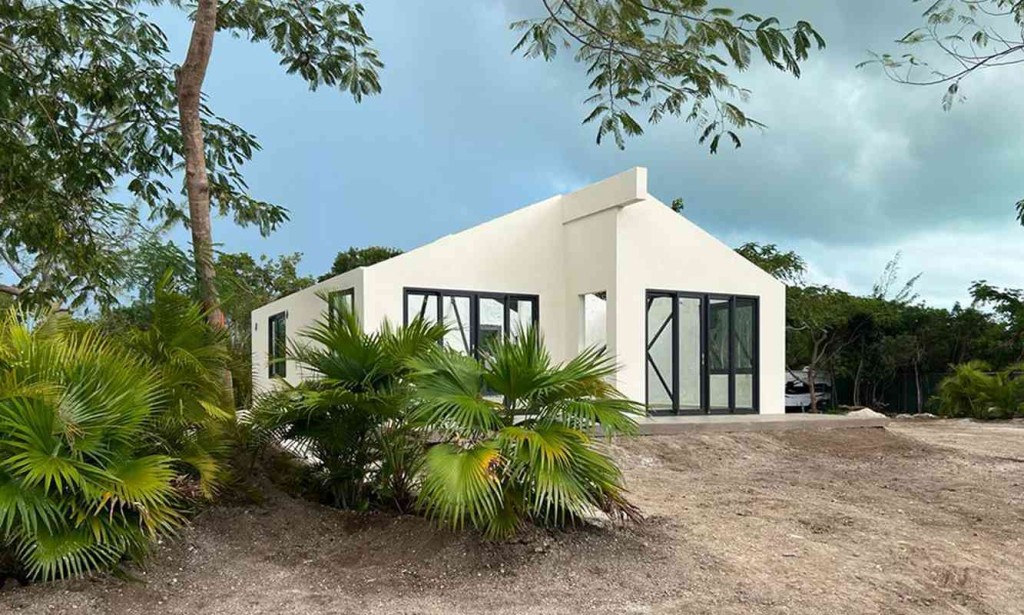
“If one does not know to which port one is sailing, no wind is favorable.” – Lucius Annaeus Seneca

Quote of the Day: “If one does not know to which port one is sailing, no wind is favorable.” – Lucius Annaeus Seneca

Photo by: Daniel Salcius

With a new inspirational quote every day, atop the perfect photo—collected and archived on our Quotes page—why not bookmark GNN.org for a daily uplift?

Livin’ Good Currency Ep. 29: Carrie Rich on How to Show Up, Learn, and Listen to Make Entrepreneurial Good in the World

The Lesson: Expressing genuine interest in learning, in a job, in what other people have to say, in showing up even when you aren’t necessarily needed, this is a behavior which boardrooms around the world will want to vacuum up, as long as one makes certain they see it.

Notable Excerpt: “One of the things I’ve learned is that every human adds value to our collective story; you have to believe that. If you’re really going to believe in making the world a better place, you have to believe that every human adds value. And if you believe that then you’re open to having meaningful conversations with everyone no matter where they are in this moment in life, so I don’t care if I’m on a bus, or a plane, or a train, or the street, or the slum, or the boardroom, I’m genuinely interested in learning from the people next to me.”

The Guest: Carrie Rich believes in making the world better through business and leadership. That is why she co-founded The Global Good Fund ten years ago to invest in high potential, overlooked social entrepreneurs. She also founded the Global Impact Fund, which is dedicated to investing in socially impactful businesses primarily led by black, brown and women founders.

Carrie’s fourth book, Impact The World: Live Your Values and Drive Changes as a Citizen Statesperson, was published by Wiley in May 2022 and is now a WSJ and Amazon Best Seller. Carrie is the recipient of the POLITICO Women Who Rule Award, Washington Business Journal 40 under 40, and many others.

The Podcast: Livin’ Good Currency explores the relationship of time to our lives. It focuses on learning how super-successful people align their purpose with their passions to do good for themselves and others daily, and features a co-host who knows better than anyone the value of time (see below). How do you want to spend your life? This hour can inspire you, along with upcoming guests, to be sure you are ‘Livin’ Good Currency’ and never get caught running out of time.

The Hosts: Good News Network fans will know Tony (Anthony) Samadani as the co-owner of GNN and its Chief of Strategic Partnerships. Co-host Tobias Tubbs was handed a double life sentence without the possibility of parole for a crime he didn’t commit. Behind bars, he used his own version of the Livin’ Good Currency formula to inspire young men in prison to turn their hours into honors. An expert in conflict resolution, spirituality, and philosophy, Tobias is a master gardener who employs ex-felons to grow their Good Currency by planting crops and feeding neighborhoods.

Episode Resources:

Carrie Rich | Twitter
Global Good Fund | Website
Global Good Fund | Twitter
Global Good Fund | Instagram

Are you ready to start your health journey today? Go to viome.com/goodcurrency to get $50 off Viome’s Full Body Intelligence test or bundle, the most advanced at-home health test currently available to consumers. Use Promo Code: CURRENCY50

Gardening Could Help Reduce Cancer Risk, Boost Mental Health and Bring Communities Together

SWNS
SWNS

Gardening could help reduce the risk of cancer, boost mental health and bring communities together, according to new research.

Scientists say it leads to eating more fibrous fruits and vegetables, exercising more and building social connections, which together can ease stress and anxiety and lower the risk of various illnesses.

“No matter where you go, people say there’s just something about gardening that makes them feel better,” said Dr. Jill Litt, a professor in the Department of Environmental Studies at the University of Colorado, Boulder.

In a classic case of correlation or causation, while it’s known that those who garden tend to be a healthier weight and eat more fruit and vegetables, it’s unclear whether healthier people just tend to garden more or whether gardening influences health.

To find the answer, Dr. Litt recruited 291 non-gardening adults with an average age of 41 from the Denver area.

Half were assigned to the community gardening group and the other half were put in a control group that was asked to wait one year to start gardening.

CHECK OUT GNN’s GOOD GARDENING SECTION: Good Gardening Week 7: What Are Your Best Gardening Hacks? Check Out Last Week’s Answers

The gardening group received a free community garden plot, some seeds and seedlings, and an introductory gardening course.

Both groups were surveyed about their nutritional intake and mental health. They also underwent body measurements and wore activity monitors.

The group started in spring and by autumn those in the gardening group were eating on average 1.4 grams, or 7% more fiber per day than the control group. It may seem like a small difference, but it isn’t.

“An increase of one gram of fiber can have large, positive effects on health,” said co-author James Hebert, director of the University of South Carolina’s cancer prevention and control program.

The gardening group also upped their physical activity by around 42 minutes per week, and saw their stress and anxiety levels decrease, with those who came in the most stressed and anxious seeing the biggest drop in mental health issues.

RELATED: 8 in 10 Youth Think Gardening is Cool, and Half Would Rather Visit a Garden Center Than a Nightclub

Many of the participants live in areas where access to affordable fresh fruits and vegetables is extremely limited.

Some were low-income immigrants living in gardenless apartments, and having a garden plot allowed them to grow food cheaply. Community gardening can also build social connections within communities and offer a space for people to share their culture.

“Even if you come to the garden looking to grow your food on your own in a quiet place, you start to look at your neighbor’s plot and share techniques and recipes, and over time relationships bloom,” said Dr. Litt.

“It’s not just about the fruits and vegetables. It’s also about being in a natural space outdoors together with others.”

SHARE This Great Health News, And Check Out Our Good Gardening Archives

The First African-Produced Tests to Diagnose Cancer will Cut Costs and Waiting Times Across the Continent

Oussama Benbila/Courtesy of MAScIR

With the debut of a Moroccan-born test for breast cancer and leukemia, the continent has achieved its first domestic cancer test, one that could reduce cost and wait times significantly.

Most diagnostics kits are imported from Europe or North America, and as such require time and money which many hospitals in poorer countries may not have.

“The price of the kit can be double that of what it would cost to manufacture it locally. It is also a long process. It can take weeks or months for the kits to arrive,” said Hassan Sefrioui, an executive board member of the Moroccan Foundation for Advanced Science, Innovation and Research (MASciR), which developed the new tests.

Apart from the other nations of the Colorful Continent, Morocco herself will be helped greatly by the tests. Breast cancer, reports the Guardian, is the most prevalent form in the country, and a leading killer of women.

Moreover, the results of imported tests for some cancers have to be exported back to France for diagnosis. MASciR’s leukemia test has already been used on 400 people, and can instead gather results in a few hours.

MORE MEDICINE NEWS: Aggressive Breast Cancer Could Be Tamed By Ingredient Found in Cardamom Spice, Say Scientists

MASciR was one of the first firms in Africa to develop a COVID-19 test, which was sold in the Francophone nations of Tunisia, Senegal, and Ivory Coast, as well as Rwanda. The cancer tests will likely be available in these countries first.

Because of the need to import raw materials, it’s likely the tests will still be more expensive than imported European ones, at least for the first few years. Officials at the African Pharmaceutical Technology Foundation believe that if MASciR is well-supported the costs will come down quickly and significantly.

SHARE This Milestone for African Innovation With Your Friends… 

Urban Trees at the End of Life Are Turned into Valuable Products, Rather Than Chipped for Landfil

credit - Urban Hardwoods Seattle
credit – Urban Hardwoods Seattle

Across America, cities are choosing to upcycle their felled urban trees into valuable products rather than chipping them, burning them, or dumping them into the landfill.

Along with being more generally favorable to the environment, it’s a trend that’s leading to entrepreneurial innovation, as a network of urban woodworkers has coalesced around municipalities looking to do something more productive with waste lumber.

When processed, sold, and utilized to its highest value, the U.S. could produce nearly 8 billion board-feet of urban-sourced lumber annually, or around 10% of the production that the traditional lumber industry gathers from America’s forests.

An article from Pew Charitable Trusts reports that in 2018, city leaders in Harrisonburg, Virginia, began a wood utilization effort that saw felled municipal trees go into making park benches, planter boxes, and conference room desks.

The article continues in Maryland, where the Baltimore Wood Project, a U.S. Forest Service-led effort to promote urban wood reclamation, has provided more than 65,000 board-feet for city constructions of fishing piers, pedestrian bridges, and wellness centers.

Out west, West Coast Arborists are serving this cause in 350 cities across California and Arizona, lobbying for city ordinances on shade trees and other urban tree planting programs to adopt the planting of tree species with a high end-use value for the purpose of upcycling and reclamation.

Recently, West Coast Arborists began supplying lumber from felled urban trees to Taylor Guitars, who were looking for Shamel ash and red ironbark eucalyptus trees for several of their models.

CHECK OUT: European Cities Are Turning Rooftops Into Community and Sustainability Hubs: ‘A revolution in urban planning’

Urban Hardwoods, a Seattle-based bespoke furniture maker, runs its own sawmill for the processing of trees received through Urban Wood Network, an industry collaborator that connects municipalities, sawmills, arborists, finished goods producers, and others in a giant web of urban wood reclamation activity.

All of Urban Hardwoods’ beautiful furniture is made from trees cut down as part of the tree-surgeon work in Seattle within a 15-mile radius of the store.

Nearby, Oregon also has a program from its environmental department for the recycling of shrubs, limbs, and other wood that can’t be turned into high-end products. It instead turns them into biochar, a recently developed soil amendment that involves heating wood over fire without access to oxygen.

RELATED: Tree Corps Has A Green Job For You: Planting the ‘Healing Power’ of Trees in Low-Income Neighborhoods

When placed in soil, biochar acts like a sponge to soak up minerals and water, as well as acting as something nice, nutritious and solid for a tree or shrub to wrap its roots around.

It’s not as carbon-neutral as furniture, but making biochar and other fertilizers produces less CO2 than shredding trees into chips, burning them, or loading up a landfill.

Upcycle This Good Idea For Waste Trees With Your Friends…

Green Comet in the Sky This Week Is Rare ‘Messenger from the Outer Reaches of Our Solar System’

A photo of comet C2022 E3 ZTF taken on Dec. 26, 2022 in Payson, Arizona by Chris Schur.

A bright green comet is passing through our solar system and has astrophotographers elated for the chance at a once-in-a-lifetime image.

Comet 2022 E3 (ZTF) is its name, and the last time it passed close enough to Earth it would have been seen by human and Neanderthal alike—around 50,000 years ago.

On January 12th it passed the closest point to the sun, and in the two weeks leading up to February 1st, its closest approach to Earth, it can be viewed with binoculars and even the naked eye.

Space.com did a roundup of astrophotographers working with telescopic lenses, and one by Chris Schur from Payton, Arizona stands out.

“Here is a really deep hour and a half exposure of the comet, showing the colors of the dust tail very well and a long tortured gas tail,” Schur told Space in an email.

The Planetary Society has the details on how to see this green marvel.

“Observers in the Northern Hemisphere will have the best chance of spotting the comet if they look in the northwestern skies before dawn,” wrote Kate Howells. “Without a telescope, Comet 2022 E3 (ZTF) will most likely look like a faint, greenish smudge in the sky rather than a bright object.”

MORE LIKE THIS: ‘Orion’s Fireplace’: Flame Nebula is Ablaze With Color and Captured in Stunning New Images

More specific details about how to find this comet can be found on Earthsky, where they have its placement among constellations across several dates.

Comet 2022 E3 (ZTF) is a traveler from deep in the outer solar system, where its orbit has it spending thousands of years beyond our sight. Astronomers don’t know whether it gathers enough speed to move into interstellar space, or if its elliptical orbit keeps it bound to us.

SHARE This Great Stargazing Opportunity Before It Passes!

“There is a wonderful intelligence to the unconscious. It’s always smarter than we are.” – Russell Banks

Quote of the Day: “There is a wonderful intelligence to the unconscious. It’s always smarter than we are.” – Russell Banks 

Photo by: Edurne Tx (enhanced)

With a new inspirational quote every day, atop the perfect photo—collected and archived on our Quotes page—why not bookmark GNN.org for a daily uplift?

Singing Bus Driver Becomes a Star After Making Music Video to Show Family in India What He Did for Work (WATCH)

Ranjit Singh with fellow drivers - YouTube / SWNS
Ranjit Singh – SWNS

A singing bus driver has become an unlikely Youtube sensation after a feel-good music video he made about his job racked up tens of thousands of views.

Ranjit Singh wanted to show his family in India what he did for a living so he made the film with the help of his colleagues at National Express.

His song celebrates multi-cultural Britain and what it’s like to serve a multi-faith community while driving buses across the industrial heartlands of the Black Country.

Despite what some might consider a mundane subject matter, the heart-warming video about the pride Ranjit takes in his work has attracted him thousands of adorning fans.

Since the four-minute long footage was uploaded to Youtube, a video which was originally just meant for family, has been viewed more than 66,000 times.

The uplifting track was recorded against the backdrop of one of the company’s garages and at West Bromwich Bus Station.

“I have a great passion for driving and singing, so I wanted to combine the two together,” said the 59-year-old from West Bromwich in the West Midlands of England.

“I thought there was no better way than a video to show my family back home what I do for a living.

WATCH: New U.S. Citizen From Cuba Celebrates ‘First Paycheck in America’ in Viral Video

“I have worked at National Express West Midlands for 13 years and take great pride in what I do.

“There’s a real team spirit and I wanted to do something that celebrated the many different communities we have at our West Bromwich depot and how we all work together as one team.”

Ranjit Singh with fellow drivers – YouTube / SWNS

Recorded in the Punjabi language, but with English subtitles, sprightly Ranjit dances away as he sings: “Friends drive buses together.”

“With honest working hands, we drive the buses. From different countries brothers drive buses together…we all drive the buses from our different faiths.

“All the different cultures and nations drive buses together as friends. Working in the offices as brothers. We sit together in the canteen as brothers.

“Doing overtime shifts we exhaust the buses. Within different countries friends drive the buses together.

LOOK: Watch Elephant Give Back a Child’s Shoe That Fell Into Zoo Enclosure – SO SWEET

“If any drivers need moral support we give it to each other. Health and safety priorities must be taken before holding the steering wheel.

“We check the bus condition before holding the steering wheel.

“Sisters also drive the buses from different cultures and nations from all over the world. Sisters also became bus drivers within the UK.

“Staying happy and in high spirits we work together singing with our brother Ranjit.”

“Fabulous!” said one fan on YouTube. “Thanks to Ranjit and everyone working so hard to keep us all moving.”

Another gushed, “This is why we should be proud of multi-cultural Britain. All colours and creeds coming together. Keep up the good work Ranjit.”

POPULAR: Man in Pakistan Needed Surgery in Alabama – Got So Much Love That He Invited the Entire City to His Wedding

David Bradford, managing director for National Express West Midlands, said: “Our staff really are our greatest assets.

“They all work incredibly hard to keep our customers moving, and to see the enthusiasm that they have for their roles in the company is great.

WATCH the music video below…

SHARE The Inspiring Video to Inspire Friends on Social Media… 

Two-Thirds Feel Guilty For Getting Rid of Sentimental Items, So Resale Stores are Thriving

By Robyn Budlender
By Robyn Budlender

Most of the items within the average American household arrived there secondhand, a new poll suggests—with 66% reporting that more than half of the items in their home were previously owned by someone else.

In the survey of 2,000 respondents, three-fourths of people (77%) reported forming emotional connections with the items in their home, regardless of whether or not those items have been used.

Maybe that’s why almost two-thirds (63%) feel guilty tossing an item that “still has a little bit of life left in it,” or that could be passed on to another household.

One in five (20%) even experience significant guilt every time they declutter—which for half of respondents happens once every six to 12 months.

And, 39% would part with one of their belongings if they believe “someone else will enjoy it more” than they do.

When it comes time to declutter, respondents are most likely to relinquish clothing (46%) and papers or other files (44%) above other items like books (29%), toys (25%) or appliances (24%).

Conducted by OnePoll on behalf of resale company Winmark, the random double-opt-in survey also confirmed that a whopping 92% of respondents have shopped at secondhand, thrift or resale shops—which a third (33%) believe are among the “most fun” stores to shop at—at least once in their lives.

RELATED: More Than Half of Adults Would Welcome a Pre-Owned Gift

“Shopping at your local resale store is a great way to keep money circulating in your home community,” Winmark Chief Executive Officer Brett Heffes said. “In particular, it cuts down on shipping-related fuel and packaging consumption, which can be just as wasteful as the product manufacturing process itself.”

Four in 10 purported to be frequent secondhand shoppers, with almost one in 10 (11%) claiming they “exclusively” purchase pre-owned items.

Among those polled, secondhand stores are also thought to offer the most value (37%), just ahead of dollar stores (36%) and outlets (34%).

INTERESTING: Six in 10 Americans Believe They Can Build Generational Wealth in Several Ways

Although 33% consider an item’s value to be of top importance, sustainability also plays a meaningful role in consumers’ choices.

TOP ITEMS DISCARDED WHILE DECLUTTERING

1. Clothing – 46%
2. Papers/files – 44%
3. Books – 29%
4. Toys – 25%
5. Hobby equipment or supplies – 25%
6. Appliances – 24%
7. Kids’ items – 24%
8. Furniture – 22%
9. Sports/exercise equipment – 20%

Compounds That Can Stop COVID From Infecting Human Cells Discovered in a Sea Sponge

Dr. Jimena Perez-Vargas working in the Jean lab – Credit: Paul Joseph

Compounds that could stop coronavirus and flu viruses from infecting human cells have been discovered in sea sponges.

Researchers unearthed 26 such compounds found in nature, including in plants and fungi.

The international research team say their discovery paves the way for new “natural” medicines and antivirals than can help treat contagious viruses.

They claim the compounds will help tackle existing and future variants—as well as flu—because they target human cells, which evolve more slowly than viruses.

They are effective in very small doses in the lab, where the compounds completely stopped viral infection in human cells.

“The advantage of these compounds is that they are targeting the cells, rather than the virus, blocking the virus from replicating and helping the cell to recover,” explained Dr. Jimena Pérez-Vargas from the University of British Columbia in Canada, who co-authored the study.

For the study, which was published in the journal Antiviral Research, the team investigated more than 350 compounds derived from natural sources including plants, fungi, and marine sponges, in a bid to find new antiviral drugs that can be used to treat the novel disease—or in 26 cases, completely stop coronavirus infection in cells.

They bathed human lung cells in solutions made from these compounds and then infected the cells with Covid variants.

Human lung cells to go bright green when they became infected with COVID-19 variants – Credit: Perez-Vargus et al, Antiviral Research

The researchers used a version of the coronavirus which causes cells to go bright green when they are infected, as well as a special screening technique, to make the discovery.

They say the fluorescent virus is a powerful tool that enable scientists to check thousands of compounds, track the virus as it moves from one cell to another and makes extremely laborious steps that used to be necessary completely redundant.

POPULAR: Vaccine that Could Cure and Even Prevent Brain Cancer Developed by Scientists

All three of the most effective compounds were found in Canada: alotaketal C, from a sea sponge in Howe Sound, British Columbia; bafilomycin D from a marine bacteria in Barkley Sound, British Columbia; and holyrine A from marine bacteria collected in waters off Newfoundland.

Further tests showed the three compounds were effective against the delta variant and several omicron variants.

Bafilomycin D was found to work synergistically with an existing antiviral nasal spray against omicron sub-variant BA.2. This paves the way for multi-drug treatments that work against the coronavirus as well as other common viruses.

MORE: New Nasal Spray That Could Protect People From All COVID Variants to Start Human Trials

The team now want to test the compounds in animal models in the next six months.

The study’s senior author, UBC’s Dr. François Jean, added: “Our research is also paving the way for large-scale testing of natural product medicines that can block infection associated with other respiratory viruses of great concern in Canada and around the world, such as influenza A and RSV.”

SPREAD the Good News Like a Virus By Sharing the Breakthrough on Social Media…

Bizarre Creature From China Had a Dinosaur Head on Bird’s Body – a Missing Link From 120 Million Years Ago

Cratonavis zhui – Chinese Academy of Sciences via SWNS

The evolution of dinosaurs into birds is a transition that encompasses such dramatic morphological changes that paleontologists are still scratching their heads to understand how the fantastic event occurred.

Now, a new 120-million-year-old fossil of a creature in China, called ‘bizarre’ by scientists, shines fresh light on the mystery with its T-rex-like skull attached to the body of a bird.

Named Cratonavis zhui, the chicken-sized hybrid had long shoulder blades, or scapulas, and claws. But its large skull was shaped in an almost identical way to that of T Rex and other meat-eating theropods.

The fossil, with its surprisingly elongate shoulder blade (scapula) and first metatarsal, makes it stand out from all other birds—including fossil ones—and fills in some of the gaps as to how some dinosaurs evolved into birds.

The news, published in Nature Ecology & Evolution on Jan. 2, describes a study conducted by paleontologists from the Chinese Academy of Sciences.

“The primitive cranial features speak to the fact that most Cretaceous birds such as Cratonavis could not move their upper bill independently with respect to the lower jaw,” said lead author Dr. Li Zhiheng. “This is a functional innovation widely distributed among living birds that contributes to their enormous ecological diversity.”

In the avian evolutionary tree, Cratonavis came before Ornithothoraces, which evolved to have many traits of modern birds.

Birds have been dubbed ‘living dinosaurs’; the first primitive species looked like a small, feathered dinosaur. Their mouths still contained sharp teeth. But over time, birds lost them and evolved beaks.

POPULAR: At Long Last, Paleontologists Find the Remains of a Swimming Dinosaur—’a Cretaceous Cormorant’

Life reconstruction of the 120-million-year-old bird Cratonavis zhui – Chinese Academy of Sciences via SWNS

Corresponding author Dr. Wang Min commented on the shoulder extension discovered in the fossil: “The scapula is functionally vital to avian flight and it conveys stability and flexibility.

“We trace changes of the scapula across the Theropod-Bird transition, and posit that the elongate scapula could augment the mechanical advantage of muscle for wingbone retraction and rotation.

“It compensates for the overall underdeveloped flight apparatus in this early bird, and these differences represent morphological experimentation in flight behavior early in bird diversification.”

LOOK: ‘Impossible Fossil’ Preserves the Exact Moment the Dinosaurs Died: ‘It’s Absolutely Bonkers’

The study also found the first metatarsal (big toe) was subjected to selection, during the dinosaur-bird transition, to favor a shorter one.

It then lost its evolutionary flexibility toward change once it reached optimal size—less than a quarter of the length of the second metatarsal.

Co-author Dr. Thomas Stidham said: “It may have resulted from conflicting demands associated with its direct employment of the first toe in locomotion and feeding.”

For Cratonavis, it likely stemmed from a selection advantage for catching prey. It was a carnivore that ate small reptiles, amphibians, mammals and insects.

RELATED: This 120-Million Year Old Bird/Dinosaur Hybrid Is Teaching Us How Birds Came to Be

The abnormal anatomy preserved in the fossil highlights the breadth of skeletal plasticity in early birds, explained co-author Dr. Zhou Zhonghe.

He said: “Changes in these elements across the theropod tree show clade-specific evolutionary lability resulting from the interplay among development, natural selection and ecological opportunity.”

Cratonavis stands out from all other birds—including fossil ones—illuminating how our feathered friends evolved from the largest animals that ever roamed land.

DON’T MISS the Chance to Fly This Wonder to Friends on Social Media…