All News - Page 315 of 1719 - Good News Network
Home Blog Page 315

Railroad Worker Rescues Raccoon After the Hair on its Butt Got Frozen to the Tracks

SWNS
SWNS

Railroad workers were able to rescue a stricken male raccoon after it became frozen to the tracks—stuck fast by the hair on its private parts.

The animal was seen facing the oncoming train carriage as it straddled one side of the track.

Neil Mullis was out on the job when he came across the poor little guy.

The traumatized-looking raccoon was eventually rescued after a five-minute operation.

“I poured the warm water under his bottom while a co-worker worked the shovel under his butt to try and break him loose,” said the 35-year-old.

“After about five minutes of slowly working him loose, he was free. He jumped off the rail and ran in the woods never looking back.”

Despite the rescue efforts from Neil and his colleagues, nobody could tell how, or why, the raccoon got into this predicament near Cochran, Georgia.

“I’m guessing because it was 10 degrees outside, somehow he was crossing over the rail and sat too long and got stuck!” said Neil.

SWNS

After inspecting the clumps of fur left stuck to the rail, Neil summed it up by saying: “Operation well-performed.”

“Little fella is safe now.”

SET This Story FREE By Sharing it on Social Media…

Hubble Captures Rare Event: Star Eaten By a Black Hole 300 Million Light Years Away (LOOK)

Artist's illustration shows how a black hole can devour a bypassing star -Credits: NASA, ESA, Leah Hustak of STScI
How a black hole can devour a bypassing star -Credits: NASA, ESA, Leah Hustak of STScI

Black holes are gatherers, not hunters. They lie in wait until a hapless star wanders by.

When the star gets close enough, the black hole’s gravitational grasp violently rips it apart and sloppily devours its gasses while belching out intense radiation.

Now, astronomers using NASA’s Hubble Space Telescope have recorded a star’s final moments in detail, as it gets gobbled up by a black hole.

Although the black hole encounters are violent, they’re known as “tidal disruption events”—and astronomers are using Hubble to find out the details of what happens when a wayward star plunges into the gravitational abyss.

The ‘AT2022dsb tidal event’ can’t be photographed up-close with Hubble because the munched-up star is nearly 300 million light-years away. But astronomers used Hubble’s ultraviolet sensitivity to study the light from the shredded star—which include hydrogen, carbon, and more, all forensic clues to the black hole homicide.

About 100 tidal disruption events around black holes have been detected by astronomers using various telescopes. NASA recently reported that they spotted another black hole tidal disruption event on March 1, 2021, from another galaxy.

Data was collected in X-ray light from an extremely hot corona around the black hole, after the star was already torn apart.

“There’s a lot of information that you can get from the ultraviolet spectra,” said Emily Engelthaler of the Center for Astrophysics | Harvard & Smithsonian (CfA).

“We’re excited because we can get these details about what the debris is doing. The tidal event can tell us a lot about a black hole.”

RELATED: Astronomers Spot Light From Behind a Black Hole for the First Time – Proving Einstein Right Again

This sequence of artist’s illustrations shows how a black hole can devour a bypassing star. 1. A normal star passes near a supermassive black hole in the center of a galaxy. 2. The star’s outer gasses are pulled into the black hole’s gravitational field. 3. The star is shredded as tidal forces pull it apart. 4. The stellar remnants are pulled into a donut-shaped ring around the black hole, and will eventually fall into the black hole, unleashing a tremendous amount of light and high-energy radiation. Credits: NASA, ESA, Leah Hustak (STScI)

Changes in the doomed star’s condition are taking place on the order of days or months, but for any given galaxy with a quiescent supermassive black hole at the center, NASA believes shedding happens only a few times every 100,000 years.

This AT2022dsb stellar snacking event was first caught on March 1, 2022 by the All-Sky Automated Survey for Supernovae (ASAS-SN or “Assassin”), a network of ground-based telescopes that surveys the extragalactic sky roughly once a week for violent, variable, and transient events that are shaping our universe. This energetic collision was close enough to Earth and bright enough for the Hubble astronomers to do ultraviolet spectroscopy over a longer than normal period of time.

“Typically, these events are hard to observe. You get maybe a few observations at the beginning of the disruption when it’s really bright. Our program is different in that it is designed to look at a few tidal events over a year to see what happens,” said Peter Maksym of the CfA. “We saw this early enough that we could observe it at these very intense black hole accretion stages. We saw the accretion rate drop as it turned to a trickle over time.”

The Hubble spectroscopic data are interpreted as coming from a very bright, hot, donut-shaped area of gas that was once the star. This area, known as a torus, is the size of the solar system and is swirling around a black hole in the middle.

“We’re looking somewhere on the edge of that donut. We’re seeing a stellar wind from the black hole sweeping over the surface that’s being projected towards us at speeds of 20 million miles per hour (three percent the speed of light),” said Maksym.

LOOK: NASA Celebrates World First: Smashing a Spacecraft into an Asteroid to Practice Saving Humanity

“We really are still getting our heads around the event. You shred the star and then it’s got this material that’s making its way into the black hole. And so you’ve got models where you think you know what is going on, and then you’ve got what you actually see. This is an exciting place for scientists to be: right at the interface of the known and the unknown.”

The results were reported at the 241st meeting of the American Astronomical Society in Seattle, Washington.

WATCH the NASA video…

BEAM This Steller Story to Star-Gazers on Social Media…

Top Ways That People are Improving Their Sleep Routines in 2023, According to New Poll

If you wake up feeling more exhausted than when you fell asleep, you’re not alone.

A new survey of 2,000 U.S. adults about their sleep found the average person doesn’t get anywhere near the quality or amount of sleep they want.

On average, Americans only get six hours of sleep on any given night, and they wakes up feeling well-rested only three mornings out of the week.

The poll, commissioned by Premier Protein and conducted by the market research firm OnePoll, uncovered that not only were Americans seldom waking up feeling refreshed, but the average person also struggles to wind down before bed nearly half of the week.

Parents, in particular, claim to struggle with nighttime routines. Thirty-five percent of respondents who were parents said their nighttime routine suffers, with a similar percentage of parents sharing that they have trouble winding down before bed most of the week.

But it’s not just parents. Two in three Americans (66%) believe that they need two hours or more to wind down before being able to fall asleep. Respondents who live in the Northeastern U.S. (38%) are most likely to struggle with winding down.

Respondents who describe themselves as “night people” (53%)—because they feel happier, more productive, or energized during the night—are also most likely to struggle with winding down.

Those who identify as “day people” are more likely to have a “good” or excellent” sleep routine (45%), compared to just 22% of “night people.”

Nearly half (47%) believe their eating habits have an impact on their ability to relax before bed.

“Many don’t realize how their evening routine and eating habits throughout the day can impact overall sleep quality,” said Carissa Galloway, a registered dietitian nutritionist who consults with Premier Protein.

“Committing to a consistent and relaxing nighttime routine, as well as making healthy food and drink choices, can help support a healthy sleep regimen.”

The survey found that foods and beverages like milk (41%), tea (31%), honey (23%), wine (19%) and bananas (19%) were believed by respondents to be the best things to eat before bed to improve sleep quality.

39% rate their sleep pattern—how often they wake up during the night, and whether or not they wake feeling rested—as below average. Only 8% said they have an “excellent” sleep pattern.

Science of SleepA Good Night’s Sleep Really Does Make Us Happier – By Dampening Negative Emotions

The random double-opt-in survey also showed that Americans are striving to prioritize sleep routines and habits in the new year. 46% have already tried something new that they saw online with the hopes it would help.

Two in three reported they are focusing on winding down before bed: 49% are striving to commit to a regular sleep schedule, 43% are going to bed earlier, and 38% are vowing to practice a consistent nighttime routine.

Six Tips That Respondents Believe Help Them Sleep Better:

– Having warm drinks before bed to help them relax (36%)
– Taking naps to make up for missed sleep (33%)
– Drinking a glass of wine before bed to help their body unwind (18%)
– Adding new vitamins and minerals to their daily routine – 24%
– Experimenting with new products in their nighttime routine – 19%
– Investing in a new sleep supplement – 17%

“Everything I understand, I understand only because I love.” – Leo Tolstoy

Narges Pms, public domain

Quote of the Day: “Everything I understand, I understand only because I love.” – Leo Tolstoy

Photo by: Narges Pms

With a new inspirational quote every day, atop the perfect photo—collected and archived on our Quotes page—why not bookmark GNN.org for a daily uplift?

101-year-old Woman Reveals Her Secret to Longevity is Dancing Every Day

Dinkie Flowers at age 99 – SWNS

This 101-year-old woman says the secret to keeping herself young and healthy includes daily ballet moves on the barre.

Dinkie Flowers is one of the oldest women in the UK and is eager to offer her tips for longevity.

“I couldn’t live without dancing and I think it’s what’s kept me young and happy.”

“It sounds hard, but it’s never too late to start,” said the former professional dancer. “Once you know what you’re doing and being taught by a teacher you’d love it.”

She started dancing at the age of three, and still teaches lessons at her dance school called Dinkie Flowers Stage School to this day.

“I just love dancing, I always have and I always will. I’d advise anyone—and everyone—to start dancing to keep your body and mind young.

“Everyday I go and dance in the studio. The work you do keeps your body supple.”

CHECK OUTThese Are the Top Benefits of Aging

Reflecting on her long life, the mother-of-one who lives in Shoreham-by-Sea in Sussex, England, says she won’t stop dancing “until they take me away in a box”.

Dinkie Flowers on her 100th birthday – SWNS

“I just couldn’t live without dancing. You don’t have to go mad, but it’s good to keep on moving your body, bending your knees and stuff like that.”

Dinkie made her TV debut a couple years ago, tap-dancing her way through auditions to appear on The Greatest Dancer at 98 years young.

Dinkie, who has four grandchildren, says ‘helping people dance’ is her life.

“I see people just sitting on their bottoms all day and reading, but it’s important to get up and keep on moving—do something.

IDEA: Virtual Trip to Museum ‘Can Help People Stay Mentally–And Physically–Healthy’

“It doesn’t matter how old you are. You could be 30 or 100, but as long as you have movement you are fit and well.”

SHARE Dinkie’s Advice with Silver Seniors on Social Media…

Ancient Cave Markings Finally Decoded By Amateur Scientist–A Calendar of When Animals Mated 20,000 Years Ago

Released by UCL – Credit M. Berenguer

An amateur scientist has decoded the meaning of cave markings used in Ice Age drawings—a communication system of early ‘writing’ dating back 14,000 years earlier than any previously known.

Ice Age hunter-gatherers were using mysterious markings alongside their drawings of animal prey to store and communicate “sophisticated” information about the behavior of species that were crucial to their survival at least 20,000 years ago.

And, the perplexing ancient code has apparently been unlocked not by an archaeologist but by a London-based furniture conservator who spent hours looking at images of cave paintings from the British Library, then teamed up with a few professors.

Ben Bacon then published his results in the Cambridge Archaeological Journal.

He explained that the marks, found in more than 600 images on cave walls across Europe, cannot be called “writing” in the sense of the pictographic and cuneiform systems from 3,400 BC onwards. Instead, it is a “proto-writing system” that pre-dates any others found from the Neolithic period.

Until now, archaeologists have known that the sequences of lines, dots, and other marks from the last Ice Age were storing some kind of information about species—such as wild horses, deer, cattle, and mammoths—but did not know their specific meaning.

Mr. Bacon’s aim was to decode them, and in particular the inclusion of a ‘Y’ sign – formed by adding a diverging line to another.

It turns out, the number of marks associated with the animals were a record of which lunar month the species were mating.

Mr. Bacon hypothesized that the ‘Y’ sign stood for ‘giving birth’—and the work of the research team confirmed his theory to be correct.

Their work showed that the sequences record mating and birthing seasons and found a statistically-significant correlation between the numbers of marks and the position of the ‘Y’ sign and the months in which modern animals’ mate and give birth.

“The meaning of the markings within these drawings has always intrigued me so I set about trying to decode them, using a similar approach that others took to understanding an early form of Greek text,” said Bacon.

His success came while looking for repeating patterns.

“It was surreal to sit in the British Library and slowly work out what people 20,000 years ago were saying, but the hours of hard work were certainly worth it.”

RELATED: Incredible Cave Paintings 8 Miles-Long Revealed Deep in Amazon Forest: The Sistine Chapel of Ancients

Then, he reached out to friends and senior university academics, whose expertise were critical to proving his theory, including Professors Paul Pettitt and Robert Kentridge of Durham University who work in the field of visual paleo-psychology, studying the earliest development of human culture.

“To say that when Ben contacted us about his discovery was exciting is an understatement,” said Prof. Pettitt. “I am glad I took it seriously.”

Public domain photo by US Forest Service

“The results show that Ice Age hunter-gatherers were the first to use a systematic calendar and marks to record information about major ecological events within that calendar.

“In turn we’re able to show that these people—who left a legacy of spectacular art in the caves of Lascaux and Altamira—also left a record of early timekeeping that would eventually become commonplace among our species.”

MORE MYSTERY: Over 100 New Nazca Lines Discovered in Peru Designed by Ancient People

Prof. Kentridge added, “The implications are that Ice Age hunter-gatherers didn’t simply live in their present, but recorded memories of the time when past events had occurred and used these to anticipate when similar events would occur in the future.”

Ben also enlisted University College London Professor Tony Freeth, who deciphered the function of the ancient Greek astronomical clock Antikithera.

“I was stunned when Ben came to me with his underlying idea that the numbers of spots or lines on the animals represented the lunar month of key events in the animals’ life cycles,” said Freeth.

“Lunar calendars are difficult because there are just under 12-and-a-half lunar months in a year, so they do not fit neatly into a year. As a result, our own modern calendar has all but lost any link to actual lunar months.

“In the Antikythera Mechanism, they used a sophisticated 19-year mathematical calendar to resolve the incompatibility of the year and the lunar month—impossible for Paleolithic peoples.

LOOK: 300 Epic Ancient Murals ‘Unique in the World’ Depict Creation Myths on Texas Rock: ‘Oldest Books in North America’

“Their calendar had to be much simpler. It also had to be a ‘meteorological calendar’ tied to changes in temperature—not astronomical events such as the equinoxes.

“With these principles in mind, Ben and I slowly devised a calendar which helped to explain why the system that Ben had uncovered was so universal across wide geography and extraordinary time-scales.”

Bacon is now encouraged to continue the work and attempt to understand more of the symbols.

“What we are hoping, and the initial work is promising, is that unlocking more parts of the proto-writing system will allow us to gain an understanding of what information our ancestors valued.

POPULAR: Researchers Solve Mystery of Scattered Black Glass in Chilean Desert

“These people, separated from us by many millennia, are suddenly a lot closer.”

COMMUNICATE the Amazing Finding With Your Tribe–By Sharing on Social Media…

Baker Creates Stunning Cakes That are Straight Out of a Cartoon (WATCH)

Baker Amy Bicknell cuts into her cake – Amy’s Little Cakery / SWNS

A part-time baker creates epic 2-D cakes that look like drawings straight out of a cartoon.

Amy Bicknell was inspired to create her own cartoon cake after spotting a picture of one online.

Her first attempt at the cake proved challenging as she doesn’t normally work with fondant icing, made of granulated sugar and water. (She preferred using a cream-based ganache instead.) But her animated-style slice cake soon became incredibly popular.

The 44-year-old has now been inundated with requests from around the world for special occasions like birthdays and even wedding cakes.

A video shows her entire process, from covering the sponge cake in icing and perfectly smoothing it out, to lining the edges with thin black fondant to create the animated effect. Many people don’t even believe they are cakes until she cuts into them.

Amy, from Greater Manchester in England, started Amy’s Little Cakery in April 2020 for fun during lockdown—and, as a full-time teacher, she had no intention of it becoming a business.

Amy’s Little Cakery – Instagram

“I created a page for my cakes. I quickly grew a following and it just spiraled from there.

“I never expected my account to grow so quickly, but I’ve been very lucky to work as a brand ambassador with several amazing companies.

“I love what I do and find it to be a creative release from a very stressful job.”

Amy’s Little Cakery uses the social media account on Instagram to share her creations, where she has amassed over 120,000 followers.

Amy hopes that her projects inspire other bakers to have a go at this trendy cake decoration.

LOOK: Professional Puzzler in Jigsaw Championships Makes a Living With Her Hobby–Can Finish a 500-piece Puzzle in 50 Minutes

Amy’s Little Cakery – SWNS

“It really makes people look twice, as they look just like a drawing!

“I love an illusion that you can make out of cake and I hope they can make people smile.

SHARE the Cool Idea With Your Baking Friends on Social Media…

Your Inspired Weekly Horoscope From Rob Brezsny: A ‘Free Will Astrology’

Our partner Rob Brezsny provides his weekly wisdom to enlighten our thinking and motivate our mood. Rob’s Free Will Astrology, is a syndicated weekly column appearing in over a hundred publications. He is also the author of Pronoia Is the Antidote for Paranoia: How All of Creation Is Conspiring To Shower You with Blessings. (A free preview of the book is available here.)

Here is your weekly horoscope…
FREE WILL ASTROLOGY – Week of January 21, 2023
Copyright by Rob Brezsny, FreeWillAstrology.com
CAPRICORN (Dec. 22-Jan. 19):
Some insects are helpful to humans. For example, ladybugs devour aphids, which are highly destructive to crops. Damsel bugs eat the pests called leafhoppers, and lacewings feed on the pernicious nuisances known as mealybugs. I also remind you that some bugs are beautiful, like butterflies, dragonflies, and jeweled beetles. Keep these thoughts in mind, Capricorn, as you contemplate my counsel. Metaphorically speaking, you will have experiences with bugs in the next three weeks. But this won’t be a problem if you ally yourself with the good, helpful, and beautiful bugs.

AQUARIUS (Jan. 20-Feb. 18):
What are “brain orgasms”? Can you seek them out and make them happen, or do you have to wait patiently for them to arrive in their own sweet time? When they occur, what should you do? Surrender into them with all your welcome fully unleashed? Or should you question whether they’re real, be suspicious of their blessings, or dismiss them as irrelevant flukes? I encourage you to meditate on questions like these. That will raise your receptivity to the stream of brain orgasms that life will offer you in the coming weeks.

PISCES (Feb. 19-March 20):
My Piscean pagan friend Valie says God is stealthy yet blatant, like a green chameleon perched on a green leaf. After analyzing the astrological omens, I conclude that this is a helpful, all-purpose metaphor for you to use in the coming weeks. I encourage you to be alert for beauty that is hidden in plain sight. See if you can spy the miracles embedded within the ordinary. Ask life to pleasantly blow your mind over and over again. Here’s your phrase of power: *open secret*.

ARIES (March 21-April 19):
Good news, Aries! During the next episode in the age-old struggle between the Impulsive You and the Farsighted You, I predict the latter will achieve a ringing victory. Hallelujah! I also foresee you overcoming the temptation to quit a project prematurely, and instead pushing on to complete it. There’s more! You will refrain from knocking your head against an obstacle in the vain hope of toppling it. Instead, you will round up helpers to help you wield a battering ram that will produce the desired toppling.

TAURUS (April 20-May 20):
You may not have a clear picture of where you’ll be going in the next five years. The detailed master plan that your higher self devised for you before you were born might even be obscure. But I’m here to tell you that in the coming weeks, a new lucidity can be yours. You can summon an acute instinct about which way is forward, if only you will recognize the subtle ways it’s speaking to you. In fact, I believe you will regularly know what move you should make *next* so as to expedite your long-term evolution. Life will be rewarding you with mysterious step-by-step guidance. Now please write a short statement affirming your intention to love, honor, and obey your intuition.

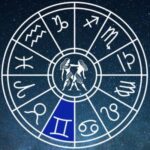
GEMINI (May 21-June 20):
Do you believe in the existence of guardian angels and spirit guides and ancestors who can intervene in your behalf from the other side of the veil? Do you wonder if maybe your invisible friends from childhood show up in your vicinity now and then to offer you support and kindness? Or how about the animals you loved earlier in your life but who have since passed away? Is it possible their souls have never left you, but are available if you need their affection? Even if your rational mind tells you that none of these possibilities are authentic, Gemini, I suspect you will nevertheless be the beneficiary of their assistance in the coming weeks and months. Their influence will be even more potent if you proceed as if they are real.

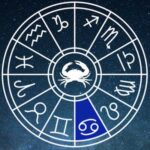
CANCER (June 21-July 22):
Among your potential strengths as a human being are empathy, sensitivity, and emotional intelligence. You may or may not choose to develop these natural gifts. But if you do, they can be instrumental in helping you achieve the only kind of success that’s really meaningful for you—which is success that your heart and soul love as much as your head and your ego. According to my astrological analysis, you are moving into a phase of your cycle when you will have extra power to ripen your empathy, sensitivity, and emotional intelligence—and thereby enhance your ability to achieve the kind of success that’s meaningful for you.

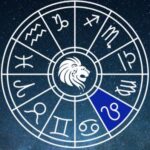
LEO (July 23-Aug. 22):
“Dear Rob the Astrologer: The computer firewall at my youth hostel is blocking your website. I am being told you practice ‘Illegal Folklore and Insurrectionary Fairy Tales.’ What the heck? Can you do anything at your end to get me access to your wonderful horoscopes? Maybe cut back a bit on your Illegal Folklore and Insurrectionary Fairy Tales? Haha. Just kidding. I love that crazy stuff. —Deprived Leo in Ireland.” Dear Deprived: Many of you Leos have lately had problems getting all the Illegal Folklore and Insurrectionary Fairy Tales you need. I hope you will push hard to compensate. In my estimation, you currently have a strong need for dreamy stories that appeal to the Wild Child in you. They’re essential to your mental and spiritual health.

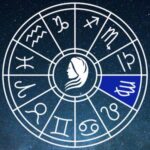
VIRGO (Aug. 23-Sept. 22):
In his book A Million Miles in a Thousand Years: What I Learned While Editing My Life, Donald Miller acknowledges that fear can be a “guide to keep us safe.” Being afraid may indeed have its uses and benefits. But Miller adds that it’s also “a manipulative emotion that can trick us into living a boring life.” In my astrological opinion, Virgo, fear will be of service to you—a guide to keep you safe—about nine percent of the time in 2023. Around 83 percent of the time, it will be a manipulative emotion not worth acting on. For the other eight percent, it will be neither. Please plan accordingly.

LIBRA (Sept. 23-Oct. 22):
Select two sticky situations in your world that you would love to reinvent. Let other annoyances and glitches just slide for now. Then cultivate a focused desire to do everything in your power to transform the two awkward or messy circumstances. Proceed as if you will have to do all the work yourself—that nothing will change for the better unless you take full responsibility. If you’re absolutely sure this involves other people altering their behavior, consider the possibility that maybe your behavior needs to shift as well.

SCORPIO (Oct. 23-Nov. 21):
My rage against the world’s injustices motivates me to mitigate these travesties, like by educating my readers about them and donating money to groups crusading to fix the problems. In the coming weeks, Scorpio, I hope you will take advantage of your astrological potentials by using your anger constructively, too. Now is a favorable time for you to fight fiercely and tenderly for what’s right.

SAGITTARIUS (Nov. 22-Dec. 21):
I predict that love will bring you many AHA! moments in 2023. You can’t fully prepare yourself for them—and that’s a good thing! The epiphanies will be brighter and deeper if they are unexpected. Your motivation to learn the available lessons will be wilder and stronger if you enjoy being surprised. So be ready for lots of entertaining rumbles and reverberations, Sagittarius. The adjustments you will be asked to make will often be strenuous and fun. The inspirations you will be invited to harvest will require you to outgrow some of your previous beliefs about the nature of intimacy and togetherness.

WANT MORE? Listen to Rob’s EXPANDED AUDIO HOROSCOPES, 4-5 minute meditations on the current state of your destiny — or subscribe to his unique daily text message service at: RealAstrology.com

(Zodiac images by Numerologysign.com, CC license)

SHARE The Wisdom With Friends Who Are Stars in Your Life on Social Media…

“Fear is a manipulative emotion that can trick us into living a boring life.” – Donald Miller

Credit: Ishan Gupta

Quote of the Day: “Fear is a manipulative emotion that can trick us into living a boring life.” – Donald Miller 

Photo by: Ishan Gupta

With a new inspirational quote every day, atop the perfect photo—collected and archived on our Quotes page—why not bookmark GNN.org for a daily uplift?

Internet Sleuth Proves That 5 Historical Torture Devices Were Never Used – But Invented By Con Artists

Photograph of a supposed iron maiden from the Lubuska Land Museum in Zielona Góra, Poland, and an illustration by the Austrian artist Vinzenz Katzler from 1868 depicting a man being forced into an iron maiden

(Note: Children or sensitive individuals should avoid this article.)

Across Europe, it’s not uncommon to find museums of torture stocked with black cast iron pieces of the most unimaginable cruelty.

However a clever internet snoop and aspiring historian Spencer McDaniel presents the case that several of the most famous torture devices were actually invented in the 19th century by con men and hucksters looking to make a buck off tourists.

McDaniel focuses her analysis on a Buzzfeed video entitled “5 Of The Most Gruesome Medieval Torture Devices,” and proves that only one likely even existed in the Middle Ages, and was rarely used in any case.

This is not to say that our European ancestors weren’t capable of terrible cruelty, but the mechanical nature of these so-called medieval torture devices implies that there were people who spent months thinking about the most revolting methods of pain infliction.

The torture devices they did use weren’t really devices at all, and they were more for executions than for torture. Furthermore, they carry the hallmarks of hot-blood cruelty rather than cold-blood, as in, they tended to use whatever was easily available such as fire or horses.

The first device which McDaniel tackles is called “The Brazen Bull” which was allegedly a large bronze bull statue with a compartment wherein could be placed the victim. Underneath a fire would be kindled until it burned the victim alive, whose screams would sound like a bull bellow resonating out through the statue’s nose and mouth.

This was allegedly used by a Greek tyrant Phalaris of Akragas in 570 BCE. But despite its depictions during the Renaissance, no such device has ever been found. One was referenced by a lyrical poet of all people (because they’ve never lied), who lived decades after Phalaris’ death. The only other reference was from Greek historian Diodorus Sikeliotes nearly 500 years after Phalaris’ death.

READ ALSO:  Historians Stunned: Uzbekistan Nomads Supplied a Third of the Bronze Used Across Ancient Mediterranean

Other more iconic devices such as the “iron maiden,” and “pear of anguish” have histories replete with frauds. As to the former, historians living in the 18th century were able to ascertain that an iron maiden—a sort of vertical sarcophagus filled with spikes—was fraudulent, when it was reported from Nuremberg, Germany that in 1515 it was used to execute a coin forger.

Iron maidens showcased in museums today were all built long after the historical record was well-illuminated, and no case of them ever having been used in the Middle Ages, nor of an individual device built from that time, has come down to us.

The “pear of anguish” was supposedly a sort of pear-shaped metal object that when inserted into an orifice could be expanded outward via a screw, causing horrible pain. The oldest surviving account of this being used was from the 18th century by a Parisian criminal—not exactly an organ of law and order, and certainly not medieval.

CHECK OUT: Woman’s Name and Tiny Sketches Found in 1,300-Year-Old Medieval Text was Hidden for 12 Centuries

McDaniel also claims that the mechanical features of those found in museums would not have worked the way they were supposed to anyway.

The last instrument she mentions probably arose from someone’s imagination of the burnings during the Inquisition, but as she details “the Spanish Tickler” was invented during our own lifetimes by torture-focused con men on the internet, who wanted to propose that a kind of rake was used to remove the flesh of victims as leaves might be piled up in autumn.

“The so-called ‘Spanish tickler’ was totally made up on 15 December 2005 by a Wikipedia editor with the username ‘Andyok,'” writes McDaniels. “The hoax article… was ultimately discovered by responsible Wikipedia editors on 2 March 2018 and has now been deleted.”

While this seems to be a slightly frivolous rabbit hole of disproving already hard-to-imagine things, one commenter on McDaniels’ work reveals its value.

MORE FROM HISTORY: This Lost Roman Era ‘Miracle Plant’ May Have Been Rediscovered

“Inhumane medieval torture devices depicted by the media such as the pear and the iron maiden upset and haunted me greatly since childhood, as I could not help but vividly imagine the victims’ agony. You have finally lifted my nightmares and restored some humanity in the medieval era for me! Thank you!”

McDaniels reminds the commenter there was definitely torture during the medieval period, but concurrent to what’s written above, they tended to involve readily available materials and were more methods of execution than torture.

HELP Restore Your Friends’ Faith In The Medieval Era With This Story… 

This Crew of Street Veterinarians Treat the Pets of L.A.’s Homeless Residents of Skid Row

Dr. Kwane inspects a homeless woman’s dog – credit The Street Vet

There aren’t many willing to voluntarily go out to spend the day on Skid Row, and even fewer with the goal of giving away free stuff, but Dr. Kwane Stewart, also known as “The Street Vet” is nearly famous because of it.

Kwane runs the 501(c)3 non-profit Project Street Vet, that takes donations and volunteers out onto the streets and to homeless encampments to provide free medical care for their pets, and last year they were able to help nearly 600 animals receive medical care.

It’s estimated that 10-25% of the homeless population of America own pets, for companionship, and occasionally for security. It goes without saying that many don’t have the means to take proper care of these animals, whom they often love more than anything else in the world.

In 1997 Stewart was buried in student loan debt when he graduated from the University of Colorado, before bouncing from one miserable rescue shelter to the next. Out of frustration for his career choice, he just started spending a few hours a day providing free medical care to pets of the homeless in LA.

This went on for 7 years until he had an encounter with show biz that spawned Dr. Kwane: The Street Vet, a one-season Canadian TV show that attracted pet product firms, volunteers, and philanthropists to his mission.

READ ALSO: 10 Years After Fukushima Nuclear Disaster, Two Men Are Still Living There Taking Care of Everyone’s Pets

In 2020, he and his brother Ian started his non-profit that provides free exams, vaccines, flea medications, supplies, and information to people experiencing homelessness on how to raise their animals with the limited means they possess.

Charity organizations partner with animal clinics and Project Street Vet to open pop-up clinics where the homeless can bring in their pets for even more sophisticated medical care, as well as procedures like spaying and neutering. Project Street Vet also assists qualified pet parents with their pet’s veterinary care through financial assistance grants.

RELATED: This Hero Dog-Lover Keeps Seniors and Their Pets Together With ‘Peace of Mind’

Their website produced a 2021 year-in-review which they describe as being very generous.

Their 2022 report for activities in Atlanta, San Diego, Los Angeles, and Webster, Florida, report that Project Street Vet saw and helped nearly 600 pets, as well as nearly 150 people receive financial assistance.

They rely entirely on charitable contributions, and anyone who wants to donate time or money can do so here.

WATCH that recap… And the trailer for the TV show… 

SHARE This Amazing Work With All The Pet Parents You Know… 

New AI-Powered Farming Robot Trundles About Inspecting 50 Acres of Crops per Day for Pests and Disease

SentiV robot - credit: Meropy
SentiV robot – credit: Meropy

Most people imagine robots at work in a factory, but there’s no less innovation going on at the farm—take this spoke-wheeled robot plant nurse who can inspect 50 acres of row crops for disease, pests, or other issues.

Trundling through fields a little like a tumbleweed, the SentiV scouting robot is currently just a prototype, but its designers hope that the high unit cost can be offset with savings on pesticides and fertilizer, as the SentiV can determine exactly which plants need what.

Planting is a seriously stressful time for farmers, as all the input costs stack up while profit lies far away in the distant months. Furthermore, many things can go wrong between planting and harvest time, whether that’s a sudden outbreak of disease, pests moving into the area, or a proliferation of weeds.

Manually inspecting crops can take hours while airborne drones can’t see under the leaves.

That’s why a 33-pound robot that moves about on spokes rather than wheels or treads which crush plants could be ideal for farmers looking to reduce labor costs and hours.

Placing the GPS coordinates of the field’s boundaries, the SentiV then uses these boundaries as a guide to map the whole field—up to 50 acres in a day, scanning both the underside and topside of plants with a pair of cameras.

SIMILAR: Solar-Powered, Weed-Killing Robots Could Save Farmers Billions of Dollars on Herbicides

Smart algorithms then look for threats, monitor the plants’ growth, and identify signs that the plant might need more or less water or nutrients.

The wheel height is easily adjustable to make sure it passes over a farmer’s crops without damaging them.

MORE ROBOTS LIKE THIS: New Smart Farming Robot Unveiled That ‘Smokes’ Weeds With High-Powered Lasers For Healthy Weeding

The nearly timeless image of a field of crops being worked by farmers and animals is soon going to look a lot different, as robots of all different sizes are being developed to phase out extensive labor and materials costs on farms.

This robot has 50 nozzles that spray weeds with de-weeder and plants with fertilizer at a rate of 20 shots per second, while this robot tractor can plow on 24-7 all by itself.

WATCH the little fellow at work…

SHARE This Story With Your Robot Fan Friends On Social Media… 

Over 100 New Nazca Lines Discovered in Peru Designed by Ancient People

Released by Yamagata University

In a major archaeological discovery, a team of Peruvian and Japanese researchers have discovered 168 new geoglyphs in the ancient Nazca Plain in Peru, near to the enormous glyphs that remain as mysterious as they are famous.

Found during 2 years of aerial surveys, their discovery led to the creation of a new archaeological park to protect them.

The famous Nazca Lines are enormous depictions of humans and animals carved into the ground of a flat plain by ancient peoples. Their monumental scale was only discovered after flight, when a pair of eyes could be high enough to see the whole two dimensional image.

The originals measure hundreds of yards, but the new discoveries are smaller. Jorge Olano, head archaeologist for the Nazca Lines research program, said the new geoglyphs averaged between two and six meters (6.56 to 19.7 feet) in length.

They were made by removing the black stone of the plain to uncover its white soil below, and line series of ancient trails.

Masato Sakai of Yamagata University and his team of Japanese archaeologists have been working in the area since 2004, and this is not their first discovery.

By 2018, the team had identified 190 geoglyphs by collecting images from aerial surveys and drones, which when added together with this latest batch makes for a total of 358 previously-unknown geoglyphs discovered by the Japanese-Peruvian team.

Believed to have been carved between 100 BCE and 200 CE, they depict humans, camelids such as llamas, alpacas and guanacos, birds, orcas, felines, and snakes, and at times can look almost childish.

Their purpose, as well as their larger cousins which make up a UNESCO World Heritage Site, is unknown.

WATCH aerial footage released by the university… (Note: GNN has no affiliation with any ads displayed)

SHARE This Amazing Addition To An Already Amazing Discovery With Your Friends…

“If the highest aim of a captain were to preserve his ship, he would keep it in port forever.” – Thomas Aquinas

Quote of the Day: “If the highest aim of a captain were to preserve his ship, he would keep it in port forever.” – Thomas Aquinas (a quote about hand-wringing)

Photo by: Joakim Honkasalo (cropped) – Helsinki, Finland

With a new inspirational quote every day, atop the perfect photo—collected and archived on our Quotes page—why not bookmark GNN.org for a daily uplift?

The Year of the Rabbit Hops into 2023 – What it Means and How to Tell if You Were Born Under its Sign

Celebrate the Chinese New Year—or Lunar New Year—this Sunday, as we say farewell to the celestial sign of the Tiger and enter the year of the Rabbit (tù (兔).

In the Chinese zodiac, rabbits are born every twelve years—in 2011, 1999, 1987, 1975, 1963, 1951, and so on.

Rabbit is a zodiac sign associated with the element of wood, although 2023 is the year of the water Rabbit.

For the uninitiated, there are 10 heavenly stems, represented by the five elements and the yin/yang dichotomy (5 x 2 = 10) which make up traditional Chinese astrology of a 60 year cycle.

Water years of yin will end in 3, i.e. 2023, while water years of yang will end in 2, i.e. 2022. Therefore this is the earthly-branch sign Rabbit, in the heavenly stem of water, in the year of yin. The last year of the water Rabbit was 1963.

With that out of the way, what will a yin-water Rabbit expect this year?

The horoscopes published in anticipation of the Year of the Rabbit suggest a year that’s anything but dull for. This is partially because, when averaged across a variety of horoscope websites—there’s almost no overlap—they all say completely different things.

Expect either incredible challenge, incredible reward, or anything in between. It’s a good year to have a baby, it’s also a bad year to have a baby. It’s a good year to start a new business, it’s also a bad year to start a new business. Rabbits will be healthy, but they also shouldn’t eat too much if they live in a temperate climate, but they also need to spend a lot of money to prevent aging, and they should have a lot of check ups, but they will also experience a lot of physical training breakthroughs… one gets the point.

FUN QUIZ: Baboon, Bear, or Bison: Find Out Which Animal Personality Best Matches Yours in a Free Fun Quiz

Interesting facts about the sign of the Rabbit…

The reason the Rabbit is the fourth Chinese zodiac sign sounds a lot like the old tale of the Tortoise and the Hare.

When the Jade Emperor called all the animals to his palace, the Rabbit who was mighty proud of his speed, arrived first only to see no other animal was there. Taking a nap aside the road, he woke up to discover that Tiger, Ox, and Mouse had all arrived before him.

The most famous water Rabbit of modern times is Michael Jordan—the greatest basketball player to ever live. Although the horoscope for the water Rabbit, and the rabbit in general is of a quiet, super-polite (masculine trait) scholar that is gentle, weak-willed and quick to learn, and no one who ever met Michael Jordan described him as any of these things.

Famous Rabbits in general include Albert Einstein (Earth), Angelina Jolee and former spouse Brad Pitt, David Beckham (Wood), and Lionel Messi (Fire).

One thing the horoscopes agree on is that Rabbits, especially in this year of the water Rabbit, since water is the weakest point of matter, either when it is already dead or decaying, should stay away from Roosters—the least compatible sign for Rabbits.

Lucky numbers are 3, 6, and 9, and the auspicious direction is southwest. Unlucky colors are brown, white, and yellow; lucky colors are essentially everyone else.

RELATED: Seeing a Glass As Half-Full May Say More About Someone’s Personality Than Just Being Optimistic

Share This Semi-Horoscope With Your Friends… 

Researchers Harness Sunlight to Produce Both Power and Food—Using Light to Improve Each Harvest

Photograph courtesy of UC Davis

Scientists working in techno-agriculture have found that by covering crops with canopies of translucent solar panels, they can separate the light which generates energy from the light that leads to photosynthesis in plants.

This not only means a farmer could generate solar energy and crops at the same time, but better crops, and more energy than could be achieved with the two operations separately.

Different-colored light from our sun impacts biology on Earth in different ways. The blue spectrum of sunlight for example is what life uses to detect daytime, and is a trigger for major hormonal shifts in animals and plants from active to inactive behaviors.

Red light on the other end is preferentially what plants use to turn carbon dioxide into sugars. Red light isn’t as hot as blue light, and plants exposed to growing conditions with red light spectra show less heat stress than those exposed to blue light. Blue light on the other hand is what is needed to generate solar power in any meaningful way.

With this in mind, associate professor Majdi Abou Najm from the Univ. of California, Davis, tested organic solar panels made from translucent material that absorb the blue light to generate electricity, but allow the red light with its longer wavelengths to pass through to the crops below.

At the UC Davis Agricultural Experiment Station, Abou Najm and his team planted three different plots of processing tomatoes, a common central valley California crop, under a canopy of selective red light, another of selective blue, and a third uncovered plot.

MORE AGRICULTURE NEWS: California Begins Covering Canals with Solar Panels to Fight Drought

While the filtered light crops resulted in one-third less yield from the reduced sunlight, they produced half as many heat stressed, or “bad” tomatoes as the uncovered plot.

When the electricity and water savings are added in, the resulting picture becomes very profitable.

GNN has reported before on the recent phenomenon of “agrivoltaics,” a practice of growing shade tolerant crops under solar panel arrays. The shade protects the crops from heat stress, while the plants’ transpiration humidifies the air beneath the panels, cooling them down and increasing their electricity output.

MORE SOLAR NEWS: Solar Company Gets Bright Idea to Cover Storage Facilities in Solar Panels—Brings Power to 1,400 Homes

Abou Najm sees his translucent solar canopies as the inevitable next step in this practice as one doesn’t need to alternate rows of panels, nor deprive plants of the sun’s feeding rays.

Another benefit of these panels is that like plants’ leaves, they absorb light from the sun indirectly, unlike the large metal panels typical of arrays and rooftops that need direct sunlight to function.

SHINE A LIGHT On Your Friends’ Social Media Pages With This Hot Story…

Cancer Plummets, Guinea Worm Eradicated, Bye-Bye Ebola—3 Huge Wins for Humanity

Photo by Church of the King

2022 saw major advances, and even victories in the efforts to combat several diseases, from industrialized to tropical ones.

Starting at home, a study last year found that US cancer deaths had declined by 33% since 1991. This is equivalent to around 3.8 million people alive thanks to various efforts to combat the disease family.

The report was authored by the American Cancer Society, and published in the journal CA. American Cancer Society CEO Karen Knudsen called the drop “truly formidable,” while the report attributed the fall to the development of better treatments, the reduction in smoking habits, and earlier detection methods.

Just between 2019 and 2020, cancer death rates dropped 1.5%, while the deployment of the HPV vaccine was correlated with a 65% drop in cervical cancer rates from 2012 through 2019 among women in their 30s.

The report also found that not only are death rates falling, but 5-year survival rates for detected cancers have increased 68% among all diagnoses made between 2012 and 2018.

Cancer research often involves cutting edge medical research, but across West Africa and India where cutting edge medicine is not widely available, human determination has succeeded in nearly eradicating Guinea Worm disease.

There are records of this truly unpleasant parasite affecting human health going back thousands of years, and in 1989, there were nearly 1 million cases globally.

But in 2022, this unwelcome waterborne guest created just 15 cases worldwide—a decline of 99.998%, and almost all 15 of those cases occurred in Chad.

MORE MEDICINE NEWS: Nigerian Mom Designs Solar-Powered Cribs That Put an End to Baby Jaundice Disease

This monumental turnaround was not the result of some experimental vaccine, but simple education, teaching people how to avoid drinking contaminated water, when and where this mostly seasonal parasite is likely to be found, and how to treat water to purify it of the Guinea worm.

Other than Chad, Guinea Worm disease was also found in Uganda, which produced another medical milestone with the successful eradication of a recent Ebola outbreak.

The outbreak began in September, driven on by the incurable Sudan strain of the virus. It was the worst outbreak in 20 years, but even though there is no vaccine for the Sudan strain, the health authorities managed to contain it to just two administrative districts, and 142 confirmed cases.

READ ALSO: The Humble Potato Could Hold the Key to Beating Hospital Superbugs as Well as Crop Diseases

“The magic bullet has been our communities who understood the importance of doing what was needed to end the outbreak, and took action,” said health minister Dr. Jane Ruth Aceng Ocero last Wednesday.

Vaccine trials involving Oxford University are currently underway for the Sudan strain, but until that time, health authorities received congratulations for their swift actions, and were thanked for the “lessons learned.”

SHARE These Big Health Victories On Social Media… 

A Man from Luck Won the Lottery

A man from Luck, Wisconsin, population 1,191, just won the highest Megabucks lottery jackpot in 8 years after picking up $15.1 million.

Mark Cunningham bought the big winning ticket at Wayne’s Food Plus on 151 Butternut Ave. Luck.

Cunningham came to the Wisconsin Lottery office in Madison on Monday to claim his winning ticket, saying in a release that “Dreams really do come true,” while adding “I actually won $15.1 million and two dollars, [because] I also had a $2 winning ticket for the same drawing.”

The day was almost as crazy for the manager of Wayne’s Food Plus, who said he got “lots of phone calls.”

“I was told by the Lottery people that, now you’re going to be that Mecca,” Manager Paul Wondra said in a release from the state lottery company. “You sold a big ticket. You’re going to be the place to go. So far, it’s holding true.”

The village of Luck is about 2.5 square miles, and was founded by Danish immigrants in the late 1800s on the shores of Big Butternut Lake. Another town called West Denmark was founded by the same people to the northwest, on the shores of Little Butternut Lake.

The two settlements knew it was impractical to remain separate entities, but disagreed about which would be the center of town.

YOU MAY ALSO LIKE: After Asking His Neighbor to ‘Take His Trash Bin Out’ – He Received a Photo Shoot of Their Day on the Town

The humor is reminiscent of GNN’s recent report that the town of “Dull” in Scotland decided in 2012 to twin itself with “Boring,” Oregon in the hopes it would make both more exciting.

In 2017, the mayor of a town called “Bland” in New South Wales, Australia, decided they wanted to get in on the act, and suggesting that together the towns could promote a tourist circuit known as the ‘Trinity of Tedium.’

Other US towns like Dreary and Ordinary have also been touted as potential partners.

MAKE Your Friends Laugh With This Incredible Turn Of Luck…
“Put your heart, mind, and soul into even your smallest acts. This is the secret of success.” – Swami Sivananda

Quote of the Day: “Put your heart, mind, and soul into even your smallest acts. This is the secret of success.” – Swami Sivananda 

Photo by: copyright GWC

With a new inspirational quote every day, atop the perfect photo—collected and archived on our Quotes page—why not bookmark GNN.org for a daily uplift?

To Reduce the Harmful Health Effects of Sitting, Take a 5-Minute Walk Every Half-Hour

A study looking to find the bare minimum of physical activity required to prevent the well documented ill effects of continuous sitting determined that 5 minutes of walking every half hour was enough.

By looking at blood sugar levels and blood pressure, two important metrics of heart disease, the scientists were able to determine how much daily movement was required to get back to equilibrium from the negative effects of sitting.

Picture if you will, an office worker. Waking in the morning in time for coffee and perhaps breakfast with perhaps a spouse or perhaps children, the day begins with at least some sitting. Then climbing into one’s car, the office worker drives in a seated position to the office. There, between lunch and desk work, the worker spends 8-9 hours sitting before returning home, sitting in their car. Once home, they likely sit down for dinner, and perhaps a bit of television or reading; both done from the seated position.

Sitting time for adults in industrialized nations has been climbing for decades, and it increases the risk for all the diseases typical of those nations, i.e. type-2 diabetes, cancer, heart disease, stroke, fatty liver disease, etc.

In a new study published in Medicine Science in Sports and Exercise, Keith Diaz et al. asked 11 healthy middle-aged individuals to complete an experiment in which they sat in a lab for 8 hours a day for 5 days to represent a normal workweek.

On some days they sat for the whole 8 hours, only rising for bathroom breaks. On others they were engaged in short bouts of walking with differing regularities to find the lowest amount of movement required to reduce their blood sugar and blood pressure.

CHECK OUT: Exercise Can Help Older Adults Retain Memories

“We found that a 5-minute light walk every half-hour was the only strategy that reduced blood sugar levels substantially compared with sitting all day,” Diaz wrote in The Conversation.

“In particular, 5-minute walks every half-hour reduced the blood sugar spike after eating by almost 60%, [and] that strategy also reduced blood pressure by four to five points compared with sitting all day.”

Defining exercise, and time spent in exercise has become a focus of physiologists of late, as recent evidence points out that time spent in movement for work purposes doesn’t confer the protections from the diseases mentioned above the same way exercise does. Where the dividing line between movement for work and movement for exercise sits is not well understood.

MORE EXERCISE NEWS: Intensive Exercise the ‘Best Way to Alleviate Symptoms of Chronic Anxiety Without Drugs or Therapy’

Furthermore, multi-day bouts of prolonged sitting creates an “exercise resistance” that can render even something like a 60-minute moderate intensity run meaningless in terms of its improvement for cardio-metabolic health.

This new research offers a concrete guideline for desk workers or office managers to employ, one that doesn’t rely on general guidelines from government agencies like the Dept. of Health and Human Services that simply state “move more, sit less,” or which recommend 150 minutes of moderate to intense physical activity per week, and which don’t address potential solutions for the workplace.

READ MORE: There’s ‘No Link’ Between Exercise and Developing Arthritis in the Knee

Exercise targets should be set if at all possible at levels to maintain robust muscle mass and cardiovascular strength, since there’s much more to life than just avoiding early death by common disease.

Exercise can protect against several forms of dementia, and of course maintaining muscle mass protects joints from age-related wear and tear or impacts—as goes the saying, “break your hip, die of pneumonia.”

GET UP AND MOVE PEOPLE! Share This Story With Your Friends…