Quote of the Day: “Even a single lamp dispels the deepest darkness” – Mahatma Gandhi
Photo by: Vladimir Fedotov
With a new inspirational quote every day, atop the perfect photo—collected and archived on our Quotes page—why not bookmark GNN.org for a daily uplift?
A breakthrough in electric vehicle fast charging battery design from Penn State has enabled a 10-minute charge time for a typical EV battery.
The record-breaking combination of a shorter charge time and more energy required for longer travel range came from heating the battery to a Goldilocks Zone which has proven difficult for engineers thus far.
Their findings are hoped to accelerate the sale of EVs, and were announced on October 12th, in the journal Nature.
“The need for smaller, faster-charging batteries is greater than ever,” said Chao-Yang Wang, Professor of Mechanical Engineering at Penn State and lead author on the study.
“There are simply not enough batteries and critical raw materials, especially those produced domestically, to meet anticipated demand.”
In August, California’s Air Resources Board passed an extensive plan to restrict and ultimately ban the sale of gasoline-powered cars within the state. By 2035, the largest auto market in the United States will effectively retire the internal combustion engine.
If new car sales are going to shift to battery-powered electric vehicles (EVs), Wang explained, they’ll need to overcome two major drawbacks: they are too slow to recharge and too large to be efficient and affordable. Instead of taking a few minutes at the gas pump, depending on the battery, some EVs can take all day to recharge.
“Our fast-charging technology works for most energy-dense batteries and will open a new possibility to downsize electric vehicle batteries from 150 to 50 kWh without causing drivers to feel range anxiety,” said Wang, whose lab partnered with State College-based startup EC Power to develop the technology.
“The smaller, faster-charging batteries will dramatically cut down battery cost and usage of critical raw materials such as cobalt, graphite and lithium, enabling mass adoption of affordable electric cars.”
The technology relies on internal thermal modulation, an active method of temperature control to demand the best performance possible from the battery, Wang explained.
Batteries operate most efficiently when they are hot, but not too hot. Keeping batteries consistently at just the right temperature has been a major challenge for battery engineers. Historically, they have relied on external, bulky heating and cooling systems to regulate battery temperature, which respond slowly and waste a lot of energy.
Wang and his team decided to instead regulate the temperature from inside the battery. The researchers developed a new battery structure that adds an ultrathin nickel foil as the fourth component besides anode, electrolyte and cathode.
Acting as a stimulus, the nickel foil self-regulates the battery’s temperature and reactivity which allows for 10-minute fast charging on just about any EV battery, Wang explained.
“True fast-charging batteries would have immediate impact,” the researchers write. “Since there are not enough raw minerals for every internal combustion engine car to be replaced by a 150 kWh-equipped EV, fast charging is imperative for EVs to go mainstream.”
The study’s partner, EC Power, is working to manufacture and commercialize the fast-charging battery for an affordable and sustainable future of vehicle electrification.
SHARE This Battery Break Through With Your Friends…
A significant drop in the rates of suicide among active military members that was observed over 2021 has continued into the first 6 months of 2022.
Driven chiefly by sharp drops among the Marine Corps and Air Force, the declines come as a result of increased attention to the issue among high ranking officers and the Dept. of Veterans Affairs.
According to the data, the number of suicides in the Air Force and Marine Corp dropped by more than 30% in 2021 compared with 2020, and the Navy saw a 10% decline. The Army saw a similar 30% decrease during the first six months of this year, compared with the same time period last year.
All the services have been struggling to combat the complex issue of suicide throughout the ranks while dealing simultaneously with the dual challenges of insufficient staffing of mental healthcare workers, and continuing stigma of seeking help professionally.
For this, PBS reports, the services have been increasingly taking advantage of military chaplains, health and fitness coaches, and other support staff to support suicide prevention and mental health care programs.
“The amount of attention that we’re paying to it, I think, is hopefully—we’re cautiously optimistic — what is translating into the downward trend,” Yvette Bourcicot, the acting assistant Army secretary for manpower, told the AP on Thursday.
The Pentagon is working on filling a new force of 2,000 mental healthcare workers, but in the meanwhile some senior officers are requiring soldiers to visit a councilor every so often.
Lt. Gen. Douglas Sims, for example, mandated once-a-year-visits with councilors at his post on Fort Riley, Kansas. All but 10 of the 14,000 staff used their 60-minute session to talk.
As part of our 25th anniversary celebration, GNN is donating a case of our books (…And Now, The Good News) to the James A. Haley Veterans’ Hospital in Tampa, Florida, to help fight depression.
SHARE This Hopeful News With Enlisted And Non-Enlisted Friends…
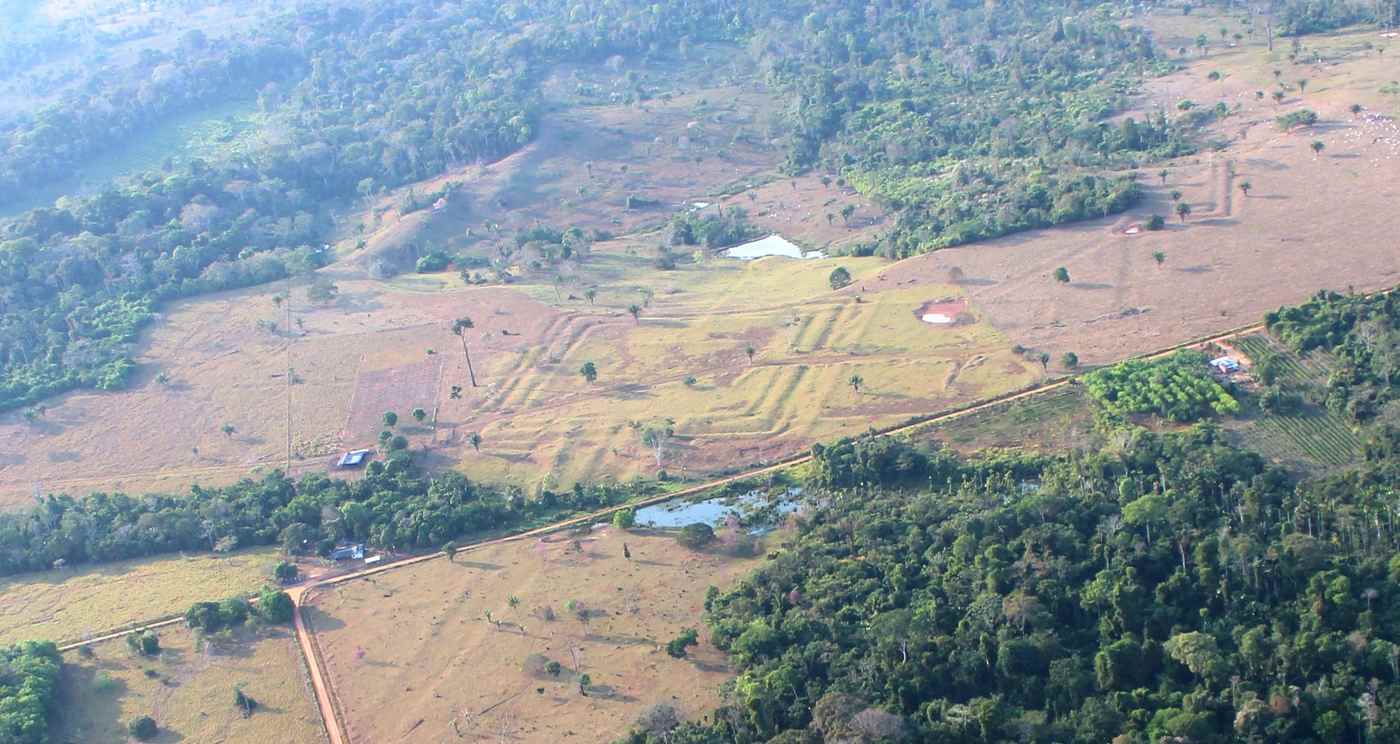
An ag-tech startup is spreading basalt rock dust on farmers’ fields as both fertilizer and an ingenious way to not only capture carbon, but remove it from the global carbon cycle forever.
At its maximum output, 3 tons of rock dust can capture 1 ton of CO2, a return on investment that if done at scale has an almost unlimited ceiling of carbon removal.
The business model is based on a mutually-beneficial exchange: the farmer’s fields are enriched with iron, phosphorus, magnesium, and calcium, boosting yields compared to agricultural limestone dust by 47% in some cases. The company, Lithos Carbon, sells the dust application as carbon credits to industries looking to offset their emissions, and gives a cut to the farmers.
“My approach to this is, if you can give farmers something that they will want and love and need, then they will do that,” Lithos CEO Mary Yap told Fast Company. “And then you will scale carbon capture almost as a side effect. One of my farmers has said, ‘I can’t eat carbon credits.’ Really, the crops at the end of the day are the thing that matters.”
The way the carbon is captured comes from one of the fundamental steps in the global carbon cycle. CO2 in the air is partially absorbed by rains, which deposit it into the soil and the oceans. When rains fall on a field treated with basalt rock dust from Lithos, the carbon is captured in the basalt, before the material is washed down rivers into the ocean.
Once in the ocean it’s taken up by a large variety of animals, often mollusks are other animals who use it to make their shells. Once they die, their shells fall to the ocean floor where the carbon remains, under most circumstances, permanently.
Basalt rock is the most common volcanic rock available on Earth and is produced by the millions of tons per annum in the mining industry, effectively guaranteeing a supply.
The primary challenge comes from the fact that every field will be different in how much dust is used and how it’s applied. Too much can released CO2 or be toxic to breathe in. For that they’ve developed intelligent software alongside Yale University.
At the moment Lithos is managing 14 farms, the most recent of which saw 1,500 tons of rust over 140 acres that should absorb 384 tons of CO2.
SHARE This Brilliant CO2 Capture Operation With Your Friends…
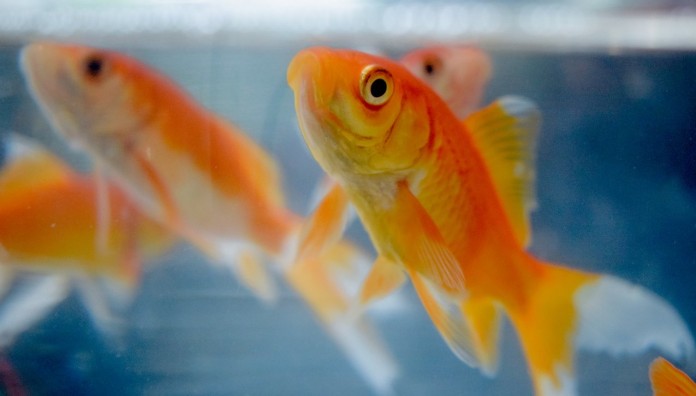
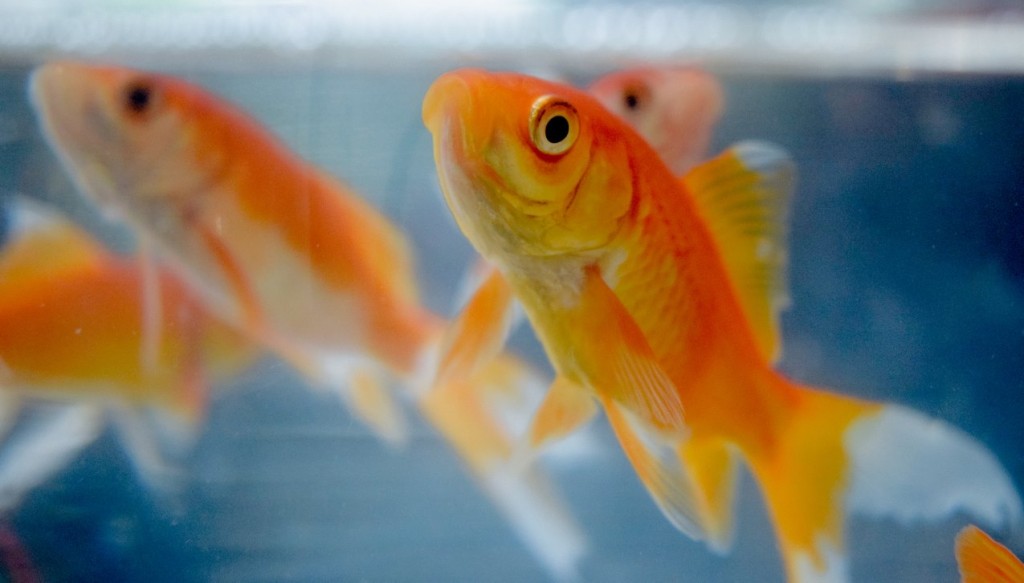
Quick, what animal has a terrible memory? Goldfish of course, everybody knows that.
Sticking to the nautical theme, this is actually as big a myth as the Lost City of Atlantis, and researchers have been proving for decades that goldfish not only have good memories, but are even among the smarter fish in the ocean.
Recently, Oxford University trained a school of goldfish to measure distances. Releasing a goldfish into a long thin thank with black and white vertical stripes, the fish learned and remembered how far to swim down the tank before turning around to the start point for a treat.
The first time the fish swam down the tank, a researcher immersed their hand in the water at a certain point, a point of distance that was remembered accurately by 8 of 9 fish on the second swim down the tank.
“We’ve known about the reasonably good memories of goldfish since the ’50s and ’60s,” Culum Brown, an expert in fish cognition at Macquarie University in Australia, told Live Science last year. “Despite what everybody thinks, they’re actually really intelligent.”
He says the perception of goldfish as dullards stems from pet owners putting them in empty glass bowls with nothing to interact with, hence the appearance of a short memory.
“What is baffling is that it’s pretty much the same wherever you go in the world. In some places, it’s 2 seconds, and in others, it’s 10—but it’s always short.”
In reality, goldfish have such impressive memories, they’re often used as a common model for studying memory and learning in fish, Brown said.
Live Science details that goldfish can navigate mazes, escape nets, and can be prompted to complete tasks with a variety of stimuli, including non-hazards like bubbles, or music. Brown says goldfish can complete these tasks after months of not doing them.
Some pet owners report their goldfish recognizing them from other people, something that is also supported by the science of fish-on-fish interactions.
It’s time for society to change its tune. The goldfish is a pretty smart cookie, and deserves a little more respect around here.
Quote of the Day: “Once you realize that you can do something, it would be difficult to live with yourself if you didn’t do it.” – James Baldwin
Photo by: Markus Spiske
With a new inspirational quote every day, atop the perfect photo—collected and archived on our Quotes page—why not bookmark GNN.org for a daily uplift?
The James Webb Space Telescope has been a heck of a software update. Just look at this iconic space feature, the Pillars of Creation.
The left side image was made by the Hubble telescope, while the right-side image was taken with Webb’s near-infrared camera (NIRCam), revealing so much more celestial activity.
Newly formed stars pop out in shades of pink, red, and crimson. Still-forming stars that remain hidden deep in the dusty pillars resemble molten lava, and fully formed blue and yellow stars sprinkle the scene.
Located in the Eagle Nebula, around 6,500 light years away, the Pillars of Creation have iconized space telescope imagery. The largest pillar is so big, it would take four light years to go from tip to tail. They are mostly made of cold hydrogen despite their fiery appearance.
Two images were made of the Pillars, the first in 1995, and the second in 2014. This new one illustrates just how big of an upgrade the infrared vision that Webb brings to bear can be when imaging dense areas of the cosmos.
The new stars lying outside of the dusty pillars are perhaps a few hundred thousand years old, and appear as bright red orbs typically with diffraction spikes. When knots with sufficient mass form within the pillars of gas and dust, they begin to collapse under their own gravity, slowly heat up, and eventually form new stars.
Although it may appear that near-infrared light has allowed Webb to “pierce through” the clouds to reveal great cosmic distances beyond the pillars, there are almost no galaxies in this view. Instead, a mix of translucent gas and dust known as the interstellar medium in the densest part of our Milky Way galaxy’s disk blocks our view to much of the deeper universe.
A closer look at the edges of some pillars reveal fiery red, wavy lines. These are ejections from stars that are still forming within the gas and dust.
Young stars periodically shoot out supersonic jets that collide with clouds of material, like these thick pillars. This sometimes also results in bow shocks, which can form wavy patterns like a boat does as it moves through water. The crimson glow comes from the energetic hydrogen molecules that result from jets and shocks.
The new image will update astronomer’s star-formation models.
WATCH a video tour of the image from the Webb-site…
The past quarter century witnessed an unprecedented decline in child poverty rates in the United States.
Today roughly 1 in 10 children live in families whose economic resources are considered below the poverty line, a 59% drop over the last 26 years.
In 1993, the beginning year of this decline, the numbers were more than one in four children, and the magnitude of this decline in child poverty is unequaled in the history of poverty measurement in the United States.
What led to this remarkable decline in child poverty? A report from a research group called Child Trends took a detailed look.
Lower unemployment rates and higher single mothers’ labor force participation can account for some of these results, but economic factors can’t account for it all.
Family configurations played a role as well, including a decrease in the amount of children in immigrant families, lower rates of teen pregnancy, and increases in the rates of children living in two-parent households.
However the highest increases were because of two social safety net programs, the Earned-Income Tax Credit, and the Supplemental Nutrition Assistance Program.
Delightfully, the report concludes its summary that between 1993 to 2019, poverty rates declined at similar rates for nearly every subgroup of children examined.
This included children in immigrant families and those in non-immigrant families; for Asian/Hawaiian/Pacific Islander children, Black children, Hispanic children, and White children; and for children living in two-parent families and children living with no or one parent.
Child Trends’ report is a reminder that no matter how gloomy the mainstream media wants the world to seem, society keeps improving every day.
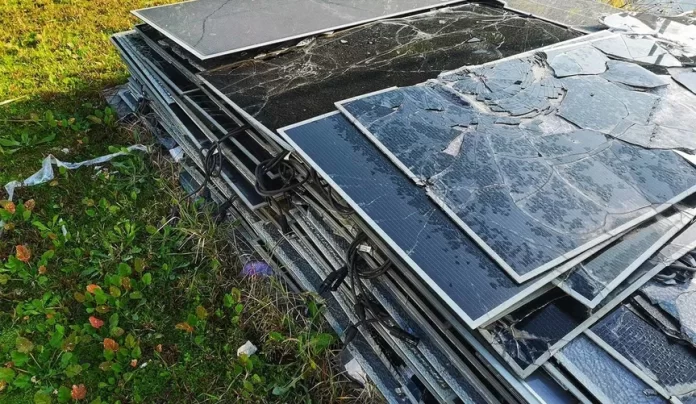
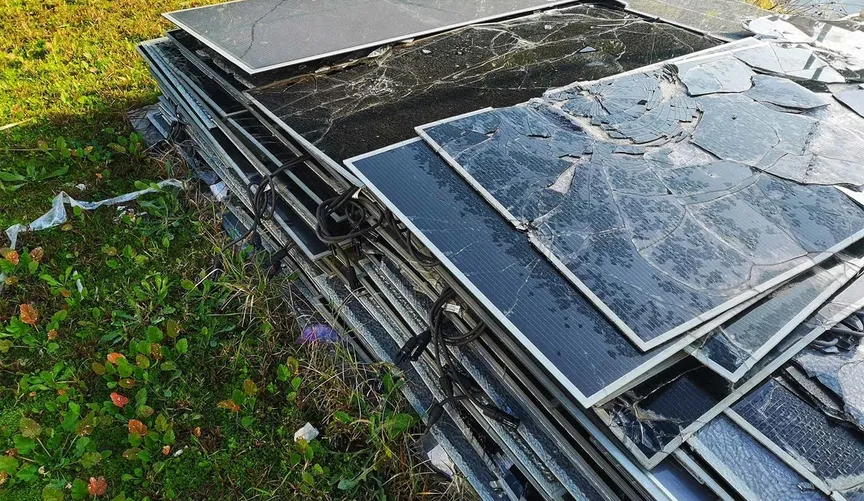
An American firm called Solar Cycle is transforming broken solar panels from landfill waste to valuable raw materials—perfect for making more solar panels.
Copper, aluminum, silver, and silicon are all recovered from panels at the end of their lifecycle, with the company’s new recycling method reducing them to just 2% of their material weight.
A 2016 report by the International Renewable Energy Agency found that likely by the mid 2030s, millions of metric tons of solar panels will be decommissioned, and if a method wasn’t found to economically recycle them, they would probably end up in the landfill.
Some Australian scientists however found a method of electrostatically separating waste streams from solar panels fed into large machine-grade shredders. By removing the aluminum frame, and then shredding the solar cells, the process is profitable and advantageous when shredding small amounts of solar arrays.
The process can chew up 220,000 pounds (1,000 tonnes) of solar panels a year, the rough equivalent to 50,000 panels a year, says lead author Dr. Pablo Dias.
“This is something someone can pick up elsewhere, it doesn’t use any chemicals, it doesn’t emit any hazardous pollution. It produces dust from crushing the panels, but you have dust collectors there,” Dias told the Guardian.
Dias has recently gone to work to apply his technology on behalf of Solar Cycle, who have attracted investment from all over the solar market, like Sun Power, Solar City, and Closed Loop Partners.
“For solar to truly scale to its full potential, we need to create renewable supply chains and a vibrant secondary market for used panels and recycled materials,” Solar Cycle states.
Solar Cycle is currently the only dedicated technology-based recycling company for the solar industry, and they recently closed a deal for end-of-life solar array recycling with their first utility-scale partner, Silicon Ranch, which operates 145 solar power facilities nationwide.
WATCH an interview with their co-founder and see the process in action…
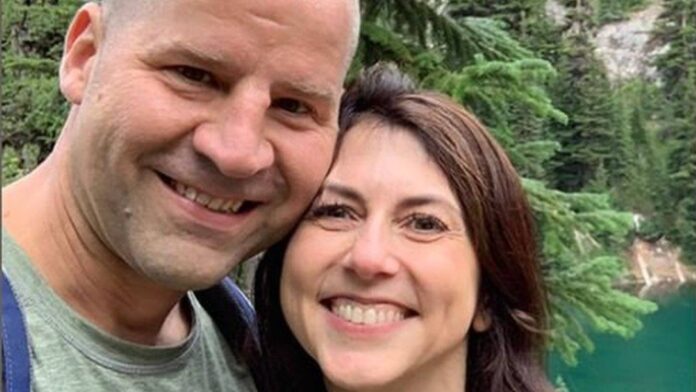
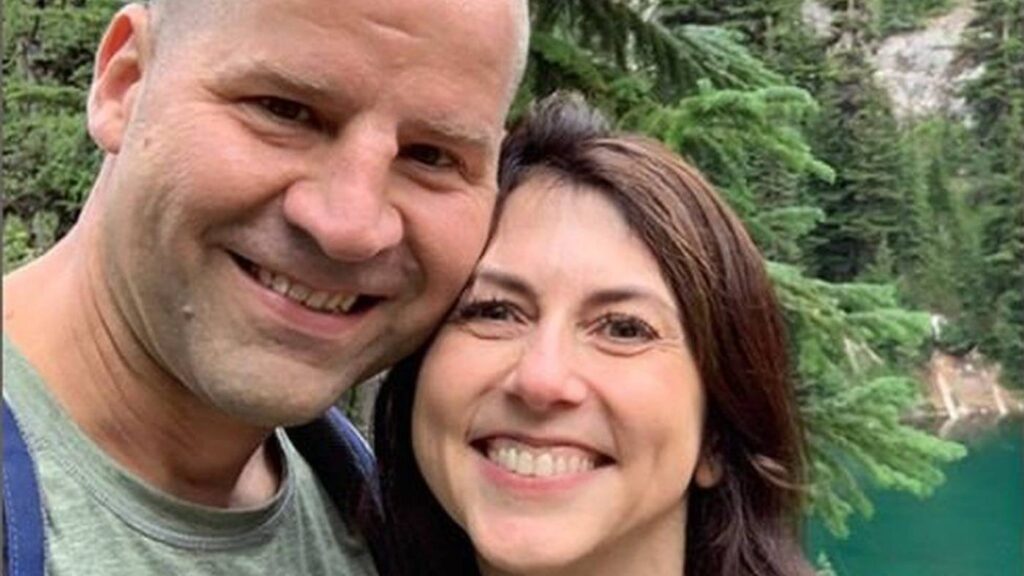
MacKenzie Scott and former husband Dan Jewett, Giving Pledge
MacKenzie Scott and Dan Jewett, Giving Pledge
Jeff Bezos’ former wife MacKenzie Scott has donated $15 million to provide hundreds of thousands of people with eyeglasses.
It’s believed to be the largest private donation towards assisting uncorrected blurry vision, and will help mainly low-income tea, coffee, cocoa and artisan workers in India, Bangladesh, Ghana, Kenya and Uganda.
While it might not be as glamorous as pledging 10 billion dollars to save the world from climate change, the difference a pair of eyeglasses makes is huge, personal, and immediate.
The donation was made to VisionSpring, a non-profit targeting this economic hinderance. It’s believed these workers could produce $1 billion annually in additional value for themselves and their businesses thanks to the increased productivity from being able to see well.
“The gift from Ms. Scott is an incredible acknowledgment of the power of a simple pair of eyeglasses to unlock earning, learning, safety and wellbeing for people vulnerable to poverty,” VisionSpring’s chief executive Ella Gudwin said.
“And, with this powerful endorsement of our work, we are embarking on a multi-year journey to put Livelihoods in Focus, addressing the massive vision care gap among agricultural and artisan workers in south Asia and sub-Saharan Africa.”
VisionSpring have highlighted that the benefits of a correct pair of eyeglasses are immediate, leading to reduced anxiety and depression and richer family lives from being able to see loved-ones’ faces and expressions more clearly.
Over time the better vision increases productivity and income, especially in fiddly tasks such as hand-pollinating a cocoa tree for example, or through better acquisition of knowledge at school and work.
The donation was made through Giving Pledge, an organization set up following several commitments from America’s richest to give away half their wealth to charity.
“In addition to whatever assets life has nurtured in me I have a disproportionate amount of money to share,” Scott has said. “My approach to philanthropy will continue to be thoughtful. It will take time and effort and care. But I won’t wait. And I will keep at it until the safe is empty.”
SHARE This Clear-Eyed Good News With Your Friends…
Quote of the Day: “Yesterday is history, tomorrow is a mystery, and today is a gift: That’s why they call it ‘the present’.” (This quote is variously attributed to ‘anonymous’, Eleanor Roosevelt, or Deepak Chopra.)
Photo by: Stefan Widua
With a new inspirational quote every day, atop the perfect photo—collected and archived on our Quotes page—why not bookmark GNN.org for a daily uplift?
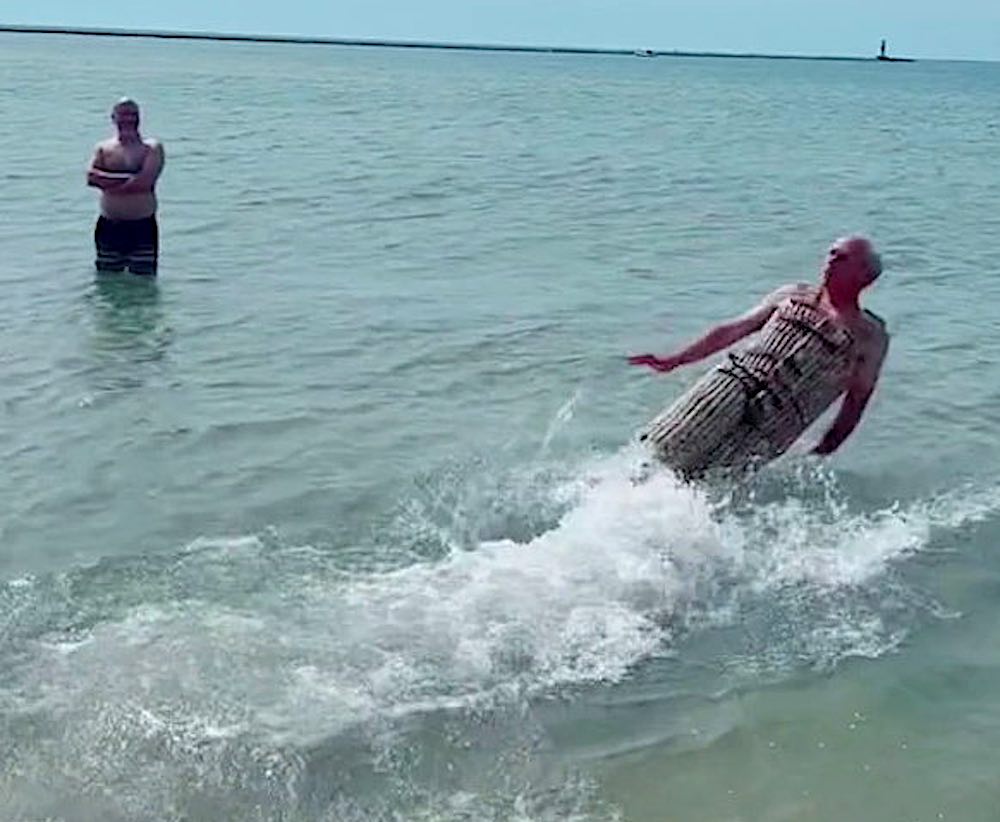
A man who spent three years building a floating suit made from 1,150 corks has finally debuted his creation.
Kerry Haulotte crafted the one-of-a-kind suit in total secrecy until it was ready for its maiden voyage where “it performed flawlessly.”
The 64-year-old said the suit was meant to be a silly gag for the family to have fun with during their boat outings, but the video of Kelly launching himself into Lake Michigan has gone viral—with 3 million views and 500,000 likes.
Friends and family were each trying on the cork suit so they could float in the water during a fun day out.
The suit was constructed by drilling 3,450 holes through hundreds of corks, and the finished product ended up weighing over 13 lbs.
The project was shrouded in secrecy due to Kerry’s anxiety about the project failing.
“Other than my wife Jamie, I kept the project a secret for the entire creation time, fearing that I may not finish the project or that it would be a massive failure,” he told SWNS news.
When it was finally revealed to family members, they were amazed by Kerry’s creation.
“This is the coolest thing I have ever seen!” exclaimed his stepdaughter Haley, who posted the video.
Kerry said it was an ‘on-again and off-again project’ that took 120 to 130 hours to overall.
“I admit I was afraid people would think I was absolutely nuts, and while that may be true, it turns out people really loved it. It has put a smile on the face of everyone observing, and all that have floated in it.
“Incidentally, it has been signed and dated by everyone who has floated in it,” he added.
What surprised 28-year-old Haley was how ‘kind’ people have been online.
“I was worried the online community would be rude, but everyone has been hyping up my stepdad, which I absolutely love to see. He is one of the most humble, creative, and interesting people I know.
“He deserves all the recognition, love, and support. I couldn’t have gotten a cooler stepdad.”
WATCH the maiden voyage…
Challenge Your Friends to Make a Cork Suit – By Sharing on Social Media…
It’s not uncommon for reunions to take place within a few years of the initial event—or maybe ten to twenty years after the first meeting. But a reunion after 75 years is truly astounding.
That’s exactly what took place recently between immigrants Lena and Yolanda, who were young girls when they first met during a 14-day ocean crossing.
In April of 1947, both the young girls were emigrating with their Italian families to the United States. They met each other aboard the Saturnia, a ship sailing toward America’s Ellis Island—and became instant friends.
In the last few years, Lena’s youngest son Steve had been researching their transatlantic voyage, and uncovered the actual ship’s manifest online.
Lena, now 85 years old, had always remembered the name of her sailing buddy, Yolanda. So, Steve diligently searched for the whereabouts of her friend, who had remained only a memory frozen in time.
Lena left her hometown of Pallagorio when she was ten years old. Nine-year-old Yolanda left her home in Belmonte—a 2.5 hour drive between them on today’s maps.
The Saturnia
Steve continued tracking down the lost friend who, if alive, would be 84.
Lo and behold, Yolanda was still thriving—and the two girls, now matured, had been living within 2.5 hours of each other their whole lives.
Steve found Yolanda’s phone number and left a message on her answering machine explaining that her childhood sailing buddy wanted to get in touch. Covid-19 and other obstacles delayed the reunion, but finally a time and date were set.
Yolanda‘s son Rich drove his mom across state lines from her home in Weirton, West Virginia, to Lena’s house in Meadville, Pennsylvania, where they greeted each other at the front door, embracing with tears of joy.
Lena and Yolanda
“They were celebrating a momentary friendship that has lasted a lifetime,” Lena’s son Tony told GNN.
As well as reminiscing about their few memories of that voyage on Saturnia—which included feelings of wonderment and trepidation of what the New World would be like—they also packed in as many stories of their unfolding lives as possible within the short afternoon lunch.
“Yolanda was the face and name that was synonymous with my transition from one life to another,” Lena said.
“For that reason alone, I could never forget her. Now that we’ve been reunited, I am even more grateful to call her my friend and to have had the chance to share our stories.”
It’s almost as if they were sisters separated at birth: They both uphold their families’ Italian traditions.
The 75-year reunion was so successful that they decided to meet again in a few months, hoping for more precious time together.
In these ‘silver’ ages, it’s not always easy finding a new friend—let alone an old one! Maybe the Ellis Island database at the National Archives can help you search for your ancestor’s voyage, and uncover a lost friend.
[SWNS] – Volcanoes were erupting on the moon a billion years more recently than previously thought, according to new research from the Institute of Geology and Geophysics of the Chinese Academy of Sciences.
Scientists had previously believed the moon became “geologically dead” three billion years ago. However, new lunar samples collected during China’s Chang’E-5 mission last year have revealed eruptions on its surface were still happening two billion years ago.
Since the moon is small and rocky, the heat fueling volcanic activity should have been lost far longer than two billion years ago.
Scientists previously believed that larger amounts of water or heat-producing elements inside the moon might have driven eruptions in the late stage of the moon’s life. However, the new findings throw this into doubt.
For the study, researchers led by the Institute’s Professor Chen Yi compared the new moon samples with those from the U.S. Apollo missions and the Soviet Luna missions.
The team conducted fictional crystallization and lunar melting simulations to compare the samples and found that the young Chang’E-5-source magma contained more calcium oxide and titanium dioxide than older Apollo magmas.
These younger samples contained more titanium and calcium, which melt more easily—thus, those components could have reduced the melting temperature of the moon’s mantle, in turn triggering the eruptions.
“We discovered that the Chang’E-5 magma was produced at similar depths but 80 degrees Celsius cooler than older Apollo magmas,” said the study’s first author Dr. Su Bin from the National University of Singapore.
“This is a fascinating result, indicating a significant contribution of late-stage lunar magma ocean cumulates to the Chang’E-5 volcanic formation.”
“It means the lunar mantle experienced a sustained, slow cooling of 80 degrees Celsius from some three billion years to two billion years ago.”
The team say their work, published in the journal Science Advances, is the first viable explanation for why volcanoes remained active on the moon for a billion years longer than previously believed.
SHARE the New Moon Discoveries With Space Lovers on Social Media…
Quote of the Day: “I will now live my life with the inventiveness of an engineer…(where) improvisation is the rule: No more beaten paths.” – Osman Lins
Photo by: David Pisnoy
With a new inspirational quote every day, atop the perfect photo—collected and archived on our Quotes page—why not bookmark GNN.org for a daily uplift?
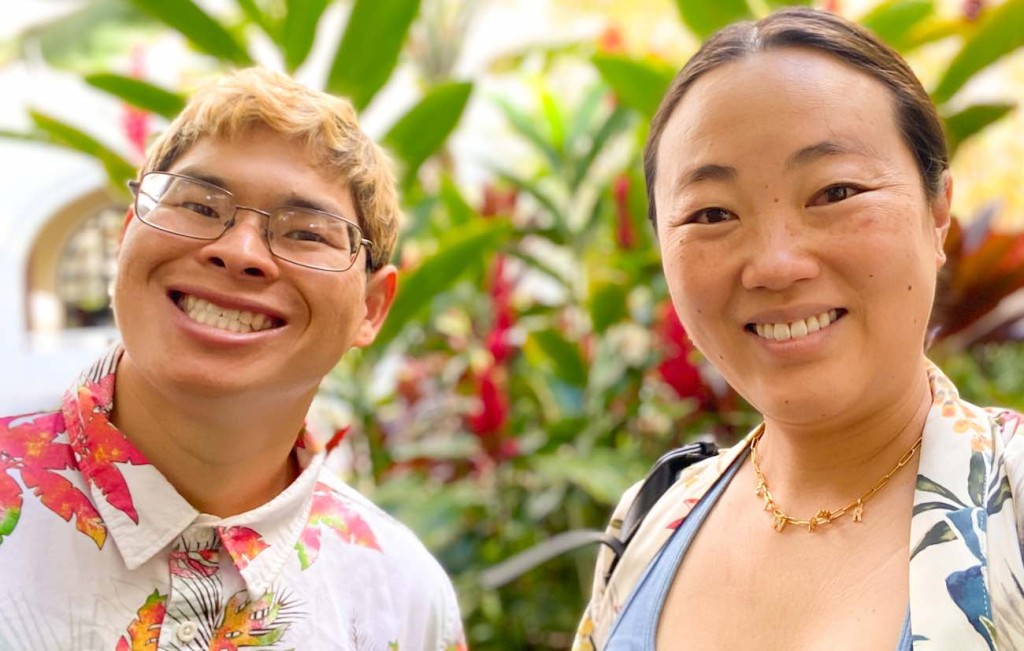
A woman built her brother a little house in her back garden and says it’s been a “game-changer” to give him the independence he needs.
Tiffany Chou moved back to Hawaii from New York City to look after her 33-year-old brother, who has autism, after hearing that he was unhappy in his residential home.
The siblings, who are both adopted, hadn’t lived together for 15 years, so Tiffany was apprehensive about what it would be like because Chris’s behavior could be “challenging”.
To better deal with that, the 36-year-old sister and her boyfriend decided to build Chris his own cottage in their back yard after moving to Maui.
“I didn’t really know what I was getting myself into when I moved back and took in Chris,” said the accessory designer. “He can be a bit noisy and overwhelming so we decided if he had his own independent space, just seconds from us, that would be ideal.”
There was a little structure in their garden, which they tore down to begin the construction—and she and her boyfriend managed to put the cottage together for just $15,000.
Chris got to chose the colors of his house and helped out initially with the build, which was completed in three months.
SWNS
In August, he moved in and now loves his new digs.
“He absolutely loves it—and the change has been incredible,” says Tiffany.
“He’ll do his dishes without prompting. It’s really helped him be more independent.”
They outfitted the home especially for his quirks, too.
“Chris is the thirstiest person you have ever met so he is constantly up in the night drinking water and needing the toilet, so we made sure his bathroom and a water tank was right by his bed.”
His kitchen has an induction cooktop to make sure it’s not left on and Tiffany prepares his food ahead of time, in daily portions, which he keeps in his fridge.
The home—which was built out of reclaimed materials, and fitted with second-hand furniture to keep costs low—has given Chris a newfound independence. (See the home in the video below.) And Tiffany and her boyfriend have their own space, which is essential, especially because they welcomed their new daughter, Luna, last month.
“He loves being an uncle and is great with Luna.”
“It’s been a game-changer for all of us—I don’t have to constantly prompt him to do stuff anymore.
Depo Market / SWNS
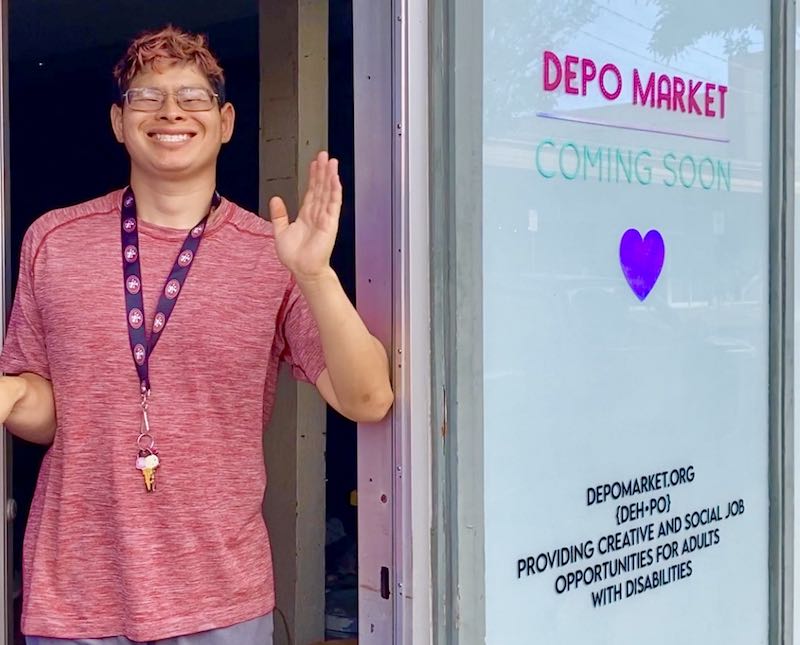
Meanwhile, Tiffany is set to make a big difference for the wider community. She’s set up a new employment service for adults with disabilities. Depo Market provides creative and social job opportunities to help adults like Chris to live more independently.
Watch a short video showing Chris in his new pad…
SHARE These Loving Siblings On Social Media to Inspire Others…
FREE WILL ASTROLOGY – Week of October 22, 2022
Copyright by Rob Brezsny, FreeWillAstrology.com
LIBRA (Sept. 23-Oct. 22):
Libra poet Wallace Stevens said that the great poems of heaven and hell have already been written, and now it is time to generate the great poems of earth. I’d love to invite all Libras, including non-writers, to apply that perspective in their own sphere. Just forget about heaven and hell for now. Turn your attention away from perfection and fantasylands and lofty heights. Disregard pathologies and muck and misery. Instead, explore and celebrate the precious mysteries of the world as it is. Be a connoisseur of the beauty and small miracles embedded in life’s little details. Find glory in the routine.
SCORPIO (Oct. 23-Nov. 21):
Here are two top Scorpio pastimes: 1. exploring and deploying your intense, fertile creativity; 2. spiraling gleefully down into deep dark voids in pursuit of deep dark riches. Sometimes those two hobbies dovetail quite well; you can satisfy both pursuits simultaneously. One of my favorite variations on this scenario is when the deep dark void you leap into turns out to actually be a lush wonderland that stimulates your intense, fertile creativity. According to my analysis of the astrological omens, that’s likely to happen soon.
SAGITTARIUS (Nov. 22-Dec. 21):
“I don’t want to be made pacified or made comfortable. I like stuff that gets your adrenaline going.” Sagittarian filmmaker Kathryn Bigelow said that. With the help of this attitude, she became the first woman ever to win an Academy Award for Best Director. Her film was The Hurt Locker, about American soldiers in Iraq who dispose of unexploded bombs while being harassed by enemies. Anyway, Bigelow’s approach is usually too hard-ass for me. I’m a sensitive Cancer the Crab, not a bold Sagittarius the Centaur like Bigelow and you. But I don’t want to assume you’re in the mood for her approach. If you are, though, the coming weeks will be a favorable time to deploy it. Some marvelous epiphanies and healing changes will be available if you forswear stuff that makes you pacified or comfortable.
CAPRICORN (Dec. 22-Jan. 19):
Author Jan Richardson tells us we can’t return home by taking the same route we used when we departed. This will be wise advice for you to keep in mind during the next nine months. I expect you will be attempting at least two kinds of homecomings. For best results, plan to travel by different routes than those that might seem natural and obvious. The most direct path—the successful passage—may be circuitous.
AQUARIUS (Jan. 20-Feb. 18):
In the coming days, maintain strict boundaries between yourself and anyone or anything that’s not healthy for you. Be ultra-discerning as you decide which influences you will allow to affect you and which you won’t. And rather than getting sour and tense as you do this, I recommend you proceed with wicked humor and sly irony. Here are three saucy self-protective statements you can use to ward off threats and remain inviolable. 1. “The current ambiance does not align sweetly with my vital soul energy; I must go track down some more harmonious karma.” 2. “This atmosphere is out of sync with my deep precious selfness; I am compelled to take my deep precious selfness elsewhere.” 3. “The undertones here are agitating my undercurrents; it behooves me to track down groovier overtones.”
PISCES (Feb. 19-March 20):
While asleep, have you ever dreamt of discovering new rooms in a house or other building you know well? I bet you will have at least one such dream soon. What does it mean? It suggests you want and need to get in touch with parts of yourself that have been dormant or unavailable. You may uncover evocative secrets about your past and present that had been unknown to you. You will learn about new resources you can access and provocative possibilities you had never imagined.
ARIES (March 21-April 19):
“We must be willing to let go of the life we planned so as to have the life that is waiting for us.” Aries mythologist Joseph Campbell said that, and now I’m passing it on to you just in time for the Sacred Surrender Phase of your astrological cycle. Make sage use of Campbell’s wisdom, Aries! You will generate good fortune for yourself as you work to release expectations that may be interfering with the arrival of new stories and adventures. Be brave, my dear, as you relinquish outdated attachments and shed defunct hopes.
TAURUS (April 20-May 20):
Plastic bags are now languishing in our soil or oceans, degrading slowly as they cause mayhem for animals and ecosystems. In alignment with current cosmic rhythms, I’m encouraging you to be extra discerning in your relationship with plastic bags—as well as with all other unproductive, impractical, wasteful things and people. In the coming weeks, you will thrive by focusing on what will serve you with high integrity for a long time.
GEMINI (May 21-June 20):
Achilleas Frangakis is a professor of electron microscopy. He studies the biochemistry of cells. In one of his research projects, he investigated how cells interact with the outside world. He didn’t learn much about that question, but as he experimented, he inadvertently uncovered fascinating new information about another subject: how cells interact with each other when they heal a wound. His “successful failure” was an example of what scientists sometimes do: They miss what they looked for, but find unexpected data and make serendipitous discoveries. I suspect you will experience comparable luck sometime soon, Gemini. Be alert for goodies you weren’t in quest of.
CANCER (June 21-July 22):
Renowned Brazilian novelist Osman Lins was born under the sign of Cancer the Crab. He wrote, “I will now live my life with the inventiveness of an engineer who drives his locomotive off the tracks. No more beaten paths: improvisation is the rule.” In the coming weeks, I am all in favor of you, my fellow Cancerian, being an inventive adventurer who improvises liberally and departs from well-worn routes. However, I don’t recommend you do the equivalent of running your train off the tracks. Let’s instead imagine you as piloting a four-wheel-drive, all-terrain vehicle. Go off-road to explore. Improvise enthusiastically as you reconnoiter the unknown. But do so with scrupulous attention to what’s healthy and inspiring.
LEO (July 23-Aug. 22):
In recent years, art historians have recovered numerous masterpieces that had been missing for years. They include a sculpture by Bernini, a sketch by Picasso, a drawing by Albrecht Dürer, and a painting by Titian. I’m a big fan of efforts like these: searching for and finding lost treasures. And I think you should make that a fun project in the coming weeks. Are there any beautiful creations that have been lost or forgotten? Useful resources that have been neglected? Wild truths that have been buried or underestimated? In accordance with astrological potentials, I hope you will explore such possibilities.
VIRGO (Aug. 23-Sept. 22):
The most important experience for you to seek in the coming months is to be seen and respected for who you really are. Who are the allies best able to give you that blessing? Make vigorous efforts to keep them close and treat them well. To inspire your mission, I offer you three quotes. 1. Franz Kafka said, “All the love in the world is useless if there is a total lack of understanding.” 2. Anais Nin wrote, “I don’t want worship. I want understanding.” 3. George Orwell: “Perhaps one did not want to be loved so much as to be understood.”
WANT MORE? Listen to Rob’s EXPANDED AUDIO HOROSCOPES, 4-5 minute meditations on the current state of your destiny — or subscribe to his unique daily text message service at: RealAstrology.com
A team of researchers from Japan studying the processes of hair growth has successfully generated hair follicles in cultures. Their in vitro experiments add to the understanding of hair follicle development, which could lead to useful applications for treating hair loss disorders.
Scientists grew the fully mature hair follicles with long shafts using a technique that involves creating skin organoids—tiny, simpler versions of an organ—in a Petri dish.
Due to a lack of understanding the mechanisms for hair follicle development, hair follicle morphogenesis has not been successfully reproduced in a laboratory culture dish, until now.
“Organoids were a promising tool to elucidate the mechanisms in hair follicle morphogenesis in vitro,” said Dr. Tatsuto Kageyama, of Yokohama National University in Japan
Using two types of embryonic cells, the team developed hair shafts with almost 100 percent efficiency. The organoids produced fully mature follicles about 3 mm in length (a little more than 1/100 of an inch) after 23 days of culture.
As growth occurred, the researchers monitored formation and pigmentation, shedding new light on chemicals involved in the process. For instance, adding a drug that boosted melanin, a natural pigment, improved the color.
By transplanting the organoids, they achieved regeneration with repeating hair cycles.
“The model could prove valuable for better understanding of hair follicle induction, for evaluating hair pigmentation and hair growth drugs, and for regenerating hair follicles,” said Kageyama, the lead author of a paper published in the journal Science Advances.
Results could also be relevant to other organ systems and contribute to the understanding of how physiological and pathological processes develop.
Looking ahead to future research, the team plans to optimize their organoid culture system using human cells.
“Our next step is to use cells from human origin, and apply for drug development and regenerative medicine,” said the paper’s co-author, Professor Junji Fukuda.
Future research could open the door to developing fresh treatments for hair loss disorders, such as male pattern baldness.
The first wild bison to be born in the UK in almost 6,000 years has been announced just months after a small herd was brought to Kent in England.
The Wilder Blean project near Canterbury only released the bison into the wild in July—and organizers got the surprise of a lifetime, because one of the them had turned out to be pregnant.
Weighing the size of a small car, an adult bison’s pregnancy is undetectable, which is a survival mechanism that deters them from being targeted by predators, so when the little female was born rangers were delighted.
“When the bison took their first steps into the wild just weeks ago, it was hard to imagine that anything could come close to the elation we felt in that moment. But here we are celebrating the arrival of a bison calf,” exclaimed Mark Habben, Director of Zoo Operations at the Wildwood Trust.
“We always hoped that the bison would breed, but it is fair to say we were not anticipating it quite so soon,” said bison ranger Tom Gibbs.
Her appearance means there are now four female bison in the woodland located in West Blean and Thornden Woods, a project that was funded by the People’s Postcode Lottery.
A bull is also due to be introduced in the next two months as part of the rewilding initiative to help combat the climate and biodiversity crises.
Bison act as ecosystem engineers, and through their natural behaviors they create light, space, and fertilizers that prompt wildlife to thrive.
Discovered on September 9, the birth was not announced immediately by Kent Wildlife Trust or the Wildwood Trust.
Rangers say she has developed well, playing in the rain and copying the other bisons’ iconic dust-bathing behavior.
“These animals are wild, so we want to remain as hands-off as possible, but their welfare is at the absolute heart of what we do,” said Gibbs, who had already created a care plan for any calves to ensure their needs would be met.
“She is being observed by experts and we are constantly monitoring the whole herd to ensure their wellbeing.”
They are also preparing for the arrival of a bull from Germany within the next few months and will be carefully planning how that introduction is made, to ensure they bond well and act as a herd should.
“This is now an incredibly important time for this family of eco-system engineers and we understand that people will want to catch a glimpse of this new addition, however we ask people to consider the impact they may have and ask that they are given the space and time they need to bond,” added Gibbs.
The Wilder Blean Project / SWNS
While remains of European Bison have not been discovered in the UK, they have been found under the North Sea. The site, known as Doggerland, was once a land bridge connecting the UK and the continent. A close relative of the European bison, bison schoetensacki, did however live in the UK around 6,000 years ago before becoming globally extinct.
Like their American cousins, by the early 1900s European Bison were also on the brink of extinction and could only be found in two protected areas—in the former Soviet Union and in Poland.
Fortunately, thanks to conservation efforts, there are now around 5,000 animals on the continent, with around 4,000 living in wild or semi-wild places.
This herd of bison with its new baby is part of a million-dollar ‘rewilding’ program led by the Wildwood Trust and Kent Wildlife Trust.
“European Bison are an incredible species,” said the Trust’s director, Paul Hadway. “To think that their numbers now swell beyond 9,000 is a true testament to the commitment and dedication of international breeding efforts.”
Natural bison behaviors—grazing, dust bathing, eating bark, and felling trees—enable other species to thrive.
It is hoped the presence of bison at the 120-acre Blean site, alongside Exmoor ponies and Iron-Age pigs, will transform the woods into a lush, thriving, biodiverse environment once more and allow less hands-on management.
“When the herd arrived they were calm and settled quickly, a sign that the transportation process had not put them under significant duress,” said Habben.
CREATE a Stampede For This Wonderful News By Sharing on Social Media…
Quote of the Day: “A smile is happiness you’ll find right under your nose.” – Tom Wilson
Photo by: Toa Heftiba
With a new inspirational quote every day, atop the perfect photo—collected and archived on our Quotes page—why not bookmark GNN.org for a daily uplift?