American criminal records are filled with non-violent cannabis possession charges, but in New York, that could soon go from being an employment hinderance to a lucrative employment opportunity.
New Yorkers with past cannabis conviction charges will be the first to have the opportunity to obtain a Conditional Adult-Use Retail Dispensary licenses.
Once the center of “stop and frisk,” the 2021 legalization of cannabis for adult use in the state of New York was underpinned by a commitment to benefit those most harmed by war on drug policies.
The Marijuana Regulation and Taxation Act looked at other states’ similar bills and found that due to excessive regulations, the largest cannabis industry leaders cobbled up most of the opportunities.
But because the war on drugs for so long has terrorized black and brown minority individuals, it only seemed right to let them be the first ones to receive an economic boon from the newly-legalized substance.
“We think that leaning into folks who [have past convictions], but have that business experience means that we’re going to find a bunch of applicants who have gone through some significant challenges to still open and operate successful businesses,” Office of Cannabis Management executive director Chris Alexander said in an interview, according to Politico.
Dispensary licenses are available now through September 26th to those with prior cannabis-related convictions, or who have a family member with the same.
Applicants must have some kind of business experience and some kind of asset, for example a car registered in New York state or a rental contract, tying them to the state.
“Successful applicants will receive aid from a $200 million Social Equity Cannabis Investment Fund, which was created to help finance the leasing and equipping of up to 150 dispensaries across the state,” reports Politico.
Turn Over This New Leaf In New York Justice On Social Media…
State utilities in California are preparing to launch a pilot project to cover California’s irrigation canals in solar panels.
The decision was influenced by a landmark 2021 research paper, where scientists at Univ. of California Santa Cruz crunched the numbers and figured that the panels would save 63.5 billion gallons of water from evaporation annually by shading the flowing water.
Turlock Irrigation District Water & Power is preparing two pilot canal projects: a 500-foot (152-meter) curved canal section near the town of Hickman, and a second mile-long (1.6-km long) straightaway in nearby Ceres.
GNN reported last year that the UC Santa Cruz investigation found that for every megawatt of solar energy generated during Turlock’s 290 days of average sunshine, the pairing of panels over canals could replace 15-20 diesel generators used to pump water along the canals.
Called Project Nexus, the work is slated to begin this October with funding of $20 million from the state’s coffers.
Along with preventing evaporation, reducing the land clearance needed for solar farms, and boosting green energy output, the canal-mounted panels have the added benefit of longer functional lifespans, as the water underneath keeps the panels’ undersides cooler.
This idea actually began in the Indian state of Gujarat in 2014, when a pilot project covering 750 meters of canal space led to the creation of an entire canal-topped solar plant in Vadodara District, and another one totaling 100 megawatts off the Narmada River.
Researchers in India found that the water running beneath the panels cooled them, too, preventing overheating and resulting in an average efficiency increase of between 2-5%.
There are around 4,000 miles of canals in California, which could produce up to 13 gigawatts of power which would cover around 750,000 homes, or around half of Los Angeles.
“It’s really exciting to test our hypothesis and the paper we published. We’ll have an opportunity to really understand if those benefits pencil out in the real world,” Brandi McKuin, one of the lead investigators at UC Santa Cruz, told Reuters.
(Note: GNN has no affiliation with any ads displayed in the following video)
Create A FLOW Of Good News Out To Your People On Social Media…
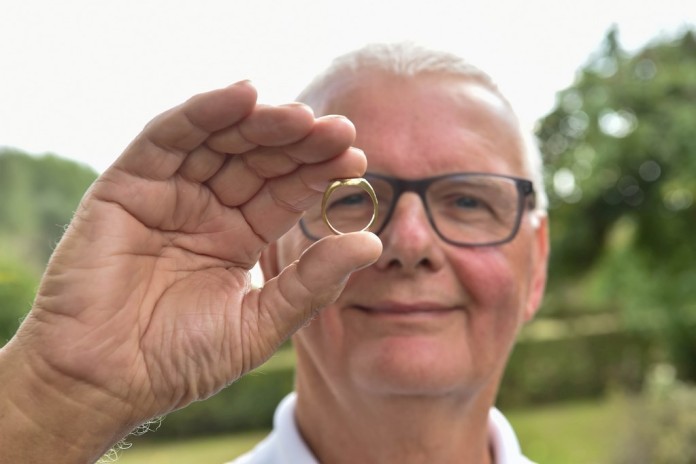
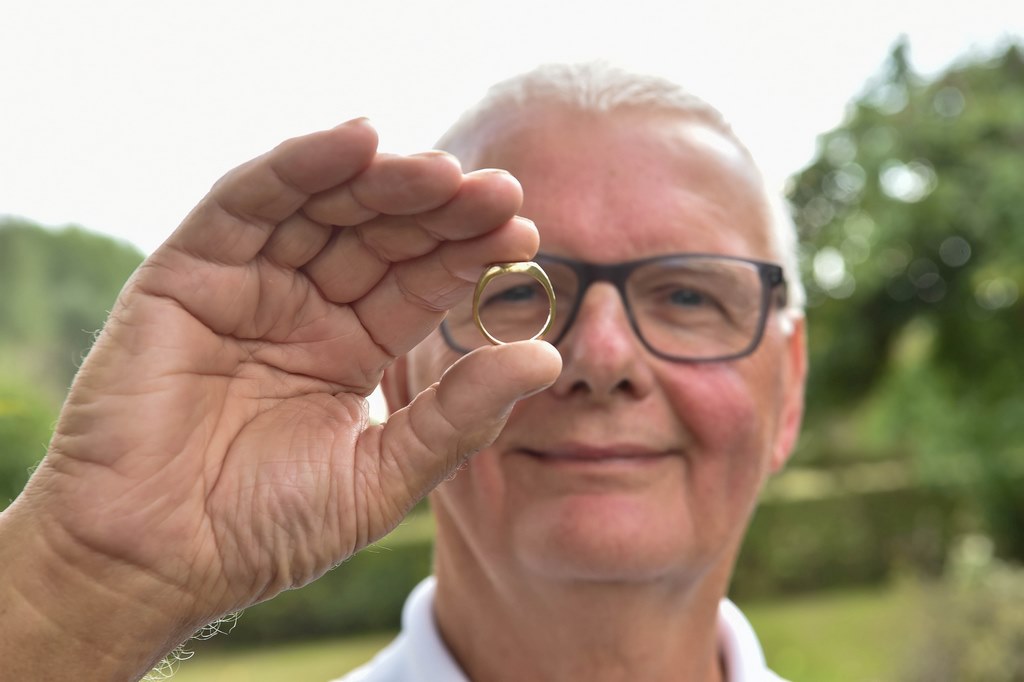
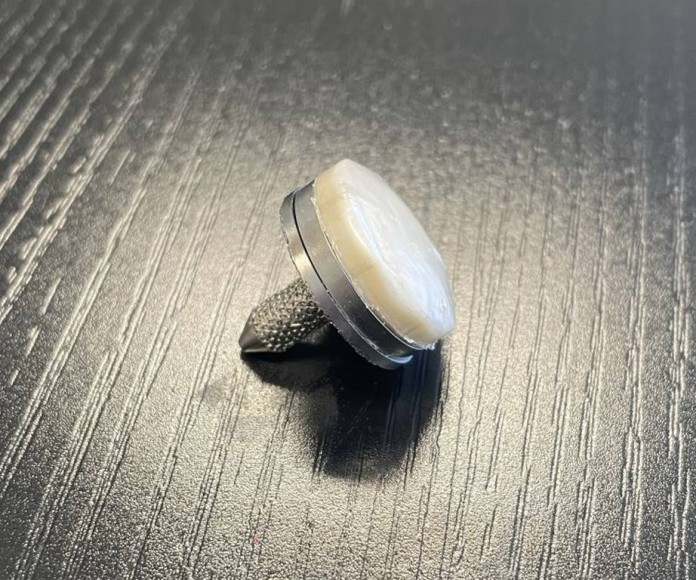
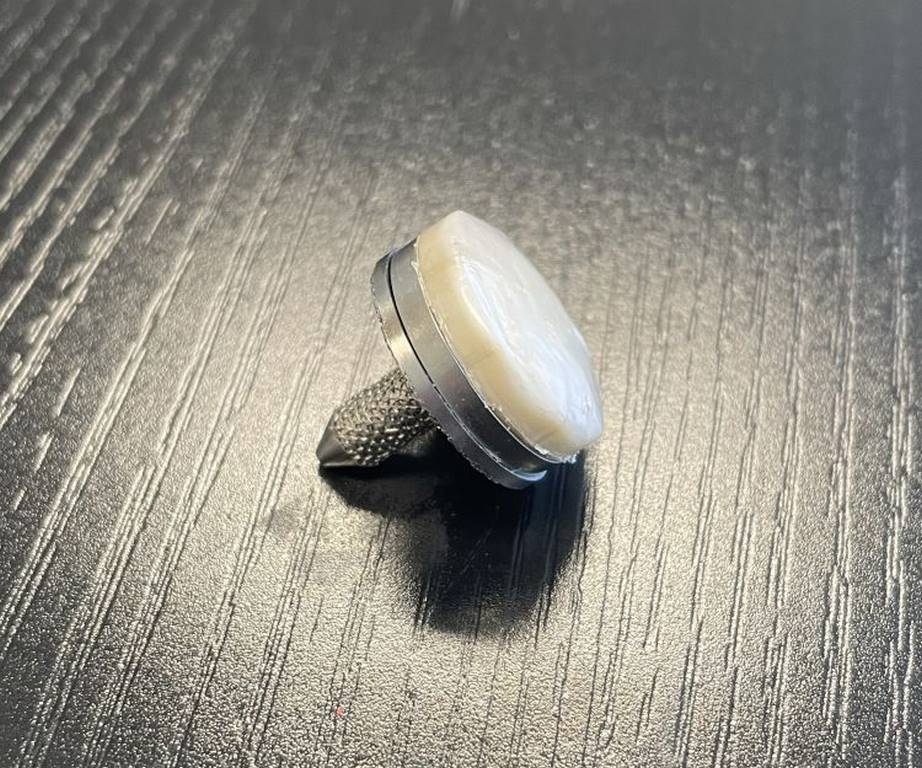
A man has been reunited with a ring he lost while picking fruit over 50 years ago.
It was gifted by his late mother for his 21st birthday, but slipped off his finger as he picked strawberries in 1968.
Retired train engineer Dave Radley spent several distraught hours trying to locate the ring among the rows of bushes.
He was picking strawberries in the field behind a friend’s father’s house to sell that morning when he suddenly realized the ring was no longer on his finger. He had received the 9 carat gold ring as a present just weeks before, but the fit wasn’t quite right.
In a stroke of luck, last month a metal detectorist who received a tip from the land-owner about the lost ring made the discovery.
54 years after the signet ring ran off, Dave got a call from his friend’s brother Peter who still owns the land. A metal detectorist working for Peter asked if he could detect in the very same field where the item had been lost, to which Peter agreed and informed him about the missing ring.
It was found seven inches deep in the ground with only one slight scratch ready to be polished out, and Dave went to collect it from Leicestershire later that week.
“The ring might not have changed but its owner has—so it’s a fairly tight fit,” Radley said. “I’ve had to have it changed slightly as I can just about get it on. But none of that matters because I’m so grateful to have it back”.
“My family wasn’t too well off in those days and I spent hours searching for it on the rows we had been. My mother wasn’t upset with me, just more upset because of how distraught I was.”
“When I got the call from Peter I couldn’t quite believe it—the joy I felt in that moment is indescribable.”
Radley said that a jeweler near to his home priced it at £700, which he said demonstrated just how much his mom had gone out of her way to surprise him.
REVEL In Dave’s Joy By Sharing This Story On Social Media…
Quote of the Day: “Give me strength to defeat my greatest enemy, the doubts within myself.” – P.C. Cast
Photo by: Elyas Pasban (cropped)
With a new inspirational quote every day, atop the perfect photo—collected and archived on our Quotes page—why not bookmark GNN.org for a daily uplift?
A discovery which paleontologists are calling the find of a lifetime was recently turned up by a school teacher in Canada.
It could be 300 million years old, and is probably at least a prehistoric species new to science, and at most a “once-in-100-years” find that could go so far as to rewrite the fossil record.
Lisa Cormier was taking a walk down on Cape Egmont in southwest Prince Edward Island (PEI) when she found what looked like a skeleton.
There were the head, ribs, and spine; all pressed into the stone like a fossil. Taking pictures and sending them to her mother sent off a chain reaction that had geologists and paleontologists racing to the cape.
It was a fossil, and John Calder who is an expert in prehistoric PEI, told CBC news it was “extremely rare.”
“A fossil like this comes up every 50 years or 100 years,” he said. “I mean there’s no real frequency, but it’s rare. And this could be a one-of-a-kind fossil in the tree of life … of evolution of amphibians, to reptiles, to mammals to us.”
Calder believes it’s an early reptile from after their class broke off from amphibians during the Carboniferous period, around 300 million years ago. Few specimens exist from this era, and so getting a bead on where it’s located in the evolution of reptiles, or even its place in absolute time, could be very tricky.
The scientist also advised beachcombers to be on the lookout, as not only are prehistoric finds becoming more common, but there are a lot more beachcombers that there are paleontologists.
“To think that I found something that might be 300 million years old, it’s incredible,” Cormier said. “I think it’s gonna be a one time [thing], but I’ll continue my walks and I’m going to continue to look for sea glass and maybe I’ll find something else.”
REWRITE The Bad News With This Good Discovery From Canada…
When a father and son’s fishing boat hit rocks out from Boston Harbor, their lives were saved in part thanks to their desire for some liquid libations on board.
While the headline sounds like a barrel of laughs, 15 minutes of frigid Atlantic waters almost caused the pair to enter hypothermia.
Two officers from the Boston Harbor police unit were on patrol when they got the call about a sinking ship.
When they arrived on the scene, all that could be spotted bobbing about was a turquoise cooler, on which were dangling a pair of life-preservers.
The whole rescue was caught on the officers’ body cameras, during which the son requests that the police help his father up before himself.
Again, what appears in the video to be a simple act of pulling oneself onto a boat belies the fact that the simple act of recruiting muscle fibers becomes extremely difficult since cold transmitted through water immersion chills the body 25x faster than air.
Both men are no worse for wear for their time at sea, and the cooler was presumably saved and set aside for the next time they cast off.
WATCH Inside Edition go through the body cam footage…
SHARE This Remarkable Rescue Story And The Heroic Cooler’s Actions…
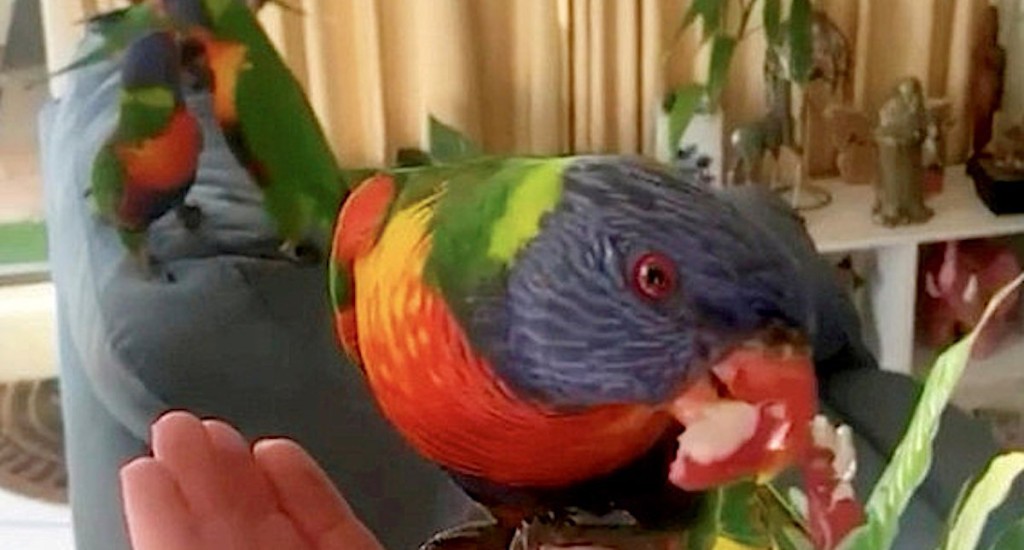
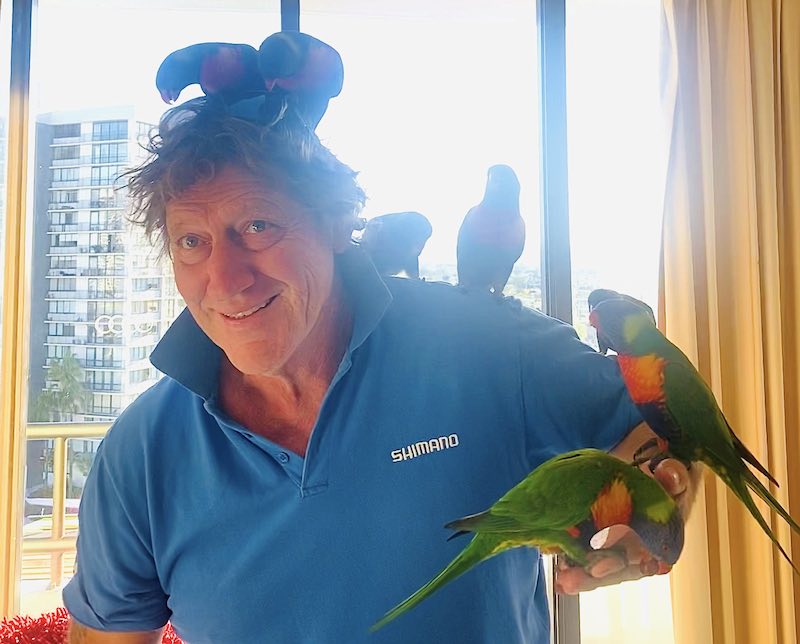
Video grab of the flock of wild lorikeet birds inside Georgina Brough and Christian Allen's apartment in Gold Coast, Australia See SWNS story SWFSlorikeet. This Aussie couple gets daily visits from a group of wild lorikeet birds who broke in 1 year ago and now want to hang out in their apartment every day. Georgina Brough and Christian Allen, both 21, had their first visit from the birds in early 2021 when they broke in through their balcony door hoping to score some lunch.The birds lived in trees opposite their apartment and the couple often spotted them watching ‘hopefully’ as they would eat lunch outside.After leaving their door open one summer morning, the birds saw their opportunity and broke in - beginning their daily visits.
By Georgina Brough and Christian Allen via SWNS
Georgina Brough and Christian Allen get daily visits from a group of wild lorikeets—birds that broke in a year ago and now want to hang out constantly.
The new feathered friends first visited the young couple in early 2021.
They flew in through their balcony door hoping to score some lunch at their apartment in Australia.
The birds lived in trees opposite their patio table and the couple often saw them eyeing ‘hopefully’ whenever they would eat lunch—especially grapes—outside.
After leaving their door open one summer morning, the birds saw their opportunity and broke in, which began their daily visits.
Georgina, who is a bartender, and Christian, who is a laborer, said the lorikeets will watch TV with them, sit on their laundry, hang out on their couches—and would probably explore the apartment all day if they were allowed.
“They are super friendly birds,” said Georgina. “We can touch them and hold them, so naturally we love them.”
By Georgina Brough and Christian Allen via SWNS
The couple, who are both 21-years-old, described one downside of their visitors: They are ‘super loud’ and frequently wake up the couple, begging for more grapes.
Quote of the Day: “Sometimes your only available transportation is a leap of faith.” – Margaret Shepard
Photo by: Stuart Anthony
With a new inspirational quote every day, atop the perfect photo—collected and archived on our Quotes page—why not bookmark GNN.org for a daily uplift?
A company is seeking to target the worst aspects of wasteful fast fashion and demonstrate and economically-profitable circular economy with that most standard of garments—the t-shirt.
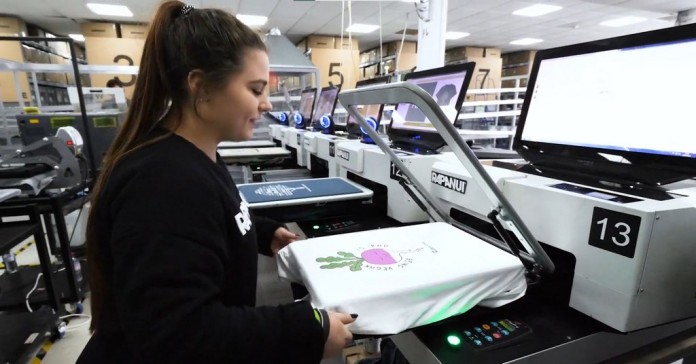
Utilizing the second-largest source of cotton on Earth, Teemill’s business model is making mass-produced t-shirts from mass-produced t-shirts.
These days, if you’re having a corporate event, a good idea is to print 100 cotton t-shirts to commemorate it. Going on tour and looking to drum up some merchandise money for your band? Print 500 cotton t-shirts to sell at the merch booth.
Trying to keep the World Wildlife Fund’s profits going? Print 10,000 cotton t-shirts to send to donors.
In the world of fast fashion, the ubiquity of the casual t-shirt with something printed on it seems immeasurable in scope.
That’s where Teemill comes in. Claiming a truckload of clothes is dumped in a landfill or burned around the world every second, they’re trying to get a handle on this waste flow by cutting off the t-shirt spigot.
Every t-shirt bought from Teemill can be sent back, ground up into cotton fibers, sterilized and remade into new t-shirts in a pair of carbon-neutral factories powered by renewable energy.
“We get told constantly as consumers ‘change what you buy, make better choices, educate yourself, do your bit.'” explains Teemill Co-founder Mart Drake-Knight in a TedX about his experience entering into sustainable fashion.
“So when we tried to do our bit and buy products made from organic materials… or products that are designed in such a way that they don’t eventually end up in a landfill, it’s like they don’t exist. Actually the more we looked, the more we learned that almost everything in the world seems to be made in the exact same way.”
– Teemill
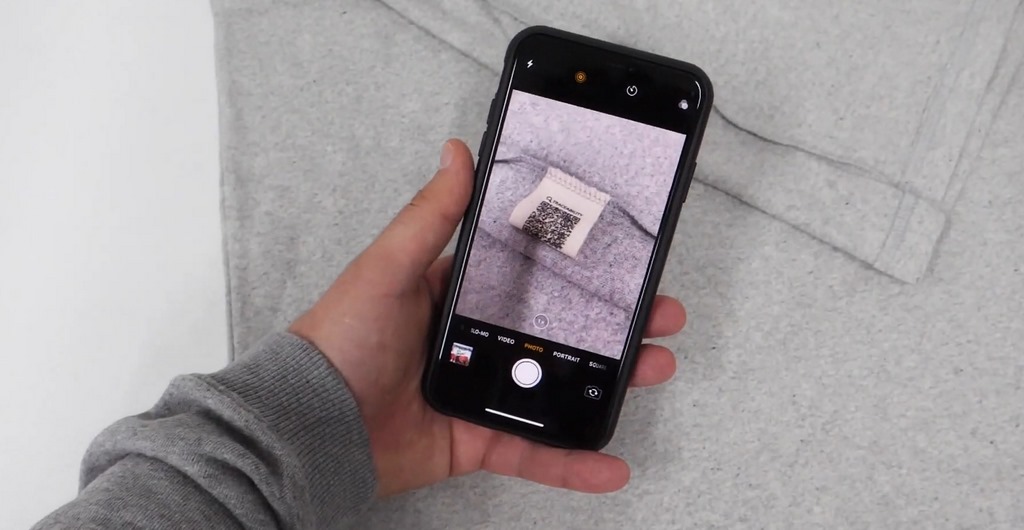
The torso tag on every shirt comes with a QR code that when sent back to Teemill is scanned and worth a little rebate. In this way the consumer also becomes the supplier, and where Teemill would have to buy new cotton, they instead spend that money on shipping to retrieve old or unwanted Teemill tees from previous buyers, and on a little incentive for them to do so.
Sustainable fashion is not catching up to the waste from its more wasteful industry cousins, and selling sustainably grown cotton, or t-shirts made from recycled water bottles, when the price point is over $25 a shirt, is just not going to catch on.
Taking advantage of economies of scale by selling in bulk to people who need hundreds of t-shirts, and lower manufacturing costs from opening a factory in India, Teemill is adapting the aspects that made fast fashion so wasteful and using them to their advantage.
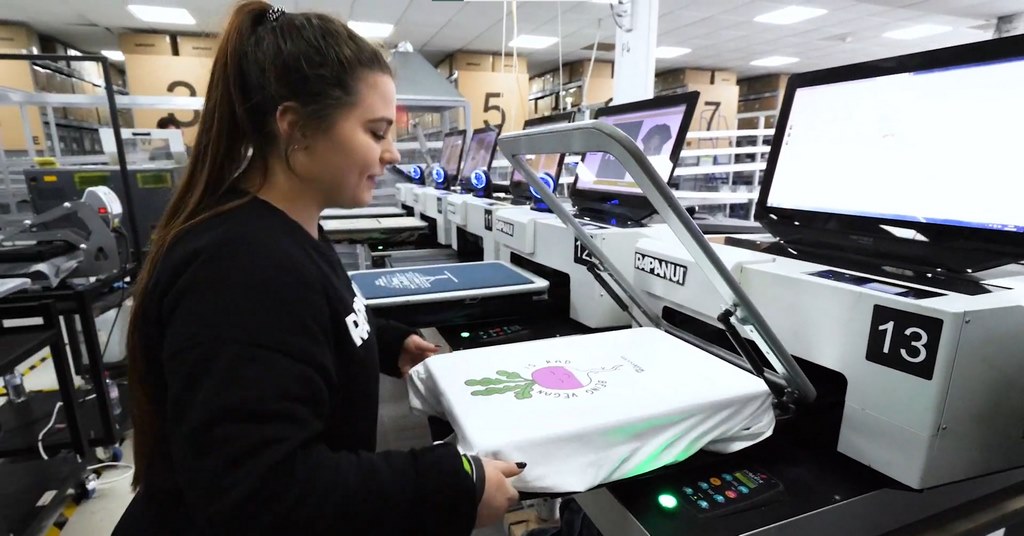
To these they pair smart tech innovations like machines that print t-shirts with custom designs in real-time along with orders to reduce the amount of warehouse inventory needed, and cloud platforms that allow small designers to start their own fashion brands linked to the Teemill circular model.
WATCH the start to finishing T-milling process…
LOOP This News Out On Social Media And “Do Your Bit”…
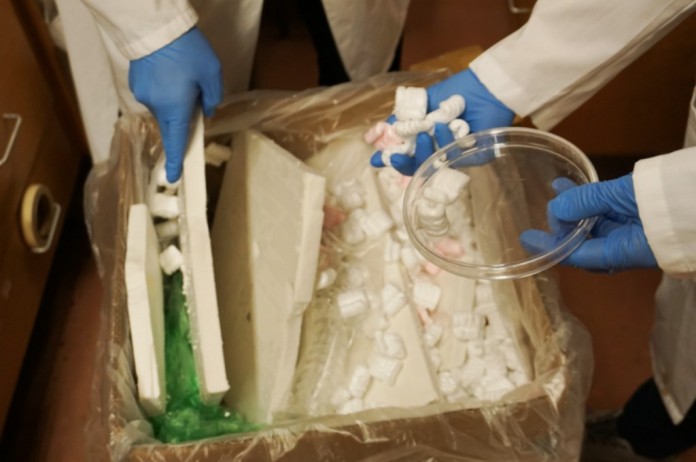
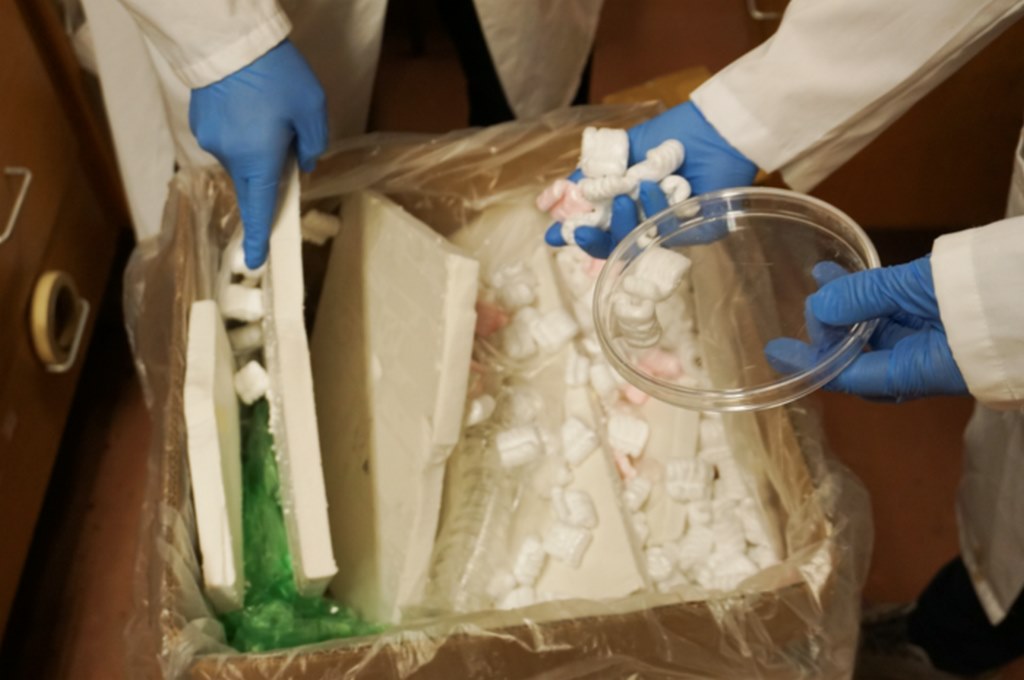
Polystyrene (Styrofoam) has been turned into a valuable chemical found in seaweed by exposing it to sunlight.
Broken down, it produces DPM (diphenylmethane,) a molecule in the aquatic plant used in drug development, polymer manufacturing, and even fragrances and other cosmetics.
Polystyrene is the indestructible plastic is found in everything from takeaway containers to TV packaging.
It’s rarely recycled due to costly and complex processes required, as well as the difficulty of collecting it.
Now scientists have broken it down using a simple and inexpensive technique that combines UV (ultraviolet) rays and a chemical catalyst.
Market incentive is baked into the process, since the market price for DPM is 10-times higher than other materials currently made from polystyrene. Other valuable chemicals produced included benzophenone, used for clear coatings in the printing and film industry, and 4-oxo-4-phenyl-butyric acid.
“Many municipal recycling facilities instruct residents not to put polystyrene in their home recycling bins,” explains lead author Professor Greg Liu, of Virginia Tech. “Currently, the main method for recycling polystyrene yields a product that is often too low-quality to make the process economically viable.”
“In other words, if a recycling plant tries to recycle polystyrene on a large scale, it will either need a financial boost, such as a government subsidy, or the operation risks running out of money and shutting down.”
The VA Tech team published a study in PNAS that demonstrated their technology, but also included economic viability findings through consulting business experts from Santa Clara University in California and Dongbei University in China.
Around 1.15 billion polystyrene food and drink containers were sold in England in 2018, according to the Department for Environment, Food and Rural Affairs.
Unlike most plastics, polystyrene can remain intact for over 1,000 years, and its presence in the environment has been linked to diseases, including some cancers.
However when exposed to UV light it weakens. The researchers showed sunlight degrades polystyrene chemically. While this brings up the possibility of recycling methods, it also means that floating in the oceans, it will break apart into microplastics, causing a different sort of damage.
Sales of single-use polystyrene food containers have been banned in Scotland for just this reason.
“Many of us are comfortable tossing a metal can or a glass jar into the recycling bin without a second thought,” said Professor Liu. “Not every recycling plant is equipped to handle every type of plastic. That’s because the chemistry and structure of plastic materials are diverse, and each type requires a specific recycling procedure.”
“We at Virginia Tech can contribute a small piece to the big puzzle and offer solutions to positively impact the world.”
BREAKDOWN This Good News To Your Friends On Social Media
Neural Sleeve by Cionic and Fuseproject - Released
Neural Sleeve by Cionic and Fuseproject – Released
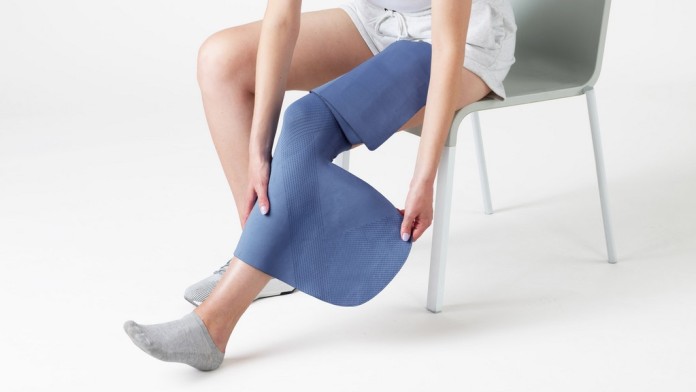
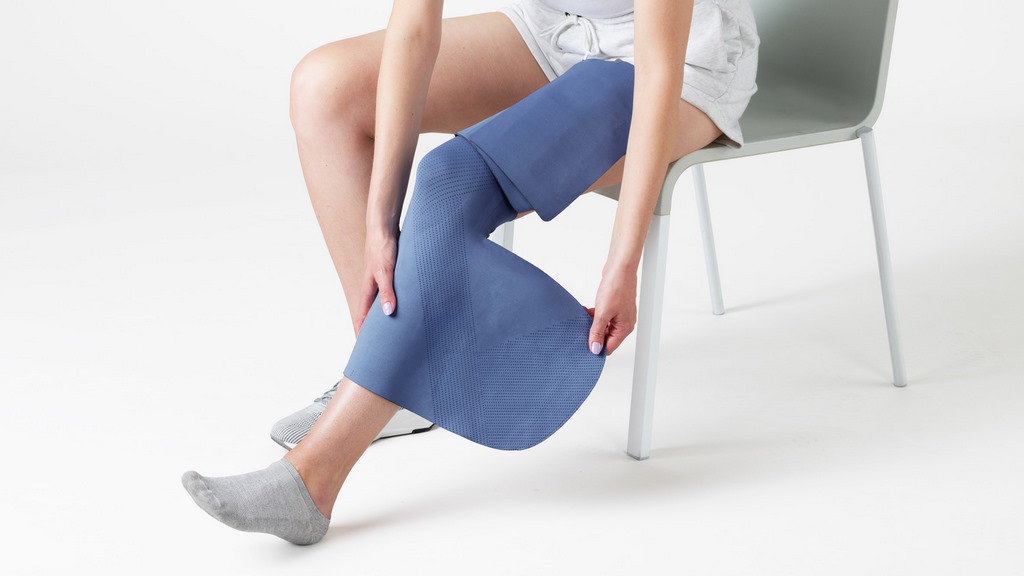
A Velcro sleeve fastened around the leg has been designed with electrodes that help stimulate the muscles of those who experience difficulty getting around due to nervous system conditions.
It uses artificial intelligence to detect walking gait, and sends that information to the electrodes to ensure each leg is moving as much in sync as possible.
Furthermore, this device will be ready for delivery to those who have experienced a stroke, or have multiple sclerosis or cerebral palsy, in 2023. All testing and approval has already been concluded.
Called the Neural Sleeve, it was developed by a company that makes bionic wearables called Cionic.
“Think of it as a way to sort of remote control your own leg,” said Yves Béhar, the brains behind a design studio Fuseproject, which worked with Cionic to make the technology usable and scalable.
“What the algorithms do and what the electrodes do is they deliver that right sequence. And when the brain has relearned and re-acquired the knowledge of how to fire those muscles, the sleeve is not needed anymore,” Béhar told Dezeen.
The lightweight fabric is fastened around the leg with Velcro, and comes in different colors and patterns so wearers don’t need to look at it like a medical device, but more like a knee-brace or similar non-tech wearable.
An app on the phone can also quickly change the mode in which the electrodes are firing to suit different actions, such as sitting down or cycling.
When testing of the Neural Sleeve began, Cionic started with 50 prototypes, and initially targeted a condition known as foot drop, where the patient can’t lift the front half of their foot. 94% of these trialists experienced greater mobility in and around the feet.
“Not only has reported mobility improved for many of these users, the number of users experiencing moderate to severe pain was reduced by 60% and the number of users experiencing moderate to severe anxiety or depression was reduced by 75%,” Cionic claims.
“Wearing the Neural Sleeve, I move in a way that is more flowing and natural. I am walking more quickly and smoothly, while using less energy in doing so. Already I feel that I am getting stronger and more enduring,” said Jim Vecchi, trial patient.
“I should also mention that the Neural Sleeve is surprisingly comfortable and my body has become accustomed to wearing it surprisingly quickly. I do not have the words to properly explain the positive effects on my confidence and outlook.”
Founder of Cionic, Jeremiah Robison, pursued the idea originally after his daughter was diagnosed with cerebral palsy, and he realized that by helping her, he could help millions of other Americans.
WATCH the wearable in action…
HELP Get The Word Out About This Amazing Available Technology…
Editor’s note: This article has been changed as Mr. Robison’s name had been misspelled.
Quote of the Day: “Let me keep company with those who say ‘Look!’ and laugh in astonishment, and bow their heads.” – Mary Oliver
Photo by: Richard Jaimes
With a new inspirational quote every day, atop the perfect photo—collected and archived on our Quotes page—why not bookmark GNN.org for a daily uplift?
Written by Tim Vernimmen, this article originally appeared in Knowable Magazine, a nonprofit publication dedicated to making scientific knowledge accessible to all.
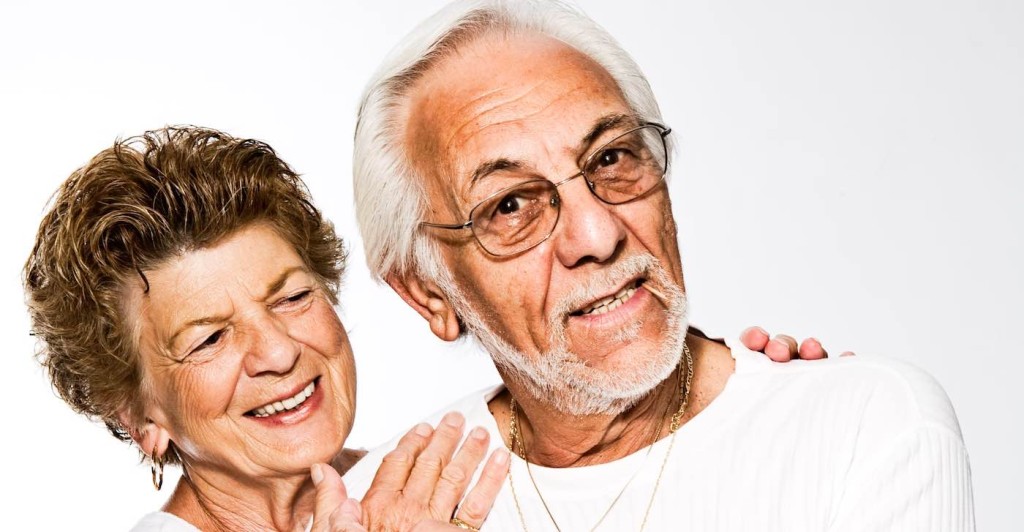
Bodies lose their vigor with the passing of the years, but in the emotional realm, older people seem to rule supreme.
For the past 20 years, Susan Turk Charles, a psychologist at the University of California, Irvine, has been monitoring the shifting moods, the sense of satisfaction, and the outbursts of anger and sadness in people of all ages—with a special interest in how we handle and experience emotions as we grow older.
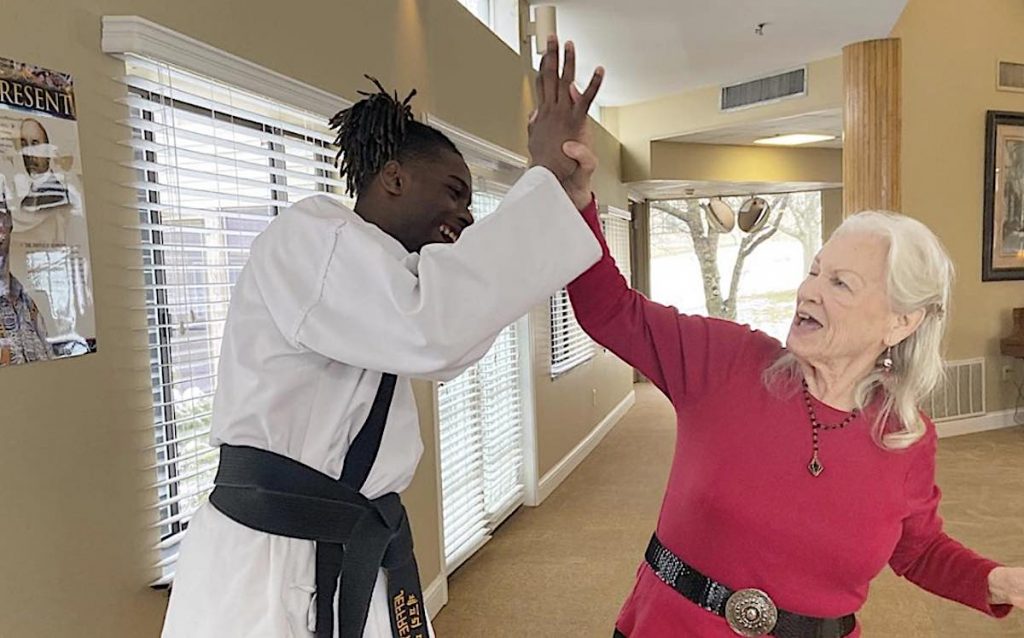
She fell in love with the idea of studying a process related to aging that is not defined by a decline. Unlike physical fitness or cognition, where you may see slowing or declines, emotional regulation and experience are often as good, if not better, as we age.
What is the secret behind this grizzled levelheadedness? How can we make sure that as many people as possible can benefit from it? And what can it teach the young? In 2010, Charles and Stanford psychologist Laura Carstensen coauthored an article on social and emotional aging in the Annual Review of Psychology. They have found that, on average, older people have more satisfying social contacts and report higher emotional well-being.
Since then, the research has revealed even more. Here’s the latest from Susan:
What might explain why aging brains get better at managing emotions?
Some neuroscientists believe that because we’re processing information a little slower with age, that makes us think before we act, instead of reacting quickly. We do see a decline with age in overall mass of the brain’s frontal lobe, the part that is responsible for emotion regulation, complex reasoning, and speed of processing. But researchers such as Mara Mather at the University of Southern California find that older adults often exhibit greater prefrontal cortex activity than younger adults when processing emotions.
A lot of work has found that older people have a positive bias, even without realizing they’re actually doing this. Their default mode is, as we say, “Don’t sweat the small stuff.” We find that older people more often let go of a situation they experience as negative, especially with friends and family. So it is really picking their battles that we think older adults are better at (unless they have cognitive decline, which causes them not to default toward the positive).
File photo by Marisa Howenstine
Is there a certain age at which we reach a peak in emotional satisfaction?
It depends on what aspects you’re looking at, but the peak we see in terms of the highest positive and lowest negative emotions is between 55 and 70. Then there’s the measure of “life satisfaction,” which includes both happiness and sadness, as well as a cognitive evaluation of how your life is going. For that, we often see a little lower ratings in midlife, lowest among people who are in their early 50s, and then it goes up. So again, it’s higher with older age. Only after 75 do negative emotions start increasing again.
Yet even centenarians report overall high levels of emotional well-being. Do people who have more positive attitudes and emotions, or encounter less adversity, live longer?
Researchers have looked at what could explain this, and they find that psychological well-being is consistently related to lower levels of the stress hormone cortisol and better cardiovascular health. Other researchers have modeled that—and they still see an age-related advantage.
Emotion regulation improves with age; we see this again and again. These are small effects, but they are consistent. We see improvement for the majority of people, but not for everyone. I don’t know the percentages, but let’s say you have 40 percent remaining stable, 40 percent going up and 20 percent going down, you’ll see people still going up on average.
Why do some people not experience these improvements?
Most of the people who have been included in these studies are what researchers define as WEIRD — people from Western, educated, industrialized, rich, and democratic societies. A lot of the people had financial security, pensions, social systems, and often the people we would interview were middle-class white people who were employed, who had a higher level of education. Compared to younger people of comparable socioeconomic status, the older people looked a lot better. But if older people are in vulnerable situations with constant stressors, or if they are living in pain, you may not see these benefits.
My former mentor Laura Carstensen’s “socioemotional selectivity theory” talks about how everyone has a sense of how much time we have left in our lives. As you get older, you see that there is less and less time left, and people start valuing emotional goals more. Older people will also rather spend time with family and friends than meet brand new people who might be interesting.
Your findings might inspire people to pursue a more positive attitude, but someone who is getting older and more unhappy, might not feel the same.
For people who are unhappy, it’s really important to look at how to structure your days to feel more fulfilled. When you’re making a list of health behaviors, getting enough sleep and exercise, and eating right, are important factors that most people agree should be included, but social relationships is something that is as important as your cholesterol level, yet is often forgotten.
Make sure that you spend time cultivating your social ties, treasuring and prioritizing your close friends and family members, at whatever age you are. Finding purpose and meaning in life is also vitally important. What that is can be different for different people, but finding an important purpose and following that can be very emotionally gratifying.
Does that imply there might also be a risk of becoming too emotionally comfortable?
Yes. You can be so comfortable that you no longer encounter any challenges. You really need to stay engaged in cognitive challenges. In a very night over eight days, we followed people over eight days. Every night, they were interviewed, and we’d ask about stressors. Did they get into an argument? Was there a situation where they could have argued, but decided not to? Are there any problems at home or at work?
We asked over 2,500 people every night over 8 days about the relatively minor stressors they had experienced. About 10 percent of the people reported never having experienced even one stressor. They also reported being happier than those who reported at least one stressor. But what we also found was that they performed worse on cognitive tests compared to people who reported at least one stressor. They also reported having received or given less help to others, and that they had spent more time watching TV.
20 years ago, we thought that if you have positive relationships and a certain lifestyle, you can have the highest emotional functioning, the highest cognitive functioning, the best physical health, the perfect life for you. Now it turns out to be a little more complicated. People who are reporting being happiest might not be as high in cognitive functioning.
This may be because people who have no stressors are spending less time with other people. But people you know and love also challenge you and engage you in problem-solving activities. It’s not that you can find optimal well-being in all areas; there might be a tradeoff. It’s like: “I want to be a volunteer, it gives me emotional meaning, I have a lot of purpose in life, but I’m also going to run into some people that may bother me.”
So how can people strive for some balance?
No one size will fit all. For example, we know that people benefit from having strong social ties, but people vary in the number of close friends and time they spend with others. We know that activities that are challenging for some people are boring for others.
To achieve balance, people need to know themselves, and make decisions that create dynamic lives where they are socially active and engaged in a way that makes them feel a sense of belonging and makes them feel needed. They need activities that are challenging for them, where they learn new information and have to remember this information—like learning a new musical instrument or the layout of a new park, or even a new video game.
Jeffrey Wall Golden Age Karate
Might there be a way for young people to press the fast-forward button to achieve some of the same emotional benefits older people acquire with age?
In the past 10 years, people have been talking more about mindfulness as an emotional regulation strategy. It takes you away from focusing on the future and reminds you that the present moment is the most important. I think those are things that older people often do, but younger people may need to be reminded of. It can really help to have a moment at the end of the week to say, “Right now, things are going well — let’s just enjoy that for today.” It would be wonderful if that was something the youth could learn from older people.
I think as I grow older, I really understand it more profoundly. I always get a kick out of experiencing myself what the research shows.
A student smuggled lightsabers into his graduation ceremony—and challenged his principal to a fun impromptu duel on stage.
Star Wars fanatic Hunter Wark-Pantoja had an elaborate plan to combine his favorite film with one of the most important moments of his life.
The 18-year-old walked to the stage and after receiving his high school diploma he pulled two lightsabers from under his gown and challenged Todd Clerkson to a battle.
The Canadian kid from Port Moody, British Colombia, had already asked his principal earlier this year if he could bring one, and Clerkson said ‘maybe’.
“So I obviously took that as a yes,” joked Hunter.
But he wanted to surprise the entire audience of the Heritage Woods Secondary School ceremony—including the principal—and make it an epic moment to remember.
Mr. Clerkson said he was completely surprised but jumped straight into battle mode. when Hunter struck his Jedi pose.
“The whole crowd was screaming and applauding – it couldn’t have been a better way to graduate.”
Hunter’s friend Joey Aconley captured the moment on camera, saying “Ever since I’ve known him, he was always a big Star Wars fan.”
“Every May 4th—a globally-recognized Star Wars Day—he would bring lightsabers to school for battles,” said Joey. “In photography class, he would use them as light sources.”
“One day we were chatting about doing something on stage at graduation, but when he actually did it, we all screamed. We cheered so loud for him.”
Nearly two-thirds of dog owners want to get their pets involved in their wedding day—acting as ring bearers, bridesmaids, and even the best man, according to a new poll.
Of 2,000 dog owners, 60 percent already knew someone who included their dog in their wedding.
The most popular roles for dogs on the big day were ring bearer (50 percent), flower girl (17 percent) and page boy (13 percent).
And just shy of one in 10 (nine percent) would even have their dog as the groom’s best man.
It also emerged that couples would be prepared to spend an average of $75 to get their pooches ready for the nuptials.
“This poll reflects the growing trend of newlyweds wanting to involve pets in their big day, whether it’s to walk them down the aisle or be a ringbearer,” said Xavier Flamand, of Amazon Handmade which launched its new wedding store and commissioned the poll.
The survey also found that a full 93 percent believe that because a dog is part of the family, they should be involved at the wedding.
76 percent of respondents agree that guests would react positively to having dogs involved at a wedding.
It seems, dogs would also have their own banquet, as 68% said they would get a special dish prepared for their pet.
Alexandra Moston, who had her Labrador Hugo by her side at her special day last year, said: “Hugo is such an important part of the family, so it was only natural for us to make sure he was a part of our day.
“We wanted Hugo’s presence as ‘Best Dog’ and ring bearer to be a surprise for all our guests, so we only told the best men and vicar!
“We got the best man to pretend he had forgotten the rings, but then Hugo came bounding down the aisle. It was an amazing moment that made everyone smile.
Alexandra and Mike Moston’s wedding, with Hugo. SWNS / OnePoll
“He also treated our guests to some dog biscuits for their four-legged friends to take home.”
When deciding what their dog will wear for the special occasion, a special collar with a ring box on it was the most popular choice (46 percent), according to the survey carried out by OnePoll.
This was closely followed by a custom suit (42 percent), bow tie (39 percent), floral collar (26 percent) and a custom dress (21 percent), as other possible outfit options.
1. A special collar with a ring box on it – 46%
2. A custom suit – 42%
3. A bow tie – 39%
4. A floral collar – 25%
5. A special bandana – 23%
6. A custom dress – 21%
7. A hat – 13%
8. A bow for their tail – 11%
9. Special shoes – 7%
10. A fascinator (formal headpiece) – 5%
Keanu Reeves was spotted having “a couple of whiskies” and chatting with a wedding party in the UK this week—continuing his reputation as the nicest guy in Hollywood.
Reeves met the groom on his wedding day at the bar of a 4-star hotel in Daventry and promised to come to the reception.
James Roadnight and bride Nikki were then thrilled when the actor turned up at Fawsley Hall Hotel & Spa, and happily took photos with the couple.
Later, the Matrix actor walked into The Fox and Hounds in Charwelton, and happily mingled with customers and posed for photos.
The bar’s owner Danny Ricks was shocked when the film star entered and sat down at a table.
“It’s not every day you get a Hollywood star walk into your pub. It made everyone’s evening.”
The 57-year-old ate a Caesar salad and appetizer followed by a main course of falafel—and washed it all down with “quite a few double whiskies.”
“It was bizarre. I had to do a double take when he walked in as I couldn’t quite believe my eyes. I thought ‘that guy looks quite a lot like Keanu Reeves.’
“He was just a down-to-earth guy and was really nice to everyone. Everything nice you would think about him was all true.
The Canadian actor was in the area filming a documentary about Brawn GP’s F1 championship-winning year of 2009. Reeves, famous for The Matrix franchise, is next starring in John Wick: Chapter 4, due to release in 2023.
SHARE Your Love of Kindness on the Big Screen of Social Media…
Quote of the Day: “If you can change the way people see themselves–you can change the way people live their lives.” – Chuck Palahniuk
Photo by: Bekah Russom
With a new inspirational quote every day, atop the perfect photo—collected and archived on our Quotes page—why not bookmark GNN.org for a daily uplift?
A man rescued a dying bunny that was drowning in his pool after spotting a strange reflection out of the corner of his eye.
The Arizona resident noticed the rabbit while walking back inside from his backyard.
He found the bunny just as it had stopped moving, clearly exhausted, and began dropping its head underwater.
The 35-year-old frantically scrambled to find his pool scooper and get the bunny to safety.
The man, who makes YouTube videos, then grabbed his camera and began filming the situation.
Initially, the bunny was too tired and far too weak to even move—occasionally it would try to raise its head but even that was too strenuous.
The content creator from Lake Havasu City, moved the rabbit into the sunlight and fed it vegetables, sitting with the animal for several hours hoping it would begin to warm up and get some strength.
The bunny came over really close to him and looked at him for a while before hopping off—which he sees as a sign that the animal knew just who he was and was grateful.
HOP This Rescue Over to Bunny Lovers on Social Media By Sharing it…
A long awaited update to a 2020 medical breakthrough could have a natural knee-cartilage replicant on deck for replacement surgeries by 2023.
Knee pain comes from the progressive wear and tear of cartilage between the knee joint known as osteoarthritis, which affects nearly one in six adults—867 million people—worldwide.
For those who want to avoid replacing the entire knee joint, there may soon be another option that could help patients get back on their feet fast, pain-free, and stay that way.
GNN reported in 2020 on Duke University’s development of a water-based gel designed to replace worn out cartilage in knee joints based around the principles of biodesign found in our God-given cartilage.
To make this material, the Duke team took thin sheets of cellulose fibers and infused them with a polymer called polyvinyl alcohol—a viscous goo consisting of stringy chains of repeating molecules—to form a gel.
Although 60% water, a single quarter-sized disc of the special gel can bear the weight of a 100-pound kettlebell without tearing or losing its shape.
When the gel is stretched, the cellulose fibers resist pulling and help hold the material together. And when it is squeezed, the negative charges along the rigid polymer chains repel each other and stick to water, helping it spring back to its original shape.
In one experiment, the team subjected it to 100,000 cycles of repeat pulling, and the material held up just as well as porous titanium used for bone implants,
They also rubbed the new material against natural cartilage a million times. They found that its smooth, slippery self-lubricating surface is as wear-resistant as the real thing and four times more wear-resistant than synthetic cartilage implants currently FDA-approved for use in the big toe.
“If everything goes according to plan, the clinical trial should start as soon as April 2023,” said Duke chemistry professor Benjamin Wiley, who led the research.
Since 2020, improvements in design have given the team more encouragement that they will one day become the norm.
In the past, researchers attempting to create stronger hydrogels used a freeze-thaw process to produce crystals within the gel, which drive out water and help hold the polymer chains together.
In the new study, instead of freezing and thawing the hydrogel, the researchers used a heat treatment called annealing to coax even more crystals to form within the polymer network.
By increasing the crystal content, the researchers were able to produce a gel that can withstand five times as much stress from pulling and nearly twice as much squeezing relative to freeze-thaw methods.
Furthermore the tests found that the design stays fastened 68% more firmly than natural cartilage on bone.
For young people with worn out knee cartilage—maybe from a career of top level sports, a full knee replacement is an unattractive option, since modern knee prosthetics wear out over time and would facilitate another total replacement surgery in their lifetime. The hydrogel could simply be replaced if they managed to destroy it as well.
REPLACE The Bad News On Social Media With This Good Health Tech News…
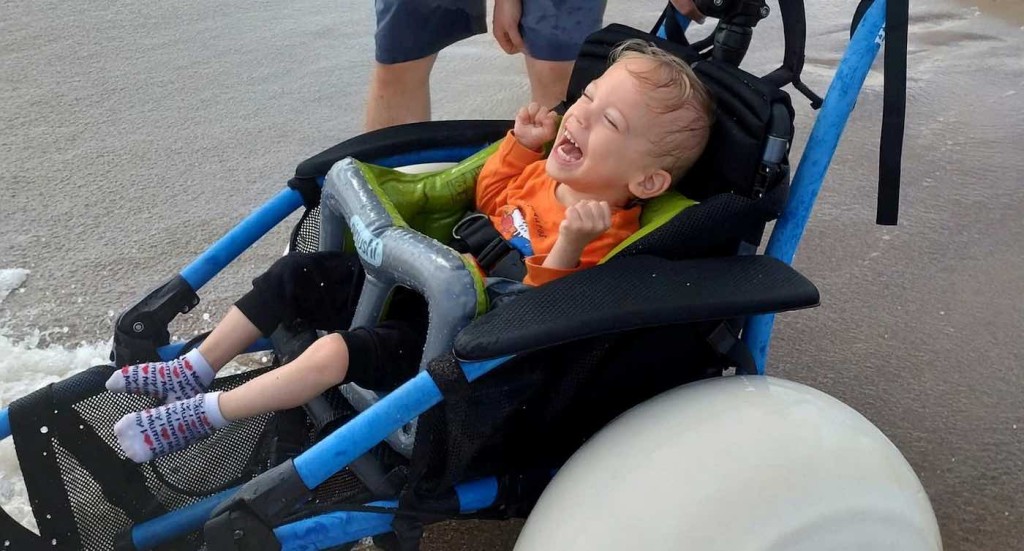
A little boy finally got to play in the sea, thanks to the use of a beach wheelchair—and his laughter brought his mom to tears.
Joey has quadriplegic cerebral palsy, which affects both of his arms and legs, and sometimes his torso and face.
The two-year-old suffers with very bad sensory issues and cannot stand the feel of grass, sand, carpet, and snow.
Trips to the beach were impossible, but thanks to a charity offering the big-wheeled wheelchairs on Ingoldmells beach in Lincolnshire, the family has finally been able to enjoy the sea for the first time.
Helen Butterfield filmed her little boy squealing with excitement as the sea water washed over him and his dad.
The mother of three who lives in Sheffield as Joey’s full time care-giver, said seeing his reaction was one of the most special moments of her life.
“Honestly, he has never laughed so much.”
She credits the community group Beach Ability Ingoldmells with having given her boy a special gift: “the chance to experience waves and mother nature’s beauty instead of feeling left out and different.”
“I’m just so glad I managed to get it on camera. We will never, ever forget this day.
Joey, who was born prematurely at 27 weeks, weighing just 2 pounds 6 ounces, cannot support his body enough to sit unaided with the diagnosis of quadriplegic cerebral palsy.
Doctors have prepared the family for the possibility that he will never be able to walk but mum Helen is determined to do everything she can to give him the best life possible.
Joey hates how pretty much everything feels, but the one thing he loves is water.
“He doesn’t handle well, especially with strangers, and gets so frustrated, but pop him in the bath and he is in heaven. It was like Joey was born to be a water baby.
“He has been through so much, so seeing him in the sea was the best feeling ever. He is so tiny, but mighty—and I’m sure his strength and determination won’t stop there.”
SHARE The Joy With Ability-Challenged Families on Social Media…