












All News - Page 415 of 1720 - Good News Network
Home Blog Page 415

Wildlife Photographer Captures Charming Portraits of the Creatures That Visit Her Garden

SWNS
SWNS

A wildlife photographer has captured charming portraits of the creatures that visit her garden.

Carla Rhodes placed a camera trap outside her home in the Catskill Mountains of New York.

The resulting pictures from the Beneath The Bird Feeder project include inquisitive birds, playful squirrels, and North America’s only venomous mammal—the Northern short-tailed shrew.

SWNS

Carla, a former ventriloquist, explains, “Beneath The Bird Feeder is a photographic project starring many feathered (and furred) visitors.

“Subjects were photographed daily via a DSLR camera trap positioned underneath my bird feeder during the winter months of 2020-2021.

“Wintertime allows me to partake in one of my favourite pastimes: feeding the birds.

“This project reveals insights into species behavior while showing the viewer a new perspective on a common pastime.

RELATED: Scientists Excited by Odd Fish Sounds Recorded in a Restored Coral Reef—the Coolest Thing You’ll Hear All Week

“Throughout this project, I asked myself many questions. What kind of ecosystem does a bird feeder create? As a result of birds dropping seeds, what other creatures would this attract?

SWNS

“When the sun went down, deer mice would gather the aforementioned seeds, caching them in a stone wall near the bird feeder (often helped along by the adorable yet venomous Northern short-tailed shrew). When day broke, an assortment of looters (from birds to squirrels) would raid the cached bounty.

SWNS

“Insights into behavior continually intrigued me.

SWNS

“Dark-eyed juncos were always the first birds to show up at the crack of dawn while Northern cardinals would always show up at dusk.

“I started to recognize regulars and grew particularly fond of a deer mouse with a notch in his/her ear, who I eventually named ‘Notches’.

MORE: The Only Monkeys That Soak in Hot Springs to Lower Their Stress: Japan’s Bathing Monkey Mystery

“I hope Beneath The Bird Feeder inspires others to explore their backyards and to give a closer look at overlooked “common” species, which are no less fabulous than their exotic counterparts.”

SWNS

SHARE These Delightful Photos From the Bird Feeder With Your Chums…

More Cities Make the Switch From Polluting Salt to Sugar Beets To Beat Icy Roads

hor Benson Kua from Toronto, Canadasnow plough wikimedia commons cc license
Benson Kua, CC license

Rock salt is prized for its use as a de-icer, but the mineral’s monopoly on curing roads of icy patches may be coming to an end as sugar beet products gradually make their way into transportation department budgets across North America.

While salt is enthusiastically caked over streets and sidewalks when winter weather turns bad, most of us understand somewhere in the back of our minds that throwing salt around willy-nilly is probably a bad idea.

Most of us, for instance, know that if exposed to too much salt, all useful plants will die, leaving the soil fit for only the hardiest and most hateful of weeds. Most of us know that salt is also quite corrosive, and that seaside houses need to protect anything, particularly metal, that is exposed to sea spray. Lastly most of us know that there are two kinds of aquatic habitats, and fish which live in one can almost never live in the other.

It’s understandable then, to see municipalities like D.C. and Winnipeg, and states like Michigan, trialing vegetable alternatives to salt, which was found in one study to be causing “major changes in the Great Lakes ecosystem.”

“The benefit from using beet-based melting products is that it reduces the chloride loading on infrastructure and the environment, while producing a good quality melting solution,” said Winnipeg communications officer Ken Allen.

RELATED: Eco-friendly ‘Jelly Ice Cube’ Could Transform Cold Storage: No Plastic and Doesn’t Melt

Indeed sugar beet extract when combined with ice-melting chlorides can actually be more effective at reducing ice than salt, but beets aren’t the only food product that’s being used in North America. Bloomberg reports that pickle-juice, cheese brine, and leftover beer have all been used by various transportation departments looking to reduce the immense budgetary pie slice given to salt purchasing.

Chemical changes caused by salt means water needs a lower temperature than normal to freeze, but when 20% chloride is combined with beet extract, that temperature becomes even lower, meaning only properly frigid temperatures will turn residual water into ice overnight.

Around 15-17 million tons of rock salt are poured on U.S. roadways every year, which along with contaminating waterways and drinking water, corrodes plowing equipment, and even leads to greater number collisions with deer, who come out onto the roads to lick the salt. Wisconsin’s share of the salt pie accounts for 40% of the state’s DoT budget.

MORE: Meet the Sustainable Alternative to Concrete that Caught the Eye of Dior and Louis Vuitton

Other states like Illinois are relying on education to reduce contamination from over-salting.

“I often see a cup worth of salt on a single sidewalk square, but one cup of salt should be enough to do an entire driveway… depending on your driveway,” Danelle Haake, stream ecologist and director of Illinois RiverWatch, told Michigan Radio. She suggests dissolving less salt in water, and spraying the water onto the ice.

CLEAR Those Winter News Feeds of Bad News – Share the Good…

“I would like my life to be a statement of love and compassion—and where it isn’t, that’s where my work lies.” – Ram Dass

Quote of the Day: “I would like my life to be a statement of love and compassion—and where it isn’t, that’s where my work lies.” – Ram Dass

Photo: by cloud.shepherd, CC license

With a new inspirational quote every day, atop the perfect photo—collected and archived on our Quotes page—why not bookmark GNN.org for a daily uplift?

Self-Compassion Is Actually Good for Your Heart Health

Despite what skeptics say, being kind to oneself is not a New Age fad—and there is research to back it up.

Middle-aged women who practiced self-compassion had a lower risk of developing cardiovascular disease, irrespective of other traditional risk factors such as high blood pressure, insulin resistance, and cholesterol levels.

“A lot of research has been focused on studying how stress and other negative factors may impact cardiovascular health, but the impact of positive psychological factors, such as self-compassion, is far less known,” said Rebecca Thurston, Ph.D., professor of psychiatry, clinical and translational science, epidemiology, and psychology at the University of Pittsburgh.

Mindfulness practices, such as meditation, are gaining popularity among U.S. adults. Exhausted from a barrage of stressors at work and in their personal life, people increasingly choose to turn inward to help manage their mood and emotions.

During the pandemic, the stressors have amplified, especially for women. Research from various groups across the world demonstrates that women are particularly affected by the dragging pandemic—they care for children and older relatives and are often the ones to care for other adults, too, as women compose much of the U.S. nursing workforce.

Practicing mindfulness and self-compassion is a tool that counsellors and clinical psychologists often suggest to clients who are dealing with chronic stress. These techniques have been shown to be effective for managing anxiety, irritability and even mild depression.

RELATED: Pecan-Rich Diet Shown to Reduce Cholesterol in New Study

But do these practices have any physiological effects on the body? Thurston and her colleagues sought to answer that question by enrolling almost 200 women between ages 45 and 67. The women completed a short questionnaire asking them to rate how often they experience feelings of inadequacy, whether they often feel disappointed by their self-perceived flaws or if they grant themselves caring and tenderness during difficult life moments. The women also received a standard diagnostic ultrasound of their carotid arteries—major vessels in the neck that carry the blood from the heart to the brain.

The scientists found that women who scored higher on the self-compassion scale had thinner carotid artery walls and less plaque buildup than those with lower self-compassion. These indicators have been linked to lower risk of cardiovascular disease—such as heart attacks and strokes—years later.

MORE: People Who’ve Tried Psychedelics Have Lower Risk of Heart Disease and Diabetes

The results, published in Health Psychology, were found to persist even when the researchers controlled for behaviors and other psychological factors that might influence cardiovascular disease outcomes, such as physical activity, smoking, and depressive symptoms.

“These findings underscore the importance of practicing kindness and compassion, particularly towards yourself,” said Thurston. “We are all living through extraordinarily stressful times, and our research suggests that self-compassion is essential for both our mental and physical health.”

Source: University of Pittsburgh

SHARE This Hearty Research With Pals on Social Media…

Watch This Massive Ocean Sunfish Swim With Paddle Boarders Off the California Coast

Rich German
Rich German

When one sees a dorsal fin out on the water, only the calm and the eagle-eyed don’t immediately think “shark.” So it was with a group of paddleboarders who came across a sunfish about the size of a car off Laguna Beach in California.

Known as the mola mola, the giant or ocean sunfish which Rick German and his friends discovered could have been nine foot long according to them, as their paddleboards were about 14 feet in length.

“I wasn’t scared because I knew what it was,” German told CBS News. “It looks like a mutilated alien shark that got bit in half.”

The heaviest vertebrate fish found globally, the mola mola can reach 10 feet in length and weigh 5,000 pounds. At a young age, its back fin stops growing and instead folds in towards itself, creating a kind of rudder that also tilts the fish’s body at an angle.

“I just thought it was kind of neat this fish is hanging out in an area where it’s totally protected and safe,” German told NBC News. “We hung out with it for probably 30 minutes. Eventually, it just dropped down below the surface.”

As it happened, German is the founder of a non-profit dedicated to ocean conservation, and given the fact that most of America’s largest news companies came out to interview him, he wasted no airtime in getting the message out that the tropical-dwelling mola is listed as Vulnerable by the IUCN, and needs help from us to recover so that more paddleboarders can enjoy these sensational experiences.

Dr. Matthew Wheaton posted an up-close and personal video on Instagram of the encounter, which you can take a look at below.

SHARE This Marine Story From the Ocean Now…

Christmas-Loving Mom Transforms Her Home Into Real-Life Gingerbread House (LOOK)

SWNS
SWNS

A Christmas-mad mom has transformed her home into—a real-life gingerbread house.

67-year-old Virginia Hoffman spent ‘hundreds of hours’ festooning her property into a vision from a fairytale.

Homemade decorations include candy canes, giant gumdrops, peppermint swirls, huge chocolate and wafer cookies, and an oversized gingerbread man.

Interior designer Virginia, of Salt Lake City, Utah, says her daughter, son-in-law, and their children all were involved, as well as her husband, who is a professional artist.

She said, “I live in a neighborhood where most the houses were built in the 1920s and the architecture has a lot of charming characteristics.

“I was looking at my circle of houses and thought how they all looked like gingerbread houses with their various roof lines and windows.

“I began to imagine how I could make some decorations to make my house into a gingerbread house.

RELATED: Christmas Fanatic Turns Her Office Cube Into Incredible Life-Sized Gingerbread House (LOOK)

“I drew a little sketch of what was in my mind, and then I started thinking of how to accomplish it. It grew on from there.

“It was a lot of work, but each year it is fulfilling to see it completed and feel like a lot was accomplished with imagination, ingenuity, a little engineering and figuring things out, and some luck.

“I am grateful for the help and support of my husband and family members; without them I would not have been able to succeed. They have spent many hours along with me.

SWNS

“Also, a project such as this, taken on with help from family and grandchildren, will hopefully be a long-term memory that they’ll always remember and maybe cherish. It’s a special thing in our family now because we made it ourselves.

MORE: Brits Reveal Their Best-Loved Holiday Traditions, Like Christmas Jumpers on Boxing Day

“The best part for me is watching children come. When they come up to the house and they look at things up close and, honestly, the twinkle in their eyes is just magical. I love to see that it catches their imagination.”

(SEE the house in the video below.)

SHARE This Festive Story With Your Best Buddies…

Check Out These Solstice Webcams Capturing Today’s Winter Celestial Event Live at Ancient Monoliths

The ancients were astonishingly aware of the changes in the world they inhabited, and the few structures that survive from their time—monolithic stone monuments, demonstrate this as they often align with astronomical events.

The British and Irish governments are livestreaming the monuments of Newgrange in Ireland and Stonehenge in England, to allow anyone who wants to to watch the setting sun on the 22nd pass straight through the henge and the rising sun through the Newgrange passage tomb.

Stonehenge and Newgrange

The English Heritage YouTube channel stream will begin at 7:25AM GMT, or 1:25AM U.S. EST, to watch the sunset at Stonehenge on the 22nd of December, while the Heritage Ireland channel goes live every morning at 8:45AM GMT or 2:45AM U.S. EST, on the 21st and 22nd to show the passage of the rising sun through the burial chamber at Newgrange. 

“Watching the light creep into the five-thousand-year-old passage tomb in real time is a moving event that has the power to fill us both with wonder at the ancient architects’ ingenuity and with hope for the future,” said Patrick O’Donovan at the Office of Public Works, Ireland.

Shaped inside like a cross with three recesses for cremated remains, the low-lying winter sun comes in through a shaft above the main entrance that baths the central chamber in light for around 17 minutes. It was constructed around 3,200 BCE.

Maeshowe Chambered Cairne

For those not wanting to get up so early, at the Maeshowe Chambered Cairne in Scotland, a livestream will begin to celebrate the Winter Solstice with poetry, and information about the site, coupled with the phenomenon of the setting sun moving perfectly in line with openings down into the interior of the cairne. This occurs at 4:00PM GMT, or 10:00AM U.S. EST and can be found on this YouTube channel.

Maeshowe Chambered Cairne can be found on the island of Orkney, and is considered the heart of Neolithic Scotland. A UNESCO World Heritage Site, the central chamber is 15 feet in each direction and the roof is twelve feet high. it is very similar to Newgrange in Ireland, but was built around 500 years after.

SHARE the Mystical Fun on Social Media…

“The opposite of a correct statement is a false statement, but the opposite of a profound truth may well be another profound truth.” – Niels Bohr

Quote of the Day: “The opposite of a correct statement is a false statement, but the opposite of a profound truth may well be another profound truth.” – Niels Bohr

Photo: by Casey Horner

With a new inspirational quote every day, atop the perfect photo—collected and archived on our Quotes page—why not bookmark GNN.org for a daily uplift?

Scientists Create Biodegradable Batteries That Can Be Buried in Soil After Use

SWNS
SWNS

Scientists have created biodegradable batteries that can be buried in soil after use.

The paper-thin biodegradable zinc batteries could one day become an environmentally sustainable option for powering smartphones and flexible wearable electronic devices.

The NTU Singapore-developed zinc batteries are made up of electrodes (through which the electrical current leaves or enters the battery) screen-printed on to both sides of a piece of cellulose paper that has been reinforced with hydrogel.

Once the battery has been expended, it can be buried in soil, where it breaks down completely within a month.

In a proof-of-concept experiment, the NTU team demonstrated how a 4cm x 4cm square of printed paper battery could power a small electric fan for at least 45 minutes. Bending or twisting the battery did not interrupt the power supply.

RELATED: New Solution to Ridding Oceans of Microplastics Uses Acoustic Waves

In another experiment using a 4cm x 4cm battery to power an LED, the scientists showed that despite cutting away parts of the paper battery, the LED remained lit, indicating that cutting does not affect the functionality of the battery.

The scientists think their printed battery could be integrated into flexible electronics such as foldable smart phones that are already on the market, or biomedical sensors for health monitoring.

MORE: This ‘Floating Continent’ Could Collect and Recycle Plastic from the Ocean in Future

Professor Fan Hongjin from the NTU School of Physical and Mathematical Sciences and the study’s co-lead author, said, “Traditional batteries come in a variety of models and sizes, and choosing the right type for your device could be a cumbersome process. Through our study, we showed a simpler, cheaper way of manufacturing batteries, by developing a single large piece of battery that can be cut to desired shapes and sizes without loss of efficiency. These features make our paper batteries ideal for integration in the sorts of flexible electronics that are gradually being developed.”

Assistant Professor Lee Seok Woo from the NTU School of Electrical and Electronic Engineering and the study’s co-lead author, said of the research, published in Advanced Science, “We believe the paper battery we have developed could potentially help with the electronic waste problem, given that our printed paper battery is non-toxic and does not require aluminium or plastic casings to encapsulate the battery components.”

“Avoiding the packaging layers also enables our battery to store a higher amount of energy, and thus power, within a smaller system.”

DON’T WASTE Great Research Findings; Share This Story…
Teens Build Bus Stop Shelter for 5-Year-old Wheelchair User, Protecting Him From Harsh Weather

SWNS
SWNS

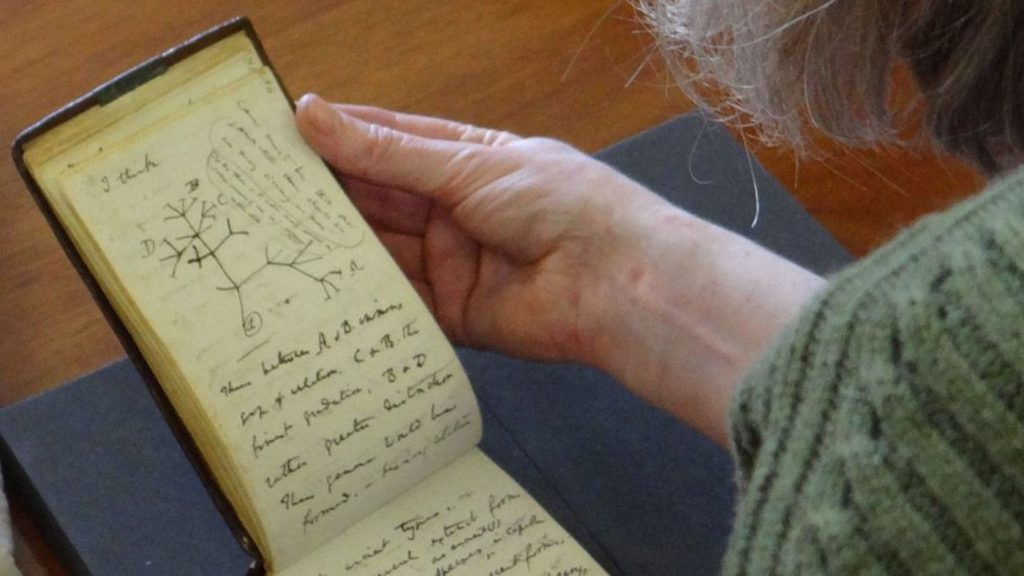
Teenagers have built a shelter for a five-year-old boy who uses a wheelchair after noticing he got wet while waiting for the school bus in winter.

Five-year-old Ryder Killam has had to battle rain, wind, and snow for about 15 minutes every day, using only a patio umbrella as protection.

But after hearing about his problem, local students in Bradford, Rhode Island, got to work and built him his own bus shelter for the bottom of his driveway during their construction lessons.

Ryder’s father Tim said, “Ryder uses it every day before school and his nurses wait inside it every day while they await his return home.

“He does like to go hang out in it from time to time as his fort as well.

“This project brought out community together a bit, it showed that there is still so much good in this world and town!”

Ryder was born with spina bifida myelomeningocele and has never been able to walk.

He stated using a wheelchair when he was two years old.

He started attending inclusionary preschool Dunn’s Corner Elementary in June 2019, and every day had to be pushed 75ft to the end of the road to wait for his school bus by his parents Tim and Nikea.

LOOK: Sisters Recreate Adorable Photo – With Daughters Stepping into Roles That Dreamed of Motherhood

As Ryder was unable to rush for this bus if he was running late like his peers, this would often mean he’d have to wait for up to 15 minutes out in whatever weather there was.

In September this year, just when Ryder started kindergarten, Tim decided to put up a patio umbrella at the end of his driveway to provide some shelter from the elements.

He said, “The problem is with the wind and fall weather here in New England it really didn’t accomplish much unless it was just a rainy day with no wind, otherwise he still would get wet and not stay warm.”

They decided to reach out to their community to see if anyone had anything that would work to protect Ryder from the elements.

Tim, who runs a marine electronics company, said, “I placed a post on Facebook looking to see if one of my friends or one of their connections might have an old bus hut.

RELATED: Dunkin’ Donuts Customer Gives Employee a New Home So She Can Continue Excellent Customer Service

“I see them here and there on people’s property and figured maybe someone had one and had grown children that might not need it anymore.

SWNS

“After the post, a WPS member suggested I reach out to the construction class at Westerly High and see if they would want to take on the project of building Ryder a bus stop hut.”

Tim sent Dan McKena, who had been teaching construction technology at Westerly High School for 27 years, an email asking if he’d be interested in this kind of project.

“He responded with an ‘absolutely’ and then he worked with his students to design and build the hut,” he said.

Three of Mr Mckena’s classes worked hard on the project for numerous weeks, learning new skills through YouTube as they created the structure, motivated by the cause and knowing that soon snow would be falling.

MORE: Man Loads His Truck with Grill and Food to Help Tornado Victims in Kentucky

About $300 worth of wood was donated by Home Depot for the project, but the rest of the materials were purchased by the Kilmans for $600, who were kept updated with photos throughout.

SWNS

The hut was built 5×8 feet so that it could bit both Ryder and one of his parents or a nurse comfortably, and was finally delivered to the home six weeks later on November 2.

Tim said, “We were shocked, it was much bigger than we expected and allows such great access for Ryder and an adult to be with him comfortably.

“Ryders first reaction was ‘Holy Cow!’, he loved it and wants to hang out it in all the time.”

The family sent a photo of Ryder in the bus shelter and thanked the teens for their hard work. We’re sure they were thrilled to see just how their project has helped others.

PASS On the Generosity; Share This Story…
This Hotel Suite Carved in Ice Will Leave You Warm With Memories of Nature’s Beauty

Magnus Mårding
Magnus Mårding

Whether one is looking for midnight sun or northern lights, one of the least-disputed places to do so is at Sweden’s ICEHOTEL. Now, the legendary all-ice building hosts a new suite designed by the prince of Sweden to paradoxically celebrate the country’s Midsummer Festival.

Just as the hotel, made entirely of snow and ice, has had to be rebuilt every year since its inception in 1989, Prince Carl Philip’s suite reflects that brevity with flowers and summer decorations encased in ice.

Magnus Mårding

Called Midsummer Night’s Dream, the walls and blocks of the suite contain colorful floral decorations, while a stunning chandelier of ice and flowers gives light to the ethereal space.

“Well, what better way to show the true character of the ice than to encapsulate the most delicate and beautiful Swedish midsummer flowers in an arctic environment? For us Swedes, midsummer, and especially midsummer’s night, is filled with myth and legend,” the Prince and his business partner Oscar Kylber, who helped design the suite, said in a statement.

The layers of metaphor are as thick as winter snow drifts in the town of Jukkasjärvi, 120 miles inside the Arctic Circle where ICEHOTEL is located.

Like the beautiful summer flowers used in the design, the suite in all its beauty will last through the season, only to vanish and leave nothing but memories at its end.

Magnus Mårding

The merry flowers mirror the happy Swedes, a country which ranks sixth on the global happiness scale, and which must endure its northern reaches being essentially encased in ice for six months of the year.

RELATED: Design Students Use Art to Reimagine Plastic Recycling – Creating Lamps, Seat Covers, and More

Kylber and the Prince were two of 32 artists selected to make this year’s ICEHOTEL, as they run a design firm that boasts clients like Hästens and Georg Jensen.

Magnus Mårding

ICEHOTEL consists of 24 rooms, 12 artistically-rendered suites, and a ceremonial hall; this time around at least, as it changes every year.

MORE: World’s First 3D-Printed House Made Of Local Raw Earth – And it Closes the Roof With a Dome

The company behind it runs the winter hotel, rebuilt every year, a traditional hotel and chalet, and ICEHOTEL 365, which features artistic suites and buildings carved out of ice that are kept frozen during summer with a solar-powered refrigerator.

UNFREEZE Those News Feeds With Beautiful Design; Share This Story…
World’s First 3D-Printed House Made Of Local Raw Earth – And it Closes the Roof With a Dome

Mario Cucinella Architects and Wasp
© Mario Cucinella Architects/Wasp

Inspired by the potter wasp, an Italian architecture firm has used 3D printing to make the domed, beehive-like structure of a house out of zero-emissions clay in the hope of showing what heights of sustainability can be reached with the technology.

Like the industrious wasps, the houses are made using the clay from wherever they are being built, which also means if they have to be knocked down, the only waste is the plumbing, gas, and electrical components.

© Mario Cucinella Architects/Wasp

Mario Cucinella Architects in Bologna maintains that “the idea of the city must be challenged” and their contender is a modular-series of clay pods not out of place inside the Great Enclosure in Zimbabwe.

The method is called TECLA, short for technology and clay, co-developed by Cucinella with help from another company called WASP, which specialize in 3D-printing solutions.

Their modular design utilizes two 3D-printing arms at once to create two domed spaces out of 350 layers of undulating clay and rice chaff as insulation, similar to the traditional building methods of the Moroccan Kasbah. The goal is to be totally off-grid, and the design and durability can be modified according to climate and local challenges.

MORE: Meet the Sustainable Alternative to Concrete that Caught the Eye of Dior and Louis Vuitton

Cucinella lost the opportunity to call the project “circadian cupulas,” as one is designed for the day, with a large circular skylight and door letting in plenty of natural light, and another one for night, with a smaller, warmer, enclosed setting under a smaller window.

© Mario Cucinella Architects/Wasp

Treehugger says the idea is that Cucinella Architects will make these cupulas as self-sustaining eco-communities, both for the outskirts of urban areas, and for developing countries through WASP’s contribution of a sort of DIY-version of the houses.

© Mario Cucinella Architects/Wasp

SHARE This Genius Design and Inspire Others on Your Social Feeds…

“Imaginary obstacles are insurmountable. Real ones aren’t.” – Barbara Sher

Quote of the Day: “Imaginary obstacles are insurmountable. Real ones aren’t.” – Barbara Sher

Photo: by Ian Chen

With a new inspirational quote every day, atop the perfect photo—collected and archived on our Quotes page—why not bookmark GNN.org for a daily uplift?

Nearly 70% of Americans are More Excited to Give Gifts Than to Receive Them This Year

Kira auf-der-Heide

Nearly seven in 10 Americans are more excited to give gifts than receive them this year, according to new poll.

Kira-auf-der-Heide

As families look to reconnect with their loved ones during this winter’s festivities, two-thirds agree that spending quality time with family is the highlight of their holiday season.

The survey, conducted by OnePoll on behalf of Minted, asked 2,005 Americans to pinpoint what makes the season so joyful.

Not only are 68% more eager to give than receive, 57% look forward to giving more gifts this year and have added more names than usual to their shopping lists.

Over half (52%) think sharing gifts is the reason for the season.

Interestingly, 45% of millennial respondents loved using snail mail to send their season’s greetings, saying that mailing holiday cards is one of their favorite holiday activities.

During this year’s holiday downtime, four in five Americans (78%) plan on breaking out the tried-and-true family traditions, while 68% of those respondents will be trying out brand-new traditions this year.

RELATED: Vending Machines Are Now ‘Giving Machines’ Where People Can Give Chickens, Blankets, Boots, or Basketballs

Watching holiday movies (57%) and decorating the Christmas tree (54%) are the top two traditions people plan on reviving this year.

Roughly half of respondents cited preparing family recipes and watching holiday movies as the most beloved traditions that they have continued from their childhood into adulthood.

Three in five respondents said putting up holiday decorations with their families is the most important part of the season.

Vintage decorations have grown increasingly popular over the years. And, nearly half (46%) said they own an ornament that has been passed down in their family through the generations.

POPULAR: Dunkin’ Donuts Customer Gives Employee a New Home So She Can Continue Excellent Customer Service

“With a focus on quality family time and giving gifts rather than receiving, this year’s holiday season is shaping up to become a joyful return to the beloved values and traditions of years past, ” said a Minted spokesperson.

How will this holiday season look different than those in the past? One-third of respondents said they’ll be sending care packages to their loved ones who live far away.

And while 51% of millennial respondents are hoping to see a shiny new piece of tech under the tree, 52% would prefer a sentimental gift, such as a custom framed picture or ornament.

LOOK: Christmas Fanatic Turns Her Office Cube Into Incredible Life-Sized Gingerbread House

In fact, two-thirds of all respondents (67%) said a custom gift is the best present to give to a family member or friend. 72% also agree that including a holiday card with a handwritten note is the perfect way to make any gift more meaningful.

It’s likely that those gift recipients will appreciate the gesture for a long time, as more than half (53%) have amassed a collection of treasured holiday cards they’ve received over the years.

This Week’s Inspiring Horoscopes From Rob Brezsny’s ‘Free Will Astrology’

Our partner Rob Brezsny provides his weekly wisdom to enlighten our thinking and motivate our mood. Rob’s Free Will Astrology, is a syndicated weekly column appearing in over a hundred publications. He is also the author of Pronoia Is the Antidote for Paranoia: How All of Creation Is Conspiring To Shower You with Blessings. (A free preview of the book is available here.)

Here is your weekly horoscope…

FREE WILL ASTROLOGY – Week beginning December 17, 2021
Copyright by Rob Brezsny, FreeWillAstrology.com

SAGITTARIUS (Nov. 22-Dec. 21):
The coming months will be a favorable time for you to redefine the meaning of the term “sacred” and to deepen your relationship with sacredness. To spur your imagination, I offer three quotes: 1. “Recognizing the sacred begins when we are interested in every detail of our lives.” —Buddhist teacher Chögyam Trungpa 2. “When you notice something clearly and see it vividly, it then becomes sacred.” —poet Allen Ginsberg 3. “Holiness begins in recognizing the face of the other.” —philosopher Marc-Alain Ouaknin

CAPRICORN (Dec. 22-Jan. 19):
Capricorn author E. M. Forster wrote, “The only books that influence us are those for which we are ready, and which have gone a little further down our particular path than we have yet gone ourselves.” I propose we universalize that statement: “The only people, information, and experiences that influence us are those for which we are ready, and which have gone a little further down our particular path than we have yet gone ourselves.” I believe this principle will be especially fruitful for you to embrace during the next three months. Prepare yourself for lessons that are vital for you to learn—and on the frontier of your understanding

AQUARIUS (Jan. 20-Feb. 18):
Among America’s Founding Fathers was Aquarian William Whipple (1730-1785). He was one of 56 men who signed the Declaration of Independence in 1776, instigating war with Great Britain. Unlike many of his colleagues, however, Whipple believed it was hypocritical to enslave human beings while fighting for freedom. That’s why he emancipated the person who had been in bondage to him. The coming months will be a favorable time to make comparable corrections, Aquarius. If there are discrepancies between your ideals and your actions, fix the problem.

PISCES (Feb. 19-March 20):
According to Piscean author Ryunosuke Akutagawa, “People sometimes devote their lives to a desire that they are not sure will ever be fulfilled.” So true! I can personally attest to that behavior. Is such a quest misguided? Delusional? Naive? Not in my view. I see it as glorious, brave, and heroic. Akutagawa did too. He said that those who refrain from having inspirational desires are “no more than mere spectators of life.” In any case, I recommend you think big in 2022, Pisces. From an astrological angle, this could be the year you home in on and refine and upgrade the single most important desire you will ever have.

ARIES (March 21-April 19):
Key questions for you, beginning now and throughout 2022: 1. What do you need to say, but have not yet said? 2. What is crucial for you to do, but you have not yet done? 3. What dream have you neglected and shouldn’t neglect any longer? 4. What sanctuary is essential for you to visit, but you have not yet visited? 5. What “sin” is it important for you to forgive yourself for, but you have not yet forgiven yourself? 6. What promise have you not yet fulfilled, even though it’s getting late (but not too late!) to fulfill? 7. What secret have you hidden so well that you have mostly concealed it even from yourself?

TAURUS (April 20-May 20):
Taurus novelist Anthony Trollope (1815–1882) took one of his manuscripts to a publishing company, hoping it would be made into a book and sold to the public. A few weeks later, he got word by mail that his masterpiece had been rejected. He took a train to the publisher’s office and retrieved it. On the train ride home, he turned the manuscript over and began writing a new story on the back of each page. He spent no time moping. That’s the spirit I recommend you embody in the coming weeks, dear Taurus.

GEMINI (May 21-June 20):
“John Coltrane was an addict,” wrote author Cornel West about the renowned jazz saxophonist and composer. “Billie Holiday was an addict. Nobel Prize-winning author Eugene O’Neill was an addict. What would America be without addicts and post-addicts who make such grand contributions to our society?” I welcome West’s sympathetic views toward addicts. Many of us who aren’t addicts understand how lucky we are not to have the genetic predisposition or the traumatic experiences that addicts often struggle with. We unaddicted people may also have been spared the bigotry and abuse that have contributed to and aggravated some addicts’ addictions. Having acknowledged these truths, I nevertheless hope to do whatever I can to help you convert any addictive tendencies you might have into passionate obsessions. Now is an excellent time to launch a new phase of such work. Invitation: Make a list of three things you can do in the coming months to nurture the process.

CANCER (June 21-July 22):
Actor and model Kate Beckinsale unleashed a cryptic boast: “My best feature is unfortunately a private matter, although I’m told it is spectacular. But you can’t really walk it down the red carpet. What can I say?” I bring this oddity to your attention in the hope that I can convince you to be more forthright and expressive about your own wonderful qualities. It’s time to be less shy about your beauty, less secretive about your deep assets. Show the world why you’re so lovable.

LEO (July 23-Aug. 22):
Leo-born Edna Ferber (1885–1968) was a celebrated author who won a Pulitzer Prize. She was witty and outspoken. Her stories featured strong women and characters struggling against discrimination. “I never would just open a door and walk through,” she said about her career. “I had to bust it down for the hell of it. I just naturally liked doing things the hard way.” At least in the coming weeks, Leo, I urge you NOT to adopt Ferber’s attitude. In my view, you’ll be wise to do everything possible to open doors rather than bust them down. And the best way to do that is to solicit help. Cultivate your ability to ask for what you need. Refine your practice of the arts of collaboration, synergy, and interweaving.

VIRGO (Aug. 23-Sept. 22):
“No one has ever written, painted, sculpted, modeled, built, or invented except literally to get out of hell,” wrote Virgo dramatist Antonin Artaud. That’s a ridiculous generalization, in my opinion. For example, I occasionally generate songs, stories, and horoscopes to help me escape from a momentary hell. But most of my creations are inspired by my love of life and a desire to inspire others. I’m very sure that in the coming weeks, your own motivations to produce good things will be far closer to mine than to Artaud’s. You’re in a phase when your quest for joy, generosity, blessings, and fun could be fierce and productive.

LIBRA (Sept. 23-Oct. 22):
Author Barbara Sher offered this wise counsel: “Imaginary obstacles are insurmountable. Real ones aren’t.” I bring this to your attention because I believe the coming weeks will be an excellent time to identify the imaginary obstacles you’ve erected in your inner world—and then smash them or burn them or dispose of them. Once you’re free of the illusory interference, I think you’ll find you have at least twice as much power to neutralize the real obstacles.

SCORPIO (Oct. 23-Nov. 21):
Prolific author Ray Bradbury liked to give advice to those with a strong need to express their imaginative originality. Since I expect you will be a person like that in 2022, I’ll convey to you one of his exhortations. He wrote, “If you want to create, you must be the most sublime fool that God ever turned out and sent rambling. I wish you a wrestling match with your Creative Muse that will last a lifetime. I wish craziness and foolishness and madness upon you.” Keep in mind that Bradbury was referring to constructive craziness, wise foolishness, and divine madness.

WANT MORE? Listen to Rob’s EXPANDED AUDIO HOROSCOPES, 4-5 minute meditations on the current state of your destiny — or subscribe to his unique daily text message service at: RealAstrology.com

(Zodiac images by Numerologysign.com, CC license)

SHARE The Wisdom With Friends Who Are Stars in Your Life on Social Media…

World’s Largest Real-Life Study on CBD Products Finds Improvements in Pain, Anxiety, and Sleep

Kimzy Nanney

Reprinted with permission from World At Large, a news website of nature, politics, science, health, and travel.

Kimzy Nanney

History’s largest real world evidence study, consisting of nearly 3,000 participants, has just produced some stunning results on the use of commercially-available — off-the-shelf-anyone-can-buy-them-right-now — cannabidiol (CBD) products.

Known as the ACES trial, (Advancing CBD Education and Science), participants experienced a 71% improvement in their well-being on average, while 63% experienced an improvement in anxiety and sleep quality, and 47% experienced improvements in pain levels. 61% of participants reported an effect within one to four hours of taking their product.

The group behind the trial is Radicle Science, a health-tech startup looking to revolutionize the way in which natural consumer products are studied and evaluated for efficacy.

“Radicle Science has delivered much-needed clarity to a confusing marketplace where consumers are baffled as to which products and dosages might best serve their needs,” says Ethan Russo, MD, one of the study’s collaborator working with Radicle. “Radicle is charting a compelling and innovative course towards offering personalized predictive data on the health effects of cannabidiol products consumed by millions of Americans every day”.

And indeed it is millions. A 2019 Gallup poll found that an estimated 14%, or at least 1 in 7 Americans that answered Gallup polls, report to use CBD; mostly for pain, even though a Consumer Brand Association study in July of 2021 found that consumer knowledge of CBD is around 3.3 out of 10.

“Despite the massive and growing market size, there is still scant data on the effectiveness of over-the-counter cannabinoid products,” says Jeff Chen, MD and CEO of Radicle Science.

RELATED: Cannabis Compound Inhibits COVID-19 Replication in Human Lung Cells

A June Radicle Science study on the use of a CBD-product for women also found very significant improvements in the reporting of anxiety, which was sustained over a 60-day period.

Radicle methods

Radicle uses crowd-sourced data and machine-learning while eliminating all physical infrastructure to conduct its trials, yet they establish the same regulations as randomized-controlled trials (RCTs), the gold standard of medical research.

For example, 208 participants took one of a selection of 13 off-the-shelf or over-the-counter CBD products, while a group of 298, which received nothing but placebo, acted as the control group. Respected scientific indices standardized by the WHO and NIH were used to measure participants’ self-reported data, and the trial organizers didn’t know who got placebo and who got CBD.

RELATED: First-of-its-Kind Clinical Study Finds That Microdosing THC Can Reduce Chronic Pain

ACES was launched in August, and was finished before Thanksgiving. For comparison, one meta-analysis found the average time it takes an RCT to finish is 20 months, rising to 3 and a half years if including recruitment, which can take 2 years.

Making waves with leaves

The study was funded collectively by the 13 brands which were trialed. The products were tested by Radicle and a third party to see if they contained the ingredients reported, at the levels at which they were reported, and then the companies supplied enough doses to cover 3,000 people over the 4-week period.

It’s generally considered that a reported rate of clinically-significant effects greater than 60% represent some of humanity’s most successful medications. For example, acetaminophen, the base ingredient in many off-the-shelf pain killers, confers around a 52% reported effect for headaches, around 20% higher than placebo one trial found.

For three of the four measured affects to have been reported as improved by greater than 60% is a major success, all the more impressive when one considers the nature of Radicle’s method—that they’re not excluding nearly anyone, nor are they policing the dosing habits.

RELATED: Cannabis Can Be 30x More Powerful Than Aspirin for Inflammation, Says Study

By including the “noise” the results are purer, in a way.

“Looking at the results, clearly it differs depending on which condition, but yes it looks pretty darn robust,” says Chen “One caveat here, this is just the top line result. The next layer of analyses we want to run is starting to dive into those who didn’t experience a clinically-significant improvement”.

Radicle plans to release the updated findings in early 2022, including conditions and results based on demographic, underlying conditions or dose-dependencies, to see if there are habits or conditions that disrupt the benefit conferred by the CBD. They also plan to continue their research into CBD using their breakneck speed, opening the field into THCV for focus and appetite suppression, CBN, and other minor cannabinoids.

SHARE the CBD Benefits With Ailing Friends and Family on Social Media…

A Fairytale Ending for Three Little Pigs Stuck in a Pen That Was Always Flooded

Just in time for the holidays, it’s a fairytale ending for these three little pigs.


The pigs had been confined to a perpetually flooded pen in the woods of Norfolk, Virginia.

PETA said its fieldworkers visited the pigs regularly to give them clean straw bedding and nutritious food, but there was no relief from the rainwater that filled their makeshift pen.

Eventually, their owner agreed to let PETA whisk them away to a new home. So now they get to enjoy the holidays at The Blind Spot Animal Sanctuary & Rescue in North Carolina.

The pigs have been exploring open fields, foraging for food, splashing in a pool, and dining on seasonal treats like fresh pumpkin.

“These three little pigs are living happily ever after in their new sanctuary home,” says PETA’s Daphna Nachminovitch.

RELATED: Good Samaritans Rescue 60 Cows From Hurricane Ida Floodwaters

The video below shows their rescue—and their release into greener pastures.

Maybe their story will inspire other people to offer some comfort and joy to animals this season and throughout the year.


SHARE The Happy Ending With Animal Lovers on Social Media…

First Coral IVF Babies on Great Barrier Reef Have Produced Next Generation

Acropora coral larval restoration on Great Barrier Reef – Peter Harrison / Southern Cross University

The first Coral IVF babies on the Great Barrier Reef have produced the next generation—the first time that a breeding population has been established on the Great Barrier Reef using the innovative process.

Acropora coral larval restoration on Great Barrier Reef – Peter Harrison / Southern Cross University

Researchers have found that 22 large coral colonies born through the first Coral IVF trial on the Reef in 2016 have grown to maturity, and were filled with eggs and sperm ready to spawn after the recent full moon mass coral spawning event.

Great Barrier Reef Foundation Managing Director Anna Marsden said, “We couldn’t be more excited to see that these coral babies have grown from microscopic larvae to the size of dinner plates, having not only survived a bleaching event but are now reproducing themselves – helping to produce larvae that can restore a degraded reef.”

From the larvae deployed five years ago, these coral babies have grown from microscopic larvae to the size of dinner plates. Many of the dozens of other smaller colonies are not quite large enough to reproduce but should be breeding next year.

After discovering the potential of this game-changing technique, the Great Barrier Reef Foundation brought together its partners and the public back in 2016 “to give nature a helping hand” near Heron Island.

Lead Researcher and Southern Cross University Distinguished Professor Peter Harrison said, “Coral IVF is the first project of its kind to re-establish coral on damaged reefs by collecting millions of coral eggs and sperm during the spawning season, growing them into baby corals and releasing them directly onto degraded areas of the Reef.”

“This is a thrilling result to see these colonies we settled during the first small-scale pilot study grow over five years and become sexually reproductive.

POPULAR: Spectacular Coral Event This Year Spawns Hope –And Billions of Babies For Great Barrier Reef (LOOK)

Acropora spathulata coral, now five years old, with mature pink eggs and sperm packets ready to spawn – Christina Langley / Southern Cross University

“The ultimate aim of this process is to produce new breeding populations of corals in areas of the Reef that no longer have enough live corals present due to being damaged by the effects of climate change,” Prof. Harrison said.

RELATED: Gigantic 438-Year-old Coral Discovered in the Great Barrier Reef in ‘Excellent Condition’

“The larvae generated from these spawning corals have dispersed within the Heron Island lagoon and may settle on patches of reef nearby, helping to further restore other reef patches that have been impacted by climate change.

“This has given me and the rest of the team renewed enthusiasm as we research additional techniques on Lizard Island, through the Reef Restoration and Adaptation Program in collaboration with CSIRO, QUT and with support from Australian Institute of Marine Science, that will enable us to scale up and optimize this technique.”

Professor Peter Harrison inspecting coral IVF colonies at Heron Island lagoon, December 2020 – Southern Cross University

The Reef Restoration and Adaptation Program is the world’s largest and most ambitious effort to develop, test and deploy at-scale protection, restoration and adaptation interventions to ensure that the Great Barrier Reef and coral reefs globally can resist, adapt to, and recover from the impacts of climate change.

“Saving the Reef is a huge task,” says Marsden. “But having proof that this innovative, cutting-edge science works gives us hope.”

SPAWN Some Good News on Social Media By Sharing This With Ocean Lovers…

“When things go wrong, they usually go on getting worse for some time; but when things start going right they often go get better and better.” – C.S. Lewis

Quote of the Day: “When things go wrong, they usually go on getting worse for some time; but when things start going right they often go get better and better.” – C.S. Lewis, The Horse and His Boy

Photo: by Dawid Zawila

With a new inspirational quote every day, atop the perfect photo—collected and archived on our Quotes page—why not bookmark GNN.org for a daily uplift?

NASA Probe Enters the Sun’s Atmosphere for the First Time, Immediately Teaching Us New Things About Our Star

Betmari, CC license

Three years after launching, and decades after its inception, the Parker Solar Probe passed into the solar atmosphere, arriving closer than any craft ever before to the surface of the Sun.

Betmari, CC license

While claims that the probe “touched the sun” are a bit misleading, the reality is that entering the Sun’s atmosphere is a truly remarkable achievement, and almost immediately provided data on solar magnetism and solar winds which we could never have collected from Earth.

Back on the 28th of April, Parker passed what is known as the Alfvén critical boundary. The sun has no actual surface, but the roiling material inside is kept in check by a magnetic field and gravity—but heat and pressure can push some material further.

It is at this moment that the ejected material is classified as the “solar wind”: highly energetic solar material that leaves the Sun in a zig-zag pattern, and moves so fast that it passes the boundary and arrives at Earth in the form of radiation.

Scientists had no idea where the Alfvén critical boundary was, and as the Parker Solar Probe continued to orbit the Sun, it’s eighth revolution saw it pass a point of around 8.1 million miles from the surface where the magnetic and particle data changed, informing scientists it had passed through the boundary and was within the Sun’s atmosphere, also known as the corona.

RELATED: Chinese Rover Spots Weird, Large ‘Cube’ on the Moon

What we learned

“We were fully expecting that, sooner or later, we would encounter the corona for at least a short duration of time,” said Justin Kasper, lead author on a new paper about the milestone published in Physical Review Letters.

After the initial entry, Parker passed in and out of the boundary several times, proving that rather than a smooth sphere, it’s wrinkled and bent according to pressures coming off of the Sun itself. Understanding how events on the surface impact this boundary can help scientists better understand the solar wind and how it affects the solar system.

A particular moment in orbit brought Parker to within 6.5 million miles from the surface, where it captured images of a pseudostreamer, massive columnar structures that rise above the Sun’s surface, and which make up the dramatic tentacle shapes coming off the Sun seen during a total solar eclipse.

Strangely, the pseudostreamer was like a storm system, in that the edges were extremely active, but in the center, conditions quieted.

At this point it bears mentioning that in order to avoid being melted from the intense heat thus far left out of the discussion, Parker has to travel at 320,000 miles per hour, which makes it the fastest thing build by humans. Its heat shield, behind which the instruments are protected, staves off heat up to 2,500°F (1,400°C).

CHECK OUT: A Mathematician Just Made a Musical Album Entirely Composed of Black Hole Wavelengths – Listen

In 2019 when Parker first entered the edge of the Alfvén critical boundary environment, it discovered the origin of the zig-zag pattern of the solar wind. On its 6th orbiting of the Sun, collected data showed the zig-zags, known as switchbacks, occurring in patches and have a higher percentage of helium—known to come from the surface of the sun, the photosphere.

The switchbacks’ origins were further narrowed when the scientists found the patches aligned with magnetic funnels that emerge from the photosphere called supergranules. These supergranules could be the genesis of the solar wind altogether. A fascinating discovery.

LOOK: This is What it Looks Like When a Black Hole Snacks on a Star

Over the next few years, Parker will continually dart in and out of the corona taking readings, and one point will see it reach 3.8 million miles from the surface.

“I’m excited to see what Parker finds as it repeatedly passes through the corona in the years to come,” said Nicola Fox, division director for the Heliophysics Division at NASA Headquarters. “The opportunity for new discoveries is boundless.”


SEND This Breakthrough From Space to Science Fans on Social Media…