











All News - Page 443 of 1734 - Good News Network
Home Blog Page 443

Earliest Prehistoric Art Discovered –And it Turns Out to Be Hand Prints Made by Children 170,000 Years Ago

Matthew Bennett -Bournemouth University

Written by Matthew Bennett and Sally Christine Reynolds at Bournemouth University. This article is republished from The Conversation under a Creative Commons license. The research was published in Science Bulletin.

Fossilized footprints, and more rarely, hand prints, can be found around the world; left as people went about their daily business, preserved by freak acts of geological preservation.

In new research our international team have discovered ancient hand and footprints high on the Tibetan plateau made by children.

The team argues that these traces represent the earliest example of parietal art. Parietal art is paintings, drawings, and engravings on rock surfaces—the sort of thing you would find in a cave, although the Tibetan traces are not in a cave.

The limestone on which the traces were imprinted dates to between around 169,000 and 226,000 BC. This would make the site the earliest currently known example of this type of art in the world. It would provide the earliest evidence for humans and other members of the Homo genus (hominins) on the high Tibetan plateau.

This discovery also adds to the research that identifies children as some of the earliest artists.

RELATED: Human Footprints Found in New Mexico Are 23,000 Years Old – Long Before the Ice Age Glaciers Melted

Matthew Bennett -Bournemouth University

Hand shapes are commonly found in prehistoric caves. Usually the hand is used as a stencil, with pigment spread around the edge of the hand. The caves at Sulawesi, Indonesia or at El Castillo in Spain have some fine examples and were the oldest known to date.

At Quesang, high on the Tibetan plateau, our team led by David Zhang from Guangzhou University found hand and footprints preserved in travertine from a hot spring. Travertine is freshwater limestone, often used as bathroom tiles, and in this case deposited from hot waters fed by geothermal heat.

The limescale that accumulates in your kettle provides an analogy for this. When soft, the travertine takes an impression, but then hardens to rock.

Five hand prints and five footprints appear to have been carefully placed, probably by two children judging by the size of the traces. The prints were not left during normal walking and appear to have been deliberately placed. The child making the footprints was probably around seven years old and the other, who made the hand prints, slightly older, at 12 years of age. The age estimates are based on the size of the traces with reference to modern growth curves.

Bournemouth University

POPULAR: A Sorceress’ Toolkit Has Been Discovered in the Ashes of Pompeii

Were the children casually playing in the mud while other members of the group took the waters at the hot spring? We do not know, but the team argues that what they left is a work of art, or prehistoric graffiti if you prefer.

The team dated the travertine using a radiometric method based on the decay of uranium found in the limestone. The age is surprising, with the deposit dating to between around 169,000 and 226,000 years ago. This goes back to the middle Pleistocene (mid-Ice Age) and provides evidence for the earliest humans (or their direct ancestors) occupation on the Tibetan plateau.

This is quite incredible when you think of the high altitude involved; Quesang has an elevation of over 4,200 meters and would have been cold even during an interglacial period. The age also makes this the oldest example of parietal art in the world.

MORE: Astounding Fossil Discovery in California After Man Looks Closely at Petrified Tree And Finds Bones of Great Beasts

Were the children members of our own species, Homo sapiens, or members of another extinct archaic human species? There is nothing in the tracks to resolve this question. They may have been an enigmatic group of archaic humans referred to as the Denisovans, given other recent skeletal finds of this species on the plateau.

Bournemouth University study

Should we consider this panel of prints as art? Well, that depends on one’s definition, but the marks were deliberately made, and have a clear composition. Whatever these humble traces represent, they clearly evoke images of children at high elevations, enjoying a spot of creative play.

LOOK: Incredible Cave Paintings 8 Miles-Long Discovered Deep in Amazon Forest: The Sistine Chapel of Ancients

SHARE the Prehistoric Childlike Fun to Create AWE on Social Media…
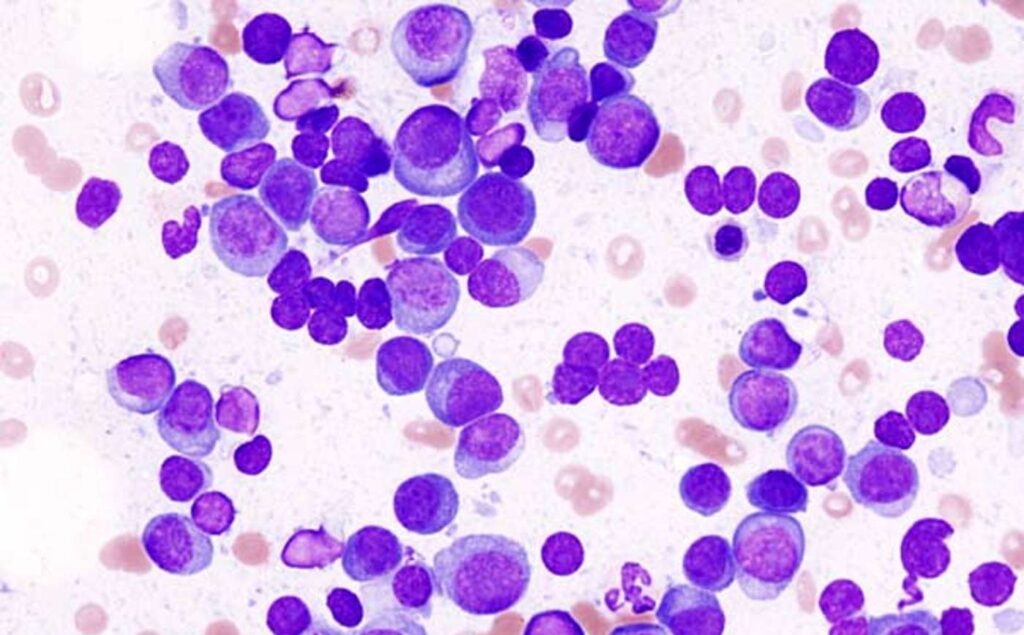
After Using Tools, Crows are Happier and Behave More Optimistically: ‘The pleasure of accomplishment’

By Peter Reuell, Harvard Gazette 

It’s no secret crows are smart. They’re notorious for frustrating attempts to keep them from tearing into garbage cans; more telling, however, is that they are one of the few animals known to make tools.

But would you believe doing it actually makes them happy?

That’s the finding of a recent paper, co-authored by Dakota McCoy, a graduate student working in the lab of David Haig, George Putnam Professor of Biology, who found that crows behaved more optimistically after using tools. The study is described in an Aug. 19 paper in Current Biology.

“What this suggests is that, just the same way we enjoy something like solving a crossword, they actually enjoyed simply using a tool,” McCoy said. “I think it suggests there’s a lot more going on in that little head than we think. They get satisfaction out of doing things they’re good at, have trained for their whole lives, and that they use frequently.”

While tool use in the animal kingdom is not unheard of — chimps use sticks to “fish” for termites and other animals use rocks to smash open nuts or shells — New Caledonian crows stand out for manufacturing multiple complex tools and regularly refining their designs.

But how can making and using tools make an animal feel good? A clue, McCoy said, lies in looking at how complex actions make humans feel.

“I think we tend to under-anthropomorphize animals, especially really intelligent animals,” she said. “It’s not that they are machines, and we are feeling beings. Clearly, animals also have emotional reactions and moods.”

And, one of those emotions is the pleasure of accomplishment.

Clever Crows, Harvard on YouTube

LOOK: Figaro the Toolmaking Cockatoo Taught His Mates How to Craft Tools – And Stunned Scientists

“One potential answer for why tool use evolved is because crows are used to picking up objects and caching them,” she said. “They actually love, when you’re experimenting with them, to pick up your equipment and cache it way up high where you can’t get it.”

Once crows started using tools, she said, the fact that it made them feel good encouraged them to keep at it, refining and developing the behavior further.

“Maybe crows are just like humans and other primates in that, when they’re doing these complicated actions, they’re reinforced not just by getting a prize out of it, but because they actually enjoy the process itself,” she said.

To understand how crows felt about using tools, McCoy and colleagues devised an experiment to test how optimistic the birds were feeling.

“We do have subtle ways to test mood, and the classic paradigm is a glass half filled with water,” she said. “Someone who is feeling pessimistic will interpret it as half empty, while an optimistic person will see it as half full.”

RELATED: Scientists Studying Crows Get Big Surprise –They’re So Smart They Understand the Concept of Zero

For the crows, researchers conceived a similar test.

In the lab, crows were trained using a small box. When placed on the left side of a table, the box always contained a large reward — three pieces of meat. On the right side, it contained just a scrap of meat, a far smaller reward.

Once the crows understood the difference, researchers placed the box in the middle of the table. If the birds quickly came to investigate that ambiguous box, it suggested they were optimistic that they would find a large reward. If they waited or didn’t visit the box at all, it suggested they were more pessimistic.

To test how they felt about tool use, the crows were then put through a series of tests over a number of days — one in which they had to use a tool to extract a piece of meat from a box and another in which the meat was readily available.

“But we thought that it might not be that tool use puts them in a good mood, it could be just that they had to work harder,” McCoy said. “So we [added] two more conditions. In one the meat was right on the table so there was no effort involved, and in another “effortful” condition, they had to fly around to the four corners of the room to retrieve each piece of meat.”

POPULAR: New Research Shows Why Crows Are So Intelligent and Even Self-Aware—Just Like Us

The results, she said, showed that, following tool use, the birds were much quicker to approach the ambiguous box, and much less enthusiastic after the effortful test compared to the easy test.

“They enjoyed the easy condition, that was no surprise,” McCoy said. “But the surprise was that, clearly, they don’t just like tool use because it’s difficult. We controlled for difficulty and that wasn’t what was motivating their interest — there is something specific about tool use they’re enjoying.”

While it’s impossible to say for certain exactly what the birds were feeling, McCoy said her study is far from the first to attempt to gauge what effects animals’ moods.

“Many people have done studies about what kind of mood animals are in … but the research to date has almost exclusively been on captive animals, and what kind of circumstantial changes can improve their mood,” she said. “Many people have shown that animals’ mood improves if you do something like give them a larger cage, but this study shows that animals also have a better mood if you give them complex, fun tasks to do.”

MORE: After Years of Helping Crow Family, Man Was Left ‘Mind-Blown’ Over Their Homemade Gifts in Return

McCoy, who is a student in the Graduate School of Arts and Sciences, said that she hopes to see the findings of the study applied to improving the lives of animals in captivity.

(WATCH the Harvard video below – article originally published in Harvard Gazette)


“Our findings suggest that one way to improve the welfare of captive animals is to give them complex, species-specific enrichment where they’re using skills they have … to achieve goals instead of just receiving passive enrichment,” she said. “We’re far from a world where we don’t have animals in captivity … but they could live a much more enriching life if they’re housed socially and given fun tasks to solve.”

SHARE the Fascinating Study With Your Flock on Social Media…

Yukon to Yellowstone Wildlife Corridor Makes Massive Gains Since ‘Y2Y’ is Dreamed Up in the 90’s to Help Grizzlies

Whatever happened to the Yukon to Yellowstone (Y2Y) wildlife corridor dream that was splashed across headlines years ago?

Conservationists’ dreams of a wildlife corridor stretching from the Yukon to Yellowstone (Y2Y) where “charismatic megafauna” like bears, wolves, and caribou can roam freely and have enough continuous undisturbed habitat to thrive is slowly becoming a reality thanks to the dogged determination of thousands of concerned individuals and over 450 partner groups behind them.

Since the project’s inception in 1993, green groups, indigenous groups and government agencies have worked together to preserve more than a half million square miles of the intermountain west for this project, with hopes of adding much more.

In August 2021, they further advanced the corridor in Montana securing a key habitat connection for grizzly bears after the Y2Y initiative purchased 80 acres (32 hectares) near the confluence of the Bull River and Clark Fork River.

The core of Y2Y is within the Rocky Mountains in Canada in British Columbia, but it expands into the Greater Yellowstone Ecosystem, and the Columbia Mountains of eastern B.C., as well.

Unlike other animal crossings, Y2Y is a large area across mountain ranges without a hard boundary. Since natural ecosystems are entirely interconnected, conservationists have drawn soft, flexible boundaries in conjunction with evolving patterns of seasonal movements by wildlife.

These untouched areas serve as safe highways for the diverse range of species to feed, breed and migrate without outside interference.

RELATED: World’s Longest Wildlife Bridge Could Cross the Mississippi, So ‘Buffalo Can Roam’

The green area below shows preserved land before 1993, while the large 2000-mile swath encircled shows the Y2Y corridor in 2018.

Y2Y.net

In other sections of the Y2Y region where development has been more commonplace, partner groups have worked to create wildlife-friendly infrastructure to facilitate crossings of roads and other man-made obstructions. They have also set up tracking mechanisms for some species to monitor their success.

LOOK: ‘It’s working!’ From Bobcats to Bears, Utah’s First Wildlife Bridge is a Hit–And There’s Video to Prove it

“In 2020 alone, thanks to the generosity of our donors and funders, we spent more than $3.49 million—driven by 26 staff, but working with our many partners—to advance conservation in the Yellowstone to Yukon region, including 13 wildlife overpasses and underpasses underway that will support connectivity across roads,” says a Y2Y annual assessment.

Banff National Park overpass wildlife crossing-by Allie Banting for Parks Canada-2014

Meanwhile, other partners have been focused on acquiring real estate parcels that can be left in a natural state or converted back from development to be included in the animal-friendly network of corridors.

In the Y2Y region, conservationists and scientists have focused on the preservation of grizzly bears—an “umbrella” species. Since grizzly bears roam such an expansive area of land in search of food and mates, they play a central role in maintaining the healthy functioning of an ecosystem. Given the population declines and genetic diversity loss of the region, conservationists have especially pushed for wildlife corridors to alleviate the habitat loss and fragmentation among grizzly bears.

POPULAR: World’s Biggest Wildlife Crossing Will Protect Animals From Drivers on the 101 in Los Angeles

Bighorn sheep populations have declined since mountains underwent development. – Philipp Haupt, CC license

Achieving the Y2Y vision has not come easy. Much of the region stretches across private lands. To accommodate both humans and wildlife, conservationists have worked with private landowners to ensure safe passage for wildlife without interrupting human lifestyles.

Many oil, gas and mining projects also require access roads, which often cut through natural landscapes and degrade wildlife habitat.

While the Y2Y mission has come far in preserving the natural environments from Yellowstone to Yukon, the initiative calls for further collaboration from diverse communities.

MORE: Florida Just Enacted Sweeping Law to Protect Its Vast Wildlife Corridors – And Save Panthers

Whether it’s volunteering from local groups or partnerships with larger organizations, Y2Y aims to continue its vision of harmonizing a wild and wooly 2,000-mile swath of the North American West.

HELP This Good News Travel Widely –Share it on Social Media…

With editorial help from EarthTalk® and Emagazine.com, produced by Roddy Scheer & Doug Moss for the 501(c)3 nonprofit EarthTalk. To donate, visit Earthtalk.org. Send questions to [email protected]

Faith in Humanity Restored When Florida Teens Return Wallet and Refuse Reward

After Chris Person lost his wallet outside a Publix store, he searched the area multiple times. After his 72-year-old mother scoured the parking lot and looked at surveillance footage with the store manager, but came up empty, he’d completely given up hope.

The wallet contained his drivers license, Covid vaccination card, credit cards, plenty of cash, and even a gift card that could easily be redeemed by anyone.

The next day three strangers showed up to his home in Palmetto Bay, Florida.

15-year-old Lucas Perry had found the wallet in the parking lot, which had fallen out of Chris’s pocket, and with his father and sister decided to drive to Chris’s address to personally hand deliver it.

Chris became impressed with the values that Eduardo Perry had obviously instilled in his children. Especially because every dollar of the more than $100 in cash was still in the wallet.

“They all refused my offer to keep the money that was inside it, they only wanted to do the right thing—and they did,” Chris told GNN. “Eduardo was adamant about teaching his children the impact of a selfless, honest act, but I have a strong feeling these two teens would have done it anyway.”

RELATED: Hero Teen is Rewarded for Returning $135,000 He Found Next to ATM

They didn’t even look at their phones

Chris was also impressed by the respectful attitude of Lucas and his 17-year-old sister Maya.

While they talked about everything from Jimi Hendrix to Lucas’ artwork, the two teens “never even looked down at their phones”.

“We found we had so many commonalities between us—especially a love of classic rock,”

“I’m fortunate to know this wonderful, gifted, and talented family—I know that because we spent a good amount of time listening to Maya play my guitar and sing Let it Be with her beautiful sweet voice.”

LOOK: Family Praised for Honesty After Returning Bags Containing $1Million in Cash

The following weekend Chris and his wife got a new TV and decided they didn’t need their souped-up surround sound system anymore. Chris remembered Eduardo is very much into quality audio, so he called him up and asked if he wanted it—and he was thrilled by the offer.

“So, interestingly, one Sunday they are dropping off my wallet at my house, and the next Sunday they are back at my house to pick up a surround sound system,” Chris exclaimed. “I can’t wait to see what the future holds.”

“I made three new friends today. What an amazing experience!”

MORE: When College Students Find $40,000 Hidden Inside Used Couch, They End Up Getting A+ for Honesty

SHARE With Your Friends to Restore Everyone’s Faith in the Future…

“It does not matter how slowly you go so long as you do not stop.” – Andy Warhol

Quote of the Day: “It does not matter how slowly you go so long as you do not stop.” – Andy Warhol

Photo: by Andre Ouellet

With a new inspirational quote every day, atop the perfect photo—collected and archived on our Quotes page—why not bookmark GNN.org for a daily uplift?

This Plant-Based Jet Fuel Can Reduce Emissions by 68% – Without Displacing Crops

By Forest and Kim Starr, CC license

Replacing petroleum-based aviation fuel with a sustainable alternative derived from a type of mustard plant can reduce carbon emissions by up to 68%, according to new research from a University of Georgia scientist.

By Forest and Kim Starr, CC license

Puneet Dwivedi led a team that studied the break-even price and lifetime carbon emissions of a sustainable aviation fuel derived from Brassica carinata, a non-edible oilseed crop.

“If we can provide suitable economic incentives along the supply chain, we could potentially produce carinata-based SAF (sustainable aviation fuel),” said Dwivedi, associate professor in the Warnell School of Forestry and Natural Resources.

It is estimated that the aviation industry emits 2.5% of all carbon dioxide emissions nationwide and is responsible for 3.5% of global warming. Carinata-based fuel could help reduce the carbon footprint of the aviation sector while creating economic opportunities across the southern U.S., where the plant would grow well, says Dwivedi.

RELATED: World’s First Hydrogen-Powered Passenger Plane Lifts Off On Maiden Zero-Emissions Flight

Dwivedi’s findings come at an opportune time. In September, President Joe Biden proposed a sustainable fuel tax credit which would bring federal agencies together to scale up the production of SAF nationwide.

The proposed tax credit requires a 50% reduction in life cycle carbon emissions—a standard that carinata exceeds, according to the team’s findings, published in GCB Bioenergy.

The price for producing SAF from oil derived from carinata ranged from $0.12 per liter on the low end to $1.28 per liter, based on existing economic and market incentives. The price for petroleum-based aviation fuel was $0.50 per liter—higher than carinata-based SAF when current economic incentives were included in the analysis.

POPULAR: Canadian Startup to Build $400M UK Plant to Harness Nuclear Fusion in Entirely New Cost-Effective Way

Growing carinata in the Southeast

Dwivedi is part of the Southeast Partnership for Advanced Renewables from Carinata, or SPARC, a $15 million project funded by the U.S. Department of Agriculture’s National Institute of Food and Agriculture. Through SPARC, researchers have spent the past four years investigating how to grow carinata in the Southeast, exploring questions related to optimum genetics and best practices for the highest crop and oil yield. With those answers in place, Dwivedi is confident.

“In the South, we can grow carinata as a winter crop,” he said in a UG news report. “Since carinata is grown in the ‘off’ season it does not compete with other food crops, and it does not trigger food versus fuel issues. Additionally, growing carinata provides all the cover-crop benefits related to water quality, soil health, biodiversity, and pollination.”

RELATED: Researchers Pull Carbon Out of the Sky And Convert it to Instant Jet Fuel, Reshaping Aviation For Good

The missing piece of the puzzle, according to Dwivedi, is the lack of local infrastructure for crushing the seed and processing the oil into SAF. His current research focuses on modeling the economic and environmental feasibility of producing and consuming carinata-based SAF across Georgia, Alabama and Florida by taking a supply-chain perspective.

“Our results would be especially relevant to the state of Georgia, which is the sixth-largest consumer of conventional aviation fuel in the country, hosts the busiest airport in the world, and is home to Delta, a leading global airline company,” he added. “Carinata has the potential to be a win-win situation for our rural areas, the aviation industry, and most importantly, climate change.”

FLY This Progress to Green Friends on Social Media…
Don’t Rake Those Leaves: Good for Your Yard, and Good For the Planet

raked-leaves-smile-CC- trpnblies7

Can’t get motivated to rake those leaves off your lawn? Now you have the ultimate excuse to avoid that chore: you’d be saving the environment, as well as making your lawn more healthy.

The National Wildlife Federation says leaving leaves where they fall helps critters in your yard and contributes to a healthy ecosystem.

If you are mostly concerned about lawn health, the best thing to do is just run a mulching lawn mower right over the leaves. The smaller bits act as fertilizer. If you don’t like how that looks, attach a bagger to your mower and dump the leaf mulch on your garden beds. It looks amazing and will fertilize the beds.

RELATED: 5 Alternatives to Herbicides to Get Rid of Weeds Without Killing Bees

Toads, turtles, and other animals eat the fallen leaves and birds use them to build nests. Caterpillars ride out the winter beneath the moist blankets to emerge as butterflies or moths in the spring.

Letting your leaves fall where they may also reduces greenhouse gases in the atmosphere. The EPA estimates 33 million tons are dumped into landfills every autumn, accounting for 13% of America’s solid waste.

Buried underground without oxygen to help them decompose naturally, leaves will turn into methane gas that slowly leaks into the air.

CHECK OUT: Growing Mushrooms at Home is Everyone’s New Pandemic Hobby

You can also keep leaves out of the landfill by composting them at home in a composter or pit.

Another benefit: if you avoid raking in the fall, you can avoid even more yard work in the spring, say some landscapers. That’s because leaves become a natural fertilizer when using a mulching mower to break them down—and those nutrients may cut down on pesky weeds.

(WATCH a video below…)


Plant Some Positivity: Click To Share (Photo by trpnblies7, CC)

This Week’s Inspiring Horoscopes From Rob Brezsny’s ‘Free Will Astrology’

Our partner Rob Brezsny provides his weekly wisdom to enlighten our thinking and motivate our mood. Rob’s Free Will Astrology, is a syndicated weekly column appearing in over a hundred publications. He is also the author of Pronoia Is the Antidote for Paranoia: How All of Creation Is Conspiring To Shower You with Blessings. (A free preview of the book is available here.)

Here is your weekly horoscope…

FREE WILL ASTROLOGY – Week beginning October 22, 2021
Copyright by Rob Brezsny, FreeWillAstrology.com

SCORPIO (Oct. 23-Nov. 21):
Nobel Prize-winning poet Odysseus Elytis was speaking like a consummate Scorpio when he said, “What I love is always being born. What I love is beginning always.” Like most Scorpios, he knew an essential secret about how to ensure he could enjoy that intense rhythm: He had to be skilled in the art of metaphorical death. How else could he be born again and again? Every time he rose up anew into the world like a beginner, it was because he had shed old ideas, past obsessions, and worn-out tricks. I trust you’ve been attending to this transformative work in the past few weeks, Scorpio. Ready to be born again? Ready to begin anew? To achieve maximum renaissance, get rid of a few more things.

SAGITTARIUS (Nov. 22-Dec. 21):
“I haven’t had enough sleep for years,” author Franz Kafka (1883–1924) confessed to a friend in 1913. I think it showed in his work, which was brilliant but gaunt and haunted. He wrote the kinds of stories that would be written by a person who was not only sleep-deprived but dream-deprived. The anxiety he might have purged from his system through sleep instead spilled out into the writing he did in waking life. Anyway, I’m hoping you will make Kafka your anti-role model as you catch up on all the sleep you’ve missed out on. The coming weeks will be a fantastic time to fall in love with the odd, unpredictable, regenerative stories that well up from your subconscious depths while you’re lying in bed at night.

CAPRICORN (Dec. 22-Jan. 19):
“The reason life works at all is that not everyone in your tribe is nuts on the same day,” writes author Anne Lamott. I will add that on rare occasions, virtually everyone in your tribe is functioning at high levels of competency and confidence and compassion. According to my analysis, now is one of those times. That’s why I encourage you to take extraordinary measures to marshal your tribe’s creative, constructive efforts. I really believe that together you can collaborate to generate wonders and marvels that aren’t normally achievable. Group synergy is potentially at a peak—and will be fully activated if you help lead the way.

AQUARIUS (Jan. 20-Feb. 18):
I believe your plan for the rest of 2021 should borrow from the mini-manifesto that Aquarian author Virginia Woolf formulated at age 51: “I will go on adventuring, changing, opening my mind and my eyes, refusing to be stamped and stereotyped. The thing is to free one’s self: to let it find its dimensions, not be impeded.” Does that sound like fun, Aquarius? It should be—although it may require you to overcome temptations to retreat into excess comfort and inertia.

PISCES (Feb. 19-March 20):
“Anyone who isn’t embarrassed of who they were last year probably isn’t learning enough,” writes author and philosopher Alain de Botton. That’s way too extreme a statement for my taste. But I agree with the gist of his comment. If we are not constantly outgrowing who we are, we are not sufficiently alert and alive. Luckily for you, Pisces, you are now in a phase of rapid ripening. At least you should be. The cosmos is conspiring to help you learn how to become a more vibrant and authentic version of yourself. Please cooperate! Seek all available updates.

ARIES (March 21-April 19):
Even the wisest among us are susceptible to being fascinated by our emotional pain. Even those of us who do a lot of inner work may be captivated and entranced by frustrations and vexations and irritants. Our knotty problems make us interesting, even attractive! They shape our self-image. No wonder we sometimes are “intensely, even passionately, attached to suffering,” in the words of author Fyodor Dostoevsky. That’s the bad news. The good news, Aries, is that in the coming weeks, you will have extra power to divest yourself of sadness and distress and anxiety that you no longer need. I recommend you choose a few outmoded sources of unhappiness and enact a ritual to purge them.

TAURUS (April 20-May 20):
In Norway, you don’t call your romantic partner “boyfriend” or “girlfriend.” You say kjaereste, which is translated as “dearest.” In Sweden, you refer to your lover as älskling, meaning “my beloved one.” How about Finland? One term the Finns use for the person they love is kulta, which means gold. I hope you’ll be inspired by these words to experiment with new nicknames and titles for the allies you care for. It’s a favorable time to reinvent the images you project onto each other. I hope you will refine your assumptions about each other and upgrade your hopes for each other. Be playful and have fun as you enhance your empathy.

GEMINI (May 21-June 20):
The band Creedence Clearwater Revival, led by Gemini musician John Fogerty, achieved tremendous success with their rollicking sound and socially conscious lyrics. They sold 33 million records worldwide. During 1970, they were the best-selling band on the planet, exceeding even the Beatles. And yet, the band endured for just four years. I foresee the possibility of a comparable phenomenon in your life during the coming months. Something that may not last forever will ultimately generate potent, long-term benefits. What might it be? Meditate on the possibility. Be alert for its coming. Create the conditions necessary for it to thrive.

CANCER (June 21-July 22):
Cancerian philosopher Jean-Jacques Rousseau wrote, “I am unlike anyone I have ever met. I will even venture to say that I am like no one in the whole world. I may be no better, but at least I am different.” I urge you to make that your own affirmation in the coming weeks. It’s high time to boldly claim how utterly unique you are—to be full of reasonable pride about the fact that you have special qualities that no one in history has ever had. Bonus: The cosmos is also granting you permission to brag more than usual about your humility and sensitivity, as well as about your other fine qualities.

LEO (July 23-Aug. 22):
Nigerian poet Ijeoma Umebinyuo writes, “I will always want myself. Always. Darling, I wrote myself a love poem two nights ago. I am a woman who grows flowers between her teeth. I dance myself out of pain. This wanting of myself gets stronger with age. I host myself to myself. I am whole.” I recommend you adopt Umebinyuo’s attitude as you upgrade your relationship with yourself during the coming weeks. It’s time for you to pledge to give yourself everything you wish a lover would offer you. You’re ready to claim more of your birthright as an ingenious, diligent self-nurturer.

VIRGO (Aug. 23-Sept. 22):
As author David Brooks reminds us, “Exposure to genius has the power to expand your consciousness. If you spend a lot of time with genius, your mind will end up bigger and broader than if you spend your time only with run-of-the-mill stuff.” I hope this strategy will be at the top of your priority list during the next four weeks. You will have abundant opportunities to put a lot of “excellent stuff into your brain,” as Brooks suggests. Uncoincidentally, you are also likely to be a rich source of inspiration and illumination yourself. I suspect people will recognize—even more than they usually do—that being around you will make them smarter. I suggest you help them realize that fact.

LIBRA (Sept. 23-Oct. 22):
Self-help author James Clear describes a scenario I urge you to keep in mind. He speaks of “a stonecutter hammering away at his rock, perhaps a hundred times without as much as a crack showing in it. Yet at the hundred and first blow, it will split in two.” Clear adds that “it was not that last blow that did it—but all that had gone before.” You’ll thrive by cultivating that same patience and determination in the coming weeks, Libra. Proceed with dogged certainty that your sustained small efforts will eventually yield potent results.

WANT MORE? Listen to Rob’s EXPANDED AUDIO HOROSCOPES, 4-5 minute meditations on the current state of your destiny — or subscribe to his unique daily text message service at: RealAstrology.com

(Zodiac images by Numerologysign.com, CC license)

SHARE The Wisdom With Friends Who Are Stars in Your Life on Social Media…

A Lost Sunken City of Gold and Jewels Found in the Mud of Indonesian River

WreckWatch Magazine

Nighttime divers on the Musi River in Indonesia are beginning to fish out fistfuls of gold, gems, and other treasures from the mud—and it might be the site of a fabled kingdom known in the 8th century as the ‘Island of Gold’.

WreckWatch Magazine

Dr. Sean Kingsley, a British maritime archaeologist, suspects the finds, such as a ruby-studded life-size golden Buddha worth millions, represent the gradual-rediscovery of a lost merchant palace city from the kingdom of Svirijaya, which ruled the trade routes in large parts of Indonesia for 400 years.

Situated around the town of Palembang, sometimes called “Venice of the East,” the palace city would have sat on a major artery of the maritime version of the Silk Road, and like its terrestrial counterparts in the cities of Qashqar, or Tashkent, would have bustled in its heyday with people of every faith and skin color.

Earlier diving expeditions conducted by Australian archaeologists have recovered pristine collections of ceramics preserved in the mud of the river, representing a staggering number of cultures—including every major Medieval power in Asia, and even the Dutch, British and Portuguese.

But now the treasures coming from the Musi River have a more legendary quality: Dr. Kingsley picks up the narrative when he spoke with Dalya Alberge at The Guardian about his upcoming presentation on the lost city in Wreckwatch Magazine.

“From the shallows have surfaced glittering gold and jewels befitting this richest of kingdoms – everything from tools of trade and weapons of war to relics of religion. From the lost temples and places of worship have appeared bronze and gold Buddhist figurines, bronze temple door-knockers bearing the demonic face of Kala, in Hindu legend the mythical head of Rahu who churned the oceans to make an elixir of immortality. Bronze monks’ bells and gold ceremonial rings are studded with rubies and adorned with four-pronged golden vajra scepters, the Hindu symbol for the thunderbolt, the deity’s weapon of choice.”

RELATED: See All the Treasure Hunting Good News in the Last Decades in the GNN Archive

“Exquisite gold sword handles would have graced the sides of royal courtesans, while bronze mirrors and hundreds of gold rings, many stamped with enigmatic letters, figures and symbols, earrings and gold necklace beads resurrect the splendor of a merchant aristocracy going about its daily dealings, stamping shipping manifests, in the palace complex.”

POPULAR: Family Finds 15th Century Gold Coins While Pulling Weeds in the Garden–6,000 People Have Dug Up Treasures During Lockdown

The image is of a city on wooden silts yet covered in golden decorations, floating on the river like a solid gold water lily. All around would have been hundreds of boats piled with luxury goods of every description, piloted by traders as from as far west as Turkey, and as far north as Korea. It would have been as stunning a sight to see as the great tent cities of the Mongol Empire.

Its disappearance isn’t detailed in any histories, or known by archaeology. The prevalence of volcanic activity in Indonesia could offer a Pompeii-like explanation, while it’s also possible that riverine activity could have swallowed the city up during a flood or mud slide.

LOOK: First Time a 10-Year-old Boy Uses His Birthday Metal Detector, He Unearths a Centuries-Old Sword

Kingsley hopes an official, wide-scale excavation will begin immediately.

SEND This Treasure to All Your Gold Seeking Friends on Social Media…

“Your own self-realization is the greatest service you can render the world.” – Ramana Maharshi

Quote of the Day: “Your own self-realization is the greatest service you can render the world.” – Ramana Maharshi

Photo: by Pen Tsai

With a new inspirational quote every day, atop the perfect photo—collected and archived on our Quotes page—why not bookmark GNN.org for a daily uplift?

Police Melt Over This 4-Year-old Boy’s Emergency Call Inviting Them to Come See His Toys (LISTEN)

NZ Police

A 4-year-old boy in New Zealand recently dialed the national emergency services number by accident. When the police answered his call? He invited them to see his favorite toys. Naturally, they took him up on his offer.

Southern District Police posted audio from the call on their Facebook page, stating, “While we don’t encourage children to call 111 to show us their toys, this was too cute not to share.”

“Hi,” the boy says on the phone to the police operator.

“Police lady,” he says, “Can I tell you something?”

After some back and forth, the little one says, “I’ve got some toys for you… Come over and see them!”

Given the picture at the bottom of the post, showing the boy hanging out on the bonnet of a police car—hands waving happily in the air—we’d say the spontaneous show-and-tell went more than well.

NZ Police

“Constable Kurt from Southern District Police responded by arriving at the child’s house and was,” the police said, “shown an array of toys.”

MORE: Indiana Boys Hop Off Their Bikes to Stand at Attention For Military Funeral Happening on Their Route

“He also had a good educational chat with the child and his parents about only using 111 for emergencies.”

Sounds like a worthy lesson to us.

(LISTEN to the adorable audio to get the full story below.)

SHARE This Sweet Kiwi Story With All Your Mates…

750,000-Panel Solar Farm Will Power Colorado Steel Mill, First of its Kind

Jatinsanghvi, CC license

The solar energy arm of petro-giant BP has brought together $285 million in private equity to fund a gargantuan solar energy project in Colorado that will power the world’s first carbon-neutral steel mill.

The Bighorn solar project array will feature three-quarters of a million panels generating 300 megawatts, negating 433,000 metric tons of carbon dioxide emissions per year—the equivalent of removing 92,100 fuel-burning cars from the road.

The 1,800 acre project in Pueblo will be the largest single-customer solar energy plant in the world.

Steel is vital to the world economy. It is also the third-largest contributor on the global greenhouse gas budget, and producing steel domestically removes the carbon-emissions of transit over the ocean from big steel producers or iron miners like China or South Africa.

“This project proves that even hard-to-abate sectors like steel can be decarbonized when companies come together with innovative solutions,” said Kevin Smith, CEO of Lightsource BP, Americas—the firm which will build and own the array. “It’s a great example of partners tackling complex issues that U.S. industry is facing today while, at the same time, preserving jobs in the manufacturing sector.”

RELATED: World’s Biggest Factory to Suck Carbon from the Sky and Store it For Millions of Years Turns on in Iceland

This is not the first movement towards decarbonizing the steel industry: a Swedish venture firm is already trying to create a scaled economy for “green steel” which they produce without adding brown coal.

“Bighorn Solar shows us what the future of American energy can look like. Renewable energy can create a more sustainable, competitive business,” said Dave Lawler, chairman and president of BP Americas. “Projects like this can make companies more resilient and protect jobs through the energy transition.”

MORE: Making Clean Hydrogen Energy Is Hard, But Researchers Just Solved a Major Hurdle

Many of the world’s largest oil producers, including Eni Spa, BP, and Shell are now turning collective billions of investment capital into renewable energy projects to aid in energy transition, achieve carbon neutrality, and help meet government mandates on emissions reductions.

POWER UP Hope—Share This Energy Story in Your News Feeds…

Istanbul Improves the Lives of Thousands of Stray Cats with Elaborate Outdoor Cat Houses

By bluXgraphics (motorcycle design Japan)=Midorikawa

In Istanbul, a city of 15 million people that’s famous for its relaxed attitude towards stray cats, groups of volunteers build elaborate houses for their feline neighbors.

There, cats can find donated food and toys, cushions and boxes to keep them out of harsh weather, and even a new owner if they’re lucky.

It all started back in 2008, when, according to one source, an interior architect named Didem Gokgoz regularly passed through a park on her way to work in the district of Sisli—in which there were always stray cats trying to find places to keep warm in winter.

Attempting to help the felines, she placed several plastic boxes they could shelter in around Mistik Park, but officials removed them because they were seen as an eyesore.

Gradually, Gokgoz came to know the people who would feed the stray cats, and formed a plan to build more refined and pleasant shelters anchored to the ground with chains. Gokgoz invited the mayor to a meeting, and the idea was discussed in circumstances that perhaps drove home the need for some sort of action.

“There were three of us in the pouring rain: Me, my lawyer friend, and Mr. Mustafa Sarigul [then the Sisli mayor],” Gokgoz reported to Tol, a solutions-focused journalism outlet in Istanbul.

“We showed him our designs, explained how it would work and everything. Mr. Sarigul listened carefully and said, ‘OK, do it; if we think it works, we will support it.'”

RELATED: Black Cat’s Meows Led Rescuers to 83-Year-old Owner After She Fell Into Ravine

Cat hotels

Estimated at 125,000, the stray cat population of Istanbul is a more appreciated component of the metropolis. A 2016 documentary called Cat was a hit with international audiences, and revealed an interesting relationship between the city’s furry residents and their human neighbors.

After getting Mr. Sarigul’s word that new houses would not be removed, Gokgoz, who now runs the nonprofit cat supplier Podo, installed two houses in Mistik Park with her friends.

The Mistik Park houses, whimsical and colorful, were a turning point, which after being covered by local news saw replication in parks around the city’s 39 districts. (See two of the designs on Tol.)

Gokgoz was flooded with requests to build houses: for two universities, cafes, and even the Industrial Development Bank of Turkey. After that came the requests to build cat houses in places further afield: the cities of Alanya, Izmir, and Gaziantep.

“It became something normal; individuals make requests for cat houses,” she said. “That was our main goal, and we’ve reached it. Today, everybody accepts that cats must have their own life spaces in the city.”

MORE: Minnesota Teen Builds Free Wheelchairs for Disabled Dogs and Cats – And Soon a Duck (WATCH)

The cats too, responded to the real estate boom, and moved to them in droves.

This allows volunteers, who often organize via WhatsApp groups, to keep a closer eye on the cats’ lives, ensuring that strays who wander into the community are spayed and neutered, and that any signs of disease can be dealt with swiftly.

SHARE the Good News From Turkey With Your Feline-Loving Chums…

Anti-Cancer Drug Derived From Himalayan Plant Clears Early Clinical Trials

University of Oxford

An Oxford University study has shown that the new drug NUC-7738—a novel chemotherapy drug, derived from a fungus—has up to 40 times greater potency for killing cancer cells than its parent compound, with limited toxic side effects.

The naturally-occurring nucleoside analogue known as Cordycepin (a.k.a 3’-deoxyadenosine) is found in the Himalayan fungus Cordyceps sinensis and has been used in traditional Chinese medicine for hundreds of years to treat cancers and other inflammatory diseases.

However, it breaks down quickly in the blood stream, so a minimal amount of cancer-destroying drug is delivered to the tumor.

In order to improve its potency and clinically assess its applications as a cancer drug, biopharmaceutical company NuCana has developed Cordycepin into a clinical therapy, using their novel ProTide technology, to create a chemotherapy drug with dramatically improved efficacy.

Once inside the body, Cordycepin requires transport into cancer cells by a nucleoside transporter (hENT1), it must be converted to the active anti-cancer metabolite, known as 3’-dATP, by a phosphorylating enzyme (ADK), and it is rapidly broken down in the blood by an enzyme called ADA.

RELATED: New Report Finds Survival Rates Are Improving Every Year For Most of the Common Cancers in U.S.

Together, these resistance mechanisms associated with transport, activation, and breakdown result in insufficient delivery of anti-cancer metabolite to the tumor.

NuCana have utilized novel ProTide technology to design a therapy that can bypass these resistance mechanisms and generate high levels of the active anti-cancer metabolite, 3’-dATP, inside cancer cells.

ProTide technology is a novel approach for delivering chemotherapy drugs into cancer cells. It works by attaching small chemical groups to nucleoside analogues like Cordycepin, which are then later metabolized once it has reached the patient’s cancer cells, releasing the activated drug. This technology has already been successfully used in the FDA approved antiviral drugs Remsidivir and Sofusbuvir to treat different viral infections such as Hepatitis C, Ebola, and COVID-19.

The results of the study, published in Clinical Cancer Research, suggest that by overcoming key cancer resistance mechanisms, NUC-7738 has greater cytotoxic activity than Cordycepin against a range of cancer cells.

MORE: New Cancer Treatments May Be on The Horizon – Success in mRNA Vaccine Trials Use Patients’ Immune Systems

Oxford researchers and their collaborators in Edinburgh and Newcastle are now assessing NUC-7738 in the Phase 1 clinical trial NuTide:701, which tests the drug in patients with advanced solid tumors that were resistant to conventional treatment.

Early results from the trial have shown that NUC-7738 is well tolerated by patients and shows encouraging signs of anti-cancer activity.

Further Phase 2 clinical trials of this drug are now being planned in partnership with NuCana, to add to growing number of ProTide technology cancer drugs that are being developed to treat cancer. That’s hopeful news indeed.

Source: University of Oxford

SHARE This Important Line of Research on Social Media…
“When you can think of yesterday without regret and tomorrow without fear, you are near contentment.”

Quote of the Day: “When you can think of yesterday without regret and tomorrow without fear, you are near contentment.” (author unknown)

Photo: by Ante Hamersmit

With a new inspirational quote every day, atop the perfect photo—collected and archived on our Quotes page—why not bookmark GNN.org for a daily uplift?

Dog Trapped in Narrow Crevice Licked Moisture From Walls Until Rescuers Found Her With Plumber’s Camera

New Jersey Initial Response Team

A dog which was trapped in a rocky crevice was successfully rescued unharmed after five days without food or water.

The incident started when a woman was hiking with her 12-year-old dog, Liza—who fell out of sight into the narrow crevice but could be heard barking.

Staff at Minnewaska State Park Preserve attempted unsuccessfully to access the crevice that evening before dark and made other unsuccessful attempts in the following days to get a camera into the narrow area to check the dog’s condition.

Members of the Ulster County Society for the Prevention of Cruelty to Animals were on scene to assist and a specialized plumbing inspection camera from Parks was utilized to reach the dog.

Parks received support from the New Jersey Initial Response Team, a regional volunteer group specializing in cave rescue.

Two NJIRT members were able to descend into the crevice to get the plumbing camera close enough to observe the dog moving in a narrow area, and apparently unharmed.

New Jersey Initial Response Team

It was a difficult situation. “This was a tight vertical fissure leading to an even tighter horizontal crack,” Mark Dickey, Chief of the New Jersey Initial Response Team, said in a statement. “Only Jessica Van Ord, our smallest team member, was able to squeeze and contort herself more than 40 feet from the surface to reach the dog.”

New Jersey Initial Response Team

Van Ord described shimmying along a narrow passage and then using a hot dog hanging from the end of the catch pole to attract the dog into putting its head into the loop, which allowed another rescuer nearby to close the loop so Van Ord could bring the dog to her.

New Jersey Initial Response Team

Palisades Interstate Park Commission Executive Director Joshua Laird said, “We are thrilled that it was possible to reunite Liza with its owner,” and noted that the incident was a good reminder of why parks rules were that dogs needed to be on-leash.

A happy ending

New Jersey Initial Response Team

Gina Carbonari, Executive Director of the Ulster County SPCA, said, “It’s always heartwarming to not only have such a positive outcome in cases like this, but also to see so many people come together, putting themselves at risk, to save an animal’s life.

“We were all concerned the dog had not survived until Jessica was able to get closer and hear movement. The rejoicing on the surface to that news was just incredible and renewed everyone’s motivation to get this little dog to safety.  Every person there played a role in making this happen—an amazing team effort by multiple agencies.”

MORE: Wildlife Officers Finally Figure Out How to Remove Tire That Was Around an Elk’s Neck for 2 Years

SPCA officials determined the dog, while hungry and thirsty, was in good health and it was later reunited with its owner. While under observation with the camera, the dog was seen licking the damp walls of the crevice, likely providing itself with moisture that helped it survive.

WOOF a Little Good News Rescue into Friends’ Feeds…
Nebraska Teen Runner Helps Competitor Finish Race After He Collapsed, Giving Up His Own Qualifying Hopes

Featured image By Jay Slagle www.preprunningnerd.com

In the sport of track and field, athletes compete not only with one another but against themselves, and with each race they strive to achieve a new personal best.

For one Nebraska teen running in what would likely be his final cross country outing before graduating high school, his personal best turned out not to be about marking the fastest time but displaying the biggest heart.

Although it was a long shot when he came out of the blocks last Thursday, Bellevue East senior Brandon Schutt knew if his time was good enough that day, he still had the potential to qualify for the upcoming state meet.

A mile into the 3.1-mile race, however, Schutt realized he wasn’t going to be able to keep up the necessary momentum.

Rather than risk injury, he slowed to a comfortable pace that would allow him to simply enjoy the moment and the day.

Meanwhile, Omaha Burke High School sophomore Blake Cerveny was running a very different kind of race.

Aiming to beat his own personal record, after a fast start, he continued to push himself hard.

With less than 400 meters to go, Cerveny’s legs cramped up and failed him.

Jay Slagle/www.preprunningnerd.com

His will did not.

Determined to finish, Cerveny rose from the ground and continued on, only to fall again after another 150 meters… and again, he got up and started running. This time he’d made it only 25 meters more before going down. But he wasn’t done yet.

Concerned, his dad and his coach asked Cerveny if he wanted to stop. He didn’t. With Herculean effort, the young runner pulled himself up and with an unsteady gait, moved forward for one final push.

It wasn’t enough. A scant 100 meters from the finish line, he lay curled on the ground. His legs had simply given out.

Before Cerveny’s dad could reach his son, another runner—Brandon Schutt—was at his side to offer a helping hand.

Jay Slagle/www.preprunningnerd.com

His first attempt to get Cerveny up failed, but like Cerveny, he too refused to quit. With a second tug, Cerveny was on his feet.

At a measured jog, with Cerveny holding Schutt for support and Schutt helping Cerveny maintain balance, the two completed the final 75 meters of the course in tandem.

Jay Slagle/www.preprunningnerd.com

Schutt even made sure the injured runner crossed the finish line first, securing his opponent a faster time.

Jay Slagle/www.preprunningnerd.com

(Although Cerveny was automatically disqualified for having received help, Schutt’s time for the race will stand.)

RELATED: The 7 Mental Health Benefits of Running That You May Not Know About

“I saw Blake zig-zagging with 100 meters to go, a classic sign that his legs were about to give. As I kept my camera trained on him, I saw Brandon come into the picture. I began whispering, ‘No, no, no,’ to myself, because at the time, I didn’t know the Good Samaritan rule had been changed,” Jay Slagle, the citizen journalist who first broke the story on his blog, PrepRunningNerd.com told GNN.

“This is the first time I’ve ever seen an athlete stop his race and work so hard to help his fellow competitor across the finish line,” he added. “Perhaps more impressively, Brandon had virtually no time to think about whether he should help or not; he reacted so quickly that he did it instinctively.”

Three weeks prior to this meet, Schutt had found himself in the same situation as Cerveny, unable to complete the race. “I felt awful about not finishing,” he told KETV-7. “I felt like I was letting my teammates down and I was letting myself down—so ultimately I just made the call [to help him].”

As Cerveny was taken to the medical tent for care, Schutt rejoined his teammates for a post-race cool-down. (Cerveny, who was only suffering from extreme muscle fatigue with no sustained injuries, was soon up and able to leave on his own steam.)

Ironically, though the pair had competed in five separate races over the course of the season, they were still strangers. At the end of the eventful day, neither Cerveny nor Schutt knew each other’s names.

Thanks to Slagle’s coverage and a whirlwind of social media, however, Schutt’s uncredited act of kindness was quickly anything but anonymous. Soon enough, the local news outlet that picked up the story and ran with it arranged an on-camera reunion in which the boys were given the opportunity to reflect on what the day’s events had meant to them.

In today’s competitive world in which the emphasis in athletics is so often put on breaking records, it was inspiring to see that for an athlete like Brandon Schutt, the value of true sportsmanship still had legs.

“Brandon is an excellent person,” Bellevue East’s head track coach Rachel Carraher told KETV-7. “He is really kind and a great leader on the team.”

MORE: Hero Park Ranger Carries Dehydrated Dog To Safety Down a Treacherous Mountain Trail

And for others, like Blake Cerveny, knowing that finishing the race—no matter the odds or adversity–is the true meaning of a win.

(WATCH the KETV7 video showing the runners meeting below.)

SHARE This Heart-Warming Act of Kindness With the Favorites in Your Life…

This Carbon-Negative Perfume is Made from Captured CO2 – And it Smells Like Figs and Orange Peel

Air Company
Air Company

Demonstrating that CO2 isn’t only pollution, but can also be a valuable raw material, a company has launched a perfume line smelling of figs and tobacco, but made from greenhouse gases instead.

With the principal ingredient being ethanol, Air Company ditches the normal process of fermenting corn for that of their proprietary technology which acts as a kind of artificial photosynthesis when fed CO2 captured from nearby Brooklyn factories.

The result is entirely sustainable ethanol, since the factory is powered by 100% renewable energy.

Air Company has released a line of ethanol-based products sourced from CO2, including the Air Eau de Parfum, Air Vodka—which GNN has previously reported on—and Air hand sanitizer.

This has the double impact of reducing the amount of corn produced to create ethanol by commercial means, freeing up farmland for more productive and desired uses.

“The goal for us has always been to use these products in our own internal research and development for the company, but as beacons for people to show you that you can make these really sustainable products that people use every day in their lives,” cofounder and CEO Gregory Constantine told Fast Company.

RELATED: Spray-on Treatment Could Lengthen Life of Roads While Making Cities Cooler

Eau de Parfum contains hints of fig, jasmine, orange peel, powdery musk, tobacco, and azalea. However novel and exciting Eau de Parfum may be, the true innovation from this company’s technology is yet to come.

Air Company is hoping to open up the market for regenerative jet fuel, synthesized directly from the emissions in the air, from nearby factories, or from the airport itself to give chances for airlines to dramatically reduce their carbon-emissions footprint.

“We’re emerging as a pioneer in this space, creating a carbon-neutral jet fuel to be distributed across North America. To curb our emissions stemming from transport, we’ll deploy modular sites as close to airports as possible, creating a direct facility-to-airport pipeline,” the company writes.

MORE: Ralph Lauren Gives Competitors New Way to Dye Cotton, Uses 90% Less Chemicals, 40% Less Energy and Half the Water

CO2 contains several of the most fundamental building blocks of nature, and infrastructure that allows manufacturers to tap into it provides a serious incentive to invent new ways of capturing it from the atmosphere.

SPRITZ the News of This Fresh New Perfume in This Social Feeds…

Want to Learn to Code? This Nintendo-Style Video Game Will Teach You – And It’s Free

Twilioquest
Twilioquest

Writing code is a skill almost anyone can make use of, and now there’s a video game that will teach you how.

Set in an old school, Super Nintendo-like, 16-bit world, TwilioQuest teaches common coding languages like Python, JavaScript, and Open Source and combines the satisfying sense of progression inherent in role-playing games, with actual skills instead of virtual ones, allowing users to level-up in real life just as they level-up in the game.

Twilio is now releasing a version 3.2 of the game, which is free for Windows, Mac, and Linux systems, and which features better graphics and more levels, as well as a feature that allows players to code their own additional extensions into the game.

This peculiar way of teaching started back in 2013, and is now welcoming other platforms to contribute to the game’s content, such as media processing-software company Cloudinary, who are currently designing an extension to teach players how to use their video-processing APIs, a body of code that provides access to server infrastructure necessary to deliver video content.

“Our mission is to unlock the imagination of builders,” CEO Jeff Lawson told Fast Company.

MORE: Boys Who Play Video Games Linked With Lower Depression Risk, UK Shows Study

Each level is set to a different language. For Python coders, there are adventures in “The Pythonic Temple,” or you could risk a trek through “The Forest of Open Source”.

Their most recent level is “The Arcane Academy of API Arts,” set in a wizardry school reminiscent of the one in Harry Potter or The Magicians.

TwilioQuest’s popularity (it’s even used in middle and high schools as a fun way to help kids practice coding skills) is naturally beneficial to Twilio, a cloud-based communications company which offers clients solutions for video APIs, and automated emailing and text messaging.

But the lean team of just six developers responsible for making and updating TwilioQuest is proud of their work, and plan to continually introduce many, many more features over time to expand the capacity of their user base to develop their skills.

RELATED: Video Game Industry Is Nudging 250 Million Gamers To Protect The Planet

“Being a fellow nerd who definitely did play a bunch of Chrono Trigger and other classics of the 16-bit era, the metaphor of a role-playing game where you could kind of level up at your own pace seemed like a useful thing to build upon for training,” Kevin Whinnery, the game’s creator and head of the TwilioQuest team, told Fast Company.

(WATCH the TwilioQuest video below.)

CODE a Little Good News Into Mates’ Feeds by Sharing This Story

People Who’ve Tried Psychedelics Have Lower Risk of Heart Disease and Diabetes

Arp, CC license
Arp, CC license

A study has confirmed that the rates of heart disease and diabetes found in users of classic psychedelic substances, like psilocybin or MDMA, are lower compared to the general public.

Parsed from data of a survey of 375,000 Americans—with the results controlled for age, gender, marital status, income bracket, education level, race, and use of other types of drugs—it found non-users were twice as likely (2.3% to 4.5%) to develop heart disease and almost twice as likely (3.95% to 7.7%) to develop diabetes.

While there’s no evidence of a chemical association for this reduction, as psilocybin or other psychedelic substances really don’t act much on our metabolic or cardiovascular systems, the results could be of a behavioral nature, since the usage of these substances are typically associated with large changes in lifestyle, even when taken only once.

These could involve the decisions to exercise more, give up smoking, drink less, or other impactful decisions that could be hard without the aid of what many see as the wisdom of psychedelics.

It’s predicted that by 2030, half of Americans will be diabetic or pre-diabetic, and considering that many of such cases are entirely preventable, behavioral alternations could be far more important and impactful than pharmaceutical aids.

RELATED: Eating Mushrooms a Few Times a Week Could Dramatically Reduce Dementia Risk, Says 6-Year Study

The data, which came from the National Survey on Drug Use and Health, asked if the participants had even once used the classic psychedelic substances DMT, ayahuasca, LSD, MDMA, mescaline, peyote, or psilocybin, and if they had been diagnosed with heart disease or diabetes in the last year.

One potential explanation is that medicine like DMT and psilocybin activate serotonin receptors which can potentially act as an appetite suppressant, reducing cravings. However there would have to be enough frequent use of these compounds to make a lasting impact on body weight, blood lipids, or other cardiometabolic measurements.

“The findings are novel and build on previous findings on the associations between lifetime classic psychedelic use and various markers of physical health,” the authors wrote in their paper, noting the drawbacks of the study, specifically that the cross-sectional nature makes determining causality impossible.

MORE: Psychedelic Found in Magic Mushrooms Spurs Growth of Neural Connections Lost in Depression, Landmark Study Finds

“The direction of causality remains unknown,” lead author Otto Simonsson told Psypost. “Future trials with double-blind, randomized, placebo-controlled designs are needed to establish whether classic psychedelic use may reduce the risk of cardiometabolic diseases and, if so, through which mechanisms.”

SHARE This Groundbreaking Research With Friends on Social Media…