We all know that recycling is good for the planet in the long run, but now, in a more immediate way, it’s also being used to save lives as plastic waste is being transformed into PPE for workers on the frontlines of the pandemic.
At Thai Taffeta, a textile factory near Bangkok, Thailand, a mountain of discarded plastic bottles has been broken down into filaments which are then woven into a water-resistant fabric used to make personal protective equipment (PPE) suits.
In addition to the PPE designated for hospitals, the safeguarding outfits are also being distributed to non-medical personnel at high risk for exposure to the virus.
A good portion of the fabric—dyed in the sect’s iconic red-orange hue—has been sent to Thailand’s Buddhist temples, where monks are overseeing the cremation of coronavirus victims.
“There are times where it is very difficult to get hold of PPE suits, sometimes even if you have money, you can’t buy [them],” Abbot Phra Maha Pranom Dhammalangkaro of Samut Prakan province’s Chakdaeng temple explained to Reuters.
It takes approximately 18 bottles to make each PPE suit. An estimated 18 million bottles have been collected and recycled thus far.
“We’re saving lives and the environment as well,” Thai Taffeta’s head of sales and marketing Arnuphap Chompuming told Reuters—which just goes to show that what’s good for the people is what’s good for the planet—and vice-versa.
WATCH the video about this story from Reuters below.)
UPCYCLE the Good News by Sharing It With Eco-Minded Others…
“To invent,” Thomas Edison said, “you need a good imagination and a pile of junk.”
Colrerd Nkosi had all the junk he needed—and the will to bring electricity to his small village in Malawi—and he not only accomplished his goal, but won an award from the Queen of England.
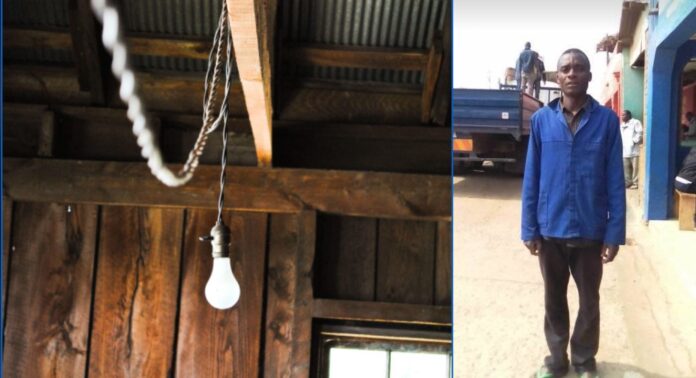
Using a repurposed corn-shelling machine motor and a fast-moving river, Nkosi created an electric turbine that’s now lighting up homes for him and his neighbors for free in the town of Mzimba.
Just like Edison, he did a lot of experimenting. In the beginning, he put a bicycle in the river and brainstormed about how the current moved the pedals, and how it might be turned into power. Then, he used an old refrigerator compressor that converted power for 6 homes. His neighbors were clamoring, so he continued to upgrade.
According to the self-taught inventor, his latest turbine has the potential to produce enough power to provide electricity to 1,000 homes and says another turbine can be installed downstream to expand the grid. (Watch the video below.)
The hydro power has the added benefit of lessening deforestation by negating the necessity for locals to cut down trees in order to obtain charcoal.
In a country where only 11% of the population has access to electricity, having a reliable and renewable source of energy has been a game-changer—especially in the schools.
“In the past, we had to study by candlelight and whenever there was no money to buy candles, we could not study,” student Gift Mfune told AFP. “Now that we have access to electricity, many more of us will pass our exams.”
The driving force behind Nkosi’s DIY power initiative (known as the Kasangazi Hydro-Electrical Power Plant) is not profit. Indeed, the only charge for his service is a €1 per month maintenance fee.
Over 2,000 people have benefitted from his sustainable and locally generated electricity, and in 2018, Mr. Nkosi won a Point Of Light Award from Britain’s Queen Elizabeth II for his dedication to innovation.
In addition to bringing light to his neighbors literally, Nkosi’s dream is to bring enlightenment to them as well—through education.
Nkosi already gives hands-on lessons in the basics of carpentry and engineering to village children, and fervently hopes to expand his own skillset with more advanced studies.
“I wish I could find a sponsor to help me fulfill my plan of going back to school to further my knowledge and pass on what I’ve learned to others,” he said during his AFP interview.
(WATCH the video below…)
Electrify Social Media With a Bright Light of Good News…
A rewilding revolution which took root 30 years ago in the English Midlands has branched out over 200 square miles, becoming one of the most successful efforts in Europe.
The National Forest now consists of nine million trees spread across three counties, and links the ancient woodlands of Needwood, and Charnwood.
Reforestation has exploded across Europe, the continent that’s lost more of its forests over the last 200 years than any other. Between 1990 and 2010, tree cover increased by 11 million hectares, or around 27 million acres, and just since 2015, €8.2 billion has been earmarked by governments for reforestation efforts.
The significance of the National Forest comes partly from where it’s taken shape. The English Midlands is one of the West’s famous mining regions, like the Ruhr Valley or the Appalachians.
The history of the towns in the counties of Derbyshire (D-Arbee-sher), Leicestershire (Less-ter-sher), and Staffordshire are entwined with an industry that gradually died off, leaving behind disused mining pits and quarries as stains on the landscape.
Now such blemishes have been turned into green parks and nature reserves, and have been combined with the surrounding countryside, farmland, and existing woods to give England a wilder heart.
It’s also opened the Midlands up to many new forms of income for locals in historic towns like Burton-upon-Trent and “Coalville.” Every year the National Forest hosts the Timber Music Festival, a three-day celebration of nature, wilderness, and quiet reflection.
Many of the villages are connected by the National Forest Way, a three-day walking tour that traverses the forest and its mosaic of landscapes from east to west.
It’s also proving a success for England’s forest schools, a new form of intermittent schooling that teaches children about the woods, animals, the web of life, and more. Little Acorns Forest School moved into the National Forest in 2015, and is now teaching everyone from toddlers to high schoolers.
The success of the National Forest has been so strong that the English government’s Department for Food, Economic and Rural Affairs has pledged to plant 500 hectares of forest across Britain’s northeast, or the equivalent to 35 (English) football pitches. The project will include South Tyneside, Durham, Gateshead, Newcastle, and Sunderland.
But it’s not only the chief region of the UK that’s proud of their new National Forest. Wales recently embarked on a journey to link every existing woodland in their country with their own National Forest; a “Wales-wide” initiative to return rural lands to something like how it would have been in the past.
HELP Good News Flourish by Sharing This One With Chums…
A series of smuggled paleontological finds recovered in a 2013 police raid in Santos Harbor, Brazil, contain the most complete crested pterosaur skeleton ever found.
Seized along with 3,000 other fossils destined for the illegal fossil trade, the skeleton opens a new world of understanding about these incredibly charismatic flying animals.
Belonging to the species Tupandactylus navigans, the animal had an enormous head crest that would put a cassowary to shame, and was preserved in limestone from the Early Cretaceous period, around 140 to 100 million years ago.
Having been sawed into six pieces to make it easier to hide, the limestone block containing the skeleton needed to be carefully reassembled, but eight years after being found, Victor Beccari and his colleagues at the University of São Paolo presented in a study a full description of the flying reptile which may actually have been more like a peacock than an eagle.
The head crest was extraordinary, and was preserved along with the skull and the soft hollow bones that normally make pterosaurs a poor candidate for fossilization. Typical of tapejarids, the animal’s group, T. navigans sported a head crest half the size of its body, had a long neck and long legs, but short wings.
In a similar way to when the theory that T-rex was mostly a scavenger irritated an awful lot of schoolchildren in the late ’90s, the scientist from Brazil has a new theory on how the mighty pterosaur spent its days.
“Pterosaurs were already mind-blowing before, but this new specimen, with its huge, awkward crest and long neck, is mind-boggling because—sort of like [flashy] peacock tails—they would have made him an attractive mate, but an easy target for predators and a poor flyer,” Beccari told New Scientist.
“Like the peacock, it probably spent its time eating fruit off the ground or using its long neck to grab food from higher bushes.”
Scans of the nasal cavity showed the animal had adaptations for powered flight, suggesting the animal would only have used its wings in certain circumstances—to escape predators for instance.
Most tours across America tend to involve a long series of flights, or a road trip of 16-hour driving days plotting a course between as many national parks as possible in a camper van. The Great Loop, traversed by only 200 Americans per year, however, is another excellent way to see the country.
A 6,000-mile journey circumnavigating the entire eastern United States and Canada, the journey ditches the car or the plane for the boat!
It turns out that in 1898, three 18 year olds discovered that it was possible to, without ever going out to sea, travel from the Great Lakes region, out to the Thousand Islands past Montreal, before snaking down a myriad of canals, sounds, and waterways across the Mid-Atlantic, using Florida as a gateway to the Gulf of Mexico, where turning north, one can pass up the rivers of Central North America to return again to the starting line.
It was in the time of the Founding Fathers that the Great Loop was envisioned. George Washington had an eye on connecting territories more easily across the vast and newly minted country.
Many of the surveys he commissioned led to the creation of canals and artificial waterways that make the Loop possible.
However it wasn’t until Ken Ransom, a sailor who grew up faring the waves in Lake Michigan, that America’s great nautical maze was mapped. Departing in a sailboat built by himself and his two friends, he went the whole way, despite multiple challenges.
Like Ransom, sailors on the Great Loop today will tell you the challenges are part of the fun. Whereas most long nautical pleasure journeys typically take place in the ocean, the myriad of habitats one must navigate to finish the Great Loop make it a lot more special, and safer, while also presenting different challenges.
Beautiful landscapes roll past you on the shores either side of your journey, such as the old city of Montreal, the Great Dismal Swamp, the Florida Keys, Virginia’s Ablemarle Sound, or the mountain-studded shores of Lake Champlain.
Boat US explains that the Great Loop takes anywhere from six months to one year to complete, but nevertheless offers sections called “Mini Loops” wherein a U.S. sailing enthusiast or perhaps a visiting British canal-boat lover can enjoy a several-day slice.
The Triangle Loop traverses Canada and the U.S. using the Hudson River as the start and finish, while passing the Eire Canal, Lake Champlain, Montreal, Lake Ontario, and the scenic Thousand Islands.
Another Mini Loop is the Florida Loop, which passes Lake Okeechobee and the Atlantic Coast before arriving at the Florida Keys, up the Gulf to Pine Island, Fort Meyers, and Caloosahatchee Canal.
LET Good News Travel, Share This One With Adventure Buddies…
Years of cognitive development research have uncovered a wealth of knowledge about what children need to grow, thrive, and learn—but it’s also important to translate those insights into real-world applications.
A new paper led by Penn State graduate Brenna Hassinger-Das, now an assistant professor of psychology at Pace University-NYC, and Jennifer Zosh, professor of human development and family studies at Penn State Brandywine, explores the science-backed core pillars of learning and examples of play spaces that incorporate them.
“We know kids in Western countries spend only 20% of their time at school, so where are they for the other 80%?” Hassinger-Das said. “They’re at home, or in the grocery store, or the park. How can we transform those everyday spaces to encourage playful learning and promote conversations between caregivers and children? We wanted to maximize these spaces and turn them into places that are fun but also support the kind of learning you do in school.”
According to the researchers, previous studies have found six core characteristics or “pillars” of learning that can maximize any experience a child has, whether it’s playing in the park, going to the grocery store, or using a smartphone app. These pillars suggest that experiences should be active rather than passive, engaging, meaningful, socially interactive, iterative rather than repetitive, and joyful.
“We wanted to leverage insights from research to help support children, families and communities,” Zosh said. “For this specific initiative, we wanted to see how we could take those pillars and apply them to communities in playful ways that support children’s learning.”
The paper looked at several examples of spaces that incorporated the pillars into their designs.
One example was Urban Thinkscape, an installation that turned a bus stop into a playful learning space that fosters play and conversations. One of the features incorporated was an element called Stories, which includes several icons placed on the ground with different pictures that can be used to tell stories. According to the researchers, as children go from icon to icon and create a story, they build narrative skills, which are a key part of literacy.
Even though the paper—recently published in the journal Trends in Cognitive Sciences—focused on public spaces that incorporated these elements, the researchers said anyone can use the pillars to enhance children’s play spaces and experiences, including parents at home.
Pillar One: Active
Stay “active” as you play and interact with your child, for example, by incorporating literary and STEM elements into your speech and interactions.
Zosh said this could mean counting the apples out loud as you put them in your basket at the grocery store or asking your child what letter each block starts with as you build a tower. She also said asking lots of questions — such as “What would happen if we mixed these blue and yellow paints together?” or “What might happen if we stack the red square block on top of the yellow triangle block?” — can be helpful, as well.
Pillar Two: Engaged
“Try to limit distractions as much as possible, including background television and your own smartphone use,” Hassinger-Das said. “These types of distractions are sometimes unavoidable, but they do have the potential to take away from these high-quality times with your child. Focusing and staying engaged during play can help you make the most of these interactions.”
Pillar Three: Meaningful
Try building on topics the child is already interested in during play. If they like dinosaurs, you could suggest a make-believe scenario where you dig for dinosaur fossils at the playground. Or, you can integrate information about dinosaurs like counting how many bones they have and what they ate.
“If you are reading a book set in a different state, get out a globe or a map app and explore where the state is and how the weather there is different from where you live,” Zosh said. “Helping children build connections helps them weave together a rich world of understanding.”
Pillar Four: Socially interactive
The researchers advised letting your child lead in play time while you offer support along the way. For example, let your child decide what to build with blocks while asking questions like, “What would happen if you placed that block in a different direction?” or “How many more blocks do you think it would take to build a tower as tall as you?”
Pillar Five: Iterative
Children are naturally scientific thinkers — they like to experiment, see what happens, and try again and again until something works. The researchers advised giving your children opportunities to guess what will happen, conduct “experiments,” make up new words to favorite songs, and make mistakes. Every mistake leads to learning.
Pillar Six: Joyful
Finally, making playtime joyful can be done in many ways, including incorporating elements of surprise.
“Playing with shadows and asking which one is bigger or how you can make your shadow grow or shrink is one way to foster surprise and joy,” Hassinger-Das said. “Similarly, think about what helps your child connect with whatever brings them joy, from construction with a cardboard box to playing vet with their stuffed animals.”
If you are forgetful or make mistakes when in a hurry, a new study from Michigan State University—the largest of its kind to-date—found that meditation could help you to become less error prone.
The research tested how open monitoring meditation—or, meditation that focuses awareness on feelings, thoughts or sensations as they unfold in one’s mind and body—altered brain activity in a way that suggests increased error recognition.
“People’s interest in meditation and mindfulness is outpacing what science can prove in terms of effects and benefits,” said Jeff Lin, MSU psychology doctoral candidate and study co-author. “But it’s amazing to me that we were able to see how one session of a guided meditation can produce changes to brain activity in non-meditators.”
The findings suggest that different forms of meditation can have different neurocognitive effects and Lin explained that there is little research about how open monitoring meditation impacts error recognition.
“Some forms of meditation have you focus on a single object, commonly your breath, but open monitoring meditation is a bit different,” Lin said. “It has you tune inward and pay attention to everything going on in your mind and body. The goal is to sit quietly and pay close attention to where the mind travels without getting too caught up in the scenery.”
Lin and his MSU co-authors—William Eckerle, Ling Peng and Jason Moser—recruited more than 200 participants to test how open monitoring meditation affected how people detect and respond to errors.
The participants, who had never meditated before, were taken through a 20-minute open monitoring meditation exercise while the researchers measured brain activity through electroencephalography, or EEG. Then, they completed a computerized distraction test.
“The EEG can measure brain activity at the millisecond level, so we got precise measures of neural activity right after mistakes compared to correct responses,” Lin said. “A certain neural signal occurs about half a second after an error called the error positivity, which is linked to conscious error recognition. We found that the strength of this signal is increased in the meditators relative to controls.”
While the meditators didn’t have immediate improvements to actual task performance, the researchers’ findings offer a promising window into the potential of sustained meditation.
“These findings are a strong demonstration of what just 20 minutes of meditation can do to enhance the brain’s ability to detect and pay attention to mistakes,” Moser said. “It makes us feel more confident in what mindfulness meditation might really be capable of for performance and daily functioning right there in the moment.”
While meditation and mindfulness have gained mainstream interest in recent years, Lin is among a relatively small group of researchers that take a neuroscientific approach to assessing their psychological and performance effects.
Looking ahead, Lin said that the next phase of research—which has been published in Brain Sciences—will be to include a broader group of participants, test different forms of meditation and determine whether changes in brain activity can translate to behavioral changes with more long-term practice.
“It’s great to see the public’s enthusiasm for mindfulness, but there’s still plenty of work from a scientific perspective to be done to understand the benefits it can have, and equally importantly, how it actually works,” Lin said. “It’s time we start looking at it through a more rigorous lens.”
Quote of the Day: “Happiness is always there. You just have to choose to see it. There’s no point dwelling in the dark and ignoring the light of the stars.” – Carrie Hope Fletcher
Photo: by Klemen Vrankar
With a new inspirational quote every day, atop the perfect photo—collected and archived on our Quotes page—why not bookmark GNN.org for a daily uplift?
Albuquerque THV- tiny home village-website-Ann Hermes
Albuquerque THV/My Home Village, Ann Hermes
In battling against the American homeless epidemic, it pays to think outside the box. The Tiny Home Village in Albuquerque isn’t just a place for someone to sleep out of the weather, it’s an occupational therapy project that helps the homeless reconnect with values and responsibility.
Set up to cultivate a strong community, the power of routine, and a sense of pride in oneself and surroundings, the Tiny Home Village (THV) hopes that its residents will be better prepared for when they finally get off the street.
The County of Bernalillo, New Mexico, secured a 30-year lease on a property owned by the Albuquerque Indian Center to build a walled and gated community of about 30 tiny houses that had doors which lock and climate control to give residents a strong enough sense of security and permanence that they could begin to really turn their life around.
Albuquerque looked at a similar project in Oregon—the Opportunity Village Eugene, which was established back in 2013, as a model for how to encourage self-governance among the villagers, allowing them to decide among themselves how the village is to be run day by day.
Rendering/Bernco.gov
The two look very similar. Inside the compound there are 30 houses painted different colors, though all featuring the same layout: a desk, two chairs, bed, closet, and stoop.
At the center of the THV there is the “Village House” where residents can cook, do laundry, watch television, socialize, use the internet, and access a library.
“We’re trying to give the villagers some tools that would stand them in really good stead once they do move out,” Ilse Biel, the resource manager for the Albuquerque THV, told Christian Science Monitor.
Biel would add that already, the theory is working, and the community is taking ownership of daily chores as well as holding each other accountable.
“They’re house-proud; really getting upset about seeing a counter not wiped, a cigarette butt somewhere.”
The THV is a welcome replacement for the previous homeless enclave—Tent City, which sprang up near a railroad in downtown and which became so big that the people there began to chalk addresses of their tents on the street.
Rendering/Bernco.gov
THV is not meant to be a place of refuge, and the doors aren’t open to just anyone.
Perspective residents must sign up for a $30 a month utilities fee, as well test clean of any hard drugs. They must be sober for at least 10 days prior to the date of entry, and must be willing and able to participate in village life, which will require them to do chores like de-weeding in the communal vegetable garden, cleaning bathrooms, and more.
Perhaps for these reasons, THV is not yet full. But the managers are hopeful, believing such a community must be more than a just a roof over someone’s head and instead somewhere a person can make friends, and gain the physical, spiritual, financial, and occupational strength to ensure that by the time they rejoin society they are there to stay.
BUILD Up the Good News in Those Feeds by Sharing This Story…
If you judge a city’s heart by how much they’re willing to go the extra mile even for its non-human citizens, Arlington in Texas recently proved that things really are bigger in the Lone Star State.
When Zoey, a 15-year-old deaf Lab mix wandered away from her home, practically the whole community turned out to help find her.
“I had put on NextDoor app, we’re missing our dog… and people were like, ‘Here’s my number. Call me and I will come help you find [her],’” dog mom Andrea Tankersley told WFAA.
“The difficult part is she’s deaf,” dog dad Brennan Tankersley added. “So we’re calling out to her, calling out to her, of course knowing it’s not any good but you can’t help it.”
Searchers reported hearing dog sounds but were unable to figure out where they were coming from. Two days later, city water crews homing in on her echoing barks located Zoey trapped in a muddy storm drain under a city street.
A water department camera was set up to monitor Zoey’s condition in the tunnel as a herculean rescue effort coordinated by Arlington’s fire department, police, paramedics, and city workers was quickly mounted to free the trapped canine.
Using jackhammers, pneumatic saws, and heavy equipment, crews worked tirelessly in extreme heat conditions to break up the pavement and dig down to the concrete drain pipe below. Throughout the excavation, neighbors supplied workers with food and beverages to keep them going.
Nearly 10 hours later, a section of the top of the culvert was lifted away to reveal the watery channel. Once they had access, rescuers still had to come up with a way to get Zoey safely out of the confined tunnel space.
SWNS
When one firefighter posed the idea of rolling her out on a skateboard, a kindergartener named Hunter volunteered his board for the cause.
(The skateboard, autographed by the fire and police personnel who helped out in the rescue is set to be presented back to the little boy with a big thank you from everyone involved.)
At 11 hours and counting, rescuers finally pulled Zoey from the concrete pipe to cheers and applause from an elated crowd of onlookers. The pooped pooch was passed, bucket-brigade style, up to the street where waiting emergency workers assessed her and then reunited her with the Tankersleys and their kids.
Amazingly, although she was scuffed up and understandably distressed, Zoey suffered no major ill effects from her ordeal, and after getting an all-clear from the vet is happy to be back home.
“It has been amazing,” Police officer Kristi Weil who was on the scene told WFAA.
“Everyone has been so helpful. There have been cheers of joy and tears when Zoey was rescued… I love seeing the community turn out and cheer a successful end to this—and for a family to have their beloved pet returned to them at the end of the day.”
Reaching the age of 100 in good health and good spirits is an accomplishment in its own right, but training to take home your next weightlifting trophy truly takes the (birthday) cake.
At the age of 98 years and 94 days, great-great-grandmother Edith Murway-Traina already had a Guinness World Record (GWR) as the “oldest female competitive powerlifter” under her belt—and she successfully deadlifted 150 pounds to do it. Traina’s storied win will be featured in the Guinness World Records 2022 edition.
As a former dance instructor and performer, physical fitness was always a way of life for the Bronx-born Florida transplant, but considering she took up weightlifting a scant nine years ago, the progress Traina’s made is truly impressive—especially since discovering her newfound avocation was pretty much a happy accident.
Traina was tagging along with pal Carmen Gutworth who’d cajoled her into accompanying her to the gym to try out some new exercises.
“She didn’t want to go by herself,” Murway-Traina told the New York Post. “She dragged me kicking and screaming all the way, so that’s more or less how I got there.
“I saw all these other ladies lifting weights, and it looked interesting. I picked up a couple of weights and had to prove to myself that I could accomplish this.”
Guinness World Records
While Gutworth disputes her friend’s version of the events: “You can’t drag Edith anywhere,” she jokingly told GWR. “Edith kept going because she always keeps going. She will not quit, and anything that’s hard… that makes her more determined. If it’s easy, she might get bored, but if it’s hard, she’s going to do it. Nobody’s going to tell her, ‘Oh, that’s too hard for me.’”
Once she got started, Traina turned out to be a natural. Soon enough, she was on the team, competing in senior events, and bringing home accolades and awards.
“When you pull a bar up and you lift it, there’s a certain power that you experience that is only yours. It belongs to you,” she told the Post.
Traina admits that harking back to her days as an entertainer, a great deal of her motivation has to do with how much she enjoys being in the limelight and the positive feedback she’s received. She says that every time she’d compete, she’d get applause, and every time she’d get applause, she’d get a little bit happier.
At the onset of the COVID-19 pandemic, Traina’s doctors sent her to the sidelines but she returned to the gym as soon as she got the green light. She’s now back in training with coach Bill Beekley, working hard to make up for lost time and get back in shape for an upcoming November competition at which she hopes to bring home yet another winner’s cup to add to her collection.
Traina also appreciates that her current notoriety largely has to do with her advanced age, but as long as she can be a positive role model who blows the “sweet little old lady stereotype” out of the water, she’s good with that.
“I think in my nineties, I became more aware of the need for people to be recognized for who they are, or what they are, or how they are and it’s the most beautiful thing in the world,” she told GWR. “I think I survive on that, mostly, myself.”
That, some well-deserved applause, and her next trophy, of course.
(CHECK OUT Edith in action in the impressive video below.)
LIFT UP Your Chums With a Little Good News, Share This…
Eight in 10 Americans believe their health is a “work in progress,” and many have been taking steps to improve their lifestyle.
According to a new survey of 13,000 people in 24 countries—including 2,000 in the U.S.—this feeling isn’t unique to Americans.
82 percent of people globally felt the same (compared to 84% of Americans), and 89% of all respondents are currently taking steps to improve their health.
Of those, 81% said the pandemic helped kickstart them into doing so—and these steps are having a clear impact on respondents’ health.
Globally, 56% of respondents can now run or exercise longer without feeling winded, while 48% have gone down a size or a belt notch.
Conducted by OnePoll on behalf of Herbalife Nutrition and the Council for Responsible Nutrition, the survey found the average respondent is currently working to break three unhealthy habits. Results delved into the specific small steps that respondents are taking to do so.
Respondents revealed they started their journey to be healthier by exercising more, cooking/eating more nutritious foods, or downloading a fitness app.
Purchasing less junk food, beginning to take walks during their lunch break, and taking vitamins or supplements were other “first steps” respondents took—or plan to take to support their health.
The survey delved further into vitamins and supplements and found them to be a priority for many respondents across the globe.
When asked about how their health goals have changed during the pandemic, half said they’re more focused on eating healthier, including supplementing their diet with vitamins and minerals.
And of those who currently take vitamins or supplements, results revealed the average respondent spends about $286 every year. Americans were slightly above that, at an average of $304 per year.
“Be it exercising, healthy cooking or including more vitamins and supplements to your routine, for many, the pandemic has provided an opportunity to improve health habits overall,” said Dr. Kent Bradley, chief health and nutrition officer at Herbalife Nutrition. “Consistency is key when one commits to a healthy lifestyle.”
But while many respondents plan to incorporate more vitamins and supplements into their diet, only 69% said they feel knowledgeable about the health benefits those can offer.
Thirty percent of respondents said they are most likely to get information about vitamins and supplements from internet searches, media, and social media, followed by consulting with their doctor (27%).
Regardless of where they currently get information, 77% would like to know more about the nutritional benefits of different vitamins and supplements to support their health.
“Being well informed about the proper use, as well as benefits of nutritional supplements, is critical as supplements can enhance every wellness journey,” said Brian Wommack, senior vice president of the Council for Responsible Nutrition.
WHAT ARE THE “FIRST STEPS” RESPONDENTS ARE TAKING TO IMPROVE THEIR HEALTH?
Start exercising more
Start cooking/eating healthier foods
Download a fitness app
Stop purchasing as much junk food
Start taking walks during their lunch break
Begin taking vitamins/supplements
Start taking the stairs instead of elevators
Reevaluate their diet
Start a more regular sleep schedule
Download an app to help track what they eat
WHAT IMPROVEMENTS HAVE RESPONDENTS SEEN IN THEIR HEALTH OVER THE COURSE OF THE PAST YEAR?
Can run or exercise longer without feeling winded 32%
Have more energy throughout the day 27%
Have fewer cravings for sugar/sweets 29%
Gone down a size/a notch on my belt 29%
Feel stronger/more in shape 21%
More likely to choose to participate in healthy activities 16%
Become more flexible 17%
Aches and pains went away 23%
Can lift more and for longer 20%
INSPIRE Fitness in Your Friends by Sharing This Story…
Sweeping educational reforms, aimed to reduce the sometimes crippling pressure for pupils to succeed at school, have seen end-of-year exams ended for children in China aged 6 and 7.
The ban mirrors one passed earlier this year for written homework for first and second graders, and one limiting the homework burden on Junior High students to 1.5 hours per night.
This reporter has worked in the Chinese private tutoring industry, and seen first-hand the pressure which the desire for a strong education has created within students, but also in parents, who will regularly work themselves to the bone in order to furnish the exorbitant tutoring costs associated with a first-class education.
It was not uncommon for me to meet students who had more than 20 classes per week entirely outside the school system, and which could include music and English or French, but also private instruction based on what they went through that week in school.
“Too frequent exams… which cause students to be overburdened and under huge exam pressure,” have been axed by the Ministry of Education’s reforms published on Monday. They added that the exam burden “harms their mental and physical health.”
Indeed a 2011 study of 43 high school students in Yunnan province found that they all saw education as a whole as nothing more than merely the passing of an examination, before the preparation for another.
“This particular approach, at its worst,” the authors wrote, “can stifle a student’s imagination, creativity, and sense of self, qualities crucial for a child’s ultimate success in and out of the classroom.”
The average public school classroom can be between 40 and 60 students, giving teachers very little time for individual attention. If a child cannot keep pace with the class, there are typically two options the parents can take. One option is to bribe the teacher to ensure their child is thoroughly understanding every lesson, however if some other parents have offered higher bribes, an informal bidding war can sometimes occur.
The other option is to go for tutoring, which can easily cost $15,000 a year, as China has one the largest tutoring sector on Earth, worth $100 billion per year.
Previously, children took yearly exams so as to prepare for the university entrance test—”the dreaded gaokao” as France24 put it, which can define a young person’s life trajectory.
The reforms were put in place to try and close the educational gap in school, which has caused all manner of social distortions. One example is that catchment areas of good schools are highly sought after, driving the prices of real estate sky high.
Another is the concentration of good teachers at good schools, as more public and private money finds its way into the coffers of schools that crank out better-testing pupils. The Party addressed this by imposing a forced rotation for teachers every six years.
Far beside the one-child, and now two-child policy, the cost of school made having multiple kids economically unfeasible. Now with the slowest population growth in decades, attempts to ease the financial burden of school is seen as welcome relief to parents.
With a new inspirational quote every day, atop the perfect photo—collected and archived on our Quotes page—why not bookmark GNN.org for a daily uplift?
Foraging is a great way to get out into nature, stretch your legs, learn where your food comes from, and save a bit of dollar on groceries.
Autumn is one of the only times a year where everywhere you look there’s something you can eat. Orchards are flush with fruit, bushes spring to life with berries, mushrooms emerge from the forests, while on the coasts, bivalves are at their most plentiful.
Foraging is fun, but it should always be done with care to avoid both poison and the law, so there’s sort of an unwritten “Forager’s Code” worth following:
Unless you can positively ID something, don’t eat it; especially when dealing with small red berries and mushrooms. These can easily be mixed up, and there are well-known edible species with toxic doppelgangers.
Never damage or pick an endangered or protected species. It’s not a law for no reason, and these are often at risk of going extinct.
Try not to pick so many leaves that the plant can’t survive, and try to leave a certain amount of fruit or nuts around for other animals. The plant needs those seeds to disperse in order to keep a healthy population.
Never tell another person your mushroom spot. If you find where chanterelles or boletes grow well, you now have a new family secret.
Guidebooks are great, but local knowledge is better.
Crabapples
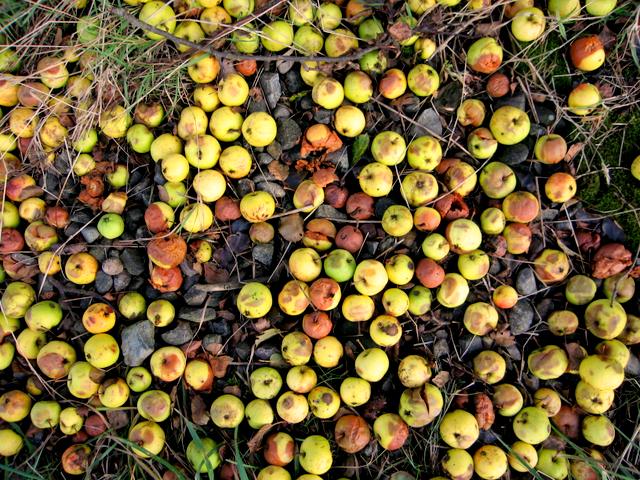
Malus sylvestris, crabapples/Martyn Gorman, CC license
Five species of crabapple tree grow native to the United States, and the most numerous are the sweet crabapple, southern crabapple, and Oregon or pacific crabapple. Rich in the setting agent pectin, and often more sour than sweet, crabapples are perfect accompaniments to other fruit in jams and preserves.
Rose hips
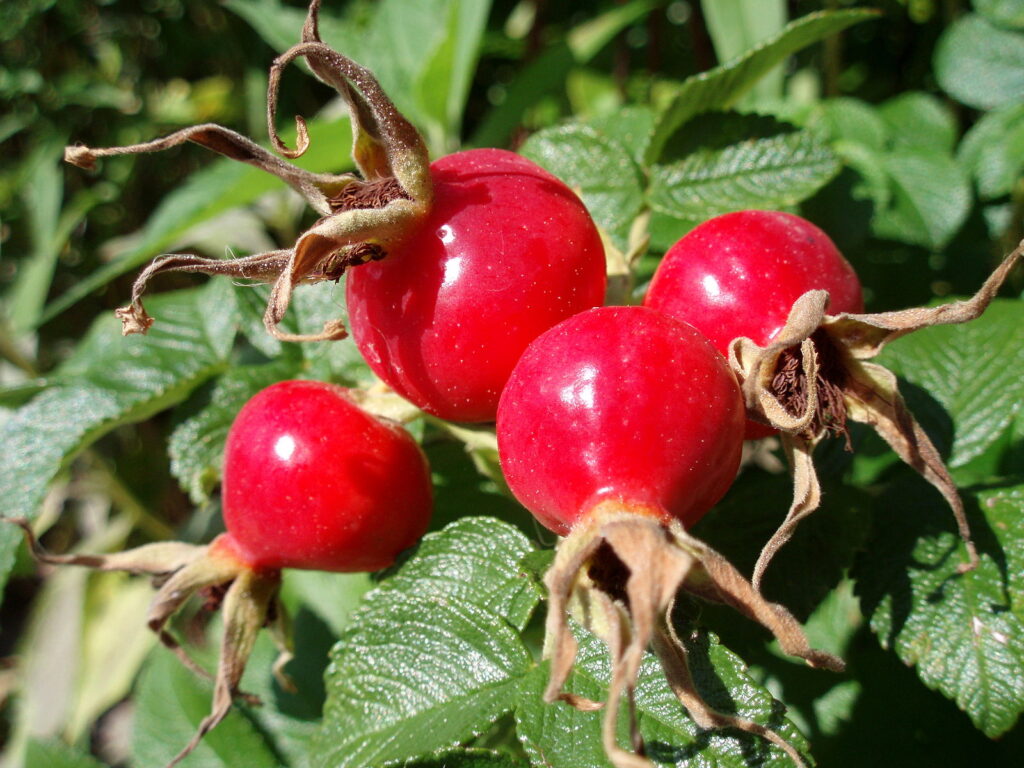
Rosa canina, Rose hips/Morn the Gorn, CC license
Having enjoyed roses in spring and summer, autumn yields the famous rosehip, used for millennia in tea, but also fine to eat as they are found, plump and red from September to October in hedgerows, gardens, and public parks.
They are rich in vitamin C, A, D, and E, and can also be used in cosmetics and grooming products. Just be sure to eat around or sieve out the seeds, as the hairs around them are an irritant.
Blackberries
Rubus, Blackberries/hor Ragesoss, CC license
Blackberries, really there’s not much to be said. They grow profusely and can produce waterfalls of berries in late-summer early autumn. They have nasty thorns so maybe think about wearing thick gloves when harvesting this one?
Chestnuts
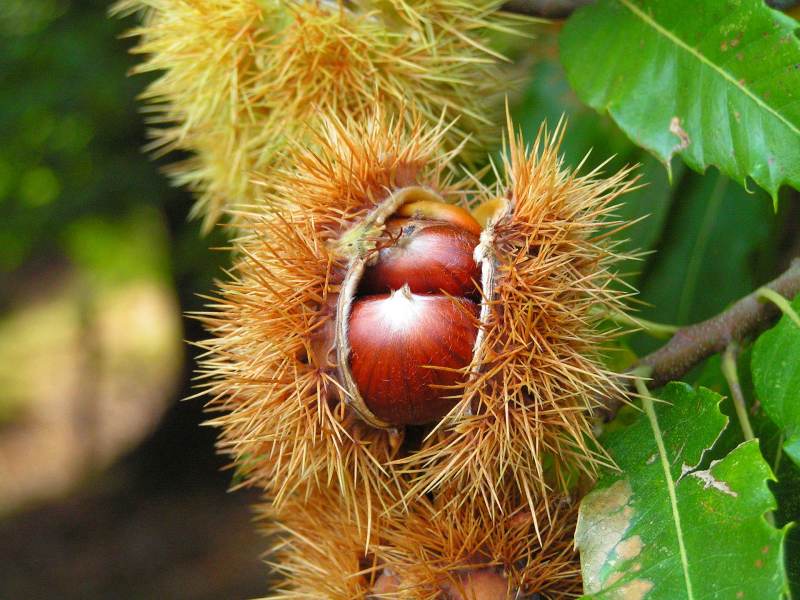
Castanea sativa, Chestnut/Benjamin Gimmel, BenHur, CC license
Perfect for roasting on an open fire, chestnuts fall from their trees encased in large green balls of perilous spikes. They are sweet, and able to be roasted or even boiled in red wine, but there are a few things to note beforehand.
First, squirrels adore them, and so you must act fast to collect your share.
Second, the easiest way to collect them is to stomp on the sea-urchin like casing with a leather shoe, or something that can be penetrated by a small woody needle, and pick them out carefully. Lastly, you’ll need to store them in the freezer if you want them to last all the way to Christmas, so you’ll need to cut a deep slit into the long side of the chestnut with a special tool like this, (you could use a knife too).
Acorns
Quercus agrifolia acorns/John Morgan, CC license
If you feel like putting the effort in to crack open enough acorns to spoon out the nut material inside, soaking out the tannins and grinding them into powder, you will be rewarded with a super nutrient-dense, stodgy flour that Native Americans used to make bread and even a kind of cake, with a taste a little bit like peanut butter (or so I’ve heard).
Seafood
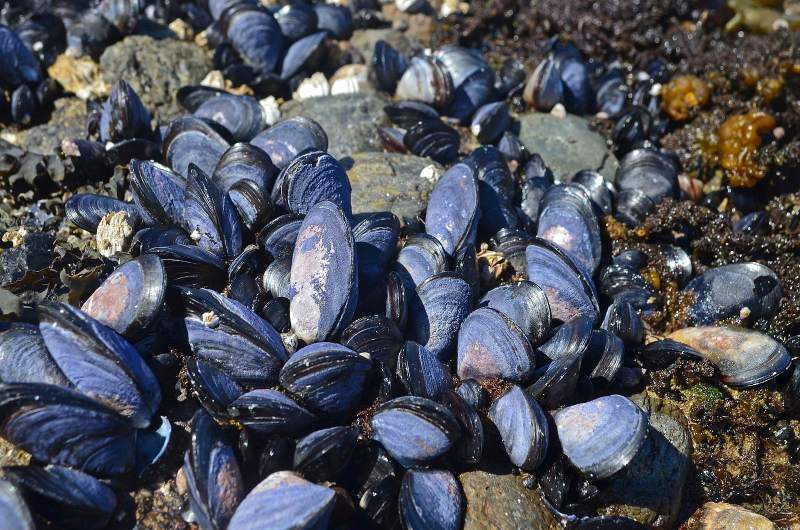
Mussels/Bureau of Land Management, CC license
The bounty of the sea, that is to say, mollusks and bivalves, increases in number towards the end of the calendar year. While foraging mussels, cockles, clams, and oysters on wild sections of coastline, or digging for them in mudflats is perhaps more ideally a winter activity, one can start in November.
Mussels should be picked only from fine clear waters at low tide, in areas where the tide doesn’t bring with it too much plastic and debris. They should be left in a bucket of saltwater overnight to clear out the grit.
Flat sandy beaches can contain cockles, small-shelled bivalves that grow in clumps. Look for cockle shells on the surface then rake across very lightly and shallow. Like mussels, leave them in the bucket overnight.
Chanterelles
Cantharellus cibarius, Chanterelles/David Baird, CC license
There are more than fifty different varieties of chanterelle, but all will radiate a luxurious perfume of citrus and apricot. Even though there may be some other mushrooms that look like the golden forest-lighthouse that is the chanterelle, they won’t have that wonderful scent.
Coprinus comatus, shaggy mane/Jerzy Opioła, CC license
These mushrooms are one of the “Foolproof Four” forageable mushrooms, as they are very easy to identify and have few dangerous twins. Shaggy manes develop black gills that exude an ink-like substance, while their stems are hollow and fibrous. Otherwise a Google image search would do you well for finding them.
The mushroom will start to degrade soon, and must ideally be cooked before the day is done. A delicate woody taste means that anything strong will overpower the mushrooms completely.
Boletes and Porcini
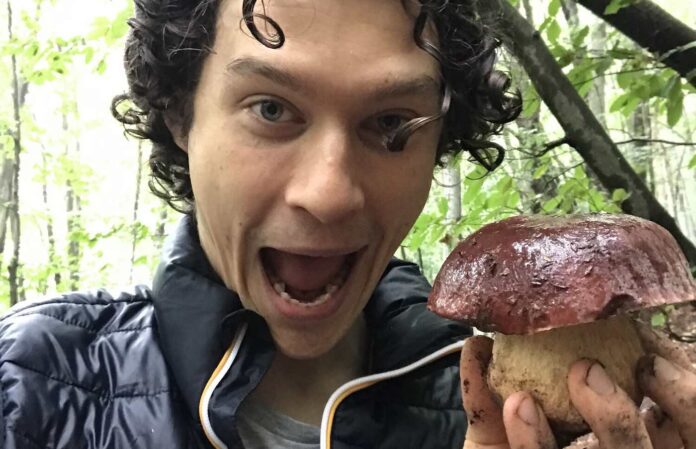
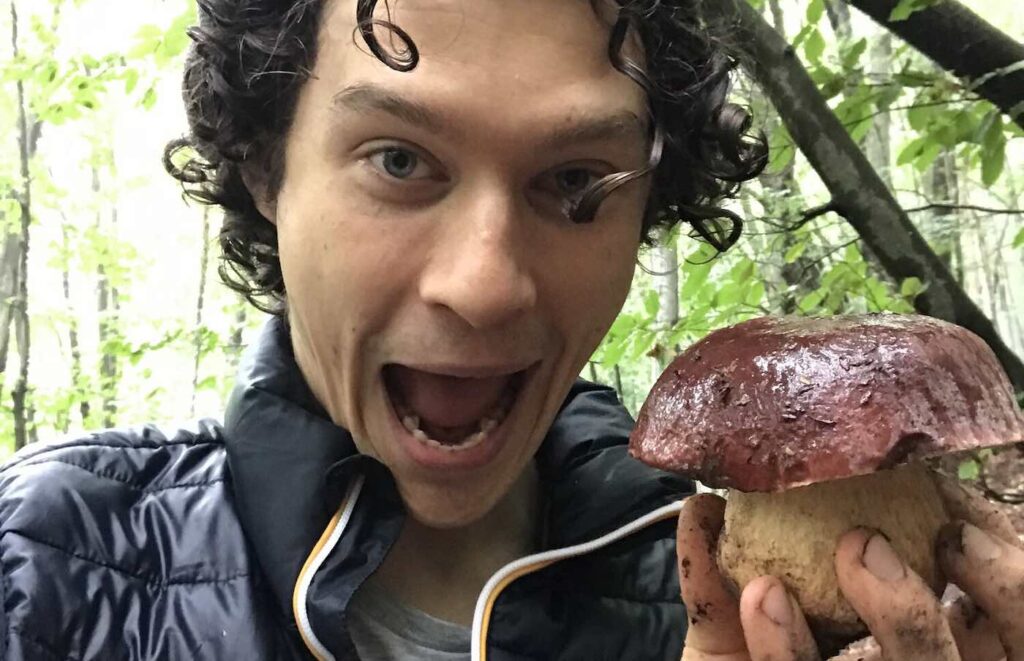
Boletus edulis, Porcini/Copyright Andy Corbley
Boletes mushrooms are different from others mostly by the lack of “gills” on the underside of their caps, replaced instead by what looks like sea or bath sponge. The king boletes or porcini is the king of the mushrooms, and, without drowning this listicle in detail, they must be processed—pickled, frozen, or dried with a proper dehydrator.
They are wonderfully delicious, and should be looked for around two to three days after a period of sustained rainfall. In the mountains is the best place to look, as the forest, along with reaching the right temperatures only a few hours per day-night cycle, is also easiest to reach by other mushroom hunters…
Having hunted porcini in the mountains of Italy, I know from experience what kind of luck it is to find around 14 kilograms of them. The people I told simply could not believe it. I didn’t have the heart to tell them that I had to throw almost all of them away, because they turned into maggot hotels within 12 hours of leaving the woods; to this day it is one of my greatest shames, but I did not understand the speed at which one must move having found them.
If there’s more autumn delicacies ready to be plucked from the bosom of the wild, tell us all about them in the comments below.
Adorable footage shows the moment a family of ducks checked out of a university library after they had waddled in off the street.
The mother and her five ducklings stunned staff and students when they wandered in through an open door at the University of Nottingham’s George Green Library.
Emma Halford-Busby, from University of Nottingham Libraries, said, “It had been very hot that week, so we had left our doors open for some extra air movement.”
The ducks came in and “walked around our atrium for a while, mom in front and ducklings in a line behind. Mom was totally calm and unflustered.”
After they apparently checked out the range of books on the shelves.
Dogs can tell the difference between deliberate actions—and mistakes, say scientists.
It adds growing evidence to the idea that man’s best friend knows just how we are feeling.
First author Dr Britta Schunemann said, “The dogs in our study clearly behaved differently depending on whether the actions of a human experimenter were intentional or unintentional.”
Dogs have bonded with people over thousands of years. Obeying every “sit,” “lay down,” and “roll over” command is just one such skill.
But whether they understand intentions, or merely respond to outcomes, remains unclear.
This is a basic component of Theory of Mind—long regarded as uniquely human.
It’s the ability to attribute mental states to oneself and others and dogs have it too.
They can tell the difference between something done on purpose, or by accident.
Dr Schunemann, of Gottingen University, and colleagues tested how they reacted when food rewards were withheld.
The researchers found the animals behaved differently depending on whether the actions of the experimenter were intentional or unintentional.
It shows dogs can distinguish between actions that were done on purpose, or accidentally.
To reach their conclusions, the German team conducted an experiment using the ‘unable vs. unwilling’ paradigm.
It works by examining whether test subjects react differently towards a human experimenter.
They either intentionally (the unwilling condition) or unintentionally (the unable condition) withhold treats.
The experiment was conducted with 51 dogs, each of which was tested under three conditions.
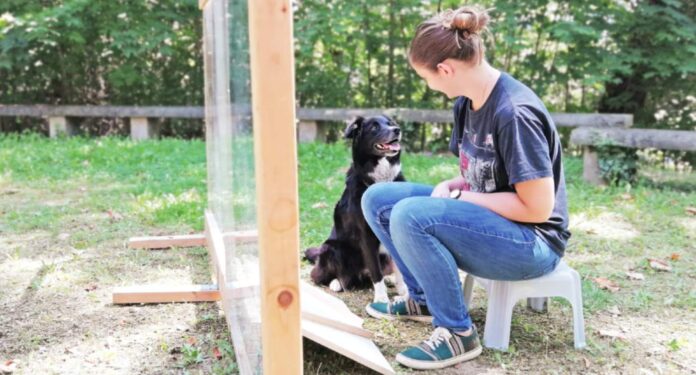
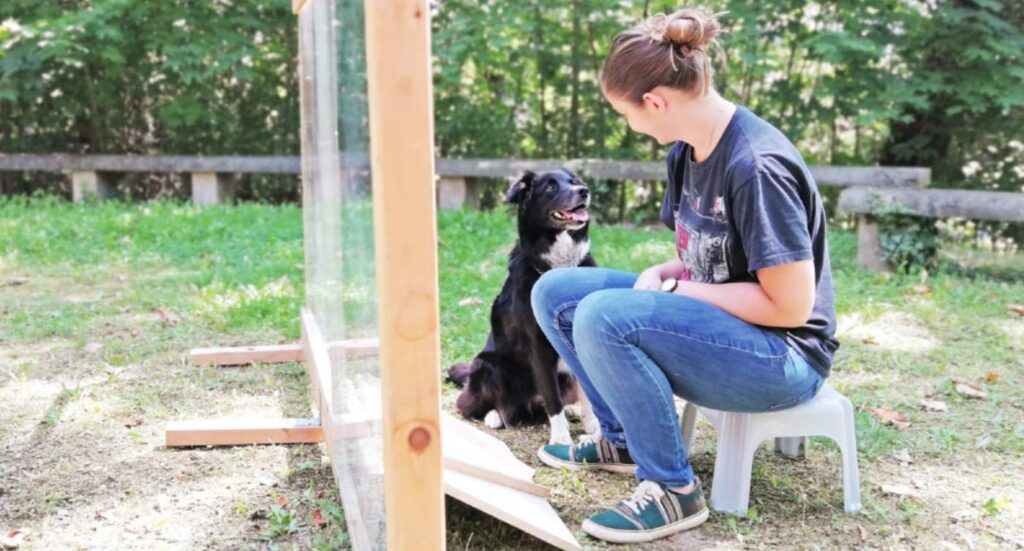
Each animal was separated from the human tester by a transparent barrier. It was fed pieces of dog food through a gap.
In the ‘unwilling’ condition, the experimenter suddenly withdrew the reward through the gap in the barrier and placed it in front of herself.
In the ‘unable-clumsy’ condition, the experimenter brought the reward to the gap and ‘tried’ to pass it through—but then ‘accidentally’ dropped it.
In the “unable-blocked” condition, the experimenter again tried to give the dog a reward.
But she was unable to because the gap was blocked. In all conditions, the reward remained on the tester’s side of the barrier.
Co-author Dr Juliane Brauer, of Max Planck Institute for the Science of Human History, said, “If dogs are indeed able to ascribe intention-in-action to humans we would expect them to show different reactions in the unwilling condition compared to the two unable conditions. As it turns out, this is exactly what we observed.”
The primary behaviour measured by the researchers was the time dogs waited before approaching the reward they were denied.
If dogs are able to identify human intentions, they would wait longer before approaching the reward in the unwilling condition, where they were not supposed to have the reward, than in the two unable conditions in which the reward was, in fact, meant for them.
Not only did the dogs wait longer in the unwilling condition than in the unable conditions, they were also more likely to sit or lie down—actions often interpreted as appeasing behaviours—and stop wagging their tails.
Co-author Dr Hannes Rakoczy, also from Gottingen, said, “This suggests dogs may indeed be able to identify humans’ intention-in-action.”
The findings in Scientific Reports suggest dogs “may have at least one aspect of Theory of Mind—the capacity to recognize intention-in-action,” said the researchers.
Previous studies have found dogs can tell the difference between happy and angry faces.
They also process language in a very similar way to humans—picking out emotional tone, intonation, and volume changes that influence meaning.
Experts think dogs have gradually evolved over 30,000 years to understand humans.
Selective breeding has meant those which could communicate better with their owners were preferred, encouraging the trait to become more pronounced over time.
RAISE Your Paws For This Fascinating Research by Sharing…
Researchers from Switzerland are tapping into an unexpected energy source right under our feet: wooden floorings.
Their nanogenerator enables wood to generate energy from our footfalls.
They also improved the wood used in the their nanogenerator with a combination of a silicone coating and embedded nanocrystals, resulting in a device that was 80 times more efficient—enough to power LED lightbulbs and small electronics.
The team began by transforming wood into a nanogenerator by sandwiching two pieces of functionalized wood between electrodes.
Like a shirt-clinging sock fresh out of the dryer, the wood pieces become electrically charged through periodic contacts and separations when stepped on, a phenomenon called the triboelectric effect.
The electrons can transfer from one object to another, generating electricity. However, there’s one problem with making a nanogenerator out of wood.
“Wood is basically triboneutral,” says senior author Guido Panzarasa, group leader in the professorship of Wood Materials Science. “It means that wood has no real tendency to acquire or to lose electrons.” This limits the material’s ability to generate electricity, “so the challenge is making wood that is able to attract and lose electrons,” Panzarasa explains.
To boost wood’s triboelectric properties, the scientists coated one piece of the wood with polydimethylsiloxane (PDMS), a silicone that gains electrons upon contact, while functionalizing the other piece of wood with in-situ-grown nanocrystals called zeolitic imidazolate framework-8 (ZIF-8).
ZIF-8, a hybrid network of metal ions and organic molecules, has a higher tendency to lose electrons. They also tested different types of wood to determine whether certain species or the direction in which wood is cut could influence its triboelectric properties by serving as a better scaffold for the coating.
The researchers found that a triboelectric nanogenerator made with radially cut spruce, a common wood for construction in Europe, performed the best.
Together, the treatments boosted the triboelectric nanogenerator’s performance: it generated 80 times more electricity than natural wood. The device’s electricity output was also stable under steady forces for up to 1,500 cycles.
The researchers found that a wood floor prototype with a surface area slightly smaller than a piece of paper can produce enough energy to drive household LED lamps and small electronic devices such as calculators. They successfully lit up a lightbulb with the prototype when a human adult walked upon it, turning footsteps into electricity.
“Our focus was to demonstrate the possibility of modifying wood with relatively environmentally friendly procedures to make it triboelectric,” says Panzarasa.
“Spruce is cheap and available and has favorable mechanical properties. The functionalization approach is quite simple, and it can be scalable on an industrial level. It’s only a matter of engineering.”
Besides being efficient, sustainable, and scalable, the newly developed nanogenerator also preserves the features that make the wood useful for interior design, including its mechanical robustness and warm colors.
The researchers say that these features might help promote the use of wood nanogenerators as green energy sources in smart buildings. They also say that wood construction could help mitigate climate change by sequestering CO2 from the environment throughout the material’s lifespan.
The next step for Panzarasa and his team, whose work has been published in Matter journal, is to further optimize the nanogenerator with chemical coatings that are more eco-friendly and easier to implement. “Even though we initially focused on basic research, eventually, the research that we do should lead to applications in the real world,” says Panzarasa.
“The ultimate goal is to understand the potentialities of wood beyond those already known and to enable wood with new properties for future sustainable smart buildings.”
Out of the ashes of Pompeii, archaeologists recently pulled up a time capsule, though only the bronze hinges remained of what is being described as a “sorceress’ toolkit.”
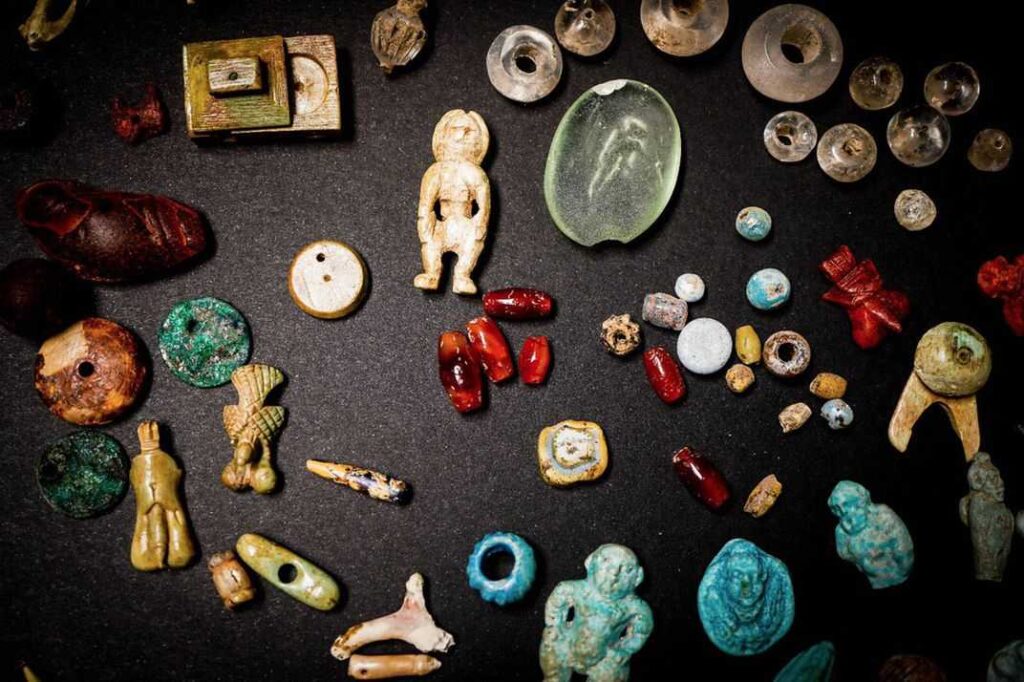
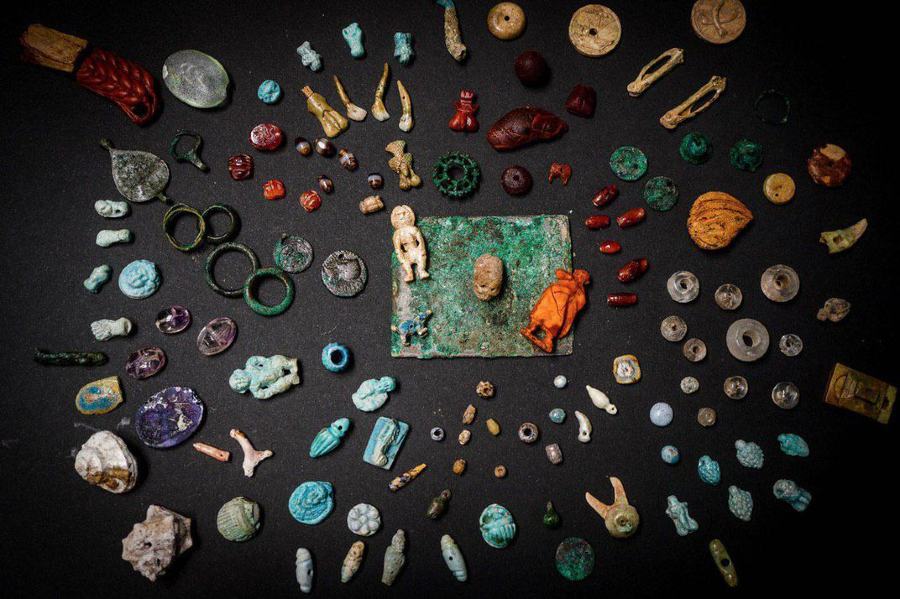
Inside were a collection of around 100 little objects: two mirrors, tiny skulls, scarab beetles, bone-carved objects like buttons, bells, and little fists, decorative elements made of amber, carnelian, and bronze, carved images of men and satyrs, and of course, miniature phallic amulets.
All in all it’s everything your average sorceress could need on the job, which archaeologists believe were to tell fortunes, divine pregnancies, conduct fertility rites, and ward off bad luck.
“They are objects of everyday life in the female world and are extraordinary because they tell micro-stories, biographies of the inhabitants of the city who tried to escape the eruption” states Pomeii General Director Massimo Osanna.
“In the same house, we discovered a room with ten victims, including women and children, and now we are trying to establish kinship relationships, thanks to DNA analysis. Perhaps the precious box belonged to one of these victims.”
Archaeological Park of Pompeii
The box containing the toolkit was found in the Garden House in Regio V, a luxurious villa which also included some highly sexualized friezes on the walls, such as the myth of Queen Leda and the Swan, and a fresco of Priapus, the god of fertility.
Early hypotheses are that the owner of the objects was not of status and could even have been a slave.
The lack of gold or precious stones among the trinkets suggests this, as the Pompeiians adored the yellow metal.
Speaking with Italian news agency Ansa, Osanna theorized the objects belonged a kind of Roman love doctor, but that’s pure speculation.
The toolkit will soon be on display in the Palestra Grande on the Pompeii site.
Archaeological Park of Pompeii
It’s fascinating that, even though most of us grew up learning about the city of Pompeii buried under the ash of Vesuvius, major discoveries are still being made there today despite the fact the site is only 163 acres (66 hectares).
Quote of the Day: “More than 500 of the most successful people this country has ever known told me their greatest success came just one step beyond the point at which defeat had overtaken them.” – Napoleon Hill
Photo: Iva Rajović
With a new inspirational quote every day, atop the perfect photo—collected and archived on our Quotes page—why not bookmark GNN.org for a daily uplift?