Flames from the Bobcat Fire - credit: Eddiem360, CC license, via Wikimedia.
To help prevent sparking California wildfires, Pacific Gas and Electric Company has announced a major new initiative to bury 10,000 miles of power lines underground.
In addition to significantly reducing wildfire risk, undergrounding also benefits customers by lessening the need for Public Safety Power Shutoffs—which are called as a last resort during dry, windy conditions to reduce the risk of vegetation contacting live power lines and setting off a wildfire.
This effort will also help ease the need for vegetation management efforts, leaving more of California’s trees untouched.
“We have taken a stand that catastrophic wildfires shall stop,” said CEO Patti Poppe in a statement. “We will gladly partner with policymakers and state and local leaders to map a path we can all believe in.”
Making the shift happen
Pacific Gas and Electric Company is the nation’s largest natural gas and electric utility— serving more than 16 million people across 70,000 square miles in Northern and Central California.
In the past, undergrounding has been done on a select, case-by-case basis, and largely for reasons other than wildfire risk reduction.
Following the devastating October 2017 Northern California wildfires and the 2018 Camp Fire, PG&E began to evaluate placing overhead power lines underground as a wildfire safety measure, and to better understand the construction and cost requirements associated with undergrounding for system hardening purposes.
In 2019, PG&E announced it would rebuild all its power lines underground in the Town of Paradise as it helps the community recover from the Camp Fire.
The company is also rebuilding power lines underground within the 2020 North Complex Fire footprint in Butte County.
Through these and other demonstration projects and rebuild efforts, PG&E has been able to refine the construction and cost requirements associated with targeted undergrounding, enabling the acceleration and expansion of undergrounding projects.
“Ten thousand miles of [buried] line is a trip halfway around the planet, 10,000 miles of line is a trip from Chico to L.A. 11 times and back,” Poppe said. “We will partner with the best and the brightest to find the best solutions to make this audacious goal come to life.”
Featured image: Eddiem360, CC license
FIRE UP Hope—Share This Story With Friends on Social Media…
When armed conflict is a way of life, a lasting resolution may seem beyond reach. And yet, while small acts of personal courage may not ultimately shape the larger outcome, there are some people on both sides who continue reaching for peace nevertheless.
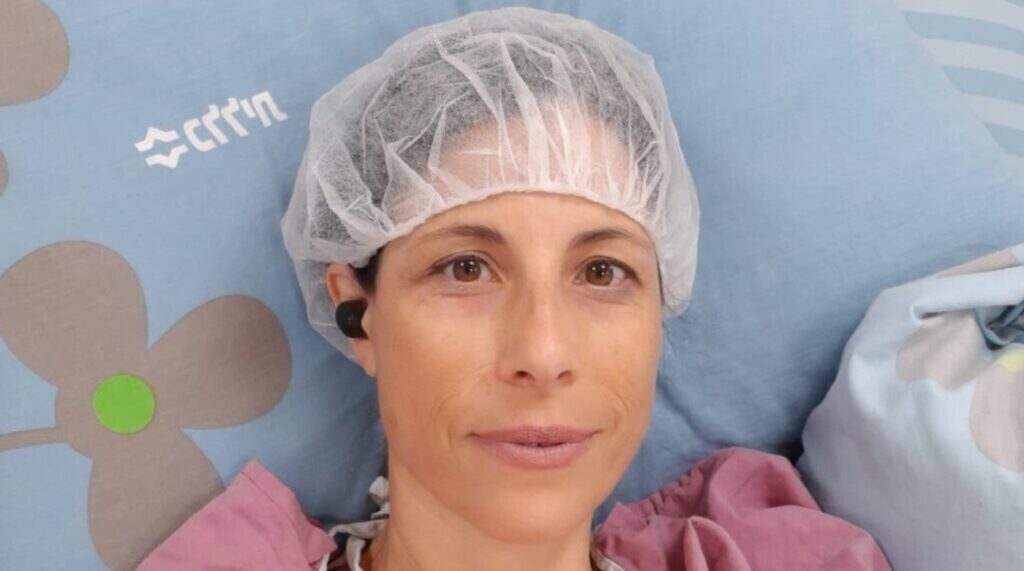
Israeli kindergarten teacher and mother-of-three Idit Harel Segal wanted to do something meaningful for her 50th birthday. Rather than receiving a present, she chose to give one.
In memory of her late grandfather, Segal decided to donate a kidney. The life-saving gift Segal offered not only aligns with her Jewish faith—but was her way of extending an olive branch as well, because the kidney recipient was a 3-year-old Palestinian boy from the Gaza Strip.
Although there are strict restrictions in place limiting the number of entry permits, the Jerusalem-based, nongovernmental organization Matnat Chaim was able to arrange for the surgical procedure on humanitarian grounds. (To move the little boy to the head of the donor list in Gaza, his father also agreed to donate a kidney to an Israeli patient, a 25-year-old mother of two.)
With all the pieces in place, the surgery was scheduled for June 16, 2021, but before it took place, Segal wanted to make sure the little boy would know just how much giving this particular gift meant to her when he grew older, so she sent him a letter.
“You don’t know me… You don’t understand my language and I don’t understand yours, but soon we’ll be very close because my kidney will be in your body,” she wrote. “I hope with all my heart that this surgery will succeed and you will live a long and healthy and meaningful life.”
In the hospital, Segal met with the little boy and his mother.* She sat next to them on his hospital bed, and as the mother comforted her son, Segal sang to him until he nodded off.
“He fell asleep, then I left. I cried,” she recalled in an interview with the Associated Press (AP). “It was really moving. Deep inside I knew I did something good.”
Segal admits her course of action wasn’t received without conflict within her own family. Her husband, eldest son, and father initially opposed the plan.
But Segal—considering the gesture as the way to best honor the values of the beloved grandfather she’d lost five years earlier—held firm to a decision she says came on the heels of an 11-day outbreak of renewed hostilities.
“I threw away the anger and frustration and see only one thing. I see hope for peace and love,” she told AP. “And if there will be more like us, there won’t be anything to fight over.”
Eventually, her family came to appreciate and embrace the choice she’d made.
Segal believes that compared to the grander scheme of things, what she’s done is only “a small thing”—but even so, any step closer to peace taken in good faith is a step in the right direction.
(WATCH the AP video for this story below.)
SHARE This Story of True Kindness With Others on Social Media…
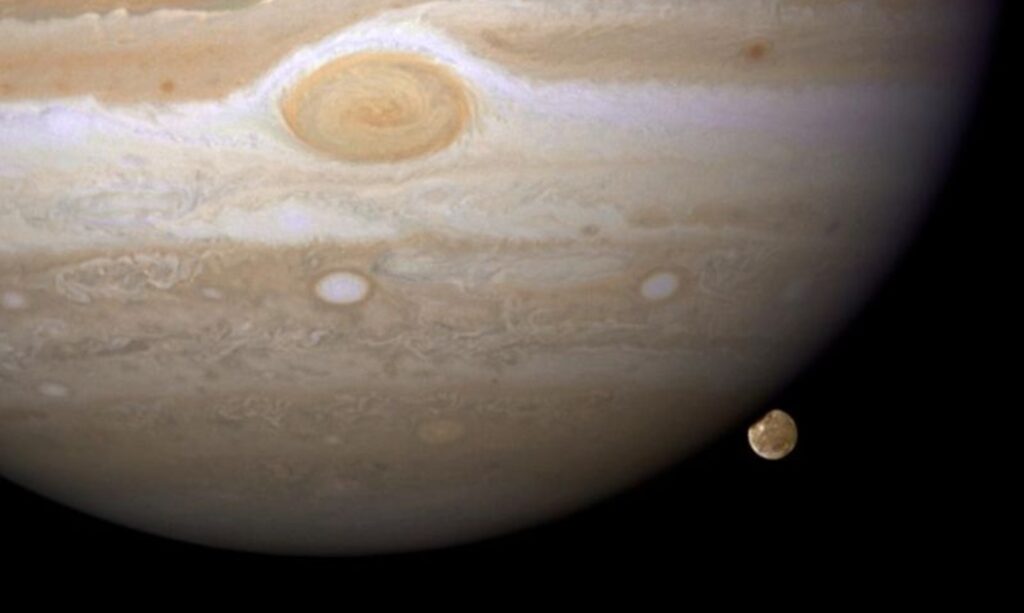
Jupiter and its largest moon Ganymede (NASA, ESA, and E. Karkoschka (University of Arizona))
Jupiter and its largest moon Ganymede (NASA, ESA, and E. Karkoschka (University of Arizona))
One might think that since we can take detailed images of galaxies millions of light years away, there’s no way something as significant a moon could exist within our solar system without our knowledge, but not only are there moons we don’t know of yet, but they are being found by amateur astronomers.
In the equivalent of putting the 80th star on a flag of Jupiter, hobbyist Kai Ly officially submitted evidence of an 80th moon of Jupiter, a hitherto unlocated heavenly body of red rock.
Currently awaiting a common name, the moon is believed to be a piece of a very large comet absorbed by Jupiter’s gargantuan gravitational field, rather than a shard of the planet itself.
This isn’t the only moon, believe it or not, which Ly has discovered. Indeed, using data from a detailed survey of the Jupiter space in 2003 from the Canada-France-Hawai’i Observatory, Ly found four moons just last year, and parsed the fifth from the same data as a “summer hobby before… school”.
“I’m proud to say that this is the first planetary moon discovered by an amateur astronomer,” wrote Ly in a message to the astronomy community. “Other than that, there really isn’t anything remarkable about this Jovian moon—it’s just a typical member of the retrograde Carme group.”
Discovered in 1938, the Carme group is a group of “Jovian moons” (Moons of Jupiter) that all came from a single large comet or other kind of debris. The largest moon in the group, carrying 99% of its total mass, is named Carme, but is just 14 miles in diameter. The clip below demonstrates the “miniscularity” of the new moon.
The Carme group is notable for its dramatic elliptical orbit, but also because they orbit in the opposite direction to the planet itself, known as a retrograde. While the recently-discovered “EJc0061 = S/2003 J 24,” is the last of the known Jovian moons to be found, there could be more, even hundreds of yet undiscovered ones.
The Jovian moons are fascinating objects, which include entities like Io, which is the most volcanically active body in the solar system, while Ganymede, the largest of the Jovian moons, is the only moon in our solar system with a magnetic field, which gives it an aurora by the way.
The best periods for looking are when the Earth and Jupiter are skewered by the sun, allowing us to view it in full light.
SHARE This Far Out Story With Pals on Social Media…
A hotel in Iceland is calling all photographers for a three-week paid vacation to capture images of this year’s northern lights, as if such work needed a reward.
Seeking a professional “Lights-catcher,” the luxurious Hotel Rangá is hosting open applications to any capable and established photographers to stay at their location on the south coast of Iceland, and at their sister hotel in the extremely remote central region for three weeks between late September early October.
To apply, photographers must fill out an application (that at the time of writing still works and is receiving submissions). Applicants must describe social media and online presence, vaccination status, ability to travel, and other optional questions.
“In exchange for providing content of the Northern Lights at the hotel, this seasonal employee will receive free room and board, along with access to the hotel’s stargazing observatory and hot tubs, not to mention the opportunity to explore the photogenic land of fire and ice on their days off,” the website writes.
An established portfolio will do any perspective lights-catchers good, as in an email correspondence with GNN, the hotel revealed they had already received 2,000 applicants from 40 countries. But that’s no reason to despair, as they won’t be selecting the right candidate until the end of August.
Hotel Rangá has retractable roofs, professional telescopes, high wind-proof walls for stargazers, and visiting astronomers to go over the star-facts and aurora with any guests.
Quote of the Day: “To me, life is a gift, and it’s a blessing to just be alive. And each person should learn what a gift it is to be alive no matter how tough things get.” – Tony Bennett (turns 95 today)
Top Photo: by Moody Fotografi, CC license
With a new inspirational quote every day, atop the perfect photo—collected and archived on our Quotes page—why not bookmark GNN.org for a daily uplift?
“We are thrilled that Health Canada has issued its No Objection Letter allowing this important study to proceed and, in doing so, potentially advance Canada toward a legal, regulated system for MDMA-assisted therapy,” said Payton Nyquvest, CEO of Numinus.
“We are gratified that our study will provide safety and outcome data to regulators to support integration of this treatment into mainstream mental health care.”
This study has advanced through the pre-implementation stage at Numinus‘ Vancouver clinic and has now received the required federal regulatory approval.
Study preparations are now transitioning into the final stages of training staff, importing medication, and obtaining ethical approval to allow the recruitment of participants according to COVID-19 public health protocols.
During the study, research, medical, and therapist staff at Numinus will collect data on the safety and effectiveness of MDMA-assisted therapy to inform Health Canada and support making MDMA-assisted therapy available to individuals living with PTSD in Canada.
Through the collaboration and study activities, Numinus seeks to create access for patients with no other treatment options and establish the physical, human resource and other infrastructure required to scale up access to MDMA-assisted therapy if federal approvals are ultimately in place.
Dr. Devon Christie, Numinus Medical and Therapeutic Services Director, will serve as the study’s Qualified Investigator and as a study therapist. Dr. Christie is a family physician with a focus in multidisciplinary pain management and a certified Relational Somatic Therapist.
“Health Canada should be recognized for its ongoing leadership through its support of this study,” said Dr. Christie in a statement. “At our Vancouver clinic, we have spent months establishing the physical, technical, clinical, and human resource infrastructure needed to move the study forward and ultimately foster greater access to MDMA-assisted therapy.”
New trial builds on strong MAPS Phase 3 results
In May 2021, MAPS announced results from its Phase 3 randomized clinical trial that confirmed the substantial efficacy and safety of MDMA-assisted therapy for PTSD under the MAPS Public Benefit Corporation (MAPS PBC) protocol.
The trial demonstrated that 88% of participants who received three controlled and supervised MDMA-assisted therapy sessions experienced a clinically significant reduction in symptoms, with 67% no longer qualifying for PTSD diagnosis in comparison to 32% of participants randomized to placebo.
SHARE This Hopeful News With Friends on Social Media…
Creativity is hard to define, and even more difficult to measure, but a new four-minute test is creating an easy and elegant way to at least measure one of the most common characteristics of this very human trait.
The test is simple, and consists of one question with ten answers: Can you think of two words that have nothing in common? What about five, what about ten?
By measuring the semantic difference between the ten submitted words, a deep learning algorithm can “score” one of the most detectable aspects of creativity—the ability to mentally bridge the conceptual gap between things, called “Divergent Thinking.”
Called the Divergent Association Task (DAT), it was formulated by a research team from McGill, Harvard, and the University of Melbourne. Jay Olson, a postdoctoral fellow at Harvard came up with the idea from a childhood game.
In a study of 9,000 people,Olson showed that his childhood game was wise beyond its years, as the scores followed similar patterns observed in two other common creativity tests.
The first was the Alternative Uses Task, which asks participants to think of novel uses of an object and judges the distance between the established use and the answers given.
The second was the Bridge-the-Associative Gap Test, which provides testers with two words, for example ‘book’ and ‘wood’, and asks them to provide a third which links the two—for example ‘bookshelf’.
From people aged 7-70, in 98 countries, it was found in the study, published in PNAS, that demographics mattered very little, with a slight statistical advantage given to younger people and women, but overall the results suggested that anyone can be creative. T
he algorithm meant that since no humans were judging the scores, the ultimate example of bias—creative preference, could be surpassed.
“Creativity is fundamental to human life,” Olson told his university press. “The more we understand its complexity, the better we can foster creativity in all its forms.”
Breaking barriers
Most of us would think of creativity as the end products we all enjoy, such as a painting, a symphony, or a poem, but far below and often months before a composer gets to direct the orchestra, it often starts with bending the rules.
Music fans will know that the sound of Mississippi Delta Blues in America came about when guitar players started using the diminished fifth note when playing minor scales or minor chords, which was a sound considered for over a century to be so unpleasant it became taboo. It took their minor scales and chords from sounding sad the way a Disney movie sounds sad, to something totally different, but it started with disassociating correlated patterns of thought and behavior.
Another easy example for those more fond of the canvas involves Van Gogh, whose act of painting ordinary things in colors that they don’t exist in changed the art scene he was popularized. Again it started with a person who was simply able to disassociate the things his mind had stuck together.
“Our task measures only a sliver of one type of creativity,” says Olson. “But these findings enable creativity assessments across larger and more diverse samples with less bias, which will ultimately help us better understand this fundamental human ability.”
Curious to see how creative you are? Take the test here.
Artist's illustration of a black hole; NASA/JPL-Caltech
Artist’s illustration of a black hole; NASA/JPL-Caltech
When doing astronomy, you can’t blink, because the difference between a never-before-seen phenomenon, and just a regular day at the telescope can be as small as seeing faint X-rays turn into fainter X-rays for a short moment.
That’s what happened when astrophysicist Dan Wilkins noticed, upon fixing his telescopes on the supermassive blackhole at the center of the galaxy I Zwicky, that following a normal series of powerful X-rays being flung out from the center, came unexpected additional flashes of X-rays that were smaller, later, and of different “colors.”
The fainter, different colored lights came from behind the black hole when the powerful burst of X-rays reflected off gasses orbiting it, and which are drawn around by the magnetic and gravitational forces that blend space and time, allowing us to see them faintly.
“Any light that goes into that black hole doesn’t come out, so we shouldn’t be able to see anything that’s behind the black hole,” said Wilkins, a research scientist at the Kavli Institute for Particle Astrophysics and Cosmology at Stanford, in a statement. “The reason we can see that is because that black hole is warping space, bending light, and twisting magnetic fields around itself.”
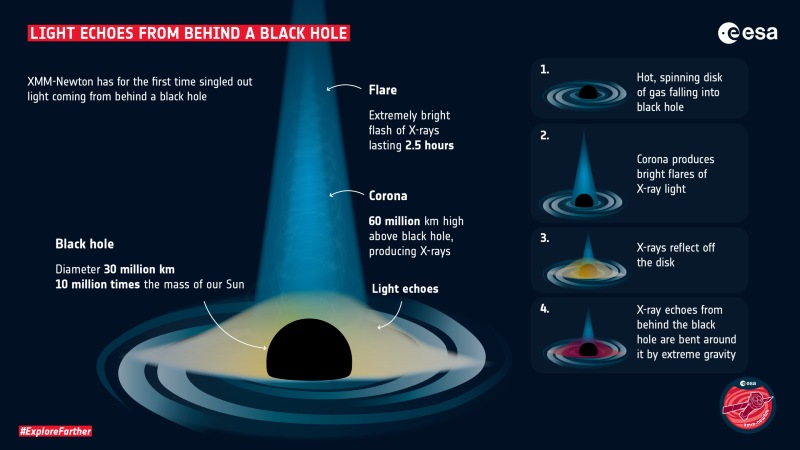
The discovery was made by the European Space Agency’s XMM-Newton and NASA’s NuSTAR space telescopes, which captured the phenomenon in stages displayed for easy comprehension on the ESA website.
Einstein: dead and loving it
European Space Agency
At 10 million times the mass of our sun, the supermassive black hole at the center of I Zwicky, 1,800 light-years from our solar system, is surrounded by a swirling cloud of gas and dust that is continuously being pulled into the black hole, like water going down a drain, called a corona.
The corona becomes heated to millions of degrees Kelvin as it spins around, creating disjointed magnetic fields that become “twisted into knots,” which eventually snap, according to ESA.
This snapping creates a massive explosion of heat and energy, which generates bursts of X-rays called “flares” which can last for two and a half hours sometimes.
During this particular discharge of X-rays, Wilkins observed the light reflecting off the gas on the opposite side of the black hole from where the telescopes were viewing it, which due to the bending of space and time around it, changed the properties and colors of the X-rays.
The revelation that we can see light in different colors from the opposite ends of the black hole led Wilkins and his team to believe they could use them to create a color-coded 3D map of a black hole and its surroundings.
CBS reminds us that Einstein predicted black holes’ ability to bend light back in 1916, which along with the 2019 “Gates of Hell” image, the gravitational waves discovery using LIGO in 2014, and the discovery that new-born black holes “ring,” means that Einstein, more than 50 years after his death, is still making correct predictions at a faster rate than most living astrophysicists.
SHARE This Far-Out News With Pals on Social Media…
What could be better on a hot summer’s day than root beer topped with a swirl of vanilla soft serve ice-cream? A root beer float that’s free.
On Friday August 6 you can enjoy just that—as between 2-8 p.m participating A&W restaurants across the U.S. will give away free, small floats and collect donations for Disabled American Veterans.
A&W’s National Root Beer Float Day celebration partners with Disabled American Veterans, and since 2013 the franchise has raised more than $800,000 for veterans groups during these float days.
“A&W has a long history of supporting veterans,” said A&W CEO Kevin Bazner in a statement—and on Friday, they hope to raise $200,000 for the organization serving more than one million veterans annually.
A&W
America’s first and oldest restaurant chain, A&W still makes Root Beer fresh in each restaurant from real cane sugar, water, and a proprietary blend of herbs, bark, spices, and berries that are served in a frosty mug alongside burgers, fries, chicken tenders, and other favorites.
Quote of the Day: “I… keep reminding myself that heaven on earth is a choice that I must make, not a place I must find.” – Wayne Dyer, Manifest Your Destiny
Photo: by Denys Nevozhai (Shanghai, China)
With a new inspirational quote every day, atop the perfect photo—collected and archived on our Quote of the Day page—why not bookmark GNN.org for a daily uplift?
I have often had a yearning spirit. I’m ambitious, I tell myself. But if I’m honest, my “ambition” is often a vicious sniper, promising happiness while spraying me with self-attack: you should be further along, weigh less, have more self-worth, started a movement, married money. This kind of “ambition”—a regret-fest or siren song of someday success—takes me down.
By Leif-E, CC license
Happiness comes from being in the moment, this moment. Every therapist or guru says the same thing.
‘You’re not doing it right, you have to learn how to go with the flow,’ squawks Zen Girl, my Self Improvement Alter Ego. And believe me, I want to tell her where she can go.
I am in this secret race to be somewhere else. Better yet, to be someone else, someone better than me. I’ve called this ambition. But, really, it’s self-abandonment.
My healing comes from loving myself where I am—and as I am. Everything else is a frenetic and impoverished way of being in my one and only sacred life.
Peace is here, not over there in some fantasy I have. If there wasn’t something here for me, I wouldn’t be here. Magic is here. I may not see it yet, but I know I’ll never see it until I start looking for it where I am. My life reflects an intelligent design, and my True Self always has my highest interests encoded into the program.
The media drums it into us: a better life is “over there” just around the corner or one purchase away. But, I am daring to welcome love into my life right now. I am calling my life holy, and arriving wholly in this moment, just as it is. It’s not always pretty—but it is always sacred.
I’m not giving up on my dreams. I’m giving up on my criticism. I’m taking in what I already have. This is empowerment.
This is where the journey begins: “I do not want to be anywhere else.”
I wrote these words for myself, sort of as an incantation, a recipe for freedom. My ego, the part of me that hurtles to the finish line, even if it means missing or dismissing my entire life, recoils when I say these words.
I do not want to be anywhere else. These are words of luxury. These are words of mystery. These are words of quantum healing. I sit down on the silk blue pillow of my own true life. If even for just this moment, I stop searching, demanding, aching, and casting about.
To a part of me this feels as awkward as running backward. But really all I am doing is not rejecting my own life.
I do not want to be anywhere else. This is what it means to stop and receive. I am like a hungry bird—and the only source of nutrition is my present life. It’s not over there or under that. It doesn’t come later, and it doesn’t get better. I get better. I get better by discovering the uncanny instruction of my own life.
I do not want to be anywhere else. I am letting go of fierce striving. It’s beautiful to reach for further expression out of joy or devotion. But I want to let go of any self-hatred that propels me forward.
“The cracks are where the light gets in,” says word magician Leonard Cohen. I will behold the cracks in my life. They, too, are part of my treasure. They, too, have soul nutrition. That’s why they’re here. Everything has something to give me. When I see my life with loving eyes, I understand what is here.
I do not want to be anywhere else. Everything has always awaited me like a white bowl of handpicked blueberries. Only I wanted to sit at someone else’s table. I wanted another fruit. I wanted another life. That desire cost me more than I know. I’m not going to pay that price anymore. I am going to seize the only existence I have. I am seizing my blueberries, my exhausting day or confusion, frustration, or elation.
These are the words that came to me in my journal:
This is your life. It’s not broken. It’s unloved. And it’s unloved by you.
This does not mean I won’t walk out of the rain into a dry place. It means I will not belittle the rain. I will not condemn the rain. I will move forward. I will go where I am called and where I belong.
Yes, I will certainly dream of what I wish my life to be, and I will invest in and create those dreams. I will rise. But not with irritation or deprivation in my heart. I don’t want to shun my own day, my own breath, my own efforts or even lack of efforts. As of this moment, I refuse to sully and bully my own existence in the name of “realizing my potential.” I do not want to be anywhere else. This is my mantra. This is my saber. This is my ticket.
For me, this is a practice, the practice of a lifetime. I am learning that acceptance is something I want and it’s not a form of resignation. Acceptance is fierce. When I truly accept myself where I am, it’s a rush of compassion and a jolt of awakening.
Acceptance is the willingness to embrace your life, your one true, beautiful, challenging, disappointing, shocking, devastating and intriguing life.
It’s the decision to stay present and not slip into the destructive undertow of resistance and rejection. Acceptance is a form of self-blessing, the secret catalyst that galvanizes the whole darn ride right now.
Tama Kieves, an honors graduate of Harvard Law School, left her law practice to write and help others create their most extraordinary lives. She is the bestselling author of 4 books including A Year Without Fear: 365 Days of Magnificence and her latest Thriving Through Uncertainty. A sought-after speaker and career/success coach, she has helped thousands to thrive in their life, calling, and businesses. Sign up for your FREE digital fortune cookies and a free copy of her popular webinar Dare to Decide at www.tamakieves.com/dare.
SHARE the Wisdom With Your Friends and Family on Social Media…
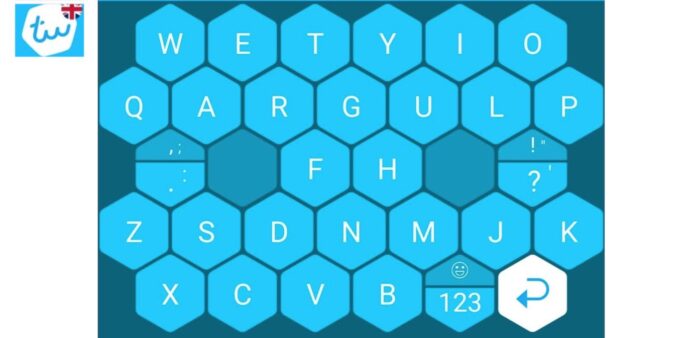
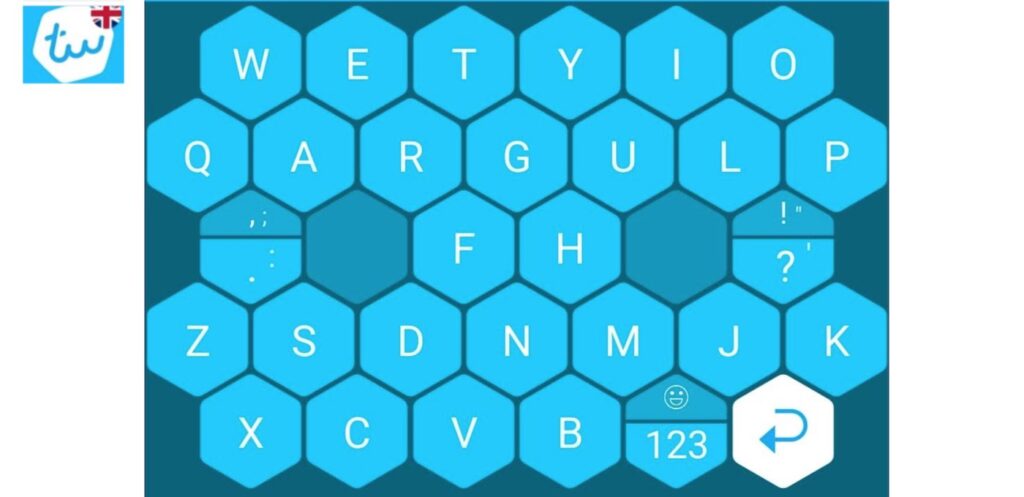
A formerly homeless man with a severely deformed hands has been able to rebuild his life after discovering a new way to communicate, thanks to a novel hexagonal smartphone keyboard made in Switzerland.
Russ Miller, 36, from Ohio, was first diagnosed with the autoimmune disease rheumatoid arthritis when he was just 26. The condition attacks the body’s joints, making it progressively more difficult for him to do everyday tasks.
“My hands are deformed. They’re not shaped properly and I can’t bend them like everyone else can. Recently my thumb has stopped working, so I can’t bend it,” said Miller in a letter to the company. “I can no longer use normal computer keyboards and it’s hard for me to even hold a pen anymore.”
Russ’ condition led to a downward spiral which resulted in him living on the streets in Florida for 4 years—but in 2018, he started trying to turn his life around.
“I was trying to get help and get myself out of my situation. I had a phone, but I struggled typing on keyboards… So I started looking for alternative smartphone keyboards that might enable me to type again. I found Typewise by accident.”
Russ attributes Typewise smartphone keyboard with enabling him to “get his life back” by empowering him to communicate with people, and therefore get help, get an apartment and even get a job:
“I was able to communicate a lot better than talking, because my voice is kind of monotone so people don’t understand me very well. And because I was able to start typing on my phone again, I was able to use social media to reach out to an organization that helps people with disabilities.”
It’s the hexagonal layout of the keyboard that Russ finds a whole lot easier. “I can move my fingers around and not mess up as often.”
Typewise
“Now I have a part-time job where I take care of dogs and cats; Tuesdays and Thursdays. I can’t work full time, because of my physical issues but at least I have something to do and something to look forward to.”
The company making the smartphone app, which has a popularity rating of 4.5 stars, had been unaware that their unique keyboard design could help people with reduced dexterity, until they received Russ’s letter.
“We’re just a small start-up from Switzerland so we were really quite surprised when Russ contacted us to say how much Typewise had helped turn his life around,” said Typewise co-founder, Janis Bernecker. We never thought we could have such a profound impact on someone’s life, especially someone on another continent.”
The free app for Android and iPhones has over a million users and boasts on its website about its privacy features (‘your keystrokes don’t leave your phone’), along with superior accuracy (4x fewer typos) and a ‘supercharged AI autocorrect’.
But, the positive review from Russ might be the thing they are most proud of now.
“It’s incredibly fulfilling for us to hear Russ’ inspirational story and we wanted to share it because there could be other people like Russ who Typewise could also help.”
Spread the Word to Others With Arthritis By Sharing This on Social Media…
With summer barbecue season well underway in the Northern Hemisphere, many of us are wondering if those citronella candles are even working to keep away the biting bugs.
By Aedes Albopictus, public domain
Science tells us that mosquitoes are peculiar insects that can’t be generalized as much as we would wish, which is why, at the end of your BBQ, some of the guests might be more bitten up than others.
While we are happy to sweep all of the wretched bloodsuckers under the same moniker of ‘mosquito,’ different species of mosquitoes have different methods of locating their host.
A fact sheet for mozzies is imperative, therefore, to minimize the annoyance these insects can bring.
Mosquitoes are CO2-seekers
All mosquitoes use CO2 from human and animal breath as a guide to the location of a potential host.
Ada McVean writing for Canada’s McGill Office for Science and Society, explains the surprisingly complicated way in which mosquitoes try and find their target in a recent article. According to McVean, if you’ve ever seen a mosquito zigzag in the air, that’s the sign they’ve just lost the CO2 scent, and are trying to find it again. Once it brings them to the general position, they use visual features to look for signs of heat, and odors to provide them with the exact position.
They can also find you through sweet-scented deodorant, body wash, shampoo, and other products—but they’ve been sucking our blood for millions of years so don’t need them.
Blood types
Most of us will have had a conversation or been in a situation at least once, wherein one person expresses their annoyance of mosquitoes which seem to be leaving someone else alone. It could be that the bitten person has a particular blood type which mosquitoes prefer.
Many studies have been conducted looking to see if a human’s blood type has some relation to their vulnerability to mosquitoes, and many of them seem to suggest that different species prefer different blood types.
A Sri Lankan study from 2019 found that 30% of starved female Aedes aegypti mosquitoes, the majority preferred O-type blood, compared to 25% for AB, and 20% for B. This species is famed for its spread of diseases like Dengue, Chikungunya, and Yellow Fever.
Another study however found that it was a combination of blood type, and a genetic feature some humans possess that cause them to secret substances related to their blood type onto their skin, which brought the mosquitoes, in this case a malaria spreader called Anopheles gambiae, to the host.
If someone with an O or B blood type were a secretor, their chance was 15-20% higher for an unpleasant visit, whereas A nonsecretors were landed on more than if they were a secretor, showing the complexity of the human-mosquito feeding methods.
Prevention measures
Physical measures are the principal ones that should be employed, long sleeves, high socks, etc., but it’s also something most people don’t want to do in the heat of summer.
Some modern outdoor wear has mosquito repellent infused into the threading, which has been scientifically-shown to work. However the treatment fades overtime, and there are question marks in Canada about the safety of placing such chemicals like permethrin next to your skin, especially for children. Craghoppers, the English outdoor brand, even recommends throwing away any treated clothes after a set number of washes.
While the world still struggles to come up with a breakthrough malaria medication, mosquito netting has been saving thousands of lives in the tropics for years, and while the mosquitoes in the U.S. aren’t carrying malaria, the net is still a proven technology.
After it was developed by the U.S. Army in 1946, DEET was registered for use by the general public in 1957.
According to the EPA, every year an estimated one-third of the U.S. population use DEET to protect themselves and their families from mosquito-borne illnesses like West Nile Virus, the Zika virus or malaria and tick-borne illnesses like Lyme disease and Rocky Mountain spotted fever.
As the world’s most thoroughly studied insect repellent, DEET, has been shown to be remarkably safe. (Here is a 2020 study offering more evidence.)
The authors of a 2002 study published in The New England Journal of Medicine wrote, “This repellent has been subjected to more scientific and toxicological scrutiny than any other repellent substance,” continuing, “DEET has a remarkable safety profile after 40 years of use and nearly 8 billion human applications,” concluding, “When applied with common sense, DEET-based repellents can be expected to provide a safe as well as long-lasting repellent effect.”
Most of the concerns can be attributed to people using products with too high a concentration of the chemical, or using it in an improper way. Concerns about rare DEET side-effects, including skin irritation, breathing difficulty, burning eyes, headaches, or
seizures, were reported after, in some cases, the chemical was ingested or applied in very large quantities.
While the CDC doesn’t make any recommendations for use or concentration of DEET in a given product, Canada’s government recommends against using a product that has more than 30% concentration, and with a ceiling of 10% for children 12 and under. As a precaution, manufacturers advise that DEET products should not be used on damaged skin, and that preparations be washed off after they are no longer needed or between applications.
Still not convinced? Here are some alternatives.
Alternative repellents
Icaridin, also known as picaridin, is a good alternative to DEET and provides equivalent protection for up to 7 hours.
It has broad efficacy against various insects such as mosquitos, ticks, gnats, flies and fleas, and is almost colorless and odorless. A study performed in 2010 showed that a spray or cream at the 20% concentration provided 12 hours of protection against ticks.
The compound was developed by the German chemical company Bayer and later evaluated and recommended as a repellent by Consumer Reports. Commercial products containing icaridin include Cutter Advanced, Skin So Soft Bug Guard Plus, and Autan.
The authors of the study pointed out that natural insect repellents based on essential oils tend to be entirely untested, something repellent shoppers should take note of.
“There are no published data describing the repellency of oils of canola, goldenseal, patchouli, rhodiumwood, sage, sweet birch, tansy, tea tree, or vetivert to mosquitoes, for example, nor has the repellency of glycerin, lecithin, menthol, extracts of barberry, chamomile, goldenseal, or myrrh to any pest or vector species been shown in scientific studies,” they write. “Of the 26 oils incorporated in the products we tested, only geranium, lavender, and peppermint oils, at the 100% concentration, repelled A. aegypti for (more than) 1 hour.”
Some products with soybean oil are marketed as insect repellents, but the soybean oil likely has nothing to do with the products’ success and is instead attributable to the other chemicals inside these products, such as geranium oil.
Sweet lemony-scented citronella candles or incense coils are often sold as insect repellent smokescreens. Citronella candles and diffusers have been shown to work with minimal protection, especially outside, but linalool and geraniol, two plant oils often included within citronella candles, were found to fare much better.
In short, buy a product that has all three for a pleasantly-smelling, and actually functional mosquito repellent, and if one can find an oil diffuser instead of a candle, even better.
Some products like bug zappers and others which play high-frequency sounds that supposedly disrupt mosquitoes could be summarized in this snippet from a study which thusly investigated: “We are not aware of any scientific study showing that mosquitoes can be repelled by sound waves and therefore we consider these devices as the modern equivalent of snake oil.”
Quote of the Day: “What you think of yourself is much more important than what others think of you.” – Seneca
Photo: by yulia pantiukhina
With a new inspirational quote every day, atop the perfect photo—collected and archived on our Quote of the Day page—why not bookmark GNN.org for a daily uplift?
This story was submitted to GNN by one of our readers. If you have an interesting story of kindness or positivity, be sure and send it to us for review.
More than three years ago at a hospital in Portland, Oregon, Lawson Lundberg was born prematurely. After spending several weeks in the neonatal intensive care unit, doctors expected the boy to have significant delays in cognitive development.
By Sara Lundberg
Despite not hearing more than two words during the first two years of his life, Lawson’s mother, Sara, witnessed a sudden change.
“He seemed leaps-and-bounds ahead, learning shapes without us having to teach him, learning words we don’t even remember saying around him.”
“Earlier this year, during the ice storm, we were without power for a few days and during that time he learned the names of countries and their capitals. It was then that we figured out he had somehow learned phonics on his own, which blew us away.”
Now, at 3-years-old, Lawson knows every flag, country, and capitol in the world. While other kids were learning to walk, Lawson was naming all 50 states and 195 countries! His vocabulary is ever-growing and his interest in learning is unique—so much so, that his parents had his IQ tested professionally.
The tyke scored 151. For reference, Albert Einstein’s IQ was estimated at between 160 and 180, but much later in life.
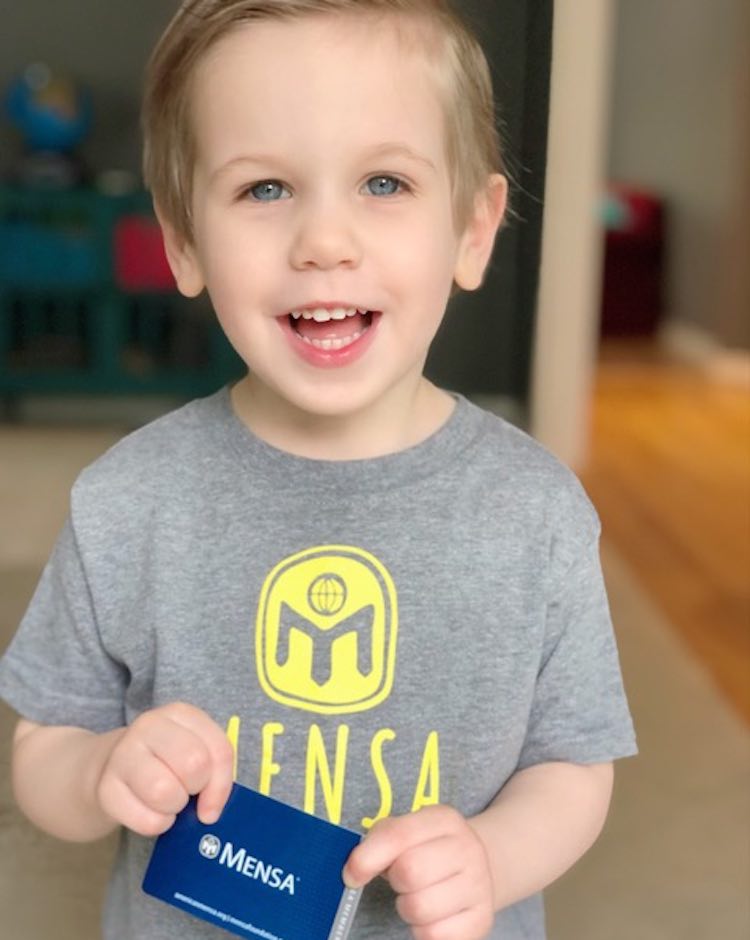
Lawson’s parents signed up their son to join the national intelligence organization Mensa, ranking him among the group’s youngest members. An IQ of 130 is required to join, and at 3 years old Lawson is far ahead of that pace and not done yet.
– Sara Lundberg
“About 21% of the IQ test, he didn’t get any of the questions wrong, so they ran out of questions to ask him,” Sara told GNN. “Normally once you get a few wrong they move on, but they weren’t able to move on until they ran out, which is not normal by any means.”
They recommended he get tested again in a few years to get a more accurate look at his IQ because the test for older kids has an unlimited number of questions.
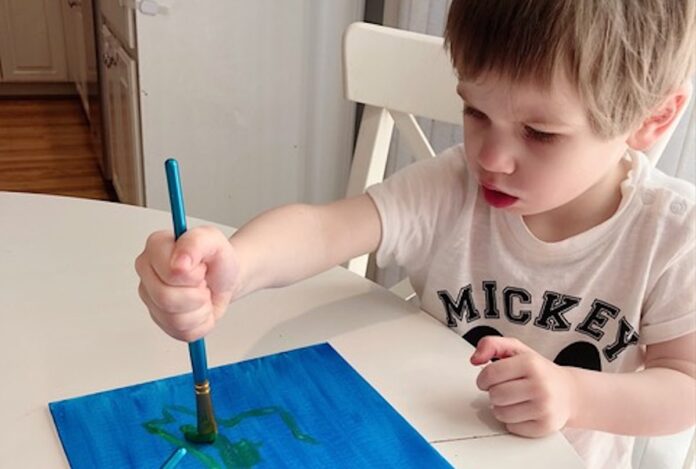
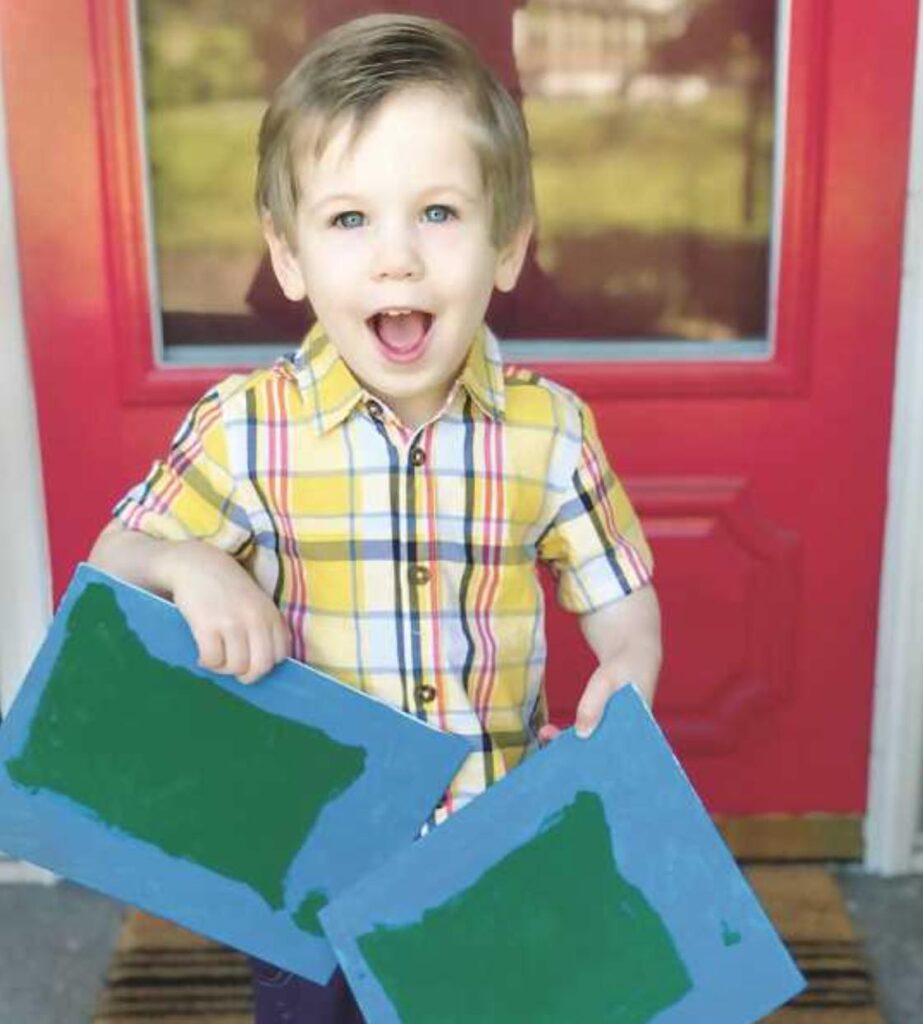
Now, Lawson has picked up a paintbrush and ‘made it his mission’ to earn money for the charity. He’s raised $525 from family friends, but now they’re offering to send the boy’s paintings—which consist of the exact shapes of states or countries—to strangers who donate on the family’s donation page at March of Dimes.
Email Sara if you donate and would like a painting shipped as a personal thanks from Lawson: [email protected].
SHARE the Inspiring Preemie Story With Other Parents on Social Media…
FREE WILL ASTROLOGY – Week beginning July 30, 2021
Copyright by Rob Brezsny, FreeWillAstrology.com
LEO (July 23-Aug. 22):
Leo poet Renée Ashley articulates a perspective I recommend you adopt. She writes, “I’m drawn to what flutters nebulously at the edges, at the corner of my eye—just outside my certain sight. I want to share in what I am routinely denied, or only suspect exists. I long for a glimpse of what is beginning to occur.” With her thoughts as inspiration, I advise you to be hungry for what you don’t know and haven’t perceived. Expand your curiosity so that it becomes wildly insatiable in its quest to uncover budding questions and raw truths at the peripheries of your awareness.
VIRGO (Aug. 23-Sept. 22):
There are many things in your heart you can never tell to another person,” declared Virgo actor Greta Garbo (1905–1990). “It is not right that you should tell them,” she concluded. “You cheapen yourself, the inside of yourself, when you tell them.” I presume Greta was being melodramatic. My attitude is the opposite of hers. If you find allies who listen well and who respect your vulnerability, you should relish telling them the secrets of your heart. To do so enriches you, deepens you, and adds soulful new meanings to your primary mysteries. The coming weeks will be a favorable time to seek this wise pleasure in abundance.
LIBRA (Sept. 23-Oct. 22):
Now is a fantastic time to seek out effervescent socializing and convivial gatherings and festive celebrations. If you surround yourself with lively people, you’ll absorb the exact influences you need. May I suggest you host a fun event? If you do, you could send out invitations that include the following allures: “At my get-together, the featured flavors will be strawberry chocolate and impossibly delicious. There’ll be magic vibrations and mysterious mood-enhancers. Liberating conversations will be strongly encouraged. Unpredictable revelations will be honored. If possible, please unload your fears and anxieties in a random parking lot before arriving.”
SCORPIO (Oct. 23-Nov. 21):
Scorpio author Andrew Sean Greer writes, “As the Japanese will tell you, one can train a rose to grow through anything, to grow through a nautilus even, but it must be done with tenderness.” I think that’s a vivid metaphor for one of your chief tasks in the coming weeks, Scorpio: how to carefully nurture delicate, beautiful things as you coax them to ripen in ways that will bring out their sturdiness and resilience. I believe you now have an extra capacity for wielding love to help things bloom.
SAGITTARIUS (Nov. 22-Dec. 21):
Suggested experiments to try soon: 1. Remember a past moment when you were touched with the sudden realization that you and a person you’d recently met were destined to fall in love. 2. Remember a past moment when you kissed someone for the first time. 3. Remember a past moment when someone told you they loved you for the first time or when you told someone you loved them for the first time. 4. Allow the feelings from the first three experiments to permeate your life for five days. See through the eyes of the person you were during those previous breakthroughs. Treat the whole world as expansively and expectantly as you did during those times.
CAPRICORN (Dec. 22-Jan. 19):
Capricorn poet Kenneth Rexroth was shirtless as he strolled along a rural road. To his delightful amazement, a fritillary butterfly landed on his shoulder, fluttered away, landed again, fluttered away—performed this dance numerous times. Nothing like this had ever happened to him. Later he wrote, “I feel my flesh / Has suddenly become sweet / With a metamorphosis / Kept secret even from myself.” In the coming days, I’m expecting at least one comparable experience for you. Here’s your homework: What sweet metamorphoses may be underway within you—perhaps not yet having reached your conscious awareness?
AQUARIUS (Jan. 20-Feb. 18):
“Each time we don’t say what we want to say, we’re dying.” Aquarian artist and singer Yoko Ono said that. I will add a further nuance: Each time we’re not aware of the feeling or experience or situation we want, we’re dying. And these will be key themes now that you’ve entered the “I KNOW WHAT I WANT AND I KNOW HOW TO ASK FOR IT” phase of your cycle. The most healing and vivifying thing you can do during the next six weeks is to be precise about your desires.
PISCES (Feb. 19-March 20):
In 1829, Piscean author Victor Hugo began work on his novel, The Hunchback of Notre Dame. He had other projects, though, and by September 1830, he had made scant progress on Hunchback. Growing impatient, his publisher demanded that he finish the manuscript by February 1831. In response, Hugo virtually barricaded himself in his room to compel himself to meet the deadline. He even locked his clothes in a closet to prevent himself from going out. For the next five months, he wore only a gray shawl as he toiled nonstop. His stratagem worked! I recommend you consider trying a somewhat less rigorous trick to enforce your self-discipline in the coming weeks. There’s no need to barricade yourself in your fortress. But I hope you will have fun taking stringent measures.
ARIES (March 21-April 19):
What does it mean to *feel real*? Some people have a hard time doing that. They have such false ideas about who they are that they rarely feel real. Others are so distracted by trivial longings that they never have the luxury of settling into the exquisite at-home-ness of feeling real. For those fortunate enough to regularly experience this treasured blessing, feeling real isn’t a vague concept. It’s a vivid sensation of being conscious in one’s body. When we feel real, we respond spontaneously, enjoy playing, and exult in the privilege of being alive. After studying your astrological potentials, Aries, I suspect that you now have an enhanced capacity to feel real.
TAURUS (April 20-May 20):
When she was a child, author Valerie Andrews visited her secret sanctuary at sunset every day for seven years. She lay on the ground among birch trees and aromatic privet plants, feeling “the steady rhythmic heartbeat of the earth” as she basked in the fading light. I’d love for you to enjoy the revitalizing power of such a shrine. The decisions you have to make will become clear as you commune with what Andrews calls “a rootlike umbilicus to the dark core of the land.” Do you know of such a place? If not, I suggest you find or create one.
GEMINI (May 21-June 20):
I suspect that your immediate future will be a patchwork of evocative fragments. You may be both annoyed and entertained by a series of flashing attractions, or an array of pretty baubles, or a hubbub of tasks that all seem at least mildly worth doing. Chances are good that they will ultimately knit together into a crazy-quilt unity; they will weave into a pattern that makes unexpected sense. In the spirit of the spicy variety, I offer three quotes that may not seem useful to you yet, but will soon. 1. “Isn’t it possible that to desire a thing, to truly desire it, is a form of having it?” – Galway Kinnell 2. “It is not half so important to know as to feel.” — Rachel Carson 3. “Like all explorers, we are drawn to discover what’s out there without knowing yet if we have the courage to face it.” — Pema Chödrön
CANCER (June 21-July 22):
A Tumblr blogger named Cece writes, “The fact that you can soak bread in sugar, eggs, cinnamon, and vanilla, then butter a pan and fry said bread to make a meal is really liberating.” I agree. And I share this with you in the hope of encouraging you to indulge in other commonplace actions that will make you feel spacious and uninhibited. You’re in a phase of your astrological cycle when you’ll thrive on doing day-to-day details that excite your lust for life. Enjoying the little things to the utmost will be an excellent strategy for success.
WANT MORE? Listen to Rob’s EXPANDED AUDIO HOROSCOPES, 4-5 minute meditations on the current state of your destiny — or subscribe to his unique daily text message service at: RealAstrology.com
A new partnership with police in Colorado is putting smiles on the faces of motorists who might not have the money to fix a broken part on their vehicle.
An Advance Auto Parts store has gifted the Denver Police Department with 100 gift cards worth $25 each to hand out to drivers who are normally pulled over by cops and given a warning or ticket to pay a fine.
“Now, when they pull over a motorist for, say, a bad headlight or a defective taillight, they’ll have the option to give a $25 gift card to help the motorist get it fixed–and get them back on the road and stay safe,” a representative of Advance Auto Parts explained.
Denver Police Chief Paul Pazen says officers have already issued the cards, and are enjoying the smiles it puts on drivers’ faces.
“Advance Auto Parts’ donation not only helps us get greater compliance with the motoring public, but it also helps us build and strengthen relationships with our community.”
WATCH the announcement below…
SHARE The Idea With Other Small Businesses on Social Media…
A real-life Indiana Jones believes he may have found the secret location of the Holy Grail and the Ark of the Covenant—under a house in Staffordshire.
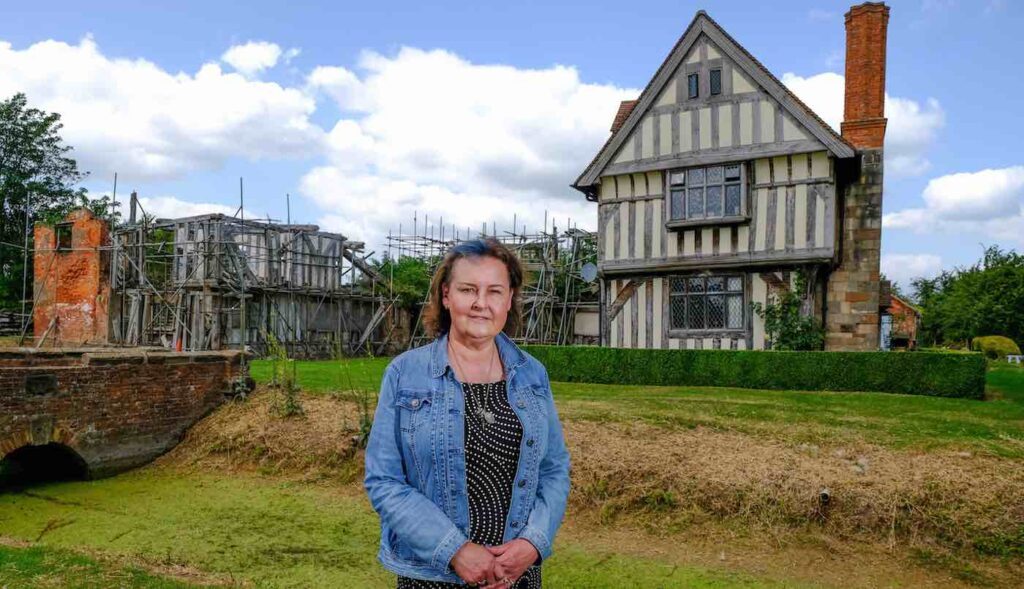
Kate Murphy – SWNS
Historian and anthropologist David Adkins is convinced that priceless treasures, which were taken from Jerusalem in 1307, were stashed beneath Sinai Park House in Burton-on-Trent.
He claims to have uncovered links between the property and the Knights Templar who concealed the mythical Ark and Grail centuries ago.
David is now hoping to search the labyrinth of tunnels beneath the 14th century house to prove the Holy Grail was hidden there.
“I’ve been researching it for 34 years, so I’ve really got a complete history of the place and looked into archives that no one had touched before,” said the 50-year-old.
“There are so many pointers that when Knights Templar left La Rochelle in 1307 we know they had a treasure. There are theories about Oak Island in Nova Scotia and Roslyn Chapel in Scotland but it has never been found.”
“Sinai House is the most obvious place once you get inside the mind of a medieval Templar,” he says. “The name Sinai really shouts at you from the pages of history because you have got no other ancient house with that name.”
The two key points for Adkins is the labyrinth of natural tunnels and caves and the timing of when Burton Abbey monks took possession of that house—at the same time as the Templars were trying to conceal that hoard.
“A geologist once told me that there were caverns as big as Westminster Abbey beneath the house,” he told the Express.
In 1880, a dig took place in the Sinai House tunnels and archaeologists reached half-a-mile underground before being ‘forced back by fumes’. The cellar’s stone archway has remained bricked up since.
The opening was sealed with bricks – SWNS
“We know there is really strong evidence they brought manuscripts and gold from the Temple of Solomon in 1307. I think they adapted the tunnels to conceal whatever they brought from Jerusalem.”
David said the family living in Sinai House at the time left in the early 1300s, and Burton Abbey then took over the property, which was hidden by Needham Forest atop a hill that drops into the Trent Valley.
Kate Murphy, the current owner has now given David permission to search the vast caverns under her home in a bid to solve the mystery. The researcher, who previously made headlines when he tracked down a 10,000-year-old skull known as ‘Greta’, wants to start his search with a geophysical scan.
Murphy, 56, bought the house in 1994 for £50,000. It is nationally designated as a Grade II historical building— which means it is of ‘special interest warranting every effort to preserve’ it.
“It’s a hugely important site and I first saw it with my late husband David in 1990 because we liked timber framed houses.
“I’m totally wedded to the idea that there is something there,” she told SWNS. “I think the theory is very good, well researched and I’m very impressed by David’s work.”
“I’m very excited about it and it’s not cynicism about the story that I think it is unlikely something will be found – that is because of the inaccessibility of the tunnels.
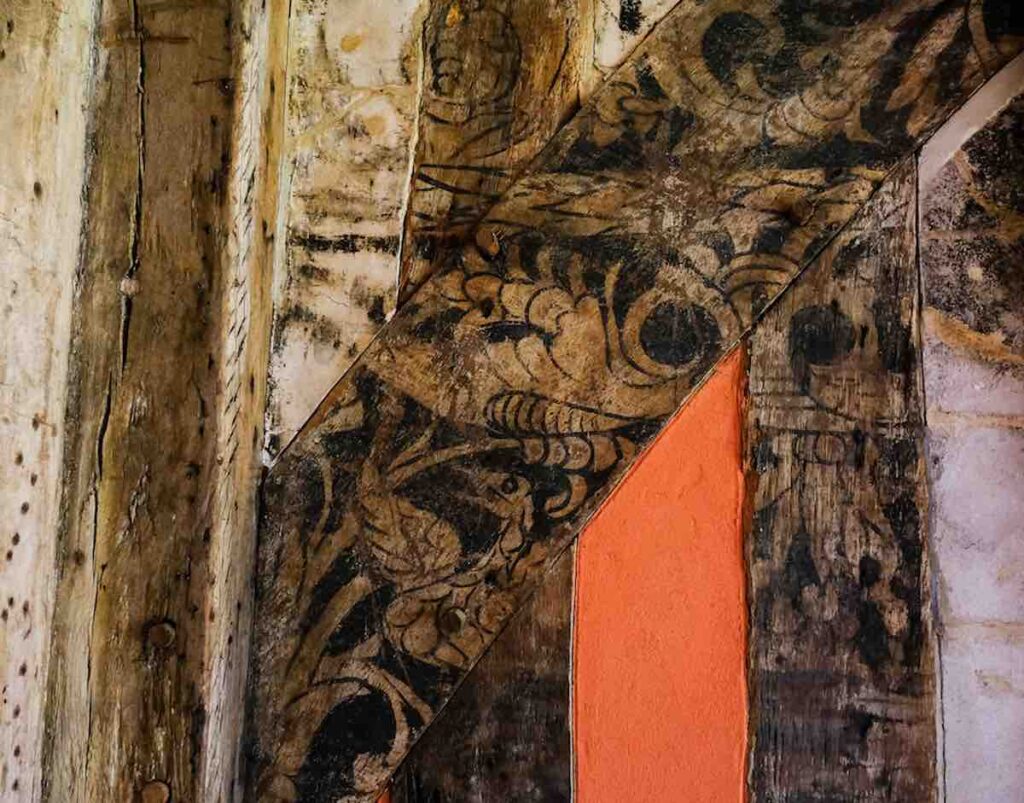
“There is plenty more evidence in the house like the wall paintings of the tabernacle that there is something going on.
SHARE the Intriguing News With Your Friends on Social Media…
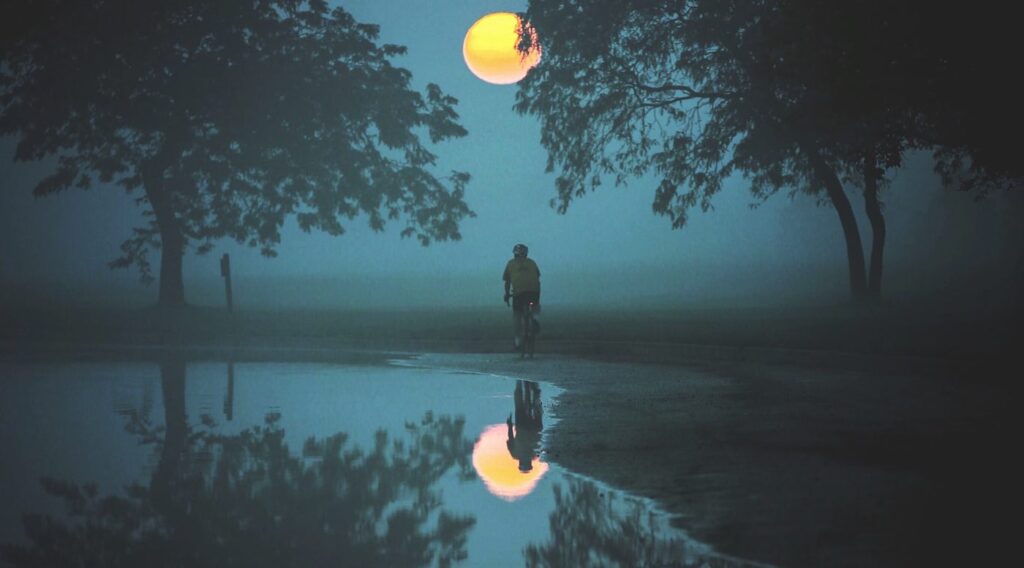
Quote of the Day: “There are times when solitude is better than society, and silence is wiser than speech.” – Charles Spurgeon
Photo: by Tony Detroit
With a new inspirational quote every day, atop the perfect photo—collected and archived on our Quote of the Day page—why not bookmark GNN.org for a daily uplift?




























 Tama Kieves, an honors graduate of Harvard Law School, left her law practice to write and help others create their most extraordinary lives. She is the bestselling author of 4 books including