














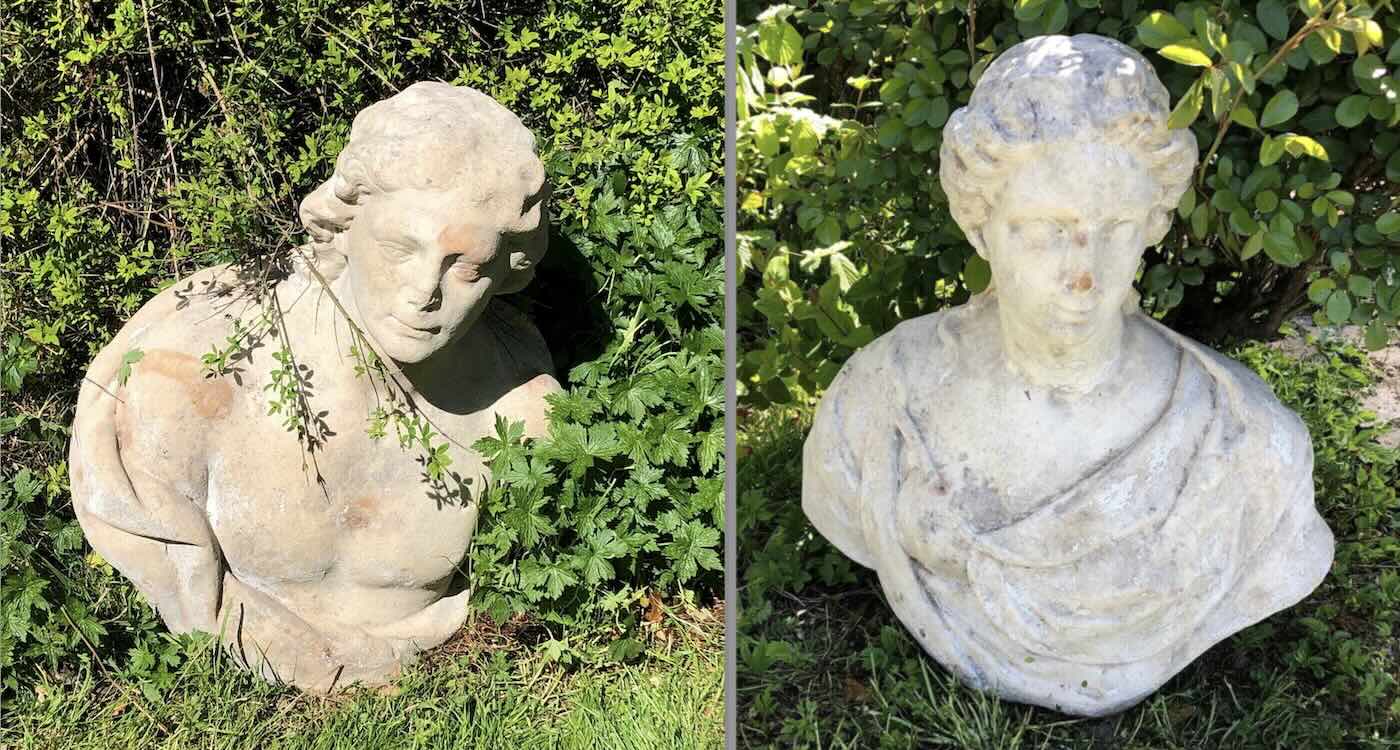
Two “worthless” garden statues thought to be made of cheap concrete were discovered to be rare 18th-century Italian marble masterpieces, earning the homeowner a nice payday after their sale.
An estate-sale expert spotted the tatty chipped busts in the undergrowth around a house that was being cleared out in Kent, England.
The owner used them as garden decorations, thinking they were low value concrete figurines, but closer inspection revealed the statues were carved in the early 1700s by craftsmen in Florence, Italy.
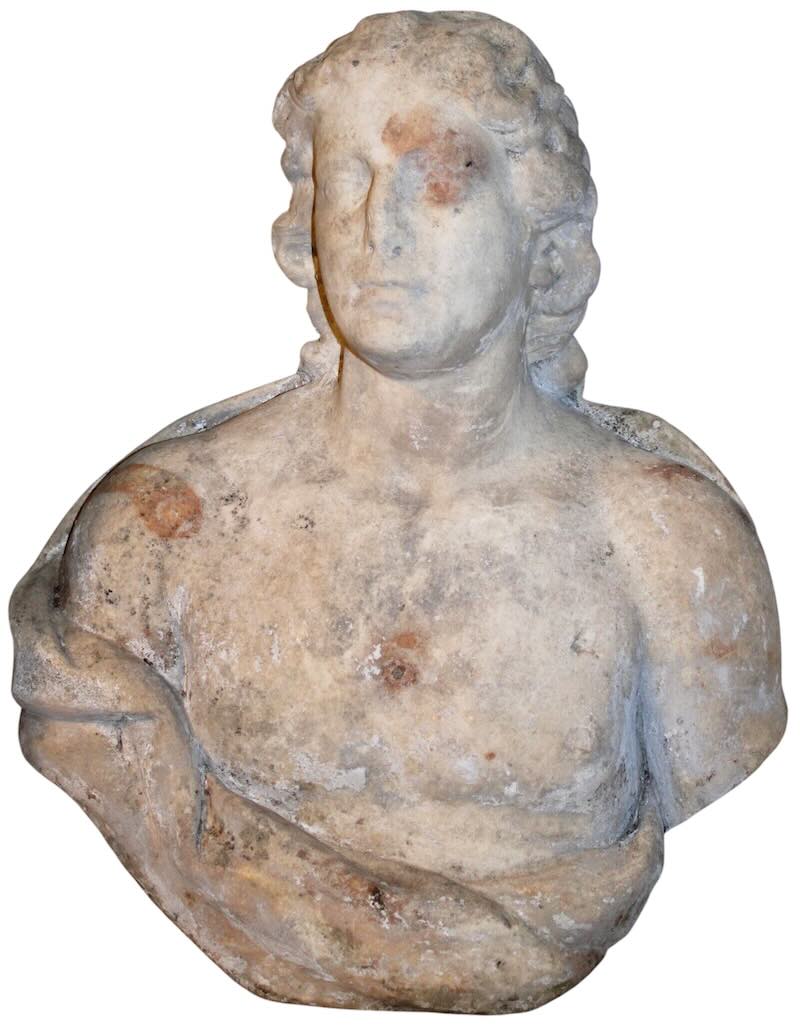
Placed up for auction this week, the two Florentine busts—one depicting Apollo and the other Diana—sparked a bidding war between collectors and architectural salvage companies.
They fetched around $3,000 each, with the hammer falling to a round of applause.
They were discovered by Hansons Auctioneers’ Justin Matthews during a routine house valuation in the village of Boughton Monchelsea.
“The owner thought they were mass produced and made of concrete and was surprised when I told him I thought otherwise.”
Dating from 1720-1730, the busts probably came to Britain during the Grand Tour era when wealthy travelers scoured Europe for classical treasures.
GRANDMA’S BEST SURPRISE: Crock Sitting on Her Porch for 40 Years Fetches $32k After She Hoped for $100 on her Birthday
“Both may once have formed part of a much larger architectural scheme, perhaps decorating a grand staircase, formal garden, or a classical façade before eventually making their way to England.”
The figures would have been instantly recognizable to Georgian collectors in the 1700s but their heavily weathered look after centuries of erosion, lichen, and surface deposits hid their true value, until experts later uncovered the hand-carved marble beneath the grime.
Apollo—god of music, poetry and the sun—is depicted bare-chested and draped in the classical Roman style. Diana—goddess of the hunt and moon—appears in flowing robes in the neo-classical style popular across Europe at the time.
CHECK ALL YOUR OLD TABLES: 400-Year-old Ming Dynasty Table Worth $80k Inherited From Relative Who Loved Anything Asian
“Many comparable pieces imported to Britain during the Georgian era were lost, broken up, or dispersed as estate collections were dismantled over the centuries,” said Justin.
“The survival of the pair is remarkable.”
SPUR YOUR GARDENING FRIENDS By Sharing the Find on Social Media…
I’m scratching my head over the fact that someone mistook marble for concrete.