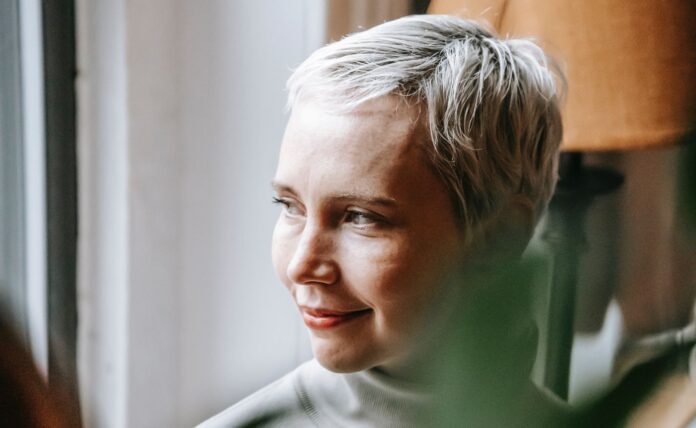
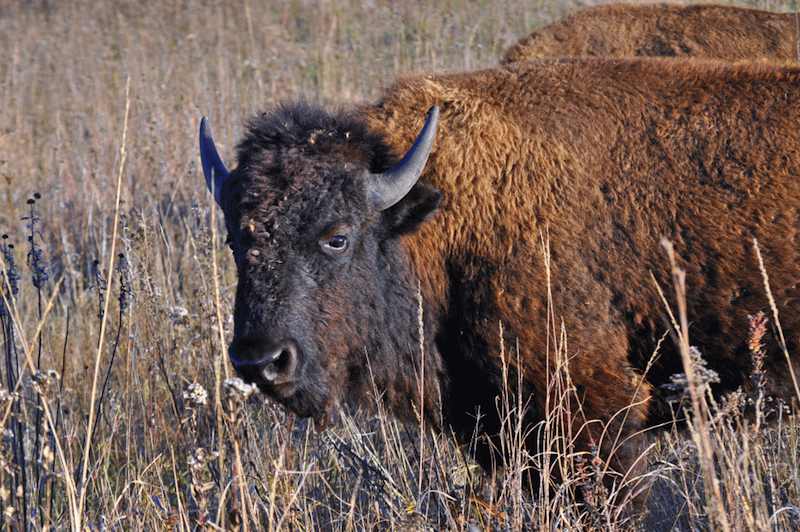
Quote of the Day: “The power of finding beauty in the humblest things makes home happy and life lovely.” – Louisa May Alcott
Photo: by Jack Wilson
With a new inspirational quote every day, atop the perfect photo—collected and archived on our Quote of the Day page—why not bookmark GNN.org for a daily uplift?
Despite a few national governments continuing to keep their coal and oil projects afloat, market demand and private entrepreneurship is driving what can only be described as a revolution in renewable energy.
SWNS
These latest achievements might have been thought unbelievable when global climate change was first being discussed as a serious threat, but today each successive development of renewable energy, nuclear fusion, and electric cars, makes subsequent developments cheaper and easier to scale.
Just six months into 2021, we have already seen some amazing progress in wind, solar, and EVs.
Tapping the African sunshine
A half million people living in the Northern DR Congo cities of Gemena, Isiro, and Bumba, are in for a surprise, as a trio of UK, French, and Spanish solar power companies look to close deals to supply the region with reliable renewable energy.
Citizens from the DRC suffer from the lowest rates of reliable electricity in the world, and the solar power plants are set to help this problem with 18 months of construction commencing.
In West Africa, the Senegalese cities of Kael and Kahone will find 60MW of solar power available to them in the coming months as a variety of institutions offer the government financing for sustainable energy. Senegal is a heavy net energy-importer, placing enormous financial burdens on people, and thus the imports have generally been cheap i.e. brown coal and oil.
Lastly in Nigeria, one of Africa’s largest economies, the Solar Power Naija program is looking to equip 500,000 homes with solar panels, generating electricity for 25 million Nigerians over the next few years.
The community of Jangefe has already tasted the start of the mammoth green electrification, with 1,000 homes already equipped with rooftop solar panels.
The windiest on record
Pixabay
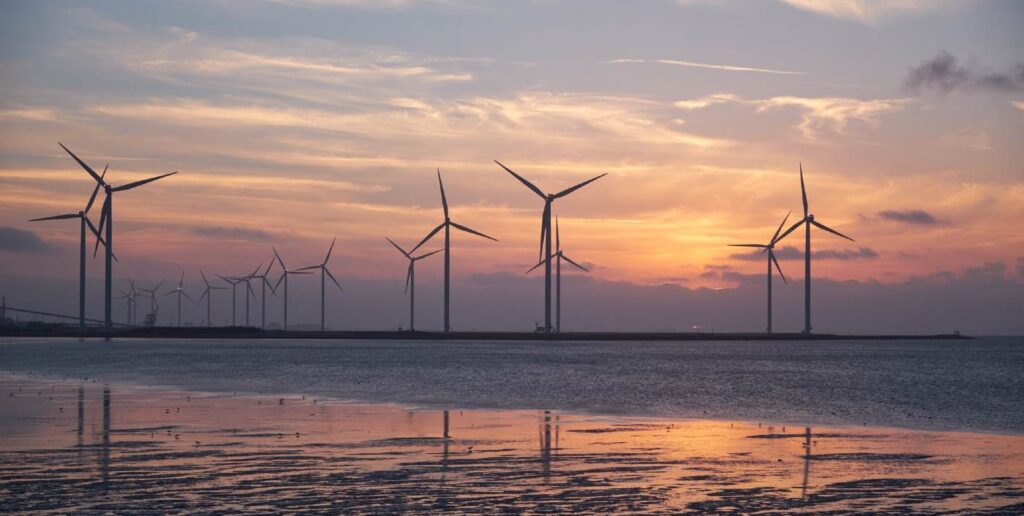
2021 was the single best year on record if you are a firm who manufactures wind turbines, or an institution that finances them, with 93 new gigawatts added—equaling a 53% increase since 2020. The 2021 Global Wind Report is a jaw-dropper, and it’s enough to quote the executive summary.
“Through technology innovations and economies of scale, the global wind power market has nearly quadrupled in size over the past decade and established itself as one of the most cost-competitive and resilient power sources across the world.”
“Today, there is now 743 GW of wind power capacity worldwide, helping to avoid over 1.1 billion tons of CO2 globally—equivalent to the annual carbon emissions of South America.”
The aluminum chancellor
Andrew Roberts
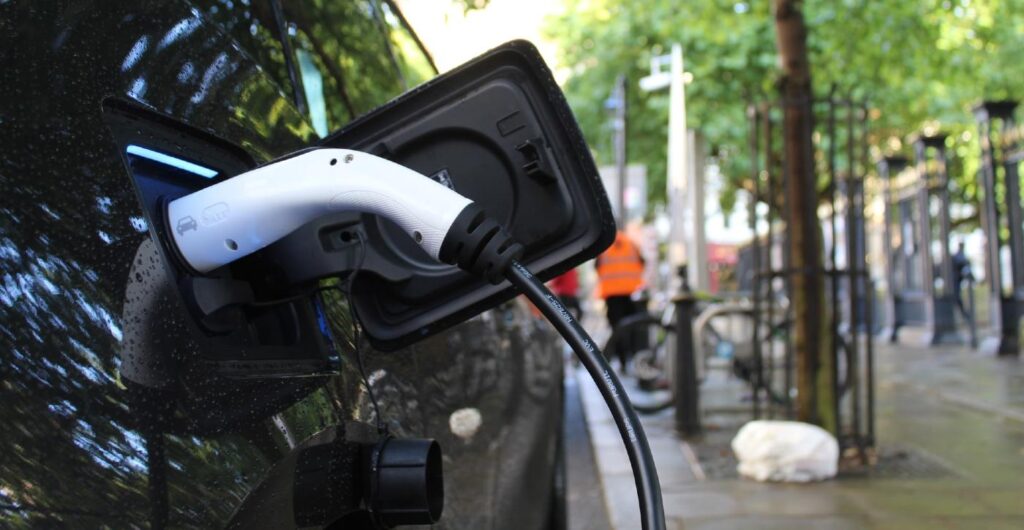
Data assembled back in March from Germany’s largest automotive industry review produced a startling statistic for anyone who’s ever looked at a full long-term airport parking lot—that 1 in 5 cars made in Germany can be plugged in.
The Schmidt Automotive Research Center found that 74,000 of the 373,900 cars that left German assembly lines were either electric or hybrid vehicles.
That was the story for the supply side, and on the demand side things are just as rosy. Germany is the fourth largest auto market in the world, and electric car registrations—that’s bought and driven EVs—grew from a 4% national market share in December 2019, to a whopping 26% market share just 12 months later. 24% of these EVs were made by Volkswagen.
Hybrids also jumped from 3% to 13%, meaning that there are more hybrids and EVs on German roads than gasoline-powered cars.
This is just in the background of a global surge in EV purchasing that climbed 40% during 2020, when most markets were suffering from COVID-related issues.
The green new pension
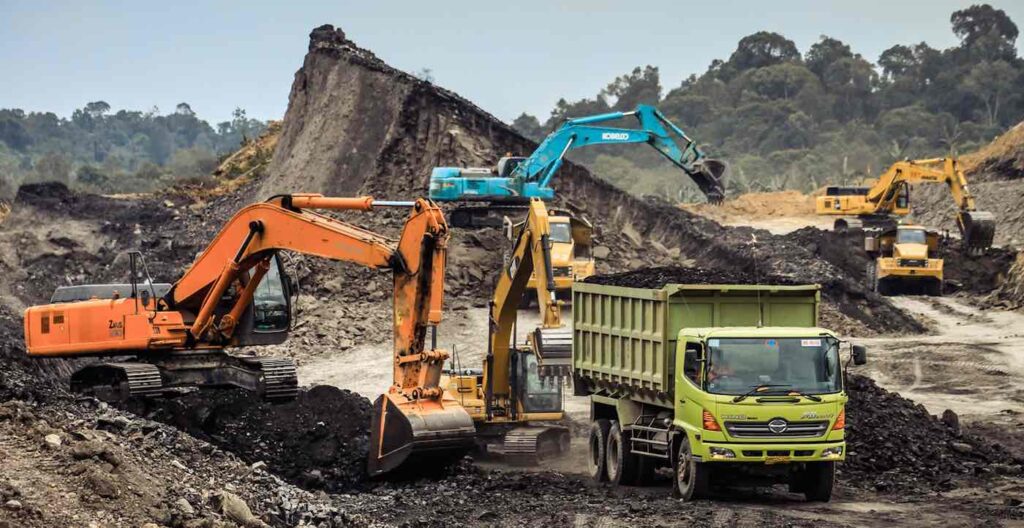
As the holders of the largest state-controlled pension fund on Earth, the South Korean monetary authorities released a statement in May that the $771 billion National Pension Fund will cease all investments related to coal power both at home and abroad.
The fund also announced that they would revamp guidelines for investment strategies to ensure a more sustainable pattern emerges in the future.
Adios, coal: Spain hits 50% renewable milestone
Coal mining: Parolan Harahap, CC license
Back in mid-May, the Spanish legislature announced it would be phasing out all oil, coal, and gas production by 2042, and that all carbon-emitting vehicle sales would be banned by 2040.
In the short term, the Spanish lawmakers want 74% of the national energy consumption to be entirely renewable by the end of the decade. They are quite close to that goal already, as the month of May saw 50% of the nation’s energy demand fulfilled by green energy.
Romania also joined the effort, alerting the EU that through its National Recovery and Resilience Plan the country would cease all coal production by 2032, at which time it hopes to have installed 34% renewable electricity to take over the baton.
G7, the world’s seven largest developed economies, all agreed to stop coal financing by the end of the year, leaving the big African emitters, India, and China as the last remaining holdouts now that Japan, part of G7, has got on board.
Green oil
All is not business-as-usual in the boardrooms of some of the world’s largest petroleum producers.
In a landmark court decision, a judge in the Netherlands ordered Royal Dutch Shell to cut emissions by 45% after 17,000 people brought a lawsuit that suggested Shell’s rather large footprint on the greenhouse gas situation merits a significant investment in CO2-slashing as a debt to society.
Elsewhere in Europe, the Italian oil company Eni became the first European oil company to launch a corporate bond that is linked to sustainability.
The €1 billion 7-year bond is linked to two key performance indicators: “Increasing renewable installed capacity to 5GW by the end of 2025; and halving the net carbon footprint of its upstream business to 7.4 million tons of CO2-equivalent by the end of 2024 from 2018 levels,” reports Dow Jones.
Lastly, Engine No.1, a shareholder group of ExxonMobil, managed to get two of their candidates elected to the American company’s board on the argument that the company’s long-term business strategy didn’t take into account all of the value loss potential from climate change, both from shareholders jumping ship, and potential damages from extreme weather events.
BlackRock, the world’s largest asset manager with $8.6 trillion in private capital, and whose sustainable investment strategies GNN has reported extensively on, ensured the Engine No.1 candidates got the positions by utilizing their vote as large shareholders.
From Everglades to Okefenokee, Florida legislatures just created one of the biggest wildlife corridors in the developed world with a $400 million funding seed.
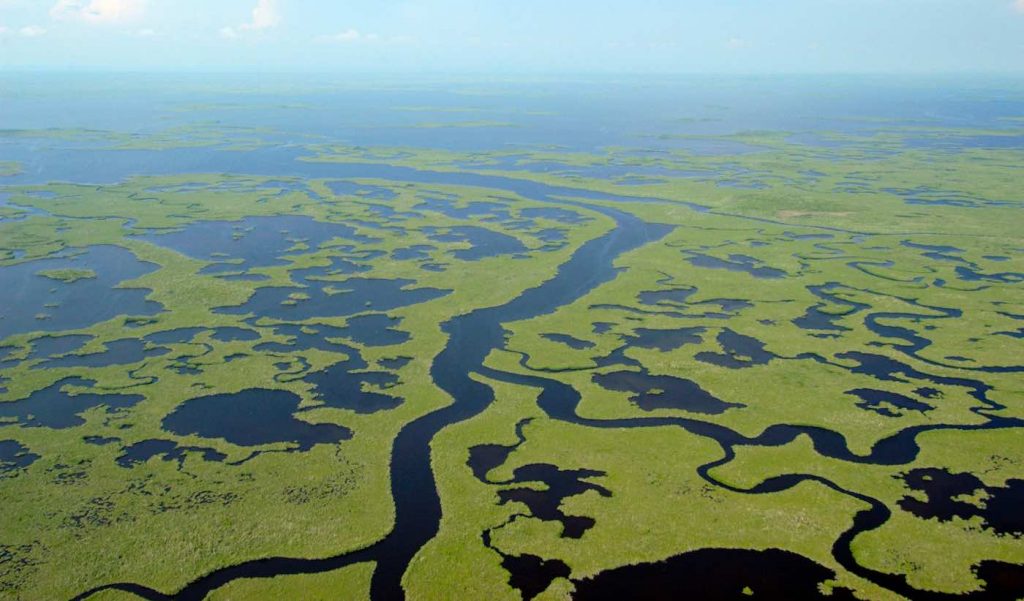
Everglades National Park, Marjory Stoneman Douglas/NPS
The Florida Wildlife Corridor Act, signed into law by Gov. DeSantis, ensures that animals can travel—without seeing a car or a human, from the Everglades Estuary to the borders with Georgia and Alabama—while protecting existing and new conservation areas, securing natural resources, and more.
Between the beach-bustle of Miami, Daytona, Fort Lauderdale, and elsewhere, and the lazy waters of the Gulf of Mexico on the western coast lies a mosaic of swamps, pastures, rivers, farmland, and forest. Among these varied ecosystems, 700 imperiled species live in habitat that may be owned privately, as state recreation areas, and as federally-protected wilderness.
The total bipartisan support the bill received, typical of American conservation legislation, has seen $300 million secured to protect these varied ecosystems, as well as to buy new conservation areas or to secure conservation easements—a subsidized incentive to conserve a particular feature on private acreage.
Another $100 million was earmarked for the general conservation program called Florida Forever, the largest state-controlled pubic land acquisition program of its kind in the U.S.
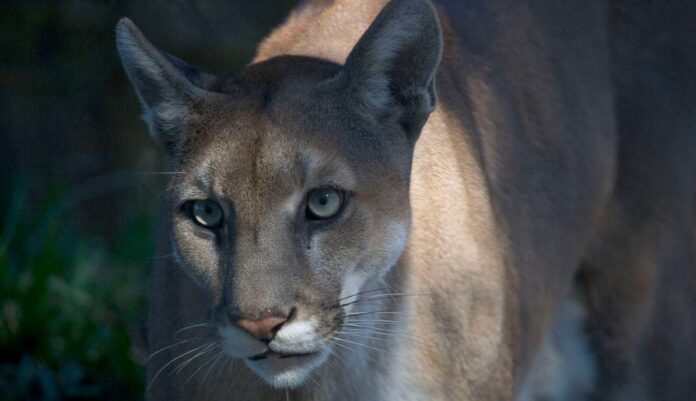
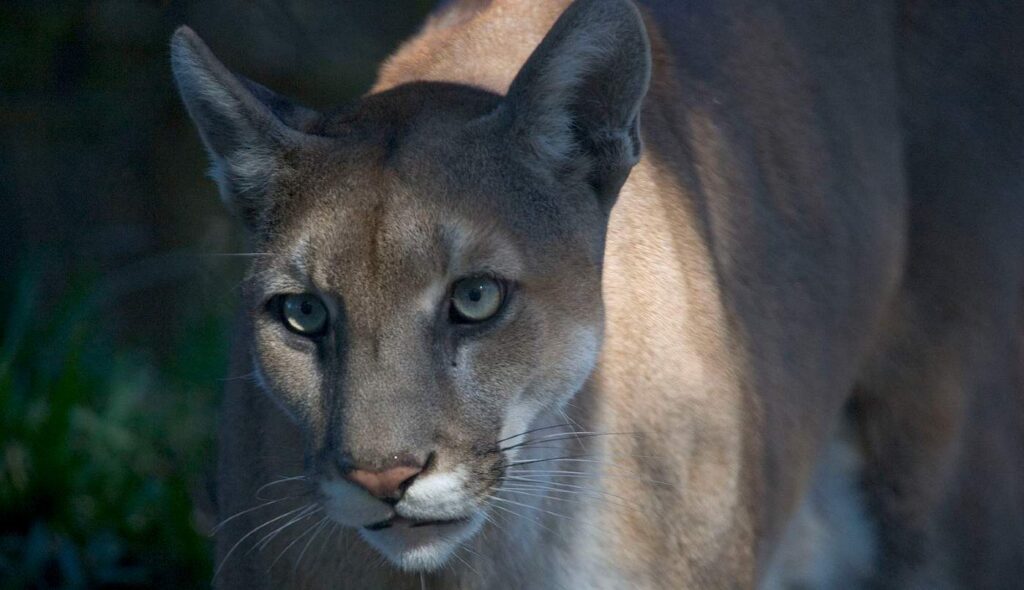
For many species this will be a windfall, especially for the iconic Florida panther, which must roam wide and far in search of food, and to secure genetic stability.
Panther path
NPS, Rodney Cammauf
The endangered cats almost went extinct during the 1970s until Texas provided an infusion of genes from their mountain lions. The last remaining sub-species of the puma in the Eastern U.S. is maybe the most endangered big cat on Earth.
National Geographic reports that a panther in 2016 was found north of Lake Okeechobee for the first time in 43 years, suggesting the species is reclaiming some of its previous habitat in the more northern areas of Florida. The further north panthers in the south can travel, the better for the species’ genetics, which have been damaged heavily by inbreeding.
The Florida Wildlife Corridor Commission—a conservation non-profit that was engaged for years in developing the idea of the Corridor and how to define it and write it into law—was set up in large part by dedicated photographer Carlton Ward Jr. and some of his friends.
For those who want to truly understand the magnitude of importance for Florida wildlife which the secured Corridor represents, they need only watch the excellent 17-minute documentary The Last Green Threadproduced by the Commission, which highlights the journey up the Corridor by Ward Jr. and his biologist friends Joe Guthrie and Mallory Dimmitt.
Ward Jr. also set up the Path of the Panther, a conservation initiative supported by National Geographic to try and save Florida’s state animal.
Path of the Panther highlights the dangers posed to the cat including genetic isolation and traffic collisions, and gathered priceless data on population numbers and movements through camera trapping.
In his documentary, Ward Jr. at one point explains that moving up the headwaters of the Everglades to the I-4 highway, there is a moment when the Corridor narrows to perhaps 200 meters before being stopped dead in its tracks northward by the I-4, forcing any migrating animals to trace the highway’s east-west path for miles before finding a possible crossing point.
The new Florida Wildlife Corridor Act specifically designates doing all of the following: “maintaining wildlife access to the habitats needed to allow for migration of and genetic exchange amongst regional wildlife populations,” as well as “preventing fragmentation of wildlife habitats,” and “providing for wildlife crossings for the protection and safety of wildlife.”
“This gives me a lot of hope for the future of land conservation in Florida,” Ward Jr. told National Geographic.
For those who want to learn more, hop over to the Commission’s website, watch their documentaries, and pour over their extremely detailed maps of the Corridor.
GROW the Good News; Share This Story With Friends…
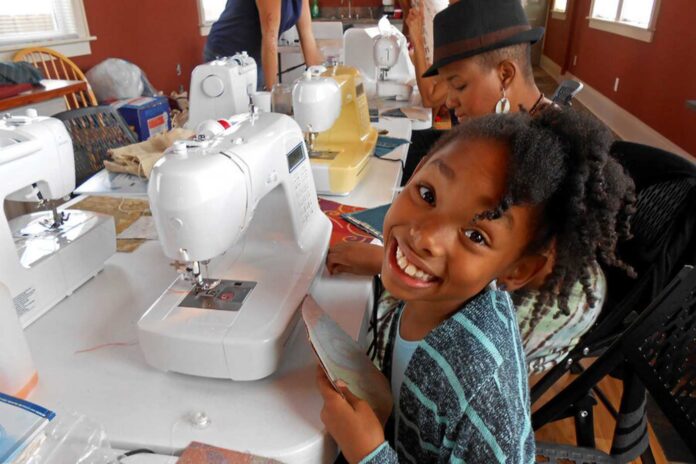
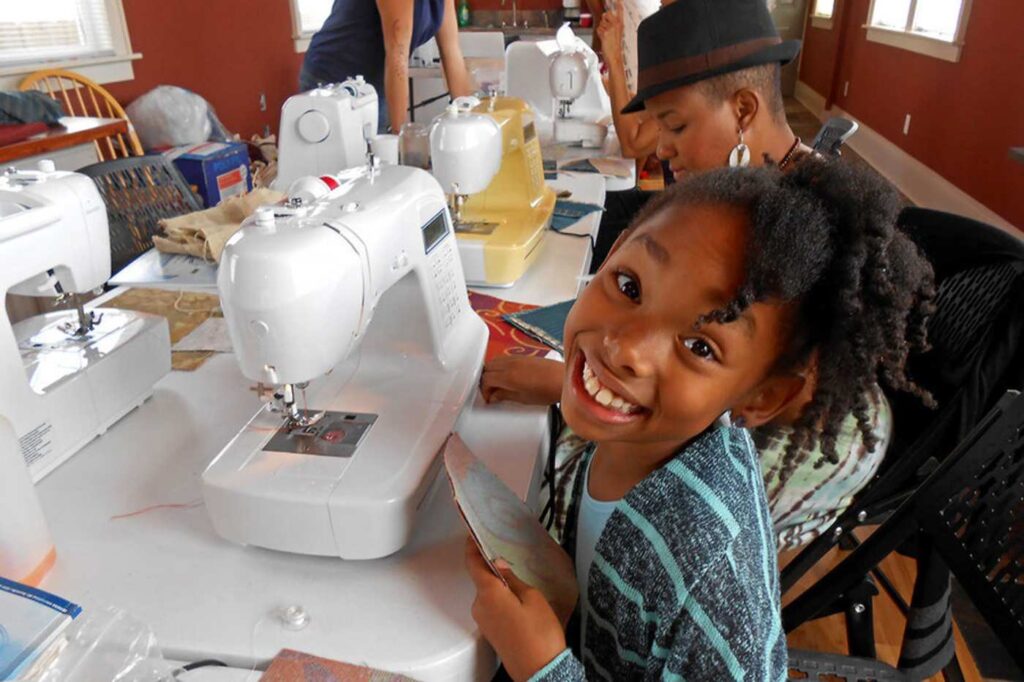
Sewing is a craft that’s been passed down through the ages from mother to daughter and from father to son. Traditionally, it’s also served as one of the few consistent sources of income for women, especially marginalized ones.
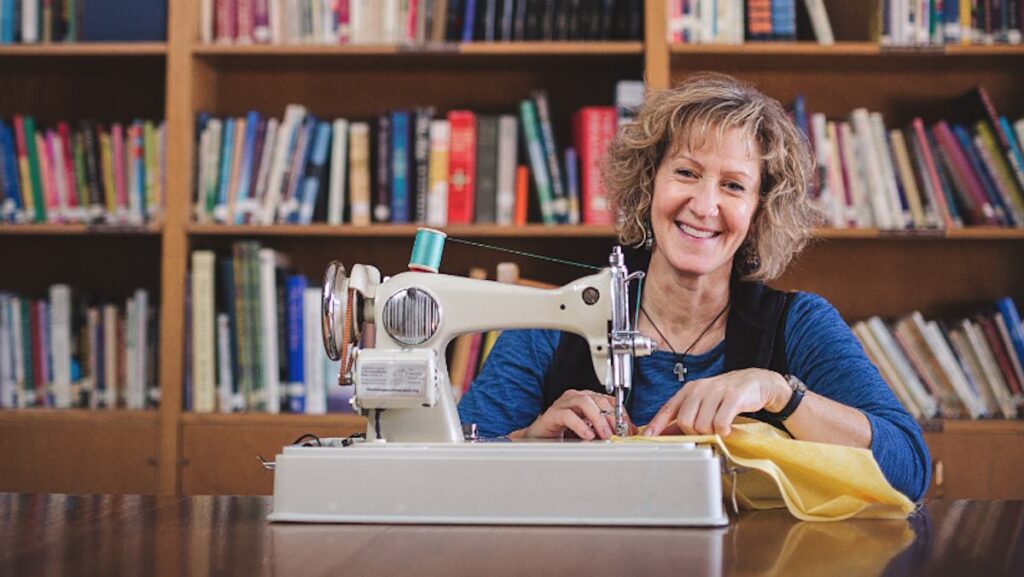
Margaret Jankowski learned to sew from her mom. As an adult, rather an avocation than a vocation, it wasn’t something she pursued full-time, but she enjoyed it enough that she taught sewing classes and created clothing for her first child.
In 2004, in the wake of the tsunami that devastated Sri Lanka, the story of a woman whose dream of becoming a tailor was dashed after spending years saving up to buy a sewing machine struck a chord that resonated with Jankowski.
“I could easily make a living without my sewing machine,” Jankowski told the Christian Science Monitor. “That wasn’t true of this woman.”
Inspired, Jankowski made a spur-of-the-moment decision to find a way to get some machines to Sri Lanka. Her original thought was to simply get hold of a few used machines and send them on, but when she outlined her plans on the local news, the project took on a life of its own and donated machines started rolling in.
In 2005 the first shipment of 25 boxes containing toys, medical supplies, fabric, and a sewing machine were distributed between five orphanages in India and Sri Lanka. In addition to creating clothing, the machines were used as learning tools to teach the children an occupation they could put to good use later in life.
Since then, The Sewing Machine Project has re-homed 3,350 sewing machines to recipients facing a variety of socio-economic challenges resulting from a variety of causes from war conflicts to natural disasters to generational poverty.
Margaret Jankowski, – SewingMachineProject.org
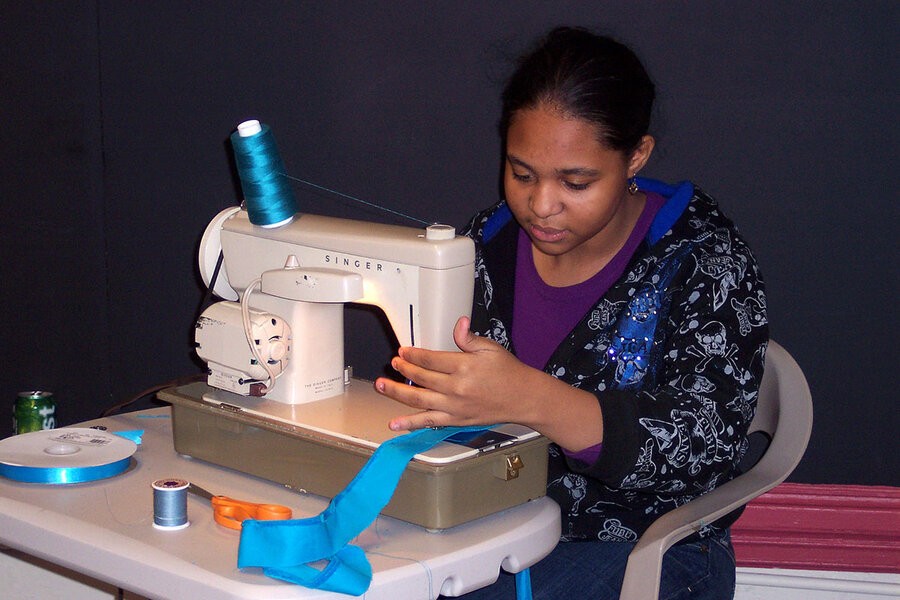
After Hurricane Katrina, hundreds of machines were delivered to New Orleans’ Mardi Gras costume makers. They’ve also found their way to Guatemala, Kosovo, and closer to home at immigrant training facilities and halfway houses for women trying to overcome drug addiction.
As valuable as learning to sew can be as a source of livelihood, whether you’re sewing to make something new or repair something old, creating something beautiful or something strictly utilitarian, being able to say, “I made this!” is an affirmation of self-esteem that can be life-changing.
Nowhere is that more true than in a pilot program in Rankin County, Mississippi, that the Sewing Machine Project serves.
Inmates at the Central Mississippi Correctional Facility began turning out backpacks filled with reusable menstrual pads and undergarments for girls in countries who often found themselves unable to attend school due to lack of sanitary items.
Since its inception, director Renee Smith has seen a definite shift in the participating inmates’ attitudes. “They know they’re making a difference in the life of someone else,” she told CSM. “To me that’s huge.”
The Sewing Machine Project, which is based in Madison, Wisconsin, accepts sewing machines of every brand. The only caveat is they must be in working condition. The Brother Sewing Machine company recently donated 500 machines, 25 of which went to Zaman International—a Detroit area nonprofit serving serving marginalized women and children, many of whom are immigrants and refugees.
Jankowski currently fields 10 to 15 emails every week from international groups looking to receive sewing machines. Having started the program almost on a whim, she initially had no idea just huge the demand would be. She says the funds aren’t available to supply everyone who asks at the moment, but she hopes in future the program will be able to expand to meet the growing need.
Dariel Thompson
As with many charitable programs, the parameters of the COVID-19 pandemic has forced a shift in the way The Sewing Machine Project operates its outreach. But here, Jankowski is especially hopeful.
“One of the many gifts I’ve received in leading The Sewing Machine Project is the opportunity to see not only the need that exists all around us but also the creative ways in which people and organizations work to address that need,” she said in their newsletter.
“Resiliency—bending and swaying in the face of challenge—shows up everywhere. We adapt and we look to one another for support. Together—all of us—are working to meet the needs of those who can benefit from the healing power of sewing.”
And while the transition may not be seamless, the Sewing Machine Project plans to continue its mission to make the world a better place, one stitch at a time.
SEW UP the Good News For Friends By Sharing This Story…
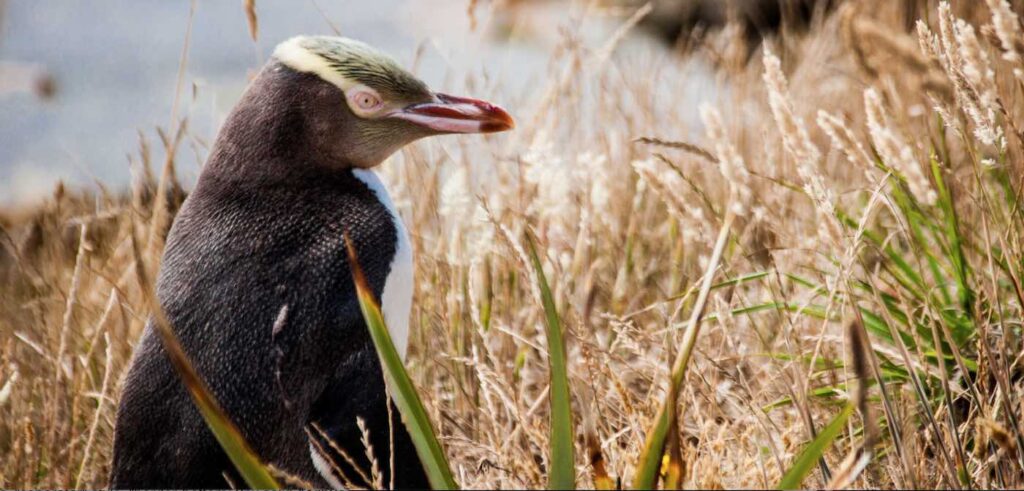
Despite the amount of cuts, poo, and “flipper bashing,” New Zealand veterinarians are enduring it all to keep an endemic penguin species alive on their beautiful South Island.
Martyn-de-Jong
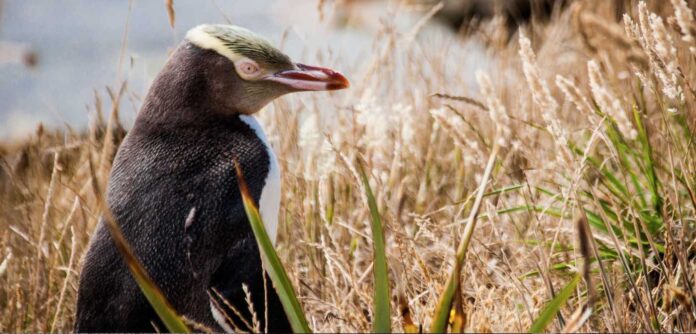
An endangered species, and one of the rarest penguins in the world, the yellow-eyed penguin, or “Hoiho,” which means “noise shouter” in Māori, numbers between 4,000 to 5,000 birds.
For years a pair of facilities in Dunedin near the extraordinary Otago Peninsula, The Wildlife Hospital and Penguin Place, have been treating and releasing birds back into the wild.
“When I see the difference we’re making, especially for the hoiho, it’s a species I’m so passionate about and just being able to work with these birds and get them back into the wild, that’s actually the best part of the job,” says Dr. Lisa Argilla, a veterinarian at the Wildlife Hospital, to BBC Travel.
4,000 to 5,000 isn’t so low, but when one considers there are only 265 known breeding pairs, the fact that 95% of injured hoiho that arrive in the hospital recover to be released again highlights the two teams’ extraordinary contribution to national Kiwi conservation.
“If Penguin Place wasn’t here, I could almost guarantee that the population would be functionally extinct,” said Jason van Zanten, conservation manager at Penguin Place, again to the BBC.
Before the Wildlife Hospital opened in January of 2018, injured penguins found by Penguin Place, which has been operating since the ’90s, had to be shipped to the North Island for care. The immediate proximity with which hoiho can be treated has drastically helped the population.
However as the world’s first entirely tourism-funded conservation reserve, Penguin Place suffered greatly during the COVID-19 measures imposed by the government, and now has only enough residual capital to survive the next few months. With the return of warmer weather, Penguin Place needs a simultaneous return of tourists, or it will be forced to shutter its doors and leave the penguins to their own devices.
It’s not a bad trip to be fair. The Otago Peninsula’s wild coastlines, towering headlands, and sheltered fjords are home to a rich variety of natural scenery and animals, much of which remains conserved due to tourist dollars.
Until the tourists return for tours of the coastal reserve, Penguin Place has turned to donations, which you can contribute to on their website along with planning a tour.
(MEET a few of these Kiwi penguins in the video below.)
SHARE This Fascinating Story With Friends on Social Media…
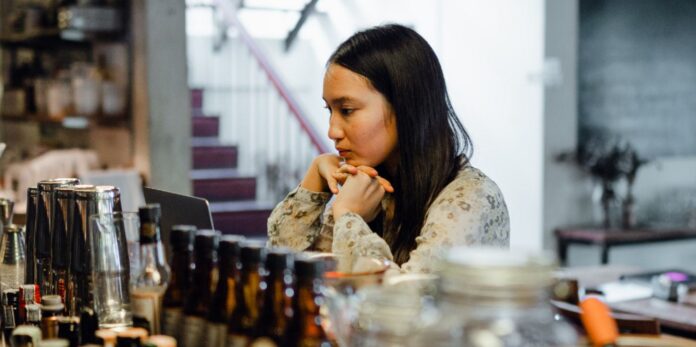
Quote of the Day: “You will never be able to escape from your heart. So it’s better to listen to what it has to say.” – Paulo Coelho, The Alchemist
Photo: by Gaelle Marcel
With a new inspirational quote every day, atop the perfect photo—collected and archived on our Quote of the Day page—why not bookmark GNN.org for a daily uplift?
Reprinted with permission from World At Large, a news website of nature, politics, science, health, and travel.
Hans-Jurgen Mager
Norway is dismantling their last Arctic coal mine piece by piece and turning the area it sits in into a national park twice the size of Grand Teton in Wyoming.
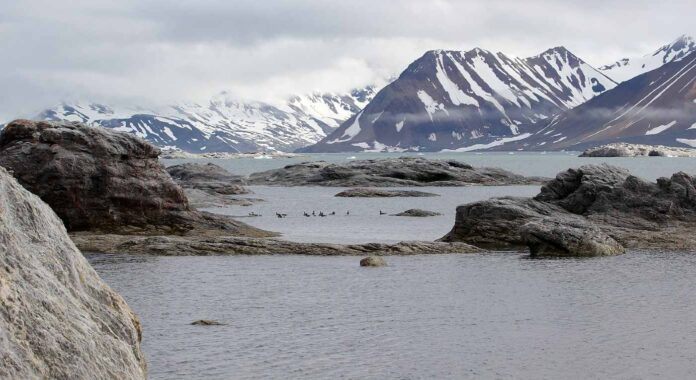
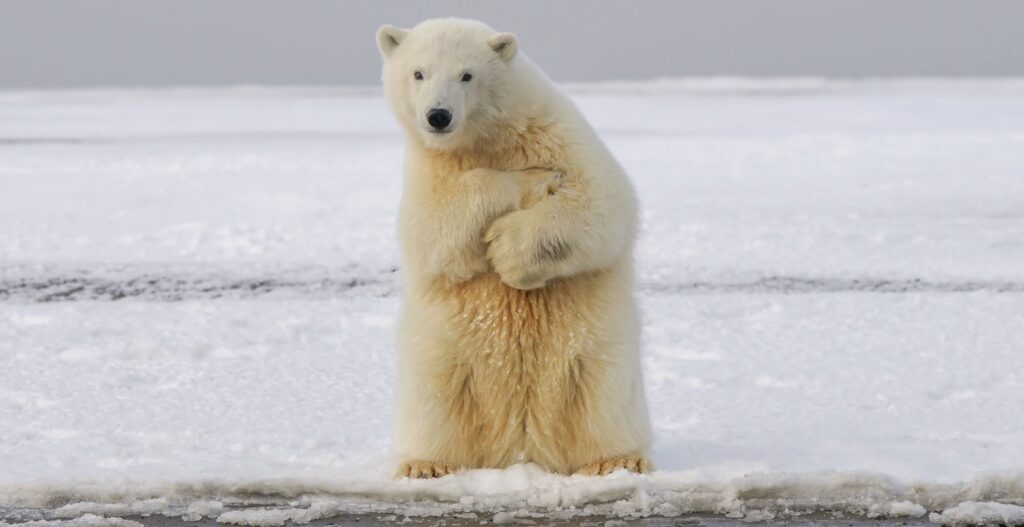
The goal is to turn the Svalbard Archipelago, in particular the Van Mijenfjord, into a howling wilderness once again—the best managed wilderness in the world where polar bears, seals, and countless other Arctic species can thrive in what experts say will be one of the most resilient areas under threat from climate change.
Seeds aren’t the only thing famously stored underground on Svalbard. Coal has been mined there under state monopoly for 100 years. Despite climate change pressures mounting throughout the 21st century, it wasn’t until 2016 that a government white paper announced a moratorium.
Seven national parks, 15 bird sanctuaries, one geopark, and six reserves dot two-thirds of the 23,500 square mile (61,000 square km) archipelago of islands, fjords, mountains, and glaciers. 3,000 polar bears inhabit the area, and during the late summer more than 20 million birds of 80 different species nest on Svalbard.
x4ing, CC license
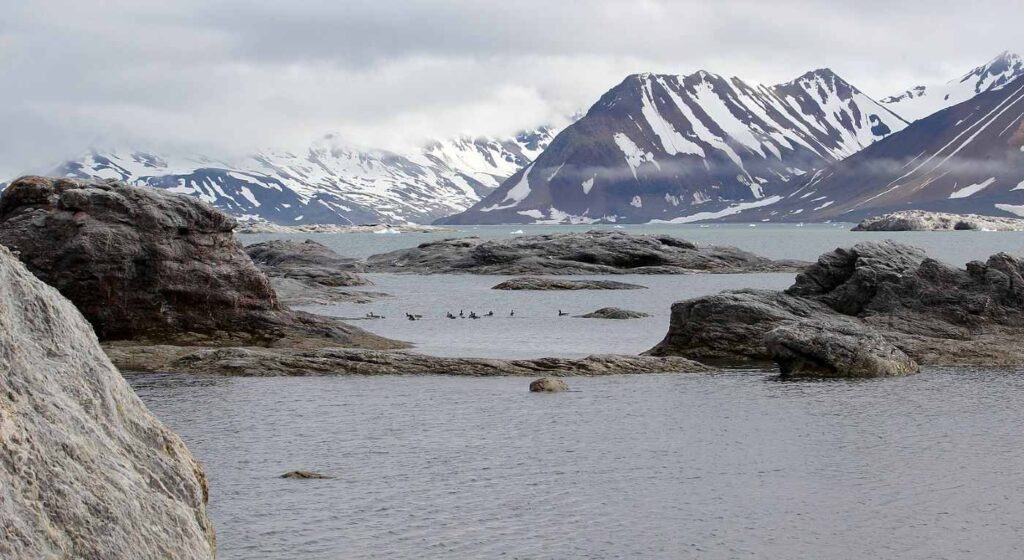
The Van Mijen Fjord has sea ice year round, and as such is an important hunting ground for bears. At the throat of the fjord, Svea Mine has loaded ships with coal for generations, but is now being dismembered rather than abandoned to ensure the area returns to a pristine natural state.
A June press release by the Norwegian government announced they were expanding the existing Nordenskiöld Land National Park to encompass the fjord, creating an additional 1,125 square miles (2,914 square kilometers) of wilderness called Van Mijenfjorden National Park.
“Our goal is for Svalbard to be one of the best-managed wilderness areas in the world. That requires us to implement measures to deal with climate changes, and pressure caused by increased traffic. The protection of the Van Mijen fjord and surrounding area is a direct response to this,” says minister Sveinung Rotevatn in the same release.
The borders of the new park lie atop the existing Sør-Spitsbergen National Park, making it easy for visitors to see both.
SHARE the Hopeful News From the Arctic With Friends…
Legend has it that Marie Antoinette’s hair turned gray overnight just before her beheading in 1791.
Though the legend is inaccurate—hair that has already grown out of the follicle does not change color—a new study from researchers at Columbia University Vagelos College of Physicians and Surgeons is the first to offer quantitative evidence linking psychological stress to graying hair in people.
And while it may seem intuitive that stress can accelerate graying, the researchers were surprised to discover that hair color can be restored when stress is eliminated, a finding that contrasts with a recent study in mice that suggested that stressed-induced gray hairs are permanent.
The study has broader significance than confirming age-old speculation about the effects of stress on hair color, says the study’s senior author Martin Picard, associate professor of behavioral medicine at Columbia University Vagelos College of Physicians and Surgeons.
“Understanding the mechanisms that allow ‘old’ gray hairs to return to their ‘young’ pigmented states could yield new clues about the malleability of human aging in general and how it is influenced by stress,” Picard says.
“Our data add to a growing body of evidence demonstrating that human aging is not a linear, fixed biological process but may, at least in part, be halted or even temporarily reversed.”
Studying hair as an avenue to investigate aging
“Just as the rings in a tree trunk hold information about past decades in the life of a tree, our hair contains information about our biological history,” Picard says. “When hairs are still under the skin as follicles, they are subject to the influence of stress hormones and other things happening in our mind and body. Once hairs grow out of the scalp, they harden and permanently crystallize these exposures into a stable form.”
Though people have long believed that psychological stress can accelerate gray hair, scientists have debated the connection due to the lack of sensitive methods that can precisely correlate times of stress with hair pigmentation at a single-follicle level.
Splitting hairs to document hair pigmentation Ayelet Rosenberg, first author on the study and a student in Picard’s laboratory, developed a new method for capturing highly detailed images of tiny slices of human hairs to quantify the extent of pigment loss (graying) in each of those slices. Each slice, about 1/20th of a millimeter wide, represents about an hour of hair growth.
“If you use your eyes to look at a hair, it will seem like it’s the same color throughout unless there is a major transition,” Picard says. “Under a high-resolution scanner, you see small, subtle variations in color, and that’s what we’re measuring.”
The researchers, whose study was published June 22 in eLife, analyzed individual hairs from 14 volunteers. The results were compared with each volunteer’s stress diary, in which individuals were asked to review their calendars and rate each week’s level of stress.
The investigators immediately noticed that some gray hairs naturally regain their original color, which had never been quantitatively documented, Picard says.
When hairs were aligned with stress diaries by Shannon Rausser, second author on the paper and a student in Picard’s laboratory, striking associations between stress and hair graying were revealed and, in some cases, a reversal of graying with the lifting of stress.
“There was one individual who went on vacation, and five hairs on that person’s head reverted back to dark during the vacation, synchronized in time,” Picard says.
Blame the mind-mitochondria connection
To better understand how stress causes gray hair, the researchers also measured levels of thousands of proteins in the hairs and how protein levels changed over the length of each hair.
Changes in 300 proteins occurred when hair color changed, and the researchers developed a mathematical model that suggests stress-induced changes in mitochondria may explain how stress turns hair gray.
“We often hear that the mitochondria are the powerhouses of the cell, but that’s not the only role they play,” Picard says. “Mitochondria are actually like little antennas inside the cell that respond to a number of different signals, including psychological stress.”
The mitochondria connection between stress and hair color differs from that discovered in a recent study of mice, which found that stress-induced graying was caused by an irreversible loss of stem cells in the hair follicle.
“Our data show that graying is reversible in people, which implicates a different mechanism,” says co-author Ralf Paus, PhD, professor of dermatology at the University of Miami Miller School of Medicine. “Mice have very different hair follicle biology, and this may be an instance where findings in mice don’t translate well to people.”
Hair re-pigmentation only possible for some
Reducing stress in your life is a good goal, but it won’t necessarily turn your hair to a normal color.
“Based on our mathematical modeling, we think hair needs to reach a threshold before it turns gray,” Picard says. “In middle age, when the hair is near that threshold because of biological age and other factors, stress will push it over the threshold and it transitions to gray.
“But we don’t think that reducing stress in a 70-year-old who’s been gray for years will darken their hair or increasing stress in a 10-year-old will be enough to tip their hair over the gray threshold.”
A karmic war chest will be waiting for one Buddhist monk who’s spent decades rescuing stray dogs in Shanghai and bringing them to his monastery to live in peace and comfort, or to find a new home.
Since 1994, Zhi Xiang has rescued over 8,000 homeless pooches from the streets of the Chinese mega-city, caring for all of them.
In Buddhism, the highest goal is to reach the fourth stage of consciousness, whereby the trappings of reality fall away as the practitioner realizes life is merely an illusion. Yet the holiest of monks, the Bodhisattvas, don’t choose this path, and instead, like 51-year old Xiang, remain in this world to try and help people stuck in the cycle of life to escape.
With help from volunteers and his own Bao’en Temple workforce, Xiang currently cares for hundreds of cats and dogs. Costing nearly $2.5 million every year in labor and supplies, Xiang tries to get as many of them as he can into family homes overseas, using social media to reach out to perspective pet owners.
So far 300 dogs have been adopted by families in Canada, the United States, and Germany.
Zhi Xiang is no ordinary animal rescuer: he is a Buddhist monk and has given nearly 8,000 dogs a new life, either at his ancient monastery or at a shelter he runs in Shanghai.
Not a trained vet, Xiang loves and cares for the animals he saves as if he was, and while many are too sick, the younger or healthy ones move on to adoption shelters, or straight into the arms of new owners.
“I think they’re very happy so I feel it’s worthwhile,” he told ABC Australia. “But of course I miss them.”
“I have a dream that one day, when I have some free time, I want to go abroad and visit them, take photos with every dog that I rescued,” he said. “So when I get old and can’t walk, I have these photos to look at.”
If indeed Karma rewards those who sacrifice their own time and wealth to help alleviate the suffering of animals, that which Xiang awaits in his afterlife is greater than anyone can imagine, and rightly so.
PASS on This Hero’s Story on Social Media By Sharing With Friends…
Turns out there are simpler methods than air-conditioning to keep a room or house cool and save you a ton of money.
That’s handy, given that depending on your temperature preference and frugality, running an A/C unit can cost anywhere from $14 to $211 per month.
Here in Italy, ground floor units don’t even have A/C, as all the buildings are made of block-and-concrete, and the windows all have wood-slat shutters to let the breeze in and keep the sun out.
If installing brown wood-slat shutters isn’t an option, try with pieces of brown cardboard; cutting small mail slots out to shed light into the room, or change to darker curtains.
Beyond that, here are some innovative, and sometimes ancient ways to keep cool and save money.
Use ice
Ever heard the story about how kitchens, hotels, and even towns would have giant blocks of ice brought in on train cars for refrigeration purposes before electricity existed? That still works today, and it’s cheaper than A/C.
If you live in a 1-bed, 1-bath or studio apartment, try soaking a couple of towels, coiling them into C-shapes, and freezing them. Once they’re frozen solid, place them on your head like a crown, around your neck like an airplane pillow, or around the femoral arteries in your thighs. This will cool you right down.
Alternatively, you can freeze water into a large block by putting a bowl or plastic bottle of it in the freezer, (which will also save you money by keeping the freezer cooler and reducing the time it needs to re-freeze) and place it on a table in front of a fan. The air blown by the fan will be chilled as it runs across the ice.
Use evaporation
If you leave your windows open for the breeze in the summertime, soak your curtains in water. The breeze will evaporate the water, cooling it to a lovely temperature, before blowing it around your house.
Sleeping under a damp bed sheet with a fan over you will work as well as any A/C unit: As the water soaks into your skin and then evaporates, it will supercool you. A damp t-shirt would act similarly.
Change your meals
As strange as it sounds, there is a reason why spicy food all comes from hot places. No one’s cooking vindaloo curry in Latvia or Harbin, and that’s because the capsaicin chemical within spicy foods is an irritant that causes us to sweat. Sweat in a frigid Arctic wind will kill you, but in warmer climes it will cool you down.
Hot beverages are also great for this, particularly hot mint tea, as the mint will feel cool and refreshing, while the heat from the tea will cause you to sweat. Drink in front of a fan for maximum benefit (though note that if you’re in a humid area, this hack won’t work so well as the sweat can’t wick properly from your body).
Finally, salty and or rich foods are proven to make the core body temperature rise. To combat this, eat smaller meals more often, ditch salt and hot protein (a cold cut sandwich isn’t bad) for fruits and vegetables, and leave that oven and stove off to reduce the heat radiation into your house (saving you more money while you’re at it).
Other tips
Honorable mention goes to whoever got the idea to leave one’s moisturizers in the fridge. Imagine needing to rehydrate your skin, and it being nearly freezing cold at the same time!
Some ceiling fans are able to switch the direction they turn. In the winter, clockwise is better, but during the summer, counter-clockwise is where it’s at, pushing the hot air around the level of our head and shoulders down towards the floor and circulating the cold air—which naturally sinks—up towards the ceiling.
Cold shower anyone?
COOL YOUR FRIENDS DOWN With the Good News—Share This Story…
Some people may say they’re dedicated to their jobs but others don’t just talk the talk, they walk the walk—literally.
To make it to his shift as a Buffalo Wild Wings cook, Donte Franklin was leaving for work three hours early each day and trekking more than eight miles on foot to arrive on time. At the end of the day, the 20-year-old Oklahoman reversed his journey to walk home.
Franklin credits his amazing work ethic to his late mom, who passed away four years ago. “I really don’t care if it gets tiring. I just have to keep pushing,” Franklin told FOX News, “I walk just to make my family proud.”
Whether or not he’s got a guardian angel keeping tabs on him, Franklin’s life recently got an amazing and unexpected lift thanks to a stranger’s random act of kindness.
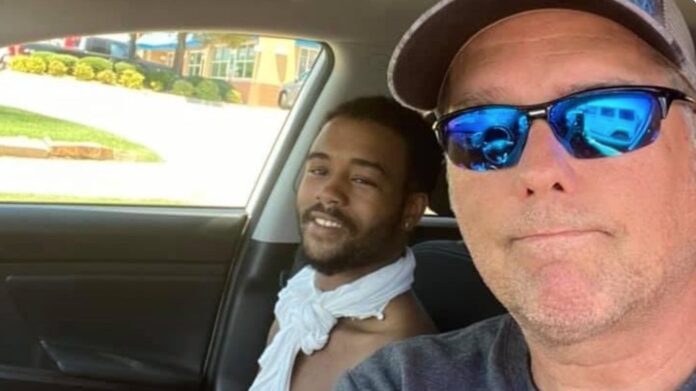
Michael Lynn was out running errands when he saw a young man—Franklin—walking in the sweltering summer heat. On his way back, he noticed the same young man—still walking—and decided to offer him a ride.
When Lynn learned more about Franklin’s 17-mile work pilgrimage, he couldn’t help but be more than a little awed. He decided to share the details of Franklin’s story on Facebook—where it was quickly shared more than 1,000 times.
One of the people who saw it was Kerri Collins. She and her husband are the driving forces behind a biker charity group called My Riding Buddies Oklahoma and Bikers for Elves (MRBO).
“Anytime I see something posted concerning anybody anywhere in Oklahoma, I immediately jump in and we do whatever we can as a group,” Keri Collins told KOCO. “It just touched me that this man is only 20 years old and is walking to two different jobs with nothing in the heat. It opened my heart because kids his age don’t do that.”
In appreciation of his extraordinary efforts, MRBO gifted Franklin with a brand-new bike prior to his next shift. His commute had just gotten a whole lot easier, but Franklin’s good luck was just beginning.
Inspired by the young man’s grit and determination, a GoFundMe page was set up in his name so he could buy a car. So far, close to $52,000 has been raised.
Franklin, who’s studying to be a welder, doesn’t have a driver’s license yet. While he plans to purchase a car eventually, in the meantime, he’ll be using the funds to help his family and taking his bike to work.
Donte Franklin says he considers everything that’s happened to him to be a blessing and believes that he and Lynn were fated to become friends. It’s something Lynn believes as well.
“As long as he wants to, I want to keep him in my life and I want to be in his life,” Lynn told KOCO. “… I told him, if the Lord opens the door for you, walk through it… I think it’s open for him and the rest is up to him.”
And we suspect, that’s not just talking the talk.
(WATCH Dante’s story in the KOCO video below.)
DRIVE a Little Good News Over to Your Friends; Share This Story…
Quote of the Day: “There were two ways to be happy: improve your reality or lower your expectations.” – Jodi Picoult
Photo: by Na Inho
With a new inspirational quote every day, atop the perfect photo—collected and archived on our Quote of the Day page—why not bookmark GNN.org for a daily uplift?
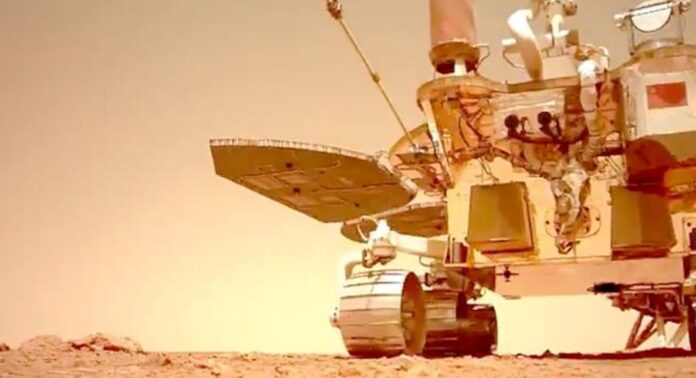
It brought to Mars a suite of scientific instruments including a weather station, ground-penetrating radar, and a laser spectroscopy device for blasting rocks apart to measure their mineral content.
It also brought a deployable Wi-Fi camera, which it left in the dust before driving off, to create footage of it driving down from the landing module and doing a series of maneuvers. This was the first footage of a rover driving on Mars which any nation has produced.
Audio clips of its metal wheels scraping against the disembarking ramps were also collected, which Chinese space authorities say demonstrates the characteristics of the Martian atmosphere.
“With the files we released this time, including those sounds recorded when our Mars rover left the lander, we are able to conduct in-depth analysis to the environment and condition of Mars, for example, the density of the atmosphere on the Mars,” Liu Jizhong, deputy commander of China’s first Mars exploration program, told Chinese media.
Earlier this year, NASA’s Perseverance collected video of its Ingenuity Martian Helicopter performing a flight test, and of the dramatic parachute deployment and landing dubbed the “7 minutes of terror.” China also collected its own video of the parachute deployment and landing.
Huge Zhurong update: Here's full footage of the Zhurong rover's EDL, showing parachute deployment, backshell separation, and landing, including very cool hover during hazard avoidance phase. [CNSA/PEC] pic.twitter.com/iWUXrFKf40
The solar-powered Zhurong, which was the name of an ancient Chinese fire god, has traveled 236 meters since it landed on June 15th, and it continues to perform system checks before heading off in search of data.
It was landed as part of the Tianwen-1 interplanetary mission, which also included a lander and an orbiter, all three of which were first of their kind for the nation—making China the world’s first nation to succeed with all three at the first go-around.
Some of the video taken may remind some readers of pre-Special Edition footage of Star Wars: A New Hope, when a young and plucky Luke Skywalker is traversing his desert home of Tatooine in his landspeeder. Enjoy the show.
SHARE This Far-Out Story With Pals on Social Media…
Is there anything better than the beginning of a beach vacation when you get your first sniff of the ocean? That chilled, briny, slightly sulfurous smell is almost better than the first sight of the sea.
But what makes the sea smell like the sea, or seafood taste like seafood? I once managed a gourmet cheese shop, and felt like I was detecting the scent of the sea whenever I pulled out the riper cheeses. Why is that?
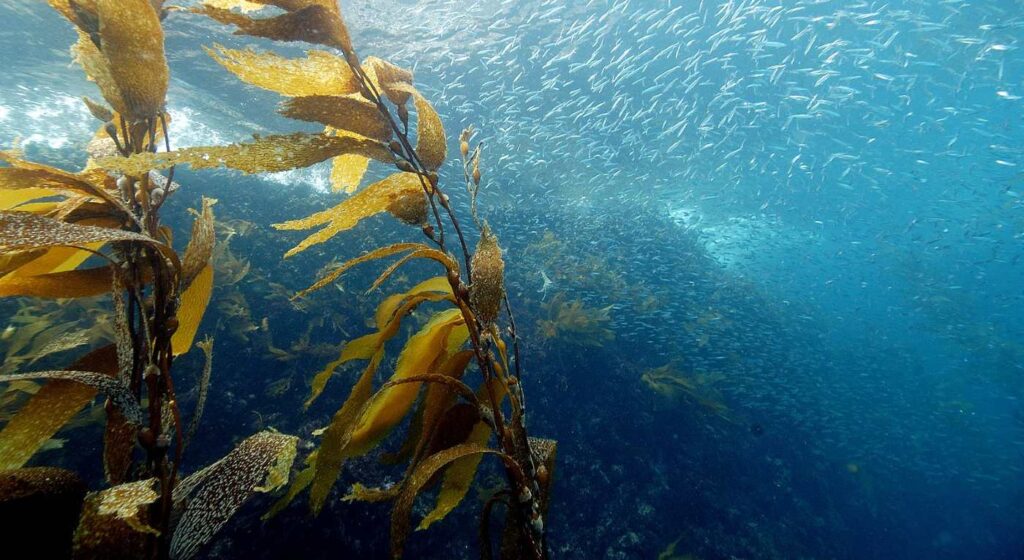
Turns out there are several chemicals, abundant in marine life and processes, that give saltwater environments their signature smell.
Dimethyl sulfide, or DMS, is the classic sulfur smell of the sea, and is produced en masse by the bacteria species that eat phytoplankton. These tiny marine food web anchors are essentially plants that use photosynthesis to draw energy from the sun.
The DMS comes from the plankton’s self-generating sunscreen, which upon their death, is converted into DMS gasses by the bacteria that eat them. One article points out that seabirds follow the smell of DMS to locate areas for hunting, since the marine food web begins with plankton, which are eaten by tiny fish, which are eaten by bigger fish, which the seabirds then have for lunch.
As well as being produced by bacteria that eat cheese proteins, dimethyl sulfides are also quite pungent in the air of coastal saltmarsh and tidal wetlands. This, rather than plankton, is due to various species of saltmarsh cordgrass. Plankton may be absent from an area of ocean, but saltmarsh is filled with cordgrass species, and this is one of the reasons the salt marshes on the California coast smell much more strongly of the sea than the coast does.
National Marine Sanctuaries
Another food web compound that gives the sea its smell is bromophenols. This chemical is often described as smelling fishlike, and in high concentrations can smell of iodine. It also likely gives a lot of the iconic flavor to fresh crustaceans, fresh fish, or the best oysters.
Acquired through the diet of these animals, often through eating marine worms, other bottom feeders or fish eggs, bromophenols are actually added to farm-raised fish to try and give it the more identifiable taste of the ocean.
Lastly, a chemical produced in the eggs of seaweed species was found to have a very strong “beach odor” and that it was the calling card for seaweed sperm to follow. When isolated it smells strongly of seaweed, unsurprisingly, and if you’re relaxing on a beach where a lot of seaweed and kelp has washed up on, you could be smelling the pheromones of the plant.
The three of these together, along with a few others, account for the distinctive, unmistakeable aroma of a day spent at the seashore—with coconut-scented tanning lotion also wafting in the breeze if you’re lucky.
BREATHE FRESH AIR into Pals’ News Feeds; Share This Story…
For thousands of cross-country tourists, the Mississippi River is one which is for crossing, not seeing. But what if the crossing bridge was a beautiful pedestrian walkway filled with American bison?
The aptly named Bison Bridge is a proposition to reconnect America’s most iconic animal with its historic habitat in the most creative of ways—by repurposing an aged bridge slated for demolition as a wildlife crossing which provides safe passage for bison herds.
When local Mississippi River advocate and President & Founder of Living Lands & Waters Chad Pregracke proposed the idea for a Bison Bridge National Park to span the river and connect the Quad Cities spanning the states of Iowa and Illinois, it caught on immediately, and quickly earned endorsements and publicity.
Along with saving Illinois millions in demolition costs, city authorities and regional planners hope re-purposing Fred Schwengel Memorial Bridge on the I-80 will draw tourists to a part of the country where the population hasn’t risen in 30 years.
“It’s a fantastic idea, a heck of a vision,” Kevin Marchek, who worked over 39 years for Illinois Department of Transportation, told local news last month. “We’ve just got to keep pushing this until it comes to fruition.”
The Chicago Tribune described the project as “a dream” and “too charming and creative to reject out of hand,” in an editorial, and several Tribal Nations also see it as a great way to shine a spotlight on the area.
Uniquely American
Rendering, Bison Bridge Foundation
The bridge, which would be the longest wildlife crossing on Earth, would feature an enclosed strip of prairie running across it, with viewing stations where passing pedestrians can observe the bison. Artist renderings put the bridge guardrails in glass, with chic cafes alongside them, to offer a comfortable and unobstructed view of the mighty Mississippi and the roaming animals.
For the Eastern Shoshone, the project offers a reconnection for both themselves and for other Americans to the heritage of the Plains Indians.
Jason Baldes, a tribal member, works for the National Wildlife Federation non-profit as tribal bison coordinator.
“The bison was known as the life commissary for my grandmas and grandpas,” Baldes told The Guardian. “It was food, clothing, shelter, and was also central to our cultural and spiritual belief systems.”
They were also essential to the plains as an ecosystem, acting as a “keystone species,” meaning that like the keystone in an arch, they held all the bricks together.
The vast herds which once totaled between 30 and 60 million stampeded across the landscape, trampling rampant growth, spreading seeds hither and yon, and allowing a very diverse mix of plants to grow, creating rich biodiverse soils. Their fur once shed is an important nesting material, and borrowing owls used to rely on their dung for making nests.
They’re living history, not only for the Native Americans, but for the history of American conservation, which one could say started with the bison when reckless overhunting brought their numbers down to just 300.
“But it’s not only important to Native American tribes, but it’s important to the American people to at least have an opportunity to learn about this history,” said Baldes. A true statement indeed.
(WATCH the video pitching the Bison Bridge project below.)
HELP Good News Roam—Share This Story on Social Media…
Pressure to feel upbeat can make you feel downbeat, while embracing your darker moods can actually make you feel better in the long run, according to new research.
“We found that people who habitually accept their negative emotions experience fewer negative emotions, which adds up to better psychological health,” said study senior author Iris Mauss, an associate professor of psychology at UC Berkeley.
At this point, researchers can only speculate on why accepting your joyless emotions can defuse them, like dark clouds passing swiftly in front of the sun and out of sight.
“Maybe if you have an accepting attitude toward negative emotions, you’re not giving them as much attention,” Mauss said. “And perhaps, if you’re constantly judging your emotions, the negativity can pile up.”
The study, conducted at UC Berkeley and published in the Journal of Personality and Social Psychology, tested the link between emotional acceptance and psychological health in more than 1,300 adults in the San Francisco Bay Area and the Denver, Co., metropolitan area.
The results suggest that people who commonly resist acknowledging their darkest emotions, or judge them harshly, can end up feeling more psychologically stressed.
By contrast, those who generally allow such bleak feelings as sadness, disappointment and resentment to run their course reported fewer mood disorder symptoms than those who critique them or push them away, even after six months.
“It turns out that how we approach our own negative emotional reactions is really important for our overall well-being,” said study lead author Brett Ford, an assistant professor of psychology at the University of Toronto. “People who accept these emotions without judging or trying to change them are able to cope with their stress more successfully.”
Three separate studies were conducted on various groups both in the lab and online, and factored in age, gender, socio-economic status and other demographic variables.
“It’s easier to have an accepting attitude if you lead a pampered life, which is why we ruled out socio-economic status and major life stressors that could bias the results,” Mauss said.
In the first study, more than 1,000 participants filled out surveys rating how strongly they agreed with such statements as “I tell myself I shouldn’t be feeling the way that I’m feeling.” Those who, as a rule, did not feel bad about feeling bad showed higher levels of well-being than their less accepting peers.
Then, in a laboratory setting, more than 150 participants were tasked with delivering a three-minute videotaped speech to a panel of judges as part of a mock job application, touting their communication skills and other relevant qualifications. They were given two minutes to prepare.
After completing the task, participants rated their emotions about the ordeal. As expected, the group that typically avoids negative feelings reported more distress than their more accepting peers.
In the final study, more than 200 people journaled about their most taxing experiences over a two-week period. When surveyed about their psychological health six months later, the diarists who typically avoided negative emotions reported more mood disorder symptoms than their nonjudgmental peers.
Next, researchers plan to look into such factors as culture and upbringing to better understand why some people are more accepting of emotional ups and downs than others.
“By asking parents about their attitudes about their children’s emotions, we may be able to predict how their children feel about their emotions, and how that might affect their children’s mental health,” Mauss said.
Source: UC Berkeley
SHARE This Fascinating Story With Friends on Social Media…
A schoolgirl didn’t fold under pressure and set a new world record for the fastest ever origami, by making 1,000 paper cranes.
15-year-old Evelyne Chia spent nine hours and 31 minutes creating the neat little paper birds, smashing the previous record of 12 hours.
She spent six months in training for the record attempt which also raised over £2,300 ($3,189) for NHS Charities Together.
Origami is traditionally associated with Japanese culture, and folding 1,000 cranes is supposed to bring good fortune.
But even skilled origamists don’t usually accomplish the impressive milestone in just one sitting.
Evelyne has just finished her GCSEs at Colchester County High School for Girls in Colchester in Essex.
SWNS
She began folding the little paper birds at 9am on Tuesday, and folded her 1,000th crane at 6.31pm.
She said: “I wanted to do a fundraiser as I have a long summer now as I’ve just finished my GCSEs.
“I wanted to do something that would get people’s attention, so I thought what better way than by trying to set a Guinness World Record at the same time?
“I applied to do this in January, and was told I had to beat a time of 12 hours.
“In ancient Japanese culture, there is a legend that says if you fold 1,000 paper cranes you can make a wish to the Gods and it will come true.
“When I completed the challenge, I made a wish that I would raise enough money to make a difference for healthcare workers, and I do feel like I’ve done that.”
Evelyne was taught by her mother Ivy how to do origami when she was just six years old.
She said: “It’s been a hobby of mine for a long time. I like making little animals, like rabbits or cats. Sometimes I’ll make them as gifts for my friends.”
But despite her proficiency in the paper-folding art, she said she “surprised” herself with how quickly she was able to fold 1,000 paper cranes.
She explained: “I’ve had practice sessions over the last six months where I’ll time myself for an hour and see how many I can fold in that time.
“At first it took me about two minutes to fold one crane, but then I started to get quicker and quicker, and eventually my average speed was about 30 seconds for each one.”
The determined teen did not take a break once during the nine and a half hours to eat, drink, or even to go to the bathroom.
She said: “After a while I kind of went into autopilot, and I was doing it from muscle memory.
“It helped that there was people around me on the day of the attempt to act as witnesses to the record.
“There were people wandering around and coming up to talk to me, so I could distract myself by talking to them, and I wasn’t just working in silence.
“There was so much going on around me that it helped to push me to work faster.
“During the last hour, I was on a Zoom call with a member of the British Origami Association, and she was talking to me about the significance of origami and paper cranes.
“That really helped to push me through to the end.”
Quote of the Day: “In the noisy confusion of life, keep peace with your soul. With all its sham, drudgery and broken dreams, it is still a beautiful world.” – Max Ehrmann, Desiderata
Photo: by Jeffery Erhunse
With a new inspirational quote every day, atop the perfect photo—collected and archived on our Quote of the Day page—why not bookmark GNN.org for a daily uplift?
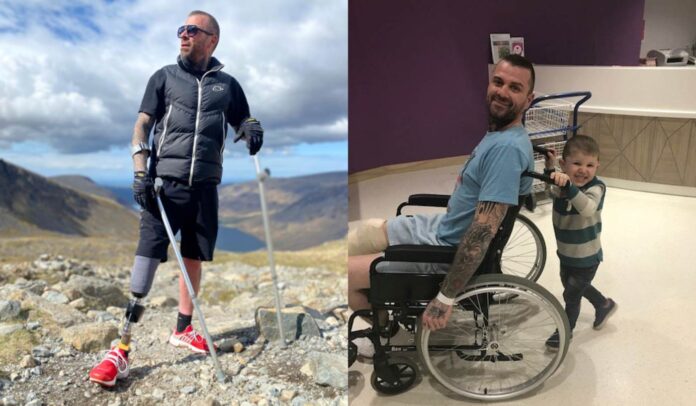
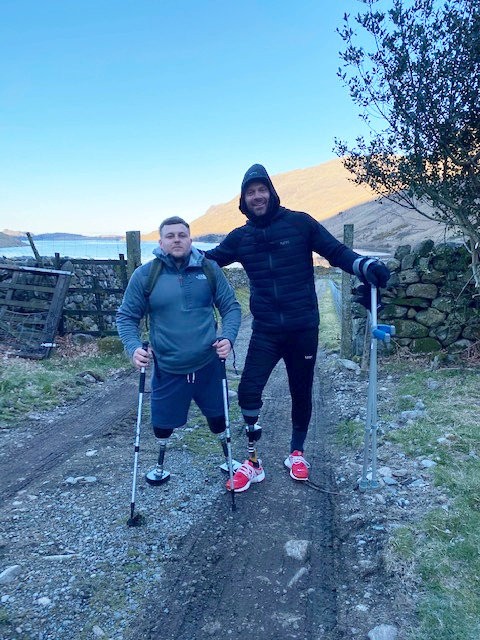
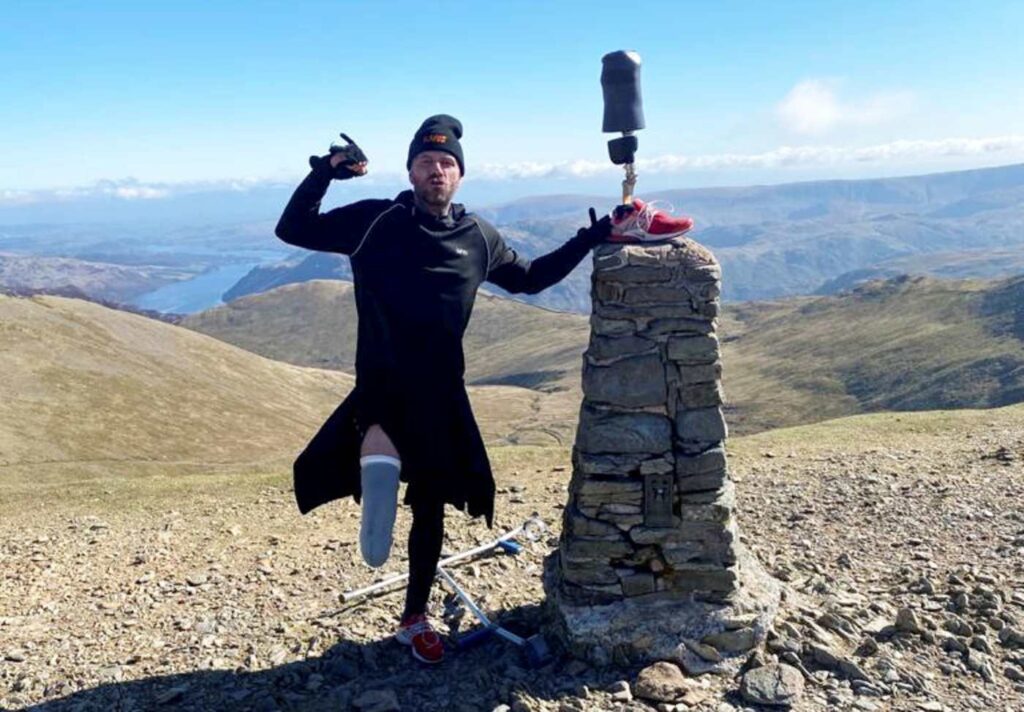
An amputee who can only walk for 20 minutes at a time has climbed England’s three highest peaks—a feat that took him 27 hours.
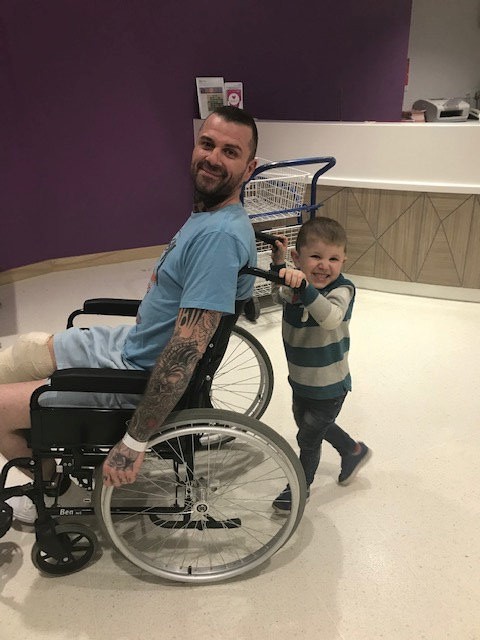
42-year-old Ben Lovell had never climbed a mountain—and in 2017 he had to have his right leg amputated due to a blood clot.
SWNS
These days the strain on his leg means he can walk 20 minutes, covering about a mile, before he has to take off his prosthetic and rest before climbing again.
But the former road worker scaled the Lake District’s Helvellyn in seven hours, Scafell in nine hours, and Scafell Pike after another 11 hours of trekking.
The father-of-two raised thousands of pounds to pay for kids with prosthetic limbs to join his fitness boot camp and holiday retreat in Tenerife, called AmpCamp.
The Yorkshire man said: “It’s never about how long it takes me; it’s just about getting it done.
SWNS
“Helvellyn was really hard and pretty scary because we lost the track and ended up climbing the side of the peak.
SWNS
“I was in a lot of pain but that’s a mental thing and you’ve just got to get past it.”
Of walking on boggy ground, he explained: “It puts such a strain on your other joints and other leg, and using crutches, which I have to do, is really hard on your back and shoulders.”
After Ben’s amputation four years ago, he suffered anxiety and depression, but now goes to the gym five or six times a week.
In the past few years, he’s completed a sponsored 13-mile walk round a reservoir on crutches and a 15,000-foot parachute jump.
The reason he founded AmpCamp? “With these holidays we just want to give people a place to go where they can feel safe and confident, and where they can relax without stigma, and if you need to take your leg off for a bit everyone understands.”
SHARE the Uplifting Adventures With Daring Friends on Social Media…
Does life imitate art or does art imitate life? In one stunningly decorated Russian coffee shop, the answer is a bit of both.
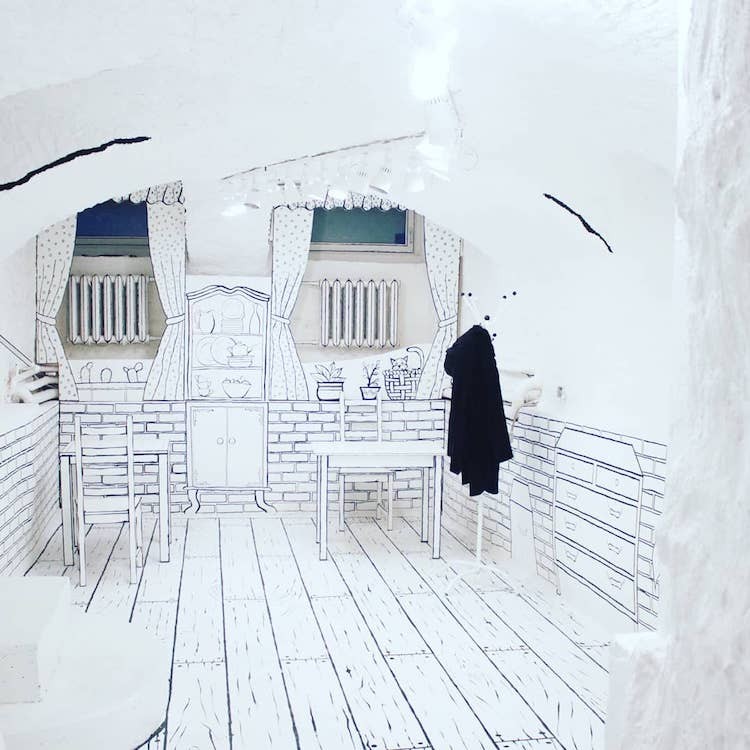
Café Bw, whose interior is designed to mimic a two-dimensional cartoon world, lets its 3D patrons step into the pages of their very own black-and-white comic book and thereby become part of the art.
Cafe BW
“The idea came up to create a place that would be interesting mainly due to its interior—of course, with a good coffee,” Bw creator and owner Solon told My Modern Met.
The café’s stylized two-dimensional renderings of everything from cats, cacti, and laundry drying on a line—to a full-size flat piano—form perfect backgrounds for Instagram-worthy photo ops.
“Our customers have been delighted!” Solon told MMM. “People deliberately come to us to take unusual pictures. Our employees are also delighted with the work and some even waited months for vacancies to open.”
Cafe BW
Bw has locations in Moscow and Saint Petersburg, but it’s not the only venue to offer fantasy fans a two-dimensional dining experience.
Cafe BW
In Seoul, at Café Yeonnam-dong 223-14 (an homage to the Korean TV show, W, whose “IRL” and webtoon protagonists move between the two worlds), it’s the clientele who put the “animated” into the bistro’s anime ambiance.
Cafe BW
Of course, for anyone who came of age in the 1980s, this particular “toontastic” intermingling of dimensions is already a familiar part of the pop culture landscape.
Back when MTV was all about the music, one of its most frequently played videos was a-ha’s iconic Take on Me, where boy and girl meet, they fall in love, and fight wrench-wielding bad guys on both sides of the comic book/real-world divide.
Cafe BW
Like its 21st-century counterparts, Take on Me is set in a coffee shop—which leaves us to wonder, does too much caffeine lead to comic book fantasies, or does life really imitate art?