














In an extraordinary breakthrough for physics, scientists at ETH Zurich have condensed the power of a superconducting magnet as big as a small building down into a device that fits in the palm of one’s hand.
This Tony Stark-like achievement promises unimagined possibilities in the fields of nuclear fusion and nuclear magnetic resonance.
Of particular utility would be turning some of the entire installations needed to perform the latter into something which could be situated onto a tabletop.
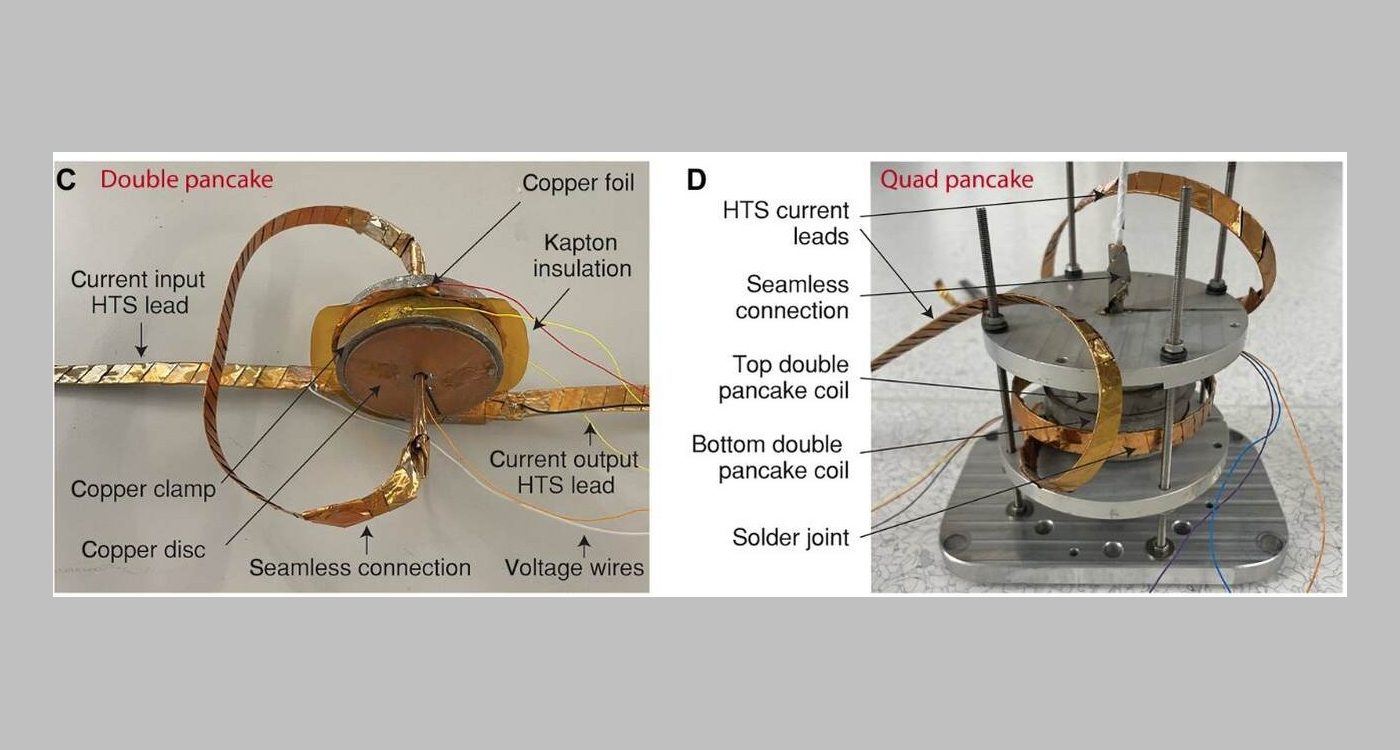
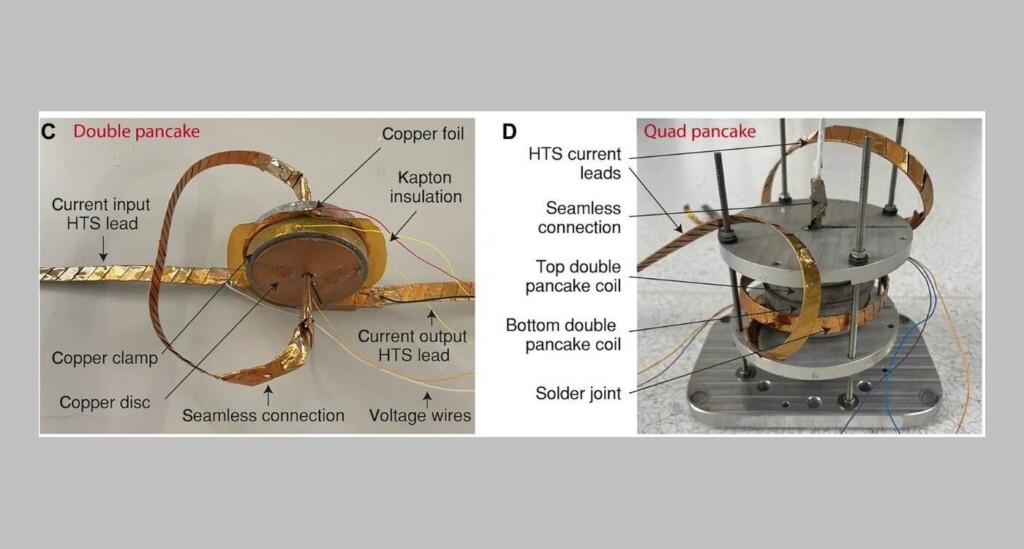
ETH Zurich is one of the top engineering schools in the world, and researchers from its Department of Chemistry and Applied Biosciences successfully made two kinds of magnets using special superconducting tape, neither of which exceeded 2.5 inches in diameter.
With them, they generated magnetic fields at an incredible 38, and 42 tesla of strength. For comparison, the world-record holding hybrid restive magnet at the National High Magnetic Field Laboratory in Florida generates a field of 45 tesla.
To do so, however, it required the following merely to built it: $15 million, 35 tons of materials arranged 22 feet high, and enough copper wiring to install the electrical cables in 80 family-size homes.
Running it, meanwhile, requires the following: 33 megawatts of power, 4,000 gallons of water every minute, and 2,800 liters of liquid helium to cool it down to -456° Fahrenheit.
To be fair to its engineers, it was built in 1999, and subsequent efforts have come close to 40-tesla magnetic fields with much smaller devices.
MORE ENGINEERING MARVELS: University in China Begins Installing World’s Strongest Gravity Centrifuge to Compress Space and Time
To build their game-changing prototypes, the scientists at ETH Zurich wound flat REBCO tape (rare earth barium copper oxide) into disk-shaped coils called pancakes and then stacked them together. Doing so concentrated the magnetic field into a small volume while using a much shorter length of tape than traditional designs.
The small size of the pancakes are, counterintuitively, key to the success of the design. Without joints, breaks in the tape, or insulation between the coils, there was no loss of conductivity, which also meant there was no need to overcome that loss through additional power and cooling.
RESONATE WITH THIS: Chinese Scientists Produce ‘Impossible’ Steel to Line Nuclear Fusion Reactors in Major Breakthrough
When the researchers pumped 1,000-amp currents through them, the dense, unbroken coils of REBCO tape generated a field of between 38 and 42 tesla.
Nuclear magnetic resonance, or NMR, is a hi-tech method for examining sub-atomic particles. Using just the 38 tesla magnet, the researchers were able to carry out NMR, and so suggested in their study that such mini-mega magnets could enable widely accessible high-field NMR and other applications around the world.
SHARE This Incredible Engineering Achievement With Your Friends…