Good neighbor David Blenkle in his 2022 Mustang Mach-E
Good neighbor David Blenkle in his 2022 Mustang Mach-E
In the course of being a wonderful, kind-hearted neighbor, a California man inadvertently demonstrated the incredible reliability and longevity of his electric vehicle.
And being that it’s a Ford Mustang Mach-E, which many derided as an abomination of the badge, it’s a head-turning, heart-tugging piece of publicity.
David Blenkle -credit Ford
David Blenkle has spent the last few years using his all-electric Mach-E to run a small private car service in Santa Cruz, California, and has driven more than 250,000 miles in the last three years.
Even more impressive, the car still has 92% of the battery capacity he had when he bought it.
Inspired by the care his grandfather received as a WWII veteran, Blenkle started off by offering complimentary rides for veterans and their families to Veteran’s Affairs (VA) appointments and national cemeteries.
He also began to offer free rides to job-seekers, both veterans and others, to help them get to any job interviews they might have lined up.
Years passed, and Blenkle has become a lifeline for hundreds of people in his community who would otherwise not have had access to reliable transportation.
Through the growth of his business, David was able to expand to continue providing reliable rides to those in need, including university students needing a ride to the airport, or locals navigating the highway over the Santa Cruz mountains.
There are many good arguments on both sides of the debate on the reliability of EVs versus conventional combustion vehicles, especially in a state as large as California. Perhaps the best on the EV side is that an electric motor has one moving part.
Resulting not a little from that fact, the course of Blenkle’s charitable work has seen him pass a quarter-million miles—equivalent to a trip to the moon—without enduring any major under-the-hood work.
SHARE This Feel-Good Story With Your Friends Thinking Of Buying An EV…
A two-legged Chihuahua named Champ detected a potentially fatal heart attack before his owner even felt symptoms, saving his life in the process.
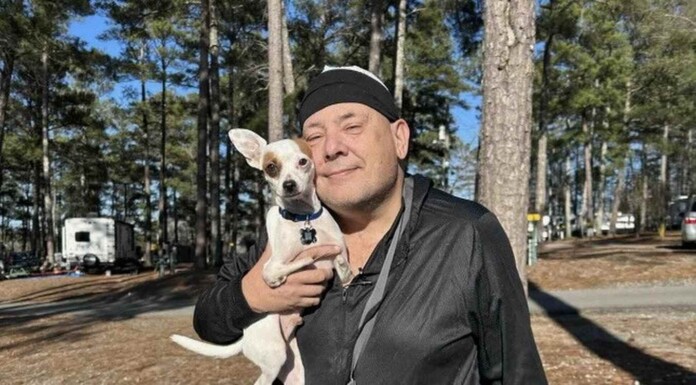
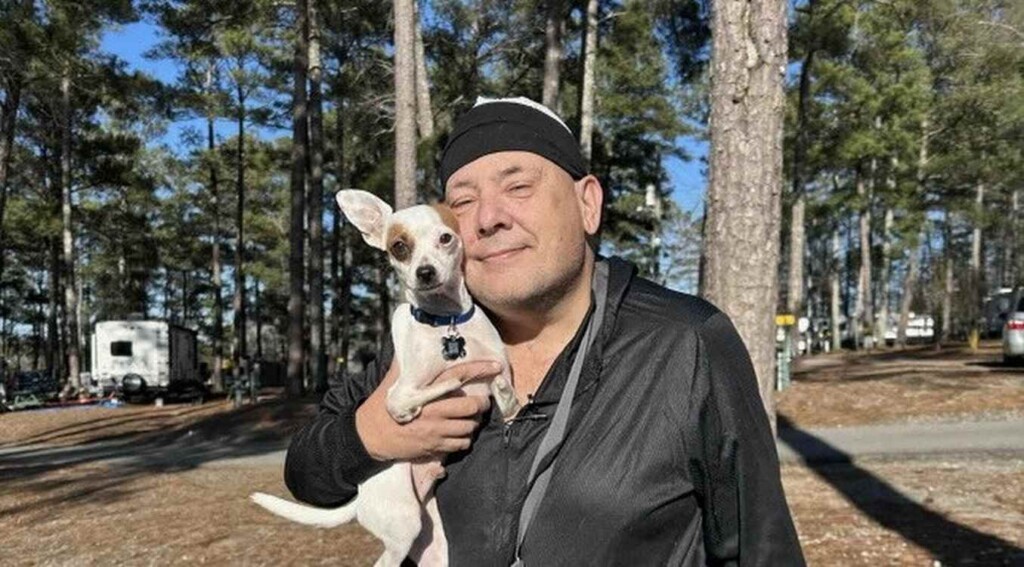
63-year-old Andrew Kuzyk says Champ’s unusual behavior—hugging his chest and whining —prompted lifesaving medical attention.
It made Kuzyk take the “chest tightening” feeling seriously, and his wife called for help.
He had emergency surgery during which his heart stopped beating twice, but survived to make a steady recovery.
“I was just watching TV when Champ came up to me,” Kuzyk, from Locust Grove, Georgia, recounted to the English news outlet SWNS. “He hugged my chest right about where my heart is and made a whine I’ve never heard him utter before. Shortly after that, I started having chest pains.”
Champ, who was born missing two legs, is one of six rescue Chihuahuas that share Kuzyk’s mobile home with him and his wife, Pamela.
He had had a minor heart attack once before, which caused him to take symptoms like the chest pain more seriously.
Moved by Champ’s persistent whimpering, Kuzyk’s wife dialed 911 for an ambulance and he was rushed about 30 miles to a hospital in Atlanta, where doctors performed emergency surgery.
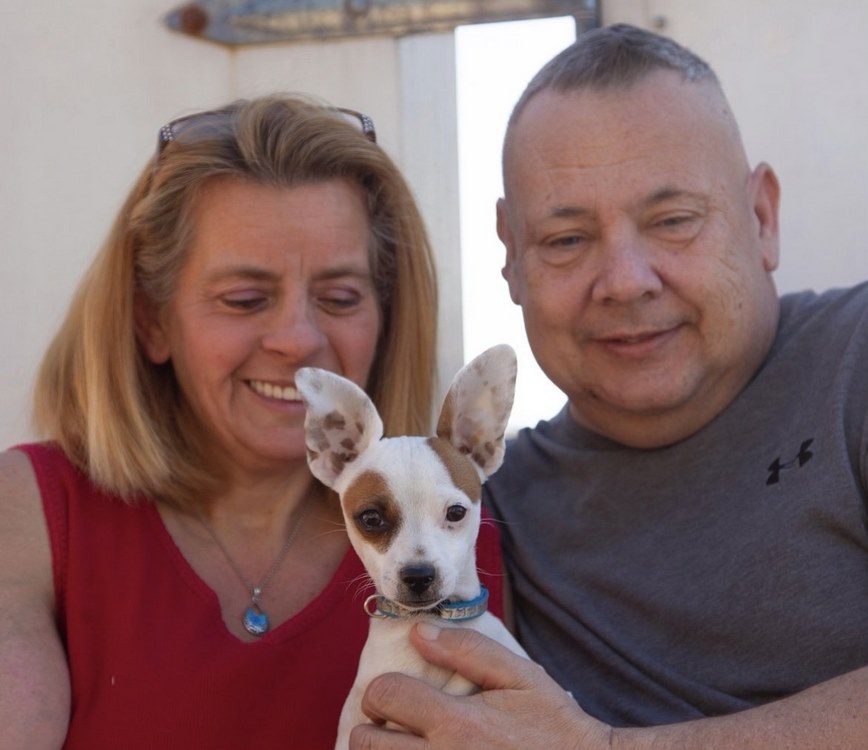
Andrew, Pamela, and Champ – credit, SWNS
“The doctor showed me this giant thing blocking my heart right after surgery,” he said. “He said in his career, he’s never seen anything like it.”
“I know for sure that without Champ I wouldn’t be here,” he added, saying the dog did the same thing shortly before he was diagnosed with brain cancer, just one of several forms of cancer he’s currently battling.
“I have a soft spot in my heart for dogs who have been abandoned, especially Chihuahuas, even though they get a bad rap because of their barking,” Kuzyk said. “Most of my dogs have special needs, too. One is blind, and they’ve become a complete blessing to me.”
Kuzyk, a self-described born-again Christian, sees profound meaning in his survival through Champ’s remarkable abilities.
“I think for some strange reason, during all my cancers, the Lord wants me to be on this earth,” he said, pointing out Champ as a third pillar of his strength, alongside Pamela and his faith.
“I love him with all my heart. He’s just incredible. Whenever people see him, they immediately fall in love with him.”
SHARE This Man’s Remarkable Survival Story With His Dog At His Side…
Reconstruction of Triassic Era Reptile (Mirasaura grauvogeli) in natural forest habitat-Credit: Gabriel Ugueto
Reconstruction of Triassic Era Reptile (Mirasaura grauvogeli) in natural forest habitat-Credit: Gabriel Ugueto
A newly-declared species of 247 million-year-old Triassic reptile and its ridiculously large crest has left scientists scratching their heads.
The crest is unlike anything seen before, and was neither made out of skin, as in the case of pterosaur crests, nor feathers, as in the case of raptors and eventually birds.
It wasn’t a kind of hair either, and in fact, the animal is now being used as a study case for the origin of protrusions of all kinds.
At the most fundamental level, feathers and hair are complex appendages that have important functions such as forming insulation, aiding sensation, providing displays, and contributing to flight.
Both feathers and hair have their origins in stem lineages of birds and mammals, respectively. However, the genetic toolkit for the development of these appendages is likely to have deeper roots among amniotes—the branch of animals that encompasses reptiles, birds and mammals.
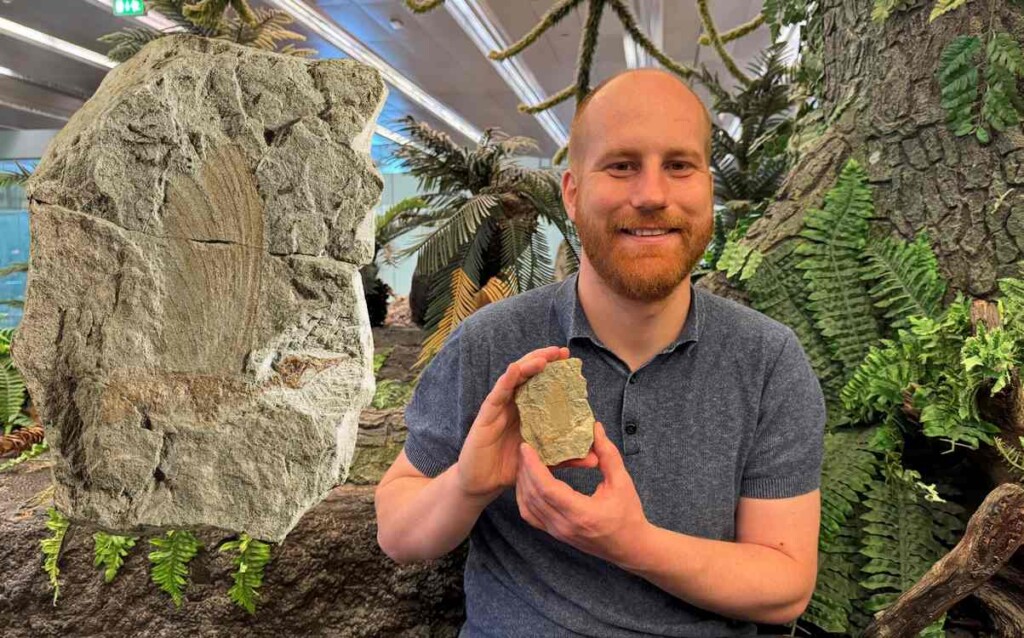
In a paper published yesterday in Nature, Stephan Spiekman and colleagues describe a small animal with a distinctive crest of appendages up to 6 inches tall along its back. Although the reptile has a superficially bird-like skull, it was been assigned to a clade of Triassic reptiles called Drepanosauromorpha and named Mirasaura (meaning wonderous reptile).
The Triassic Period was the ‘good ‘ole days’ of reptilian domination and evolution on the planet, and many reptiles still alive today such as the lizard, crocodilian, and turtle first appeared during this age of the Earth which predated the dinosaurs.
Two well-preserved skeletons with plumes of Mirasaura, along with 80 specimens with isolated appendages and preserved soft tissues were examined after arriving in the State Museum of Natural History in Stuttgart, Germany.
All fossils are dated to be around 247 million years old and the first were found in northeastern France in the 1930s but remained unidentified until further preparation was undertaken in recent years. This allowed the crests and skeletal remains to be associated with each other.
“The material has been variously described over the years as including parts of a reptile skeleton, a fish fin, an insect wing or plant parts, or was called unidentifiable,” reports Dr. Richard Prum, a paleoecologist from Yale University in a commentary piece on the discovery.
It’s very rare to have soft tissues preserved from so long ago, and it allowed Spiekman et al. to get a closer look at exactly what the appendages were made of when the animal was alive.
They contain melanosomes (pigment-producing cells found in skin, hair, and feathers) that are more similar to those seen in feathers than in reptilian skin or mammalian hair, although they lack the typical branching patterns seen in feathers.
It suggests that such complex appendages already evolved among reptiles before the origin of birds and their closest relatives, which may offer new insights into the origin of feathers and hair.
“[T]hese appendages must have been a striking and unusual feature of the animal’s appearance. They also must have been awkward to carry around, given that the longest is more than one-third of the length of the entire creature,” Dr. Prum adds.
Considering the function of the appendages seen in Mirasaura, Spiekman and colleagues rule out roles in flight or camouflage and instead suggest a possible role in visual signaling, perhaps for mating purposes, or even to deter predators like the spots on a butterfly’s wings.
SHARE This Wild New Reptile Shaking Up Biology On Social Media…
A Hamburg copper smelter is showing that with a little innovation, it’s possible to heat the city’s water without heating up the climate.
Aurubis produces 400,000 tons of pure copper every year, every ounce of which generates molecular heat that is channeled into a nearby heating system.
This provides hot water for around 28,000 homes and buildings, and saves 120,000 tons of CO2 per year.
The story begins in 2018 when the Hafencity industrial waterfront area was the focus of a major urban redevelopment project. Enercity Contracting got together with Aurubis to channel the reactive heat of their chemical smelting process through a pipeline network several kilometers long to the Hafencity district heating system.
Once there, pumps divide the hot water between its customers on demand, with a backup natural gas boiler on hand for peak demand during the winter months.
At Aurubis, their smelting process is chemical, not thermal. Using a catalyst to cause sulfur in the copper ore to react with oxygen generates the heat needed to transform the ore into metal.
“This is an exothermal reaction producing heat. So it is totally CO2-free, no gas is burnt, it’s just there,” Dr. Holger Klaassen, Director of corporate energy and climate affairs at Aurubis, told Euronews.
The total cost of the project was around €70 million, ($78 million) a pretty small investment compared to other district heating projects, like this $220 million project in Vantaa, Finland that will use underground caverns as storage basins for water heated through waste heat.
Utilities consume fossil fuels in various ways. Some use them directly, such as electricity which is delivered after fossil fuels are burned. Others require intermediaries. In the case of home heating, one of the most common is heated water pumped into radiators or through pipes in the case of underfloor heating. Heat pumps go one step further and use heated water to heat air that’s blown out into the building.
Given that intermediary, there are more possibilities for decarbonization of heating compared to electricity. Traditionally, water boilers are heated using natural gas, but any source of heat, provided it’s strong enough, could be used to heat the water and therefore the home.
Industrial processes create all kinds of elemental forces, and smelting is probably just one of many that could utilize waste heat for district heating. GNN reported on a UK swimming center that heats its pool using waste heat from a nearby internet data center.
SHARE How Hamburg Put 2 And 2 Together To Get Heating 4 The City…
Quote of the Day: “Patience is the companion of wisdom.” – Saint Augustine
Photo by: Mor Shani
With a new inspirational quote every day, atop the perfect photo—collected and archived on our Quote of the Day page—why not bookmark GNN.org for a daily uplift?
Giorgio Armani in Capri - CC skilledadventurer.com
50 years ago today, Giorgio Armani and Sergio Galeotti founded Giorgio Armani S.p.A (joint stock company) in Milan, Italy. Armani had no education in design, and instead studied medicine in advance of a two-year stint in the army. He got into fashion simply by working at department stores. By 2001, Armani was acclaimed as the most successful designer of Italian origin, and is credited with pioneering red-carpet fashion. READ more… (1975)
Tami Laird and her son Stirling - supplied by Tami Laird
Tami Laird and her son Stirling – supplied by Tami Laird
Despite a 2-day ordeal lost in deep woods, a mother and her son “did everything right,” stayed safe, and used a clever trick to help rescuers find them.
The story began when Tami Laird and her son Stirling left their home in Calaveras County, California on July 11th to attend a Boy Scout camp.
The camp director warned parents the road would be rough, so Ms. Laird had no objection about pulling off CA highway 4 onto a dirt road with the camp’s location plugged into the GPS app on her smartphone.
That was the first and roughly only mistake she made that day. As the thick woods and remote country blocked the GPS from tracking them accurately, and despite following its directions for 30 minutes, it was clear from the deteriorating condition of the track and the camp still being 8 miles away that they had run dangerously awry of their route.
Retracing their steps was no use, as the spider’s web of rights and lefts was impossible to make sense of in reverse. The sedan she was driving was beached several times on the uneven road, and the pair had to dig it out repeatedly until one time when they couldn’t.
They were stuck.
From the mistake that left them stranded on the road, Tami Laird, with a little help from her little scout, made the correct calls: first by remaining calm and taking time to consider their options as night fell; next by opting to stay in the car.
While history shows that this was the right decision, it was a long, sleepless, and anxious night for both of them. The next morning, having tried and failed to call 911 the day before, they needed to consider how to be found.
They hatched a plan to leave notes along the various roads they had crisscrossed in the hopes that someone with knowledge of the terrain would find them. Again, Laird made a good call. The forest was dense, and hills surrounded them. She feared that walking too far afield would leave them unable to find their way back, so she used scissors to cut strips of fabric off a bedsheet and tie them around trees to blaze their trails.
“Me and my son are stranded with no service and can’t call 911,” one of the notes said. “We are ahead, up the road to the right.” Another note left a phone number to call.
In the summer heat the constant hiking was exhausting, and the pair decided to call it quits for the day, having determined where next to leave other notes should no one find them that night. As Stirling began to despair, Laird suggested they play cards to settle down, but no sooner had the deck been shuffled then they heard a wonderful, wonderful sound.
One of Laird’s rescue notes – credit, Calaveras County Sheriff’s Office
The honk-honk of a truck, coming to rescue them, which was when “the tears started,” as Laird told CNN.
“We were definitely a good team out there,” Laird added, crediting Stirling for keeping her calm. “He kept trying to keep me positive because I kept saying things like, ‘I don’t think we’re going to get rescued,’ or ‘Our only hope is a helicopter, and I don’t think a helicopter is going to come.’”
Little did they know it at the time, but someone tried to call Laird after it was clear they were overdue in arriving at the camp. They communicated this to the search and rescue division of the Calaveras Co. Sheriff’s Office, which established a base at a nearby recreation area to conduct a search of the “complex network of interconnecting, labyrinth-like roads,” a statement from the Sheriff’s Office read.
“At approximately 5:40 PM, a Search and Rescue team located a handwritten note posted at an intersection of a remote Forest Service Road. The note indicated that the author and her son were stranded and in need of assistance. The team followed the road and found another note, which provided additional information, including a telephone number and the names of the missing individuals. About a mile later, the searchers located the missing persons and their vehicle.”
The statement went on to say that the teams had to communicate on HAM radio frequencies, such was the remoteness and density of the forest area; neither cell service nor conventional radio waves worked.
Stirling keeping calm in a bad situation – supplied by Tami Laird
CNN meanwhile reported that the rescue team applauded Laird for her instincts, telling her she’d done everything right. Her fiancé also shared her last known location with the rescuers.
If traveling by car in remote areas, the first and often best thing you can do to protect yourself isn’t to stock your trunk with survival gear, food, or water, but rather to leave a detailed plan with someone you love, and give them a clear deadline for calling search and rescue.
If you get lost like Laird and Stirling, and believe there’s no reason anyone knows you’re missing, the best thing you can do is follow Laird’s instincts and stay with your car.
A German backpacker lost for 12 days in the Australian outback became so when she abandoned her broken-down vehicle after hitting her head in the crash, walking away in a daze. If the terrain can block radio signals, it’s dense enough to allow one to get lost even just a few dozen yards from their vehicle, so marking trails like Laird did is a must.
Only after securing protection from the elements and animals, and maximizing the chance of rescue by signaling or leaving evidence of their presence should one consider water, and eventually food.
SHARE This Great Survival Story And Important Lessons With Your Friends…
Researchers have discovered that the active compound in psychedelic mushrooms can extend lifespan and reduce cellular aging by 50% in human cells and 30% in elderly mice.
The experiments reveal another potential therapeutic use of the compound—called psilocybin—which has already been studied as a treatment for a myriad of other conditions.
The team from Emory University are calling it the first ever long-term study evaluating the systemic effects of psilocybin in aged mice. The animals were the equivalent of 60 to 65 in biological human years, and exhibited hair loss and greying, as well as reduced physical activity.
The mice were dosed with psilocin, the active ingredient in psilocybin that appears once the latter is broken down during digestion. The mice received a low level at first, and eventually a higher dose of 15 milligrams once a month for 10 months.
Within the first 3 months, the mice receiving psilocybin exhibited signs of youth, including fewer instances of greying and hair loss—including a reversal of these symptoms—and a general improvement in physical activity. By trial’s end, the mice that received psilocybin had a 30% increased lifespan on average compared to the control group.
To date, more than 150 clinical studies have been completed or are ongoing for examining psilocybin in the treatment of various clinical conditions, including anxiety, depression, addiction, neurodegenerative diseases like Alzheimer’s, chronic physical pain, and more.
The authors cite a study from 2020 which found that a single dose of psilocybin can improve debilitating physical and psychological symptoms with improvements lasting up to and beyond 5 years post-dosage.
Photographs of the mice during various stages in the trial – credit, npj Aging, CC 4.0. Nature Press
Method behind the magic
This literature has firmly established that psilocybin acts strongly on a particular serotonin receptor called 5-HT2A, as well as several other 5-HT receptor subtypes. Notably, the 5-HT2A receptor is expressed in multiple organs and cell types, including fibroblasts, neurons, cardiomyocytes, endothelial, epithelial, macrophages, and T-cells, the authors write.
Those are skin, brain, heart, and various immune cells in layman’s terms. In the brain, 5-HT2A stimulation was followed by the activation of one of the body’s most important determinants in aging, a pathway called SIRT1. This is heavily involved in the regulation of cellular senescence, a process by which cells that old become redundant, nondividing, and inflammatory, before eventually being cleared away.
“Here, we demonstrate that psilocin increased SIRT1 expression in cells, suggesting a potential mechanism by which psilocybin delays senescence and promotes longevity. This study provides the first experimental evidence suggesting that psilocybin may impact multiple hallmarks of aging, including delayed senescence, preservation of telomere length, [and] enhanced DNA stability,” the authors wrote in their study, published in Nature Partner Journal’s Aging.
“Beyond its neurological and psychological benefits, our findings suggest that psilocybin influences systemic aging processes, potentially explaining its long-lasting therapeutic effects across multiple disease indications”.
The scientists also tested the effects of psilocin on human fibroblast cells from the lung in vitro, continually dosing them with the psychoactive compound or a placebo until they reached replicative senescence, or the point at which the cell has divided around 50 times and then stopped.
Psilocin treatment of 10 micrograms resulted in a 29% extension of cellular lifespan, characterized by delayed exhaustion of proliferative potential, increased cumulative population doublings, and decreased population doubling time. Strikingly, when increased to 100 micrograms, 29% lifespan extension became 57%.
The psilocin-dosed fibroblasts were also observed to have increased SIRT1 activity, and a preserved telomere length.
The authors concluded their paper by describing psilocybin as a potentially “disruptive” pharmacological agent—an all-too-real suggestion considering the depth of therapeutic potential that has already been established in non-psychotic individuals using psilocybin for all manner of ailments, the reluctance of major pharmaceutical companies to explore psilocybin as a potential produce ingredient, and the sweeping illegality of psychedelic mushrooms in most of the world. WaL
SHARE This Incredible Research With Your Friends In Mushroom-Legal States…
NASA’s James Webb Space Telescope has clawed back the thick, dusty layers of a section within the Cat’s Paw Nebula to mark the start of its 3rd year of operations.
The image it reveals shows a star-forming region where massive stars are in their very earliest stages of birth, helping scientists chart all the little steps between something like our Sun and the gas and dust which created it.
Located approximately 4,000 light-years away in the constellation Scorpius, the Cat’s Paw Nebula offers scientists the opportunity to study the turbulent cloud-to-star process in great detail.
Webb’s observation of the nebula in near-infrared light builds upon previous studies by NASA’s Hubble and retired Spitzer Space Telescope in visible and infrared-light, respectively.
With its unparalleled resolution, Webb shows never-before-seen structural details and features. Massive young stars are carving away at nearby gas and dust, while their starlight is producing a bright nebulous glow represented in blue.
It’s a temporary scene where the disruptive young stars have a brief but important role in the region’s larger story. As a consequence of these massive stars’ lively behavior, the local star formation process will eventually come to a stop.
The nebula takes its name from the cavernous clouds of dust shaped like the toe pads of a feline paw. The toe pad at the top is nicknamed the “Opera House” for its circular, tiered-like structure. The primary drivers for the area’s cloudy blue glow are most likely toward its bottom: either the light from the bright yellowish stars or from a nearby source still hidden behind the dense, dark brown dust.
Just below the orange-brown tiers of dust is one of many bright yellow star with diffraction spikes seen throughout the image. While this massive star has carved away at its immediate surroundings, it has been unable to push the gas and dust away to greater distances, creating a compact shell of surrounding material.
Look closely to notice small patches, like the tuning fork-shaped area to the Opera House’s immediate left, that contain fewer stars. These seemingly vacant zones indicate the presence of dense foreground filaments of dust that are home to still-forming stars and block the light of stars in the background.
Toward the image’s center are small, fiery red clumps scattered amongst the brown dust. These glowing red sources mark regions where massive star formation is underway, albeit in an obscured manner.
Some blue-white stars, like the one in the lower left toe pad, seem to be more sharply resolved than others. This is because any intervening material between the star and the telescope has been dissipated by stellar radiation.
Near the bottom are small, dense filaments of dust which have managed to remain despite the intense radiation, suggesting that they are dense enough to form protostars. A small section of yellow at the right notes the location of a still-enshrouded massive star that has managed to shine through intervening material.
One eye-catching aspect of this Webb image is the bright, red-orange oval at top right. Its low count of background stars implies it is a dense area just beginning its star-formation process.
A couple of visible and still-veiled stars are scattered throughout this region, which are contributing to the illumination of the material in the middle. Some still-enveloped stars leave hints of their presence, like a bow shock at the bottom left, which indicates an energetic ejection of gas and dust from a bright source.
WATCH a video tour of the region offered by our space administration…
CELEBRATE Webb’s Three Years Of Brilliant Service With Your Friends…
With the help of one of America’s most heroic charities, Arizona’s governor has helped eliminate $429 million in privately-held medical debt and hospital bills in the state.
352,000 Arizonans received a letter in the mail explaining how their debts had been paid off for pennies on the dollar—one can only imagine the relief.
Taking money apportioned for community healthcare in the American Rescue Plan Act passed during the COVID-19 pandemic, Governor Katie Hobbs then gave it to Undue Medical Debt, an organization that has zeroed out tens of billions in debt for millions of Americans.
Identifying Arizona debtors that owed 5% or more of their annual income in medical bills, or those who held medical debt while making up to or below 400% of the national poverty line, the partnership should cut outstanding medical debt in the state by around 25%.
“This investment demonstrates Arizona’s commitment to ensuring that no one should face financial ruin for seeking care, and we’re grateful to work with providers across the state who recognize that removing these unpayable debts of necessity helps their communities thrive,” said Allison Sesso, president and CEO of Undue Medical Debt.
“This particular contract, we’re going to be spending $10 million of money that would be a lot harder to raise in only private dollars, but we pair that with private donations across the United States,” Sesso told AZ Family.
But how can $429 million in debt be eliminated for just $10 million? The first fact on the surface of this remarkable bargain is that the cost of care and procedure to the patient is often not reflective of the costs to the hospital for providing it.
Yet saddled with a massive bill in the event of an unforeseen sickness or accident, hospital patients often can’t or won’t pay for years at a time. A hospital may have a claim on someone’s money worth $50,000, or even $100,000, but if they can’t pay it in anything other than tiny installments, it suddenly begins to look quite worthless to a hospital administrator.
The hospital could take legal action, but there’s no guarantee they would collect, and it’s expensive to pay the legal fees resulting. So Undue Medical Debt comes into the picture and offers $5,000 in immediate cash payments to take that claim off their hands—essentially buying the debt for pennies on the dollar.
GNN has previously reported that the subtle brilliance in the act of buying outstanding debt from hospitals is that it’s up to the hospital’s accounting department to assess whose debts are available for Undue Medical Debt to buy.
This gives the charity a true randomness that prevents natural biases or preferences; the letters arrive into the hands of strangers, reporting the good news that they now debt-free, as if they’d won the lottery or been subject to divine intervention.
Rochelle Jordan is just one Arizonan who was relieved of a debt burden by Undue Medical Debt and Governor Hobbs. Doing what she felt was the responsible thing and calling an ambulance years ago when she felt very sick in town, she arrived at the hospital, received treatment, and received a bill for upwards of $3,000 for the ambulance ride.
“I didn’t know catching the ambulance will cost me so much,” Jordan expressed to AZ Family.
SHARE This Incredible Relief With Your Friends On Social Media…
Quote of the Day: “An artist’s career always begins tomorrow.” – James Whistler
Photo by: Johnny Magrippis
With a new inspirational quote every day, atop the perfect photo—collected and archived on our Quote of the Day page—why not bookmark GNN.org for a daily uplift?
Photo by Deutsche Bank at a Birdies For the Brave charity tournament, CC license
25 years ago today, Tiger Woods became the youngest golfer to win a complete Grand Slam. At age 24, he held all four modern major championships simultaneously — the US Open, The British Open Championship, the PGA Championship, and the Masters. He won the British Open that year at St. Andrews, with the best score ever recorded—19 under par. READ more about this momentous achievement… (2000)
The successful team on Nukufetau - credit Jesse Friedlander, via Island Conservation
The successful team on Nukufetau – credit Jesse Friedlander, via Island Conservation
In the continuing conservation success story of eliminating invasive species on tropical islands, the nation of Tuvalu has completed the eradication of invasive rats from 6 of its 124 islands.
Additionally, an overwhelming population of invasive mosquitoes and “yellow crazy ants” are both nearly eliminated.
The project’s success was an example of the power that community-led conservation can have when properly backed by even the smallest governments, a statement from Island Conservation, a nonprofit that aided in the eradication, explained.
“[T]he project has led to the successful eradication of invasive rats from six islets, which includes four in Nukufetau [Atoll] and two in in Funafuti [Atoll], which has significantly reduced the threat to native seabirds, coastal biodiversity, and island ecosystems,” said Mr. Soseala Tinilau, Director of the Tuvalu Department of Environment.
Tepuka, an island located within the capital city atoll of Funafuti, was also infested with yellow crazy ants, one of the world’s largest ant species on account of its long legs and antennae, and which earned its “crazy” moniker for its extremely erratic movement patterns.
Like the fire ant, the species is known as a “tramp ant,” another rather humorous moniker that is given to ant species which can easily become invasive colonizers due to their aggression towards other ant species. A yellow crazy ant colony can spread 10 feet per day, and was infamous for causing the ecological “meltdown” of Christmas Island.
“We knew rats were a problem, but now we understand how much damage they were doing to our environment, and we now know to protect our islands,” said a community member from Nukufetau, where the rats were eliminated from the islands of Sakalua, Motumua, Teafuone, and Teafuatule.
Another shared that “we used to see fewer birds and crabs around, but now they’re coming back, and it feels like our island is breathing again.”
Richard Griffiths, Island Conservation’s Head of Operations in the Pacific, on Teafuatule, Nukufetau – credit Jesse Friedlander
A catalogue of divisions, ministries, and intergovernmental organizations contributed to the project, which was funded primarily through the New Zealand Ministry of Foreign Affairs and Trade, designed and led by the Secretariat of the Pacific Regional Environment Program, and implemented by the Tuvalu government.
Island Conservation, which have succeeded in similar eradication efforts on 65 islands across the world, helped by providing technical leadership from decades of experience.
“The recovery we’ve already seen in such a short time is astonishing,” said Jesse Friedlander, a Project Manager at Island Conservation. “The last time we were here, we saw very few coconut crabs. Now, birds and crabs are free to flourish. Healthy reefs aren’t optional for Tuvalu, they’re a matter of survival.”
A follow-up monitoring mission has confirmed the success of the eradication, and the project model could be expanded to other islets, further enhancing Tuvalu’s ecological resilience and food security.
“Communities are already witnessing the positive environmental changes, along with increased understanding of invasive species issues.”
According to the statement from Island Conservation, the success of the project was rooted in strong community engagement. Residents of Nukufetau participated in awareness sessions and received hands-on training in eradication techniques, ensuring that the knowledge and capacity to maintain a rat-free environment remain within the community.
Mr. Sam Panapa, Tuvalu’s National Invasive Species Coordinator, commented that “removing these predators will create a safer environment for native species, benefiting biodiversity and supporting sustainable practices for the Nukufetau community.”
SHARE This Great Ecological Recovery With Your Friends…
In a huge win for British water, birds, and communities, the UK environment ministry has announced a rapid phase out leading to a total ban on lead ammunition.
Global health authorities agree unanimously that there is no safe level of lead exposure, and lead shotgun pellets and small-caliber ammunition are two of the most persistent poisons of bird life, particularly waterfowl.
In 2008, the California government introduced a phase-out/ban of lead ammunition in the southern geographical range of the California condor, which helped reduced excess mortality from ingestion of lead by these scavengers.
Though not scavengers, waterfowl are also at high risk of lead poisoning since they’re traditionally hunted with shotguns that fire clusters of lead pellets, called shot, and because these birds habitually ingest small stones as a digestive aid. They’ve been known to mistake shot and bullets for these stones.
Starting from 2026 and coming into total effect by 2029, any shot containing more than 1% lead or bullets with more than 3% lead, will no longer be legal to use. Announced on Saturday by Environment Minister Emma Hardy, the decision was informed by the UK’s Health and Safety Executive, which had originally proposed a longer phase-out period.
Hardy declined, and opted instead for a faster, 3-year phase out.
“Britain is a proud nation of nature lovers, but our rivers are polluted and iconic birds are declining. This ban will help reverse that, protecting birdlife and restoring our countryside,” Hardy said in a statement.
Steel, copper, tungsten, and bismuth are all ballistically similar to lead, and to most hunters and shooters, any differences would be undetectable; substantially more subtle than variations in groupings and placement brought about from mere human influence like trigger panic or shoulder fatigue.
Exemptions will be made for law enforcement and military in the case of small-caliber bullets where no alternative is available.
According to the Wildfowl and Wetlands Trust (WWT), some 100,000 birds die annually in the UK from ingesting lead shot. Voluntary methods, which have shown some success in protecting condors in America, haven’t worked as well in the UK, and a study from the country in 2022 found that 99.5% of hunted pheasants that were tested for lead found the heavy metal in their bloodstream.
The WWT called the decision a “huge day for wildlife,” while the Royal Society for the Protection of Birds called it “long overdue.”
SHOOT This Story Over To Your Friends On Social Media…
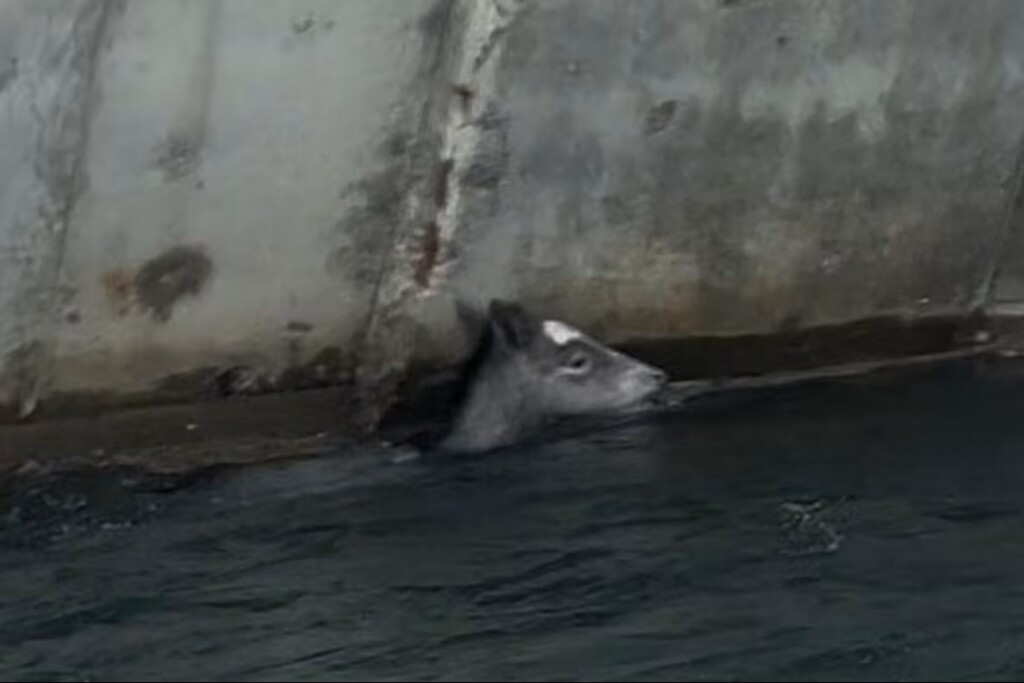
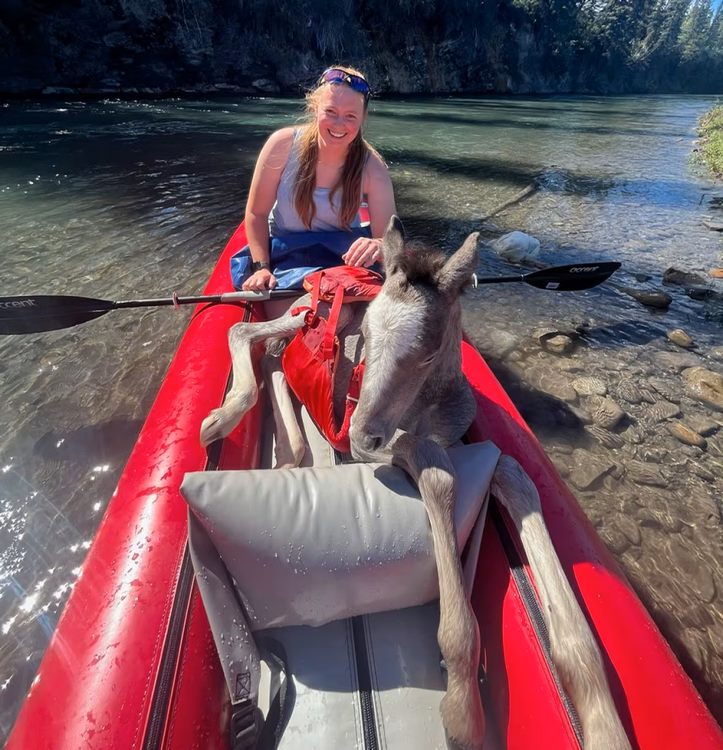
The foal who had been stuck in the Kananaskis River - supplied by Ava Haddad
The foal who had been stuck in the Kananaskis River – supplied by Ava Haddad
As two women were enjoying canoeing down an Alberta River, they had no idea they would have the chance to save a life.
The sun was out, the water was glistening, and the birds were singing, but the idyllic drift down the Kananaskis River was interrupted when a horse waded into the water under a highway bridge and abruptly blocked their course.
Looking to their right, they realized what the horse was after: a foal was seemingly trapped in deep water against the concrete side of a bridge support.
Anna Gleig and Ava Haddad, both students at the University of Calgary’s environmental science program, decided to lend a hoof to the stranded foal, who could only just keep its head above water.
Paddling toward the bank on the other side of the river, the two scared the mother horse away, which at least made things a little safer. Gleig, a former lifeguard, led the rescue effort as the two swam over to the animal. Gleig supported it while Haddad paddled and pushed.
“He didn’t fight back against us,” Haddad recounted to CBS News. “He just let us take him, so that worked out really well.”
The foal stuck in the water – supplied by Ava Haddad
“Somehow,” Gleig explained, they managed to get the 90-pound foal back on the bank. But there was another problem: his mother had run off.
They waited there in the midday sun from a safe distance, expecting the foal’s mother would come back to look for it, but she didn’t. At times they considered leaving the foal, but every time they paddled away it would wade back out in the water and require rescuing again.
Eventually, they just put him in the boat and decided to paddle on to see if they could find help.
“I ended up putting my life-jacket on him and picking him up and putting him in the boat with us. And miraculously, somehow he was calm enough, and was OK with being in the boat,” Gleig said. “He took a little nap there because he was just so tired.”
Ana Gleig and the foal after they got him into the boat – supplied by Anna Gleig
After about 20 minutes, the paddlers were able to get a hold of someone from a First Nations community who knew exactly which horse the foal belonged to.
The man loaded the foal into his pickup truck, and before the day was out the two women received confirmation the animal had been reunited with his mother.
They described to CBS News that they were proud and happy to have given the foal a “second life,” reasoning that if they hadn’t passed by, it’s likely the foal would have drowned.
WATCH the story below from CBS News…
SHARE This Joyfoal Rescue With Your Friends From Canada…
A dwarf sand adder snake - credit Arno Moller, Unsplash
A dwarf sand adder snake – credit Arno Moller, Unsplash
Hundreds of potential antibiotics have been discovered in snake and spider venom thanks to AI.
A screening of global venom libraries, powered by artificial intelligence uncovered dozens of “promising” new drug candidates.
AI has already been used to complete screenings of plant compounds and existing drugs in search of potential new antibiotics, and snake, scorpion, and spider venoms have proven a fruitful hunting ground as well.
Antibiotic resistance contributes to more than one million deaths worldwide every year. Finding alternative compounds that can eliminate these pathogens is one of medicine’s great ongoing missions.
To that end, researchers at the University of Pennsylvania in the United States used a deep-learning system called APEX to sift through a database of more than 40 million venom encrypted peptides (VEPs), tiny proteins evolved by animals to ravage the nervous system, blood cells, and organs of their prey and/or attackers.
The algorithm flagged 386 compounds within a matter of hours with the molecular hallmarks of next-generation antibiotics.
“Venoms are evolutionary masterpieces, yet their antimicrobial potential has barely been explored,” said senior study author Professor César de la Fuente. “APEX lets us scan an immense chemical space in just hours and identify peptides with exceptional potential to fight the world’s most stubborn pathogens.”
From the AI-selected shortlist, the team synthesized 58 venom peptides for lab testing.
The findings, published in the journal Nature Communications, showed that 53 killed drug-resistant strains of bacteria, including E. coli and Staphylococcus aureus at doses that were harmless to human red blood cells.
“By pairing computational triage with traditional lab experimentation, we delivered one of the most comprehensive investigations of venom derived antibiotics to date,” said co-author Dr. Marcelo Torres in a release from his university.
The platform mapped more than 2,000 entirely new antibacterial “motifs”—short, specific sequences of amino acids within a protein or peptide responsible for their ability to kill or inhibit bacterial growth.
The team is now taking the top peptide candidates, which could lead to new antibiotics, and improving them through medicinal-chemistry tweaks.
SHARE These Scientists Biting Into To Antibiotic-Resistance On Social Media…
Quote of the Day: “Hold yourself responsible for a higher standard than anybody expects of you. Never excuse yourself.” – Henry Ward Beecher
Photo by: Mitchell Griest
With a new inspirational quote every day, atop the perfect photo—collected and archived on our Quote of the Day page—why not bookmark GNN.org for a daily uplift?
The Bluewater Bridge at night - credit, Optionbooter CC 3.0. BY-SA
28 years ago today, the second span in the twin-span cantilever truss bridge crossing the St. Clair River was finished, completing the entirety of the Bluewater Bridge connecting Ontario with Michigan. The 2nd busiest crossing point along the US-Canada border, it was designed and built by Ralph Modjeski, a Polish-American who was called the nation’s “greatest bridge builder.” READ more about this iconic crossing point… (1997)
Kiki walks to school with Sonny - Credit: Cats Protection
Kiki walks to school with Sonny – Credit: Cats Protection
An affectionate cat named Kiki never misses a day of school.
Every morning, even if she’s sleeping or only half awake, the Scottish cat can sense when her housemate, 10-year-old Sonny, is getting ready for school.
Then, the spotted white cat will walk with Sonny and his classmates to school in Glasgow, Scotland, wait on the playground during the day, and then walk the students home once school concludes.
Kiki’s daily devotion has made her an unofficial mascot for the school. A head teacher recognized the feline for her “100% attendance record.” And now, Kiki has been nominated for a UK National Cat Award.
“She’s brought a lot of joy to the children, staff and school community,” Kiki’s owner, 51-year-old Michelle Scott told reporters. “She’s given the teachers an opportunity to teach children how to treat cats and respect them.”
Sonny chose Kiki from among a litter of cats for his eighth birthday gift—and the bond between the boy and his cat became a love-fest.
Before long, it extended to his friends, then his classmates, and soon the entire school community in the south of Glasgow.
Sonny’s mom continued, “I’ve always had cats but Kiki is like no cat I’ve known. She’s really sociable. Whenever Sonny had friends round, she would sit with them as if she was one of them.”
Kiki’s social connections and community impact have made her one of three finalists in the National Cat Awards in the category called Connected Cats. The contest organizer is the UK’s largest cat welfare charity, Cats Protection.
Last year, a black and white cat named Marley won the National Cat Award for his work as a support animal in a safe haven shelter for crime victims.
The public can vote for Kiki—and all the categories—on the website until July 31. Winners of each category will be announced on September 24, when a panel of judges will select one winner as the National Cat of the Year 2025.
Perhaps, the winner will be the cat that never misses a day of school.
SHARE THIS STORY WITH A CAT FAN YOU CAN ALWAYS COUNT ON…
Walking just slightly faster helps older people stay active for longer, and stave off frailty.
Taking just 14 steps per minute more than their usual pace led to “meaningful” improvements in physical well-being for seniors who were frail or at risk of becoming frail, according to new findings.
The research team explained that frailty is a medically defined condition in older people that increases vulnerability to everyday stresses, leading to a higher risk of falls, hospitalization, and loss of independence.
Warning signs of frailty include 1) unintentional weight loss, 2) moving slowly, 3) feeling weak, 4) persistent tiredness and 5) low levels of physical activity.
Because most of these signs have a direct link to how active someone is, scientists say walking is a particularly effective way for older people to improve their overall health and quality of life, and maintain their independence longer.
But the question had remained until now: how fast do they need to walk to see real benefits.
Traditionally, the “talk test” has been used to guide walking intensity where people are encouraged to walk at a pace that makes it difficult to sing but still allows for comfortable conversation. But this method is subjective and difficult to apply consistently.
The new study, led by scientists at the University of Chicago Medicine, found that cadence—the number of steps per minute—may be the key, and the researchers developed a smartphone app designed to accurately measure walking pace, making it easier to integrate the beneficial practice into daily life.
Anesthesiologist Dr. Daniel Rubin became interested in walking cadence during his clinical experience evaluating older patients preparing for surgery, because they have a higher risk of complications associated with surgery.
“Traditionally, surgical teams have relied on physical function questionnaires to risk-stratify patients, but I thought there must be a way to develop more objective metrics,” he said in a media release.
Dr. Rubin and his colleagues studied older adults classified as either frail or pre-frail. The participants with an average age of 69 were enrolled in structured walking programs within their retirement communities, guided and assessed by clinical research staff. Cadence was measured by a device fitted to their thigh.
One group was encouraged to walk “as fast as safely possible” while another group walked at their usual comfortable pace. The results, published in the journal PLOS One, showed “clear” benefits.
Shoot for 100 steps per minute
Those who increased their cadence to around 100 steps per minute—14 steps per minute above their usual pace—experienced “substantial” improvements in their functional capacity (demonstrated by their ability to walk longer distances in a standardized test).
“People who haven’t experienced frailty can’t imagine how big a difference it makes to be able to not get tired going to the grocery store or not need to sit down while they’re out,” Rubin said.
Building on those findings, Rubin’s team created a smartphone app, called Walk Test, which they designed specifically for measuring walking cadence accurately because they didn’t necessarily trust the built-in trackers in smartphones.
The app, which is not yet available publicly, uses a novel open-source method to analyze the data measured by the phone. Validation testing showed the app counts steps-per-minute with “exceptional” accuracy, closely matching specialized, research-grade accelerometers.
“Even casual walking had positive effects on our study participants, but for those who are able, increasing their walking pace judiciously can yield even greater results.”
SHARE THE WALKING TIPS With Seniors on Social Media…