













All News - Page 79 of 1695 - Good News Network
Home Blog Page 79

$16 Million Investment Will Expand Production of Superior Trash Sorting Robots for Recycling Facilities – (WATCH)

- credit, Glacier Robots
– credit, Glacier Robots

From Tech Crunch comes the story of a trash-sorting robot that just got massive financial backing to improve America’s recycling infrastructure.

Recycling is a difficult industry, as consumers pay little attention to things they throw out, and recycling labor is an unwanted job, even among manual labor positions.

In response, Glacier, a 6-year-old startup hoping to tackle the problems with robotic arms and machine learning, has deployed its products to San Diego, Seattle, Chicago, Detroit, and Los Angeles. But more needs to be done, as well over 1 billion tons of trash is created around the world annually.

Hoping that robotics can make up for human failings at both ends of the recycling process, a variety of venture capital and climate philanthropy funds have chucked $16 million at Glacier and its robots.

Capable of identifying 30 different types of material waste from trash speeding down a conveyor belt, the robots can due what humans just can’t, or wont’

“Every time we send people to audit our AI systems, the people just do so much worse,” Areeb Malik, Glacier’s CTO and second co-founder, told Tech Crunch. “AI is getting really powerful, being able to distinguish beyond what people can even notice.”

Additionally, Tech Crunch reports that materials recovery facilities (MRF) the official name of a recycling plant, have incredibly high turnover rates of employees compared to similar types of work.

ALSO CHECK TO: This Robot Expertly Takes Apart E-Waste So Their Components Can Be Reused

A typical MRF might hire five times a year for the same sorting position, and as Malik points out, all in the name of staffing an inferior set of eyes and hands.

Believing the cause is worth the cost, Glacier offers the sorting robots for outright purchase, or through a lease-to-own program. The firm offers an accompanied maintenance package, but will also allow companies to access the diagnostics data and repair manuals for fixing the bots themselves.

MORE TRASH SORTING ROBOTS: Robot Named Sorty McSortface Uses Mechanical Claws and AI to Sort Tons of Recyclables in Minutes

The robots collect data on recycling waste streams they are tackling, which the company then packages and offers as a research product to municipalities and businesses interested in understanding how much waste of any given type is being collected, how the material streams vary throughout the year, and other statistical data.

The Ecosystem Integrity Fund led the Series A financing round, and was backed by the Amazon Climate Pledge Fund and 10 other funds and intiatives.

WATCH the robot system in action…

SHARE This Financial Shot-In-The-Arm With Your Friends On Social Media… 

Turning a Landfill into a Solar Powerhouse, Pittsburgh Airport is Now Totally Energy-Independent

Representatives from PIT at its partners in front of the solar array at Pittsburgh International Airport - credit, BlueSky News / PIT, via Flickr.
Representatives from PIT at its partners in front of the solar array at Pittsburgh International Airport – credit, BlueSky News / PIT, via Flickr.

Already partially-solar powered, the Pittsburgh International Airport (PIT) is doubling its solar panel count by utilizing an adjacent property that used to be a landfill.

Now filled in, the 12 acres of terrain will be covered in 4.7 megawatts of solar energy, capable of canceling out 5 million pounds of CO2 emissions that would otherwise be generated from burning fossil fuels.

PIT already boasts its own 23-megawatt solar and natural gas microgrid, an installation which uses solar power to cover PIT’s demands, natural gas to make up the difference during peak hours or if the sun isn’t shining, and which transfers unutilized solar power to local homes and businesses.

The new solar farm on the old landfill will support this mission, leading to fewer cubic meters of gas being burned, and more solar power being sent out into the wider area.

“We’re maximizing the use of airport assets for the betterment of the region—from air service to real estate development to energy innovation,” said PIT CEO Christina Cassotis. “And there’s more to come.”

“More” in this case means the future site of a mini-refinery for sustainable aviation fuel, according to Elektrek, which claimed the landfill solar farm would be operational in 2027 for those looking out of their windows hoping for a glimpse.

OTHER AIRPORT INNOVATIONS:

A release from Blue Sky News references recent blackouts that shut down London Heathrow Airport and airports in Spain and Portugal as a flashpoint that captures the value of PIT’s microgrid, which, along with preventing such calamities, saves the airport $1 million in electricity costs per year.

SHARE This Impressive Display Of Corporate Responsibility And Innovation… 

After 9 Months on the Run, Escaped English Tortoise Found 1 Mile from Home Having Hibernated Through Winter

Leonardo the tortoise - credit, Rachel Etches
Leonardo the tortoise – credit, Rachel Etches

In the ancient English region of Cumbria, a woman discovered to her great surprise that Leonardo, her pet tortoise, had fled her house in Ulverston.

Rachel Etches will occasionally allow Leonardo to wander around the garden lawn to his great enjoyment. Despite being far from a sprinter, it only took one lapse of concentration for one such play date to go terribly awry.

Escaping, Leonardo began a 9-month trip around town right as winter was approaching. Etches set up a social media campaign to try and recruit help in locating her reptile before the temperatures plummeted and the cold-blooded creature froze.

But after the spring thaw, a dog walker noticed him ambling down the street, proving him capable of facing the North English winter, of finding food, and avoiding predators like rowdy shepherd dogs.

MORE LOST TESTUDINES: Lacking Ninja Training, Trapped Turtle is Rescued from City Sewer by Police and Firefighters

“He’s gone on his travels around our little hamlet and he was found about a mile from our house. It was totally my fault, we were out in the garden, we’d just had our second child, I got a bit distracted and he just wandered off out of our sight,” Etches told the BBC.

“He’s led a very comfortable life for 13 years under a heat lamp in my house, so we didn’t think he was going to survive the winter being out for the first time.”

SHARE This Surprisingly Resilient Tortoise And His Winter Holiday Plans On Social Media… 
Traditional Maasai Warrior Transforms Training Camp to Prepare Young Men for 21st Century Leadership

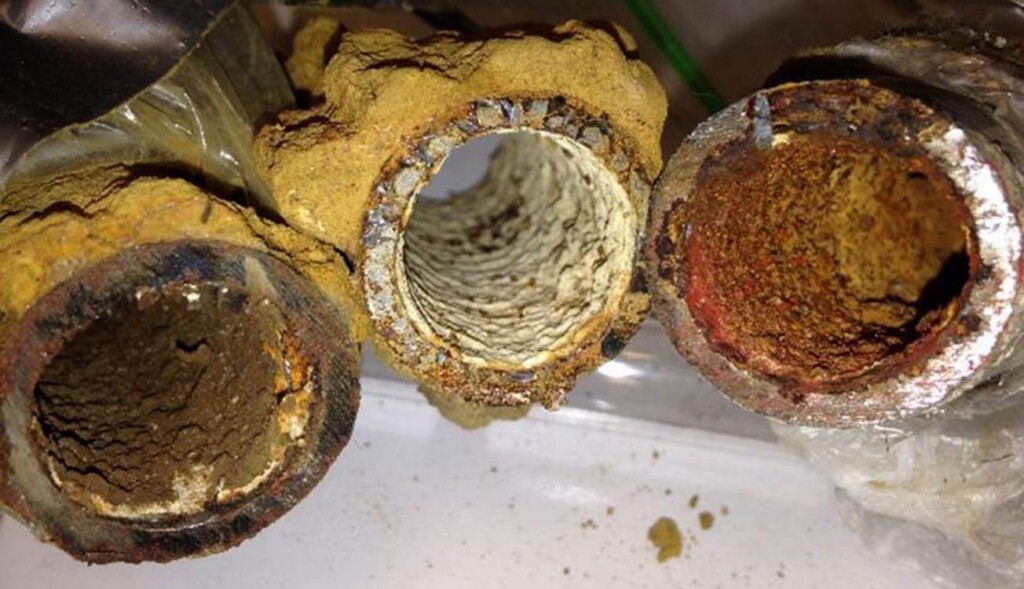
Maasai men gathered in Kenya - credit Helga76, CC 3.0.
Maasai men gathered in Kenya – credit Helga76, CC 3.0.

In Kenya, a gathering of young Maasai tribesmen is taking place that wont happen again for a generation.

In the past, the gathering lasted all year, and required young warriors to sleep and survive in the rough, hunt lions, and learn to fight with spears. The goal was to form the leadership of the clans’ next generation.

Now however, the training camp, called the “Enkipaata,” is cultivating a different kind of clan leadership. The 900 or so young warriors attend for only one month—in line with the school holiday so as not to disrupt education. Spears are replaced with sticks, and while wilderness survival skills are still practiced, so are the skills needed for the tribes to survive the 21st century.

With shrinking grazing rights and climate change altering the patterns of rain and pastures, the Maasai need engineers and lawyers more than lion hunters.

The Enkipaata is formed by selecting the most promising youth from the clans of Maasai people across Kenya and Tanzania. Gathering in Narok County, Kenya, they learn essential Maasai values of respect, leadership, and cultural preservation.

Chief Ole Ngoshoshi of the Irkitoip age group stressed the importance of maintaining cultural practices to avoid losing respect within the community, urging the younger generation to safeguard their traditions.

NEWS FROM THE MARA: Transforming Lion Killers into ‘Lion Guardians’ in Africa

“If you lack respect, there will be disorder among the clans,” he said, according to Africa News. 

The Maasai have always lived close with the land, and the camp includes a training session on reforestation—seen as a necessary skill for the future generations.

MORE INDIGENOUS KNOWLEDGE: Bison Ranchers Return Thousands of Animals to Native Lands and Witness Total Rejuvenation of Ecosystem

At the conclusion of the Enkipaata, a feast was prepared for the attendant clans from the meat of a ceremonial and blessed bull. The graduating class was given the name “Iltaretu,” symbolizing unity and hope, and encouraged to preserve the traditions they just undertook, and pursue education.

SHARE This Tribe Adapting To The Challenges Of The Modern World… 

“Find something you’re passionate about and keep tremendously interested in it.” – Julia Child

Olivie Strauss for Unsplash+

Quote of the Day: “Find something you’re passionate about and keep tremendously interested in it.” – Julia Child

Photo by: Olivie Strauss for Unsplash+

With a new inspirational quote every day, atop the perfect photo—collected and archived on our Quote of the Day page—why not bookmark GNN.org for a daily uplift?

Olivie Strauss for Unsplash+

Good News in History, May 2

Raising a flag over the Reichstag - credit, Public Domain

80 years ago today, the Third Reich surrendered Berlin, the Wehrmacht surrendered en masse, and World War II ended in the West as more than 1,000,000 German soldiers officially surrendered across their positions in Italy, Germany, and Austria. A Red Army soldier was famously photographed draping the flag of the Soviet Union down over the Reichstag. READ a bit more of what happened on May 1-2… (1945)

For 10 Years Running, West Virginia Boasts 5th-Lowest Recidivism Rate Among US States

- credit, Matthew Ansley, Unsplash
– credit, Matthew Ansley, Unsplash

Beyond the lyrics of a certain John Denver song, West Virginia tends to get a bad rap for being impoverished and backward, but this small mountainous state has a secret to success concealed beneath its wooded cloak.

A recent report by Suzuki Law found that West Virginia’s recidivism rate ranks among the lowest in the nation, meaning fewer criminals continue to perform criminal acts after leaving prison than almost anywhere else.

“The impact of recidivism on society is profound, with both economic costs and social implications that affect taxpayers, communities, and public safety,” the report’s introduction reads.

“According to recent studies, 600,000 prisoners are released annually, and 71% return to prison within five years.”

With a rate more than 40% lower than that, West Virginia enjoys the 4th lowest rate of recidivism in the nation, a position it has maintained for an entire decade.

On a separate note, the states which perform better than West Virginia are often equally criticized by coastal elites as being backwards, and include Oklahoma (22.6%) and South Carolina (21%). Virginia’s rate is also lower at 23.5%, and Florida’s is just higher than West Virginia (24.5%).

Similarly, the report found that Reentry Alabama, a post-incarceration preparatory program in the state, managed to drop the recidivism rate to 4% among the participants.

Perhaps these rates seem high—between 1 in 4 or 1 in 5 released prisoners end up re-imprisoned within 5 years. This doesn’t make for encouraging reading on the face of it, but compared to the worst states, it seems heaven sent.

Delaware suffers from a 65% recidivism rate—2 of every 3 released inmates will be back within five years. Wealthy Rhode Island and Colorado each witness a 50% recidivism rate, while 62% was recorded in Alaska by Suzuki, which specializes in criminal defense.

“Our correctional industry leaders and employees have recognized that operating a successful prison system includes preparing the incarcerated population for a productive life outside of the system,” Joe Thornton, former Secretary of the West Virginia Department of Military Affairs and Public Safety, was quoted as saying.

OTHER POST-INCARCERATION NEWS: Georgia State University Hails First Class of Inmate Graduates: ‘A degree to utilize when they come home’

“This effort involves parole and probation agencies, social service providers, work-release employers, and support from the community.”

According to West Virginia Watch, the foundations of this decade of success were laid by Democrat governor Earl Ray Tomblin, and a GOP-controlled legislature, which together made a very conscious decision to identify and employ “scientifically validated” best practices to reduce recidivism rates back in 2013.

MORE POSITIVE PRISON NEWS: Prisons Across the World Are Shaving Days Off Sentences for Every Book Read by Their Inmates

The Justice Reinvestment Initiative passed through Senate Bill 371, explored the best ways of tackling social challenges like “behavioral health and substance abuse” while also establishing “day report centers” that emphasized treatment and recovery rather than penalization and incarceration.

SHARE This Brilliant Statistic From The West Virginia Justice System… 

Tiny New Species of Snail with Unusual ‘Cubist’ Shell Named After Pablo Picasso

Mandatory credit 'Gojšina et al.' via SWNS
Mandatory credit ‘Gojšina et al.’ via SWNS

A tiny new species of snail with an unusual shell was recently discovered in Southeast Asia by some very art-conscious biologists, who decided to name it after painter Pablo Picasso.

Measuring just 3 millimeters, the microsnail’s shell was nevertheless eye-catching, and they came up with the name because of the way its shell seemed to embody the principles of Cubism.

The international team of biologists was led by Serbian PhD student Vukašin Gojšina and his Hungarian supervisor, Dr. Barna Páll-Gergely. Together with local experts and scientists, they were studying snail diversity in Southeast Asia’s forests when the species, previously unknown to science, grabbed their attention.

They explained that, unlike most other snails, Anauchen picasso has rectangularly angled whorls that, according to the scientists, make it look “like a Cubist interpretation of other snails with ‘normal’ shell shapes.”

“Although the shell sizes of these snails are less than 5mm, they are real beauties!” said Dr. Páll-Gergely.

“Their shells exhibit extraordinarily complexity. For example, the aperture—the ‘opening’ of the shell—is armed with numerous tooth-like barriers, which are most probably useful against predators.”

“Furthermore, several of the new species have an aperture that turns upwards or downwards, which means that some species carry their shells upside-down.”

The research team’s findings were published in the journal ZooKeys in a 300-page article that included the descriptions of 46 new species of microsnails from Cambodia, Myanmar, Laos, Thailand, and Vietnam.

BEAUTY IN NATURE: Check Out the Greatest Snowflake Photos Ever Taken With Vividly High Resolution

The apertural barriers and the orientation of the last whorl on the shell were among the primary characters that helped the researchers tell different snails apart.

While many of the new species were collected recently, several, unknown to science until now, were found in the collection of the Florida Museum of Natural History, collected in the 1980s.

OTHER BEAUTIFUL SNAILS: Photographer Unites With Cuban Scientists to Save the World’s Most Beautiful Snail

“It is likely—and in some cases, certain—that the locations where these snails were found have already been destroyed by deforestation and limestone quarrying, which are the major threats to locally endemic land snails in Southeast Asia,” said Dr Páll-Gergely.

SHARE This Snail Shell Art With Your Friends Who Love Collecting Shells… 

No AC Needed in India’s Heat: Inside Gujarat’s Eco-Friendly ‘Cool House’

The Gujarat 'Cool House' - credit
The Gujarat ‘Cool House’ – credit SRDA

Western India is home to one of the hottest deserts on Earth, and the residents of the western states of Rajasthan and Gujarat have traditionally used architecture to keep cool.

Utilizing principles of thermodynamics, one house in the city of Bharuch, where temperatures can hover at 110°F for days during the summer, stays cool all day and all summer without ever needing the air conditioning switched on.

In fact, the building’s interior is a breezy, green, “introverted space” that passively cools the air inside by a whopping 18°F all using simple science.

“We used the direction of the winds, design, and cooling materials to lower the heat of the house,” Samira Rathod, the principal architect of the ‘Cool House’ and founder of Samira Rathod Design Atelier (SRDA), told The Better India reporting on the story.

“The plot had three buildings around it and a road on one side. The only view that the house would have was the neighbor’s building. An introverted house was a good choice in that sense. It is basically one where the house opens up when you go inside it. From the outside, it would look like a rather closed structure,” she explains.

Indeed, it might even be called depressing, as its front door is hidden between two giant, 18-inch thick facades of gray and black. But inside, a design reminiscent of a railroad track sees the rooms divided on either side of a giant split in the house that was built to align with the current of the wind off the ocean.

Bharuch is situated on the Indian Ocean, and despite the scorching temperatures, at various times during the day, a breeze is present throughout much of the city. The narrow slit in the house leverages the Venturi effect, which states that the narrower the space an element must pass through, the faster and colder it becomes.

The principle can be seen in human breath, which through an open mouth emerges hot, but through pursed lips emerges cool. The same effect can be seen in rivers, where narrow channels cause the water to speed up and form rapids, while wide, flat lands cause the water to slow down.

The wind from the sea enters the split and hits an interior courtyard where a pool of water cools it down further. Entering the 10,500 square foot home interior, a second courtyard aids in circling it around to each room, where the family lives with three generations.

DESERT LIVING: Flintstones-like Home is Built Around 200 Million-Year-old Red Rock in Colorado–And is Now For Sale

“The house looks inwards and we have created courtyards with trees so it feels like you are looking outside rather than inside,” said Rathod.

Mirai House of Arches in Bhilwara – credit Sanjay Puri Architects

GNN has previously reported on Indian architecture in this part of the country. Natural designs like envelopes, air channels, and even “wind towers” could, and probably should, become normal designs in parts of the world where temperatures are predicted to rise, such as the southwest United States or Southern Europe.

MORE CLEVER BUILDING DESIGNS: These Ancient Chinese ‘Skywells’ Are Keeping Homes Cool as Green Architects Learn from the Past

In Rajasthan’s city of Bhilwara, a “House of Arches” ensures that no part of the building is exposed to the sun thanks to a building envelope that provides shade and air circulation.

The science lies in the separation of the envelope from the house itself. Even as the rays of the sun heat the envelope, wind and moisture evaporation can make their way into the space between the house and the envelope to reduce the radiative heat that enters the living areas.

SHARE These Beautiful Indian Desert Homes And Their Passive Cooling Design…

Capable of Powering 1.1 Million Homes, the First of 64 Offshore Wind Turbines Rises Above the North Sea

The first of the He Dreiht wind turbines - credit EnBW, released
The first of the He Dreiht wind turbines – credit EnBW, released

The first of 64 gargantuan wind turbines is up and spinning under its own weight in the North Sea, promising the first 15 megawatts of what will become around 1,000 MW which could power a medium-sized city.

EnBW is one of Germany’s largest energy companies, and the He Dreiht offshore wind farm, translated as the “It Spins” wind farm, has been financed without any government subsidies.

“It will play a key role in helping us to significantly grow our renewable energy output from 6.6 GW to over 10 GW by 2030,” said Michael Class, who heads up EnBW’s generation portfolio development.

Believed to be capable of generating 980 megawatts of peak power, it will deliver enough energy to power 1.1 million homes, with each turbine being so large that a single spin of their giant blades could power a house for a whole day, according to Michelle Lewis at Eletrek. 

Depending on conditions, up to 500 workers across 60 vessels will be out building the wind turbines in their remote spot dozens of kilometers from land.

OTHER WIND PROJECTS TO GET EXCITED ABOUT: Novel Merry-Go-Round Wind Turbine: Half the Cost and Better for Landscape Than Giant Towers

Foundations for each turbine were already drilled and laid into the seabed last year, and each turbine will have to be lifted up vertically with large, ship-mounted cranes.

A partner consortium made up of Allianz Capital Partners, AIP, and Norges Bank Investment Management owns 49.9% of the shares in He Dreiht, with the rest owned by EnBW.

SHARE This Gargantuan Wind Project With Your Friends…

“Tact is the ability to describe others as they see themselves.” – Abraham Lincoln

Quote of the Day: “Tact is the ability to describe others as they see themselves.” – Abraham Lincoln

Photo by: Marcos Assis

With a new inspirational quote every day, atop the perfect photo—collected and archived on our Quote of the Day page—why not bookmark GNN.org for a daily uplift?

Good News in History, May 1

William Wilberforce, the leader of the British campaign to abolish the slave trade.

218 years ago today, the Slave Trade Act of 1807 entered into force in Great Britain, abolishing the British participation in the Transatlantic Slave Trade and pressed other nation states to abolish their own slave trades. Sometimes in history, the abandonment of a previous widespread practice occurs naturally after its practice diminishes, but the Slave Trade Act was passed at a time when slavery was still an incredibly lucrative business, demonstrating, at least partially, the resolve of the abolitionists in Britain who lobbied and campaigned for 18 years for a bill. READ more… (1807)

Surfer Conquers Biggest Waves in the World Despite Only Having One Leg

Pegleg Bennett during a surf session at Perranporth Beach - credit, William Dax, SWNS
Pegleg Bennett during a surf session at Perranporth Beach – credit, William Dax, SWNS

‘Pegleg’ Bennett was born with a birth defect that led to the amputation of his foot when he was a baby, but the 55-year-old never let it impede the pursuit of his passion: surfing.

The father of three has traveled the world surfing, making it to some of the most famous big wave surfing spots in places like Indonesia, Hawaii, Australia, and Portugal. He’s also represented his country in a para-surfing championship, and pioneered some best practices in making prosthetic legs for surfers.

Bennett was born with the ankle of his left leg missing and his foot looking twisted and mangled.

At the hospital, his parents were given the choice of amputation—which the doctors said would actually ensure he had better quality of living.

“The ocean is my happy place,” said Bennett, who legally changed his name to Pegleg—a childhood nickname—in 2016. “When I’m riding a wave nothing else matters, nothing else is there—it is just me and that wave and feeling that glide and that ride.”

He told the British media outlet SWNS that he grew up a “water baby” and given that his father was a big swimmer, the progression to surfing came naturally, despite his missing foot.

He describes “harassing” the UK’s National Health Service for years, “and eventually they gave me what they call a ‘beach activities leg’ and then my surfing progressed at a phenomenal rate after that.”

Pegleg Bennett during a surf session at Perranporth Beach – credit, William Dax, SWNS

After learning to surf on it, Bennett drilled holes in that first prosthetic leg to improve its functionality, and this led to a phenomenal surfing career.

“There is a big wave spot in Portugal called Nazaré,” he said, at the start of listing every spot he’s enjoyed. “I have also done the entire European coast, I have driven the Moroccan coast right down into the occidental Sahara, Hawaii, all over the States, Indonesia, Japan. I have surfed on the Arctic circle.”

His new leg, made from carbon fiber and titanium, has taken his surfing to a “new level”, he said.

AQUATIC AMPUTEES: This Cheap, Amphibious, 3D-Printed Prosthetic Means That Amputees Can Now Enjoy the Water Without Stress

“I have got a surf specific leg—it’s got a titanium ankle joint in it so I can stand on the board a lot better than I used to.”

For his whole adult life, Bennett has been at the crest of the wave of para-surfing, which has undergone a revolutionary transformation.

The turning point came in 2015 when the International Surfing Association (ISA) hosted the first Adaptive Surfing World Championships—bringing together surfers from all the nations.

Since then, the sport has exploded in popularity with the adaptive surfing, or para-surfing, community becoming the fastest-growing segment of the surfing world. Team England para-surfing team is now ranked seventh in the world, led by Bennett’s instruction and inspiration.

He explained that within the para-surfing community there are people with all kinds of disabilities.

“I coached someone with cerebral palsy, MS, I have got some blind guys that I coach, obviously some amputees,” he said. “If somebody has got a disability and they want to get in the ocean and catch waves, I can make it happen.”

OTHER SURFING STORIES: Olympic Kite Surfer Saves Drowning Woman in Dramatic Video – WATCH

“I don’t believe in barriers. I believe in we can do it.”

Although para-surfing narrowly missed out on the 2028 Los Angeles Games, there is strong hope for its inclusion in the Paralympics in Brisbane in 2032, and the opportunities that could bring for extra funding.

SHARE Pegleg’s Inspirational Story With Your Friends who Need A Pick-Me-Up…

Taylor Guitars Made From Condemned Urban Trees and Imperfect Ebony are Saving Money, Carbon and the Amazon

Photo: GWC for GNN
File Photo by GWC for GNN

Guitar manufacturers like Taylor and Gryphon are utilizing native California trees marked for removal in the state’s urban areas to birth a new generation of acoustic instruments.

The motive: helping musicians and consumers dodge the increasing prices for prized woods needed to make guitars, as well as helping memorialize condemned native trees in the state.

If you look at the product catalogue for any major guitar retailer, you see the same few words mentioned over and over: rosewood, ebony, mahogany.

These are also the words you may see while reading news reports about the ongoing deforestation in the Amazon.

The sound quality of the world’s instruments depend on these rainforest trees—and demand for guitars is expected to increase.

So, what about a guitar made from shamel ash, red ironbark, or black acacia?

These are three species now being used by Taylor Guitars and Gryphon Stringed Instruments, which are commonly found growing along sidewalks and median strips all over Central and Northern California.

Playing a lead role in this movement is West Coast Arborists (WCA), a family-run business of tree surgeons that manage urban trees for 320 towns and municipalities, public agencies, and private communities in 4 different states.

WCA believes that trees in cities do more than just offer shade and beauty, they are means of connecting to a fundamental Earth circuitry amidst areas covered in concrete. That’s why for every tree they’re instructed to remove, they plant two.

WCA also believes that a large urban tree deserves to have a second life, and that these species which shade us and our dogs offer quality, craft-ready lumber.

In fact, a quarter-century ago, reports CBS in San Francisco, WCA created an urban wood recycling program called Street Tree Revival.

Now, if a large tree is marked for felling, its dimensions and location will be uploaded to a central database that can be accessed by craftsmen in the area, who can then buy the wood from the tree.

Bob Taylor, who founded Taylor Guitars 50 years ago, has identified several species that possess the acoustic properties necessary for use in guitars.

“We developed a system where our IT department could use any time [sic] a list comes out with trees that are going to be removed. And they see a shamal ash is identified, it automatically sends a notification to me at area manager and to our Street Revival people that, ‘Hey, here’s a possible tree we can send to Taylor,'” said Tim Patterson, a manager with WCA.

Ebony and irony

That’s not all he identified, however. As good an idea as the use of native California trees in making instruments was, Taylor found that ebony, one of the woods traditionally used to make guitar bridges and fretboards is harvested with extremely wasteful practices; with about one tree used for every 6-10 cut down.

The reason? Not all ebony trees found in the Congo Basin contain the black wood that we associate with guitar woods. In Africa, where the trees are harvested, loggers don’t know which ones possess the jet black wood. If after felling, they find the interior is streaked with brown, they leave it to rot.

Taylor’s use of native California trees, such as red ironbark, are about providing alternatives to this kind of logging—as much as it is about saving consumers money.

During a visit to the jungle, Taylor told his Cameroonian contacts that he would buy the streaked wood.

THE ART OF TREE-KEEPING:  Man Cultivates a Giant Mango Tree with Each Branch Growing a Different Variety of Fruit–and There Are 300

“But they said ‘Sir you can’t sell that wood!’ They’re used to decades—a century, of only black wood, and so are the consumers,” Taylor told CBS in a separate story.

“Now, if you buy a Taylor guitar, that’s the wood you’re going to get.”

Ironically, that streaked wood the Cameroonians said Taylor wouldn’t be able to sell is gorgeous, and very similar to natural wood grains which are sold by instrument manufacturers specifically for its aesthetic taste. Mechanically, it’s exactly the same as totally black ebony.

YOU MAY ALSO LIKE: Guitar Center is Replacing Instruments Lost in L.A. Wildfires With New Initiative

Back in California, CBS got to accompany WCA to the felling of one such tree—a 30-foot-tall shamal ash that was pruned, cut, and gently lowered to the ground via a crane. The tree had to be removed because it posed a risk to a pair of utility lines, and was then taken to WCA’s facilities to be milled and shipped off to Taylor or Gryphon.

“The topic does not even come up, you know ‘what this wood is and where did it come from.’ Instead, it’s like “Wow, this sounds great, and it looks beautiful,” said Richard Johnson, one of the founders of Gryphon.

WATCH the story of WCA and Taylor’s ebony inspiration below from CBS News… 

SHARE This Awesome Story Of Recycling And Sustainability In Music With Your Friends…

City’s Experiment with Reusable Cups at Chain Restaurants Is Smashing Success as Diners Return Them All Over Town

Petaluma reuseable cups - credit, NextGen Consortium
Petaluma reuseable cups – credit, NextGen Consortium

Last July, GNN reported on the California city of Petaluma and its experiment collaborating with local restaurants to create a city-wide return-and-reuse beverage cup program.

At the time, the plan was a 3-month trial: the results of which are in. It was a home run.

With major chains like Starbucks and Taco Bell joining in alongside local mom-and-pop stores, the program ensured customers wouldn’t be charged a penny more for the reusable, but were merely asked to deposit their cup in one of many purple bins around the city center.

“I think this was a very exciting thing to be part of to be the only city in the country to do this,” proclaimed Ashley Harris, a manager at the Petaluma branch of Coffee & Tea Company.

CBS News in the Bay Area reported on the project’s launch, and is now happily trumpeting its success. Set up by the Closed Loop Partners investment firm’s Center for the Circular Economy, the program aimed to cut back on the 50 billion disposable drink cups used by Americans every day.

The program’s organizers, NextGen Consortium, employed the local firm Muuse to provide the collection, washing, and distribution of the cups.

“I really liked it. There were a million places where you could put the cup back,” resident Kadi Newlan told CBS.

According to a report published by NextGen, over 220,000 cups were used and returned in the city of 60,000. Customers were not required to return the cup immediately after first use, and they could carry it around and use it, for example, like a refillable coffee cup.

With a vibrant purple exterior, the cups could be easily picked out of waste streams in case someone tossed them in with the normal garbage or recycling. The bins, advertisements, cups, and stations inside restaurants all shared the same color to help connect the infrastructure in people’s minds.

And this helped the project massively. NextGen Consortium’s report showed that 83% of customers knew of the program’s existence, of whom 88% knew how to return the cup, and 80% wanted the program to continue, something the owner of a local slushie and ice cream shop, Once Upon A Slush, noticed himself.

CUTTING OUT THE WASTE: Pee From Runners at the London Marathon is Going to Be Turned into Fertilizer for Wheat

“We haven’t seen that level of community engagement, awareness, understanding, satisfaction, and pride. Petaluma was very proud of the project,” Carolina Lobel, senior director at the Center for the Circular Economy, told CBS.

The experiment is over, and most Petalumans are back using either disposable drink cups or their own reusable ones, and both the Center and Consortium are left to decide what to do with the knowledge.

MORE CIRCULAR ECONOMY STORIES: Scientists Are Making Jet Fuel from Landfill Gas Aiming to Launch Circular Economy

Given that Petaluma business leaders like Harris hope to see the project become permanent, Lobel said they’re investigating how to do just that—by turning over the knowledge and materials to private partners.

WATCH the report’s success below… 

SHARE This Inspiring Success Promising City-Wide Sustainability With Your Friends…

Electricity Captured from Falling Rain Conjures the Ultimate Picture of Tropical Sustainability

By Ann Fisher, CC license

Scientists in Singapore have broken a long-standing limitation on the ability to generate electricity from flowing water, suggesting that another elemental force of nature could be leveraged for renewable electricity: rain.

With the simplest and smallest scale test setup, the team could power around 12 LED lightbulbs with simulated rain droplets flowing through a tube, but at scale, their method could generate meaningful amounts that could rival rooftop solar arrays.

Singapore experiences significant rainfall throughout the year, averaging 101 inches (2581 millimeters) of precipitation annually. The idea of generating electricity from such falling water is attractive, but the method has long been constrained by a principle called the Debye Length.

Nevertheless, the concept is possible because of a simple physical principle that charged entities on the surface of materials get nudged when they rub together—as true for water droplets as it is for a balloon rubbed against the hair on one’s head.

While this is true, the power values thus generated have been negligible, and electricity from flowing water has been limited to the driving of turbines in hydropower plants.

However, in a study published in the journal ACS Central Science, a team of physicists has found a way to break through the constraints of water’s Debye Length, and generate power from simulated rain.

“Water that falls through a vertical tube generates a substantial amount of electricity by using a specific pattern of water flow: plug flow,” says Siowling Soh, author of the study. “This plug flow pattern could allow rain energy to be harvested for generating clean and renewable electricity.”

The authors write in their study that in existing tests of the power production from water flows, pumps are always used to drive liquid through the small channels. But the pumps require so much energy to run that outputs are limited to miniscule amounts.

ALSO CHECK OUT: Another Study Shows Incredible Results of Pairing Solar Panels With Agriculture: ‘Getting more from the land’

Instead, their setup to harness this plug flow pattern was scandalously simple. No moving parts or mechanisms of any kind were required. A simple plastic tube just 2 millimeters in diameter; a large plastic bottle; a small metallic needle. Water coming out of the bottle ran along the needle and bumped into the top section of the tube that had been cut in half, interrupting the water flow and allowing pockets of air to slide down the tube along with the water.

The air was the key to breaking through the limits set by the Debye Length, and key to the feasibility of electricity generation from water. Wires placed at the top of the tube and in the cup harvested the electricity.

MORE RENEWABLE ENERGY ALTERNATIVES: Jet Engine Exhaust is Turned into Electricity to Power Dallas International Airport

The total generation rate of greater than 10% resulted in about 100 watts per square meter of tube. For context, a 100-watt solar panel can power an appliance as large as a blender or ceiling fan, charge a laptop, provide for several light bulbs, or even a Wi-Fi router.

Because the droplet speeds tested were much slower than rain, the researchers suggest that the real thing would provide even more than their tests, which were of course on a microscale.

SHARE This Awesome Scientific Breakthrough With Your Friends… 

“Never retreat. Never explain. Get it done and let them howl.” – Benjamin Jowett

Quote of the Day: “Never retreat. Never explain. Get it done and let them howl.” – Benjamin Jowett

Photo by: Nghia Le

With a new inspirational quote every day, atop the perfect photo—collected and archived on our Quote of the Day page—why not bookmark GNN.org for a daily uplift?

Nghia Le

Good News in History, April 30

Hydrogen atomic orbitals at different energy levels. The more opaque areas are where one is most likely to find an electron at any given time - CC 4.0.

128 years ago today, J. J. Thomson announced his discovery of the electron as a subatomic particle, over 1,800 times smaller than a proton (in the atomic nucleus), at a lecture at the Royal Institution in London. It put to rest a long history of experimentation seeking to determine whether or not a “cathode ray” as the electron was first studied, was a ray or a wave. Thomson discovered that, in fact, it was neither. READ more about this groundbreaking discovery… (1897)

More Than 90% of Schools in England Ban Smartphone Use, 13 US States Have Already Taken Action

- Getty Images for Unsplash+
– Getty Images for Unsplash+

Without a government body to legislate the result, UK education authorities have discovered that over 90% of national schools have instituted smartphone bans, a measure still being debated by industry members and scientists.

Representing a triumph of distributed sovereignty, a survey of more than 15,000 schools found that 99.8% of elementary schools and 90% of middle schools had instituted some form of ban, the Guardian reports.

The paper further claimed that education leaders in the UK have largely supported school autonomy and guidance rather than government regulation on the question of smartphones, and the schools seem to have used that autonomy quite decisively.

Current Education Secretary Bridget Philipson said that the results of the survey represents “comprehensive evidence,” that “shows our approach of backing headteachers to implement bans in their schools is working.”

Individual school action has showed before that prohibiting smartphone use in schools, or at least while classes are in session, can improve student performance. Some classes used tablets and phones as teaching materials, and such usage wasn’t included in the survey findings of device usage.

“A lot of this is about a battle for attention, a battle for focus and concentration. It’s not just about having your phone out and using it, it’s the mere presence of the phone,” Tom Rees, chief executive of the Ormiston academies trust, one of the largest private school businesses in the country, told the Guardian. 

“There’s evidence that tells us that even if your phone is in the same room, it could be in your bag or pocket, your brain is leaking attention, still thinking about it and being drawn to it, wondering if there has been a notification on it and what it might be.”

Ormiston was the first academy chain to go smartphone-free,

Justine Elbourne-Cload, co-chair of the St Albans primary schools consortium, the first institution in the country to implement a total smartphone ban for under-14 age groups, said that parents’ reactions had been “phenomenal.”

“They are really onboard. Parents are crying out for that support.”

In the United States, policies on phone usage are being left up to the states, and several have already implemented some forms of restrictions.

ALSO CHECK OUT: Since 1968 French Teachers Have Come to Louisiana Classrooms to Preserve French Language Through Immersion

In Delaware, Pennsylvania, and Arkansas, governments have allocated grant money to any school district that wants to begin controlling smartphone and device usage by closing them away in secure pouches or boxes at the beginning of lessons.

Florida and California have passed prohibitions already, with the latter mandating its effect by the end of the next school year (July 1st). Ohio, Virginia, Minnesota, Indiana, and Louisiana have all passed measures that compel schools to come up with their own programs and methods for reducing, controlling, or eliminating smartphone and device usage during school hours or in classrooms.

SCHOOL PERFORMANCE: Adding 70 Windows to Illinois School Improves Student Wellbeing and Performance, Confirming Studies – LOOK

Several other states, including Washington and Alabama, have taken a lighter touch, passing non-binding measures that encourage schools to take action, rather than mandating it.

“The research is clear: Reducing the use of cellphones in class improves concentration and learning, improves mental and physical health, and reduces pressures caused by social media,” said Washington schools superintendent Chris Reykdal in an official guidance document.

SHARE This Movement Toward Device-Free Classrooms… 

Team of Tradesman Go ‘DIY SOS’ and Transform Home for Disabled Dad for Free

(Left to right) Andrew Little, project lead, Carl Hickey, and Stuart Barr who donated their time to help build aa extension with charity Band of Builders - credit, SWNS.
(Left to right) Andrew Little, project lead, Carl Hickey, and Stuart Barr who donated their time to help build an extension with charity Band of Builders – credit, SWNS

A charity in the UK organized a team of volunteer builders to add an extension onto the house of a disabled man who’s been forced to sleep in his dining room for 3 years.

58-year-old Paul Kitterman hasn’t been able to walk since getting an abscess on his back three-and-a-half years ago, but without a bedroom on the ground floor, he’s had to sleep in the dining room.

But now, thanks to a team of volunteer builders, gathered together by the charity ‘Band of Builders,’ Paul will have a bedroom and bathroom of his own.

The team, of at least 25 laborers, started building the extension to the three-bed home home in Addlestone, Surrey, that Kitterman shares with wife Sasha, their son, and Paul’s mother-in-law, in March 2025.

The project was labeled by the English media outlet SWNS as a “DIY SOS” after a famous British television show of the same name.

“The first night was the best sleep and the best shower ever,” said Kitterman, speaking with SWNS.

“I can’t thank everyone enough—the volunteers from Band of Builders for giving their time and expertise, and all the builders’ merchants who have donated the materials… It’s overwhelming to realize that people would do this for me.”

Kitterman felt an excruciating pain in his back in October 2021, and after developing a fever and collapsing repeatedly, he was taken to St. George’s hospital. He was found to have an abscess on his spine, which required surgery to remove that resulted in sepsis and pneumonia.

Paul Kitterman, who has had an extension built by Band of Builders – credit SWNS
The extension built by Band of Builders – credit SWNS

He was put in an induced coma for a week, and upon waking, doctors said he wouldn’t be able to walk again because the abscess had crushed his spinal cord.

After 6 months of recovery and rehab, Kitterman went home but has been confined to the downstairs where he sleeps on his hospital bed in the dining room.

Sasha contacted Band of Builders—a charity which pulls together volunteers and donations for projects to help construction-industry workers battling illness or injury—while he was still recovering in the hospital.

VOLUNTEERING TO BUILD: Legions of Amish Come to Help Rebuild NC Town: ‘It’s Fun Making a Difference’

They agreed to come and help in March, and put out a call for volunteers to work on the extension. The volunteers work for free and all the materials are donated. Paul estimates the project has a market value of nearly $200,000. Friends and family raised over $25,000 to put towards the work.

“I still can’t believe that all these people are turning up just to help me—this makes me feel very lucky!” said Kitterman. “This will make a massive difference to my life. I think things will feel a bit more normal.”

– SWNS

Tim Winstanley, senior brand manager for DeWALT, a company which has contributed to the project, said that when he heard about Kitterman’s situation “we knew this was a project that we wanted to help with.”

“Our team is excited to donate their time to the project, alongside the tools required to complete the build, as we all know it will make a real difference to Paul’s life, and that of his family.”

Pro bono work from professionals has been in the news feed at GNN recently, with a story of a surgical team donating time and expertise to help deliver a baby grown inside a transplanted womb in March followed by the story of a local landscaping business that built a garden retaining wall for an elderly couple for free after hearing they were scammed by another contractor.

SHARE This Great Story Of Generosity And Compassion For A Man Who’s Lost So Much…