












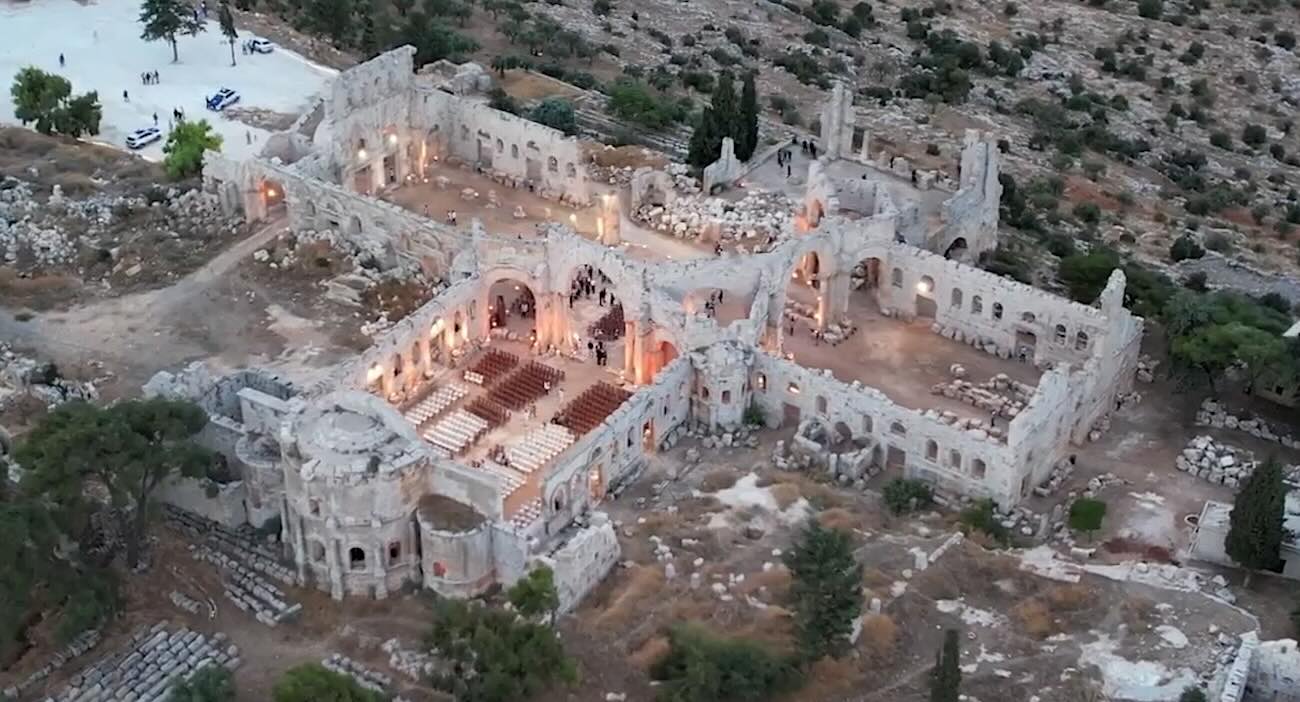
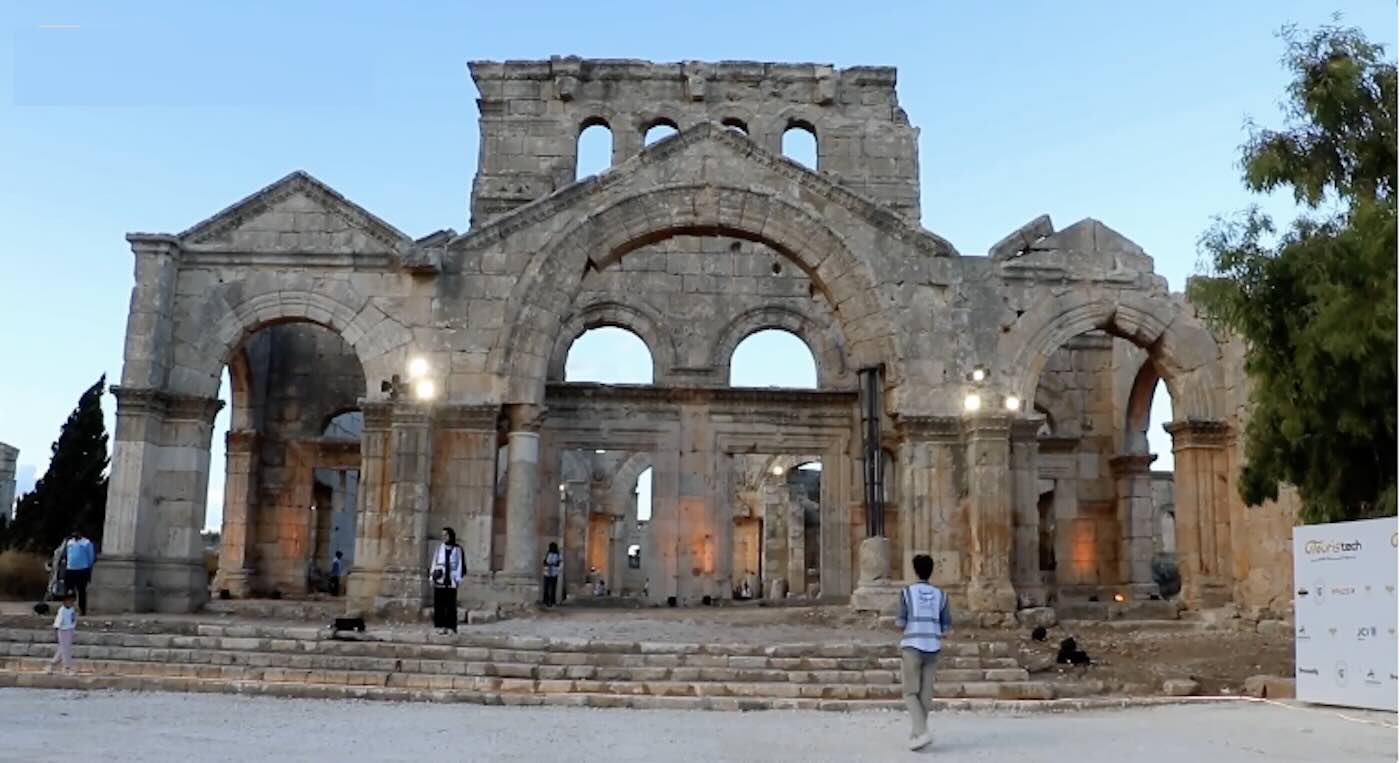
A 5th-century Christian heritage site has reopened to visitors in Aleppo, Syria, after rehabilitation, restoration, and clearing the remnants of war.
Syria’s Directorate-General of Antiquities and Museums officially reopened the Saint Simeon church complex on October 2 with a ceremony, welcoming visitors after 14 years of closure.
Restoration of the Byzantine-era site included clearing landmines, reinforcing fragile structures, and repairing damaged structures and facilities.
The reopening is part of the government’s plan to capitalize on the exceptionally rich history and religious heritage of the country and boost international tourism “from Damascus to Palmyra”.
The site had been damaged during Syria’s civil war, including in a 2016 airstrike, and later by the 2023 earthquake.
The complex was originally built to honor Saint Simeon Stylites, who sought prayerful isolation by parking himself atop a tall pillar for 37 years until his death in 459—believing he gained spiritual proximity to God (while his followers brought him food and water—and carried away the saint’s human waste in a bucket—using a ladder attached to the stone pillar).
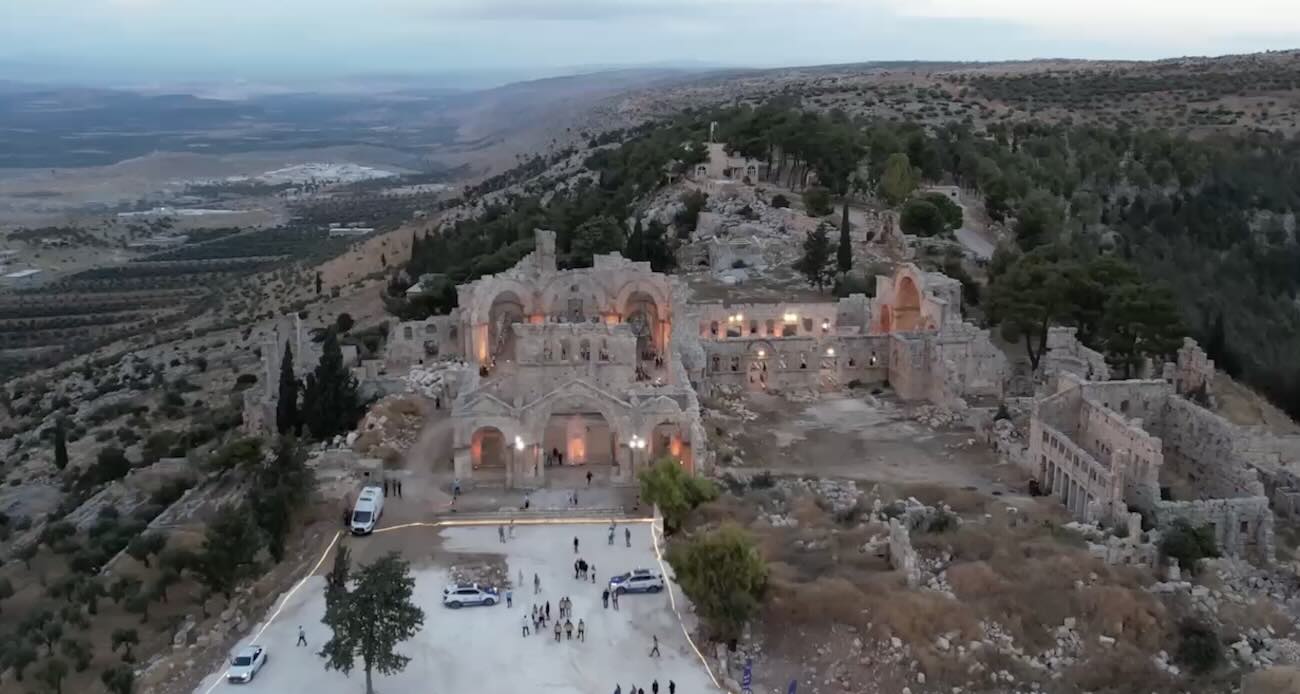
Following his death, the Byzantine Emperor Zeno commissioned the construction of a massive sanctuary (built between 476 and 490 AD) to accommodate the thousands of pilgrims who flocked from across the Christian world to seek blessings.
At the dead center of the octagonal rotunda sits the boulder-like base of Saint Simeon’s original column.
Over the centuries, pilgrims chiseled away at the pillar for relics, reducing it from its original 15-meter height (49 feet) down to a remaining three-meter (9-ft) stub. (See the gorgeous footage in the video below…)
New pilgrimage routes were added during renovation leading to the mountaintop complex.
Significance of the site
Part of the UNESCO World Heritage-listed Ancient Villages of Northern Syria, it is one of the oldest surviving church complexes, founded in the 5th century. Its size was not surpassed by a Christian church until the construction of Hagia Sophia was finished in 537.
Born in a mountain village, Saint Simeon entered a monastery at the age of 16, but he was judged to be unsuited for monastic life due to his extravagantly severe denial of physical pleasures. He attempted to live the life of a hermit ascetic in the wilderness, but his feats of physical endurance and self-denial attracted pilgrims seeking religious instruction and others who became devotees.
In an effort to escape from such distractions, he resolved to live on a small platform atop a 3-meter column. The height of the column was raised over time to 18 meters. From his perch, Simeon preached twice a day to the crowds who gathered to witness this spectacle of self-mortification.
The ladder also allowed messengers to bring written notes to Simeon, and pick up letters he wrote to his followers. (Check out the video, especially at the end, capturing the scene at night with the church all lit up…)
SHARE THE SITE w/ TRAVELERS AND PILGRIMS By Sharing on Social Media…