














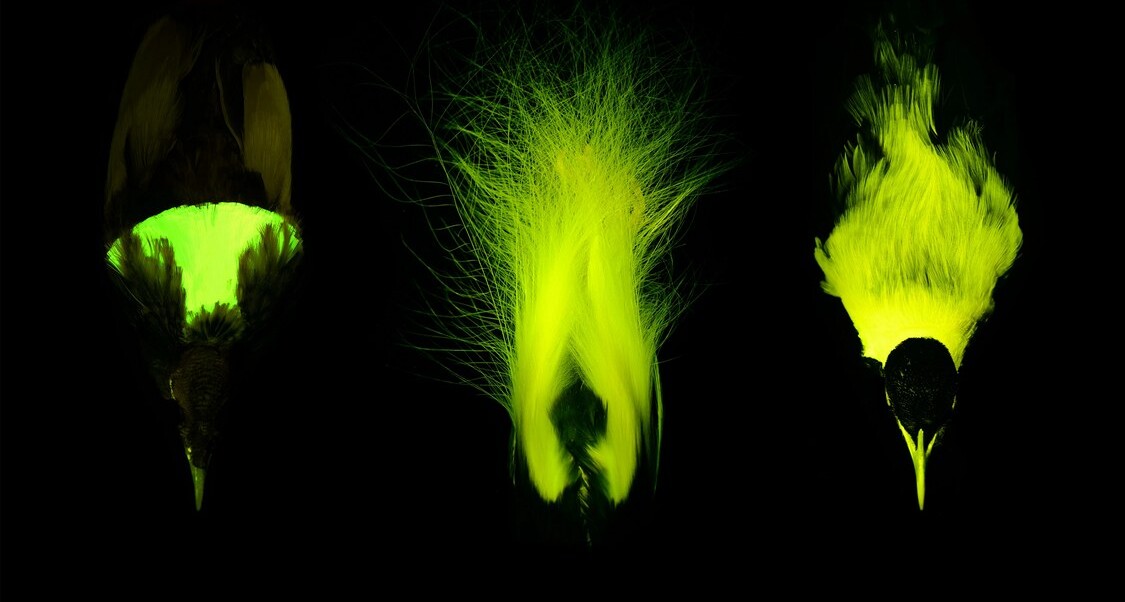
Birds-of-paradise have long dazzled us with their incredibly vibrant and varied plumage, but researchers studying the group have recently made an even more incredible discovery.
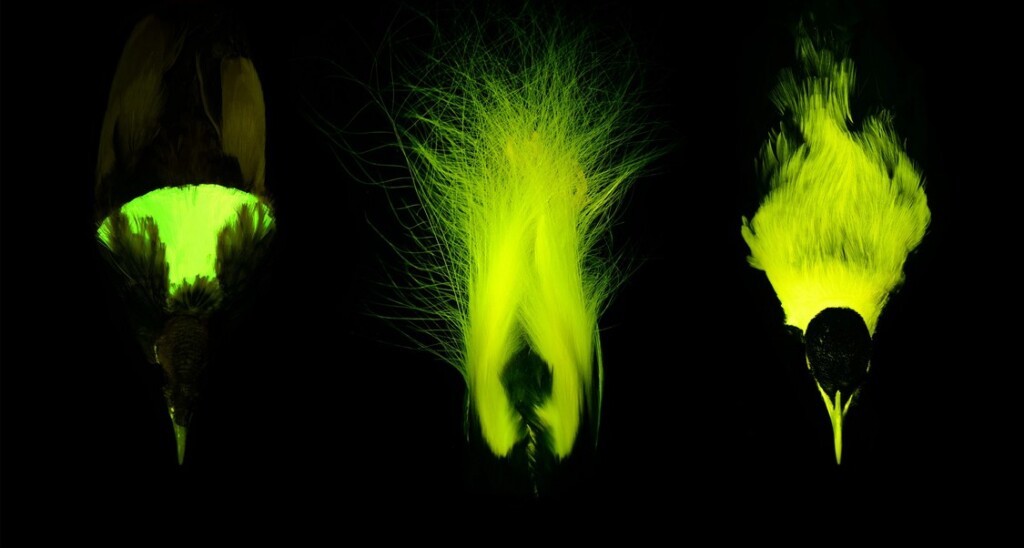
Plumage on 37 of 45 birds-of-paradise species emit biofluorescence meaning molecules inside the feathers absorb UV light and release it as a yellow-green glow.
From long spindly plumes, to bright crowns and fluffy patches on the breast and shoulders, or even feathers so black they absorb light similar to a black hole, birds-of-paradise, found throughout the islands of Australasia, are among the most demonstrative show birds in the world.
Why, then, would their plumage need even more razmataz? That’s what ornithologists are wondering after a team of ichthyologists (fish scientists) revealed that the majority of birds-of-paradise emit biofluorescence from one or sometimes two or three parts of the body.
The ichthyologists were studying biofluorescence in fish, and while sequestered among the collections in the American Museum of Natural History, they got to wondering what other animals displayed this trait.
Using a UV light in a dark room, drawer after drawer of collected specimens of birds-of-paradise shone just like glow-in-the-dark stars under the scientists’ inspection.
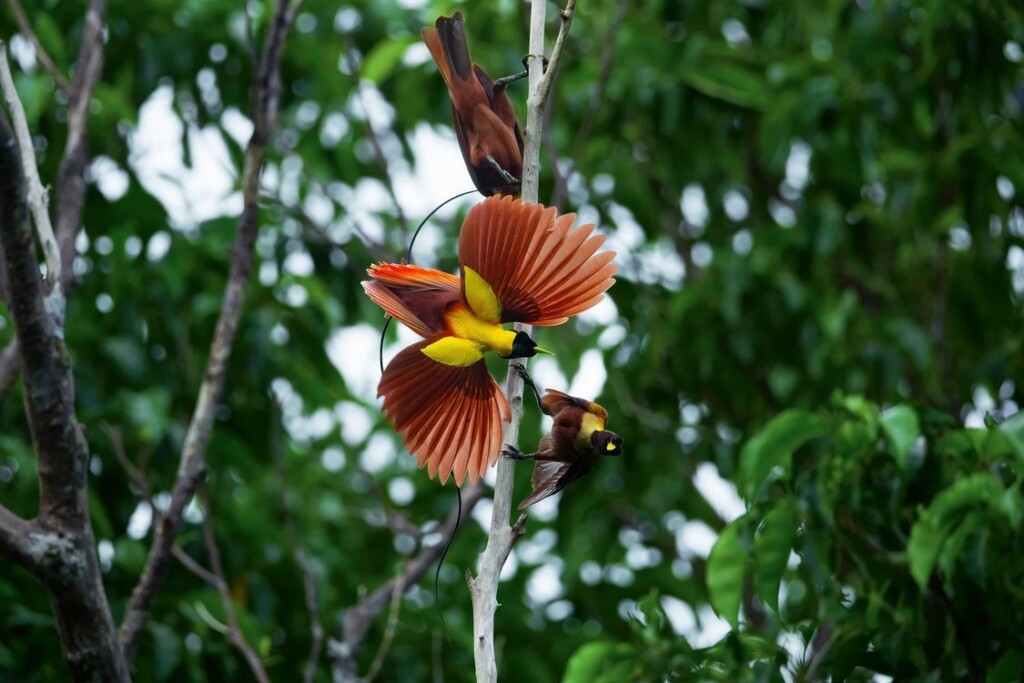
“It could just be that the biofluorescent portions are helping enhance those displays even more,” hypothesizes lead study author Rene Martin, a fish biologist at the University of Nebraska-Lincoln.
Further fascinating discoveries followed the first fascinating feathered discovery—that birds-of-paradise had the biofluorescent trait in their mouths as well, and that the 8 species of birds that were noted to be monogamous had much more muted biofluorescence than those other species that paired up every year.
Birds have one more photoreceptor in their eyes than humans do. This allows them to see more colors than us. Study co-author Emily Carr, a PhD student at the American Museum of Natural History, told the Audubon Society that birds-of-paradise also have a small drop of oil in their eyes that filter out certain wavelengths of light that might allow them to see the biofluorescence even more strongly.
BRILLIANT BIRDS: Hummingbird Chicks Observed for the First Time Pretending to be Caterpillars to Avoid Being Eaten
As to why the feathers glow at all, scientists are guessing it has to do with aiding the well-documented mating displays of various species, or even to establish some sort of social dominance.
“To me, the interesting part is that it’s so widespread throughout the group,” Edwin Scholes, who founded the Birds-of-Paradise Project at Cornell Laboratory of Ornithology and was not involved in the study, told Audubon. “It’s not just all tail feathers or all flank feathers or anything specific—it’s pretty much all over the board.”
WATCH The BBC’s Classic Planet Earth footage of the birds-of-paradise…
SHARE This Impressive Plumage And Its More Impressive Secret On Social Media…