













This week the Empire State Building was illuminated in gold to celebrate NASA’s Voyager 1 spacecraft passing one light-day away from Earth.
It now takes the farthest man-made object from Earth 24 hours to send a signal back to NASA headquarters.
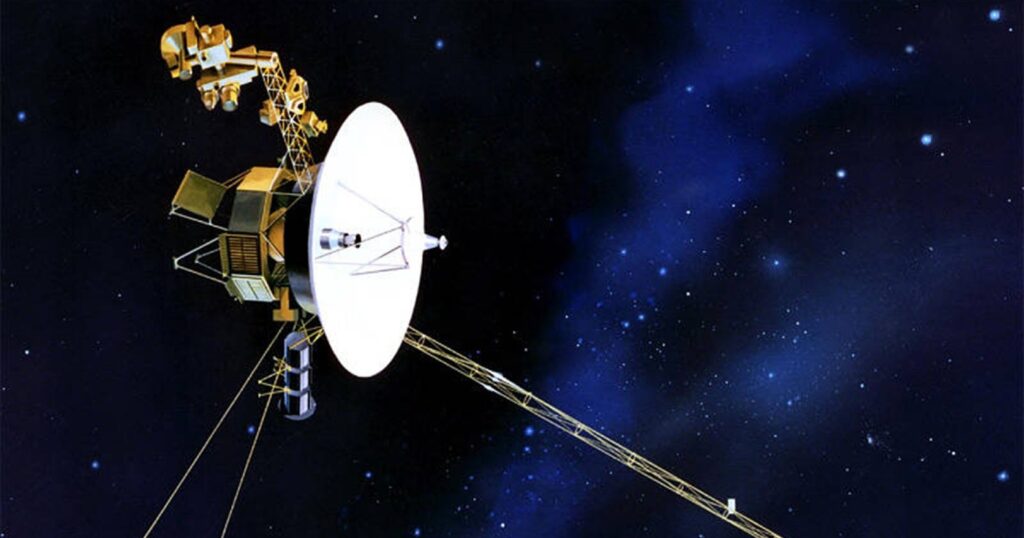
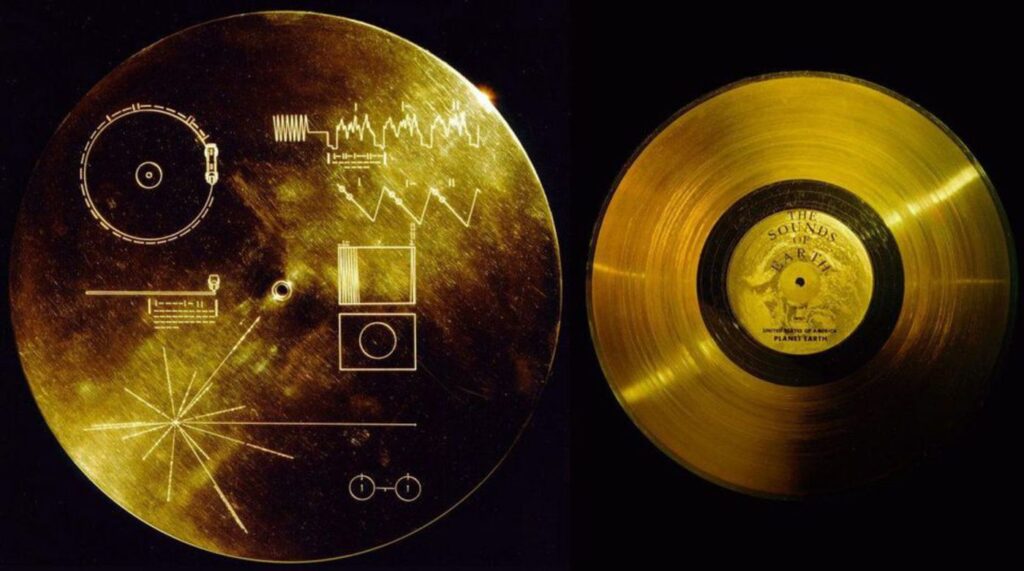
“The color gold is emblematic of the gold-plated copper phonograph record that is flying on Voyager,” NASA wrote on Tuesday. “The record contains sounds and images selected to portray the diversity of life and culture on Earth.”
The 12-inch gold-plated copper disc is intended as a message from humanity to any civilization that may encounter it. It includes 115 images, natural sounds, music from different cultures and eras, and spoken greetings in 55 languages.
Voyager 1 was launched in 1977 to study Jupiter and Saturn. It crossed into interstellar space in 2012 and continues to send data back to Earth nearly 50 years after its launch.
On Wednesday, the spacecraft passed one light-day from Earth: the distance light travels in 24 hours, or about 16 billion miles (26 billion kilometers).
NASA will be celebrating the milestone today because of the very fact that it will take one day to receive the signal sent on Wednesday.
For its part, Voyager seems to have decided to celebrate by relaying that it has a problem: something it has been wont to do of late; though considering its age and the distance it has traveled, it can hardly be surprising.
It was on Tuesday that the Voyager 1 mission team became aware that the spacecraft had stopped sending science and engineering data, though ground-based antennae were able to find its carrier signal.
The presence of a carrier signal means that Voyager 1’s Attitude and Articulation Control computer is doing its job to keep the spacecraft pointed at Earth and that its antenna, as well as its broadcast equipment, still work. The lack of data suggests the issue is with the onboard computer responsible for collecting the data from the spacecraft’s various subsystems, including science instruments, and putting it into the right format to be transmitted to Earth.
GNN has previously reported on the vagaries involved with trying to keep a machine operational 15 billion miles away, and NASA’s team at the Jet Propulsion Laboratory have had to come up with several creative solutions. By March 2024, Voyager had had almost all of its instruments deactivated to save power.
“We never know for sure what’s going to happen with the Voyagers, but it constantly amazes me when they just keep going,” Suzanne Dodd, Voyager’s project manager, told CNN in April of that year.
The question now will be whether Dodd and her team can continue to communicate with the probe and keep it running until 2036 when it will pass beyond the reach of even NASA’s Deep Space Network, and beyond all reach of communications.
SHARE The News And Celebrations For Voyager’s Incredible Milestone…