














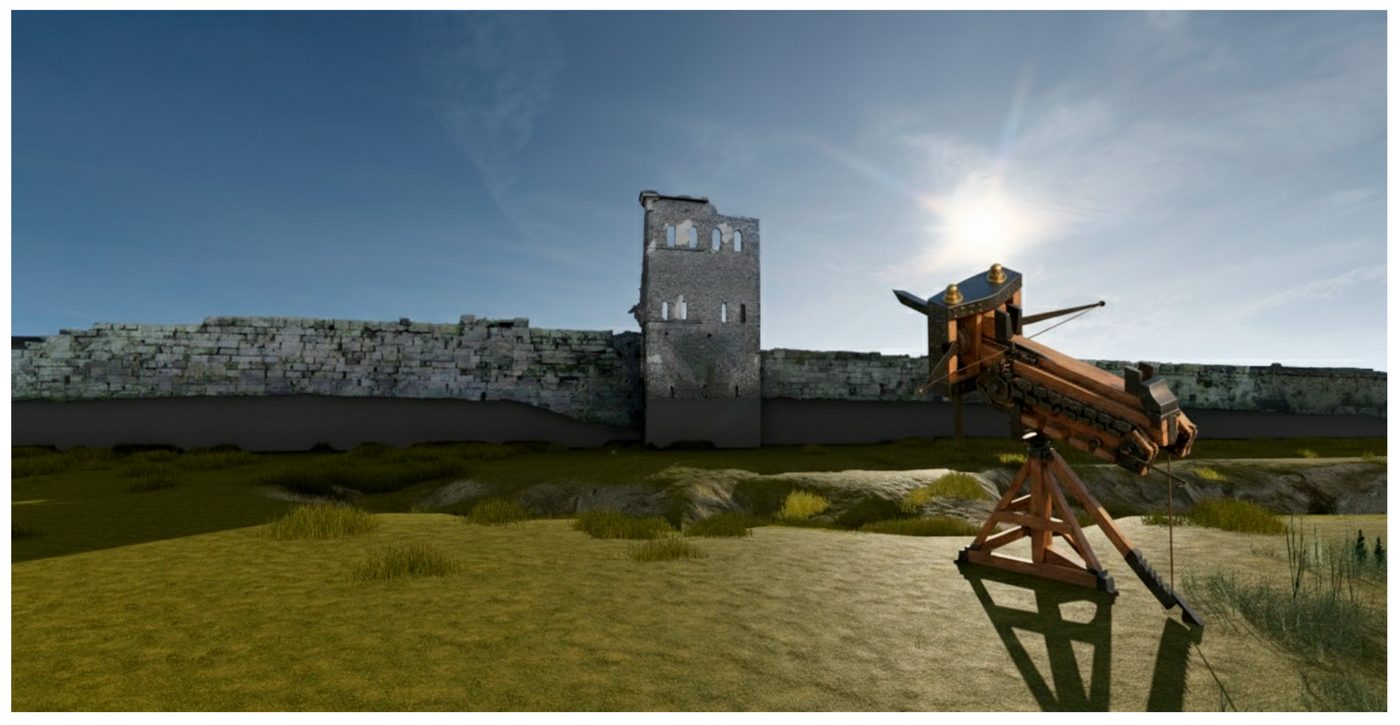
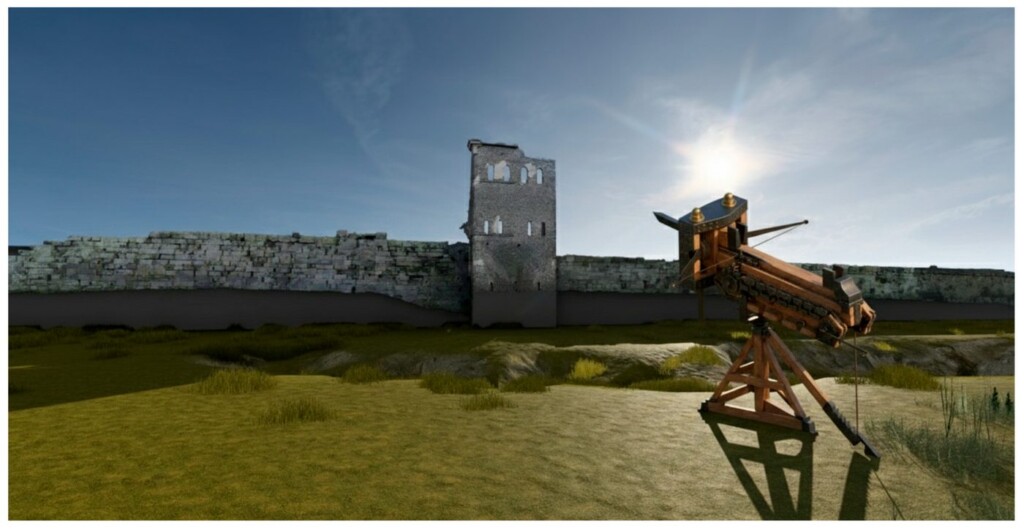
2,100 years ago, famed Roman general and one-time dictator Lucius Cornelius Sulla laid siege to a rebellious Pompeii during a lesser-known conflict called the Social War.
On the day, Sulla brought along a special form of artillery. The contraption could fire multiple projectiles without needing either to reload or reengage the firing mechanism; in order words, it was the precursor to a machine gun.
Called the “polybolos,” meaning multiple launcher, Sulla’s artillery was something written about in prior Byzantine chronicles, but has never been confirmed to exit through archaeological evidence.
It was apparently designed by the Greek, Dionysius of Alexandria.
Recently, a team from the University of Campania in Italy, led by researcher Adriana Rossi, identified impacts on the city walls made by a large and powerful projectile. The quadrangular holes identified at two sites were identical to each other and closely spaced.
To press the gun metaphors further, Rossi and her team had found the Roman artillery officer’s “groupings.”
Published in the journal Heritage, the study brings together ballistics science and engineering with historical primary sources and intelligent software to reconstruct various impact scenarios. The result is a comprehensive analysis of what could be the first-ever evidence of the polybolos’ existence.
“The indentations—clearly of anthropic origin by number and morphology—bear no resemblance to the circular marks caused by spheroidal projectiles launched by ballistae or skilled slingers,” the authors wrote.
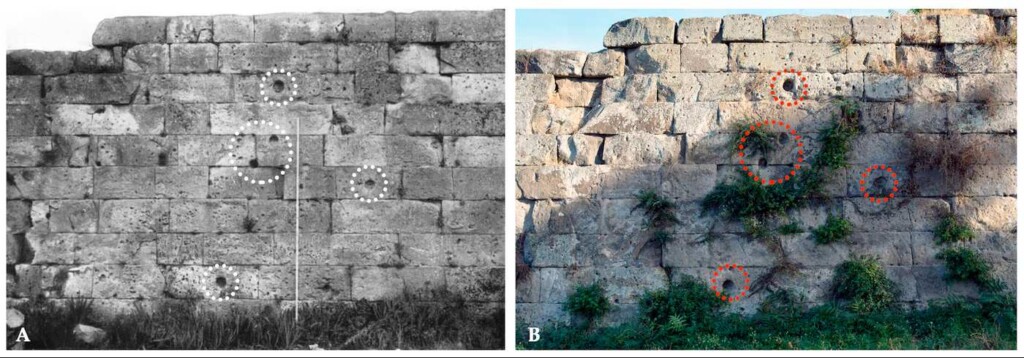
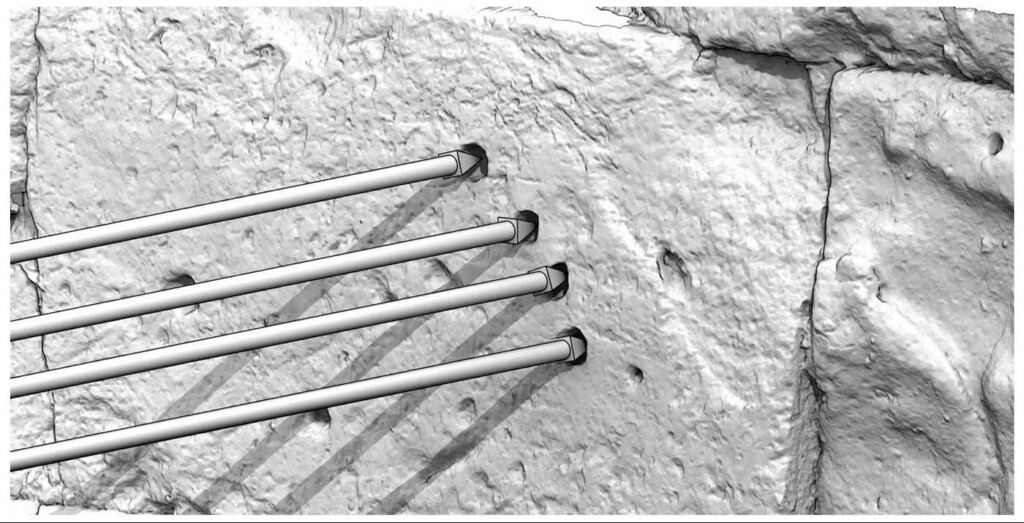
Ballistae used their large, horizontally-bowed arms drawn back by a cord to launch large stones to batter city walls and gates. The polybolos was not so much a siege engine as an anti-personnel weapon. Hypothetical drawings of the device make it appear to be a large stationary bow that shot heavy iron darts capable of piercing wooden barricades and shields.
“The artillery deployed during the assault was primarily intended for anti-personnel purposes, targeting defenders positioned along the ramparts and between the merlons, rather than to demolish the fortifications themselves,” the authors wrote.
SHARE This Amazing Discovery And Unique Insight Into Medieval Weaponry…