













In mid-May, GNN reported that 3 teens from India had won a major continental science prize for their brilliant use of an ingredient in Indian cuisine as the basis for a microplastic filter.
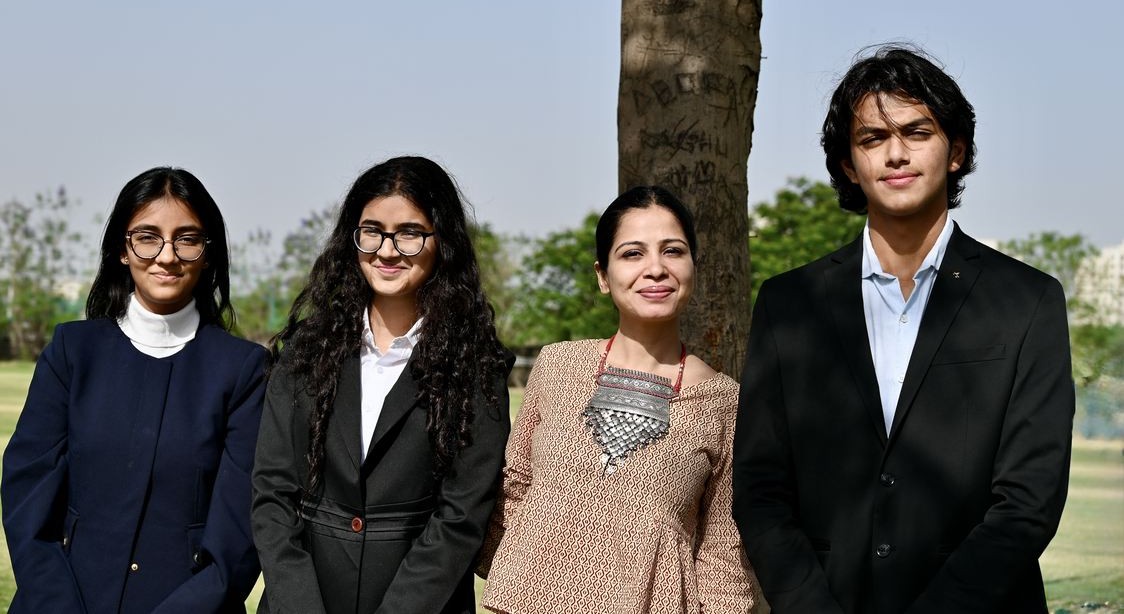
Now, from Geneva comes the announcement that 16-year-olds Vivaan Chhawchharia, Ariana Agarwal, and Avyana Mehta, have claimed the Global Earth Prize in addition to the Asian one, as voted by 23,000 experts from dozens of countries around the world.
“Being named the Global Winners of The Earth Prize is incredibly special for all of us, especially as the first team from India to receive this recognition,” the trio said in a statement.
“What started as an idea between students has now been recognised among thousands of projects from around the world, which feels both surreal and deeply motivating.
Their grand prize-winning invention is called Plas-Stick, and used powdered tamarind seed as the base for an all-natural microplastic clumping agent. After a short agitation period, the clumped microplastic-tamarind mass can be removed with nothing more than a magnet.
Notably, Plas-Stick is the first-ever Global Winner of The Earth Prize from India.
Designed for use in shared water containers, the biodegradable powder binds invisible plastic particles into visible clumps that can then be easily removed with a handheld magnet, offering a simple and low-cost alternative to complex filtration systems.
The idea was sparked by the team’s studies in environmental science and a visit to a rural community, where they observed how drinking water is often stored in shared containers without access to advanced filtration systems.
Globally, over 2.2 billion people lack safely managed drinking water infrastructure, increasing reliance on stored water that may contain microplastics. Microplastics may be the most significant environmental and human health contaminant on Earth. Particles ranging in size from the 1/1 to 1/1,000th the width of human hair have been found virtually everywhere anyone has thought to look for them, including on the summit of Everest and the bottom of the Marianna Trench.
MORE INSPIRING PERFORMANCES: Teacher Wins $1M Prize for Turning India’s Slums Into Hundreds of Open-Air Classrooms
They have been recorded in worryingly high quantities in every human organ and tissue, including the brain and even placenta. Though the full gamut of toxic damage related to microplastic exposure isn’t fully known, what’s certain is that they act as strong endocrine disrupters.
Determined to create a solution that is both effective and accessible, Chhawchharia, Agarwal, and Mehta developed a system that requires no electricity or complex infrastructure. It in fact requires only a crop that’s already used widely in South Asian cuisine, which is both cultivated and thrives in the wild.
COMBATTING MICROPLASTICS: Seeds from ‘Miracle Tree’ Can Filter More Than 98% of Microplastics from Tap Water
“Plas-Stick was designed to be simple, affordable and accessible, and this support allows us to take it beyond pilot schools and scale it to many more communities that need it most!”
Now following their Global Winner recognition, the team plans to scale the solution through decentralised production hubs and expand to rural communities across India, making safer drinking water more accessible across rural Indian communities and beyond.
The Earth Prize is run by The Earth Foundation, a non-profit based in Geneva, Switzerland, founded during the School Strike for Climate in 2019. At a time when climate anxiety affects a majority of young people—59% reporting they are very or extremely worried about the environment—the Prize provides a pathway from concern to action, equipping students with the tools to develop tangible, real-world solutions.
SHARE These Brilliant Teen Winners With Your Friends…