














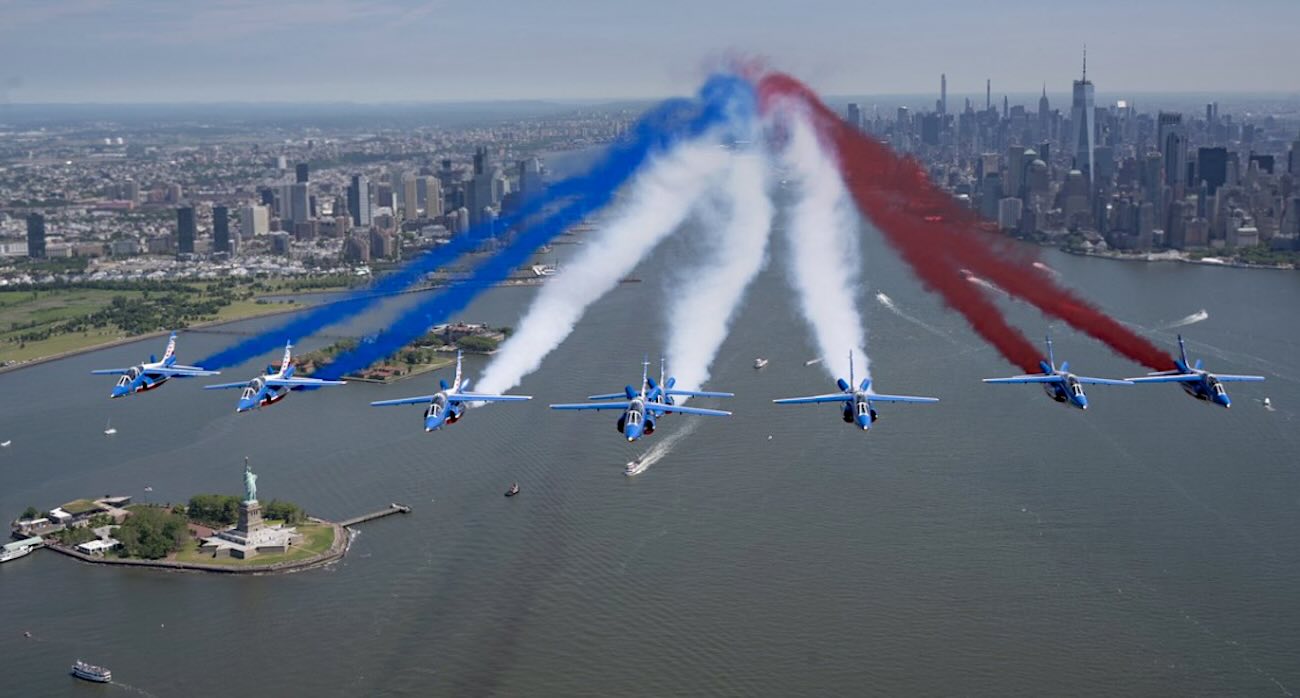
The skies over New York City turned red, white, and blue on Tuesday as France launched Mission #Liberté250 to celebrate America’s 250th anniversary—and to honor the enduring alliance between sister nations.
The flyover by the French Air Force’s precision aerobatics team—the Patrouille de France—kicks off a historic month-long tour along the East Coast in a tribute to 250 years of French-American friendship.
The official social media page of the Embassy of France in New York shared video and photos on Facebook, thrilling anyone who missed the spectacle from the riverbanks of the Hudson.
“What a symbol,” said French President Emmanuel Macron. “250 years of shared history.”
That history goes much further back than the gift of a bronze Lady Liberty from Paris in July 4, 1884, to commemorate the centennial of U.S. independence.
France, in fact, was the primary reason the Declaration of Independence was written and signed 250 years ago in 1776. The document was fundamentally designed as a ‘call to arms’ for France’s King Louis XVI, signaling that the colonies were permanently breaking from Britain.
King Louis XVI made it clear they would not openly intervene in a civil war between Britain and her colonies, and had no interest in backing a rebellion that might be temporary and end in a peaceful reconciliation, leaving France exposed to British wrath.
Thomas Paine publicized this exact geopolitical reality in his January 1776 bestseller Common Sense, arguing that France and Spain would never lend aid until a manifesto of independence was dispatched to foreign courts. So, the Continental Congress had to formally declare themselves a separate, sovereign nation.
By issuing the Declaration on July 4, Congress transformed their movement from an illegal domestic insurrection into a legitimate war between sovereign states.
France made moves to ensure the American Revolution prevailed
But France had already been actively making the quiet, monumental moves that ensured the American Revolution survived its infancy. Before the colonies ever signed the Declaration, France was setting up the covert supply chains that kept George Washington’s army alive:
May 2, 1776: King Louis XVI officially authorized one million livres to purchase munitions for the Americans.
June, 1776: The French government backed a playwright’s idea to establish a fictitious trading firm—a ‘front company’ that allowed France to secretly channel gunpowder, muskets, tents, and uniforms to the Continental Army while maintaining official neutrality to avoid immediate war with Britain.
So critical was France’s secret aid that an estimated 90% of American troops at the pivotal first Battle of Saratoga carried French firearms and were entirely dependent on French gunpowder. Without the logistical support shipped overseas 250 years ago this summer, the revolution likely would have collapsed. (See the calendar of events for Liberté250 at the bottom…)
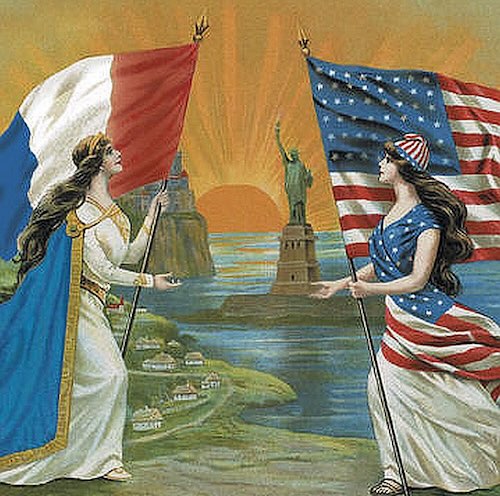
Lafayette, a French hero who forced the British surrender
The Marquis de Lafayette began working with George Washington in 1777, four years before the British surrender at Yorktown. The 19-year-old French aristocrat immediately impressed Washington with his unusual humility; unlike other foreign officers who demanded high pay and immediate command, Lafayette offered to serve without pay and volunteered to start as a basic staff member.
In his very first combat experience under Washington, Lafayette was shot in the leg while trying to rally retreating American soldiers in the 1777 Battle of Brandywine. Washington was deeply moved by the young Frenchman’s bravery and ordered his personal army surgeons to care for Lafayette as if he were his own son. Later that year, the Frenchman stayed by Washington’s side during the brutal winter at Valley Forge, sharing the same harsh, freezing conditions as the regular troops, which cemented a lifelong father-son relationship between the two men.
16 months later, with Washington’s blessing, Lafayette returned to France as a military hero—and lobbied the French king for massive reinforcements. He sailed back to America in 1780 and told Washington the ultimate good news—a French expeditionary force of 6,000 soldiers under General Rochambeau was on its way to fight under Washington’s direct command.
This deep, four-year foundation of trust is exactly why Washington bestowed upon a 23-year-old Lafayette the independent command of Virginia in 1781, setting the stage for a blockade that outmaneuvered British Lord Cornwallis, trapping him in Yorktown for the final victory.
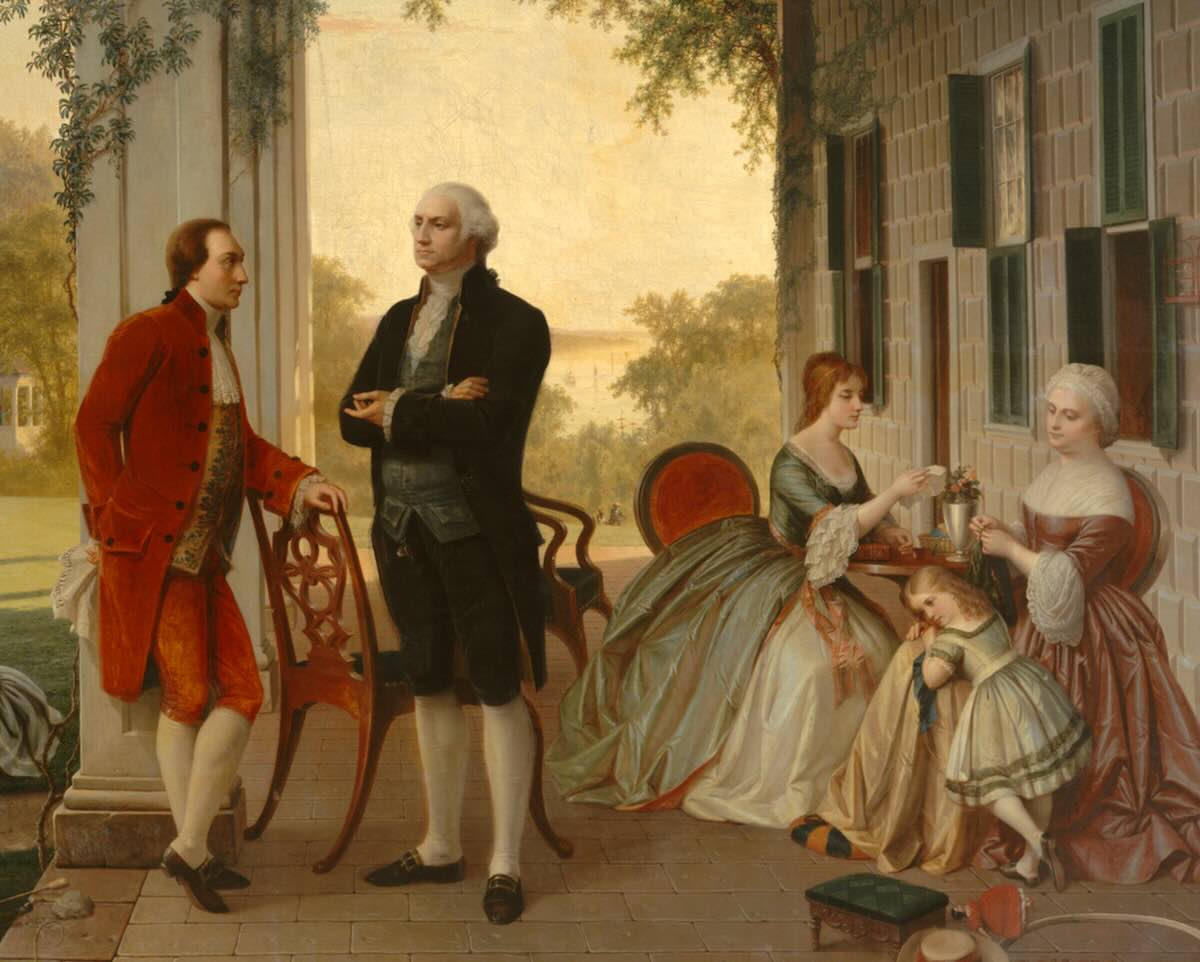
Outnumbered nearly 4-to-1, Lafayette used a “cat-and-mouse” strategy, retreating north to Fredericksburg to preserve his forces while teasing Lord Cornwallis into chasing him deeper into the Virginia wilderness.
Mistakenly believing Lafayette’s army was broken, Cornwallis marched his troops to the port of Yorktown to establish a naval base for reinforcements by sea. But. Lafayette quickly moved his forces south, sealing off the land exits of the Yorktown peninsula and trapping Cornwallis against the water—sending a dispatch to Gen. Washington: “The British army is cornered.”
In October of 1781, Washington arrived along with French Gen. Rochambeau and the French fleet to launch the Siege of Yorktown. Cut off from land—by Lafayette’s troops—and by sea—thanks to French ships—Cornwallis formally surrendered, effectively winning the war for American independence.
And the Patrouille de France jets will be flying in formation over that very spot next Monday…
RELATED TO THE REVOLUTION:
• This Year Is the 250th Anniversary of the First Battle of the American Revolution, But it Ended in a Standoff
• Perfectly Preserved 250-Year-old Cherries Found in George Washington’s Cellar at Mount Vernon
Check out other Liberté250 events and flyovers scheduled for the next month below… (Note: New events may pop up on their website.)
- June 13 and 14: The Ocean City Air Show in Maryland
- June 15: The Patrouille de France will stage ceremonial flyovers over Yorktown, Williamsburg, and the Chesapeake Bay
- June 20 and 21: Fly over at the Naval Air Station Patuxent River Airshow
- June 22: The French aerial detachment will conduct flyovers over the National Mall in Washington, DC, Arlington National Cemetery, and Mount Vernon.
- June 24–30: The French Navy will participate in Sail250 in Baltimore, Maryland, alongside an international flotilla of tall ships and military aircraft.
- June 27 and 28: The Sail250 and Baltimore Air Show
- Fourth of July: The Patrouille de France will fly over Washington, DC
SHOW YOUR GRATITUDE By Sharing The Special History on Social Media…