












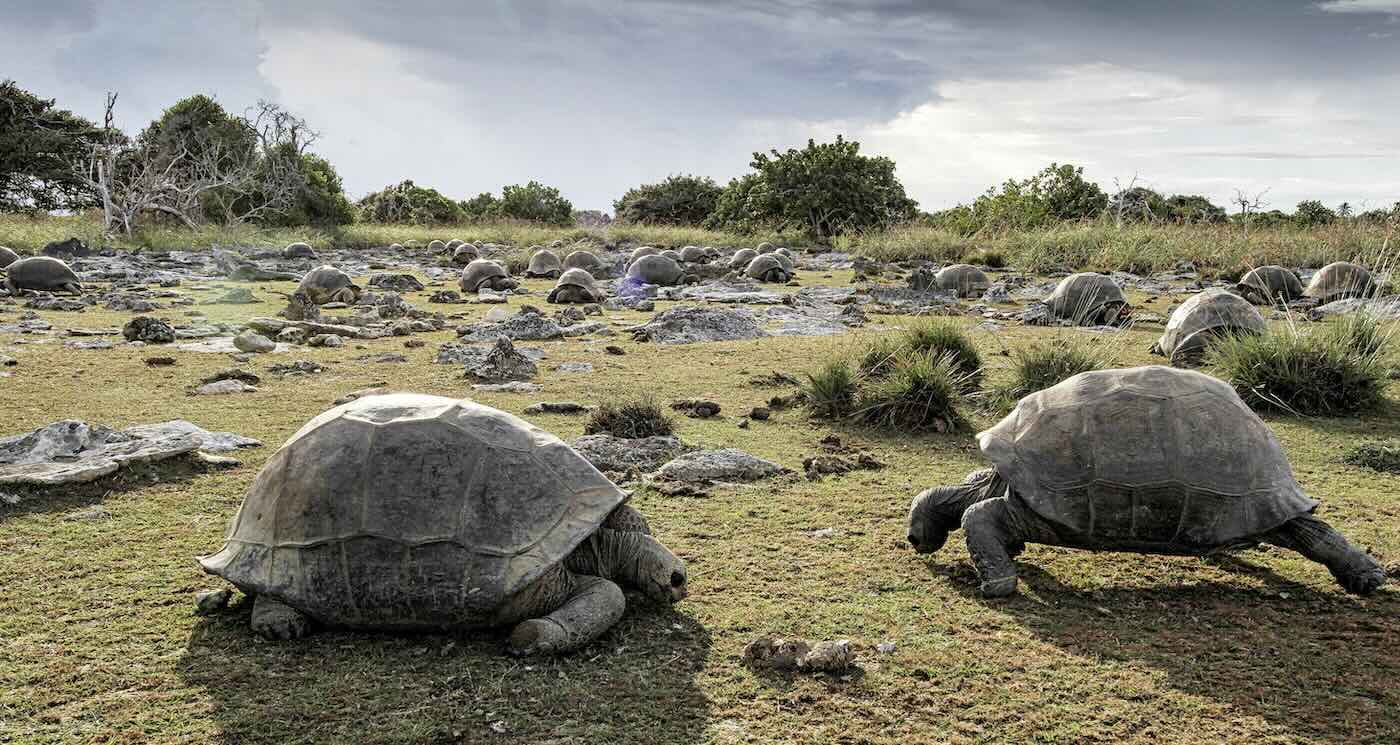
A landmark survey of the world’s largest free-roaming giant tortoise population has revealed the once-endangered species is now thriving.
The latest count of tortoises on the Seychelles atoll of Aldabra revealed that there are approximately 180,000 living on the islands.
This is the highest figure ever recorded for the species and far exceeds the human population of the Seychelles.
The team, led by the Seychelles Islands Foundation (SIF) and the University of Exeter, analyzed five years of tortoise counts collected between 2018 and 2022.
It is the first update since the widely cited figure of 100,000 tortoises from the late 1990s.
Aldabra Atoll (a ring of coral islands in the Indian Ocean east of Africa) is one of only two places in the world where giant tortoises can be found in the wild, with a much smaller population living in the Galapagos.
“More than 180,000 giant tortoises roaming freely on our atoll is proof of what long-term commitment to conservation can achieve,” said Dr. Frauke Fleischer-Dogley, the CEO of SIF.
“This is wonderful news for Seychelles, for the world, and for everyone who has worked to protect Aldabra.”
The study, published in the scientific journal Ecology and Evolution, found that the population was relatively stable for this period, with a best estimate of almost 183,000 adult and sub-adult tortoises.
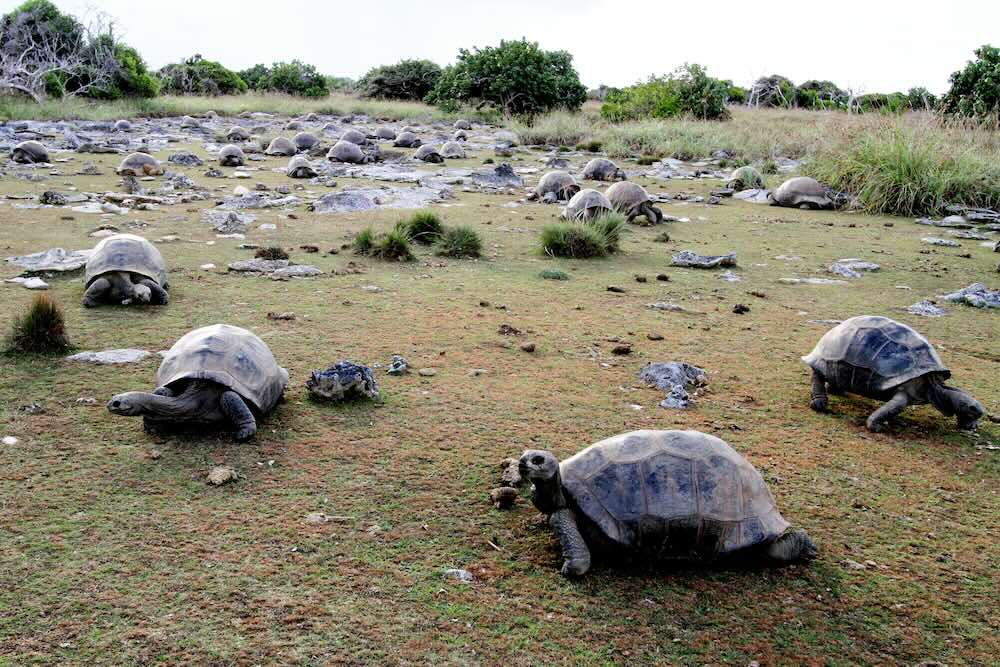
In the 19th century, exploitation of the animals meant there were fewer than 1,000 Aldabra tortoises on the island.
But a recovery program meant the island became a strict nature reserve in 1981 and a UNESCO site in 1982.
Now, researchers are saying it’s one of the greatest conservation success stories of the Indian Ocean, with the new study confirming it.
“Aldabra’s giant tortoise monitoring program is one of the longest running in the region, but the atoll’s dense vegetation makes counting tortoises genuinely difficult in places,” said Dr. Nancy Bunbury, one of the study’s co-authors.
“By modeling what we didn’t see, as well as what we did, we’ve produced the most reliable baseline yet for this iconic Seychelles species, establishing a benchmark we can use to track the population for decades to come.”
Aldabra’s climate is changing, with longer and more frequent droughts predicted to reduce the shade and food available to tortoises, so the conservationists intend to be vigilant.
The study authors say that invasive mammals remain a key threat including feral cats and black rats that prey on tortoise eggs and hatchlings.
The planned eradication of these remaining invasive mammals, the authors say, could lift the last barriers to further growth of the population and help it withstand future climate pressures.
“These results are great news for the tortoises and testament to the fantastic work done in the field,” said Dr Dave Hudson, postdoctoral research associate at the University of Exeter, Cornwall.
“Hopefully we have provided the conservation managers the evidence they need to track future change and act early as the tortoises face increasing pressures from climate change, drought, and invasive species.”
SHARE THE AMAZING NEWS With Turtle-Lovers on Social Media…