






JoyDrops: Short Films With Big Hearts and Even Bigger Ambitions
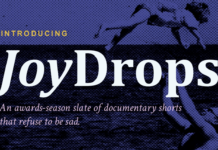
Good News Network and Switchboard Magazine have joined forces on JoyDrops, a curated slate of awards-season documentary short films that offer positive perspectives, made by artisan filmmakers that have already racked up numerous accolades and awards on the film festival circuit.
The idea started, of all places, on the Oscars stage. Introducing the Documentary Short category at this year’s ceremony, host Conan O’Brien paused to rename it “little sads,” before asking the room whether the films had, in fact, made them sad. (A little bit, they agreed.) The Documentary Short category has long skewed toward grief, hardship, and the elegiac. JoyDrops hopes to offer viewers a wider variety of films to consider this year.
What JoyDrops is
JoyDrops celebrates documentary shorts that find wonder, humor and hope in real life. Each week, Good News Network will feature one film from the slate. Every installment pairs the film with an interview from the director who made it.
The directors will share what drew them to their subjects, the surprises they found along the way, and why they think stories like these belong in the awards conversation. Each film stands on its own, and together they make the case that a documentary can be moving, rigorous and hopeful all at once.
Share your joy
We want to hear what brings you joy, too. Post about the people, places and moments that make you happy on Facebook, Instagram, TikTok or X using #JoyDrops. We’ll share some of our favorites.
Meet the slate
Over the coming weeks, GNN will publish a five-part series, with one story for each JoyDrops film and the director who made it.
The Boys and the Bees, directed by Arielle Knight, is set on an idyllic farm in rural Georgia. A beekeeping couple shares their knowledge of life, love and nature with their two young sons while restoring their homestead. The Boys and the Bees is presented by POV Shorts and TIME Studios, in partnership with Switchboard Magazine and Higher Ground.
In Panther Pat, Ashley Brandon tells the story of Patricia Palinkas, who in 1970 became the first woman to play professional football. Using archival interviews, Barbies and stop-motion, the film revisits a nearly forgotten moment when a gender barrier fell in America’s game.
Ora DeKornfeld’s The Grandfather Puzzle follows her search for her grandfather’s past. He fled Hungary and left behind a castle, a baronial title and a life he never talked about. All he wanted to do was jigsaw puzzles, so she traveled to Hungary to photograph the castle and turn it into one.
The Second Life of Freddie Nole, directed by Dana Nachman, follows a man who spent 50 years in prison. Today he meets newly released men at the prison gates and offers them a ride, support and a path toward a second chance.
In Oh Whale, Winslow Crane-Murdoch returns to a small Oregon town, an exploding whale and the TV newsman who made the story famous. The film reflects on how we don’t get to choose our fate, only what we make of it.
Together, these five films make the case that a film can leave you better than it found you and still belong in the awards conversation.