










As autumn descends upon the Great Plains of North America, the largest private land conservation project in the country is ringing in an inspirational milestone.
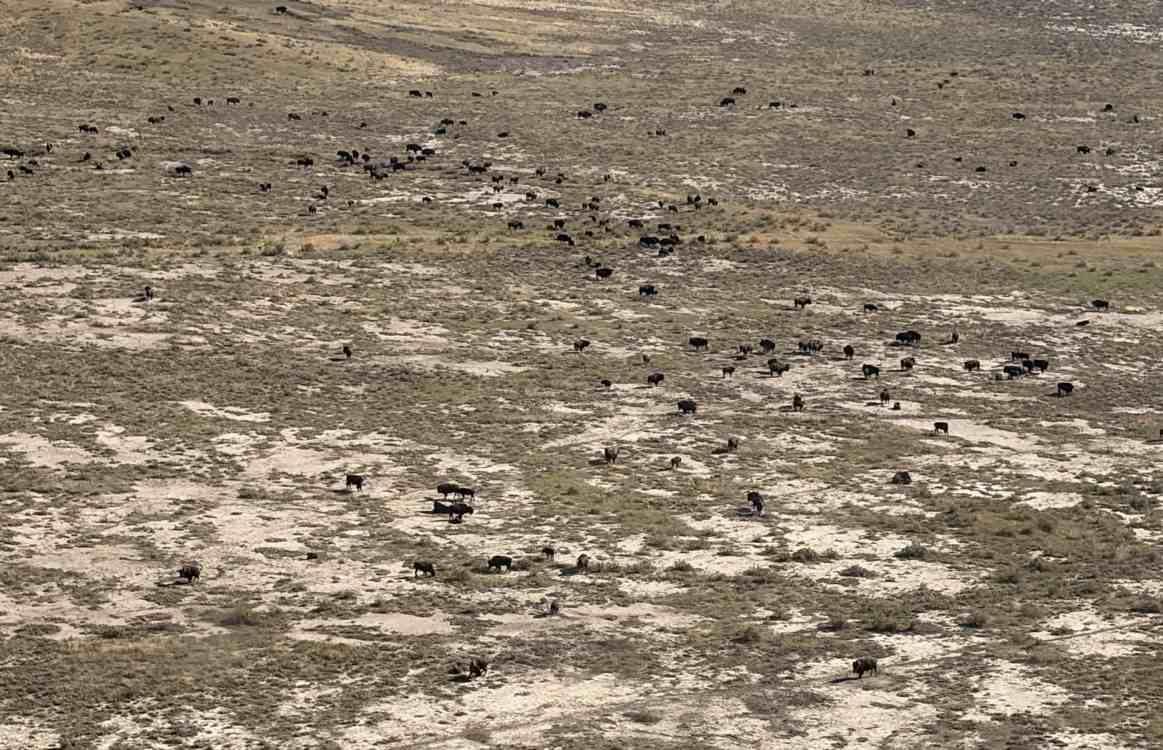
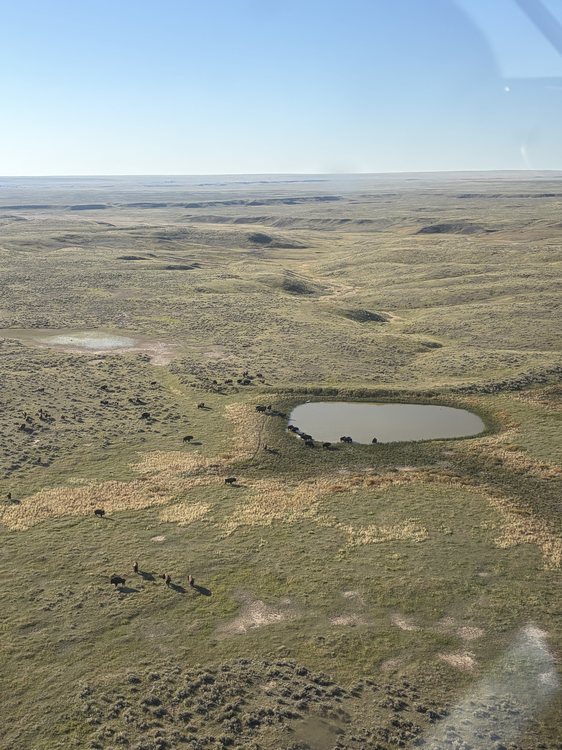
The resident herd of relatively free-roaming bison now numbers 4 digits for the first time since the organization’s founding more than 20 years ago.
American Prairie is a conservation nonprofit that GNN readers may be familiar with. The group is quite simply attempting to stitch together the largest contiguously-wild stretch of North American Prairie in the country for the purpose of conservation and recreation.
Stitching together grasslands, water features, ranchland, rolling hills, and woodland, the reserve has accumulated 603,657 acres, which comprises 167,070 deeded acres and 436,587 leased public acres. The goal is ultimately to protect and some cases rewild 3.2 million acres—far harder to achieve for citizens than government lawmakers.
Yet in the over 20 years that American Prairie has been working, they’ve expanded their reserve to such an extent that if it were declared a National Park, it would rank among the nation’s 10 largest across the Lower 48.
Americans know that tens of millions of bison used to roam the prairie, and that those herds were almost wiped out long ago. What most Americans won’t know is why they haven’t returned yet.
Today, bison may number as little as 1 to 3.5% of their pre-industrial numbers. Of that total, less than 10% are managed for conservation or as a wild species. American Prairie details that most conservation herds are very small and are mostly confined to small, fenced-in areas. These conditions threaten the genetic health of bison and greatly hinder their ability to roam widely, display natural behaviors, and impart their ecological impact—so necessary to the flourishing of the prairie—onto the landscape.
Some of the chief hurdles to bison restoration are legal ones. Montana, where most of American Prairie’s acres area located, classify bison as livestock, not wildlife. As such, their movements and grazing are regulated the way cattle are—through a system meant to prevent cross-breeding, disease spreading, and encroachment.
MORE FROM THE PRAIRIE: Land Was Owned by Billionaires Who Didn’t Allow Access to National Monument – Now it’s Open
American Prairie recently had to take to the courts to defend its bison herd. On September 4th, a federal judge granted a preliminary injunction to block the Bureau of Land Management (BLM) from enforcing its order requiring American Prairie to remove its bison from 3 federal grazing allotments in northeastern Montana.
BLM revoked American Prairie’s bison grazing permits in May 2026, and ordered the nonprofit organization to remove its bison from federal public lands, which make up the majority of the reserve. The order was made under an interpretation of a federal grazing rights law which the BLM saw as providing land solely for the commercial production of food and fiber.
American Prairie’s interpretation, which the judge said seemed highly likely to be correct, was that the Taylor Grazing Act includes no such distinction between commercial purposes and other purposes, such as conservation or recreation.
MORE FROM THIS NONPROFIT: 100 Miles of Derelict Fencing Removed by Rewilders Across the Great Plains in Montana
Fresh off of this intermittent legal victory, American Prairie’s annual calf count coming at the end of the breeding season put the size of the nonprofit’s herd at 1,016, the first time it’s ever held a thousand-handle.
Organizers believe a herd of 5,000 is a very achievable aim, but 5,000 square miles—the ultimate size they hope their land package reaches—would in theory provide suitable space for tens of thousands of bison.
SHARE These Beautiful Images To Ring In A Major Milestone For This Nonprofit…