












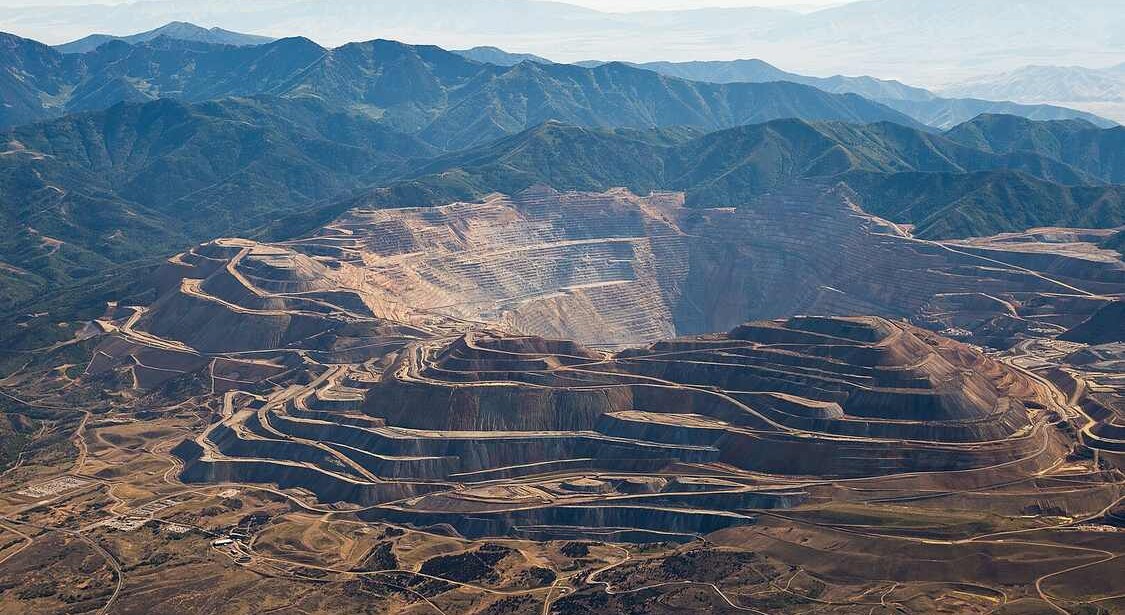
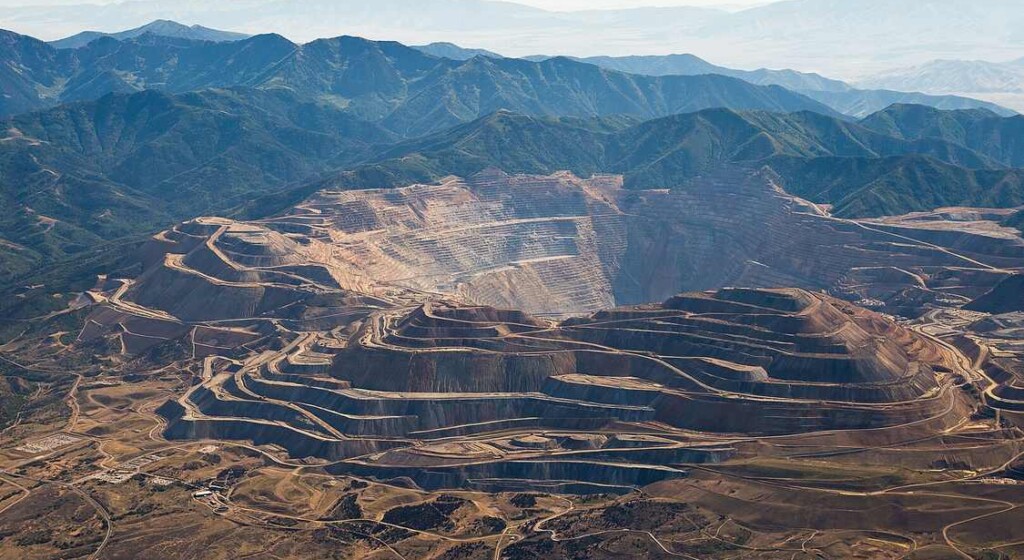
Below the soil of a mining concession in Utah, a recent drill survey has discovered what might be North America’s largest-known deposit of so-called “critical minerals.”
Turning up evidence of elements like gallium, lithium, tungsten, and vanadium, the land is already permitted for mining, and extraction work would benefit from existing nearby infrastructure, an exploratory company executive said.
Also referred to as “rare-earth” minerals/elements or “battery metals,” these are periodic table bedfellows that power the highest forms of tech in society, from the computer chips capable of running large AI systems, to the magnets inside nuclear fusion reactors. They’re also critical for batteries in EVs and renewable energy systems like storage and solar panel.
Recently becoming all the rage in discussions about supply-chain independence, critical minerals are found all over the world, but only certain markets have spent the last 20-30 years investing in the infrastructure needed to extract and refine them at high levels.
Ionic Mineral Technologies—also known as Ionic MT—published the results of a drilling survey undertaken in their 4,000-acre Silicon Ridge project in Utah, finding substantial mineralization of a full spectrum of rare-earth elements.
That spectrum appears to be embedded in a geologic feature similar to the one which China has leveraged to become the world’s largest producer of several critical minerals—namely, a softer clay system from which the minerals are easier to extract than hard rock.
Andre Zeitoun, founder and CEO of Ionic MT, calls the discovery a “watershed moment” for America’s resource independence.
“For the first time, we have a domestic, shovel-ready source for a full spectrum of critical minerals, all extractable with a faster, cleaner process than traditional hard rock mining and extraction,” he said in a press release dated to December 12th.
CRITICAL MINERALS: Lithium Discovery in Crater in Nevada Could Be Biggest Deposit Ever Found
Zeitoun expects a “rapid timeline to commercia production,” as the drill sites on Silicon Ridge sit just a few miles from the 74,000-square-foot processing facility in Provo, where the company is located and where the ores would be processed for sale.
Further, being that the land is already permitted for mining, the treasured wider Utah landscape would be under little additional threat, and existing infrastructure like roads, power lines, and water bodies are all present from previous operations.
MORE STORIES LIKE THIS: Chemical Process Produces Critical Battery Metals from This Unloved Mineral with No Waste
The US has been expanding federal involvement in critical minerals under the current Administration, with trade agreements for cobalt and other elements signed with the Democratic Republic of the Congo in conjunction with an attempted peace negotiation between the country’s long-time warring factions.
Refinery capacity—concentrated enormously in China—is being subsidized, and even shares of certain mining operations have been directly purchased by various departments such as Commerce and Energy.
SHARE This Huge Step Towards Supply-Chain Independence In The USA…