













Researchers have recorded sounds emitted by plants that no human can hear—and their click-like sounds are unique to each species, and varied depending on what exactly is stressing their growth.
Similar to the popping of popcorn, they are emitted at a volume similar to human speech, but at high frequencies, beyond the hearing range of the human ear, according to the team from Tel Aviv University.
“We found that plants usually emit sounds when they are under stress, and that each plant and each type of stress is associated with a specific identifiable sound,” said Professor Lilach Hadany from the School of Plant Sciences and Food Security who lead the research team. “While imperceptible to the human ear, the sounds emitted by plants can probably be heard by various animals, such as bats, mice, and insects.”
“From previous studies we know that vibrometers attached to plants record vibrations. But do these vibrations also become airborne soundwaves—namely sounds that can be recorded from a distance?” asked Prof. Hadany. “Our study addressed this question, which researchers have been debating for many years.”
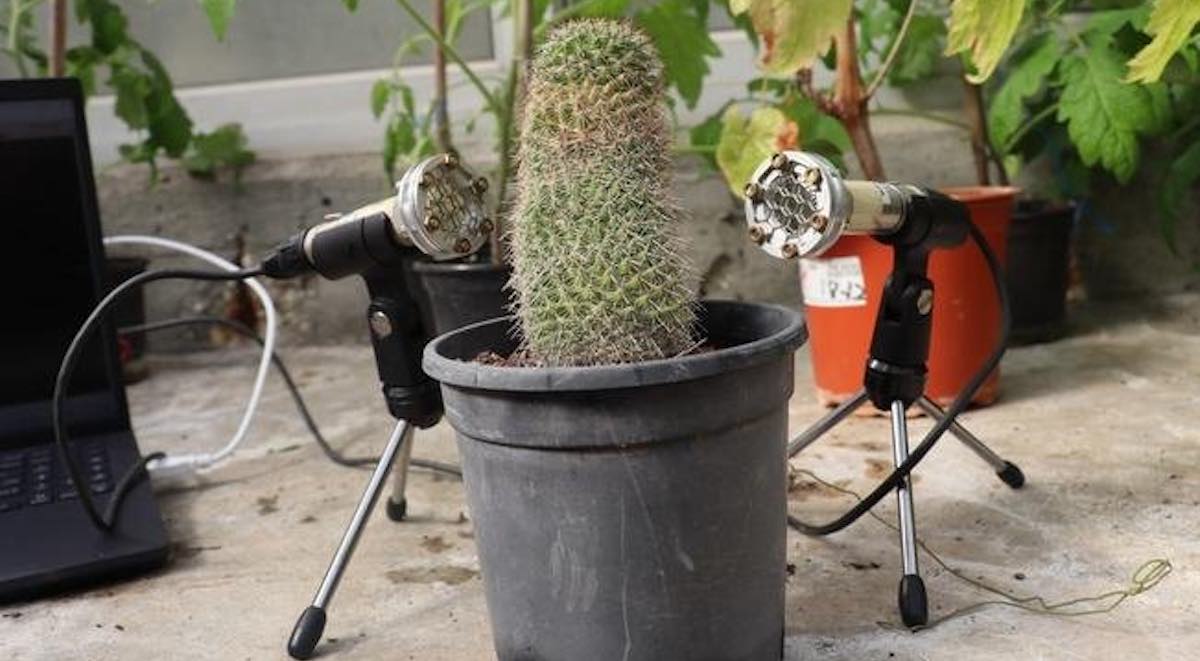
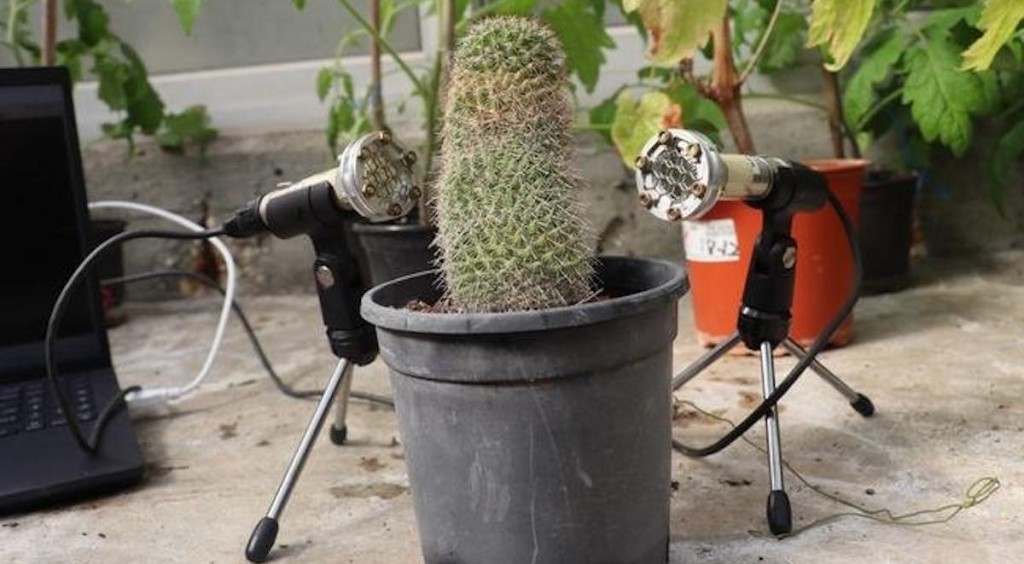
For the first stage of the study, published in the journal Cell, the researchers placed plants in an acoustic box in a quiet, isolated basement with no background noise. Ultrasonic microphones record sounds at higher frequencies than the maximum detectable by a human adult, which is about 16 kilohertz. Mics were set up at a distance of about 4 inches (10cm) from each plant, including tomatoes, grape vines, tobacco, wheat, corn, cactus, and henbit.
POPULAR: Stroke Recovery Improved for 70% of Patients Taking Celery Seed Drug
Before recording the plants, the team subjected them to various treatments: some plants had not been watered for five days, some had their stems cut, and some were untouched.
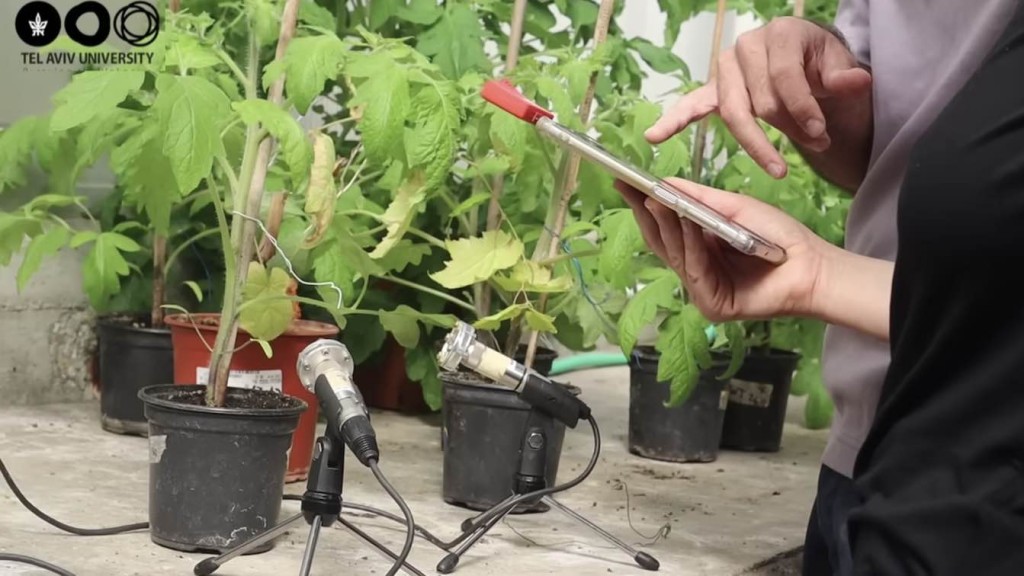
“Our intention was to test whether the plants emit sounds, and whether these sounds are affected in any way by the plant’s condition. Our recordings indicated that the plants in our experiment emitted sounds at frequencies of 40-80 kilohertz.”
“Unstressed plants emitted less than one sound per hour, on average, while the stressed plants—both dehydrated and injured—emitted dozens of sounds every hour.”
The recordings collected in this way were analyzed by specially developed machine learning (AI) algorithms. The algorithms learned how to distinguish between different plants and different types of sounds, and were ultimately able to identify the plant and determine the type and level of stress from the recordings.
Moreover, the algorithms identified and classified plant sounds even when the plants were placed in a greenhouse with a great deal of background noise. In the greenhouse, the researchers monitored plants subjected to a process of dehydration over time and found that the quantity of sounds they emitted increased up to a certain peak, and then diminished.
LOOK: Otherworldly Scenes Show Plants Breathing in Close-Up Detail: A Long Sought Discovery
“In this study we resolved a very old scientific controversy: we proved that plants do emit sounds!” said Hadany. “Apparently, an idyllic field of flowers can be a rather noisy place. It’s just that we can’t hear the sounds!”
“Our findings suggest that the world around us is full of plant sounds, and that these sounds contain information about water scarcity or injury.
“We assume that in nature the sounds are detected by creatures nearby, such as bats, rodents, various insects, and possibly also other plants, that can hear the high frequencies and derive relevant information. We believe that humans can also utilize this information, given the right tools—such as sensors that tell growers when plants need watering.”
RELATED: Getting Plants ‘Drunk’ Insulates them Against Drought, According to New Research
Future studies will explore a range of intriguing questions: What is the mechanism behind plant sounds? How do moths detect and react to sounds emitted by plants? Do other plants also hear these sounds? And more…
Listen to tomatoes talking—and grape vines gabbing—in the video below…
MAKE SOME NOISE and Share This Cool News With Plant-Lovers on Social Media…
I thought this would be interesting but that awful music in the background
wouldn’t let me hear any sounds if there were any.
This leaves me wondering that people like me who have an affinity for raising plants and can tell when a plant is stressed even before seeing any physical evidence can in some manner detect the sounds, (obviously not with hearing, but in some weird sense) that they make. Or in some way can sense that the plant is not happy. I can usually tell when a plant is not happy before I find any evidence that it has a mold or insects or is not getting the correct nutrients, it’s just one of those “things” that some people can do. My mom was the same way. She talked to her plants WAAAY before the science told us it was beneficial to the plants to communicate with them in a soft and loving tone, she told me she did that all her life.
She also had an affinity for helping injured animals as well. Animals would literally show up in the yard, on the door step or in the middle of the road while she was driving somewhere. She nursed many different species, including an injured tarantula, a rabbit, more than a few birds, and even a white tailed deer back to health after finding them injured or sick , displaced or just too far away from where they should be, stranded or confused by human encroachment, roads or construction sites, always releasing them back to the wild. This was back in the 60s and 70s when there weren’t wildlife rehabilitation facilities anywhere close to where we lived, the animals had few choices, but my mom would help when she could. My childhood was a mixture of domestic ducks, geese, dogs and rabbits as well as the various wild creatures that showed up and were cared for and left. it was an amazing time to grow up.