













GNN has previously reported on heritage American architecture finding new life as hospitality and entertainment centers.
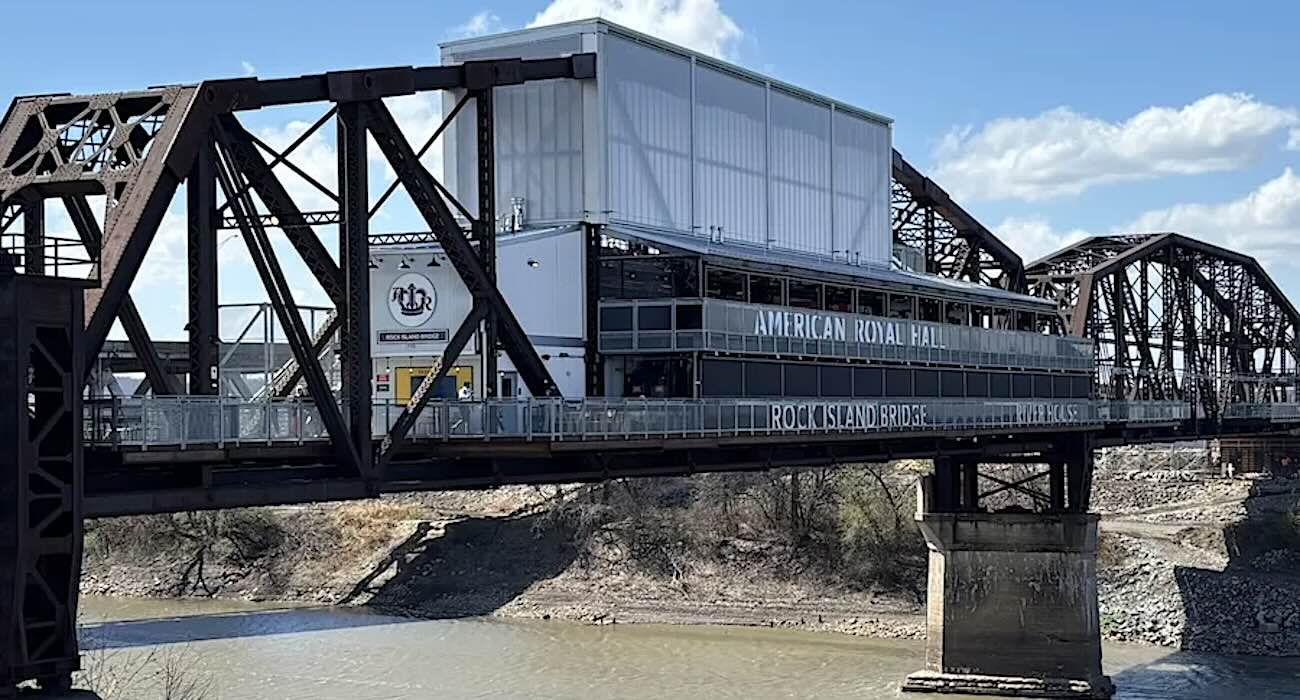
On the Kansas River, a 120-year-old railroad bridge has been infused with the labor and love of both states the trains used to pass through, and has been resurrected into a restaurant and event space plus walking path.
The Rock Island Bridge opened this April, with a full opening of all areas slated for mid-summer. Its CEO, Mike Zeller, holds a 66-year lease on the structure received from the united authority of Wyandotte County Kansas and Kansas City Missouri.
Zeller was the “band leader” behind the project, which started on a boat trip up the Kansas where he passed the old rail bridge which seemed like others he remembered loitering on as a young man; an object that something should be done with
10 years later, in 2017 he founded the company that would lead the bridge’s renovation: Flying Truss LLC, which after several years of begging, pitching, and brainstorming, managed to coalesce a coalition which Zeller called a “P6 approach” for public-private-philanthropy-people-purpose-process.
Speaking with Engineering News Record, Zeller said that some 35 local businesses donated materials and labor for the job—everything from the big neon entrance sign made by Hammer Out Design, to a local legal firm which worked pro bono for 7 years.
Many ideas were floated out, from being entirely a part of the city’s burgeoning trail network to a place were food vendors would work out of shipping containers. Eventually it was agreed that there’d be a two-story restaurant, an event venue, and an open-air space that would connect with the levee-top trails being built by Kansas and Missouri governments—costing $16 million.
A pretty standard rail crossing, the Rock Island Bridge was about 18-feet wide and utilized 3 steel trusses built by Andrew Carnegie’s steel firm. Trusses are those cage-like structures that sit atop flat river bridges to add stability.
After structural analysis found the bridge able to support 3.16 million pounds before any elements were removed, such as the old rail track and concrete, primary contractor. L.G. Barcus and Sons, Inc. determined that not much needed to be done to the original components. A few bolts needed to be replaced and some rust addressed, but that was it.
For the new structure, 15-foot cantilevers would support a wrap-around deck for restaurant space. Intriguing challenges awaited Barcus, such as what would happen if everyone moved to one side of the bridge to watch fireworks, and how to fit the second and first stories of the restaurant under the 300-foot-long central truss without covering them up.
BRIDGES AS VENUES: Contest Winner Turns Bridge into the Longest Walking Art Gallery in South Korea
As far as the trusses were concerned, existing machinery called lift gates had been well maintained, and Barcus was the original contractor on a 1952 project to raise the trusses to meet the heights of newly-built levees following a flood. With nothing more than a new motor and new grease, not only could the trusses be raised to accommodate the second story of the restaurant, but to satisfy the US Army Corps of Engineers’ standards for both a 750-year flood and the levees they were building along the Kansas River.
All the new support steel and cantilevers added up to around 680,000 pounds—well within the weight constraints.
Opened in April, it’s already one of the highlights of the city’s many venues. The truss beams occasionally plunge right through the walkway—even the tables, but they transmute the charm of the old architecture into the place—just like the steel railroad track acting as the footrests along the restaurant’s bar.
SIMILAR STORY IN SCOTLAND: Scotland’s Largest Greenhouse Set to Be Preserved as ‘Living Ruin’ and New Event Space
At the conclusion of the project, the cost was a mere $20 million, funded through a mixture of private investment (60%) public funding and grants (30%) and philanthropic donations (10%), which Zeller said had helped “create something spectacular for Kansas City that our kids and our grandkids are going to enjoy,” … “a gift from about 200 Kansas Citians to our city.”
Kansas City Magazine, attending the opener, wrote that Rock Island Bridge is free to enter and walk across, “and Zeller says visitors can also expect fun events, from farmers markets and live musicians to ticketed concerts and more.”
SHARE This Amazing American Renovation With Your Friends On Socials…