












Between 2022 and 2023, scientists in Saudi Arabia began a survey of over 1,000 caves, hoping to find preserved remains of ancient animals to infer modern rewilding strategies.
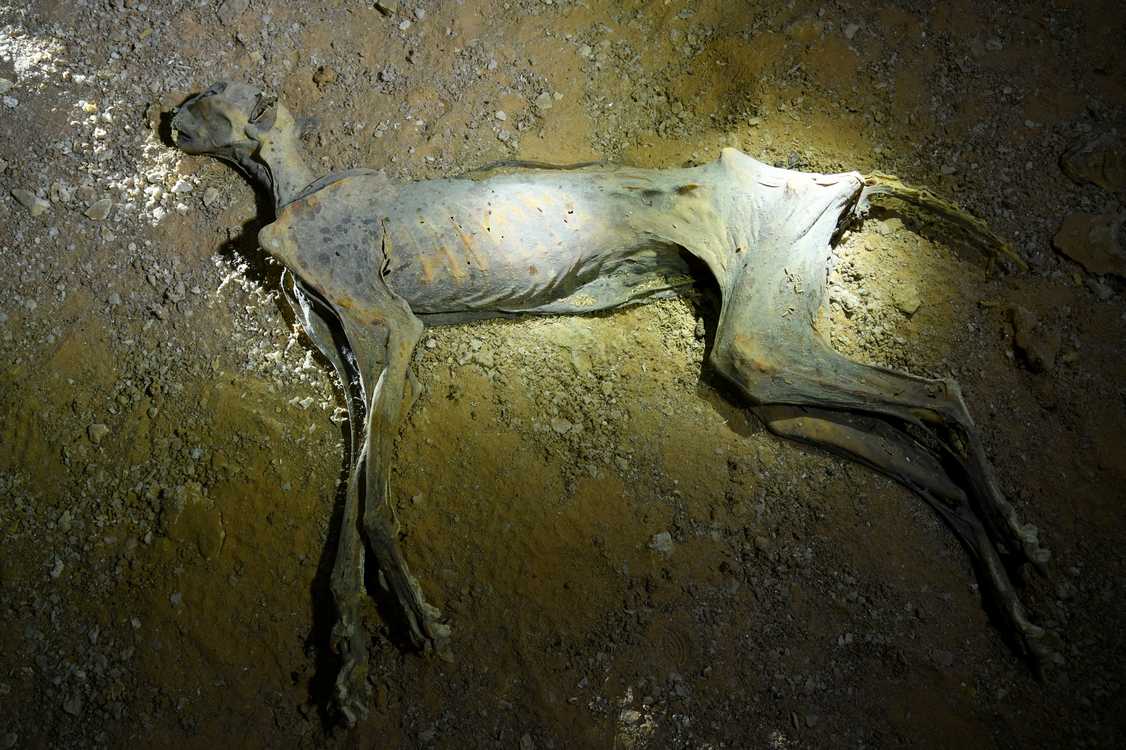
Whatever modest results they might have allowed themselves to hope for, they almost certainly would not have expected to find 7 naturally mummified cheetah skeletons.
They had been preserved in incredible detail in the dry air of the caves and sinkholes, the doors of which acted both metaphorically and almost literally as windows into the past.
Cheetahs once inhabited much of Africa as well as Western and Southern Asia, but now live in just 9% of their historic range. In Asia, their range has decreased by 98%, and they are thought to have been locally extinct on the Arabian Peninsula since the 1970s.
The species (Acinonyx jubatus) is divided into 4 recognized subspecies, and the discovery of the cheetah mummies reveals that at least two subspecies of these endangered cats inhabited the Arabian Peninsula before their local extinction.
In a report on the mummies, published in Nature Communications Earth & Environment, the scientists extract paleo-DNA from the specimens to infer which species, if any, could be suitable to the Arabian landscape today.
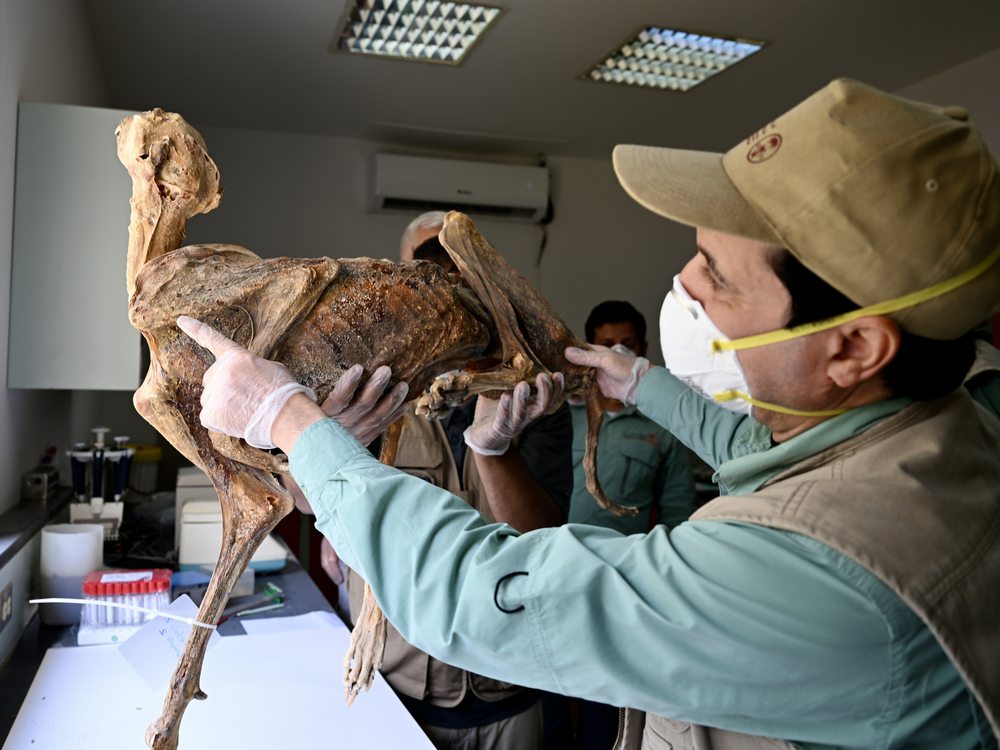
Dr. Ahmed Boug and colleagues discovered the natural mummies along with the skeletal remains of 54 additional cats in 5 caves near the city of Arar in northern Saudi Arabia. The oldest skeletal remains date from approximately 4,000 years ago, while the mummified remains date from as recently as 130 to as old as 1,900 years ago.
3 subspecies of the cheetah are located in Africa, divided between Northwest, Northeast, and Southern Africa. There was once an East African cheetah, but in 2017, the east and southern populations were combined in taxonomy trees.
The Asiatic cheetah (Acinonyx jubatus venaticus) has long been thought to have been the only subspecies present in Saudi Arabia, as it was the only subspecies present in neighboring Iraq. The team extracted complete genome sequences from three of the seven sampled specimens—the first time this has been done in naturally-mummified big cats.
Once stretching from the Levant to India, only a single small wild population remains today in Iran. Therefore, the feasibility of reintroducing cheetahs to the peninsula is debated.
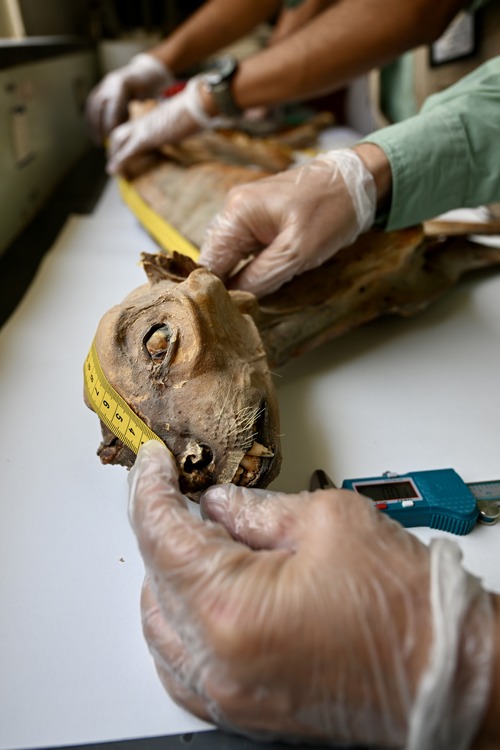
But while the most recent mummy specimen was genetically closest to the Asiatic cheetah, the two older cheetahs—including the oldest dated specimen—were found to be most similar to the northwest African cheetah (Acinonyx jubatus hecki).
This Critically-Endangered subspecies of cheetah is preset today only in Niger, Algeria, and tiny overlaps into Benin, Burkina Faso, and Mali, across Sahel and Sahara-like terrain. However, it once roamed across all of West Africa.
MORE ARABIAN NEWS: Discovery of Immense Fortifications Dating Back 4,000 Years Enclose Khaybar Oasis in Northwest Arabia
In recent decades, the authors write, Saudi Arabia has successfully restored ungulates to landscapes from which they were extirpated from, including the Arabian oryx, Arabian gazelles, Sand gazelles, and Nubian ibex. With so much prey and empty space, the authors suggest that a reintroduction of carnivore species would be “timely.”
Yet it would have been likely infeasible to capture and transport one of Iran’s Asiatic cheetahs for establishment in Arabia. In 2020, Iran made headlines around the world for the arrest and imprisonment of a team of wildlife biologists who were conducting a camera trap survey on the cheetahs, charging them with espionage.
CHEETAH STORIES: Six Baby Cheetahs Born in the Richmond Zoo’s Prolific Breeding Program – 167 Cats Since 2013 (WATCH)
Although they were eventually released, it certainly isn’t likely to inspire any confidence in cross-border conservation work.
The estimated 250 cheetahs of Northwest Africa aren’t in a much better place. Their protected haunts in the W-Arly-Pendjari Protected Area Complex was in 2022 a largely-lawless area stalked by terrorist groups who double as poachers.
Saudi might find the governments of Mali, Niger, Benin, and Burkina Faso, though, more willing to collaborate on a transfer of animals, as it would establish a well-funded and secure insurance population in Arabia that could be used in future decades to replenish the populations of West Africa.
Conservation of large carnivores is rarely straight forward, but as well as offering a major contribution to the science of genetic analysis, this remarkable discovery could be the basis that informs a program which could save this distinct cheetah species, and see the most famous sprinter of all return to a home from which it has long been separated.
SPRINT Over To Social Media And Share This Incredible Discovery…