













Underwater coral reefs are filled with thumps, pops, and snaps from shrimp and fish, and ecologists often use underwater microphones to monitor the health of marine environments.
But until now, ecologists have largely been unable to interpret these sounds because reefs are crowded with hundreds of different species—very few of which have had sounds accurately attributed to them.
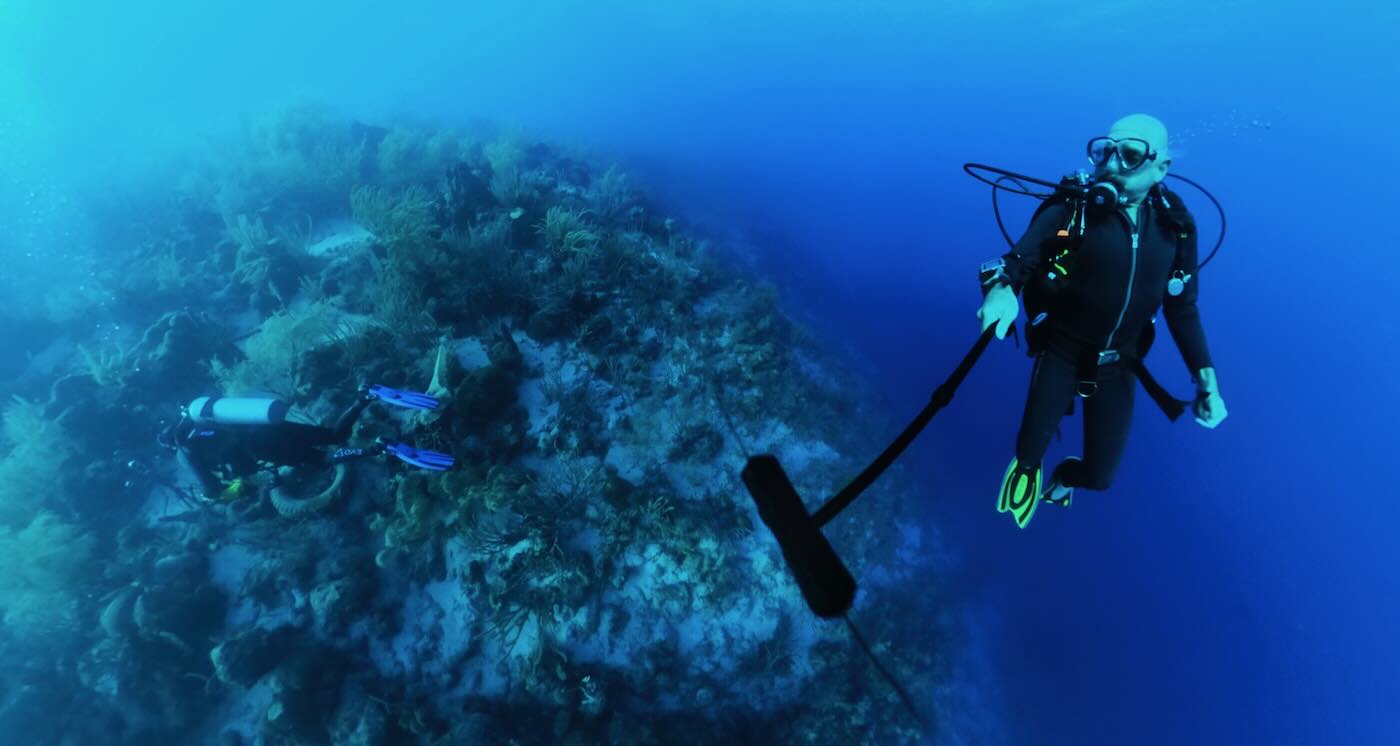
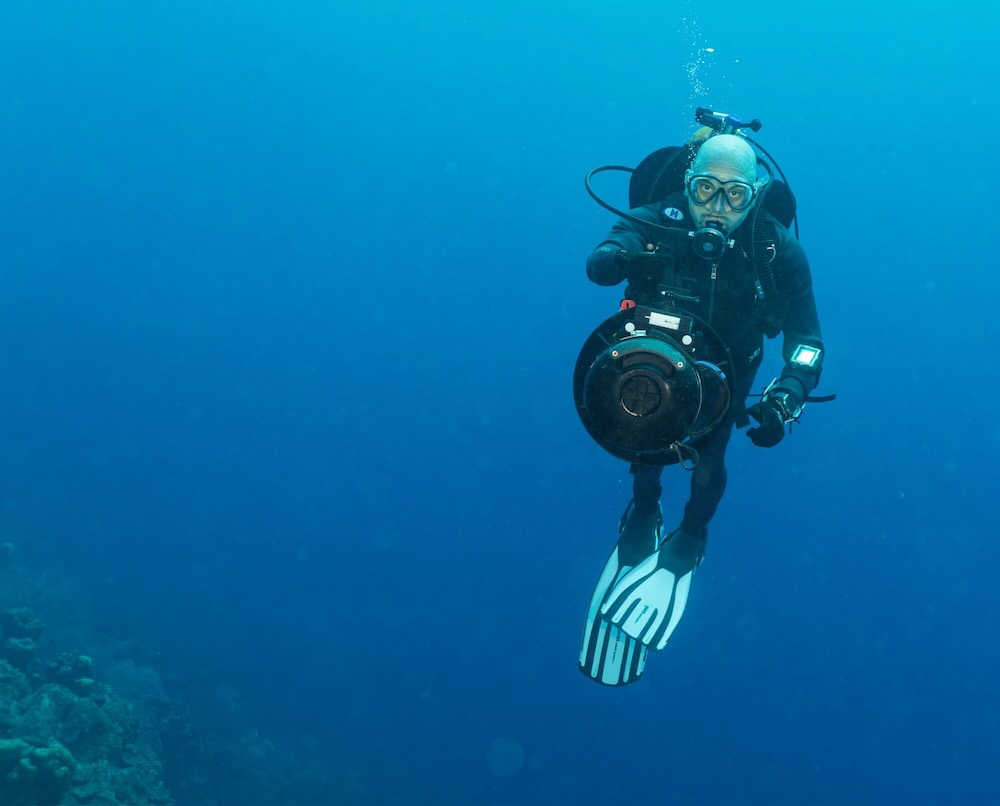
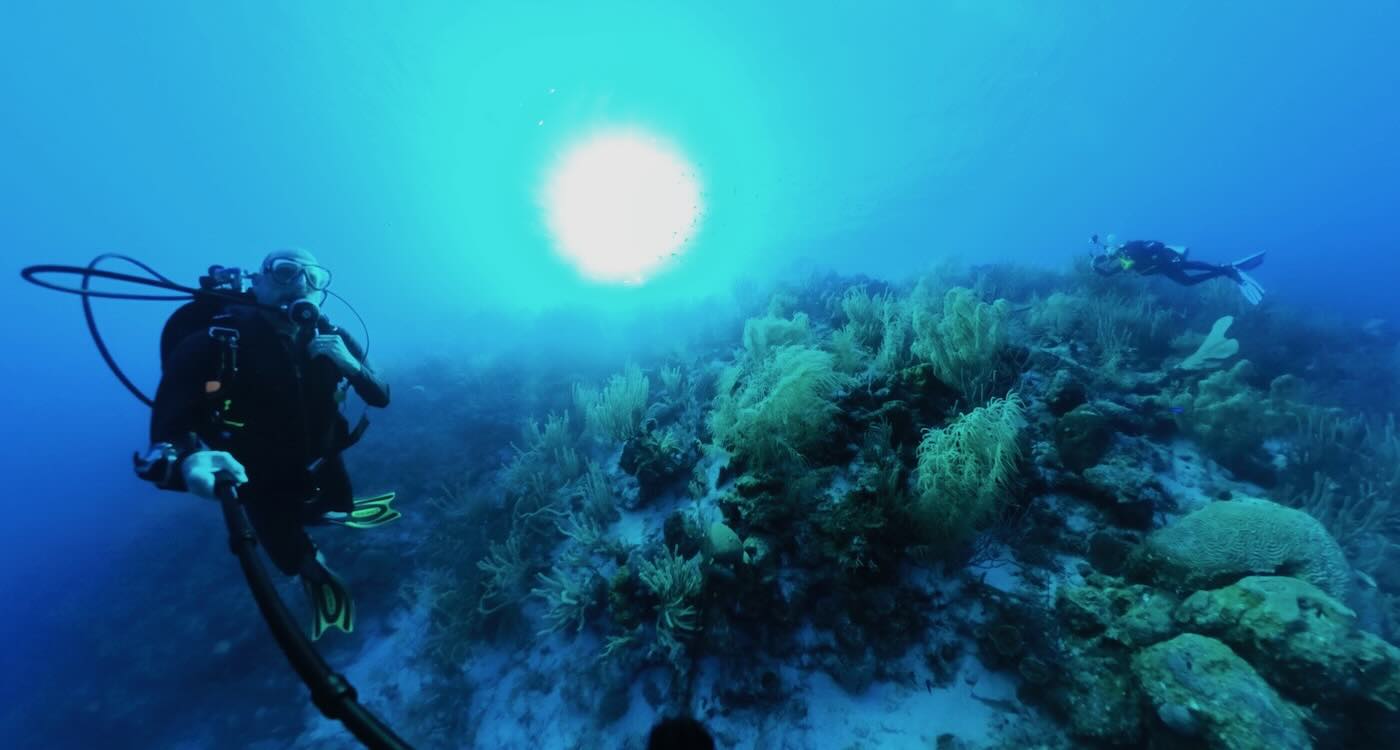
A new tool from the FishEye Collaborative combines underwater sound recordings and a camera equipped with a 360° view to pinpoint the sounds made by individual fish.
The collaboration between bioacoustic researchers at the Cornell Lab of Ornithology and Aalto University have already identified 46 fish species from the coral reefs of Curaçao in the Caribbean—more than half of them were never known to make sound.
The findings culled from their eavesdropping along with a description of their invention, the Omnidirectional Underwater Passive Acoustic Camera (UPAC-360), were published recently in the journal Methods in Ecology and Evolution.
“The diversity of fish sounds on a coral reef rivals that of birds in a rainforest,” explained Marc Dantzker, lead author and the Director of FishEye Collaborative. “In the Caribbean alone we estimate that over 700 fish species produce sounds. The same biodiversity we aim to protect is also our greatest challenge, when it comes to identifying sounds.”
“Spatial Audio lets you hear the direction from which sounds arrive at the camera,” explained Dantzker. “When we visualize that sound and lay the picture on top of the 360° image, the result is a video that can reveal which sound came from which fish.”
Now the most extensive collection of fish sounds ever published—and the growing library—is available to everyone at fisheyecollaborative.org/library.
The researchers say that identified sounds from the library can be used to automatically train machine learning systems to detect fish species in underwater recordings.
The technology is similar to smartphone apps like the Cornell Lab of Ornithology’s Merlin Bird ID that automatically identifies bird species by song or call, but no one needs to be on site. The UPAC-360 can be placed in reefs and left to collect data without the need for a diver or boat to be present.
“We are a long way from being able to build ‘Merlin’ for the oceans, but the sounds are useful for scientists and conservationists right away,” says Aaron Rice, a senior author of the study and principal ecologist at the Cornell Lab.
Dantzker adds, “We’re making it possible to decode reef soundscapes, transforming acoustic monitoring into a powerful tool for ocean conservation.”
“By discovering the identity of these hidden voices, acoustics will become a powerful indicator of reef health and a strategy to monitor wider and deeper,” said Matt Duggan, co-author and PhD candidate at Cornell.
“The fact that our recording system is put out in nature and can record for long periods of time means that we’re able to capture species’ behaviors and sounds that have never before been witnessed,” said Rice.
The researchers are expanding the research, growing the library for the Caribbean, and broadening their efforts to other reefs around the world, including Hawai’i and Indonesia, in the coming months.
THESE AREN’T FISHY:
• Fish Rescued From Garden Pond After it Grew to be 6-feet, From Just 6 Inches (LOOK)
• Fishermen Sacrifice Daily Catch to Rescue Huge Whale Shark Found in Their Net (WATCH)
LISTEN to 5 fish sounds below… [NOTES: It’s loud at first. Also, be sure to read the text.]
SHARE THE NEW SOUNDS With Divers on Social Media…