All News - Page 1065 of 1714 - Good News Network
Home Blog Page 1065

6-year-old Cancer Survivor Donates 700 Toys to Sick Kids

6yo delivers bag of toys-King5vid

A 6 year-old girl, who knows what it’s like to be sick at Christmas, collected and donated more than 700 toys to children spending their holiday at the Mary Bridge Children’s Hospital.

“I had cancer and I got lots of toys,”  Dryden Shirks told KING-5 News. “I want to make other kids happy with toys, too.”

(WATCH the video below or READ the story from KING-5 News)

Story tip – Judy Ritchie

‘Digital Nose’ on a Chip Can Sniff out Diseases

dog nose by Mark Watson-CC

Dogs and cats, with their highly developed sense of smell, have been detecting cancer or predicting epileptic seizures for some years now..

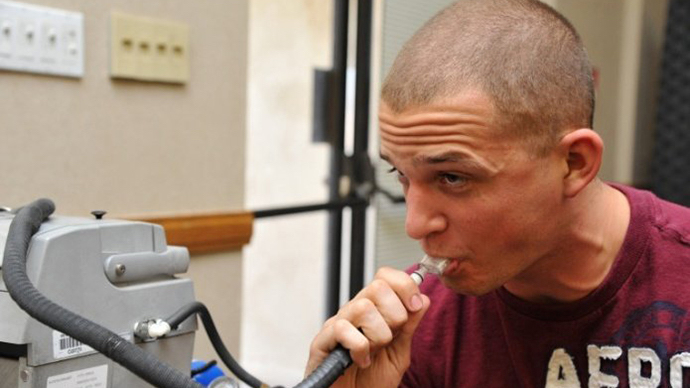
But what if we could digitize that sense and put it into a microchip, allowing us to create a breathalyzer for diseases?

For Dr. Andrew Koehl, the inventor of the microchip spectrometer technology at the heart of this “digital nose”, the technology that will allow us to do just that is already here, reports CNN.

“We can detect down to parts per billion levels,” Koehl says. “To give you an analogy that’s equivalent to one drop in an Olympic size swimming pool.”

(WATCH the video below or READ the story from CNN)

Photo credit: Mark Watson (CC license) / Story tip from Mike McGinley

Police Chief of LOVE

Brimfield Township Police Chief David Oliver comforts 6yo Kashe Heffelfinger

Brimfield Township Police Chief David Oliver comforted six-year-old Kashe Heffelfinger, who was overwhelmed by the notion of shopping without his mother during a holiday shopping spree at Kohl’s.

The event, sponsored by Sarchione Chevrolet, gave 33 elementary students $200 to shop with a professional athlete and volunteer adults.

To further cheer up the boy, Chief Oliver offered a ride in his patrol car and a police station visit.

Kashe’s mother did finally accompany him on the search for a robotic dinosaur.

Photo by Erin LaBelle

NASA Just Emailed A Wrench To The International Space Station

NASA-ISS Commander Barry Wilmore 3D printed wrench-640px

Now that the International Space Station has a 3D printer, which was installed in September, tools and parts can be emailed. It happened for the first time when ground crews overheard Commander Barry Wilmore (pictured above) saying he needed a ratcheting socket wrench.

“The socket wrench that we just manufactured is the first object that was designed on the ground and sent digitally to space, on the fly,” he said. “It’s a lot faster to send digital data than it is to send physical objects, which involves waiting months to years for a rocket.”

The team started by designing the tool with CAD software on the computer. Then they converted it to a 3D-printer-ready format. The plans were then sent to the space station and received by the 3D printer, pictured below. Plastic filament was heated in the printer and the tool was manufactured layer by layer.

(READ more from Medium.com)

3D printer on ISS station-NASA

Photo credit: NASA / Story tip from Mike McGinley

For 15 Years He Collected Leftover Office Toilet Paper for the Poor

toilet-paper-roll-emdot

He became known as the “Toilet Paper Guy.”

Leon Delong figured out that Seattle’s office buildings were discarding toilet paper rolls at the end of the day that were small but still had a quarter of the paper.

It bothered him, so the retired man asked the janitors to collect the stub rolls, rather than throwing them away. Then Leon delivered them to food banks.

“By the time he got pneumonia last month and called it quits at age 76, Leon was collecting partial rolls of toilet paper from nearly one-quarter of the Class A office space in downtown Seattle — hauling three heaping pickup loads every two weeks.”

“The food bank vows to keep the program going, with other drivers,” the Seattle Times reports.

(READ the story in the Seattle Times)


Photo credit – emdot / Story tip from Judy

A Decade After Asian Tsunami, New Forests Protect the Coast

mangrove forest

The tsunami that struck Indonesia in 2004 obliterated vast areas of Aceh province. But villagers there are using an innovative microcredit scheme to restore mangrove forests and other coastal ecosystems that will serve as a natural barrier against future killer waves and storms.

BY FRED PEARCE (Originally Published in Yale Environment 360)

On the day that the Indian Ocean tsunami hit his village a decade ago, fisherman Hajamuddin was at sea. It was the safest place to be. When he returned to his home port, the fishing community of Gle Jong on the west coast of Sumatra, he found it obliterated by the giant wave and under three meters of water. What was once home to 800 people was now a new bay. “My family was all gone,” Hajamuddin says.

Just seven people survived the ten-meter wave that hurtled up the beach at Gle Jong that morning. The lucky few were collecting firewood and had time to rush up the steps of the village’s only high point, its cemetery. Today, as the tenth anniversary of the disaster approaches, the village is on the mend. A combination of returnees, new residents like Hajamuddin’s new wife, and a baby boom have brought the numbers back to 130. They live in newly built homes set back from the coast.

It is a remarkable human recovery. But a closer look reveals something else just as remarkable. A few yards inland from the new post-tsunami coastline, on land left waterlogged by the killer wave, the survivors in this community have planted 70,000 mangrove trees. The trees are growing well, and villagers see them as protection against any future invasion from the ocean. “When the floods come again, the mangroves can save us,” says Hajamuddin.

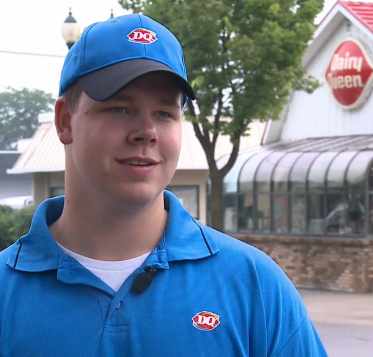
The coastline of Aceh, the northernmost province of Indonesian Sumatra, took the brunt of the tsunami on December 26, 2004. Its waters ran red with blood as an estimated 167,000 Indonesians perished, nearly all of them from Aceh. Whole villages disappeared. But the color the survivors want to show you now is green. An ingenious microcredit project funded by the Dutch branch of the humanitarian charity Oxfam Novib, and carried out with local partners by the Netherlands-based NGO Wetlands International, has been helping villagers plant mangroves and other trees. They will revive nature, improve local livelihoods, and — perhaps most important of all — protect against cyclones, coastal erosion, and any future killer waves.

In a tour of the province last month, I went to villages where virtually the only survivors were those who were away from home on the day the disaster struck. In these tightly knit communities, especially on the province’s remote western coast, many people have no relatives left.

In Gle Jong, an old fisherman who is now a janitor at the life-saving cemetery quietly wiped a tear as he pointed out where the sea below us had obliterated his village. “I am the only survivor of my family,” he said. Later, as I drank coffee in a cafe just 10 meters from the new shoreline, Hajamuddin admitted, “People here are still traumatized by the tsunami. The faithful lost their faith.” Schoolteachers told me that their students still fear even a sight of the ocean or the sound of wind.

Mangrove workers Indonesia-CIFOR-CC-640pxThe 5 million euro Green Coast project has given the people of Gle Jong something to believe in for the future. The trees are bringing a return of nature. Birds flock in the cool new forests. The ponds around the mangroves have become feeding areas for shrimp and crabs. “We thought we had lost the green turtles from the beach, but a few are now returning,” said Hajamuddin.

The 2004 tsunami was caused by an earthquake in the seabed beneath the Indian Ocean, off the western shore of Sumatra, the westernmost island of Indonesia. The geological movement created a series of giant waves that battered coasts for thousands of miles. Of the 230,000 people thought to have died, almost three-quarters were in Aceh, mostly on its west coast.

As the tidal wave dissipated, some 60,000 hectares of rice fields were left flooded with salt water and piled with sand. In many places, the water never retreated. Along most of western Aceh, the earthquake caused land subsidence that left the new coastline 200 to 400 meters further inland than before. Rice paddies, coconut groves, mangroves, and entire villages became part of the seabed.

A massive international rehabilitation program followed the disaster. Wetlands International was among a handful of foreign aid agencies to target ecological rehabilitation of coastal ecosystems. The first aim was to put back the old mangrove swamps.

Mangroves grow in partially flooded sediments along thousands of kilometers of the world’s tropical coastlines. They nurture fish and protect against coastal erosion by accumulating sediment and absorbing the energy of waves and winds. They also store carbon and clean up pollution. And yet mangroves worldwide are being lost at a rate of around 1 percent a year — several times faster than the rate of deforestation on land. The coastline of Aceh has been no exception. The prime reason, as elsewhere, has been to create space in intertidal areas for lucrative aquaculture shrimp ponds.

Most of the mangrove swamps that remained around the shores of Aceh were destroyed or badly damaged by the 2004 tsunami. An estimated 30,000 hectares of mangroves succumbed, but in the process they captured and dissipated some of the tsunami’s energy and undoubtedly saved lives by providing protection for people living behind them. Those without mangrove swamps suffered worst.

So ecological rehabilitation became a priority. But first efforts often foundered, with only a fraction of plants surviving, according to a 2006 study by Wetland International’s Indonesian director Nyoman Suryadiputra, my host in Aceh last month.

One reason was that busy and distracted villagers were paid for planting seedlings rather than for nurturing them thereafter. Many swiftly succumbed to the waves or to the wild boar, which came down from the hills after the tsunami to root around in the depopulated landscape. Others never stood a chance. They were planted on the huge amounts of sand dumped by the tsunami onto previously muddy shorelines. Mangroves require mud. Planted on sand, even in places where they once thrived, mangroves swiftly died. So the Green Coast project aimed to plant more carefully in places where mangroves would thrive, and to provide incentives for communities to take ownership of the trees and to maintain and protect them.

Mangrove-trees-CIFOR-CC-640pxHow did they persuade people trying to rebuild their lives in wrecked communities to spend time planting and nurturing trees? The answer was a version of microcredit called Bio-rights, developed by Suryadiputra. He offered villagers a deal. If they would set up groups to go planting, he would give them them unsecured credit to rebuild their economic lives. Villagers used the credit to buy new fishing nets, set up goat and cattle breeding programs, plant orchards, or even open village cafes. In addition, he promised that if the village groups looked after the trees, and if 75 percent or more of them survived for at least two years, then he would write off the debt.

The deal proved popular. Suryadiputra ended up running 70 village projects. In all, communities planted almost two million seedlings on some 1,000 hectares of coastline, mostly close to villages. Most survived. In only a few cases did the villagers have to pay back a cent of their credit. The result, five years after the project ended, is proud local entrepreneurs and extensive areas of forested coastline protecting new villages.

Mangroves were the trees of choice for replanting. But where sand now lines the shore, the project chose instead casuarina trees, a fast-growing type of sea pine common in the area. In Gampong Baro, a fishing community on the northern coast of Aceh, a group of 50 villagers planted 50,000 native casuarina trees on a bank of sand piled up by the tsunami wave. In places these evergreens have grown over 20 meters high in just five years. That, as locals like to point out, is higher than the tsunami wave. In the muddy places behind the new sand dunes, they have planted mangroves.

Along many parts of the Aceh coast, the idea of planting mangroves is at odds with the past practice of converting mangrove swamps to aquaculture. On large stretches of coastline, in the decades before the tsunami, mangroves were chopped down and ponds were dug to farm shrimp. The shrimp didn’t last because of the spread of white-spot syndrome, a virulent virus. Most operators soon stocked their ponds with milkfish (Chanos chanos), instead.

After the tsunami, aid agencies rushed to repair the ponds by renovating dykes and water channels and excavating sand from the ponds. But Wetlands International has encouraged their owners to adopt a hybrid landscape with mangroves planted on the dykes and in the ponds. The idea is to protect coastlines while maintaining and even increasing the economic productivity of the ponds.

It works, as people in several communities told me. At Krueng Tunong — where more than 1,000 bodies were found after the tsunami — I met Wahab, a villager who headed the mangrove planting program around 20 hectares of village ponds. “We get more fish now that there are mangroves,” he told me. “They grow faster and in greater numbers than when the ponds were bare. I can see the juveniles hiding in the roots of the mangroves. The roots help them avoid predators. We get more crabs, too.”

They told the same story in Lham Ujong, near Gampong Baro, where the “silvo-fishery” contains 350,000 mangroves planted in and around ponds covering 50 hectares.

But the bottom line is whether such planting can save lives in future tsunamis or major cyclones. The evidence that mangroves can protect against giant tsunami waves is necessarily in short supply, and often anecdotal. But it is there.

Suryadiputra worked on a study of a unique length of coast in southeast India hit by the tsunami in 2004. The straight shoreline had a largely homogeneous beach profile, making possible meaningful comparisons between the wave’s impact on stretches of beach with and without mangroves. The study, published in Science in 2005, found that areas with mangroves or casuarina shelterbelts “were significantly less damaged than other areas.” On one stretch, two villages on the coast “were completely destroyed,” whereas three others behind mangroves “suffered no destruction.”

Daniel Alongi of the Australian Institute for Marine Science in Townsville, Queensland, says modeling studies predict just such an outcome. As little as 100 meters of dense mangroves should reduce the destructive energy of a tsunami wave by as much as 90 percent, he has concluded. That could have made the difference between life and death for tens of thousands of people in Aceh in 2004.

Maybe next time, it will.

Photo credits: (top) Robert S. Donovan (middle, bottom) CIFOR.org – CC licenses

US to Restore Full Relations With Cuba, Erasing Last Trace of Cold War Hostility

us-cuba-caravan-326px

President Obama on Wednesday ordered the restoration of full diplomatic relations with Cuba and the opening of an embassy in Havana for the first time in more than a half-century as he vowed to “cut loose the shackles of the past” and sweep aside one of the last vestiges of the Cold War.

“The surprise announcement came at the end of 18 months of secret talks negotiated with the help of Pope Francis, which produced a prisoner swap and concluded by a telephone call between Mr. Obama and President Raúl Castro.”

(READ more from the New York Times)

Parents Buy Their School Crossing Guard a New Car

crossing-guard-surprise-courtesy-video

Parents stepped in to help their kids’ beloved crossing guard after his car was repossessed while he was caring for his ailing wife.

Since retiring from his job, Nathaniel Kendrick has been volunteering several hours a day at Dallas’ Lakewood Elementary school for ten years.

The parents parked the black Lincoln in the crosswalk and sauntered over to him with cameras recording. They handed him the keys and said, “Why don’t YOU move it? It’s yours.”

All he could do was cry.

(WATCH the videos below or READ the story from WFAA-8)

Below is the raw footage of the surprise…

SHARE the Story – Share the Love… (Click below)

See the Reaction When Hundreds of Shoppers Get Their Purchases Free for Christmas

16597186-mmmain

A family-owned department store chain decided to give customers at each of its 213 midwestern stores the ultimate Christmas surprise. All their items at check out time — whether toys, electronics or kitchen appliances — were given to them for free, compliments of Meijer stores.

Contents in the shopping carts ranged in value from $350 to $1,200, according to Meijer, which released a video sharing the emotion-filled reactions of customers (see below).

One lucky Ohio shopper said on Facebook, “I can’t even believe I am posting this…still in so much shock! My husband and I were just shopping at Meijer buying a huge amount of Christmas gifts. When we went to get in line the store manager came over (and) introduced himself (I thought we were in trouble)… He then says to us, on behalf of Meijer they would like to wish us a Merry Christmas and pay for our Christmas shopping!”

“The holidays are a time for kindness and joy, and the ‘Very Merry Meijer’ event was a perfect opportunity for us to share the spirit of the season with those we hold dear: our customers,” said Hank Meijer, co-chairman of the 80-year-old company. “Our family has always believed that our customers don’t need us, but that we need them.”

(WATCH the video below or READ more at Michigan Live)

SHARE the Love with Buttons Below – Story tip from Kelly Harrington

Smart Tortoise Turns Upside-Down Friend Back On His Feet

This content is for Good News Network – $100 members only.
Register
Already a member? Log in here

Man Digs Incredible Underground Rooms in Sandstone Hills of New Mexico

For the past 25 years, Ra Paulette has been carving into the sandstone hills of New Mexico, sculpting his own exquisite caves, making them into works of art that he calls wilderness shrines.

These intricate caves are created with manual tools only, like shovels and picks, and are illuminated by the sun through multiple tunneled windows.

The artist doesn’t make a profit on his passion — just earns a living — and is as happy underground working alone as anyone you will ever find above ground.

Ra’s website has more photos, but check out these videos…

(WATCH the incredible story from CBS Sunday Morning)

Here is another one…

Family Builds Haitian Orphanage To Continue Daughter’s Legacy

Britney Gengel-BeLikeBritFoundation-850px

Britney Gengel was a vibrant nineteen-year-old student at Lynn University when she traveled to Haiti in 2010 to work for an aid group. Deeply moved, she texted her mother on January 10 stating her desire to return and open an orphanage of her own:

“They love us so much and everyone is so happy. They love what they have and they work so hard to get nowhere,
yet they are all so appreciative. I want to move here and start an orphanage myself.”

But, hours later, an earthquake leveled Port-au-Prince and the hotel where Britney’s group was staying.

Vowing that Brit’s death would not be in vain, Len and Cherylann Gengel, along with their sons Bernie and Richie, made the girl’s dream come true by working two years to build her an orphanage.

Her father, a builder, designed the 19,000 square foot orphanage in the shape of the letter ‘B’ and constructed it atop a mountain in the town of Grand Goave as a beacon of hope.

Today, the Be Like Brit Orphanage and its foundation educates and serves 35 children and is dedicated to raising the next generation of leaders in Haiti. You can donate to the group on their donation page.

(WATCH the video from HooplaHa)

SHARE the Story and Spread the Love! (Click Below)

Student Raises Thousands for Homeless Hero Who Offered Her Money

Dominique Harrison-Bentzen-homeless-fundraising-FBphotos

An 22-year-old Lancashire art student has raised over £32,000 for a homeless man, after he offered her his last £3 so that she could get a taxi home safely.

Dominique Harrison-Bentzen declined his generous offer, but was so moved by the gesture that she started a campaign to raise enough money to help him get a flat. She called on her friends to each donate £3 in his honor.

Here’s her description of the “incredible thing” that happened on December 4:

”After losing my bank card and having no money in the early hours, a homeless man approached me with his only change of £3  (about five bucks) and insisted I took it to pay for a taxi to make sure I got home safe.”

“I was lucky enough to find him again and his name is Robbie, he has been homeless for 7 months through no fault of his own and needs to get back on his feet but cannot get work due to having no address.”

She learned that he has returned wallets to pedestrians without taking anything inside, and has offered his scarf to keep people warm.

“So that’s when I decided to change Robbie’s life and help him, as he has helped many others.  On Tuesday 16th December I will be spending 24 hours through the day and night as a homeless person to understand the difficulties they face each day.”

She asked for sponsors willing to giver her £3, “as Robbie attempted to give me his only £3.” She posted this photo and hoped to collect enough to get Robbie a deposit for an apartment.

homeless-man-Lancashire-student-fundraisingpage-GoGetFunding

She initially hoped to raise £500, but when the British media shared her story, the money started pouring in to her fundraising page. Now, with the story being covered worldwide, she wants to help other homeless people with any leftover money.

“I am so grateful to each and everyone of you who has made this happen,” she wrote on her Facebook page (where we found the photos above).

(READ more from the Guardian)

SHARE the story and help Robbie and the other Homeless…

Chanukah Takes on New Meaning for Family of Boy Struck by Lightning at Jewish Summer Camp

helphopelive-Ethan-Kadish

When Ethan Kadish was struck by lightning just over a year ago, his family’s community in Cincinnati came together to provide the care and support they needed in inspiring and unexpected ways. Working with a nonprofit called HelpHOPELive, friends, neighbors, and local, national and international members of the Jewish community have helped raise funds to cover uninsured medical expenses related to Ethan’s care, which can exceed $100,000 per year.

At the end of June 2013 Ethan was at URJ Goldman Union Camp Institute near Indianapolis playing Ultimate Frisbee with a group of friends. A sudden lightning bolt struck Ethan, causing a traumatic brain injury that has kept him from speaking or moving independently since.

“Ethan was in the wrong place at the wrong time. He did nothing wrong. It could have been anyone,” says Ethan’s father, Scott.

Ethan spent four nights in the Intensive Care Unit (ICU) at Riley Children’s Hospital in Indianapolis before being transported back to Cincinnati, where his family has lived for 16 years, by Children’s Hospital’s Medical Transport Team. But his local community sparked an effort to support him before he even arrived at the ICU. Their synagogue held a prayer service on July 2, 2013.

“We were still out of town in Indianapolis and watched it online,” says Scott. “It was standing room only. Our community stepped up and hasn’t stopped.”

Scott was raised to be conservative with his money. He works for a Fortune 500 company and has insurance coverage. But soon after Ethan’s injury the hospital’s financial advocacy group talked to Scott about what out-of-pocket medical expenses he may be facing.

It wasn’t just a bill for the initial extended stay at the hospital. Long-term costs including accessible home modifications, uninsured medical and rehabilitation therapies, travel to specialized treatment centers, and 24-hour nursing care would all add up over time.

“It was an uncomfortable realization,” recalls Scott. “We were suddenly faced with a tragedy we couldn’t financially deal with. It became clear we needed help to cover Ethan’s medical costs.”

In mid-July, several weeks after Ethan’s injury, Scott met with his rabbi and she suggested he speak with Rebecca Carr, director of fundraising and patient services for an organization called HelpHOPELive.

“There is a Jewish expression that all the people of Israel are responsible for one another,” says Rebecca. “Ethan’s family is very involved with their synagogue. The whole community was in shock and ready to help.”

HelpHopeLive-logoHelpHOPELive is a nonprofit that specializes in engaging communities in fundraising campaigns for people who need a transplant or are affected by a catastrophic injury or illness. Over the past 30 years campaigns organized by HelpHOPELive have raised nearly $100 million to cover patient expenses.

“Integrity and credibility are so important in fundraising,” says Scott. “HelpHOPELive gave us an infrastructure to work off of.”

Soon an online presence was created and “Join Team Ethan” took off. The campaign to raise funds started with a home run derby and more than 30 events have been held in the past year. HelpHOPELive has oversight over all disbursements and donations are tax deductible to the contributors.

HelpHOPELive also provides promotional support and an online platform for accepting donations. And Ethan’s community has provided more than monetary support. Volunteers have helped with hot meals and even carpentry work.

Ethan ended up spending 222 days in the hospital following his injury. To date his fundraising effort has benefited from more than 4,000 unique contributors – more donations than any other individual HelpHOPELive campaign.

“HelpHOPELive has given us the ability to take action… the ability to say yes in Ethan’s treatment,” says Scott. “It’s easy to lose hope the longer things don’t return to normal. They give us hope.”

Last year Ethan’s family and HelpHOPELive met with the Jewish Federation of Cincinnati for a unique opportunity to brainstorm fundraising ideas. “Eighth Night for Ethan” was born… an annual event that asks families to dedicate their eighth Chanukah candle to Ethan and his recovery by donating to HelpHOPELive in honor of Ethan. Participants are invited to post a photo of themselves lighting their eighth candle on the Join Team Ethan Facebook page or on Twitter with the hashtag #8NE2.

“We have seen a side of good in humanity. I don’t know why, but it’s been an incredible outpouring of support,” says Scott. “There is no prognosis for Ethan. We can only try to help him progress. And there’s no way we can stop asking for help. Every month there are new challenges, and we need to get a broader community involved.”

Participate in Eighth Night for Ethan at his campaign page – helphopelive.org.

Anonymous ‘Santa’ Pays off $50K in Layaway Balances for Shoppers at PA Walmart

angel of lights

angel of lights

‘Tis the season for copycat goodness.

Last week we heard about an anonymous woman paying off $20,000 in layaway account balances in a Toys-R-Us store in Massachusetts. This week, a man, who only wanting to be known as “Santa B.”, settled all the accounts for 100 holiday shoppers at a Pennsylvania Walmart — paying $50,000 for the pleasure.

The ‘Layaway Angel’ came into the Mechanicsburg store on Monday and gave the store a check to cover all the purchases placed on layaway for customers who couldn’t afford to pay immediately.

“It’s a miracle, not just for us, but for so many people,” said one cash-strapped shopper.

(WATCH the video below from Fox-43)


Story tip from Kelly Harrington – Photo by John Stone, Eyeclectic

Toronto Man Finds Woman With Ex-Girlfriend’s Name for Free Trip Around World

ticket-forward-Jordan Axani-FBpage

A Toronto man looking for a travel partner with the same name as his ex-girlfriend has finally found his match.

“After making headlines a month ago by offering a free plane ticket around the world to someone named “Elizabeth Gallagher,” Jordan Axani, 28, has found the right girl. Elizabeth Quinn Gallagher, 23, of Nova Scotia, will be headed to New York Thursday to begin the trip of a lifetime,” reports CTV.

She was chosen from among 18 women with the same name.

“Everyone is so happy for me and so encouraging,” Gallagher told CTV.

Jordan posted to Reddit.com last month with the headline, “Are you named Elizabeth Gallagher (and Canadian)? Want a free plane ticket around the world?”

(READ the story from CTV News)

Photo via Jordon’s Facebook account – Story tip from Julia Frerichs

Time Capsule Buried by Paul Revere and Sam Adams Discovered in Boston

time capsule removed in boston-YouTubevideo

A time capsule buried in the cornerstone of the Massachusetts statehouse by Samuel Adams and Paul Revere, might have remained hidden forever had it not been for water damage in the building that required structural repairs.

The small copper box dating back to 1795 was discovered by repair workers. They called historians who reported the alleged existence of a box containing memorial items placed into the huge cornerstone by the two Revolutionary-era founders.

After seven hours of chiseling by museum conservators using extraordinary care the box was removed. They plan to x-ray it over the weekend to confirm the contents and reveal their findings next week. The state will decide whether to open the box or not after hearing from the experts.

The Boston Globe reported that the box was once before discovered amidst emergency repairs to the building in 1855, and was returned to its spot following the construction, remaining unopened.

Based on historical records, the box is believed to contain coins, a plate and a plaque inscribed by Revere, who was a silversmith — but no one knows for sure.

(WATCH the video below or READ more at History.com)

New Biotech Co. Plans To Find Treatment for Alzheimer, Parkinson and ALS Proteins


Yumanity-biotech-partners-900px

Diseases affecting the brain and central nervous system represent one of the largest healthcare challenges and greatest unmet medical needs in the world today. This week, a renowned biotech leader Tony Coles, M.D. launched Yumanity Therapeutics, a startup that will use discoveries about yeast to develop new treatments for Parkinson’s, Alzheimer’s, and ALS, also known as Lou Gehrig’s disease.

In each of these neurodegenerative diseases, proteins that play important roles in the brain become mis-folded. Yumanity has hired, and will focus on technologies developed by, Dr. Susan Lindquist, the former MIT biomedical researcher who won the National Medal of Science for her work in how proteins fold in the brain.

When these misfolded proteins are put into yeast cells, they die. There begins the research, which the company hopes will lead to new treatments and drug discoveries.

The company’s proprietary platforms have already identified one potential new target for treating Parkinson’s disease, and the team will begin work immediately on advancing its new chemical lead series for this condition, as well as identifying additional compounds for Alzheimer’s disease and ALS.

“We believe the time is now to translate the remarkable advances in protein folding science achieved by Sue and her colleagues into a drug discovery engine that we believe can have a rapid and transformational impact on neurodegenerative diseases,” said Dr. Coles in the announcement Monday. “While no cures exist and currently available therapies only address the symptoms of these devastating illnesses, our unique approach overcomes the fundamental limitations of today’s target-based drug discovery by exploiting the power of phenotypic screening in yeast and human stem cell-derived neurons. This approach is the Yumanity advantage and enables us to identify potential new therapies to modify the cause of these diseases at the cellular level.”

DNA, the foundational code for all proteins, is initially decoded into long, linear strands of amino acids. These simple strands must fold into precise and highly distinct shapes to form functional proteins. When folding goes awry, the consequences can be disastrous, causing disruption of basic cellular processes. Current research and drug discovery efforts have been stymied by a lack of adequate tools to study the protein folding defects that are at the heart of these diseases and discover new drugs that will correct them.

Yumanity will use three discovery platforms, which formed the basis of Dr. Lindquist’s research originating in the lab at the Whitehead Institute and the Howard Hughes Medical Institute, have been documented in three peer-reviewed publications.

Dr. Coles is an esteemed leader in the biotech industry who brings more than 20 years of experience in drug discovery and development to the company. Prior to his role as founding chairman and CEO of Yumanity, Dr. Coles was chairman and CEO of Onyx Pharmaceuticals, Inc., which was acquired by Amgen in late 2013 for $10.5 billion. Under his leadership, Onyx introduced two new innovative cancer medicines to patients.


Story tip from Joel Arellano

Dog Sniffs Out Cancer, Saves Owner by ‘Crying Near Breast Lump’

dogsniffedcancer-IanCooperTheTeesideGazette

A 46-year-old British mother was saved when her beloved pet, Ted, wouldn’t stop crying and nudging at a specific spot in her breast.

The border collie’s cries and sniffing alerted Josie Conlan to the fact that it could be something serious. She’d heard that pets have the ability to smell cancer.

She went to the doctor and they found it was early-stage cancer, reports the Teeside Gazette.

“Ted is the most incredible gift to our lives. People say I rescued him and now he has rescued me”

(WATCH the video or READ more in the Teeside Gazette)

Photo by Ian Cooper /Teeside Gazette (Fair Use Copyright)

In Wisconsin, A Decade-Old Police Shooting Leads To New Law

billboards-campoutandstuff008_wide-6f4a20ddb5f01c4d982fd3e059c06f26c9985cb8-s600-c85

“Race is at the forefront of the current debate over the police use of deadly force. But one shooting in Wisconsin highlights another factor at play when police shoot civilians — the lack of outside investigation. And the decade-old death has led to real reform in the state,” reports NPR.

“A law passed this year made Wisconsin the first state in the nation to mandate, on the legislative level, that if an officer was involved with a loss of life, that outside investigators must come in and collect the data and investigate that shooting.”

(READ the story from NPR News)