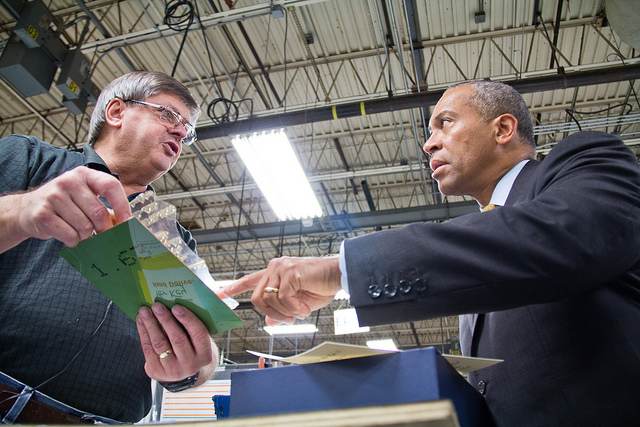
“While the acceleration in US hiring last month was surprisingly sharp and broad-based, a sector that has had a particularly rough 21st century — manufacturing — offered one of the brightest signals. US factories added 28,000 jobs in November, the most in a year, according to government data released on Friday. “
“Employers added 321,000 workers to their payrolls last month, with strong gains in most sectors, from construction and retail to finance.”
Talk therapy (Cognitive behavioral therapy) is considered the number one most effective treatment for PTSD right now. Some veterans have also found art therapy or creating structure through a daily routine helpful. Anti-anxiety medication can be effective, but it can also become addictive so it’s not a good option for a long-term solution.
When I experienced PTSD after a house fire that left me homeless, I tried a holistic approach — and it worked. Here’s what I did.
1. Avoid stimulants like sugar and caffeine. Sugar and caffeine are anxiety-provoking. They get the mind racing, stress the adrenal glands, put the nervous system on edge, add to paranoia and make the heart beat faster. I was already experiencing these symptoms with PTSD, I didn’t need something within my control to make it worse. I traded caffeinated drinks for herbal teas, and once symptoms subsided, I opted for the lesser caffeinated decaf black, Chai and green teas. If you’re a soda drinker, try flavored seltzer instead. Water with lemon or lime is another good substitute. For a sweet fix, grab a piece of whole fruit instead of fruit juices and junk food. These choices will spare adding to the stress of PTSD symptoms, and support your overall health by boosting your diet with antioxidants, vitamins and better hydration. You’ll also balance your blood sugar, which affects your emotional state.
2. Listen to soothing healing meditations daily, especially before sleep. Night time for me was hardest. When the world was still and quiet, images and thoughts became invasive and overwhelming. I was also tormented with nightmares. To help create a peaceful bedtime ritual that promoted feelings of safety, I took a hot shower or bath before bed, read or watched something upbeat, positive, funny or inspiring and left a nightlight on. I popped in my headphones and listened to a relaxing meditation that drifted me into sleep. Even if my mind continued to take me to dark places while I slept, at least I could control how I felt right before sleep. I avoided all negative news and media, and anything that could trigger the slightest hint of fear or uneasiness.
3. Consider energy therapy like Reiki or acupuncture. Energy healing stopped the persistent nightmares and alleviated heavy emotions that burdened me. It took months of sessions to feel on-going results. My sessions with a seasoned healer included talking about how I felt and what I was experiencing. Energy therapy was the calm in the storm, the healing that addressed my body, mind and spirit. Veterans have told me that energy balancing exercises like Tai Chi and QiGong are also extremely helpful. I also found regular massages a great asset to help my body and mind relax.
4. Re-program your mind with positive, grounding statements. PTSD programmed my mind to believe the world was frightening and I wasn’t safe. I was convinced something really bad was going to happen again. I walked around on edge, prepared for that next life-threatening danger, protecting myself from the next unexpected attack. I was dissociated, floating somewhere outside of my body. When I broke away from the automatic pilot of survival mode and became mindful about my thoughts I was able to question their validity. I was able to consciously choose new beliefs like I am safe, and good things can happen. When a PTSD thought stressed my mind, I interrupted it with a positive thought that affirmed my safety. I constantly reminded me that the traumatic experience was in the past, and I was in a different place now, I was okay. I had to give myself permission to move on and trust it was safe to be present. To help heal dissociation, I practiced being present whenever I felt myself drifting. When I was in the car and felt myself spacing out, I said aloud, “My hands are on the steering wheel. I’m driving to work. I’m passing the sports store. I’m approaching a light.” This present awareness self-talk helped snap me out of the numbness and gently bring myself back into my body.
5. Practice yoga therapy. PTSD disrupts neurotransmitters that regulate stress and fear responses. It stresses adrenal glands that produce survival hormones that put you on edge, cortisol and adrenaline. The nervous system gets locked into a hyper state, making you feel on edge, heightening anxiety with the slightest change in environment. You may find yourself flinch at sudden movements and jump at loud noises. My number one therapy healing PTSD was gentle and restorative yoga. At first, I practiced fast moving Vinyasas, sun salutes, to work out anxiety and anger. But cardio isn’t good for intensely stressed states, it only wears down the adrenals glands more and stimulates an overstimulated nervous system. I turned to gentle yoga instead, focusing on slowing down my movements and being present. I gently and mindfully stretched emotional tension out of my body. I asked myself, where am I holding this emotional stress today? I’d locate it in my back, or knees and sometimes my neck, jaw and shoulders. I’d pay extra attention to stretching these parts. I’d try to spend at least 5 minutes in a restorative yoga position, and worked my way up to 10, 15 and 20 as I became more comfortable with lying still and simply being.
When I taught active duty soldiers fresh off deployments, we only did gentle and restorative yoga. They didn’t want any more physical challenges. They wanted rest. They wanted a refuge from the constant moving and change. They wanted the challenge of becoming more mindful, making a conscious mind/body connection and healing from within. At first, lying still may be extremely difficult. This is a sign that your nervous system is jacked up! Have patience. Consistent practice will calm your nervous system, help you breathe deeper and help you feel safe in your body again.
A certified yoga therapist, Lauralyn Kearney founded Yoga for Heroes to teach and counsel veterans, first responders and those serving the greater good. She established the first therapeutic yoga program for the U.S. Army at Fort Bragg helping active duty soldiers heal stress and injuries. Also a reiki master and spiritual counselor, Kearney specializes in holistic healing and promoting inner peace, and has been featured on national television. To learn more, visit: www.LauralynKearney.com, or visit Yoga for Heroes on Facebook.
A team of four U.S. veterans who are now in business school in Massachusetts have teamed up with farmers they met while serving in Afghanistan to bring to market the most coveted and expensive spice in the world – Afghan saffron.
The Rumi Spice company was birthed in March 2013, when Army veterans were discussing an Afgan saffron farmer who had a warehouse full of the valuable spice, with no buyers lined up overseas. They decided they could provide the farmers with a direct link to sell their saffron globally.
The idea was to transform saffron into a cash crop that could triple farmers’ incomes by using fair-trade tactics of cutting out the middle men. In the process it could spur farmers to move away from the poppy crops used to make opium, which funds the Taliban.
Equally important is its potential to help build the fabric of Afgan life, because 80% of the saffron harvesters are women. One of Rumi Spice’s priorities is to empower and promote job opportunities for these women.
The super spice comes from the saffron crocus flower and is so expensive because it requires hand-picking of the individual stigmas. With hot, dry winds over semi-arid mountainous lands, Afghanistan’s growing region is similar to that of Kashmir, recognized as the world’s premier saffron region.
Rumi Spice has begun selling their saffron on their website, giving consumers worldwide access to the 2014 harvests.
(WATCH the Rumi Spice video below or READmore from NPR)
A new brewery in Columbus, Ohio turned an act of vandalism into something positive for their community.
The Land Grant Brewery, which just opened 45 days ago, features a rustic storefront facade made of wood from a 19th Century barn on which they hand-painted their white logo. When the owner arrived Sunday morning, he found splotches of red, yellow, green and black paint splattered across the rough-hewn wall.
The co-owners have already helped the community by choosing to renovate and move into an old brick warehouse located in a run-down area that the city hopes to revitalize.
Adam, Walt and Jamie decided to turn the ‘bad news’ graffiti into a positive. They used the image of their defaced building and designed a t-shirt to sell, with 100% of the proceeds going to two nonprofits community groups.
“For every lazy vandal in town there’s countless more folks working to benefit our awesome neighborhood of Franklinton, and Columbus as a whole, and we wanted to take this careless act and use it to shine a light on some of the folks working towards a positive end,” said the owners on their website.
Orders for the Vandalism Splatter Shirts will benefit The Gladden Community House and the Harmony Project.
No word on whether their storefront will be repainted.
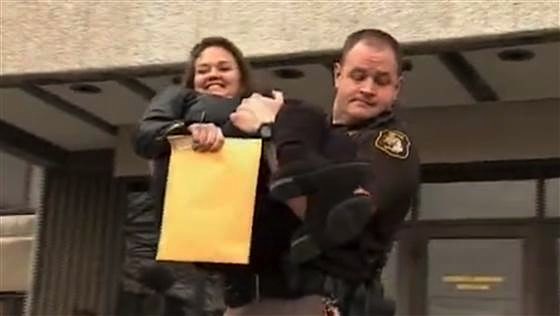
During a power outage in Detroit last week, Kristi Marie Earley was all smiles when a police officer offered to carry her down the stairs.
Earley, who has multiple sclerosis, had just walked down 11 flights of steps with much difficulty. When she reached the lobby area, she found many deputies who offered to keep watch out front for her car, while she rested inside. Once outside and facing the front staircase of the Frank Murphy Hall of Justice, Deputy Sheriff Mark Bennetts of the Wayne County Sheriff’s Department offered to give her a lift, which she accepted.
In a video posted by the local Fox news team, he scoops her up and carries her down to the car that was waiting for her. At the end of the video you can see an elderly man in a walker with another sheriff’s deputy looking to assist.
Ms. Earley said on Facebook, “Not only did this officer help me (they had someone by my side the whole time), they did a great job with helping others as well.”
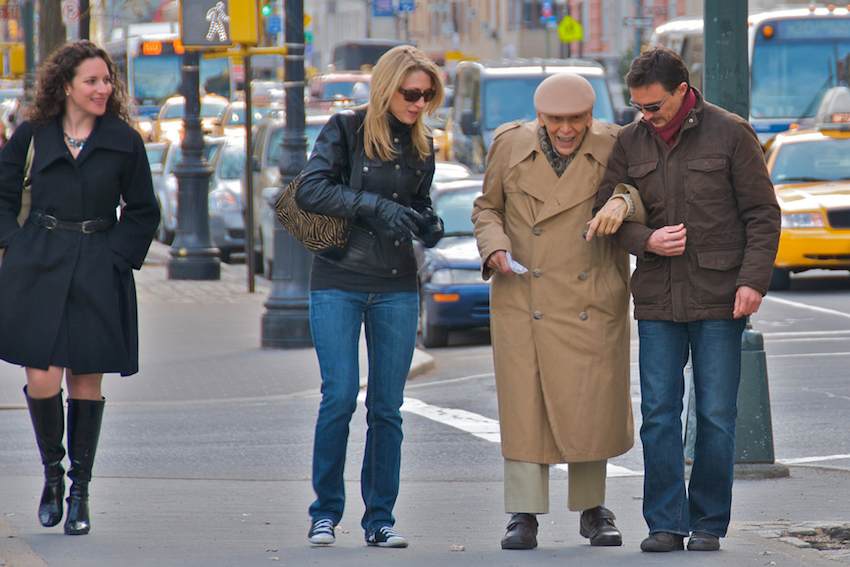
Of course, these were simply kind gestures that are not uncommon, but with the police brutality stories lately, many people are yearning for these actions to be publicized, as well.
Officer Bennetts told TODAY, “I don’t feel deserving of the attention because me doing that pales in comparison to what my partners do every day on the street.”
If Santa were in the technology business, these 100 high school students would be his favorite elves.
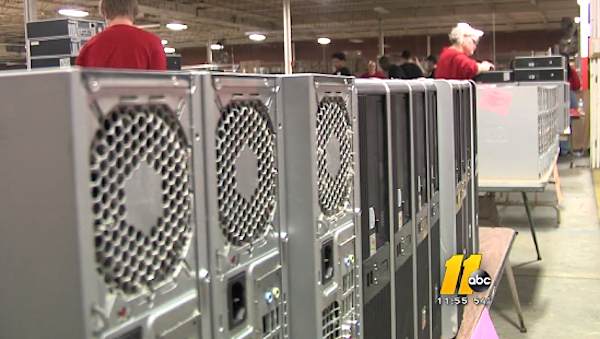
On Saturday morning, they put the finishing touches on 500 computers they’d fixed up themselves to give away to Cumberland County youth who were in need.
For the second year in a row, technology students from two schools near Raleigh, North Carolina — Gray’s Creek and Pine Forest — have given up their Saturdays over many months to refurbish the PCs, which were slated for recycling.
Stacked in rows, the teens loaded the computers into the cars of chosen families who only had to drive up to receive their gift.
When 59-year-old Jeff Taylor saw a nativity scene for sale in a thrift shop that reminded him of the one he loved as a boy, he never dreamed that this cardboard set, missing the lamp and the straw, would turn out to be the exact one that had disappeared from his mother’s home three decades earlier.
He bought it for ten dollars, despite ribbing from his wife, Ann, who didn’t like the shabby model much.
“No,” he insisted. “We gotta have it.”
He later attached an electric light and, every December afterward, gently unwrapped and placed the old cardboard nativity under the tree. “I was like the ‘happy little me.'”
It was seven years before his wife uncovered the amazing truth.
A Boy’s Plea to His Mom
He remembers the moment vividly. It was always a big deal when his mom drove her three kids to Pine Lawn to visit the enormous Katz Drug Store. He was about six years old.
”I saw this nativity scene and I really wanted it bad, so my mom bought it,” recalled Jeff, who spoke to Good News Network by telephone. “It had sheep, a roof of straw and I just loved it.”
His mother, Millie, would catch Jeff playing with the figures, including Mary, Joseph and the baby Jesus, and scold, “Now Jeffrey, quit playing with those!”
After a divorce Millie moved into an apartment, where, later, it was discovered that she had cancer.
Jeff was 27 when she passed. Within a week of the funeral her boyfriend of ten years moved away suddenly. The nativity scene and so many family keepsakes simply vanished.
“It was kind of hard; a lot of stuff I had as a kid was all gone,” he said. “But that was it and life moved on.”
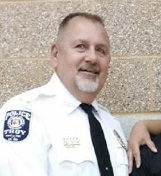
Jeff became a policeman like his father, married Ann and left the St. Louis area to become the chief of police in Troy, Missouri, about 45 miles away.
The Discovery
“There used to be a resale shop full of clutter,” Ann said. “We went in and Jeff spotted this little nativity scene. It’s not at all something I would pick. It was like the one he had from his childhood except the figures were glued in. He had to have it.”
Every year Jeff would pack it up and put it away, except last year when Ann ended up doing it.
Photos courtesy of Ann Taylor
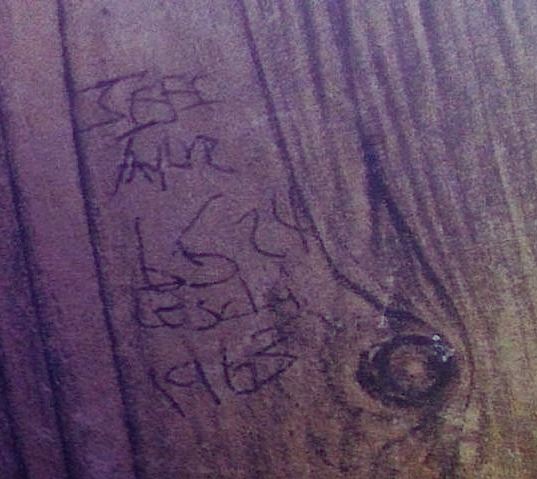
“As I was wrapping the cord end over end, I hollered out, ‘Jeff Taylor you dork. Why would you write your name on the bottom of this?'”
“I thought she was messing with me,” Jeff said. “But then she told me the address written there, ‘6524 Leschen’… That was my old address in Hillsdale!”
In lead pencil he had written his name, street address and the year, 1963. He was 8 years old.
Somehow the nativity scene, which still had a faded sticker with the price of .98 that his mother had paid, made its way to Troy and to the one person who knew it’s true value.
“I immediately started crying a little,” he said. “This is the only thing I have, besides photos, that my mom and I had together.”
Jeff called his brother and his sister — and she remembered it. Every time he tells the story it chokes him up a little.
“From that Christmas on, we don’t pack it away in the attic anymore. It gets a special place in the hall closet. And we will pass it on to our son (who is now 14) so it stays in the family.”
SHARE this Christmas Miracle with the Buttons Below…
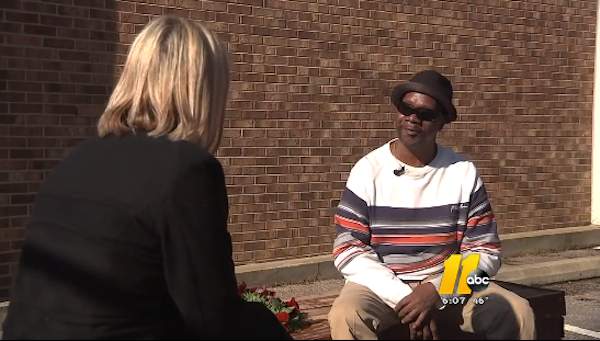
Charles Ray lost contact with his family in Fayetteville about 10 years ago. Later, he suffered a stroke that affected his memory and made it impossible for him to recall their exact whereabouts, reports ABC-11 News. Eventually he ended up homeless in Raleigh.
Lucky for him, the people at Oak City Outreach Center, which serves people living on downtown streets, encourage their volunteers to really sit down and talk to those they are feeding.
Shameeka, a social worker intern, did just that. She learned his story and used what little information he recalled to track down his relatives, who were overjoyed to hear of Charles’ whereabouts.
Further service from the Center helped him get his disability checks straightened out and he is now off the streets and planning to spend the holidays with his brother, his wife and nephews.
Rain delayed the dedication yesterday of the so-called “ugly” Christmas tree in a town square in Reading, Pennsylvania, but a single red ornament placed on its drooping branches made the spirit of the season shine extra brightly.
In late November, the city’s first-choice for a community tree was unobtainable because of soggy conditions that couldn’t support a truck. Their second choice proved controversial because of its spindly, unshapely appearance.
After an uproar of disapproval, workers removed the decorations and lights that had been erected, saving them for a replacement tree. But a stay of execution was granted when the town council voted to keep the 50-foot Norwegian pine and give it the “Charlie Brown treatment,” to remind people of the deeper meaning of the season as told in the beloved “Peanuts” holiday story.
Additionally, officials thought that keeping the tree might boost tourism in one of the country’s poorest cities because so many news reports had featured the “ugly tree”.
To placate the critics, money was donated to purchase a lush, shapely tree to be fully decorated and placed elsewhere in the town.
And, best of all, the Morning Call reports that, “like the famed cartoon tree, Reading’s evergreen will not remain forlorn for long.” A local minor-league hockey team and others have donated ornaments, and a local real estate agent has donated the use of a bucket truck to drape them on its highest branches.
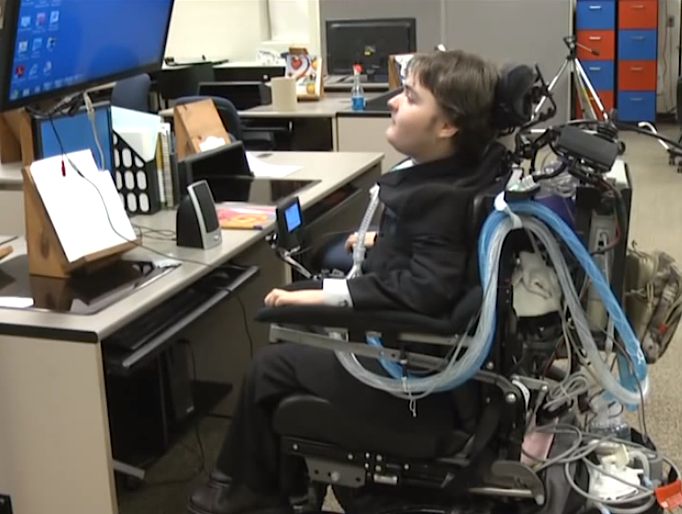
Macon High School senior Dominic Bergfield is like any other student, except that he is paralyzed from the neck down. He has always dreamed of being a writer and, thanks to a caring teacher who got him the technology he needed, that dream has been fulfilled.
With lots of persistence, William King, a business instructor at Macon Area Career Center, acquired the technology that enabled Dominic to write his novel.
It works with a small sensor placed on Bergfield’s nose. As he moves his head an infrared camera tracks and simulates his movement inside the computer, just like a mouse.
KTVO reports that Bergfield finished writing his first book, Earth, in a matter of months, and because of all his hard work and dedication, Mr. King decided to surprise Bergfield by getting it published.
“This paralyzed young man is tugging at all our hearts here with what he is accomplishing,” Donna Epperly, King’s wife, told the Good News Network.
Dominic believes his achievement can inspire others.
“I’m living proof that there’s no limitations. I’m a quadriplegic and I’m a published author, before I even graduate high school. So if I can do it, there’s not a single thing that you cannot do,” he told KTVO.
You can buy the book, Earth, about the trials of a young homeless man, at Amazon.com.
A 5-year-old girl in North Carolina won’t be left out when her grandparents pass out presents this holiday season, thanks to a trucker in Indiana.
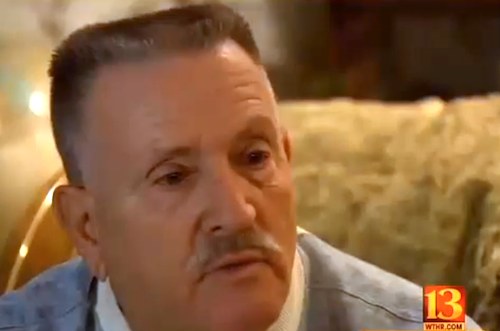
WTHR-TV reported, “Trucker George Haskett spotted what appeared to be a Christmas present in the median of a busy Indiana highway last weekend.”
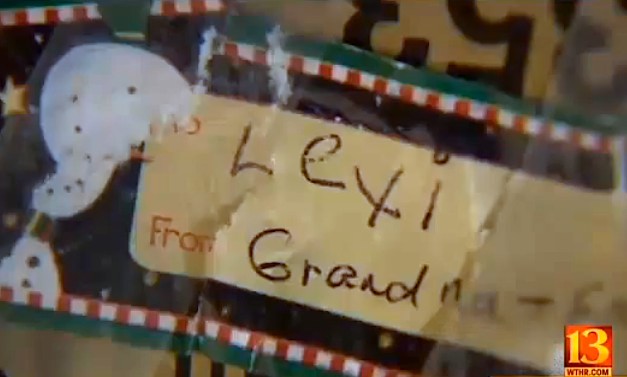
So he took the time to park his truck, hop the medium strip and pick it up. It was a wrapped Christmas present reading “To Lexi, From Grandpa and Grandma.”
The trucker wanted to get the package back to the girl because it was something unique.
After the information was shared on Facebook more than 2000 times, the mystery was solved. Now Lexi will have something very special under her tree, thanks to the efforts of George and his wife, who made sure it spread on social media.
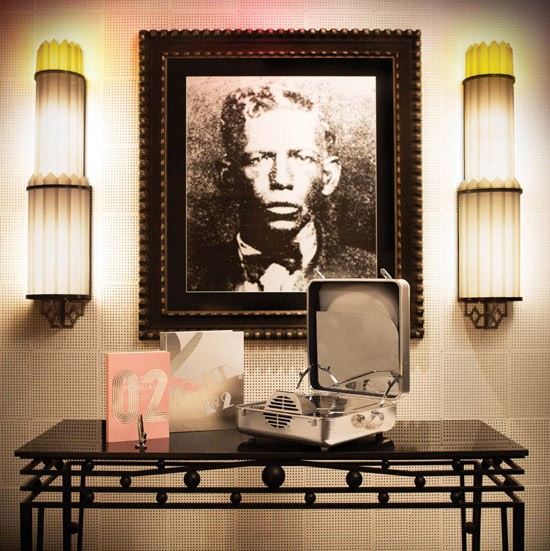
At the root and heart of so much great American music were the blues and jazz players that came out of the Mississippi Delta a century ago.
A young American rocker – Jack White, of White Stripes fame – has now stepped in to rescue a priceless blues archive from obscurity.
White’s record company has not only led a nostalgic and profitable return to making and buying vinyl LPs by new artists, it has also assembled and remastered hundreds of old recordings and collected and restored historical artwork from Paramount Records, a powerhouse in black music that closed its doors in 1932.
Oddly, Paramount, which recorded new talent such as Louis Armstrong and Jelly Roll Morton, was started by the white-owned Wisconsin Chair Company. The furniture maker sold wooden cabinets for phonographs and wanted to start a music label to help propel record sales. Their biggest selling recordings were “race records” that showcased unknown black musicians.
How did a Wisconsin chair company, producing records on the cheap and run by men with little knowledge of their audience or the music business, build one of the greatest musical rosters ever assembled under one roof? They hired Mayo Williams, an African-American Brown University graduate, to scour the South looking for talent.
Over the last three years, White’s team at Third Man Records has archived 1,800 recordings that represented 175 artists, and produced two stunning box sets to document the label’s ascent.
The Rise & Fall of Paramount, Volume One (1917-27) chronicles Paramount’s improbable rise from also-ran to jazz-blues juggernaut, launching the recording careers of giants like Armstrong, Morton, Ethel Waters, Big Bill Broonzy, and Fats Waller. It includes six vinyl LPs, 800 digital tracks (on a USB drive shaped like a Victrola arm), and two books documenting it all with a discography and illustrated advertisements from the era.
The just released “Volume Two” (1928-32) also includes six vinyl records, an 800-song USB drive, and two beautiful books. Vol. One comes in a hand carved oak cabinet and Vol. Two is sold in a polished aluminum and stainless steel suitcase. Both sets are available on ThirdManRecords.com for $400 each.
“There have been anecdotal hints for months that employers are facing new pressure to raise workers’ wages as the job market has gotten tighter,” reports the NY Times. “And Friday’s report is the first piece of real evidence in the official government data that it’s happening.”
In November, employers added 321,000 new payroll jobs, and at higher hourly wages. And, September and October counts were revised upward to net 44,000 more positions.
This represents the best monthly result since January 2012. Weekly payrolls rose a whopping 0.9 percent in November, which is the kind of monthly swing that rarely happens.
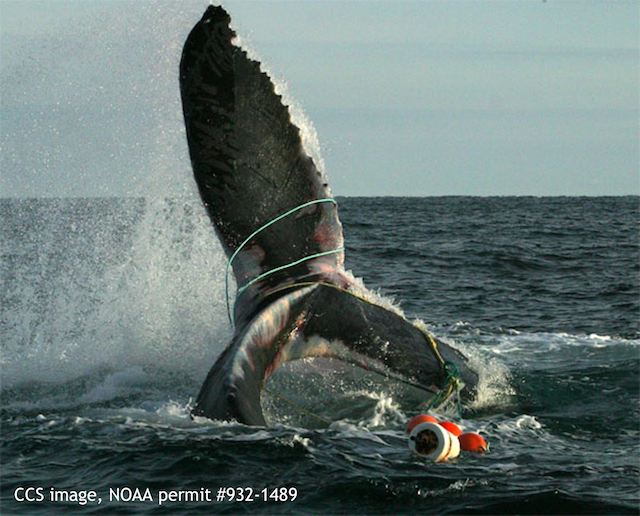
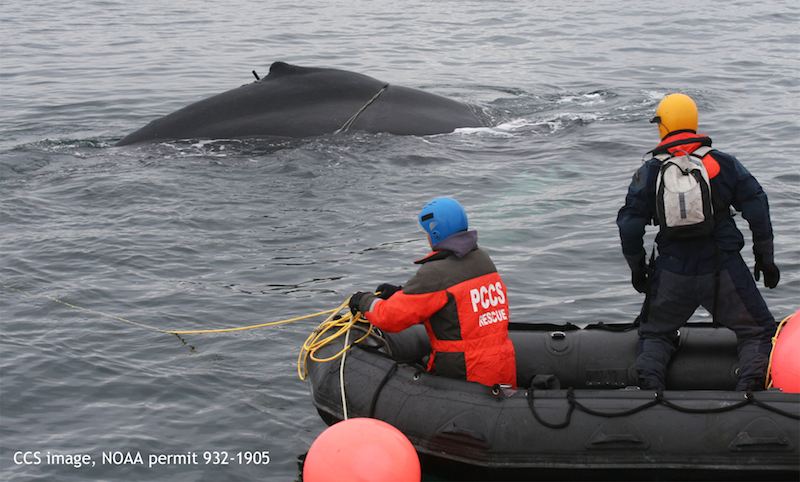
On Thanksgiving Day 30 years ago, a whale in distress was freed from a heavy, dragging mass of fishing gear in the icy waters of Provincetown Harbor. Nicknamed Ibis, the humpback was rescued by Massachusetts researchers from the Center for Coastal Studies who became the first group to successfully disentangle a free-swimming whale.
That day in 1984 was the founding spark for what became the Marine Animal Entanglement Response team (MAER). Since Ibis, the team has freed more than 200 marine animals from life threatening entanglements, including seals and sea turtles, and have developed unique techniques and tools to do the job.
Because many of these animals are endangered species (especially the North Atlantic right whale, which numbers only about 500) the successful release of just one individual may have a profound effect on the recovery of the population as a whole.
After ten years MAER and CCS partnered with the National Marine Fisheries Service to form the Atlantic Large Whale Disentanglement Network, with trained and equipped responders located from the Bay of Fundy in Canada all the way down to Florida. They’ve also travelled overseas to train teams from Australia, Mexico, and South Africa, and hosted trainees from Argentina, Brazil, Canada, the Dominican Republic, Puerto Rico and Great Britain.
An ongoing study at the Center has analyzed the scars left on entangled humpback whales, and determined that an average of 12% of the population becomes entangled annually.
Photos courtesy of CCS/NOAA
In a major new initiative the Center will collaborate with the International Whaling Commission to develop a worldwide network of professionally trained and equipped entanglement responders. According to the program’s coordinator David Mattila, “So far the program has reached more than 500 scientists, conservationist and government representatives from over 20 countries, and has been highly commended by countries and NGOs from all points of view about whales and conservation.”
The program will also ensure that disentanglement operations are conducted to the highest safety standards, minimizing risk of injury to both humans and animals.
While the rescue of individuals certainly aids species preservation and recovery, the best long-term solution to the marine animal entanglement problem is prevention. To that end, the Center continues to work with fisheries managers to explore technologies and techniques to reduce the frequency and impact of entanglement on marine animals.
If you see a live or dead marine animal entanglement off southern New England, please report to the MAER Hotline (1-800-900-3622) or hail the USCG on VHF 16.
It’s a Christmas miracle come early for a North Carolina grandmother.
Barbara’s roof was leaking over her bed and throughout the house, so she went to see All About Roofing, located in Elon. With only $300 to pay, owner Jeremy Lee realized she needed help. That amount would not even begin to address the roof’s problems.
So he decided to give her a roof free of charge, reports WGHP News.
An 80-year-old great-grandmother was handed a $50 gift card by an anonymous youth in November, a random act of kindness by a group in Prince Edward Island that has worked quietly for seven years.
Marie Myers is a long-time member of the group in Canada. She says her son T.J. was “a young man who really understood the power of giving back, and when he died four years ago, Marie wanted to find a way for his spirit to live on.”
Last week the 72nd annual Santa Train made its annual trip through Appalachia giving out more than 15 tons of clothing, food, candy, wrapping paper, toys and gifts.
Since 1943 The Santa Train has ushered in the holidays making 14 scheduled stops along its 110-mile route through poverty-laden areas of Kentucky, Virginia and Tennessee. This year, gifts and donations from individuals and companies across the U.S., including CSX, Dignity U Wear and Food City, made it all possible.
Singer Amy Grant was this year’s on board celebrity guest, and Erin LaBelle, a photojournalist from Kent, Ohio, captured a lovely moment when Grant ventured into the crowd to greet — and sing with — a young woman who has William’s Syndrome.
Savannah Church could not contain her excitement as Amy approached her at the Fremont, Virginia stop.
“Savannah caught my eye when I first arrived because she radiated such a strong positive energy,” LaBelle told the Good News Network. “As a photographer, I look for those who will react with emotion when the train arrives and they first see Santa.”
”I kept my eye on her and overheard Savannah whisper into a Santa Train volunteer’s ear to which he replied, ‘She’s coming to see you Savannah!'”
This image captured the moment Savannah is first able to see Amy climbing down off the Santa Train and walking in her direction.
“It was a truly beautiful thing to witness and speaks to the power celebrities have to bring joy and encourage others,” said LaBelle, who submitted her photo to be featured on the Good News Network.
See more photos from Erin LaBelle (Photo of Santa by The Smile Train)
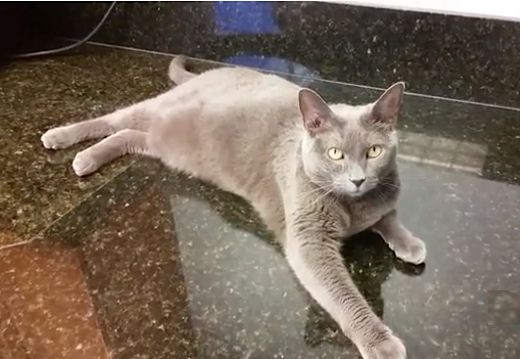
A family’s cat from Suffolk, Virginia survived a month-long trip across the country, without food or water, stuck inside a moving box.
When movers went to pack up the Barth family’s home in September, Mee Moowe went missing.
“I was really worried and starting to think the worst,” Barth told WAVY News. “Maybe she ran away, maybe the movers scared her and she decided it was too much noise and she took off.”
The family delayed their move to Hawaii, staying three more nights in their empty house, hoping Mee Moowe would show up. Eventually, they couldn’t wait any longer.