












Renewable energy technologies contributed nearly one fifth of the UK’s power mix in the first quarter of the year, as a result of high winds, rainfall, and a surge in new construction in the solar farm industry.
According to new government figures released August 14, UK renewables saw a record quarter, producing 43% more green energy than the same period in 2013.
A 70-year-old Australian man officially became the oldest person to swim the English Channel, considered the ‘Everest of swimming’.
Lifelong swimmer and life guard Cyril Baldock thanked his supporters on Twitter after completing the swim between England and France in 12 hours and 45 minutes on Wednesday.
“I haven’t had this much fun in years,” he told reporters while standing on French soil.
When he was half-way there his Twitter account @BaldockCyril reported, “Spirits still high. Weather is magic!”
However Mr Baldock’s record may be short-lived, because 73-year-old Brisbane woman Irene Keel is also attempting the swim this week, according to ABC news in Australia.
Colombian military officers and leftist guerrillas from FARC met face-to-face for the first time in their 50-year war, starting talks on a ceasefire. (Reuters)
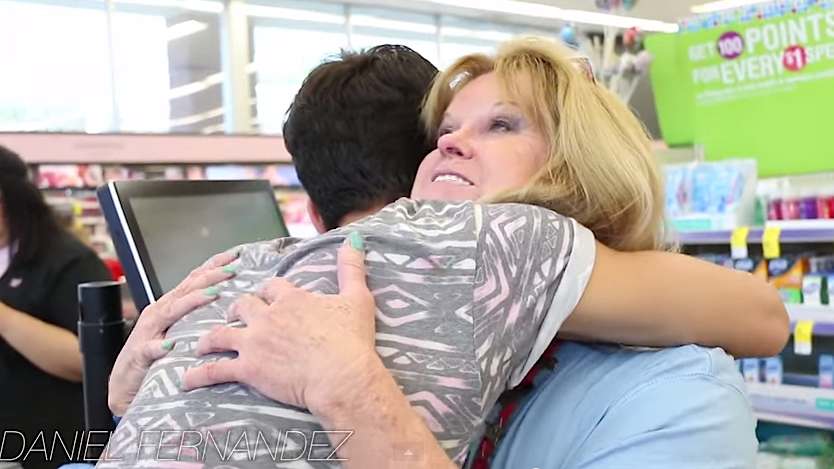
Chesterfield, VA neighbors, disturbed that a young man was robbed in their community, started discussing on Facebook the idea of collecting a large tip to give to the driver who suffered a traumatic night near their homes.
More than one hundred dollars was taken from the young man. He returned with pizza ordered by the Good Samaritans and was surprised when they presented him with a $250 tip.
“It restores my faith in humanity,” he told a WTVR reporter.
Far off in a remote area of Zambia, a new model for conservation is saving not only elephants and lions and the habitat, but reducing poverty and hunger among thousands of poor farmers who share this valley with these magnificent animals.
Over a decade ago when conservationists in the Luangwa Valley figured out the connection between poverty and poaching, things began to improve rapidly. When they learned the reason poachers hunted game was to feed their family, a great program called COMACO was hatched. By educating women and poachers in farming, bee-keeping, carpentry, and metal working, they were improving villagers lives and poaching began to plummet.
Wildlife Conservation Society biologist Dale Lewis has turned everything around since he founded COMACO (Community Markets for Conservation) and launched its training and recruitment programs in 2001. Since then, 661 poachers have retired from active hunting and for each one of them an average of 50-60 animals per year were saved.
The testimonials on the COMACO website tell a remarkable tale:
“Mostly I liked hunting elephants, leopards, and lions. I sold to buyers – all illegal. For a leopard skin we would get maybe four blankets, or exchange it for some clothes. We were not profiting,” said one young man who went from poacher to farmer. “Now we have a garden. Now we have enough so that we can sell something and have some money, unlike in the past days of poaching when we gained nothing.”
“In the past, if a young boy killed a buffalo, he gained respect. But those things you must sell at a cheap price because you can always be caught,” said another former poachers. “With a table, I can sell it [openly] to any person who wants it. Before, our parents told us, “hey, bring that knife,” and in that way we were trained to hunt. Now I tell my children, “bring that saw.” My sons will be carpenters, and life will be better for them.”

COMACO’s food products and crops, grown and packaged under the name It’s Wild, are now marketed around the region.
LEARN the ways you can help on their website, www.itswild.org.
WATCH this brilliant video from National Geographic Society
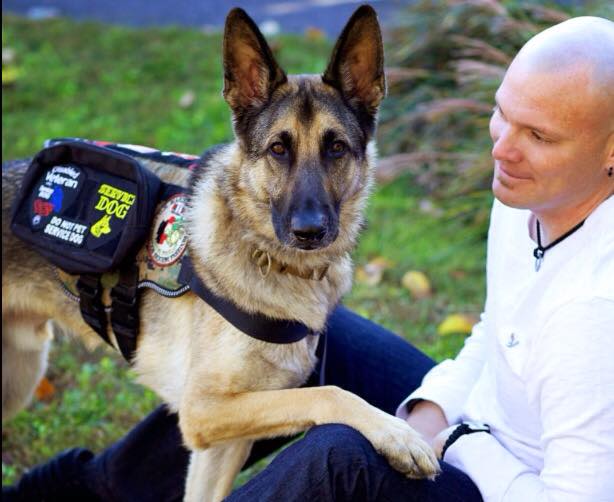
A U.S. veteran, quadruple amputee Taylor Morris, was traveling through McCarran Airport in Las Vegas with his wife, when his prosthetic knee suddenly broke down. His tool kit was out of reach, packed in his luggage, but luckily the lead aircraft mechanic for American Airlines was able to come to the rescue.
“Normally we just fix airplanes and don’t interface with passengers,” said Keith Duffner who received a call for help from a colleague upstairs.
“Occasionally we provide tape or glue for an interim repair (but) on this call, a traveling military veteran was in need of a wrench to adjust his artificial leg.”
It took a few minutes to loosen the screws, and then his wife and Duffner realigned the foot.
Taylor posted this photo on Facebook with a message for Keith, “Thank you to this awesome Las Vegas airport maintenance employee who was able to save the day!”
“What I did wasn’t much,” he said on the McCarran Airport Facebook Page when they contacted him for details. “We all are in debt to him and his family for sacrificing in service to us.”
Taylor Morris, it turns out, doesn’t waste his life feeling sorry for himself. His enthusiasm for service led him to organize the second annual 5K Glow Stick race to raise money to help someone else.
Close to 1,000 glowing supporters took to the streets in Cedar Falls, Iowa to run in the evening 5K on Saturday, August 23. They raised around $7,000 and race participants voted on which deserving person should get the money.
A 1-year-old girl named Lily, who has Spinal Muscular Atrophy Type one, was named the winner. When Lily’s dad was brought on stage, he gave a touching speech and ended it by saying their family would like to divide the $7,000 with each of the other 5 nominees.
Who knows why videos go viral — Gangnam style and twerking fads, they spread like wildfire. But, now a worthwhile charitable campaign is tearing up social media, raising more than $42 million in the process.
The recent deluge of videos featuring people dumping ice water on themselves may seem dumb at first, but to those living with amyotrophic lateral sclerosis (ALS), or Lou Gehrig’s Disease, the Ice Bucket Challenge is a splash of hope in an otherwise hopeless situation.
Anthony Carbajal has lived his entire life in fear of ALS, which runs in his family. It took the life of his grandmother and robbed his mother of the ability to walk or even sit up in bed. Five months ago, his worst nightmare became reality when he was diagnosed with the disease at 26 years old. He posted an emotional and powerful You Tube video in response to the #icebucketchallenge.
“ALS is so (bleeping) scary,” he said through tears. “Eventually I won’t be able to walk, talk or breathe on my own.”
The debilitating and rapidly progressive fatal neurological disease causes the brain to stop sending the messages that control muscle function. According to the National Institute of Neurological Disorders and Stroke, the muscles in the face, arms, legs and body gradually weaken and waste away. Eventually, the individual loses the strength and ability to move, but their mind and senses remain in tact. Control of eye muscles is one of the only ways for patients to communicate. Despite billions of dollars being poured into clinical trials, there is only one drug approved by the U.S. Food and Drug Administration, called riluzole, which has been shown to slow the progression of the disease, but only extend survival for a few months.
Aside from a few notable cases like NFL player Steve Gleason, there has been little celebrity attention on the disease since 1939 when the New York Yankees baseball star Lou Gehrig gave a heartwarming speech at Yankee Stadium saying he was the “luckiest man on the face of the Earth.” But, now, in the age of viral videos, “Lou Gehrig’s Disease” is making up for lost time — 75 years worth of silence.
Jimmy Fallon with his band, The Roots, on the Tonight Show
In three short weeks the Ice Bucket Challenge has made a bucket of frigid water the global symbol of ALS immobility. Started by Pete Frates, a former baseball player for Boston College who has lived with ALS since 2012, and fellow ALS patient Pat Quinn, the act is a metaphor for the disease, which can rob patients of their ability to sense hot or cold.
The videos tearing up social media under the tag #icebucketchallenge show everyday people –and celebrities — throwing a bucket of ice water over their heads. Then, they “nominate” three other people asking them to do the same, otherwise, donate $100 to any ALS charity, or ideally do both within 24 hours. Oprah Winfrey, LeBron James and George W. Bush were a few of the celebrities, athletes and politicians who doused themselves and made it a viral phenomenon (see those videos below).
It is Simple, Viral and Social, but to the ALS Community, it is a Miracle
“You have no idea how every single challenge makes me feel; lifts my spirits, lifts every single ALS patients’ spirits. You’re really, truly making a difference and we’re so, so, so grateful,” said Carbajal in his video at the bottom.
As of Thursday, August 21, the ALS Association had received $41.8 million in donations. Three-quarters of a million new supporters donated cash for the cause. They nominated their friends to do the same.
“To all who participated, I say thanks. I’m so honored and humbled,” Frates communicated via a computerized device due to speech difficulty associated with the progression of ALS.
With the sudden abundance of contributions, the ALS Association plans to fund groundbreaking research in laboratories, provide vital support and care services through their nationwide network. They hope to empower ALS advocates to encourage their elected officials to support government programs for research, because after summer is over – when it no longer feels refreshing to dump ice water on yourself and the dollars stop pouring in – the ALS community will still be in need of hope and in search of a cure.
32-year-old Joe Campbell didn’t have a suit hanging in the closet on the day he was scheduled to interview for a job in New York City. He’d been unemployed for more than a year and was homeless, but desperate to succeed.
After his job counselors directed Campbell to visit “Suited for Work”, he was stunned by what he found there.
Brand-new suit jackets from designers like Calvin Klein, Perry Ellis and Michael Kors hung from the racks and dress shirts stacked neatly on the shelves boasted pearly buttons.
At the Suited for Work boutique, volunteers and staff members of the nonprofit social services agency, Federation Employment & Guidance Service (FEGS), prepare their clients for success by offering each an entire new outfit.
“With donations from companies like Men’s Wearhouse, Peerless Clothing Inc. and Nautica, they have put more than 8,000 clients in new professional clothing since the program started in 2008,” says the NY Times in a recent story.
Suited for Work helps men gain additional confidence for their job interviews. No matter what the job, even in janitorial services, a sharp suit will give them a leg up on the competition. Karen Zuckerman (pictured above) is the FEGS Associate Vice President of Volunteer Services who developed the rare program that fits men with new business attire.
In the article about Suited for Work in the New York Times, Joe Campbell got the job that day. The manager offered him a part-time position on the spot, for $8 an hour, and commented on his nice suit.
A team of researchers at Michigan State University has developed a new type of solar panel that when placed over a window creates solar energy while allowing people to actually see through the window.
It is called a transparent luminescent solar concentrator and can be used for buildings, cell phones and any other device that has a clear surface.
And, according to Richard Lunt of MSU’s College of Engineering, the key word is transparent: “Ultimately we want to make solar harvesting surfaces that you do not even know are there.”
Research in the production of energy from solar cells placed around luminescent plastic-like materials is not new. These past efforts, however, have yielded poor results – the energy production was inefficient and the materials were highly colored.
“No one wants to sit behind colored glass,” said Lunt, an assistant professor of chemical engineering and materials science. “It makes for a very colorful environment, like working in a disco. We take an approach where we actually make the luminescent active layer itself transparent.”
The solar harvesting system uses small organic molecules developed by Lunt and his team to absorb specific nonvisible wavelengths of sunlight.
“We can tune these materials to pick up just the ultraviolet and the near infrared wavelengths that then ‘glow’ at another wavelength in the infrared,” he said.
The “glowing” infrared light is guided to the edge of the plastic where it is converted to electricity by thin strips of photovoltaic solar cells.
“Because the materials do not absorb or emit light in the visible spectrum, they look exceptionally transparent to the human eye,” Lunt said.
One of the benefits of this new development is its flexibility. While the technology is at an early stage, it has the potential to be scaled to commercial or industrial applications with an affordable cost.
“It opens a lot of area to deploy solar energy in a non-intrusive way,” Lunt said. “It can be used on tall buildings with lots of windows or any kind of mobile device that demands high aesthetic quality like a phone or e-reader.”
Lunt said more work is needed in order to improve its energy-producing efficiency. Currently it is able to produce a solar conversion efficiency close to 1 percent, but noted they aim to reach efficiencies beyond 5 percent when fully optimized. The best colored LSC has an efficiency of around 7 percent.
The research was featured on the cover of a recent issue of the journal Advanced Optical Materials.
There’s more than coffee percolating at a Starbucks in St. Petersburg, Florida.
For the past two days, hundreds of drive-thru customers have been providing random acts of caffeinated kindness, paying for the drinks of the strangers behind them.
It started on Wednesday around 7 a.m., when a woman paid for her iced coffee — along with the caramel macchiato ordered by the driver behind her.
Seattle Police Officers Jeremy Wade and Ryan Gallagher say they were heartbroken after meeting two little girls living in a townhouse who had no beds and were sleeping on the floor with just a dirty blanket.
“We left the house just wishing we could do more for them beyond our regular police duties,” Wade told the Seattle Times two months ago.
Their discontent drove the officers to return a few days later with new twin beds for the two young girls, paid for out of their own pockets.
Officer Wade said the surprised grandmother said she felt “like a million dollars” while the officers assembled the beds from IKEA and left gift bags for each girl who used the items to decorate their new room.
Despite their kindness, neither of the officers wanted to publicize their efforts. However, they began to reflect and realized this same situation was all too common. As Officer Wade put it, “there are hundreds of kids without beds in the Seattle area.”
To address this need in their community, the officers founded the “Beds for Kids Project.” Operating with help from the Seattle Police Foundation (SPF) Beds for Kids has been raising awareness and money all summer, in order to purchase new IKEA bedding supplies for the poorest kids in the city.
IKEA Seattle has generously donated five thousand dollars in bedding supplies to the cause.
On September 6th the Seattle Police Foundation, IKEA Seattle, and SPD officers will be volunteering their own time to assemble and distribute the 40 beds they’ve already raised money for. Each bed comes complete with sheets and pillow cases. IKEA has also pledged to donate backpacks and school supplies for the children receiving the beds.
The project has raised twelve thousand dollars for their September 6 event, but they could use a lot more help. See their web page to help buy sheets, pillowcases or mattresses. All donations go directly towards purchasing bedding supplies.
(READmore in the Seattle Times) File Photo of a police officer smiling, by Peter Martin Hall, via CC – Story tip from Julia Frerichs
The Justice Department announced today that Bank of America will pay a record $16.65 billion fine to settle allegations that it knowingly sold toxic mortgages to investors.
$7 billion of it will go to consumers faced with financial hardship.
“We are here to announce a historic step forward in our ongoing effort to protect the American people from financial fraud – and to hold accountable those whose actions threatened the integrity of our financial markets and undermined the stability of our economy,” Attorney General Eric Holder said at a news conference announcing the settlement.
Walking up and down the roads with his ladder, Jared Auger was proud of his manual labor because it provided for his family.
Richard Uhl decided to stop and talk to him and found out he didn’t own a vehicle. He takes down expired satellite dishes for homeowners in Bountiful and recycles them — all on foot.
”What a nice stranger. Gosh. He’s out there doing everything he could do to support his wife and his child,” said Uhl who returned with a huge surprise.
“I knew him for maybe seven minutes and he helped me. It’s amazing. It’s unreal to see there are still people like that,” said Auger.
Appearing thin but smiling, a doctor who weeks ago entered an Atlanta hospital in a full-body biohazard suit to be treated for Ebola said on Thursday he was “thrilled to be alive” as doctors declared him virus-free and safe for release.
“Today is a miraculous day,” said Kent Brantly, the 33-year-old medical missionary who had been working in Liberia. “I am thrilled to be alive, to be well and to be reunited with my family.”
Brantly and another doctor, who was released two days ago virus-free, received an experimental therapy called ZMapp, a cocktail of antibodies made by tiny California biotech company, but health experts cautioned against declaring the drug a medical breakthrough based on two patients.
About 50 percent of people survive Ebola anyway, even under poor medical conditions.
Each summer, the world famous Chincoteague Island pony swim captivates locals and visitors alike.
The charming little fishing village of Chincoteague (pronounced Shink-o-teeg) on Virginia’s eastern shore normally has a population of some 3,000. But on this one day every summer, the town swells with more than 10 times that many visitors. Braving the heat, humidity and insects, they come to see an event that has long enchanted horse lovers.
The annual swim of wild ponies across the Assateague Channel dates back almost 90 years. The Chincoteague Pony, also known as the Assateague horse, is a breed of pony that lives wild on Assateague Island, federal land off the coasts of Maryland and Virginia.
Seaside cowboys shepherd the animals off the island in order to maintain the herd at about 150—the number of ponies the sandy habitat can safely support.
The practice of rounding up ponies and removing some of them to the mainland began around 1835. In 1909, the town settled on the last Wednesday of July as the official day for the event, which had become a festival day. At first the ponies crossed the channel by boat, but in 1925, they began swimming across. The ponies cross at slack tide, a period of about 30 minutes when there’s no current. (Read a first-hand account of the 2014 swim in Country Magazine)
The animals are then admired and sent to a coral to rest. The day after the swim, the fire company sells the foals at auction to horse lovers impassioned by the mystique of the wild breed. The proceeds support local charities and raises operating funds for the fire department.
Several legends are told regarding the origins of the Chincoteague, with the most popular being that they descend from survivors of wrecked Spanish galleons off the Virginia coast. It is more likely that they descend from stock released on the island by 17th-century colonists looking to escape livestock laws and taxes on the mainland, according to footnotes at Wikipedia.
Gena Gabrielle had no idea when she sent the invitations for her bridal shower and wedding to her favorite celebrity, Taylor Swift, that she would even get a reply.
Swift and her team found the invitations earlier this year as they were going through the fan mail at the office. The singer thought it would be fun to surprise such a loyal fan, so she booked a flight for Columbus, Ohio setting aside the April date.
Gina had met Ms. Swift during multiple fan meet-and-greets.
Swift arrived with her assistant, loaded with gifts, including a Le Creuset kitchen mixer and a Barefoot Contessa cookbook. She included a hand-written recipe for her own chocolate chip cookies and homemade gifts like a batch of the cookies and a painting decorated with hearts, wedding date and couple’s names.
(WATCH the video made by Taylor herself about her good deed)
An Indonesian couple that were last month reunited with their 14-year-old daughter who went missing in the 2004 earthquake and tsunami disaster that hit the northernmost province of Aceh have in recent days also found their missing son.
After media reports in the country showed pictures of the family and long-lost daughter, a woman recognized a resemblance to a homeless boy, which turned out to be their son Arif Pratama, who was just seven when he was washed out to sea with his sister.
A fisherman rescued the siblings, who were later separated.
Do you have to spend hours wading through hundreds of emails when you return from vacation? So much for the stress reduction you’ve just achieved.
Car and truck maker Daimler is giving its employees in Germany a new vacation option: auto delete.
About 100,000 Daimler employees can choose to have their incoming email permanently obliterated while on vacation.
“To bring good input into the company you need also to rest and you need breaks,” says Daimler spokesman Oliver Wihofszki. He says employees should return to work motivated and with a fresh spirit, so they “don’t have to think,‘Oh my God, I have to read 576 emails.'”
There is an auto-reply message that goes out to senders for including an emergency contact, along with the cheery sign-off: “I appreciate your understanding!”