In France, where cheese has a museum, and there’s a hospital ward for foreigners who get sick eating French cheese, is it really a surprise that they have a cheesemonger olympics?
A cheesemonger is the person who sources and sells cheese to the community—a respectable profession says Emilia D’Albero, the first US woman, and the first American to boot, to win gold in said olympics.
From Philadelphia, the city where she learned the profession at the Philly Cheese School, D’Albero has been cheesemongering for years under the TikTok handle @punkrockparmigiano, but it was her first time medaling at the olympics, held in Tours, France.
“My teammate, Courtney Johnson, and I are the first all-female team USA,” D’Albero told CBS News. “They had never sent two girls before.”
Beating out cheese stronghold nations like Switzerland, Spain, Italy, and of course, France, D’Albero had to compete in four events: a blind tasting, the “perfect cut,” a cheese sculpture, and a 100-centimeter square plateau centered around a theme.
She hopes that the heavy gold medal will bring the attention which her profession so richly deserves.
“In other parts of the world, like Europe, being a cheesemonger is seen as a really respected career,” D’Albero said. “In America it’s not as respected as it should be. It’s definitely skilled labor. We have to have an encyclopedic knowledge of the cheeses in the case.”
While most Americans know only about as many cheeses as what go on pizza and sandwiches, there are some amazing American cheesemakers, which have also won awards for their cheeses.
A great start would be Point Reyes Farmstead in California, who’s Bay Blue is the perfect first-timer blue cheese you could hope to find—and you don’t even have to pay the import duty.
For what was one of the most dangerous cities in America, a summer without a homicide is a major achievement.
Major—doubtless; but unexpected? Perhaps not. Camden, New Jersey hasn’t experienced a summer without a homicide in 5 decades, but thanks to a new approach to policing and a new police department in general, sunny summers such as these could become routine forecast.
“We dissolved the police department of Camden City, formed and brought up a new county department that oversees this city,” said Camden County Commissioner Director Lou Cappelli Jr.
The dramatic restructuring was followed by a dispersal of officers into each community, where they would forge relationships with the citizens, and be closer to where crime occurred.
Overseen by the Real Time Tactical Operation Intelligence Center, a new surveillance command center operating over one thousand street cameras, the new outfit rapidly saw success.
The start of this year has been one of the best there’s been in terms of crime statistics for the once troubled city.
“It was bad,” Cappelli told ABC 6 Action News. “Homicides are down 75%. I’m just so happy for the residents of this city. They deserve this kind of safety.”
That community-focused policing has residents teaching their children that police aren’t their enemies, and working with charities and nonprofits that help put on events with them, the officers are eager to play that role—of trusted neighbor and guardian rather than enemy.
Cappelli said that the results are so good that the department has been getting inquiries from not only other American counties and cities, but also other countries as well, to ask and learn about their policing, which has been so successful it’s led the mayor and other officials to focus on growing the community again.
WATCH the story from ABC…
SHARE This “Huge Milestone” For Camden With Your Friends From The Area…
Two Ukrainian residents in Taiwan help with flood relief and cleanup - credit, supplied
Two Ukrainian residents in Taiwan help with flood relief and cleanup – credit, supplied
Taiwan society has mobilized in response to flooding after a typhoon made landfill on the East Asian island, including visitors and foreign residents.
With those arriving with rainboots and shovels dubbed “Shovel Supermen” and those arriving to cook meals for those whose homes were destroyed dubbed “Cooking Supermen,” it’s a touching and inspiring example of an all-hands-on-deck response to disaster.
Typhoon Ragasa made landfall last Tuesday, causing heavy rains in Hualien County and causing local water sources to overflow. Flooding and mudslides have displaced hundreds of residents, particularly in Guangfu Township.
In response, thousands of volunteers have streamed south, shovels and rainboots in hand, to help. The Buddhist charity Tzu Chi managed to co-opt 3,000 volunteers by the following Saturday.
Others brought food and portable kitchen supplies to cook food for volunteers and victims alike.
Heading southward in extra trains mobilized by Taiwan Railway Corp., the volunteers included two Ukrainian women who had lived in Taiwan for 9 years, and a Japanese resident Saito Tadataka.
One of the Ukrainians had actually planned on visiting Hualien County, and when seeing it underwater, felt compelled to help. Mr. Saito too felt he had to act when he saw the number of other volunteers using their 3-day weekend time to help their countrymen.
The county government turned over the coordination of the relief efforts to Tzu Chi, while enlisting the national government to identify hotel and lodging businesses who would be able and willing to house those displaced to ensure emergency shelters aren’t overwhelmed.
Displaced residents are being given a government stipend to pay for essential supplies while relief efforts are ongoing.
SHARE This Inspiring Societal Response To A Disaster With Your Friends…
Two small islets crucial to the resiliency of the local environment in the Marshall Islands Republic are witnessing a major ecological revival.
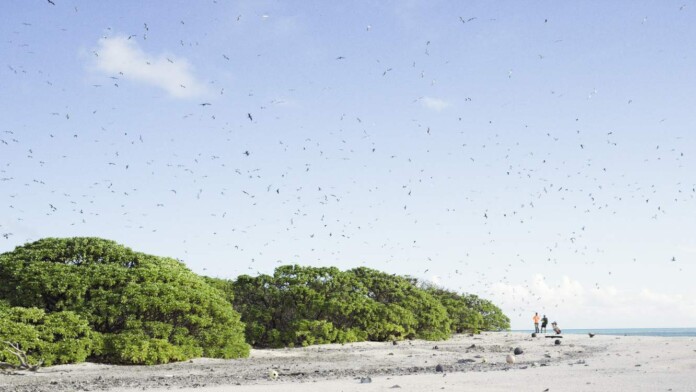
Island Conservation, a global nonprofit organization with a mission to restore islands for nature and people, has successfully eradicated invasive black rats, allowing the native forests and seabird population on Bikar Atoll and Jemo Islet to recover.
The rats have had a devastating effect on their delicately balanced ecosystems on certain islands in the Marshalls. Bikar Atoll, one of the smallest atolls in the country, is located 360 miles (580 kilometers) north of the capital, Majuro. The reef surrounds a lagoon roughly 14 square miles.
The Jemo Islet is a 16-hectare inhabited coral island that’s known to be one of the major feeding grounds for green sea turtles and a seabird sanctuary. With the arrival of invasive species such as black rats on both these landmasses, the native environment has been heavily disrupted as native plants, seabirds, and other animals fall prey to the rats’ scavenging.
In addition to turtles, Jemo had been used for generations as a place to gather and hunt, but had become something like an ecological graveyard since the rats arrived. Having already eradicated black rats on dozens of islands before, Island Conservation trained local teams with the best practices to remove the rats via poison without harming the native wildlife.
After one year, a trip back to these islands, accompanied by Island Conservation, the Marshall Islands Marine Resources Authority, Ministry of Natural Resources and Commerce, and community members from Utrik Atoll, found that the efforts to eradicate the rats had succeeded and that wildlife was bouncing back. The recovery of the native seabird population has positively impacted the link between land and sea. The nutrients from the seabirds’ droppings play a critical role as natural fertilizer for the plant population which anchors the local food web.
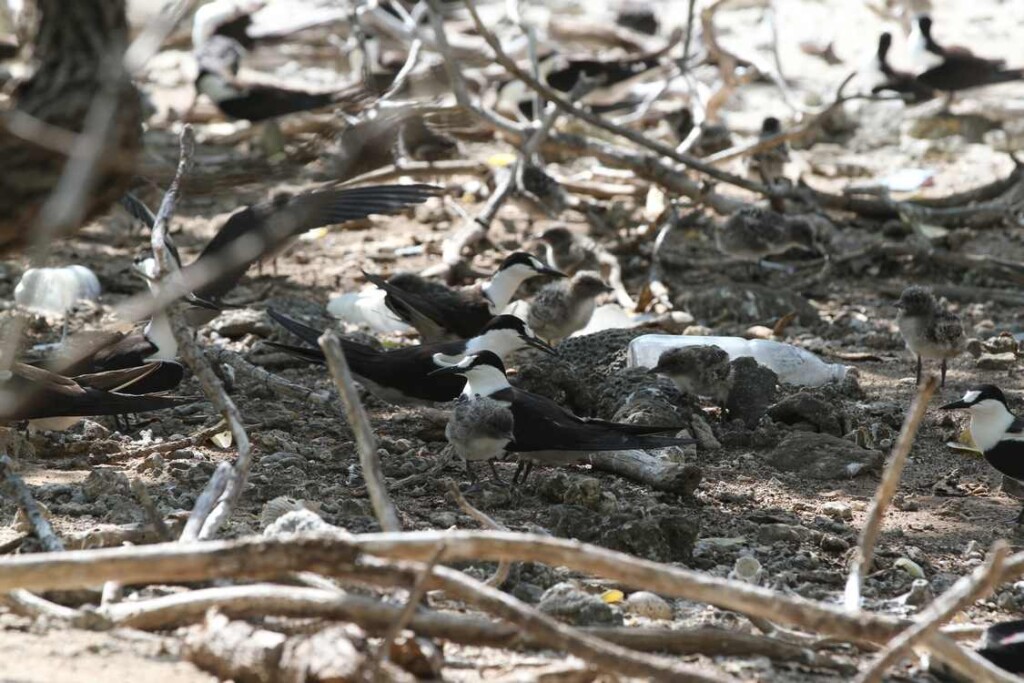
“After only one year, the transformation is dramatic. A colony of 2,000 Sooty Terns, where there was previously none, was feeding hundreds of chicks,” said Island Conservation Project Manager Paul Jacques. “We also counted thousands of native Pisonia grandis tree seedlings across just 60 monitored plots on the forest floor—in 2024, we found zero. Native forests are crucial for seabird nesting and are critical to carbon absorption and the island’s ecological health”.
Sooty tern chicks can idle on the forest floor safe from rats – credit, Paul Jacques / Island Conservation
Part of a trend
The restoration of the atolls and islands will have a lasting impact on the communities for the people who, in the past, have used Jemo as a natural hub for resources.
The rat invasion has depleted the useful resources of Jemo for the Likiep people for many years, but with the help of major participating organizations, it not only benefits the natural ecosystems of the Marshall Islands but also the communities that depend on these resources.
“Our Marshallese friends continue to add restored, pest-free islands to their list of achievements,” said David Moverley, Invasive Species Adviser for the Secretariat of the Pacific Regional Environment Program (SPREP), who partnered with Island Conservation on the project.
“Participating in the first rat removal workshop in Tonga ten years ago allowed them early on to achieve successful eradications on small islands by themselves. Now with modern technology and expert technical support from our partner Island Conservation, they are really pushing the boundaries and people are starting to realize the treasures that abound within the Marshall Islands and the opportunities that they present”.
Previously, WaL had the opportunity to report on Island Conservation projects, one being Loosiep, located in Yap State within the Federated States of Micronesia.
The project focused on the removal of invasive rats—the almost ubiquitous problem on Pacific islands—that threatened the biodiversity of its area. In partnership with the Island Conservation, local groups removed the rats allowed the “turtle islands” to thrive once again.
WaL also reported on the 2022 Island Conservation removal of invasive rats across the Pacific Islands using technological advancements of drones and poisoned bait.
These ambitious efforts by Island Conservation have already benefited 65 Islands worldwide, and their continuous work in restoring ecosystems creates lasting benefits for both nature and communities across the globe. WaL
SHARE This Game Set And Match Conservation Win With Your Friends…
Quote of the Day: “What do we know of the heart nearest to our own? … What do we know of our own heart?” – Amelia Barr
Photo by: Salomé Guruli
With a new inspirational quote every day, atop the perfect photo—collected and archived on our Quote of the Day page—why not bookmark GNN.org for a daily uplift?
Holgate Windmill is the only remaining working 5-sailed, double-shuttered windmill in England – SWNS
Holgate Windmill, the only remaining working 5-sailed, double-shuttered windmill in England – SWNS
Britain’s oldest brick tower windmill which sits in the middle of a housing development is still operating, more than 250 years after it was first built.
Located in Holgate, a suburb of York, the walled city in northeast England, the Holgate Windmill has been working since 1770 after being built by George Waud, from Selby, after he bought the land in North Yorkshire two years earlier.
The mill, which grinds corn into flour, was built in the open countryside—one of many mills in the Yorkshire region—and overlooked the hamlet of Holgate.
The 90-foot-tall mill now sits on a roundabout in the middle of a housing development built in the 1940s and 50s after World War II.
It went unused for 90 years until 2001 when a preservation society was formed and successfully restored the mill to its former glory 13 years ago.
Steve Potts, a trustee of the group and its head miller, called it an important building.
“Of all of the hundreds of windmills which which were once found around Yorkshire, this is the only working one left.
Holgate Windmill circa 1930s – SWNS
“We are a group of 35 volunteers and we think it is important to keep the industry of milling going.
“It is a dying art in many ways and if we weren’t doing it, in a couple of years there may be no one left who knows how to,” the 69-year-old told SWNS news agency.
Steve Potts, the head miller at the Holgate Windmill – SWNS
“Our plan is to keep it’s legacy going forever.”
The volunteers at the windmill have been doing a great job of that these days, as locals can buy wholemeal flour produced at the mill in a number of shops in York.
After the mill was erected in 1770, three generations of the Waud family ran it until it was sold in 1851 to John Musham, a local gentleman who hired a tenant miller John Thackwray to take over.
Mr. Musham then sold the mill in 1855 to Joseph Peart who installed a steam engine which worked the milling gear and employed William Bean Horseman and later Joseph Chapman as millers.
After Peart’s death in 1864 it’s unknown who owned the mill, but in 1877 Eliza Gutch, from the Gutch family, took it over—but Chapman continued operating it until he retired.
The milling duties were then taken over by his son Charles but only until 1901, but he died young after breathing in hazardous flour dust.
Holgate Windmill circa 1900 – SWNS
Herbert Warters ran the mill from 1901 to 1922 and was followed by Thomas Mollett.
Grain was ground into flour here until the 1930’s using wind power, but it ended in 1933 when the Gutch family sold the building to the York City Council after Eliza died.
A housing neighborhood soon grew up surrounding the mill after WWII.
Holgate Windmill is the only remaining working 5-sailed, double-shuttered windmill in England – SWNS
But now, for over a decade, it’s been fulfilling that wholesome, age-old mission of sustainable, wind-powered food production in the only working 5-sailed, fully double-shuttered windmill in England.
SEND THE GOOD NEWS to History and Local Food Buffs on Social Media…
Malcolm Atkins, Rand Smith, and Ian Brandon at St Peter’s churchyard - via SWNS
Malcolm Atkins, Rand Smith, and Ian Brandon at St Peter’s churchyard – via SWNS
Cousins from opposite sides of the ocean met by complete chance after turning up at their ancestor’s grave at the exact same time and discovering they were all related.
Ian Brandon and Malcolm Atkins from the UK were visiting the grave of their great, great, great, grandfather Anthony Smith only to find another couple from the US doing the same thing.
Rand Smith and his wife Janeel made the 3,700-mile journey from Kansas City to the town of Raunds in Northamptonshire, England, to see where his forefathers originated from.
The couple was left utterly astounded when strangers Ian and Malcolm showed up from London and Essex at the same time last month searching for the same gravestone, having planned their trip years ago.
“You couldn’t make it up. These other guys planned their trip a while ago, too,” said Malcolm, a grandfather-of-two from Harold Hill, East London.
“We met at that precise moment, and now people are saying it’s divine intervention.
“I don’t have a religious bone, but if we arrived half-an-hour later, we wouldn’t have known they were there.
Malcolm and Ian had spent seven years planning the trip to St Peter’s Church after researching his family tree.
“I’m still in shock. We’d been planning it years and years ago, and we finally got together.”
SWNS
“We’d actually gone up and got the car stuck while trying to find the car park. These two Americans went past the car and smiled as I was stuck.
“Then these two people were literally standing by the headstone of my third great-grandad.”
12 billion-to-one odds
Rand was looking at the headstone and his wife Janeel asked the strangers, “Do you know that person?” Ian answered, “That’s my third great-grandfather”—and that’s when Rand said, “That’s my third great grandfather”.
The three men, who are fourth cousins, learned that their encounter on the same day, September 22, defied the odds of 12 billion-to-one.
“It was amazing, it was like we all knew each other. Then we went to a nearby pub, where we found we had so much in common,” Malcolm told SWNS news agency.
Duke of Wellington pub (clockwise) Rand Smith, Janeel Smith, Malcolm Atkins, Linda Atkins, and Ian Brandon – via SWNS
“We’d love to see him again. I’d love to go to Kansas.”
Ian said the pair in their 70s chose to visit the grave around 100 miles from both their homes last Monday purely by chance.
“We basically turned up together, it was most strange,” Ian, from Danbury, Essex, told SWNS. “They were there two minutes before we were. It was strange, as we were all looking at the same stones.
“We had so much in common. We exchanged emails, so we’ll keep in contact.”
The cousins were visiting the historic market town after discovering Anthony Smith used to own a shoe factory in the area.
St Peter’s Church in Raunds, England – by Brixtonhill (CC BY-SA 4.0)
A family tree fanatic, Malcolm discovered Anthony had initially married an American and had eight children before re-marrying, after her death at a ‘quite young’ age, an English lady who he had seven children with.
“My wife Linda always wondered how I could do such a boring hobby. It is just names on a piece of paper, but on one account I’ve got 2,000 names.
“It’s helped us dig into this, which is incredible. You couldn’t have written it. I’m still shocked by it. It’s a day we’ll never forget.”
Rand explained why they traveled to England, “Forty years ago my grandfather travelled from the U.S. and visited the graves of our forefathers at the St. Peter’s Church in Raunds.
“Since that time, I have had the same desire. When my wife, Janeel, and I visited the graveyard and located the headstones, we were stunned to have several others come up and examine the same stones.
Headstone of Ann Eaton, the 2nd wife of Anthony Smith – via SWNS
Craig Campbell and his Doberman named Night - Supplied, Craig Campbell
Craig Campbell and his Doberman named Night – Supplied, Craig Campbell
A Canadian dog-lover has gotten to learn all over again why they call the animal Man’s best friend after his own brave pooch deterred a bear attack.
On a familiar trail in Cochrane, near Calgary, Craig Campbell was on a walk with his dog, a 10-year-old Doberman named Night. It was a trail he had taken with Night several times, but the routine physical activity suddenly turned into a life or death situation.
There in the bushes, a grizzly sow with her 2 cubs had wandered into the woods sandwiched between farms. Even still, Campbell had his bear spray, but having it is only half the challenge; the other half is using it.
“I managed two thoughts,” Campbell recalled in an interview with CTV News. “First of all, I said to myself, ‘This can’t be happening.’ And then I realized I wasn’t going to get the bear spray out (in time) and I said to myself, ‘I’m about to die.’”
Just then, Night came from beside in a flash and put himself between man and bear. Towering 7 feet on its hind legs above the crouching, barking dog, it gave enough time for Campbell to arm himself, but by then the bear huffed and went back to her cubs.
An avid trainer, Campbell has for years been training Night in the German sport of Schutzhund, often used to train the breed and others like it as police dogs. He believes this is why Night ran at the bear when others might have ran away, tail between their legs as it were.
“He is a very brave dog,” Campbell said. “To have an animal that literally stood between me and death, there’s no better friend than that.”
The story won Night an award in Purina’s Animal Hall of Fame for 2025, Canada’s longest-running pet recognition award. Inductees receive a medallion, recognition at a ceremony in Toronto, and one year’s worth of free pet food.
Despite the sports and the bravery, Campbell said Night is a playful dog too, loving few things more than jumping into a stream and watching minnows swim through his paws.
WATCH the story below from CTV News…
Know Anyone With A Doberman? SHARE This Hero Story On Their Social Media…
From left to right, NASA astronauts Victor Glover and Reid Wiseman, CSA astronaut Jeremy Hansen, and NASA's Christina Koch
From left to right, NASA astronauts Victor Glover and Reid Wiseman, CSA astronaut Jeremy Hansen, and NASA’s Christina Koch
For the crew that’s going to return humanity to the Moon, the Artemis 2 mission astronauts recently said they were fully ready and focused on the task at hand, with everything else being just noise.
Everything else is a lot, since Artemis 2 represents a lot. It will send the first Black Man and the first woman to the Lunar environment. It will set a new record for distance in a human voyage beyond Earth. It is being undertaken in what some are calling a space race with China.
In short, there’s a lot to think about, but Mission Commander Reid Wiseman says they are ready for “every scenario.”
“We might go to the Moon—that’s where we want to go—but it is a test mission, and we are ready for every scenario as we ride this amazing Space Launch System on the Orion spacecraft, 250,000 miles away,” he said on a September 24th media event. “It’s going to be amazing.”
September also saw the naming of the Orion capsule for the Artemis 2 Mission as Integrity.
Joining Wiseman will be NASA astronauts Christina Koch and Victor Glover, both of whom have spent over 100 days (over 300 in Koch’s case) on board the ISS. From the Canadian Space Agency there’s Jeremy Hansen, a first-timer, who admitted the chance to fly on Artemis II will be “an absolute privilege.”
Following an almost perfect Artemis 1 test flight of the Orion spacecraft back in November 2022, several delays have prevented its follow-up with Artemis II set to be a 10-day flight around the Moon and back to Earth, paving the way for a crewed Lunar landing.
The flight will also mark the farthest trip by humans into deep space, and will travel as many as 9,000 miles beyond the Moon, even farther than Apollo 13 traveled on its near-disastrous flight.
Acting NASA Administrator Sean Duffy mentioned how competitive he and the agency felt in getting to the Moon before China and winning the “second space race,” but Artemis 2 Mission pilot Glover said he wasn’t focusing on that race—nor his own race, but a different race altogether.
“The race that I think the most about is the relay race that we’re in,” he said. “We are going together, and our mission success is built on handing off, starting off with Artemis 3—that sets up our country and our partners to go back to the surface of the Moon.”
The first astronaut flight of NASA’s Artemis Program, which seeks not only to land humans on the Moon a second time, but also to conduct sustained crewed exploration of the lunar south pole and beyond to prepare for an eventual trip to Mars, is hoping for an early February launch date.
SHARE This Update With Your Friends Eager To See A Return To The Moon…
Quote of the Day: “Let your mind alone, and see what happens.” – Virgil Thomson
Photo by: Dingzeyu Li
With a new inspirational quote every day, atop the perfect photo—collected and archived on our Quote of the Day page—why not bookmark GNN.org for a daily uplift?
Infrared photo of the Table Mountain DSCO machinery in action - Credit NASA/JPL-Caltech
Infrared photo of the Table Mountain DSCO machinery in action – Credit NASA/JPL-Caltech
NASA recently achieved an incredible milestone in an even more incredible quest: providing broadband to the solar system.
But speaking specifically, the organization’s Deep Space Optical Communications (DSOC) division just downlinked 15 terabits of data from the Psyche Mission about 300 million miles from Earth via laser beam.
That’s over three times the distance between the Earth and the Sun, and it represents a huge breakthrough in outer space communications that will be absolutely necessary in the future, and pretty much necessary now.
“There are kind of bottlenecks now in just how much volume of data we can get down in a given amount of time from the transmitters that we have,” said Sean Meenehan, the DSOC Ground Software Lead, referring to existing technology of using radio waves.
Aside from the brilliant scientists and engineers behind it, DSOC consists of a laser transceiver, which is mounted on the Psyche spacecraft, and two ground stations. NASA’s Jet Propulsion Laboratory (JPL) Table Mountain Facility sends a laser beam to Psyche, which receives it and uses that signal to accurately beam its own laser to the second station, Caltech’s Palomar Observatory in San Diego County.
The laser sends back data encoded and communicated basically like morse code but with flickers in its light beam. How difficult is that? Try using a laser pointer to highlight Mars in the sky.
Both Psyche and Earth are moving through space at tremendous speeds, and they are so distant from each other that the laser signal—which travels at the speed of light—can take several minutes to reach its destination. By using the precise pointing required from the ground and flight laser transmitters to close the communication link, teams at NASA proved that optical communications can be done to support future missions throughout the solar system.
In December 2023, it made history when it sent an ultra-high-definition video of Taters the cat chasing a laser pointer to Earth from over 19 million miles away at 267 megabits per second.
In December 2024, DSCO completed its 65th and final pass, when it received a downlinked signal from 307 million miles away—far past Mars.
“As space exploration continues to evolve, so do our data transfer needs,” said Kevin Coggins, deputy associate administrator, NASA’s SCaN (Space Communications and Navigation) program at the agency’s headquarters.
“Future space missions will require astronauts to send high-resolution images and instrument data from the Moon and Mars back to Earth. Bolstering our capabilities of traditional radio frequency communications with the power and benefits of optical communications will allow NASA to meet these new requirements.”
Throughout all 65 passes, the system maintained downlink speeds comparable to household broadband internet.
WATCH a great explainer from NASA below…
SHARE This Incredible Innovation In Interplanetary Coms With Your Friends…
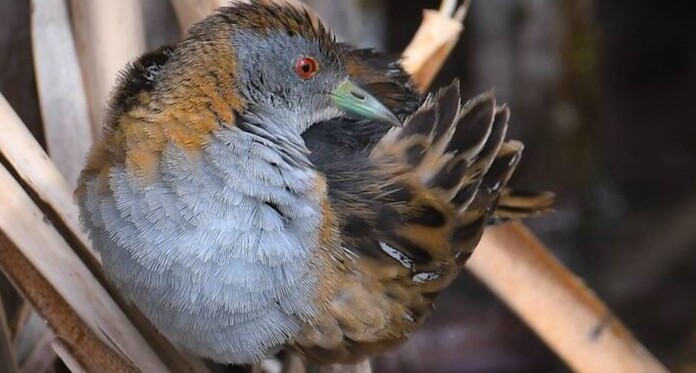
A Baillon's crake credit - I Am Birds as Poetry, via Flickr
A Baillon’s crake – credit, I Am Birds as Poetry, via Flickr
Every time a toilet in Melbourne flushes, the contents start a long trip from the metro area to a sewage treatment plant that has garnered a mythical reputation among birdwatchers.
Following the treatment process, the government allows it to retain certain excess nutrients that cause microbes and insects to flourish—anchoring the food web in an area of marsh and mudflats that birds just love.
300 different species of birds, including endangered species like the orange bellied parrot have been recorded in the Western Treatment Plant, on the shores of Phillips Bay, in Victoria state.
In the paddies, visiting birdwatchers can see the brolga, a crane common in the neighboring Queensland, but endangered in Victoria. Above, squadrons of seabirds and raptors ply the skies looking for food or nesting grounds, and shorebirds eagerly wade, hope, an skitter along man-made mudflats gobbling up tasty morsels.
50 billion gallons of sewage and wastewater flow through the plant’s 32 huge lagoons. Some are anaerobic, or oxygen deprived treatment lagoons where harmful bacteria are expunged and beneficial bacteria, which breakdown the sewage, matter are cultivated.
Oxygenated, or aerobic lagoons then work on the wastewater to reduce the levels of nitrogen—a compound common in human sewage that enriches harmful algae which can grow exponentially on the stuff if too much of it were to make it into the bay—the final destination of the water having passed through the other lagoons where it enriches the life.
“The water that goes out into the bay at the end result of the sewage treatment process does still have a lot of nutrient in it,” Cody McCormack, conservation and land officer with Melbourne Water, told the Guardian Australia on its visit to the Western Treatment Plant.
That nutrient is left over on purpose—to anchor the biodiversity at the site, but men and women like McCormack have the job of making sure it’s never so much as to cause an algal bloom. McCormack is a birdwatcher himself, and loves the shorebirds in particular.
“The nutrient in the water provides the food for the insects and for the vegetation to grow as well,” says McCormack. “It’s one of the most annoying things in my role, where I’m lowering these ponds to create these beautiful mudflats for shorebirds, but as soon as you expose the mud, there’s so much nutrient in the water that all the vegetation grows up.”
Birdwatchers can apply for access to a gate key on the active industrial site, and a few are given out to the community of Melbourne birders. A short flight over to Flickr and a search for “Western Treatment Plant” reveals the wealth of species these birders enjoy seeing and photographing.
SHARE This Great Story With The Birdwatchers You Know…
Landscape of Daqingshan- Copyright, Daqingshan Biosphere Reserve
Landscape of Daqingshan- Copyright, Daqingshan Biosphere Reserve
The United Nations has added an area the size of Bolivia to a network of special land and seascapes with the aim of ensuring they remain places where Man can anchor himself to his national and global ecosystem.
Much like the way UNESCO nominates places to become World Heritage Sites, the organization’s Man and Biosphere Program nominates UNESCO Biosphere Reserves. The network of these areas has now grown to 785 sites in 142 countries, totaling 5% of the planet’s landmass.
Again, like World Heritage Sites, each year new potential Biosphere Reserves are submitted as candidates by UN member states, and may be then added to the Reserve Network. With this year’s addition of 26 new sites, it means that one million km² of natural areas have been brought under protection just since 2018—equivalent to the size of Bolivia.
“With nearly thirty new designations this year, our World Network of Biosphere Reserves has reached a major milestone, now protecting 5% of the planet. Within these reserves, new ways of balancing nature conservation with sustainable livelihoods are being forged every day. UNESCO will continue to mobilize states, scientists, civil society, and local and Indigenous communities to continue this positive momentum,” said Audrey Azoulay, Director-General of UNESCO.
6 countries received the designation of their first Biosphere Reserve this year, including Angola, Djibouti, Equatorial Guinea, Iceland, Oman, and Tajikistan, while São Tomé and Príncipe becomes the first state to have its entire territory designated as a Biosphere Reserve.
In addition to these 6, new reserves have also been designated in Albania, China, Ethiopia, France, Greece, India, Indonesia, Jordan, Madagascar, Malaysia, Mongolia, Portugal, Saudi Arabia, and Sweden.
Since 1971, Biosphere Reserves have played a central role in UNESCO’s environmental mission. Alongside natural World Heritage sites and Global Geoparks, they contribute to protecting more than 13 million km² of terrestrial and marine ecosystems under UNESCO’s umbrella, advancing the global Kunming-Montreal target of conserving 30% of land and sea by 2030.
View of Arrabida, Portugal – Copyright, Camara Municipal de Palmela
They also safeguard some of the planet’s richest and most fragile ecosystems. They harbor a significant share of global biodiversity including more than 60% of terrestrial vertebrate species, 12% of mapped mangroves, 10% of salt marshes, and 8% of the world’s seagrass meadows.
Many iconic American landscapes are also Biosphere Reserves, including the Grand Tetons and Yellowstone, the Southern Appalachians, and the Channel Islands.
They foster local and community initiatives and serve as learning grounds for younger generations, through educational program tailored to schools as well as to local and indigenous communities.
UNESCO cannot designate Biosphere Reserves itself, and the job of policing and maintaining them falls on the nations that nominate areas—often national parks—to become reserves.
They are not created for the purpose of returning land to a wild state, or even from removing activities like agriculture, but are governed in a way that Man and the biosphere he needs to survive can do so for as long as we humans live on this planet—striking a balance between the needs of the land and the needs of the humans living on it.
The governance aspect combines activities in the natural and social sciences with a view to drafting management and development plans that will improve human livelihoods while safeguarding natural and managed ecosystems.
Partnerships with the private sector further strengthen these efforts. For example, the Amazonia Project, deployed across eight biosphere reserves with support from French conglomerate LVMH, has already supported more than 40 local initiatives, creating sustainable green jobs in agroforestry and regenerative agriculture, while strengthening forest and biodiversity protection against wildfires.
SHARE This Great Green News For An Earth To Stand The Test Of Time…
The outline of a camel etched into stone near a seasonal water source.
Credit: Sahout Rock Art and Archaeology Project
The outline of a camel etched into stone near a seasonal water source – Credit: Sahout Rock Art and Archaeology Project
12,000-year-old engravings of desert animals like the dromedary camel were used by ancient Arabian tribes to mark where water could be found, a new discovery hypothesizes.
An international team of archaeologists discovered more than 60 rock art panels containing 176 engravings in three previously unexplored areas: Jebel Arnaan, Jebel Mleiha, and Jebel Misma, along the southern edge of the Nefud Desert in northern Saudi Arabia.
The engravings mainly depict camels, ibex, equids, gazelles, and auroch in 130 life-sized and naturalistic figures, some measuring up to three 10 feet long and more than two 6 feet high.
The researchers say the rock art dates to between 12,800 and 11,400 years ago, a period when seasonal water bodies reappeared in the region following extreme aridity.
They explained that the water sources, confirmed through sediment analysis, supported early human expansions into the desert interior and offered opportunities for surviving.
“These large engravings are not just rock art. They were probably statements of presence, access, and cultural identity,” said the lead author of a corresponding paper published on the discovery, Dr. Maria Guagnin from the Max Planck Institute in Germany.
“The carvings would have been significant to the people of the region. Several of the etchings were found carved on top of older ones, indicating that they were maintained and updated over thousands of years.”
Unlike previously known sites where engravings were hidden in crevices, the researchers say the Jebel Mleiha and the Jebel Arnaan panels were etched onto towering cliff faces up to 128 feet high, in “visually commanding” locations. Jebel means mountain or hill in Arabic.
Co-lead author Dr. Ceri Shipton, from University College London said one panel would have required ancient artists to climb and work “precariously” on narrow ledges, underscoring the sheer effort and significance of the imagery.
“The rock art marks water sources and movement routes, possibly signifying territorial rights and intergenerational memory.”
The water source hypothesis is particularly compelling as the camels were depicted as males during the breeding season, which for camels corresponds with the rainy season. It seems a very deliberate detail for these ancient Arabians to add.
The research team say their findings, published in the journal Nature Communications and part of the Green Arabia project, highlight the pioneering role of human groups who lived in the interior of northern Arabia shortly after the hyper-arid conditions of the Last Glacial Maximum.
“This unique form of symbolic expression belongs to a distinct cultural identity adapted to life in a challenging, arid environment,” said Dr. Faisal Al-Jibreen, from the country’s culture ministry.
SHARE This Story Of Desert Discovery With Your Friends…
Quote of the Day: “That which is… has already been, and what is to be…. has already been.” – Ecclesiastes 3:15 (the Bible)
Photo by: Rick Hatch
With a new inspirational quote every day, atop the perfect photo—collected and archived on our Quote of the Day page—why not bookmark GNN.org for a daily uplift?
Founders Casey Lartigue and Eunkoo Lee at FSI headquarters in Seoul - credit, Andrew Corbley for GNN
Founders Casey Lartigue and Eunkoo Lee at FSI headquarters in Seoul – credit, Andrew Corbley for GNN
In South Korea’s capital, Seoul, there are now tens of thousands of North Korean refugees, all living with an intense emotional burden—and a US-founded organization is helping to alleviate it.
Freedom Speakers International (FSI) offers tuition-free and individualized mentorship for speaking in English and opportunities to engage with the international community through that most marvelous of personal development: public speaking.
They’ve since welcomed over 600 North Korean refugees to study English, public speaking, and career development at their office and at events around the city—and their work has landed one of the founders on the North Korean government’s official enemies list.
Casey Lartigue Jr., along with co-founder Eunkoo Lee, sat down with GNN in Seoul to discuss their life-changing refugee programs.
In 2013, FSI began connecting former English teachers from the totalitarian state known as North Korea (the Democratic People’s Republic of Korea) with mostly US volunteers to help them improve their skills, because they lacked the proficiency needed to teach in South Korea.
How many English-speaking refugees—or refugees at all for that matter—could there really be? Surely not enough to run a sustainable non-profit.
“The way I’ll put it is until the late 1990s only a handful of North Koreans escaped each year, a lot of them were part of the elite,” Lartigue told GNN. “But starting around 1998, about 1,000 North Koreans were escaping every year to South Korea.”
Since then, around 34,000 North Koreans have escaped to South Korea, mostly before 2020. “So, 34,000 is hard for them to punish,” he noted, addressing the commonly held belief that to flee the country meant certain punishment for family members who remain behind.
“When we first started, it was tutoring them in English, but I was on a different track,” Lartigue said. “I had a personal interest in North Korean refugees who wanted to tell their stories and then we merged those—so we had both the English tutoring and the public speaking. In 2015 we had our first speech contest because we had refugees who wanted to tell their stories; they wanted to speak out.”
Refugee Songmi Han and Casey Lartigue at FSI headquarters in Seoul – credit, Andrew Corbley for GNN
There were interesting parallels between Lartigue’s former work at the Cato Institute in Washington, D.C., where he helped parents to advance school choice policies through public speaking, and his recent goals of giving North Koreans public speaking skills: the need to communicate the value of freedom is the same for both groups.
Their main projects these days, however, have narrowed to public speaking courses, which they can do in groups—a metamorphosis that occurred out of necessity, as COVID measures limited their in-person English tutoring—and also through publishing books.
“There are 5 main reasons that they tell us they want to engage in public speaking, and number 1 is just to raise awareness about what is going on in North Korea.”
“Second is advocacy: they want something done at North Korea—sanctions. Third is storytelling. There are people in North Korea who they know might have been tortured or executed by the DPRK, so they want to tell their stories.”
An example of this third motivation came when FSI hosted a speech contest with the topic being the stories of North Korean women, and two of the speakers were men. “One wanted to the story about what happened to his sister; the other wanted to tell the story about what happened to his mother,” Lartigue said.
“Fourth is healing hearts. They have something inside that they want to get out, maybe PTSD. Fifth is to build confidence in themselves.”
Some of FSI’s published books – credit Andrew Corbley for GNN
When it comes to the books published by these brave souls, it’s about 11 years on average from the time they arrive to the publication date. Most come and have long adjustment periods. It’s only after they settle down, Lartigue said, that they begin to feel the need to speak out.
In the case of Songmi Han, she escaped in 2011 and published her book Greenlight to Freedom, in 2022.
“I didn’t know how dangerous it would be, but since my mom started sending brokers to rescue me, I started awakening,” the spritely youth, who only a month prior joined the FSI team, told GNN.
“One of my neighbors was living for 10 years in China, but then she got captured and sent back to North Korea. At the time, every day we’re just looking for food, but she would say in China she said she never had to worry about her next meal.”
Saving lives
“That’s when I decided that in North Korea, there’s no future: I cannot see it, it’s so dark, but I’m sure others have their own reasons. My mother decided to escape because she wanted to make money. She would go to China, make money, and come rescue us from North Korea.”
Some of the things that FSI handles are straight out of a Russian book like The Gulag Archipelago. In one case, FSI published a book in English in 2022 that was written by a North Korean man who had been executed by the government, but not before he got a manuscript to a Japanese reporter that published the book in Japanese in 2002—the proceeds from which paid for the extraction of his two children from the country.
While one might think that South Koreans would be the most likely volunteers, Lartigue said that for a long time, and still today, they’ve been staffed mostly by Americans, who are passionate about the project as befitting the free citizens from the self-styled leader of the Free World.
SHARE The Story About This Amazing Group And Their Work Out In East Asia…
Danny Sauter, District 3 Supervisor - credit, Sauter
Danny Sauter, District 3 Supervisor – credit, Sauter
After small businesses became frustrated with San Francisco permitting laws, a district supervisor has stood up to try and strike it down.
His proposed ordinance—filed after a dozen small business owners reached out to explain they were being harangued by regulations—would remove the “prior use” requirement, as well as those preventing businesses from uniting storefronts and moving into adjacent, empty spaces.
The story began as CBS news found it, in the hills of southern India, of all places.
Himanshu Bhaisare and his wife Milana Ram sell coffee beans from her family farm in a lovely hilly area of Karnataka ten thousand miles away in the farmer’s markets of San Francisco.
They rent time at a roastery in Berkeley, but their passion for the coffee of India saw them locate an old dry cleaners on Lombard Street near to their home, and plan to convert it into a roastery and cafe.
Just as they arrived on the last dot of the dotted line of a lease agreement, there was a problem. The property contained a “prior use” requirement, which necessitates future owners to use the building as it was already permitted.
“I went to two or three more offices in the same department asking ‘Is this really true?’ Because it made no sense to me,” Bhaisare told CBS Bay Area.
“It’s things like that that are really frustrating, especially when we have someone who wants to bring their business to San Francisco and we have all these barriers that are preventing them from opening up,” said Danny Sauter, SF’s District 3 supervisor, and author of a bill that will be up for consideration early in October that would remove the prior use requirement and other stifling regulations.
“We’ve already had about a dozen different small business owners reach out to us and tell us that without this legislation they could literally not open what they want to open.”
What CBS News didn’t follow through on were some of the other ways Sauter was tackling overburdensome regulations. To name those they forgot to mention, it’s illegal in the neighborhood of Knob Hill to open a business in the arts, such as a dance studio. It’s illegal on Polk street to open medical businesses such as a dentistry practice or acupuncture clinic.
It’s also illegal to open two businesses under a single roof, and how does that make any sense when the only thing better than a friend to have a coffe with is a new book? Perhaps bought at a bookstore?
Ram is hopeful the bill will be passed with support from so many small business owners and prospective owners, and that Lombard Street and the surroundings can taste true Indian quality coffee.
WATCH the CBS story below…
SHARE This Supervisor’s Fight On Behalf Of The Businesses In Bay Area…
A diagram of the Brenner Base Tunnel - credit BBT SE CC 4.0. BY SA
A diagram of the Brenner Base Tunnel – credit BBT SE CC 4.0. BY SA
In mid-September, a boring machine defeated the last meter of rock 4,500 feet under the Brenner Pass in the Alps to connect the world’s longest tunnel dug for railroad track.
Envisioned as an important connecting vein that will one day see trains running from Helsinki, Finland, to Palermo, Sicily, it will slash commuter times across Europe.
Italian Prime Minister Giorgia Meloni and Austrian Chancellor Christian Stocker were present when the tunnel was completed, which is hoped to shift large amounts of freight onto rails and off the roads in Italy’s crowded north.
The Brenner Pass Tunnel is one of a series of EU railroad projects that the bloc hopes will reshape travel and freight maps by seriously incentivizing rail travel between Italy and the surrounding countries.
The Benner Tunnel will run from Austria’s town of Tulfes through Innsbruck to the region of Trentino Alto Adige, and will reduce rail commutes between Munich and Verona by two-and-a-half hours.
The second consists of tunnels and high speed rail that will connect Genoa, one of Italy’s largest port cities, with Milano via the city of Tortona, while another running through Valle d’Aosta will reduce the transit time between fashion capitals Milan and Paris by 30%, with stops in Lyon and Susa.
“In the end, there is no project that is too big to be tackled, there is no project too big for us to bet on,” Meloni said at the ceremony.
A diagram of the Brenner Base Tunnel – credit BBT SE CC 4.0. BY SA
Lagging somewhat compared to peer nations, Italy’s railroads haven’t seen a major upgrade since the Roma-Milano high speed line in 2008, and these works should allow goods and passengers to flow much more freely in and around the country.
In particular, AP reports, the Brenner Pass sees more than $800 billion in goods cross the alps on board trucks every year. The tunnel will be the world’s longest rail tunnel, and will take thousands of the more than 2 million trucks that cross the pass every year off the roads.
It currently takes 7 hours to get from Milano to Paris, and the Lyon-Turin High Speed Line is estimated to reduce that down to four-and-a-half. All are expected to be finished in the early 2030s, with the Genoa-Tortona line already almost completed.
GET some quick facts in this company highlights video…
SHARE These Dramatic Infrastructure Improvements To The Boot Of Europe…
For 50 years, the state of Maine has drawn worldwide attention for its efforts to restore a puffin colony, an effort that has brought controversy, hope, and a cottage industry you have to see to believe.
Featured recently on the PBS News Hour, it’s a story that begins back in 1973 when a young ornithologist named Stephen Kress thought he could try to restore the puffin populations of the US Mid-Atlantic after overhunting eliminated them locally in the 1800s.
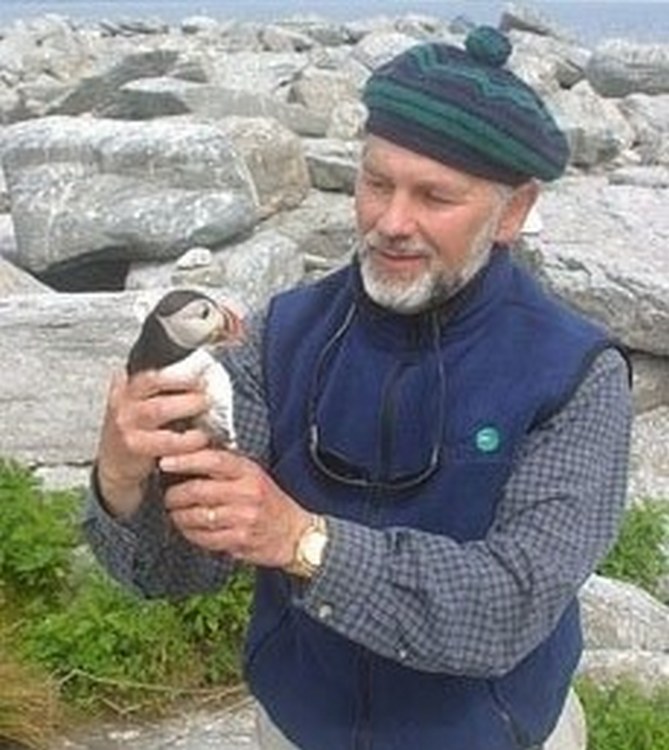
Stephen Kress holding a puffin chick – credit, VOA, public domain
“People caused them to leave,” the career puffin-ologist said. “Maybe people can help bring them back. That was the notion. I had no idea that that notion was going to be my life’s work.”
Indeed the young scientist suffered the slings and arrows for his trouble, but his years of work were a success.
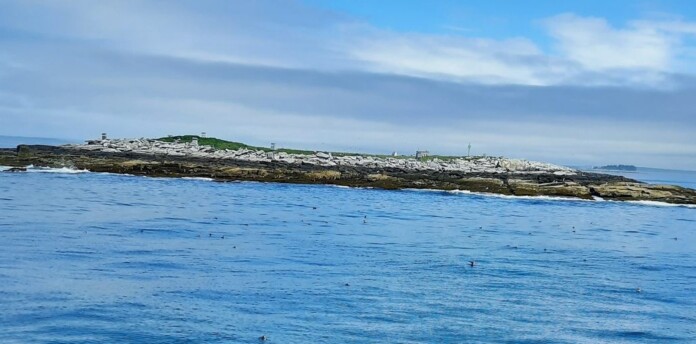
Back then, Kress believed that if he could hand-hear puffin chicks on Eastern Egg Rock Island, the last place they were found in the US, they might return to nest there after fledging. Importing some chicks from Canada to the criticism of the general ornithological community, he worked with the Audubon Seabird Institute to start Project Puffin.
The Audubon team led by Kress built nests for the puffin chicks out of a natural material called sod, and stayed on the island for hours at a time bringing fish for them to eat. Kress and the others at Audubon also needed to find a way to bring other puffins to the colony, or at least to entice those they had reared to return.
Yet again facing criticism, they began putting out mirrors, puffin decoys, and playing the recorded sounds of puffin calls. The birds are highly social and dependent on colonial structures.
The chicks gradually grew to fledge, and in 1981, 4 years after he began Project Puffin, adult puffins were seen returning to Eastern Egg Island with fish in their mouths: a sure sign that there were chicks on the island.
Today, hundreds of puffins inhabit the colony at Eastern Egg, though not without a little help from their longtime friend. Kress has been involved in protecting the puffins every step of the way, which has included tackling new threats. It turns out convincing them to lay eggs there was just the first challenge.
With the return of the puffins came laughing gulls—something of a nemesis—which steal the food they bring to their chicks.
ALSO CHECK OUT:
Project Puffin, long since concluded, has now morphed into a new effort to battle the gulls with the help of terns—a ferociously territorial bird.
“I was hoping that the terns alone would be enough to protect the puffins,” Kress admitted. “Now we know that the terns alone aren’t enough to protect the puffins. The terns and the puffins need our help.”
MORE SEABIRD SAVIORS:
Their solution was more decoys: hundreds of them, of varied species such as those the gulls don’t want to mess with. This response prompted the Audubon team to create a robust decoy-production facility, where hundreds of birds of 48 different species are made every year, causing an international demand that has seen them used in over 800 seabird conservation efforts.
The production is overseen by Susan Schubel, the Seabird Institute’s outreach educator, who said that by using decoys they can send clues and signals to different species about where it’s safe to nest.
WATCH the story below from PBS News Hour…
SHARE These Puffin People And Their Dedicated Work To Save The Species…
Quote of the Day: “It is the dawning moon of the mind that dispels the torment of disturbing thinking.” – Shantideva, Buddhist philosopher and poet
Photo by: Pramod Tiwari for Unsplash+
With a new inspirational quote every day, atop the perfect photo—collected and archived on our Quote of the Day page—why not bookmark GNN.org for a daily uplift?