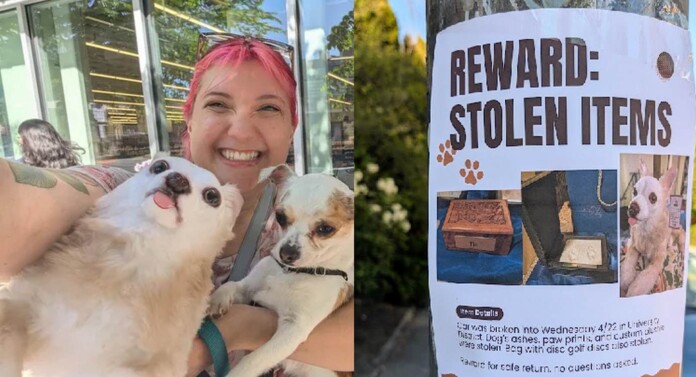
Holly Dunn, her late Chihuahua Tia, and the flyer she and her family put up to help find Tia's stolen ashes - credit GoFundMe
Katie Michie, and the flyers she put up to help find the late Chihuahua’s stolen ashes – Credit GoFundMe
A Seattle man homeless for 7 years is getting a fresh start after he found and returned the priceless memorial relics of a deceased family dog.
When Holly and Brandon Dunn’s car was broken into in Seattle’s University District, the thief made off with the most irreplaceable items they owned: the ashes, ceramic paw prints, and a memorial stuffed animal of their late Chihuahua, Tia.
Thieves rarely look at anything they take. With time being squarely of the essence, they just grab everything that’s not bolted down and go through it later. This was exactly what happened with Holly and Brandon’s car, as the thief would later deposit the (to him) worthless remembrances in a bag in a dumpster.
The homeless man, named Chris, came across the bag and, knowing it mattered to someone, held onto it until he spotted a flyer which the Dunns had put up. He didn’t hesitate to reach out, and didn’t ask for anything in return.
Now, as Chris moves into his very first apartment after 7 years on the streets, hundreds are rewarding him for his good deed through a GoFundMe organized by Kathryn Michie, who helped post flyers in the search for Tia’s remains.
It has so far raised than $5,600 toward his rent, furniture, and care for Reo, a dog he rescued from the street.
“I just got off the phone with Chris and he’s absolutely floored with the support from this community!” Michie wrote in a May 6th update. “Thank you to everyone who is changing his life for the better. He is such an angel and deserves all the help!”
There are still $1,000 dollars left before the fundraiser reaches its 7-grand goal. Donations can be made on the GoFundMe page.
SHARE This Uplifting, Heartwarming Happening Among Kind-Hearted Seattlites…
A photograph from the dancer and her avatar's December performance at OBA Theater in Amsterdam - credit, Dentsu Lab, supplied to the BBC
A photograph from the dancer and her avatar’s December performance at OBA Theater in Amsterdam – credit, Dentsu Lab, supplied to the BBC
Brain interface technology allowed a dancer suffering from ALS to project her imagination onto the stage in the form of a mixed reality avatar that pranced around a theater in Amsterdam as part of a first-of-its-kind performance.
Whether tense or free, timid or morose, the avatar encapsulated all the long years of training that saw Breanna Olson become a successful dancer before the disease confined her to a wheelchair.
The incredible moment gave Olson a chance to dance again, something she had not been able to do for years after being diagnosed with amyotrophic lateral sclerosis, the most common form of motor neuron disease.
“I never dreamed that I would be able to dance on stage again,” she said. “It was just a beautiful and memorable moment I will remember for the rest of my life.”
ALS affects the nerves, brain, and spinal cord, weakening and stiffening them over time which can lead to difficulty talking, breathing, and swallowing. There is no known cure and the disease is fatal.
Breanna Olson – credit, Dentsu Lab
A subsidiary of the Japanese conglomerate Dentsu, Dentsu Lab gave Olson the opportunity to become involved in its “Waves of Will” project that sought to use advanced brain interface technology to help those living with disabilities recapture their personal expression and identity.
Their new brain interface which the Lab developed in concert with a data tech firm NTT uses an electroencephalogram headset that captures the brain activity of Olson, and translates certain electrical signals into dance moves. Olson envisions how she would execute a movement, and the interface delivers it through normal computer instructions to a projected avatar which then performs the motion.
MORE STORIES LIKE THIS:
Olson told the BBC that it requires extreme focus and concentration to imagine the precise details of any particular movement for the avatar. She said that it did exactly what the project’s aim was: to give personal expression back to someone like her who had lost that freedom.
In December, at the OBA Theater in Amsterdam, Olson and her Avatar danced around the stage as part of a Waves of Will performance, which Dentsu Labs called the first of its kind anywhere in the world.
WATCH the avatar move below…
SHARE This Inspiring Interface Between Technology And Talent…
Australia has become the 30th nation worldwide to eliminate trachoma as a public health concern according to multiple statements.
The leading cause of blindness due to infectious disease, Aboriginal and Torres Strait Islander communities were still at risk of trachoma where the bacteria which causes it has persisted for years despite its earlier disappearance from the rest of the country.
Indeed from the center of Melbourne or Sydney, one could never imagine that Australia could continue to suffer from a neglected tropical disease that can be treated with simple hygiene procedures and antibiotics.
But the remoteness of these indigenous communities has left them vulnerable to continuous transmission for decades until Australia implemented the National Trachoma Management Program in 2006.
Trachoma is caused by the bacterium Chlamydia trachomatis and spreads through close contact with infected individuals, contaminated surfaces, and flies that carry eye and nose discharge. Repeated infections can lead to scarring of the eyelids, turning eyelashes inward, and ultimately causing blindness if untreated.
It can be eliminated comprehensively through the use of antibiotics to treat infection, promotion of facial cleanliness, and environmental improvement, as well as surgery for trichiasis if necessary.
Over time, sustained screening, treatment, and prevention activities, including improvements in housing, water, sanitation, and hygiene, led to a steady decline in trachoma prevalence in rural Australia. The country’s approach included adaptations to reflect its context, such as targeted treatment based on community-level data rather than mass drug administration.
“Elimination of trachoma is a win… for those whose lives have been impacted by a disease that is entirely preventable,” said Mark Butler, Minister for Health and Ageing, Australia. “This major milestone is thanks to Aboriginal and Torres Strait Islander leadership, community commitment, and sustained investment over many decades.”
“The lessons from this work will inform how we approach other preventable health conditions in remote and regional Australia. Aboriginal Community Controlled Health Organizations and local health workers have been central to this success, delivering culturally safe care and community-led solutions.”
Australia is the 30th country to eliminate trachoma as a public health concern. GNN reported on Myanmar eliminating trachoma in 2020, which at the time made it the 12th country to achieve this. 18 more have achieved the same milestone since, including Egypt.
CELEBRATE Australia’s Success In Catching Rural Health Up To Urban Health…
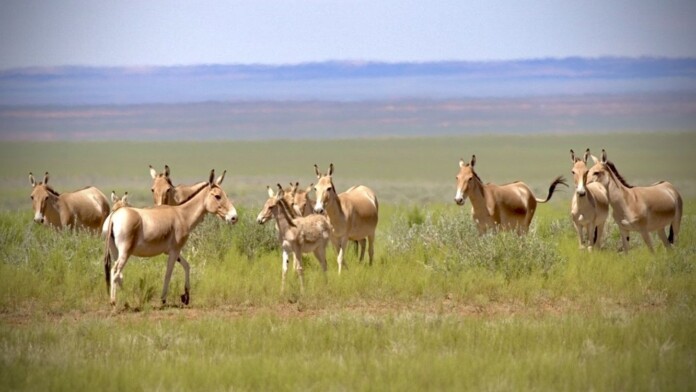
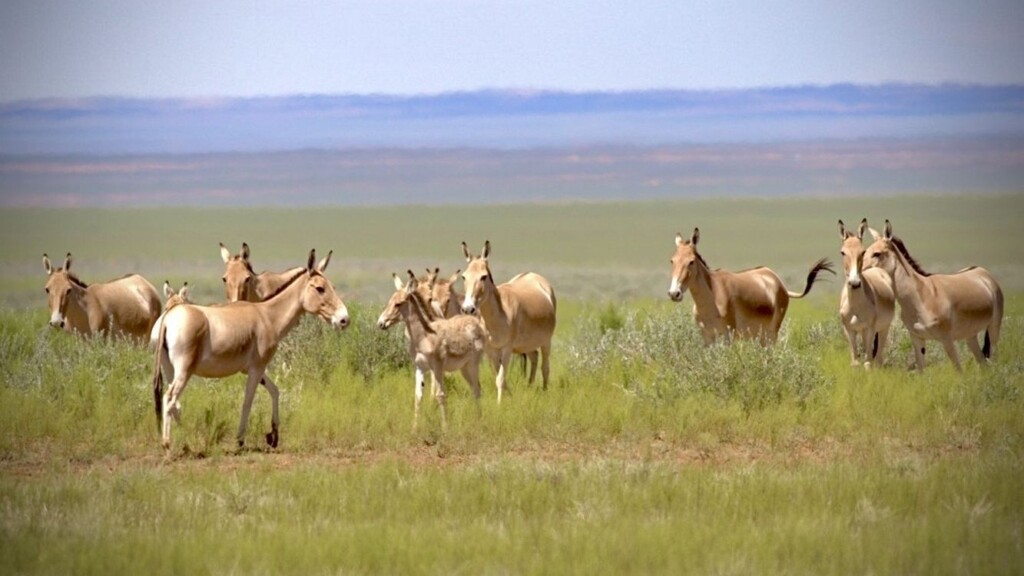
The Asiatic wild ass, known locally as the khulan (Equus hemionus), has returned to eastern Mongolia and is showing clear signs of re-establishing a population after more than 65 years of absence from the region.
For decades, fencing along the Trans-Mongolian Railway (TMR) has restricted movement of khulan and other migratory species. Recent efforts to create safe crossing points are now allowing animals to move more freely across this barrier and recolonize their ancestral lands.
Collaborative efforts between Wildlife Conservation Society, the Mongolian government, and in-country private partners have seen the fencing taken down along several stretches of the railway, while also designating a monitored, “safe passage” zone last May near the China–Mongolia border—also free of fencing.
Findings published this Month in the journal Oryx show that the interventions are working, the animals are responding to them, and that the khulan are now regularly present in multiple groups east of the TMR.
Monitoring shows that crossings occurred in recent years, and follow-up surveys have since recorded hundreds of khulan on the eastern side. This suggests that khulan are not only passing through, but beginning to re-establish in the region.
“Documenting khulan crossing this long-standing barrier and beginning to re-establish in their former range represents an extraordinary conservation breakthrough,” said Buuveibaatar Bayarbaatar, a senior scientist at the Wildlife Conservation Society who lead the study.
“It demonstrates that restoring connectivity in fragmented landscapes can support population recovery for wide-ranging species.”
The Mongolian Gobi supports the world’s largest khulan population—approximately 91,000 animals, more than 84% of the global total. The species nevertheless faces ongoing threats from habitat fragmentation, competition with livestock, illegal hunting, and climate change.
As one of the most wide-ranging terrestrial mammals, maintaining connectivity across this landscape is critical for khulan, allowing them to move between seasonal grazing areas and water sources in a highly variable and arid environment, and supporting the broader functioning and resilience of Mongolia’s steppe ecosystem.
“The return of khulan to eastern Mongolia reflects years of collaborative work with provincial authorities, border protection agencies, and railway managers, as well as careful testing of temporary fence gaps that showed wildlife could cross safely without increasing train collisions,” said Justine Shanti Alexander, WCS Mongolia Country Director.
WCS has advanced wildlife connectivity and khulan recolonization in eastern Mongolia through the vital support of several key partners, not least of which was the Mongolian government.
Plans are advancing for a new local protected area east of the railway to support long-term habitat security and khulan recolonization.
An unsubstantiated claim on Mongolia’s Wikipedia page suggests that after gaining independence, there was “enthusiasm to declare 100 percent of the country as a national park,” but that the country eventually settled on 30%—a marker that recently became an international standard.
The country currently protects 13% of its land and water, but a recent agreement with the Nature Conservancy will see that taken to 30% if all goes to plan.
SHARE This Animal’s Encouraging Trot Towards Recolonizing Eastern Mongolia…
Quote of the Day: “The self is not something one finds, it is something one creates.” – Thomas Szasz
Photo by: Ben Iwara for Unsplash+ (cropped)
With a new inspirational quote every day, atop the perfect photo—collected and archived on our Quote of the Day page—why not bookmark GNN.org for a daily uplift?
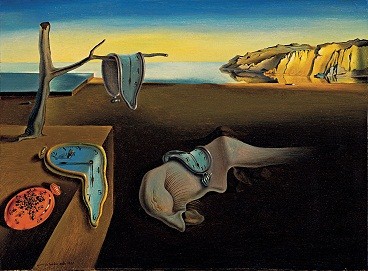
The Persistence of Memory, oil on canvas, and sometimes called "The Watches".
122 years ago today, Salvador Dali was born. Known for his striking and bizarre images, he is one of, if not the most famous surrealist painter in history. Inspired by the Renaissance masters, Dali nevertheless gravitated to the surrealist movements in the early 20th century. He would live in France for the duration of the Spanish Civil War, before moving to America and achieving commercial success. SEE a Couple of His Most Famous Works… (1904)
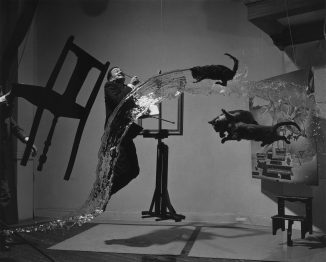
Salvador Dali, in a famous 1941 styled photograph “A Dali Atomicus”
After returning to Spain in 1941, Dali described his style as “nuclear mysticism” containing elements of major scientific discovery, mysticism, and the classics. His most famous work came before this, The Persistence of Memory which depicts soft, melting wristwatches on a seashore, and is generally considered an ode to Einstein’s Theory of Relativity.
The Persistence of Memory, oil on canvas, and sometimes called “The Watches”.
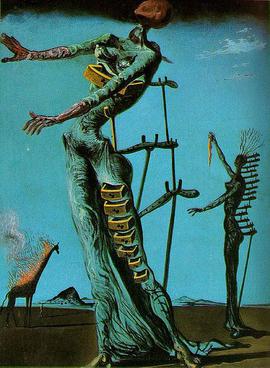
The Burning Giraffe is another perfect example of Dali’s nuclear mysticism. A tall woman, supported by crutches (a mainstay in Dali’s works,) is covered in drawers, an inspiration from Sigmund Freud’s pioneering theory of psychoanalysis. Dali said that “the only difference between immortal Greece and our era is Sigmund Freud who discovered that the human body, which in Greek times was merely neoplatonical, is now filled with secret drawers only to be opened through psychoanalysis.” Meanwhile the burning giraffe in the background is a “masculine apocalypse monster” and is a recurring motif in his paintings.
Dali’s The Burning Giraffe, oil on panel.
There are two museums devoted solely to Dali, one of which is in St. Petersburg, and the other in the town of his birth of Figueres, Spain.
MORE Good News on this Day:
Minnesota (a native Dakota word, meaning ‘clear blue water’) was admitted as the 32nd US state, calling itself The Land of 10,000 Lakes and being among the best-educated and wealthiest in the nation (1858)
Andrew Carnegie donated $1.5 million to build the Peace Palace, near the Hague and home to the Permanent Court of Arbitration, peace library and grounds (1904)
The Academy of Motion Picture Arts and Sciences was founded, with the goal of advancing the arts and sciences of movies, by funding student scholarships, maintaining film libraries, and celebrating its annual “Oscar” awards (1927)
Charges were dismissed against Daniel Ellsberg for releasing the Pentagon Papers to the press, with the government citing misconduct (1973)
The rock group Queen wrapped up their 46-date ‘News Of The World’ tour by playing the first of three sold-out nights at Wembley Arena in London (1978)
More than 170 countries decided to extend the Nuclear Nonproliferation Treaty indefinitely and without conditions (1995)
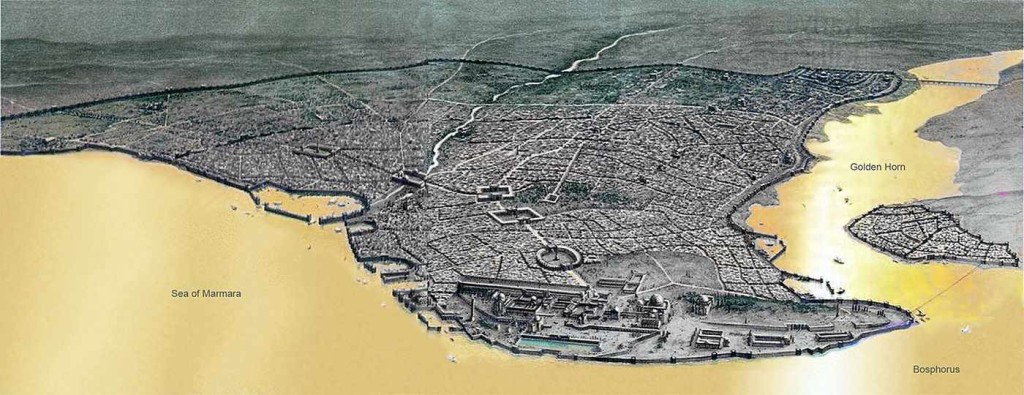
And, 1,696 years ago today, Constantinople was dedicated as the capital of the Eastern Roman Empire by Emperor Constantine the Great. It would go on to become one of the world’s greatest cities, everlasting and constantly evolving. In 324 CE, after the Western and Eastern Roman Empires were reunited, the ancient Greek city of Byzantium was selected to serve as the capital of the east, and was renamed “Nova Roma.” It would outlast the Romans, as well as the Byzantines to come after them, and the Ottomans who came after them.
An overview of Roman Constantinople
Its original incarnation was home to extraordinary splendor, including the Hagia Sophia, the Hippodrome, the University of Constantinople which contained the remains of the Library of Alexandria’s collection, the Imperial Palace, the Golden Gate, and the Theodosian Walls—considered the most impressive fortifications in the Classical Age.
After the various barbarians overran Rome and other areas in the West, Constantinople became the seat of the empire. In the decades following the rise to power of Justinian I, many of those iconic monuments were built. By the time of the Plague of Justinian, the city’s inhabitants may have numbered 500,000.
Restored section of the walls of Constantinople – CC 3.0. Bigdaddy1204
Emerging from a dark age of Persian, Avar, and Bulgar, and eventually Arab attacks, a series of emperors, starting in the year 717, definitively gave birth to the Byzantine Empire as a completely distinct historical entity that would last another 650 years.
Throughout all this time of war and peace, wealth and want, the city was a center of so much of world affairs and influence across all the lands west of India. The markets of Constantinople were the richest in the region, the architectural marvels spawned knock-offs around Europe, with St. Mark’s Basilica in Venice copying the Hagia Sophia, and Caernarfon Castle in Wales copying the Theodosian Walls.
Writer N. H. Baynes in his book on the great city, described the influence of art from this period thusly: “Princes of Kiev, Venetian doges, abbots of Monte Cassino, merchants of Amalfi, and the kings of Sicily all looked to Byzantium for artists or works of art. Such was the influence of Byzantine art in the twelfth century, that Russia, Venice, southern Italy, and Sicily all virtually became provincial centers dedicated to its production.” (330)
255 years ago today, Laskarina Bouboulina, a heroine of the Greek War of Independence, was born. A naval commander, she was born in a Constantinople prison to a captain from the island of Hydra and his wife, who had been imprisoned by the Ottomans for being revolutionaries.
Bouboulina joined the underground organization that was preparing Greece for revolution. She bought arms and ammunition at her own expense and brought them secretly to Spetses in her ships, to fight “for the sake of my nation.”
When construction of the ship Agamemnon was finished in 1820, she bribed Turkish officials to ignore the ship’s size; it later became one of the largest warships in the hands of Greek rebels. She also organized her own armed troops composed of men from Spetses—and used most of her fortune to provide food and ammunition for the sailors and soldiers under her command.
On March 13th, 1821, Bouboulina raised her own Greek flag upon the mast of Agamemnon and the people of Spetses staged one of the earliest revolts several weeks later. She joined forces with ships from other Greek islands to begin a naval blockade of the port of Nafplion near Athens. She also became the first woman-admiral of the Imperial Russian Navy, which was assisting the Greeks until their victory nine years later. Bouboulina was killed in battle against Algerian pirates mid-way through the war, but she—and her ship—were later memorialized on a coin by the Hellenic Republic. (1771)
And, 116 years ago today, the US Congress established Glacier National Park in Montana.
Photo by MountainWalrus – CC license
Along the Canadian border, the park encompasses over 1 million acres, two mountain ranges, 130 lakes, more than 1,000 different plants, and hundreds of animal species, including the threatened grizzly bear and Canadian lynx. (1910)
Also, Happy 85th Birthday to Eric Burdon, the lead singer of The Animals who sang House of the Rising Sun.
Photo by MitchD50, CC
The Rock and Roll Hall of Fame inductee also sang on Don’t Let Me Be Misunderstood and We Got to Get Out of the Place. Burdon has often toured in the last decade and reunited with The Animals in Newcastle–the English city where the band formed in 1963, before becoming part of the British Invasion that took America by storm. Burdon also joined the band WAR to help create such hits as Spill the Wine, Paint it Black, and Why Can’t We Be Friends? (1941)
Photo by BruceBlaus, CC license
66 years ago today, the US Food and Drug Administration approved of birth control as an additional use for the G. D. Searle drug Enovid, making it the first approved oral contraceptive pill following the largest drug trials ever run. The FDA had already reviewed the issue of safety when it approved Enovid’s use for menstrual disorders in 1957, but at last they relented when John Rock, the renowned Catholic obstetrician and gynecologist petitioned to let it be given to healthy women for long-term use for a social purpose—to control their own pregnancies. (1960)
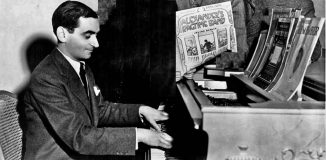
And, 138 years ago today, American composer and lyricist Irving Berlin, who was considered one of the greatest songwriters in American history, was born in Imperial Russia. The composer of hits like White Christmas, Blue Skies, Puttin’ On the Ritz, I’ve Got My Love to Keep Me Warm, There’s No Business Like Show Business, Cheek to Cheek, and God Bless America, arrived in New York City with his Jewish family at age five escaping discrimination, poverty and brutal pogroms.
Berlin never learned to read music, but played his songs entirely by ear in the key of F-sharp (keeping all five notes of the pentatonic scale on the “black keys”) WATCH him demonstrate the unusual piano that helped him learn this, playing one of his humorous love songs, and interviewed by Dinah Shore and Tony Martin. (1888)
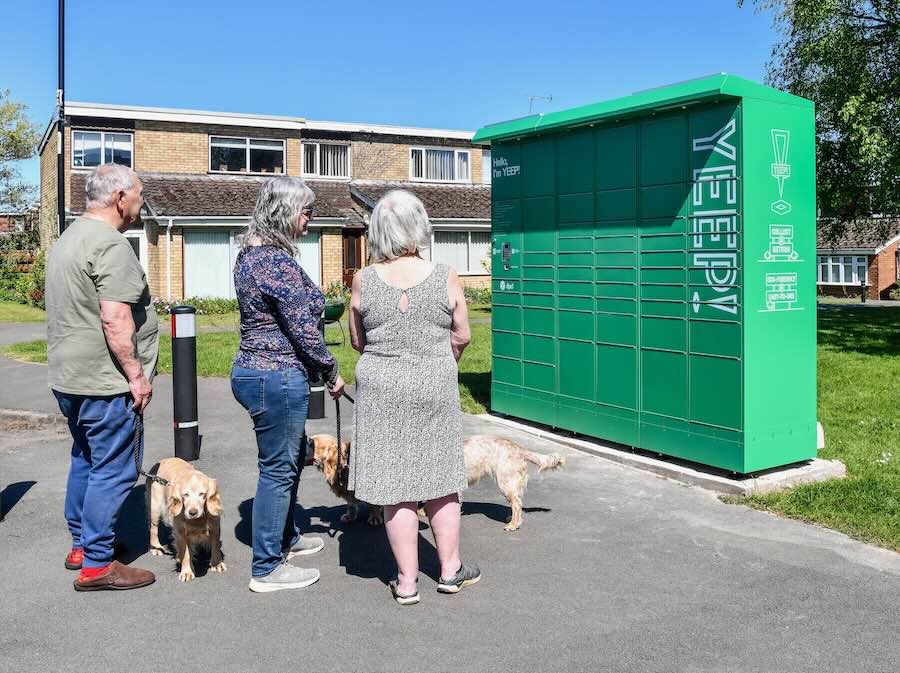
Yeep! lockers erected in Coventry cul-de-sac - SWNS
Yeep! lockers erected in Coventry cul-de-sac – SWNS
A bright green parcel locker plunked right in the middle of a quiet cul-de-sac has been removed after less than a month in response to complaints from residents.
Locals were left baffled when they discovered the huge locker had been erected yards from their homes in Coventry, England.
The company behind it has now admitted the location was “wholly unsuitable” and dismantled the 8ft structure after hearing about the outrage.
Homeowner John Davies, who lives just a few doors down from where the locker appeared in Arne Road, Walsgrave, said residents were “overjoyed” following the u-turn.
But they are questioning why it was ever put there in first place. It wasn’t even used once—and its location was a half mile from the nearest shops.
“Thankfully it’s been removed,” 77-year-old John told SWNS news. “Some men came and took it away.”
“I hope it makes them think about where they put these things in the future, they can’t just be putting them anywhere. It was an awful shock for us.”
Yeep! lockers caused neighborhood uprising – SWNS
“The residents were all overjoyed, we were all thankful that it’s gone from the street. It was such an extreme eyesore for so many of us.
“Apparently, they had been given 28 days to take it down, but to get it gone this quick is amazing.
“Now there’s just the concrete block there now, which needs to go as that’s bad in itself.”
Neighbors had expressed their anger after Yeep! installed the garish solar-powered delivery lockers, randomly in early April.
“We were on holiday and when we got back it was there, plunked in the middle of the neighborhood,” John’s wife Suzanna recalled. “It’s outrageous.”
Arne Road neighbors gather at Yeep! lockers erected in their cul-de-sac – SWNS
“We all care for where we live. There’s pretty flowers and we all help with the mowing, which will make it a bit hard to do.
“It’s all resident parking only. (Now) there’s more risk of traffic and a danger to kids. Who wants to live near that?”
Lynda Congrave, 79, who has lived on the street for 40 years, was fuming. “I can’t believe it’s right outside my living room window. It’s disgusting.”
CEO of Yeep! Jamie Dickinson, put out a statement saying, “Yeep! would like to apologize unreservedly to the residents of Arne Road in Walsgrave, Coventry.
“We have investigated the circumstances surrounding the installation and acknowledge that the location was wholly unsuitable.
“We have also reviewed our internal procedures and are implementing strengthened controls and additional improvements to prevent a similar experience occurring.”
HAIL THE POWER OF COMMUNITY By Sharing the Teachable Example on Social Media…
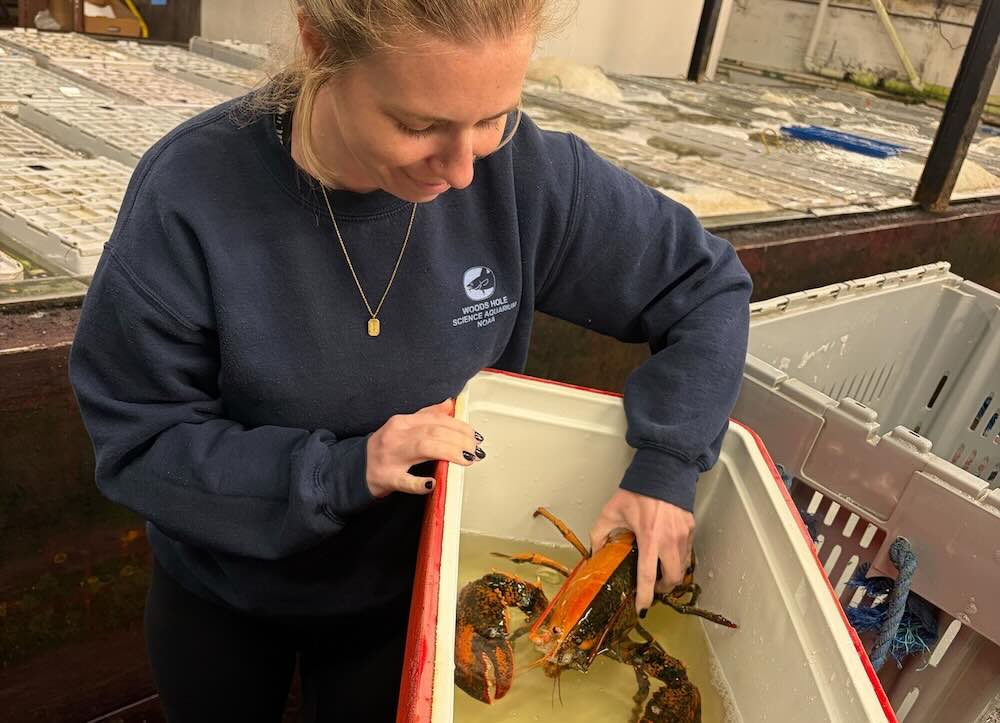
Split-colored Lobster Credit: Wellfleet Shellfish Company
Split-colored Lobster Credit: Wellfleet Shellfish Company
It may not exhibit a split personality, but this lobster is so unique that the chances of catching it are around one in 50 million.
The Wellfleet Shellfish Company announced that a split-colored lobster was caught off the coast of Cape Cod by a local fishing crew aboard the Timothy Michael.
“Split lobsters like this are extraordinarily rare — caused by unique genetic variations that create their striking half-and-half coloring,” said the company in an April 21 Facebook post.
The crustacean—half orange and half black, split right down the middle—has a long life ahead, too, because it is not headed for any lobster pot.
The company is donating it to Woods Hole Science Aquarium, where “she’ll eventually be on display for the public to experience up close once they reopen.”
In the meantime, the lobster was handed over to the team at the Marine Biological Laboratory of the National Oceanic and Atmospheric Administration (NOAA), also in the town of Woods Hole, on Cape Cod.
Woods Hole team member receives the lobster – Credit: Wellfleet Shellfish Company
“Moments like this are why we do what we do: supporting our fishing community, protecting the ocean, and sharing its wonders with everyone,” the shellfish company concluded.
Split-colored lobster Credit: Wellfleet Shellfish Company
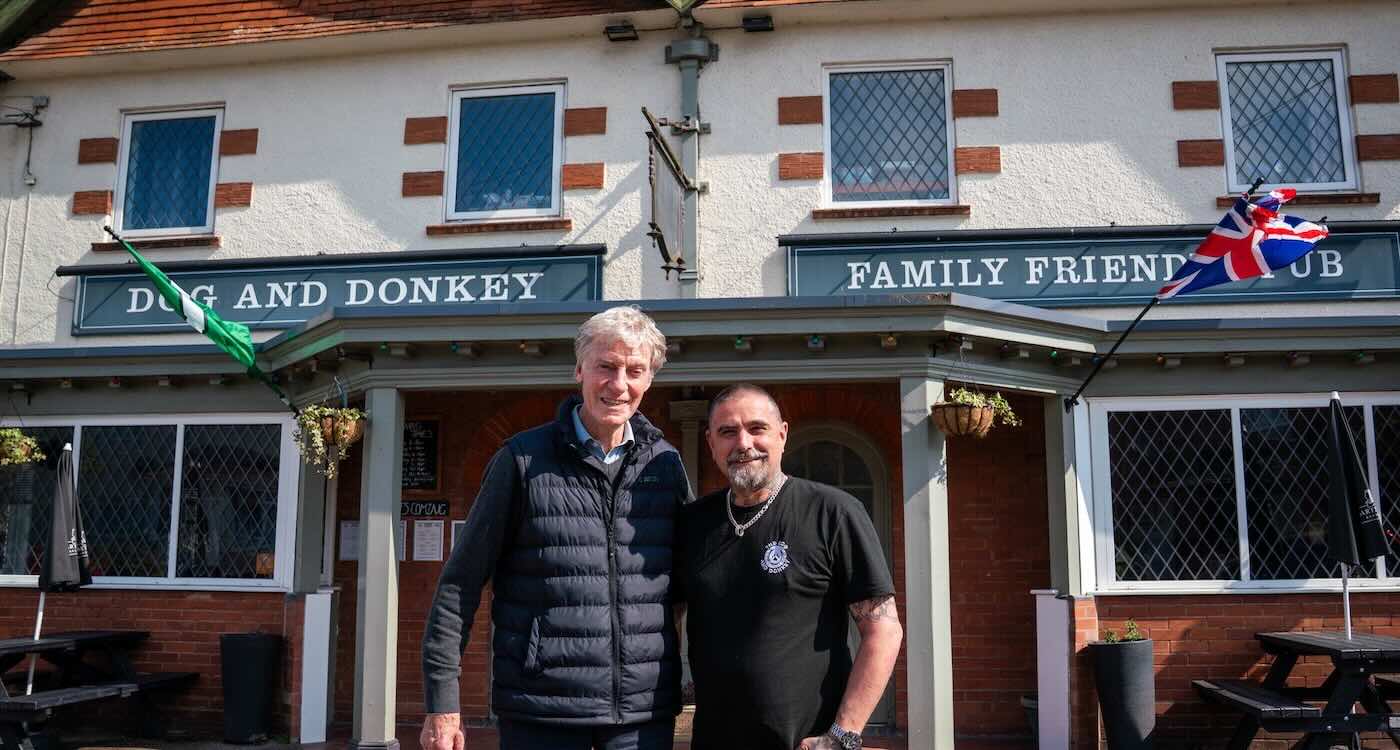
Pete Manfield (left) ensures the Dog and Donkey stays open – By William Dax / SWNS
Pete Manfield (left) ensures the Dog and Donkey stays open – By William Dax / SWNS
Sometimes you just need a place to go where everybody knows your name.
Peter Manfield had a place like that, but it was set to be sold to the highest bidder, so he remortgaged his home to make sure his favorite pub stayed open for business.
The 73-year-old couldn’t bear the thought of losing his village pub, which had been the heart of this community in Devon, England for 100 years.
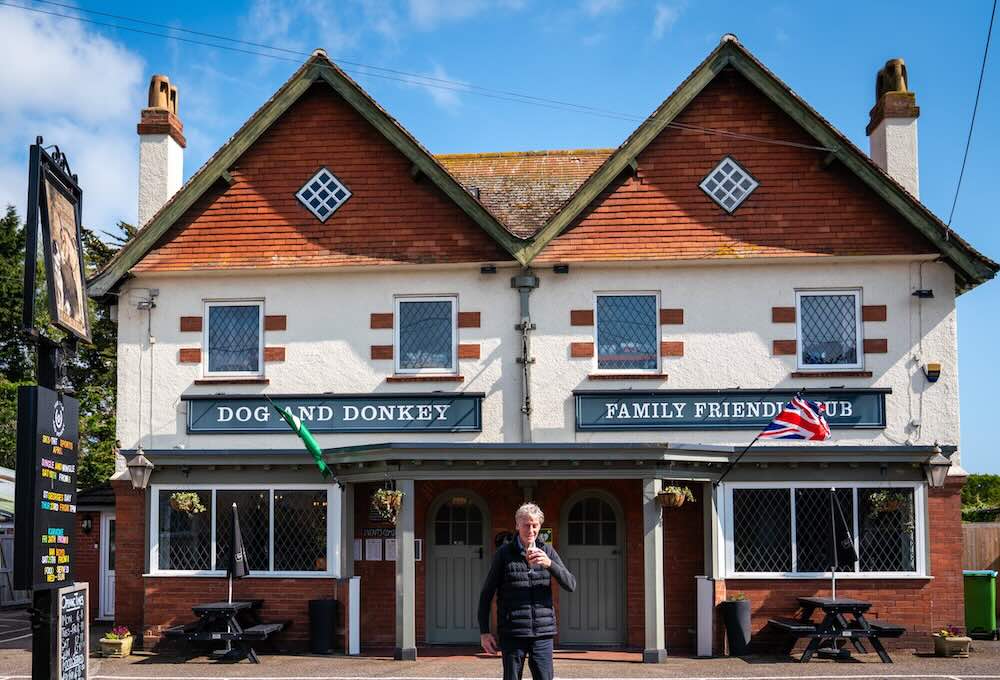
Recently known as The Dog and Donkey, the roomy pub was erected in 1926 as the Brittania Inn, and survived through World War II with an array of different landlords since then.
“It’s a beautiful building and there’s nothing else in the village apart from the village hall,” Mr. Manfield told SWNS news. “It’s a lovely pub—and it’s 100-years-old this year. It has its original fireplace and an original tiled floor.”
It was a tough decision for the music teacher and musician (known locally as Pete), but he felt he had to give it a go, or risk living with the regret when a block of apartments went up in its place.
Pete Manfield ensures the Dog and Donkey Pub stays open – by William Dax / SWNS
“To lose (the village’s) heart would’ve been catastrophic in my opinion—and then you’ve got nowhere to go.”
“You haven’t got history, that history of 100 years is gone and when it’s gone there’s no bringing it back.”
Manfield, who moved to the village in 1997, explained that the landlord was struggling and he was going to have to get rid of the pub.
“I am not a big drinker, I might come down once in 10 days—and particularly if I’ve been working or playing somewhere, then I come back and have a drink on the way through just to relax,” Manfield explained.
“It’s just a lovely old building and when it’s gone it’s gone—and it was just unacceptable to let it go without a fight. That’s the reason why we borrowed the money on the house.”
The Dog and Donkey has been at the heart of the community for 100 years – William Dax / SWNS
There was some luck involved too, back in 2024 when public records show he bought the pub in Knowle, Budleigh Salterton, for around £270,000: He needed to find someone to run the place.
He met the current manager, Mark Loftin, by chance when he was getting a haircut, and mentioned he was thinking about buying a pub. Loftin told him he wouldn’t mind trying his hand as the new bar manager.
“He’s never run a pub before, which is brilliant in many ways—he’s got no baggage. We are very lucky to have found him.”
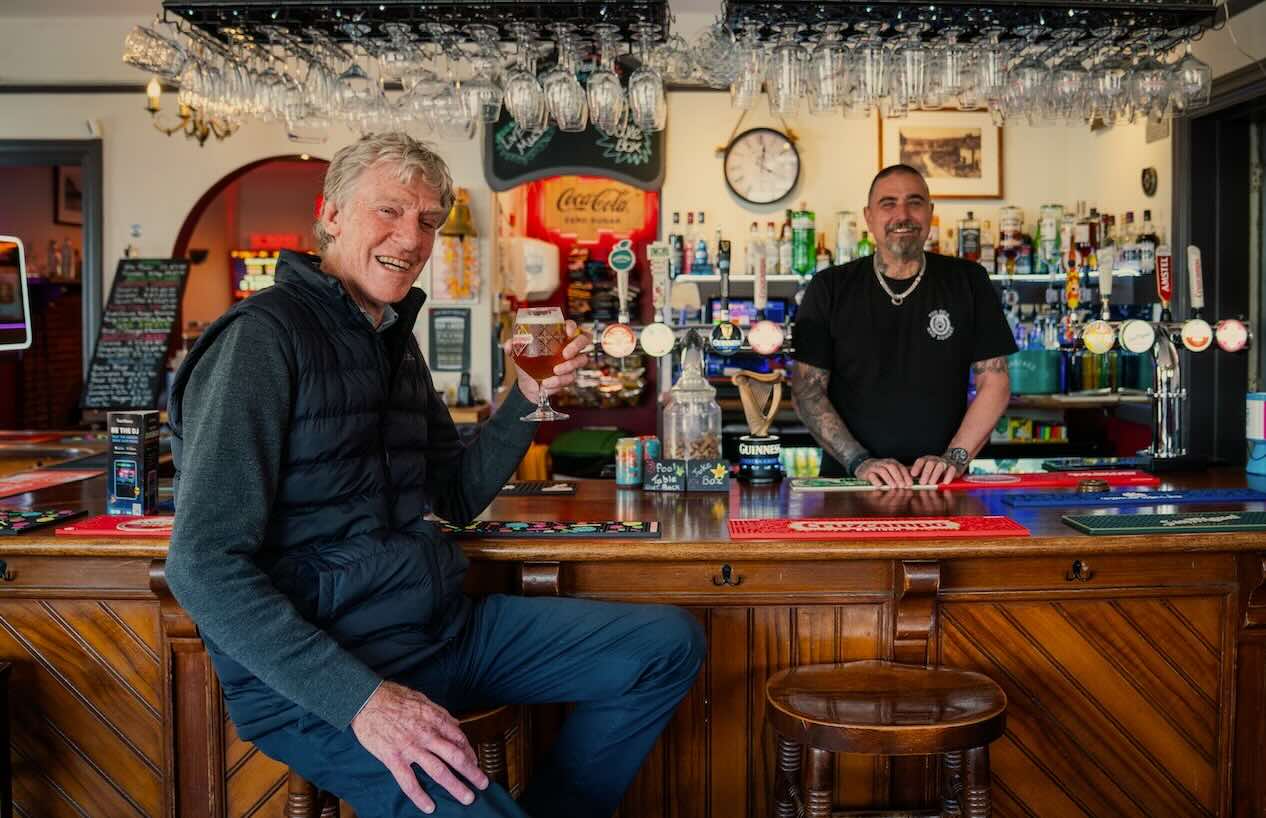
Pete Manfield with Mark Loftin at The Dog and Donkey – by William Dax / SWNS
“This was an amazing opportunity, especially to be involved with Pete.” Loftin said.
“Our values and belief systems basically align and that’s what’s important—wanting to keep the pub traditional, not turning it into a gastro pub—and that’s what we are doing.”
Together, they are saving the pub for the community.
“We have all sorts of people that use the pub for meetings, dog walkers, skittle teams that come in, and the ethos was to keep it a traditional pub.”
The community response has been positive, explained Manfield, who said their pub is thriving.
“We are extremely lucky. Mark (Loftin) has been an amazing landlord and his family is just wonderful.
“It’s a traditional English pub doing traditional English things. Many pubs are struggling and closing. This pub is surviving.”
And locals have been spreading the word on social media, and thanking Manfield for buying The Dog and Donkey.
With a new inspirational quote every day, atop the perfect photo—collected and archived on our Quote of the Day page—why not bookmark GNN.org for a daily uplift?
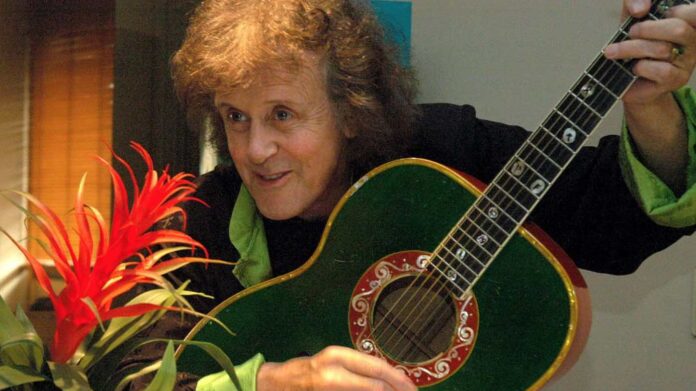
Happy 80th Birthday to the Scottish singer, songwriter, and guitarist, known by the single name, Donovan. He recorded a string of hits such as Catch the Wind, Sunshine Superman, Season of the Witch, Mellow Yellow, Atlantis, and Hurdy Gurdy Man, and was inducted into the Rock and Roll Hall of Fame in 2012. He reminisced at the time about teaching Lennon and McCartney his distinct finger-picking acoustic guitar technique. WATCHa video in which he tells the story… (1946)
The buzzer rang, the gates opened, and before the first turn, the horse that would help make history at the Kentucky Derby was coming in dead last—not surprising as Golden Tempo had 23-1 odds to win the iconic race.
The odds seemed about right, as the horse had been battling a heel condition, but Cherie DeVaux was about to make history, becoming the first female trainer to win the Kentucky Derby.
The horse’s jockey, Jose Ortiz, had never won the race in 10 previous tries. And the horse, Golden Tempo, was starting from the 19th post, way on the outside, making things even more difficult.
Indeed, heading into the final turn of this month’s Kentucky Derby, the horse was still in last place, with 17 other horses to beat.
But then, Golden Tempo began making its kick…
Racing lanes opened as the horse headed into the final stretch. One after another, Ortiz and Golden Tempo passed horses while coming up on the outside.
“What a tremendous kick by Golden Tempo,” NBC announcer Jerry Bailey said on the broadcast. “That’s a lot of ground to make up in the stretch of the Kentucky Derby!”
As the pair raced toward the finish line, the leader was Renegade, the Derby’s betting favorite.
And with DeVaux watching from the rails nearby, the ‘Golden’ thoroughbred won by a nose, while the crowd erupted. (Watch the thrilling moment below…)
“I’m just so, so happy,” DeVaux told NBC. “Jose did a masterful job at getting him there. He was so far out of it, and he had so much faith in this horse….I’m glad I can be representative of women everywhere. We can do anything we set our minds to.”
DeVaux grew up in New York with a big family that included seven brothers and two sisters, which she credits for her toughness. She spent more than two decades in the horse racing business, working all the way up from an exercise rider. She’s now been a stable owner for eight years.
Before her win at the Derby last Saturday, only one female trainer had ever won a Triple Crown race —Jena Antonucci, at the Belmont Stakes in 2023.
Now, thanks to Golden Tempo’s thrilling underdog victory, DeVaux has also made history.
“It really is an honor to be able to be that person for other women or other little girls to look up to,” DeVaux told the Associated Press. “You can dream big, and you can pivot. You can come from one place and make yourself a part of history.”
WATCH the interview from the winner’s circle below…
KEEP THIS STORY RACING ACROSS THE WEB By Sharing it On Social Media…
Credits: Petr Topič / Safari Park Dvůr Králové
Credits: Petr Topič / Safari Park Dvůr Králové
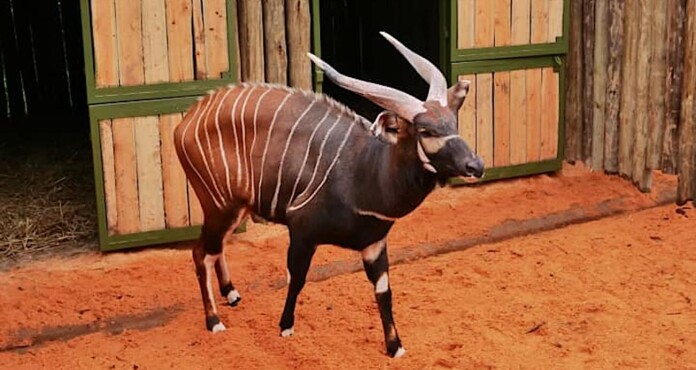
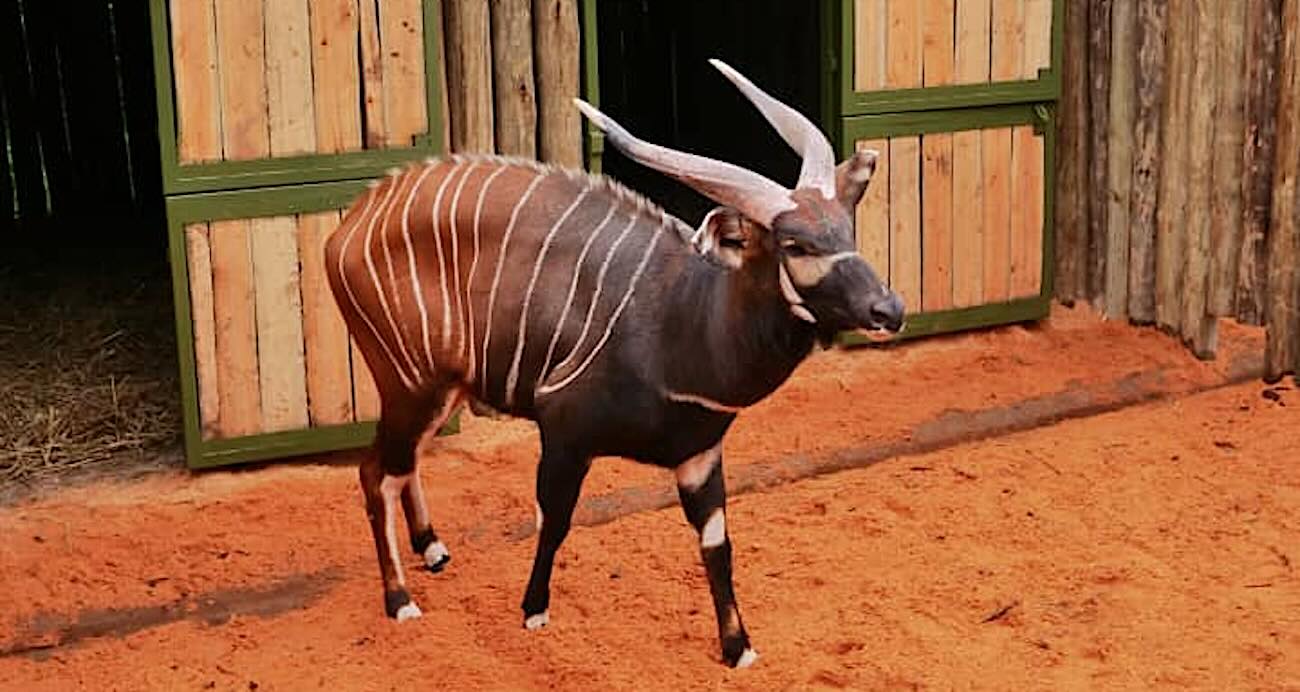
Four mountain bongos, Africa’s rarest species of antelope, have just touched down in Kenya in a major step forward in efforts to save the species from the brink of extinction.
With fewer than 50 remaining in the wild, the historic translocation from European zoos to Mount Kenya Wildlife Conservancy provides a significant boost to its breeding and rewilding efforts.
Traveling more than 4,000 miles, the four male bongos were bred in European zoos as part of an international conservation breeding program. (Watch the video at the bottom…)
Found only in Kenya, the mountain bongo is recognizable by its rust red coat with bold white vertical stripes and long spiral horns. Experts say the population losses were a result of poaching, habitat loss, disease, and fragmentation.
The coordinated initiative led by experts at Chester Zoo also involved the Kenya Wildlife Service and the European Association of Zoos and Aquaria (EAZA).
“This transfer is the result of years of planning—and is a shining example…” said Chester Zoo’s Dr. Nick Davis, who coordinates the conservation breeding program for the Mountain bongo in European zoos.
Credits: Petr Topič / Safari Park Dvůr Králové
“Through expert human care, international collaboration, and a shared commitment to conserving the species in their natural range, we can help secure the long-term future for the mountain bongo.”
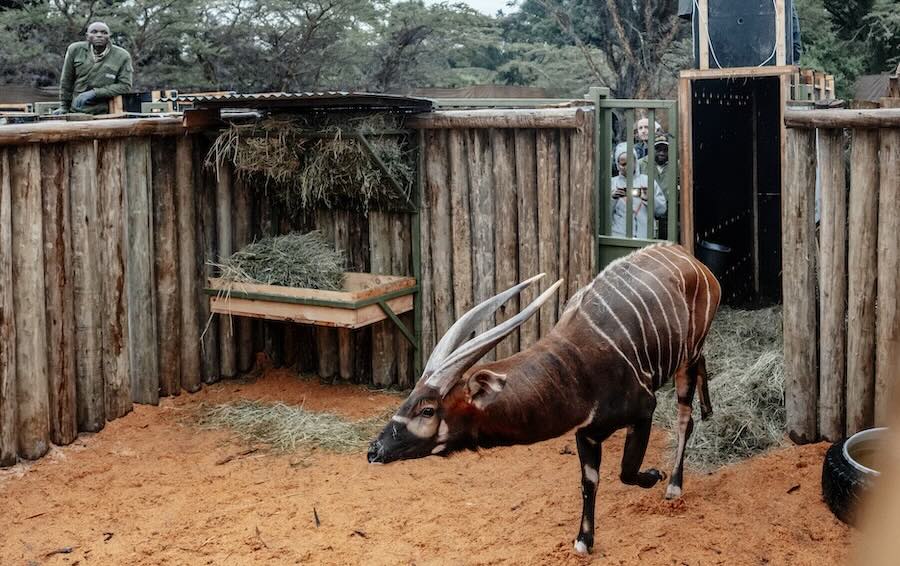
After the four male Mountain bongos underwent rigorous veterinary care at the Czech Republic’s Safari Park Dvůr Králové, the animals boarded a KLM cargo plane and were welcomed on April 28 with an arrival ceremony, officiated by Kenya’s Cabinet Secretary for Tourism and Wildlife.
Speaking at the ceremony, the Director-General of Kenya Wildlife Services, Dr. Erustus Kanga, said the four animals will strengthen the genetically diversity of the bongo populations.
“Our focus is not only on increasing numbers, but on restoring functional populations capable of thriving independently in secure habitats across the country… guided by science and a long-term vision for conservation outcomes.”
Since 2004, the Mount Kenya Conservancy has nearly doubled the population of bongos in their care through breeding, habitat management, and deliberate conservation efforts.
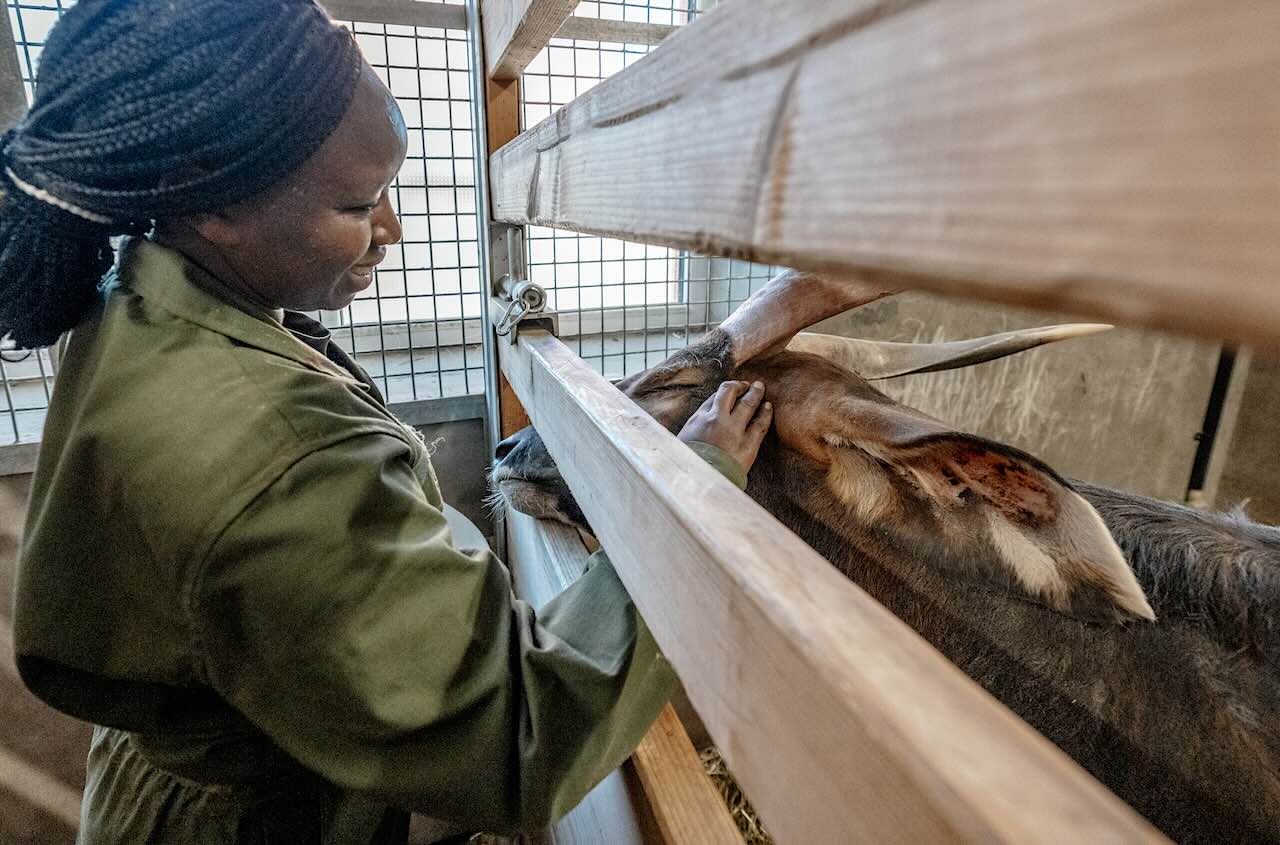
Two keepers travelled with the bongos to ensure smooth journey from Europe to Kenya – Credit: Petr Topič
“This is an important milestone as we continue to accelerate progress achieved over the years.
“These four male bongos will reinforce the existing population of over 100 individuals and enhance breeding capacity, providing an opportunity to expand our breeding herds and bringing us closer to a future where the mountain bongo once again thrives in the wild.”
The Conservancy Numbers
In 2004, the Mount Kenya Wildlife Conservancy initiated its bongo conservation program with 18 animals already present on site and the importation of a further 18 individuals from various zoos in the United States. Since then, the population has adapted to the Mount Kenya ecosystem and has continued to breed successfully.
To advance rewilding efforts, it established the Mawingu Sanctuary in 2022 inside the Mount Kenya Forest Reserve—a former natural range of the mountain bongo which is contiguous with Mount Kenya National Park.
The sanctuary provides a secure environment for breeding and gradual reintroduction into the wild. Today, the areas are home to over 100 Mountain Bongos, with more than 20 individuals already released into the sanctuary, making it the largest population of Mountain Bongos in Africa.
BEAT THE (BONGO) DRUMS For A Wildlife Success Story–Share it on Social Media…
Jackie Kirwan and Kim Smith by William Lailey / SWNS
Jackie Kirwan and Kim Smith by William Lailey / SWNS
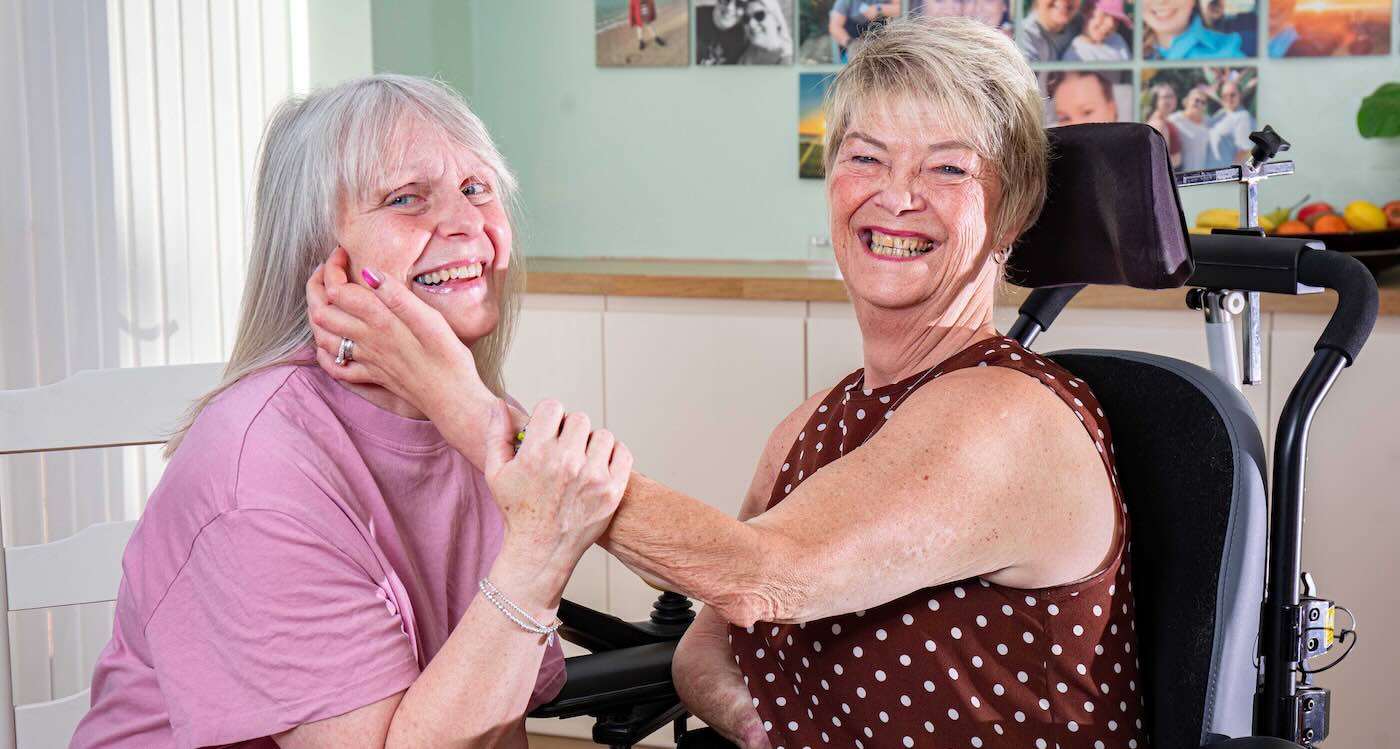
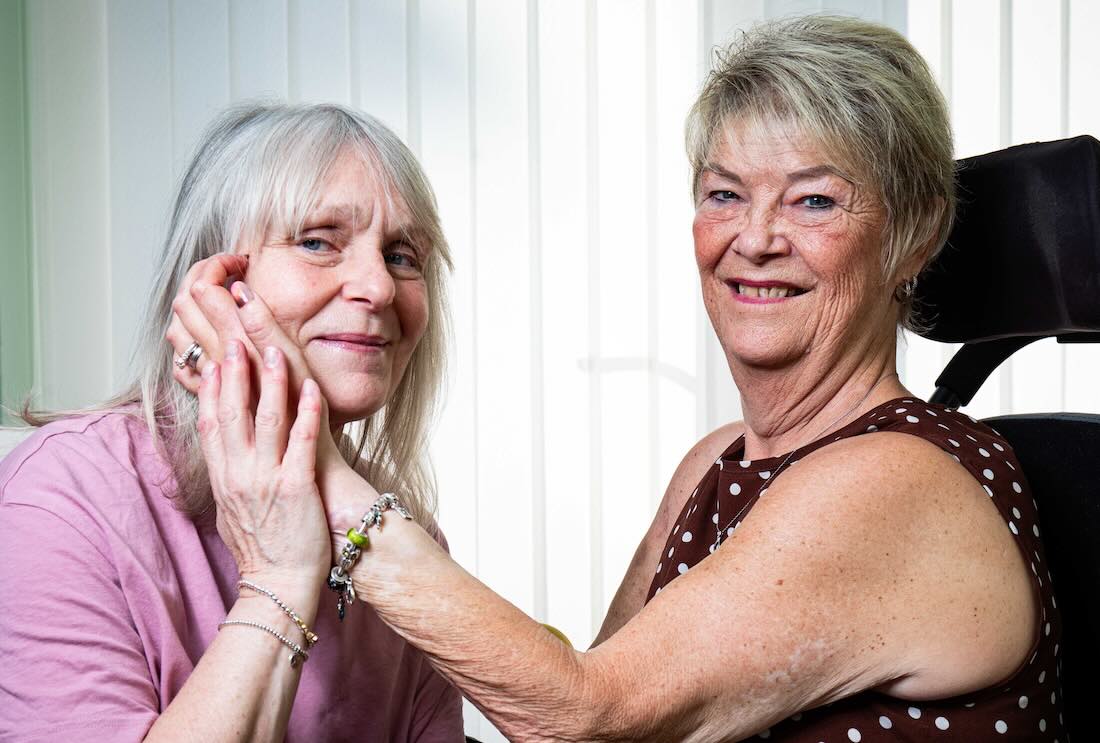
A mother shared some moving moments with the transplant recipient who received her daughter’s hand—and was “over the moon” to see how she’s made such a difference in someone’s life.
Jackie Kirwan lost her 33-year-old daughter Georgie last year in England following complications from a congenital brain malformation that caused constant debilitating seizures.
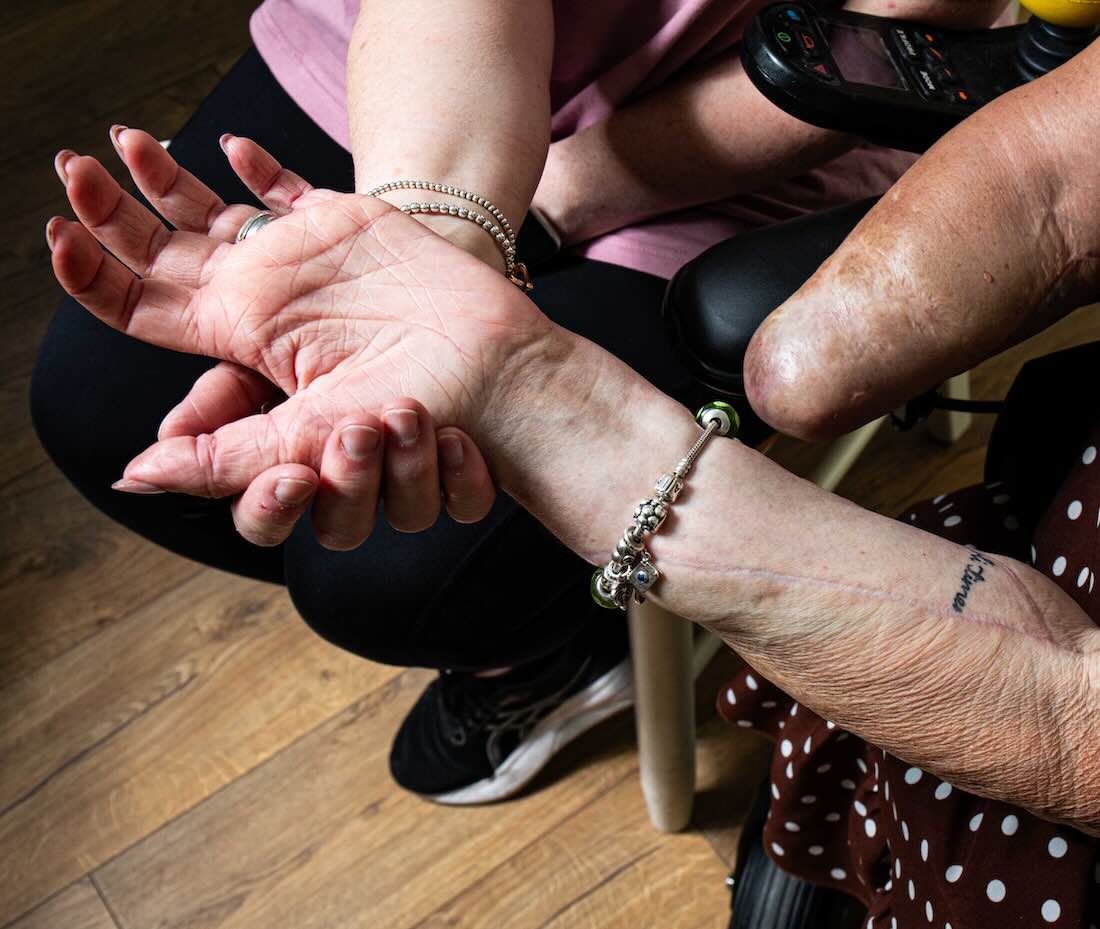
Georgie’s limbs and organs were donated, with her left hand becoming a transplant for Kim Smith who lost her hands as a result of sepsis in 2017.
Jackie Kirwan looks at Kim Smith’s new hand – Credit: William Lailey/SWNS
Georgie went to university and got a degree in English, and loved dancing and swimming, but her epilepsy was so severe, she was unable to drive, work, or take public transport on her own.
When she passed away in 2025, an organ donation nurse came to speak with Jackie, who was surprised to hear that limbs were an option.
“Georgie had joined the register when she was 17, but I never realized families still had to sign on their behalf.
“You don’t get to know where the donations go due to patient confidentiality, but, I later received a letter from Kim, thanking me and asking to meet.
“My first thought was that I could meet her and hold Georgie’s hand.”
“I think Georgie would be over the moon if she knew what it had done for Kim.”
Kim lost all her limbs after contracting an infection and getting sepsis while on vacation in Spain eight years ago, but is now thrilled after receiving a new, working left hand last year—Georgie’s gift.
“The first time I picked up a glass of wine with no problem and then held an ice cream without dropping it, I was in disbelief at how far I’d already come.”
As the ambassador for Sepsis Research, Kim enjoyed her first Christmas with her new limb last year and said Georgie had given her a “wonderful gift”.
“It is extremely rare for a donor’s family and the recipient to meet.
“I wrote a letter of thanks six weeks after my surgery but a thank you never seems quite enough.
“In the letter, I had said I’d love to meet my donor’s family and in February, I received a reply from Jackie.
“We met for the first time at the end of March and it was very emotional. I didn’t think I was nervous until she walked through the door and I then was shaking like a leaf!”
Kim Smith meets Jackie Kirwan, the mother of her hand donor Georgie – Credit: William Lailey / SWNS
“But we chatted like we’d known each other for years. It was lovely.
Plastic surgeon Simon Peter Jabir Kay who performed the intricate surgery said: “Hands are so much more than mechanical parts, they play an irreplaceable role in human communication and connection, and so it is always an honor to be able to carry out such a life-changing surgery.”
The pair are now eager to continue raising awareness of both sepsis and epilepsy—and because Georgie always said it was a person’s soul that was most important, they’ll be keeping her spirit alive.
SHARE THE JOY AND GRATITUDE–And Hail All Donors on Social Media…
FREE WILL ASTROLOGY – Week of May 9, 2026
Copyright by Rob Brezsny, FreeWillAstrology.com
TAURUS (April 20-May 20):
When lightning from a cloud hits sand or soil, the current travels down into the ground. It melts material along its path and forms tubular, branching glass structures that can penetrate deep below the surface. I believe that metaphorically similar phenomena will soon happen in your life, Taurus. Sudden insights or electrifying feelings will leave permanent traces in your psyche, creating new pathways for energy and information to flow. These disruptive inspirations and inspiring disruptions will rewire your internal circuitry, creating channels that will enhance your receptivity to future revelations. You’ll be able to absorb clues and hints from life that you weren’t tuned into before.
GEMINI (May 21-June 20):
I invite you to ruminate on death not as the conclusion of physical life, but as a metaphor for discarding what’s stale and outmoded. In that light, what would be the best deaths you could generate during the coming weeks? Use your imagination with verve and vigor as you dream up scenarios in which you purge parts of your life that are not serving your strongest, most vital yearnings. Visualize how much fresh potency that will liberate. (PS: To reiterate: You are NOT in physical danger.)
CANCER (June 21-July 22):
What part of you is too tame? Maybe your imagination is politely well-behaved, or maybe your voice edits itself before it dares to say what it really thinks. Can you inspire it to be wilder and freer? Not reckless or destructive, but more honest and experimental? Here’s a suggestion: Go on regular excursions with your wild side, maybe once every two weeks. Follow it as it chooses what to explore and create. This might ultimately teach your tamed self that it’s safe to let primal wisdom help steer you.
LEO (July 23-Aug. 22):
According to quantum physics, particles can become “entangled,” which means they share a single connected quantum state. Observing and measuring one particle reveals information about the other, even if they’re not in close proximity. Einstein called this “spooky action at a distance.” I predict that different parts of your life will also interweave in unlikely ways during the coming weeks, Leo. Moves you make in one area will seem to produce mysterious effects in other domains. For example, adjusting your morning routine may boost your creative output. Healing an old alliance could unlock a professional opportunity. Everything will be more intermingled than the visible evidence suggests.
VIRGO (Aug. 23-Sept. 22):
Your key power word for now is stretch. Speak it aloud multiple times every day, and write it on a card that you put in a place where you will keep seeing it. Also, make a point of physically and spiritually living out these three senses of stretch: 1. to lengthen, widen, or expand without snapping or tearing; 2. to unfurl your body to its full reach, boosting circulation and warding off stiffness or cramps; 3. to take on challenging tasks that push you to amplify your abilities and move beyond what you previously believed you could do.
LIBRA (Sept. 23-Oct. 22):
Four oracles for you, Libra: 1. You’re in possession of keys to doors that haven’t been built yet. Tuck those keys away somewhere safe. 2. You’re ready to dream up titles for stories your life hasn’t lived through yet. Write those titles down. 3. You are being granted sneak previews of your future, even though you can’t yet see the bridge that will carry you there. Imprint these glimpses on your memory. 4. You have everything required to grow a more muscular faith that’s grounded in real evidence, not in vague hopes and wishful thinking. Take advantage.
SCORPIO (Oct. 23-Nov. 21):
At the ancient Library of Alexandria, editors did far more than copy manuscripts. They compared multiple versions of important works and produced editions that aimed at definitively reliable texts. Their efforts at preservation required active intervention rather than mere reproduction. In the coming weeks, Scorpio, I think it will be fun and transformative for you to make similar adjustments to your own life story. How might your memories of the past need to be corrected and refined? How could you make your personal mythology more accurate and liberating? I invite you to revise and revivify the tales you tell yourself about your magnificent journey from the moment you were born until now.
SAGITTARIUS (Nov. 22-Dec. 21):
The speed of light is how fast it travels through a vacuum. When moving through water and other media, though, light’s swiftness decreases. The fastest possible speed in the universe only applies in emptiness. If you put anything in light’s way, it slows down. Let’s use this as a metaphor for your life. I suspect you may be frustrated by how incrementally things are moving. But you’re not in a vacuum. Your bright intelligence is traveling through the complex situations that life has brought you. So of course you’re not zipping along with maximum haste. My advice: Be grateful for the slowdowns. Learn all you can about how they are educating and transforming your brilliance.
CAPRICORN (Dec. 22-Jan. 19):
Cryptographer Claude Shannon (1916–2001) was the father of information theory. His achievements were comparable to those of Albert Einstein, Isaac Newton, and Charles Darwin. Here’s one of his secrets: He kept his office filled with juggling equipment, unicycles, and mechanical toys, which inspired him to solve abstract problems. His playful tinkering helped inspire breakthroughs that ultimately created the digital age. For him, recreation and innovation happened at the same time. I invite you to try a similar approach in the coming weeks, Capricorn. Blend “serious work” with “just messing around.” Be alert for key insights that emerge from improvisation and experimentation. Your diversions won’t be distractions from your purpose but rather pathways toward it.
AQUARIUS (Jan. 20-Feb. 18):
Master calligrapher Yukimi Annand is an Aquarius. She teaches that beautiful letters emerge not just from the hand that holds the brush, but from the entire body and relaxed awareness. Breath, posture, centered weight, and quiet mind all flow through the arm to create each stroke. Trying to control the outcome with arduous effort produces rigid, lifeless art. This is an excellent teaching for you right now, Aquarius. Whatever you’re striving to accomplish, I beg you to refrain from forcing results through grueling, overly laborious exertion. Instead, align your whole being so that graceful outcomes flow naturally from your soulful coherence.
PISCES (Feb. 19-March 20):
The placebo effect is getting stronger over time. Placebos in drug trials are becoming increasingly effective, to the point where it’s sometimes becoming harder to prove that actual drugs work better than sugar pills. Are we getting better at healing ourselves through belief? That would be a problem for pharmaceutical companies but interesting for the rest of us. Dear Pisces, I believe your placebo response is exceptionally strong right now. In the coming weeks, use it deliberately. Be daring and exuberant in your efforts to heal yourself.
ARIES (March 21-April 19):
Astronomers depend on instruments to collect the observations that fuel their work, but they don’t spend every night glued to the stars. On overcast nights, they turn to what they have already gathered, digging into past measurements and reworking the data. You’re in a comparable phase, Aries. For now, looking farther out into the glittering world won’t give you anything essential. The guidance you need is folded into what you’ve previously seen, felt, and taken in. It’s waiting for you to sort through and understand it on a deeper level.
WANT MORE? Listen to Rob’s EXPANDED AUDIO HOROSCOPES, 4-5 minute meditations on the current state of your destiny — or subscribe to his unique daily text message service at: RealAstrology.com
Quote of the Day: “Ever tried. Ever failed. No matter. Try Again. Fail again. Fail better.” – Samuel Beckett
Photo by: Serghei Trofimov
With a new inspirational quote every day, atop the perfect photo—collected and archived on our Quote of the Day page—why not bookmark GNN.org for a daily uplift?
Happy 80th Birthday to actress Candice Bergen, perhaps best known as TV’s Murphy Brown, a comedic role for which she won five Emmy Awards and two Golden Globe Awards over ten seasons. At 75, she continues to shine—in recent films with blockbuster women co-stars in Book Club(with Keaton and Fonda in 2018) and Let Them All Talk (with Streep in a fully-improvised 2020 Soderbergh com-drama shot in 10 days for HBO). READ more about the award winning actress… (1946)
Walking an extra 1,000 steps a day after surgery helped patients recover quicker, according to a new study of almost 2,000 adults.
The study showed that every extra 1,000 steps made per day after an operation was linked to 18% lower chance of complications, 16% lower odds of re-admission, and 6% shorter hospital stays.
The association stayed true across different types of procedures and patient health levels, according to the findings published in the Journal of the American College of Surgeons (JACS).
The researchers say step counts from a wearable device offer a practical tool to track recovery in real time, and so they analyzed data from 1,965 adult patients undergoing inpatient surgery.
They findings show that a patient’s step count following surgery is a “powerful” predictor of recovery, outperforming other metrics such as heart rate variability and self-reported wellness.
“We tell patients that they need to get up and walk after an operation, but we don’t have a good sense of how much they’re actually moving,” said study senior author Professor Timothy Pawlik. “Wearables give us an objective, continuous readout.”
“Instead of asking how you feel, we can see that you’re up and moving, which is a very actionable signal of how your recovery is progressing.”
Incremental increases in daily steps were also associated with lower odds of 30-day and 90-day hospital re-admissions, potentially indicating a dose-dependent response.
In contrast to the pedometry findings, post-operative changes in heart rate variability and self-reported “wellness” scores were not independently associated with length of stay, complications, or re-admissions.
Professor Pawlik, also the chair of the department of surgery at The Ohio State University Wexner Medical Center, said the results demonstrate a scenario similar to that of the chicken and the egg.
“People who feel better are naturally more likely to be up and around,” he said. “However, the signal is so strong that it suggests step count is not just a marker of wellness, but a key component of it.”
“Seeing a patient’s step count drop can be an early indicator to intervene, perhaps by involving physical therapy or checking in more frequently.”
He says the findings align with a 2023 study which found that patients who took more than 7,500 steps per day before surgery had a 51% lower risk of post-op complications.
“If a patient’s goal is 8,000 steps before surgery and 6,000 on postoperative day three, they can see if they’re hitting those targets. It gives them a concrete goal and gives us objective data to help decide if they’re ready for discharge or if they need more support at home.”
Pawlik also said that all exercise plans should be discussed with a doctor and that the number of steps any individual takes each day should be considered in light of other health issues.
In general, after an injury, basic movement is incredibly important, but it wasn’t always the doctor’s orders.
In 1966, a seminal study on exercise cardiology was completed called the Dallas Bed Rest and Exercise study. It found that when young athletes were prescribed 3 weeks of bed rest, which was a typical recommendation for a patient of any age that had survived a heart attack, their heart muscled atrophied 27%.
Their hearts were as correspondingly fit as someone 30 years older than they were, a fact that was confirmed when the same participants returned and undertook the same battery of physical fitness tests in 1996, and again in 2006.
In 1996, their cardiorespiratory fitness as measured by VO2 max had reduced by 12% compared to their 20-year-old baseline: in other words, at age 50, their VO2 max was 15% higher than their 20-year-old selves after 3 weeks of bed rest.
In 2026, it was still 10% higher than after the bedrest. This powerful study and its incredible follow-up results go a long way toward demonstrating why movement—even as little as 1,000 extra steps, is so key to maintaining health into the final quartile of life, and why it was so key for these surgery patients to recovering faster and returning to hospital less often.
SHARE This Important Advice And Finding With Your Friends Who Need Surgery…
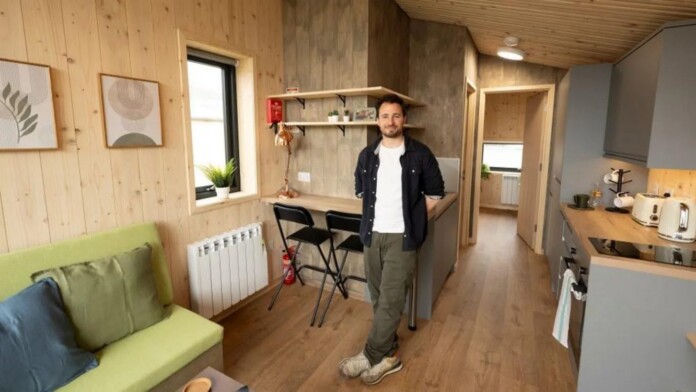
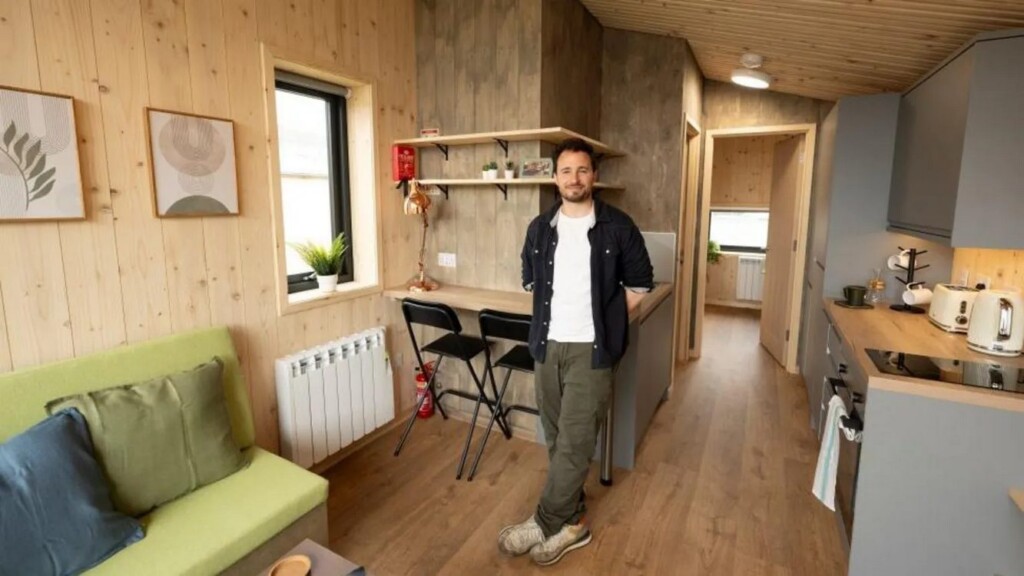
Josh Littlejohn inside of a Social Bite homeless nest unit - credit, Frame PR
Josh Littlejohn inside of a Social Bite homeless nest unit – credit, Frame PR
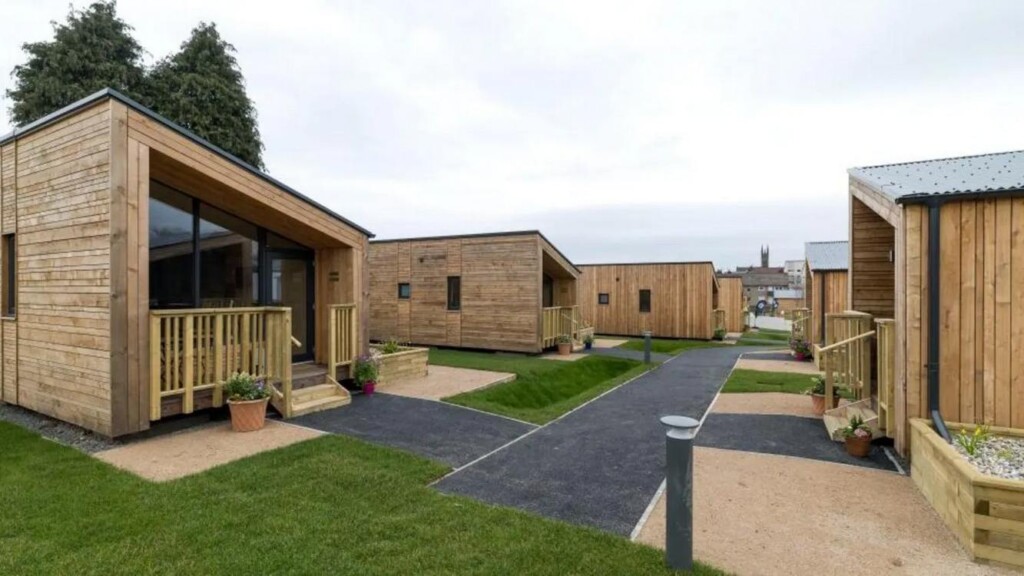
A small village for homeless residents has opened in the west of Scotland with the aim of empowering tenants with responsibility and time to get their lives back on track.
The charity Social Bite has partnered with the Salvation Army for the management of the South Lanarkshire homeless village, called Harriet Gardens, which it spent some $3.5 million to build.
Consisting of 15 “nest” units with 1 bed and 1 bath, Harriet Gardens residents will share a gym, community space, and cooking facilities. Social Bite’s Josh Littlejohn believes it will be a big improvement over government sponsored homeless hostels, which generally create an environment of chaos.
“Maybe these places aren’t fit for purpose anymore, and they’re expensive—Glasgow and Edinburgh councils are spending millions and millions on accommodation,” Littlejohn said to BBC News Scotland.
“If you create an environment where people grow in confidence, build relationships and then leave homelessness behind, then that is the first step in tackling homelessness as a problem.”
In South Lanarkshire, some 1,500 residents are considered homeless, an increase over the last 6 years of 33%.
Jacqueline Fernie, a homelessness and housing manager for South Lanarkshire Council, visited Social Bite’s village location in Edinburgh and decided she wanted to see the same in her own jurisdiction.
Harriet Gardens homes – credit, Frame PR
Fernie views the independence and responsibility of renting a tiny home as being the right catalyst for someone being able to reverse course. The Salvation Army will be on site 24/7 to provide support of any kind for residents, including “practical help, emotional support and guidance with day‑to‑day challenges,” Social Bite writes on its website.
Weekly activities organized by Salvation Army and local community partners, as Harriet Gardens was built on disused land that was formerly a saw mill but which is nevertheless set amid a residential area, are aimed at building skills, better health, and the calm reassurance of a routine to people all too used to unpredictability.
While Social Bite was met with some opposition from local residents who didn’t want a homeless encampment in the middle of their community, Littlejohn said their concerns were mostly just that—thinking that he was building an encampment.
On the other hand, some groups, such as a local gardening club Grow 73, were proactive in reaching out to offer support and a line of connectivity for residents of Harriet Gardens with the broader community.
SHARE This Great Work For Those In Need In West Scotland With Your Friends…
Gallop reported in August that since it began tracking the US drinking rate in 1939, it has never been lower than in 2025.
Last year, just 54% of Americans polled on average said they consumed alcohol. The question didn’t regard frequency, but basically asked: do you abstain from drinking entirely.
54% marks the third year of consecutive declines, something the Gallup survey had never seen before despite some years in which the drinking rate fell below 60%.
It follows updated recommendations that suggest any amount of alcohol may negatively affect health compared to previous decades where it was believed that small or even moderate amounts may be protective.
Leading the decline in the broader sense are women and youth. The drinking rate among women surveyed fell 11% since 2023 to just 51%, while the young adult drinking rate fell 9% over that time to 50% in 2025.
The largest percentage declines were seen in those making less than $40,000 per year, and registered Republicans, which Gallup recorded as falling 19% since 2023, or put in other words, 19% of the Republicans that were drinking in 2023 now abstain from alcohol.
For the first time in Gallup’s trend, a majority of Americans—53%—say drinking in moderation is bad for one’s health, reflecting an emerging scientific consensus driven by higher quality and more diverse datasets.
In 2018, that opinion was held by just 28% of surveyed Americans, but it’s grown substantially since then year-over-year. Among youth, 66% of respondents believe drinking is bad for your health, compared to 50% and 48% for the two higher age brackets.
Even among those who do drink, Gallup reports, alcohol consumption is falling. “40% say it has been more than a week since they last consumed alcohol, the highest percentage since 2000,” the polling agency wrote in a release on their data.
“The average number of drinks consumed over the past seven days is 2.8, the lowest figure Gallup has recorded since 1996. This is down from 3.8 drinks a year ago and closer to 4.0 drinks over the seven years prior to that.”
A 2022 population-based study of US adults found that 32.9% of the adult population has two or more conditions out of 20 common, chronic, diseases that significantly affect health and disease treatment, such as obesity, diabetes, or gut dysbiosis.
Certain organizations like the Commonwealth Fund and the Peterson-KFF Health System Tracker suggest that the US leads the world, or at least ranks among the worst-performing nations, for per-capita population with two or more chronic diseases.
Alcohol can aggravate existing chronic diseases through inflammation and gut microbiome disruptions. It may be that for the good of the nation, the nation as a whole could do with cutting back on the sauce for a few decades until we get our health house in order.
SHARE This Positive Trend In Health Among Americans With Your Friends…